
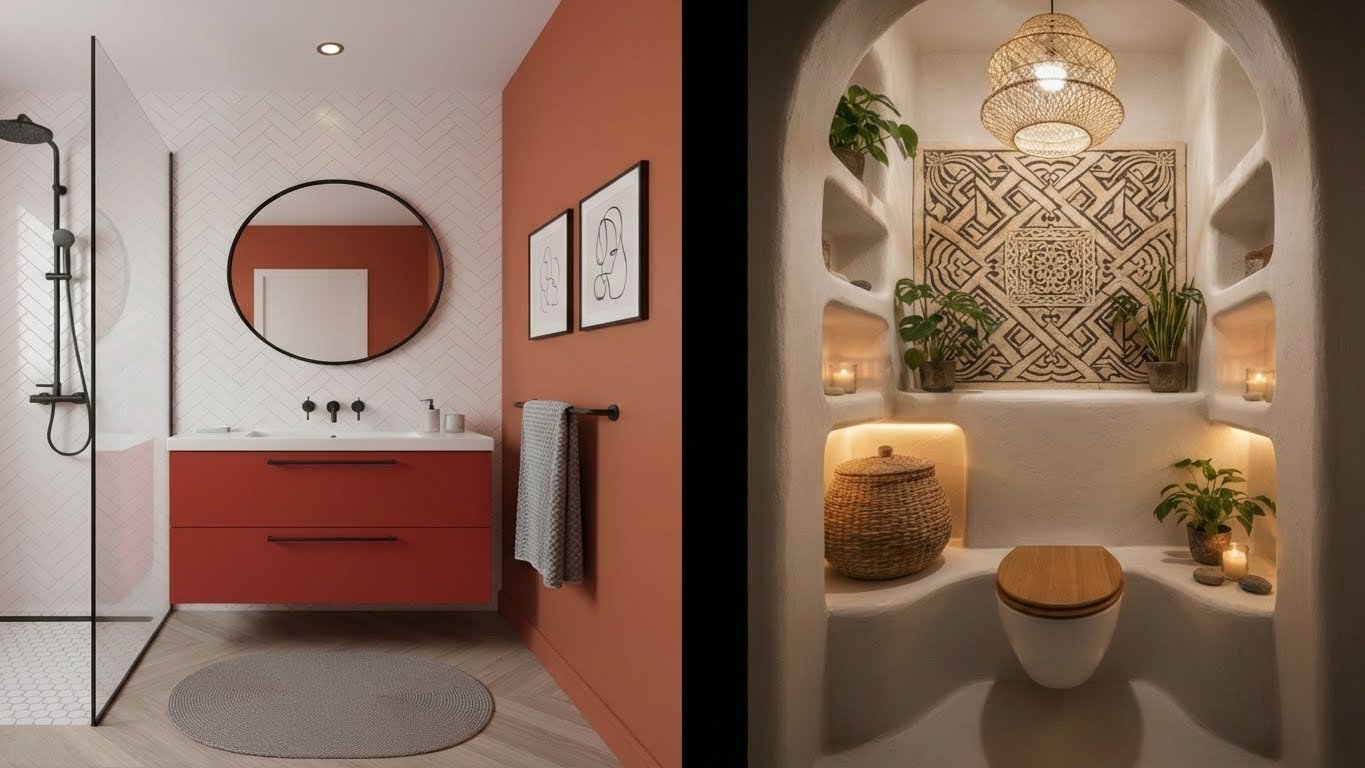
You stare at your small bathroom and see limits. We see potential. A lack of square footage does not mean a lack of style or luxury. The current trend in interior design focuses on “micro-luxury,” turning compact powder rooms and tiny ensuites into high-end sanctuaries. You want a spa-like retreat without knocking down walls. You need storage solutions that disappear into the decor.
This guide provides exactly that. We strip away the clutter and focus on verticality, optical illusions, and smart technology. You will find 15 specific, actionable ways to trick the eye and maximize every inch of your bathroom. From recessed niches that steal space from the studs to lighting that changes the room’s physical boundaries, these are the upgrades that matter.
Key Takeaways
- Verticality is King: Drawing the eye upward with floor-to-ceiling elements expands perceived height.
- Light Creates Space: Integrated LED mirrors and smart lighting eliminate dark corners that shrink a room.
- Hidden Functionality: Recessed niches and multi-purpose fixtures (like speaker showerheads) reduce physical clutter.
- Continuous Flooring: Floating vanities and wall-hung toilets reveal more floor, tricking the brain into seeing a larger area.
Table of Contents
- Green Oasis: Vertical Bathroom Garden
- Creative Tile Designs for Small Bathrooms
- Chic Clawfoot Tub Options
- Sleek Wall-Blending Mirror Solution
- Sink Storage Solutions
- Functional Towel Storage: Ladder Shelf
- Color-Changing LED Lighting for Small Bathrooms
- Decorative Wall Niches for Small Bathrooms
- Versatile Illuminated Vanity Mirror
- Elevate: Recessed Speakers Enhance Ambiance
- Elevate Small Spaces with Style
- Farmhouse Flair: Shiplap Bathroom Walls
- Shower Head with Music Integration
- Light-Friendly Privacy Solutions
- Modern Geometric Wallpaper Ideas
- Popular Asked Questions
- Conclusion
Green Oasis: Vertical Bathroom Garden
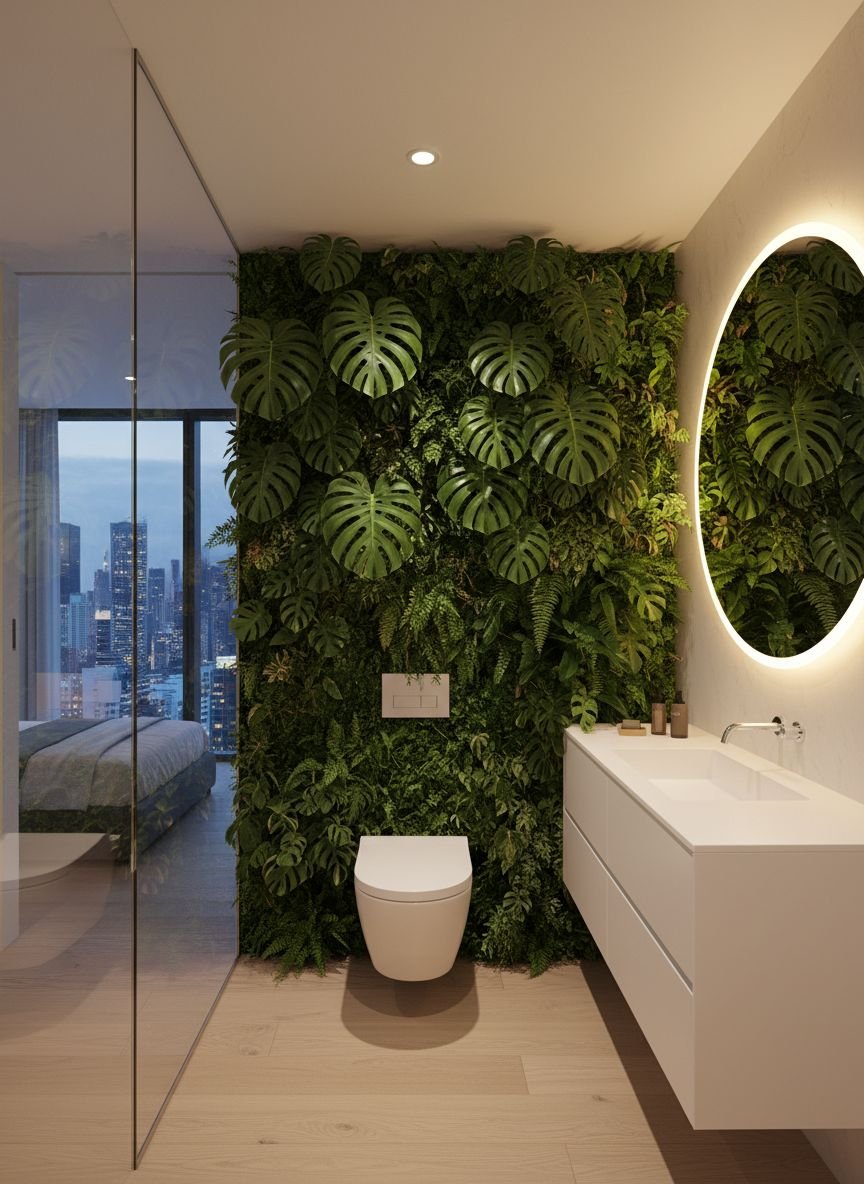
Plants breathe life into sterile tiled spaces. In a tiny bathroom, counter space is premium real estate you cannot sacrifice for a pot. The solution lies in vertical gardening. Living walls or mounted planters draw the vision upward, emphasizing the height of the room rather than its narrow width. The humidity from your shower creates a natural greenhouse environment, perfect for tropical varieties like ferns, pothos, or air plants.
Biophilic design principles suggest that connecting with nature reduces stress. A wall of greenery against crisp white subway tile creates a striking contrast. It softens the hard lines of ceramics and metal fixtures. Use floating shelves installed above the toilet or a specialized wall-mounted trellis system. This approach adds texture and color without encroaching on your floor plan.
Pro Tip: Choose “high humidity, low light” plants like Snake Plants or Boston Ferns if your bathroom lacks a large window.
Save this idea to your Pinterest.
Creative Tile Designs for Small Bathrooms
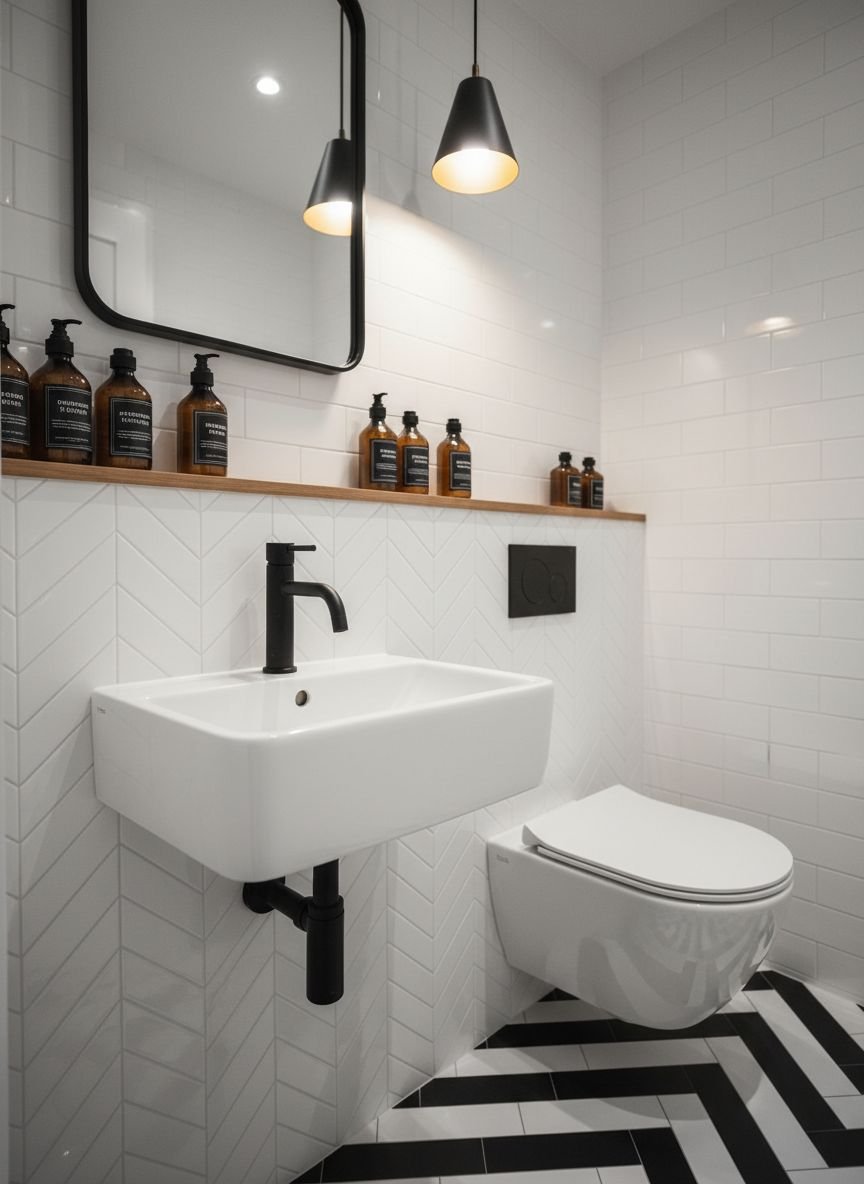
Standard grid tiling can make a small room feel like a cage. Disrupting the expected pattern alters the perception of space. Large-format tiles minimize grout lines, creating a seamless look that expands the floor area. Alternatively, installing rectangular tiles in a vertical stack bond pushes the ceiling higher. Herringbone patterns create diagonal movement, guiding the eye outward and making the walls feel wider.
Texture plays a massive role here. Glossy, light-colored tiles reflect light, bouncing it around the room to brighten dark corners. Matte finishes offer a modern, grounded feel but require strategic lighting. When you run the same tile from the floor into the shower stall, you erase the visual boundary of the shower curb. This continuous flow tricks the brain into perceiving the entire footprint as one open space.
Pro Tip: Use a grout color that matches your tile to further reduce visual noise and expand the space.
Chic Clawfoot Tub Options
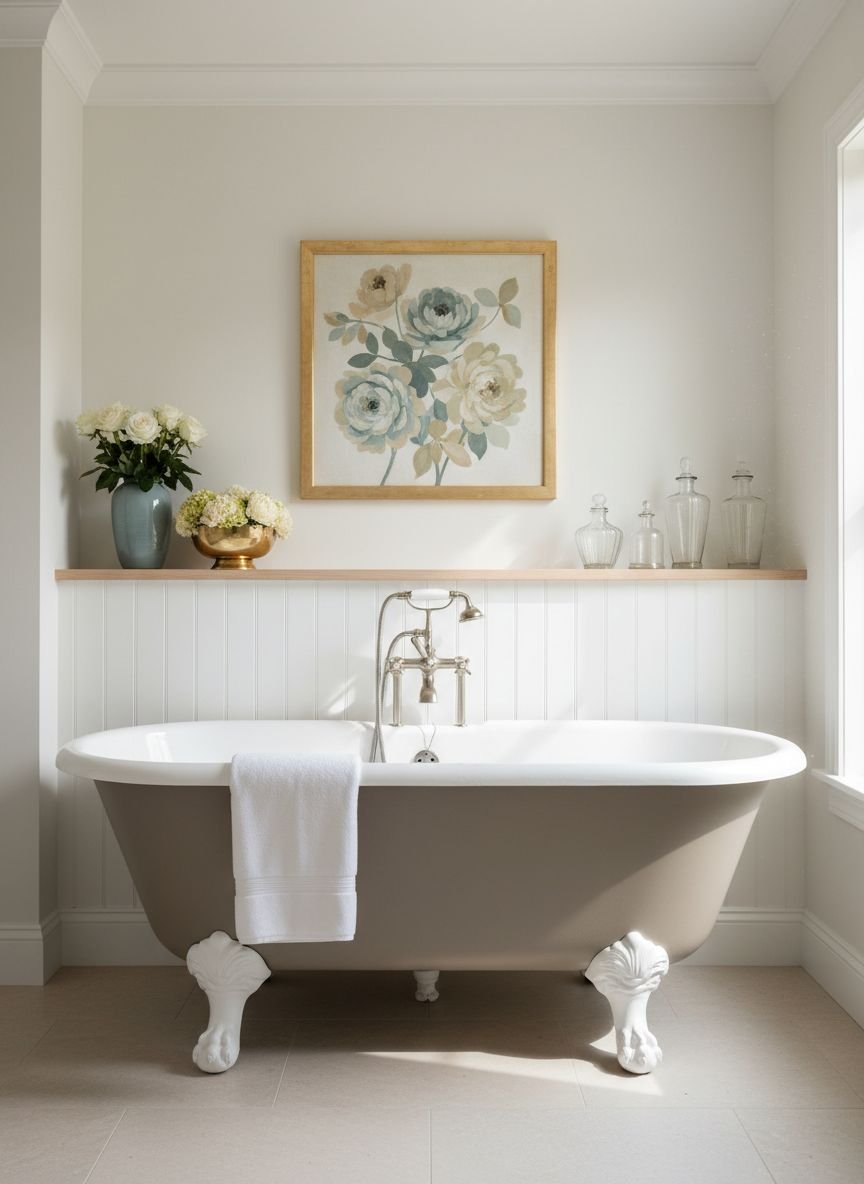
A freestanding tub in a small bathroom seems counterintuitive, but it often works better than a built-in. Built-in tubs create a bulky, boxy barrier. A petite clawfoot or pedestal tub exposes the floor underneath. Seeing more floor gives the illusion of more room. Modern acrylic versions offer the vintage silhouette without the massive weight of cast iron, making them easier to install in upstairs renovations.
The curve of a clawfoot tub introduces softness to a room dominated by right angles. Pair a colored tub exterior—perhaps a deep navy or forest green—with neutral walls to create a focal point that anchors the design. This setup allows for a “wet room” layout where the tub sits inside the shower area, a popular trend in 2026 for maximizing utility in tight quarters.
Pro Tip: Look for “compact” or “Japanese soaking tub” models specifically designed for footprints under 60 inches.
Sleek Wall-Blending Mirror Solution
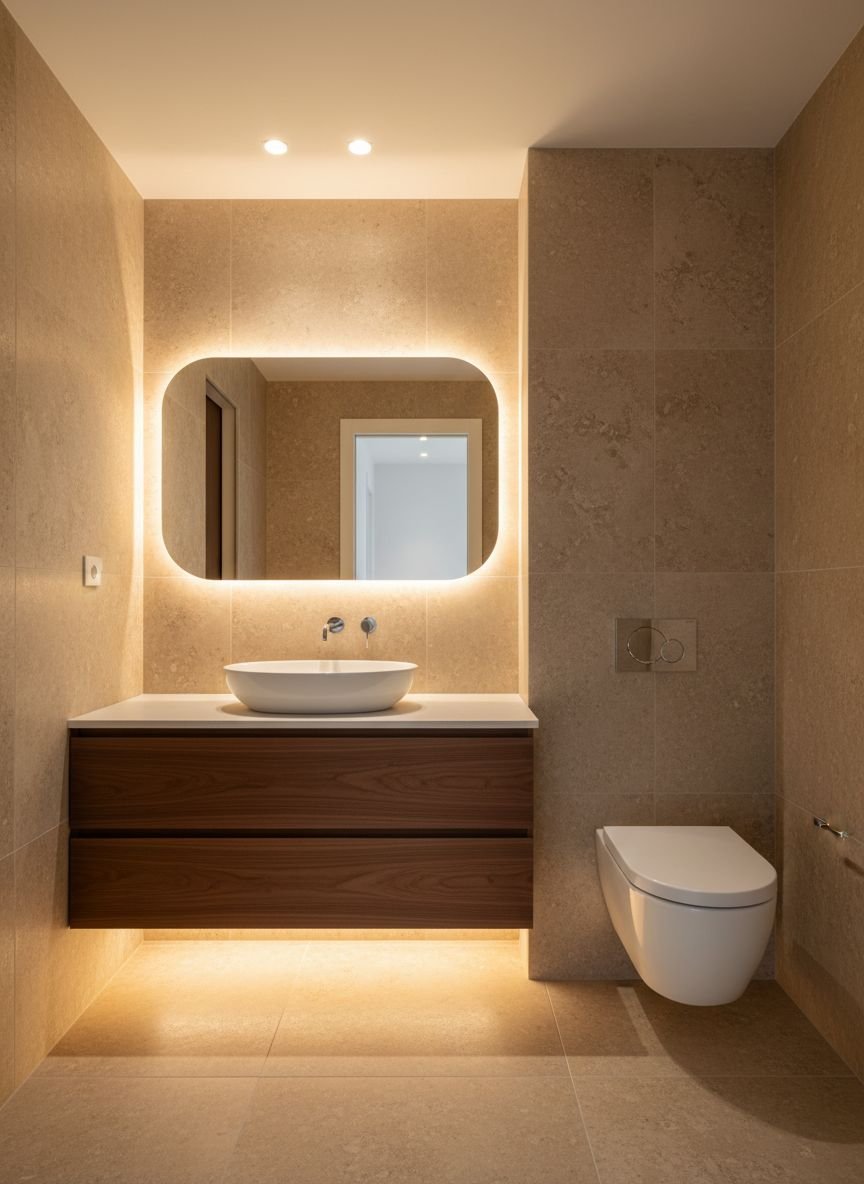
Mirrors are the oldest trick in the designer’s book for a reason. They double the light and the visual depth. A sleek, frameless mirror that spans the entire wall above the vanity eliminates the visual “stop” of a frame. By reflecting the opposite wall, the mirror makes the room look twice as deep.
Position the mirror to reflect a window or a light source. This amplifies natural light, which is often scarce in powder rooms. For a seamless, high-end look, run the mirror all the way to the ceiling. This grand scale creates a sense of luxury and height. Tinted or antiqued glass can add character if you prefer a moodier, boutique hotel aesthetic, though clear glass remains best for actual space expansion.
Pro Tip: Install a heated demister pad behind the mirror to keep it fog-free and functional in small, steamy bathrooms.
Save this idea to your Pinterest.
Sink Storage Solutions
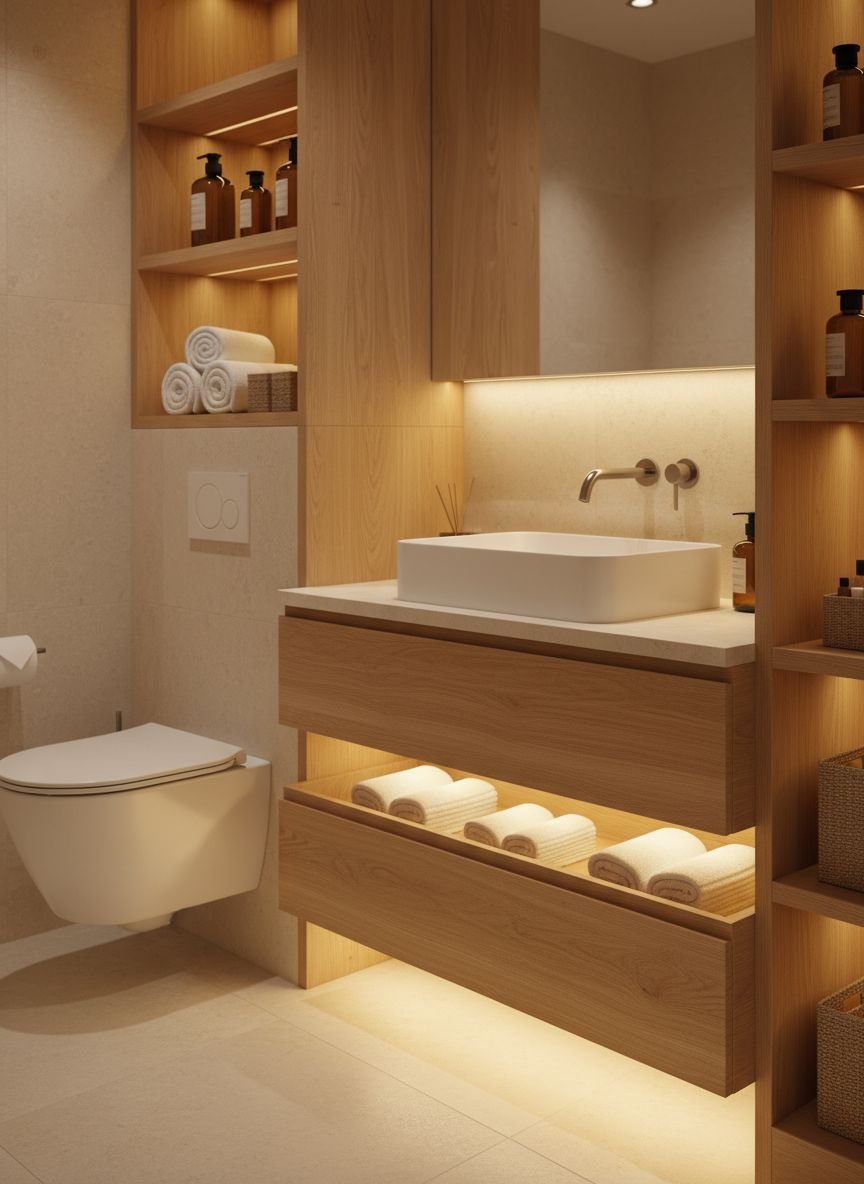
The pedestal sink is a classic space-saver, but it kills storage. The vanity cabinet is a storage hero, but it eats up floor space. The middle ground is the floating vanity. By mounting the cabinet to the wall and leaving the floor visible beneath, you maintain the open feel of a pedestal sink while keeping drawers for toiletries.
Under-sink organization requires ruthlessness in a small bath. Utilize roll-out drawers or door-mounted bins to capture dead space around the plumbing trap. If you must use a pedestal sink, consider a custom skirt or a rolling cart that slides underneath. The goal is to keep daily essentials hidden. Visual clutter on countertops shrinks a room faster than dark paint.
Pro Tip: Choose a vanity with a shallow depth (18 inches instead of the standard 21) to gain three crucial inches of walkway.
Comparison: Small Bathroom Flooring Options
| Material | Pros | Cons | Best For |
|---|---|---|---|
| Large Format Porcelain | Minimizes grout lines; expands space visually. | Harder to install in non-square rooms. | Modern, sleek looks. |
| Penny Tile | High grip; adds texture; flexible for slopes. | Lots of grout to clean. | Vintage/Retro styles. |
| Luxury Vinyl Plank (LVP) | Warm underfoot; waterproof; DIY friendly. | Can look cheap if pattern repeats often. | Budget makeovers. |
| Natural Stone | Luxurious; unique patterns. | Porous; requires sealing; expensive. | High-end spa vibes. |
Functional Towel Storage: Ladder Shelf
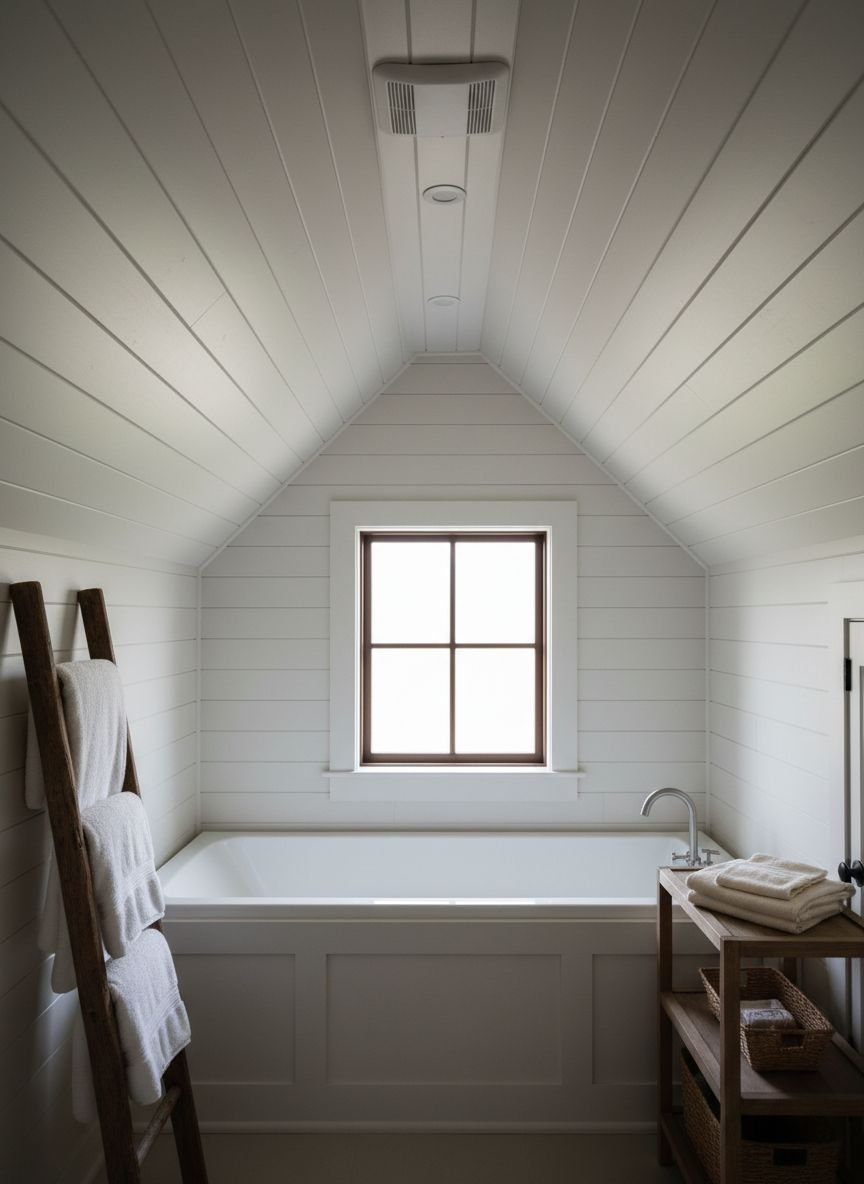
Drilling into tile is risky and permanent. A leaning ladder shelf offers flexible, rental-friendly vertical storage. It utilizes the “air space” above the toilet or on a narrow strip of wall that acts as dead space. The rungs provide perfect hanging spots for towels, while deeper shelves at the bottom can hold baskets for toilet paper or extra toiletries.
The open structure of a ladder shelf keeps the room feeling airy. Bulky cabinets block light and close in the walls. A wooden ladder adds warmth and organic texture to a bathroom full of cold ceramic and metal. You can paint it to match the walls for a monochromatic look that blends in, or stain it dark for a rustic contrast.
Pro Tip: Secure the top of the ladder to the wall with a small bracket to prevent tipping, especially in high-traffic zones.
Color-Changing LED Lighting for Small Bathrooms
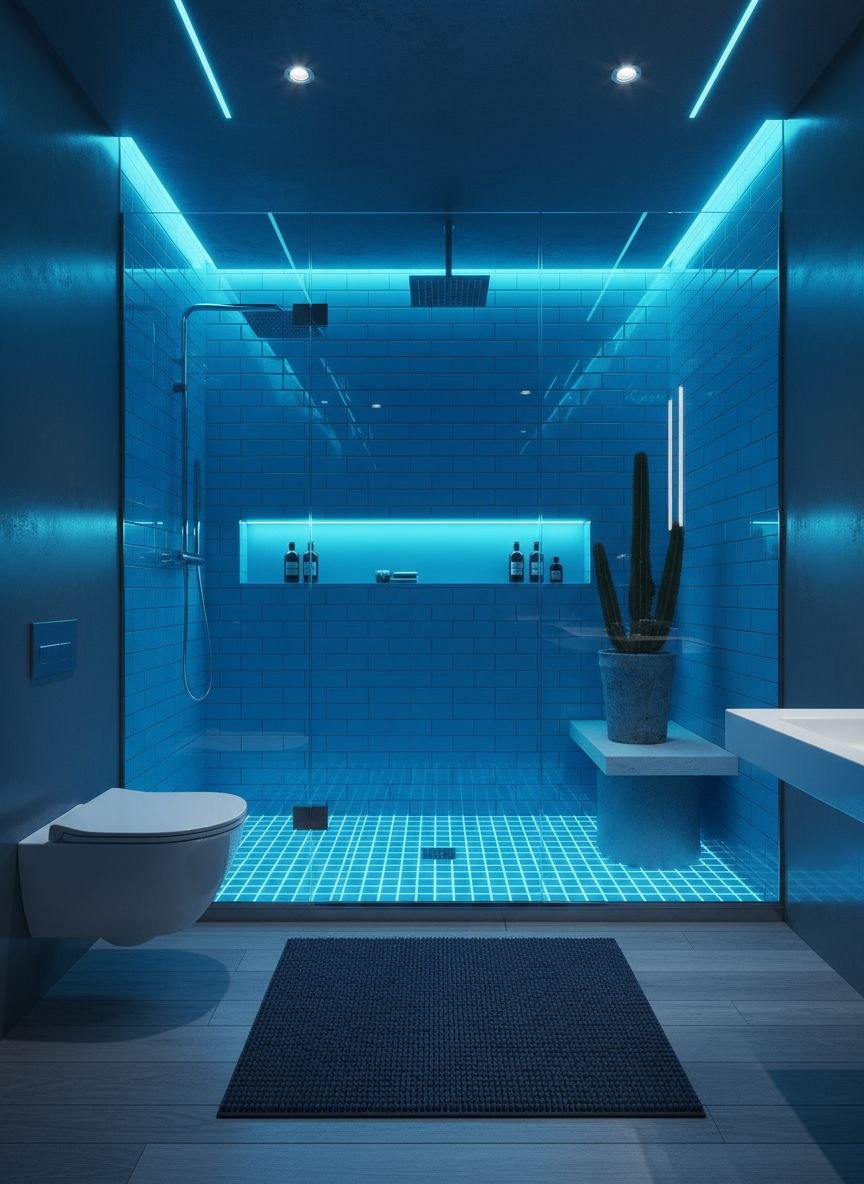
Lighting dictates the mood. In a small bathroom, a single overhead fixture casts unflattering shadows and makes the room feel cave-like. Smart LED strips hidden in coves, under floating vanities, or behind mirrors introduce layers of light. Color-changing capabilities allow you to shift the atmosphere from “bright white energizing morning” to “soft blue relaxing spa” with a voice command or phone tap.
Chromotherapy (color therapy) is a rising trend in wellness design. Soft ambers and reds promote sleep hormones for your evening routine. Cool whites mimic daylight for applying makeup. By tucking these lights into recesses, you wash the walls with light, pushing them outward visually. It creates a high-tech, custom look without the expense of rewiring the entire ceiling.
Pro Tip: Use waterproof IP65-rated LED strips for any lighting installed near the floor or under the vanity.
Decorative Wall Niches for Small Bathrooms
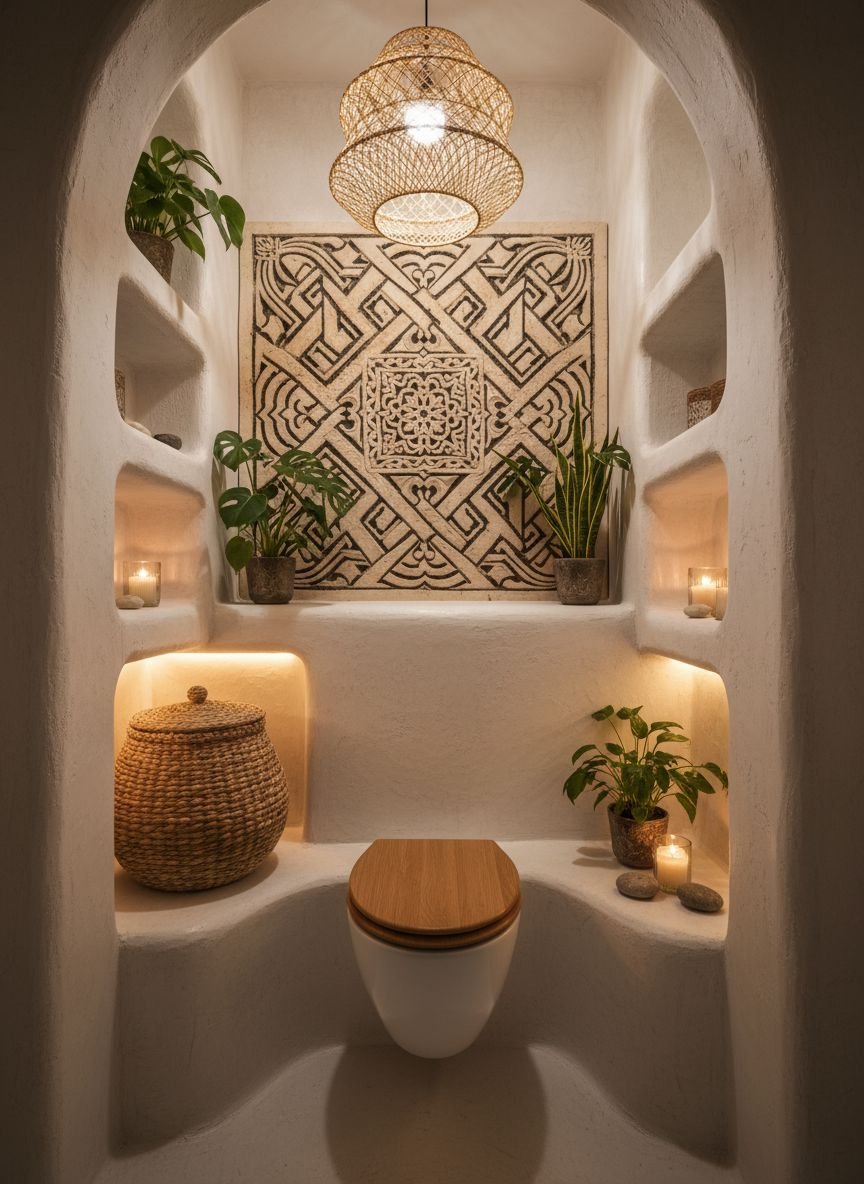
Protruding shower caddies invade your personal space. A recessed wall niche reclaims that space by utilizing the hollow area between wall studs. This is the ultimate sleek storage hack. It keeps shampoo bottles, soaps, and razors flush with the wall, maintaining clean lines and an uncluttered visual field.
Design the niche as a feature. Use a contrasting tile pattern inside the niche or frame it with a metal trim that matches your faucets. Lighting the niche with a small waterproof LED adds depth and drama. You can install niches outside the shower too—above the vanity or near the toilet—to replace protruding shelving units entirely.
Pro Tip: Ensure your contractor checks for plumbing or electrical lines in the wall cavity before framing out the niche.
Versatile Illuminated Vanity Mirror
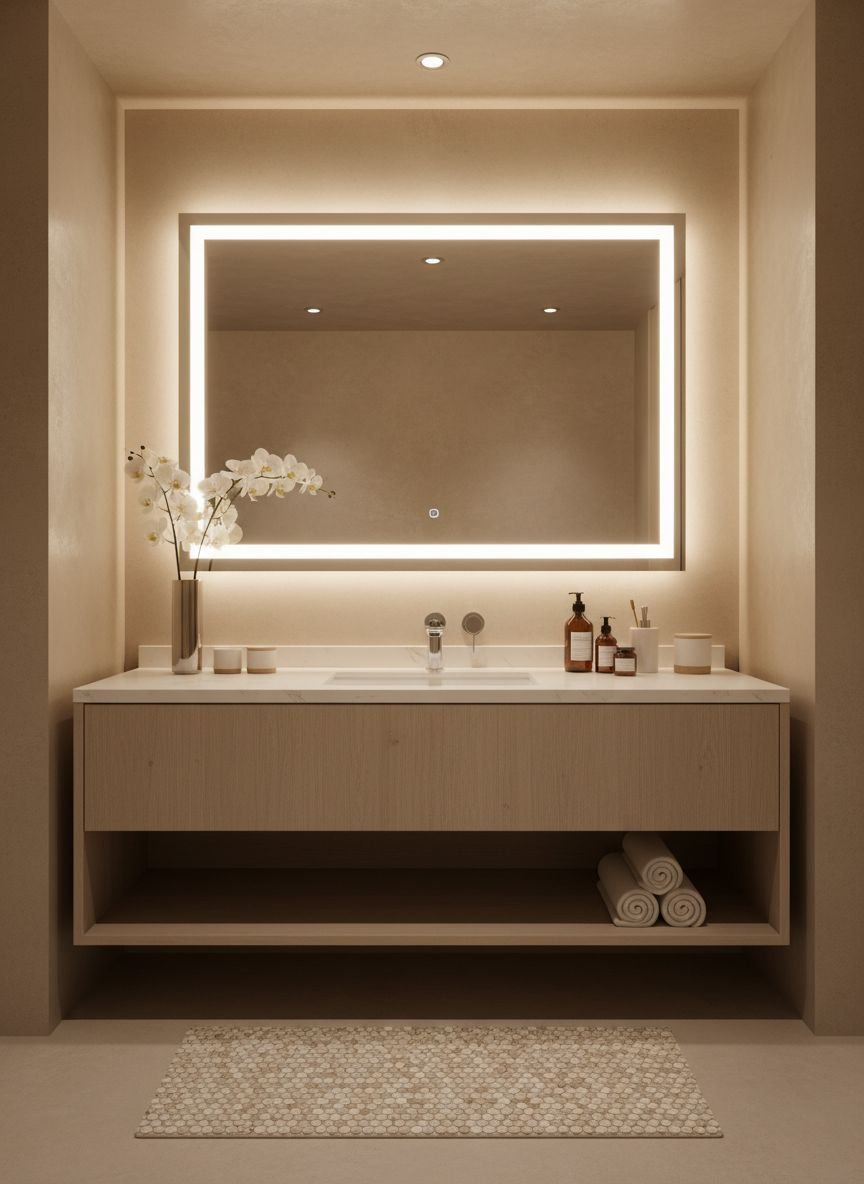
Sconces take up wall space. An illuminated vanity mirror integrates the lighting directly into the glass. This provides the most flattering, shadow-free light for grooming because the source comes from directly in front of you, not above. The clean, hardware-free look fits perfectly with minimalist and modern small bathroom designs.
These mirrors often come with anti-fog technology and dimming capabilities. The “halo” effect created by backlit mirrors adds a soft glow that bounces off the wall, creating ambient light that makes the room feel larger. It eliminates the need for a bulky light fixture above the mirror, allowing you to mount the mirror higher and emphasize vertical space.
Pro Tip: extensive hardwiring isn’t always needed; many newer models offer plug-in options if you have an outlet nearby.
Save this idea to your Pinterest.
Elevate: Recessed Speakers Enhance Ambiance
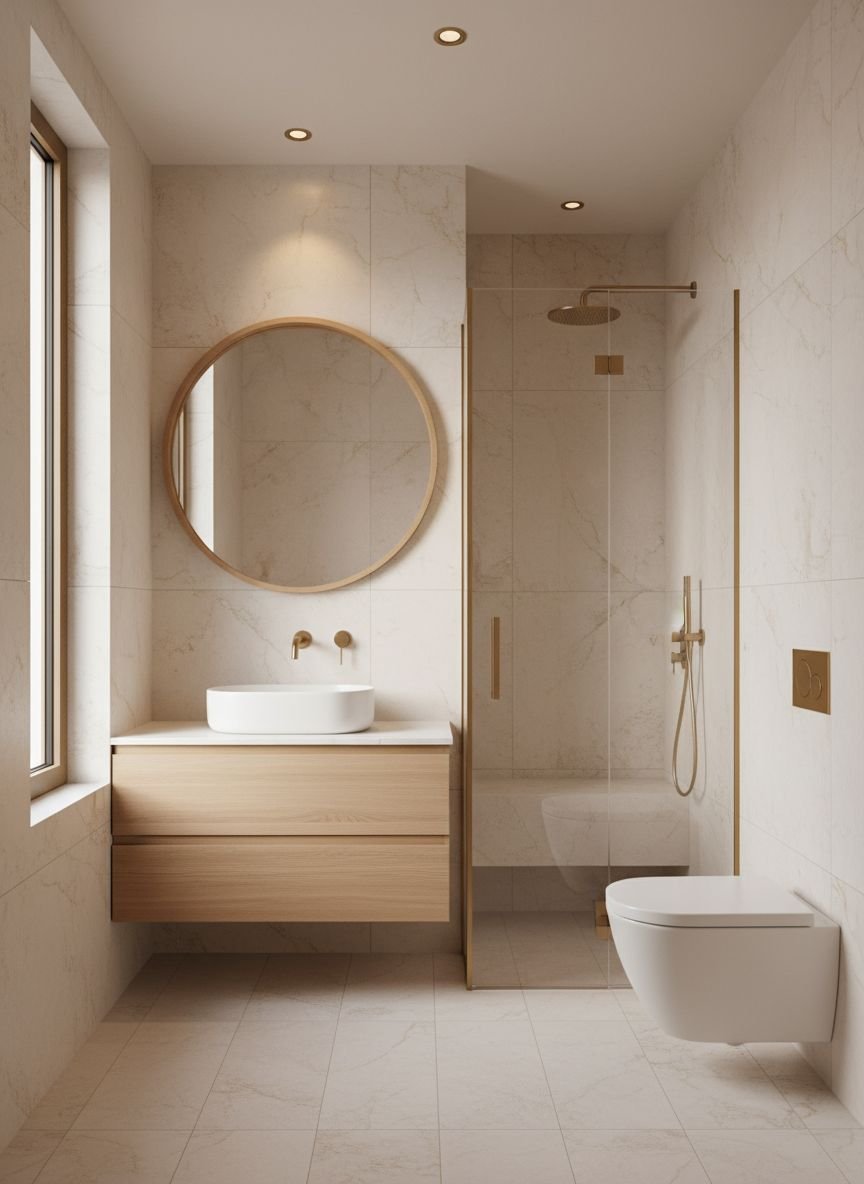
Luxury is an experience, not just a look. Audio integration transforms a cramped bathroom into a private escape. Portable Bluetooth speakers take up counter space and look messy. Recessed ceiling speakers flush-mount into the drywall, becoming invisible. They fill the room with immersive sound without adding visual clutter.
Connect these to your smart home system. Imagine starting your shower and having your “Morning News” or “Relaxing Jazz” playlist start automatically. For a tiny bathroom, a single stereo-input speaker is usually sufficient to provide rich sound. This upgrade increases the perceived value of the home significantly for a relatively low hardware cost.
Pro Tip: Look for “marine grade” or moisture-resistant speakers designed specifically for wet environments to prevent corrosion.
Related posts :
- 21 Beautiful Bathroom Decor Ideas You Will Love! (2026 Trend Guide)
- 15 Stunning Small Living Room Ideas to Transform Your Apartment Space
- 26 Living Room Mirror Ideas Designers Swear By
Elevate Small Spaces with Style
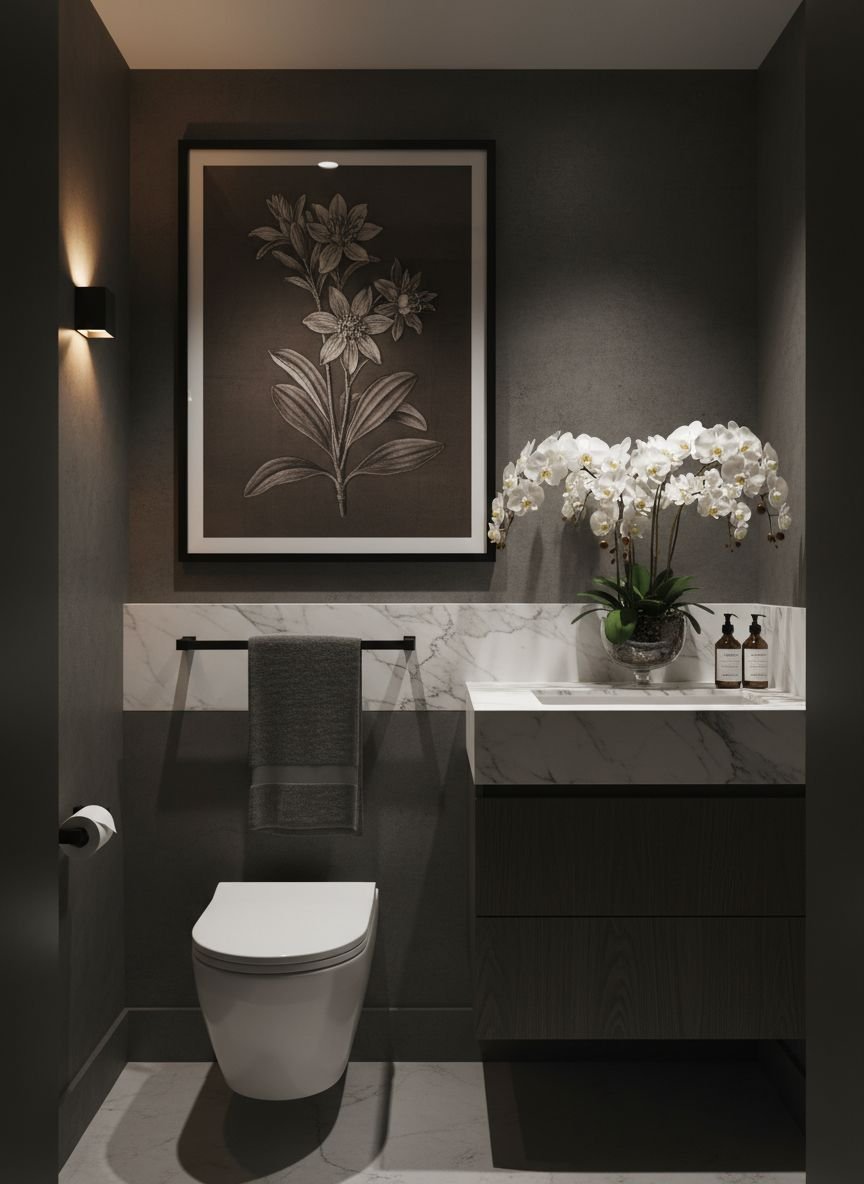
Floor space is the currency of small bathrooms. The more floor you see, the bigger the room feels. Wall-hung toilets and floating vanities are the gold standard for this “elevation” strategy. By lifting these heavy fixtures off the ground, you allow the flooring material to extend all the way to the wall. This unbroken plane of flooring tricks the eye into perceiving a larger total area.
Cleaning becomes effortless with elevated fixtures. There are no nooks or crannies around the toilet base to trap dust. This style leans heavily into European modern design. It requires an in-wall tank system for the toilet, which does involve some framing work, but the payoff is a bathroom that feels lighter, cleaner, and significantly more spacious.
Pro Tip: Install motion-sensor under-cabinet lighting beneath the floating fixtures to enhance the floating effect at night.
Farmhouse Flair: Shiplap Bathroom Walls
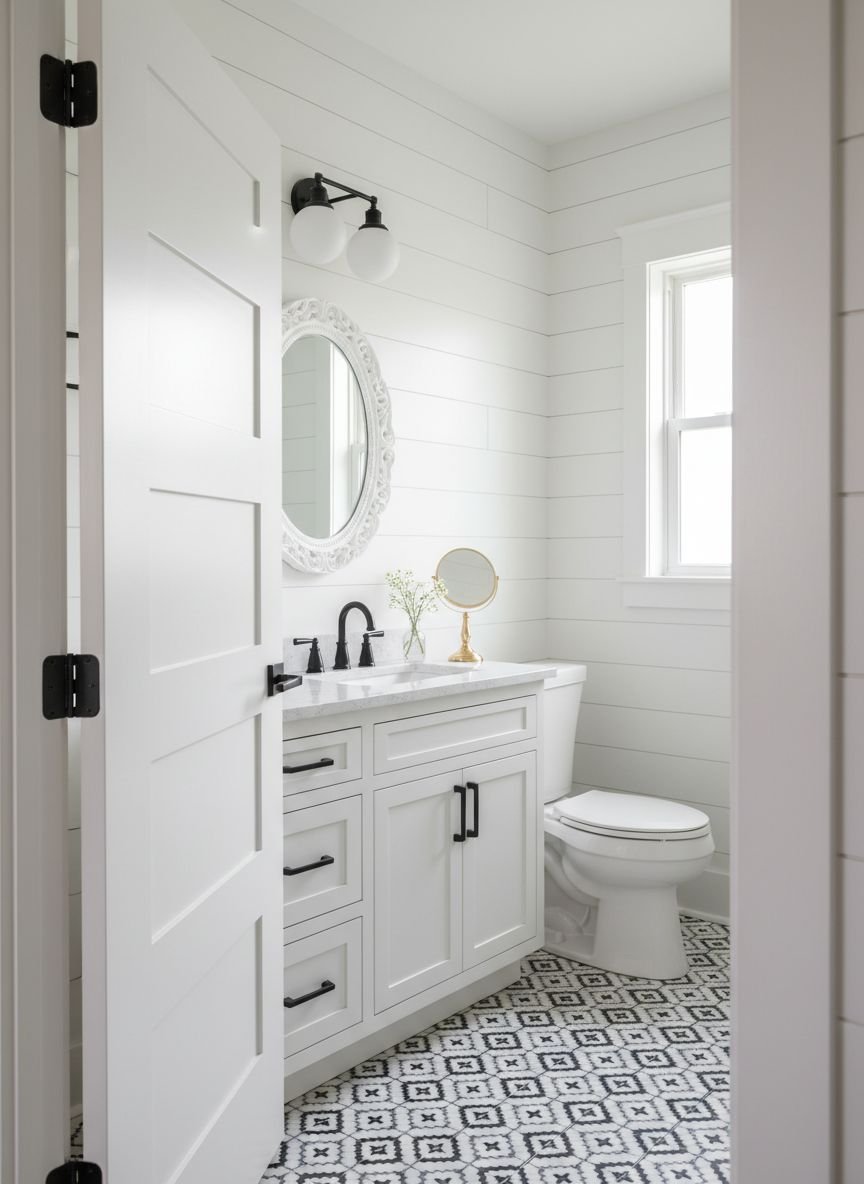
Texture hides flaws and adds interest without bulk. Shiplap—wooden boards installed with a slight gap—introduces horizontal lines that visually widen a narrow room. While often associated with rustic farmhouse style, shiplap painted in crisp white or moody charcoal works in modern and coastal bathrooms too.
Run the boards horizontally to stretch the width of the room. If you have low ceilings, run them vertically to draw the eye up. Unlike tile, wood adds warmth and acoustic dampening. It is also much easier and cheaper to install than floor-to-ceiling tile. You can use PVC shiplap in high-moisture areas like bathrooms to avoid warping or rot issues associated with real wood.
Pro Tip: Use “nickel gap” spacing for a cleaner, more modern look compared to the wider gaps of traditional rustic shiplap.
Shower Head with Music Integration
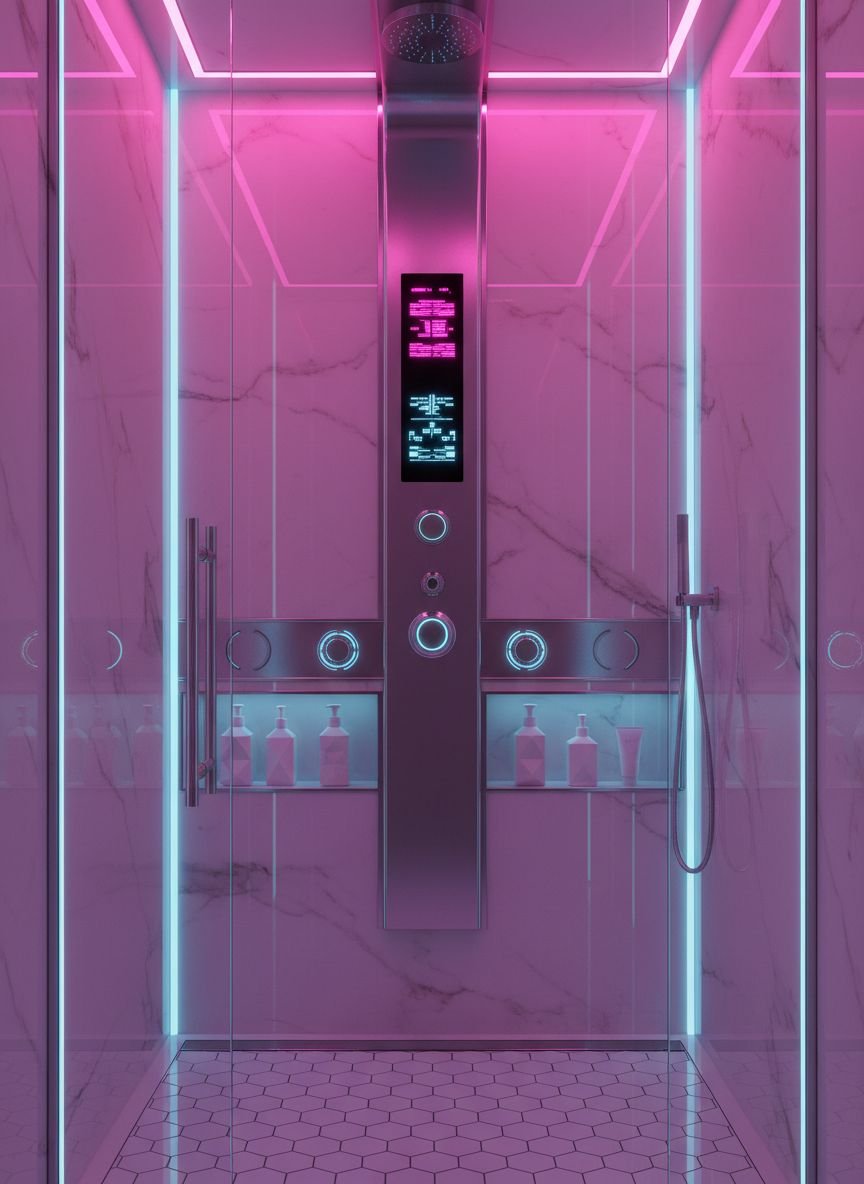
If cutting holes in your ceiling for speakers is not an option, the showerhead speaker is your answer. These innovative fixtures feature a magnetic, waterproof speaker that docks directly into the center of the showerhead. It delivers audio right where you are, overcoming the noise of running water.
This is a plug-and-play upgrade. You unscrew your old showerhead and screw this one on. No wiring, no drywall repair. It creates a luxury sensory experience instantly. Many models allow you to detach the speaker to use it elsewhere in the bathroom while you get ready. It merges tech and plumbing to save space and elevate your daily routine.
Pro Tip: Check the battery life of the speaker module; most last 5-7 hours and recharge via USB.
Light-Friendly Privacy Solutions
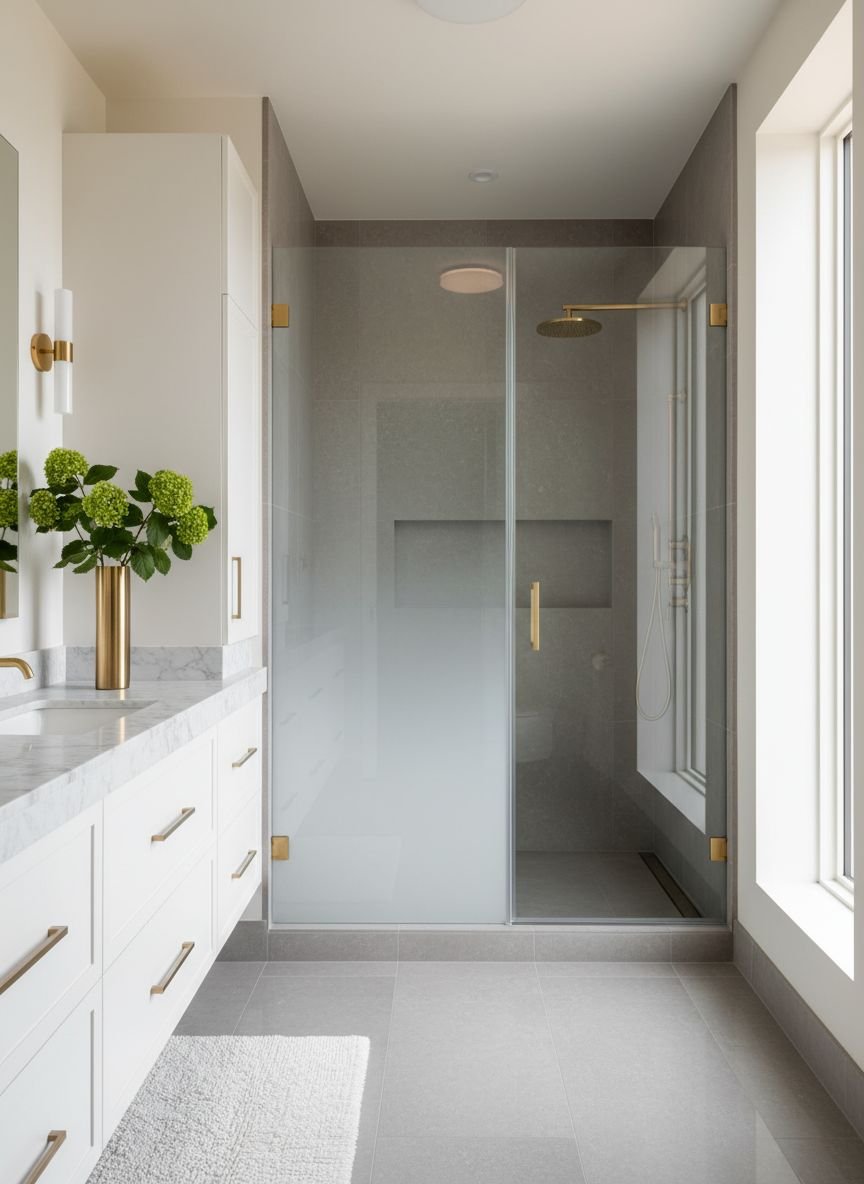
Small bathrooms often have small windows (or none). Blocking that natural light with heavy curtains or blinds makes the space feel like a coffin. You need privacy without darkness. Frosted glass film is an inexpensive, easy-to-apply solution that obscures the view while letting 90% of the light pass through.
For a more permanent solution, consider “top-down, bottom-up” cellular shades. You can lower the top half to let light in while keeping the bottom half covered for privacy. Smart glass (switchable glass) is the high-end option, turning from clear to opaque with the flip of a switch. Maximizing natural light makes the room feel airy and open.
Pro Tip: If you have no window, install a “solar tube” or skylight to tunnel natural light from the roof down into the bathroom.
Save this idea to your Pinterest.
Modern Geometric Wallpaper Ideas
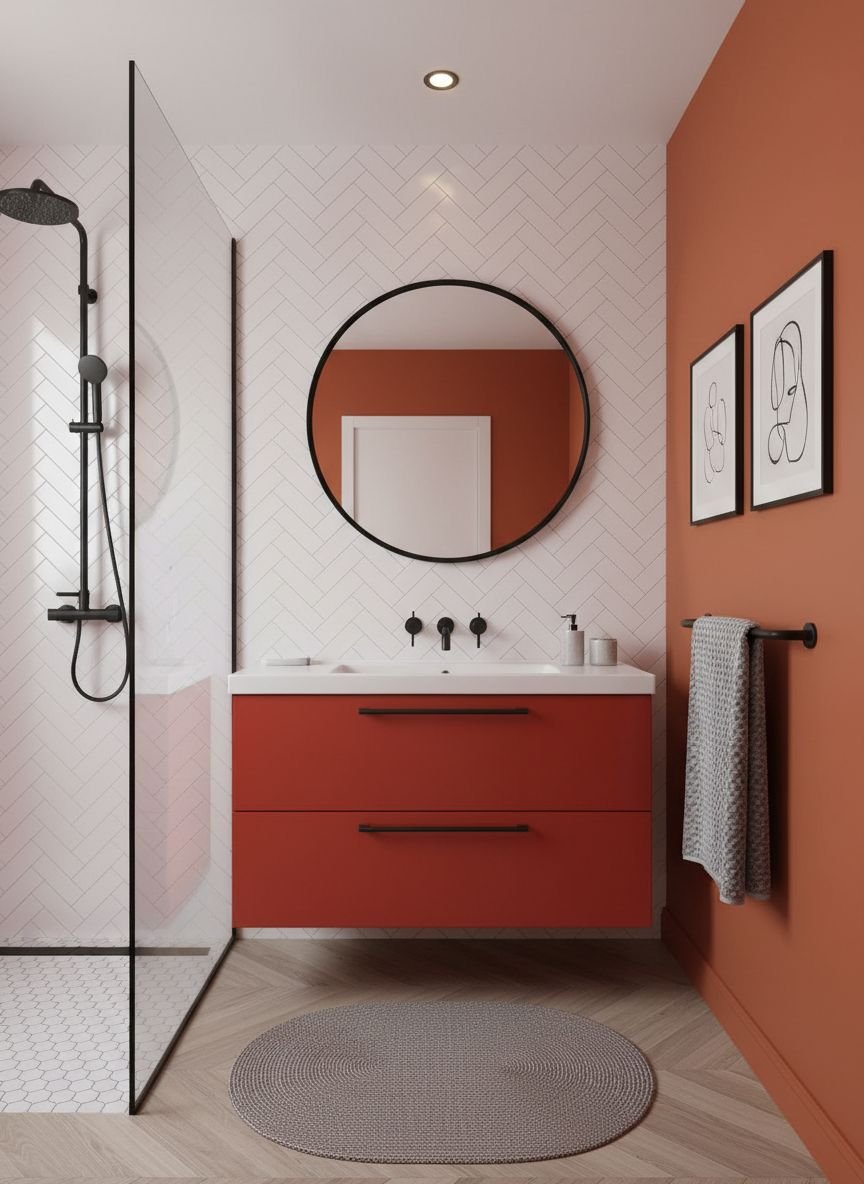
Powder rooms are the perfect place to take risks. A bold, geometric wallpaper creates a jewel-box effect. In a small space, a busy pattern blurs the corners of the room, making it hard to tell where the walls end. Large-scale geometric prints can actually make a small wall feel grand, whereas tiny prints can sometimes look cluttered.
Peel-and-stick wallpaper makes this a low-risk upgrade. You can try a bold botanical or an Art Deco geometric pattern for a year, then swap it out. Pair a busy wallpaper with simple, solid-colored fixtures to avoid visual overload. The wallpaper acts as the art, eliminating the need for hanging picture frames that protrude into the room.
Pro Tip: Use a vinyl-based wallpaper specifically designed for bathrooms to withstand humidity and prevent peeling.
Popular Asked Questions
how do you arrange a tiny bathroom?
The best layout for a tiny bathroom places the sink and toilet on the same long wall to open up a walkway. Use a corner shower or a rounded vanity to soften sharp angles that block flow. Keep the center of the room clear.
what colors make a small bathroom look bigger?
Light, cool colors like white, soft gray, and pale blue reflect the most light, making walls recede. However, high-contrast black and white can also blur boundaries. Painting the ceiling the same color as the walls prevents the visual “cap” that makes a room feel short.
is a bathtub or shower better for a small bathroom?
A walk-in shower with a glass door is generally better for maximizing space. It removes the visual bulk of a tub wall. However, if you must have a tub, a “wet room” setup where the tub is inside the shower zone is the most space-efficient layout.
how to add storage to a small bathroom without clutter?
Utilize vertical space. Install shelves above the door, use a ladder shelf over the toilet, and choose a vanity with drawers rather than doors. Recessed wall niches are the best way to add storage that doesn’t physically intrude into the room.
Conclusion
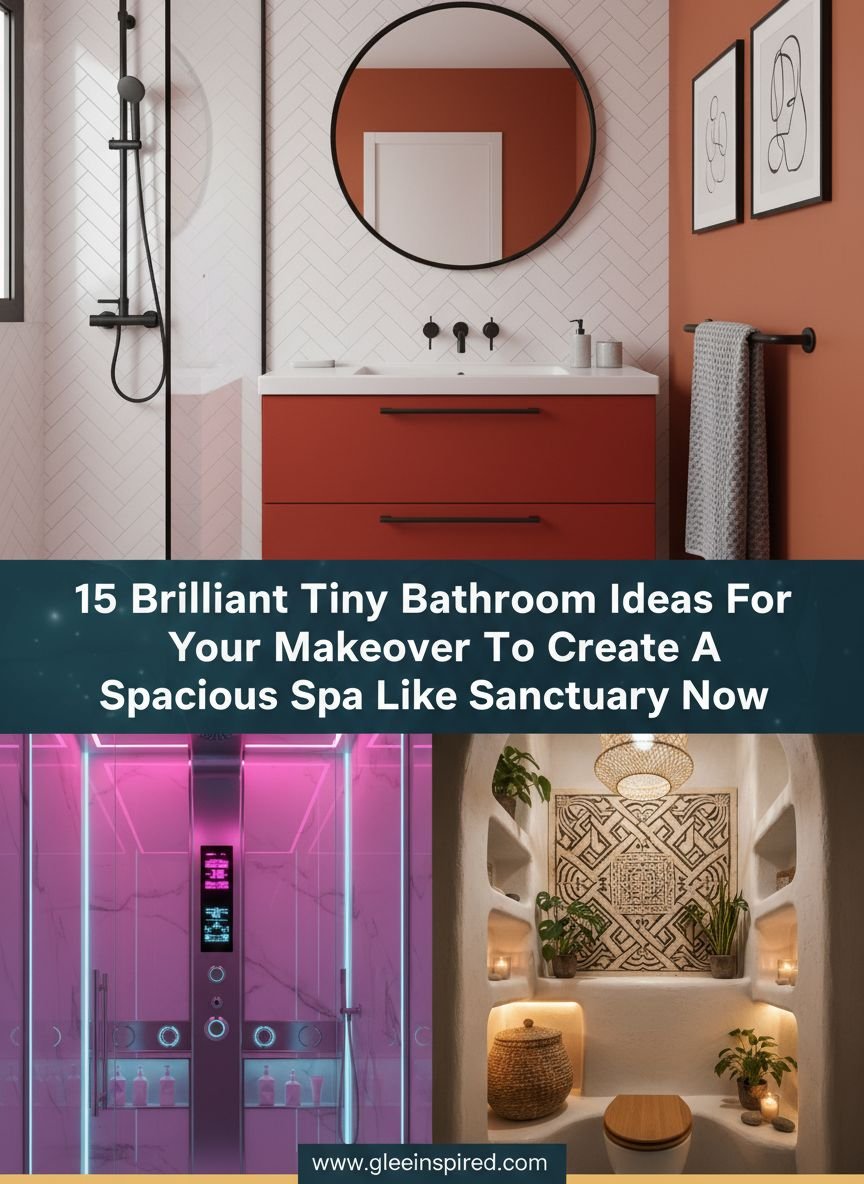
A tiny bathroom makeover does not require moving walls; it requires moving your perspective. By embracing vertical storage, smart lighting, and visual tricks like continuous flooring and large mirrors, you turn a cramped closet into a functional sanctuary. These 15 genius tiny bathroom ideas prove that style is not measured in square footage.

Leave a Comment