
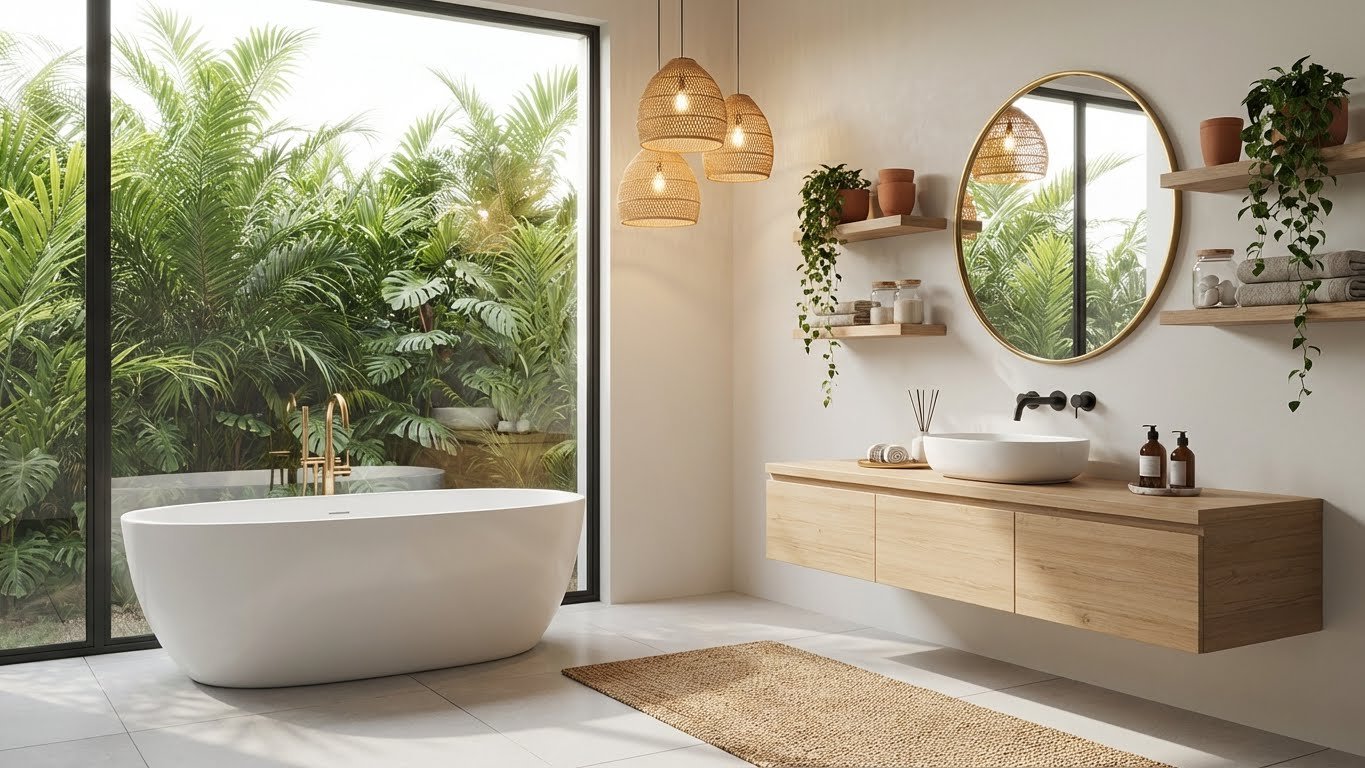
You want a bathroom that feels like a sanctuary, not just a utility closet. We know the struggle: outdated tiles, cramped layouts, and lighting that does you no favors. You are looking for a change that brings peace, style, and functionality to your morning routine.
This guide delivers exactly that. We have curated the most stunning, high-retention bathroom decor ideas trending right now. From clever storage hacks for tiny apartments to spa-like luxury upgrades for your master suite, these ideas are designed to solve your design problems instantly. You will find actionable tips to transform your space into a personal retreat without needing a full demolition crew.
Key Takeaways
- Texture Over Color: The biggest trend for 2026 is using tactile materials like stone, wood, and woven fabrics to create depth rather than relying solely on paint.
- Verticality is Vital: In small spaces, drawing the eye upward with floor-to-ceiling tile or high shelving maximizes perceived space.
- Lighting Layers: Relying on a single overhead light is out. Sconces and mood lighting are essential for a “spa” atmosphere.
- Biophilic Design: Plants are no longer optional; they are a core element for softening the hard lines of ceramic and porcelain.
- Warm Neutrals: Stark white is being replaced by warm beiges, creams, and earthy terracottas for a cozier feel.
Table of Contents
- Modern Organic Aesthetic
- The Moody Powder Room
- Floating Vanities
- Vertical Tile Stacking
- Statement Vintage Rugs
- Biophilic Sanctuary
- Warm Brass Hardware
- Japandi Fusion Style
- The Curated Tray
- Wall-Mounted Faucets
- Amber Glass Uniformity
- Textured Limewash Walls
- Over-The-Toilet Ladders
- Sconces Framing Mirrors
- Freestanding Tub Focus
- Shower Niche Styling
- Eucalyptus Shower Bundles
- Bold Wallpaper Accents
- Minimalist Glass Partitions
- Art in the Bathroom
- Spa-Quality Towel Display
- Popular Asked Questions
- Conclusion
Modern Organic Aesthetic
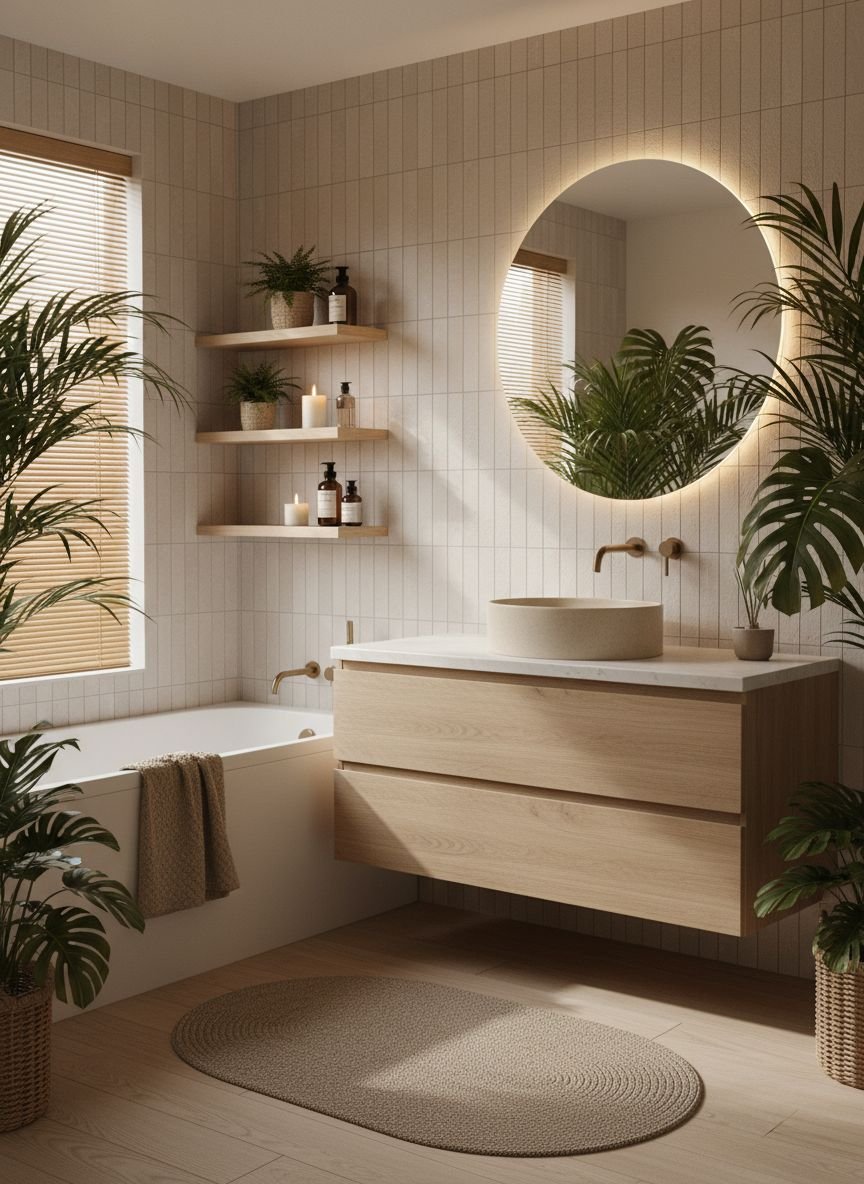
The modern organic look is dominating interior design because it bridges the gap between clean minimalism and warm comfort. This style relies heavily on natural materials to soften the harsh, cold surfaces typically found in bathrooms, such as porcelain and metal. You achieve this look by introducing raw wood elements, stone textures, and curved lines that mimic nature. The lighting should be soft, highlighting the imperfections in the materials rather than washing them out.
To implement this style, start with a neutral base palette of creams, warm greys, or soft beiges. Swap out a standard white vanity for one made of light oak or walnut with visible grain. Accessorize with stone soap dishes, woven baskets for laundry, and matte ceramic vases. The goal is to create a tactile experience where every surface invites touch. This aesthetic works particularly well in bathrooms because it inherently promotes relaxation and grounding, turning a quick shower into a calming ritual.
Pro Tip: Use a teak wood stool in the shower or next to the tub. It adds an instant spa vibe and provides a practical surface for books or candles.
Save this idea to your Pinterest.
The Moody Powder Room
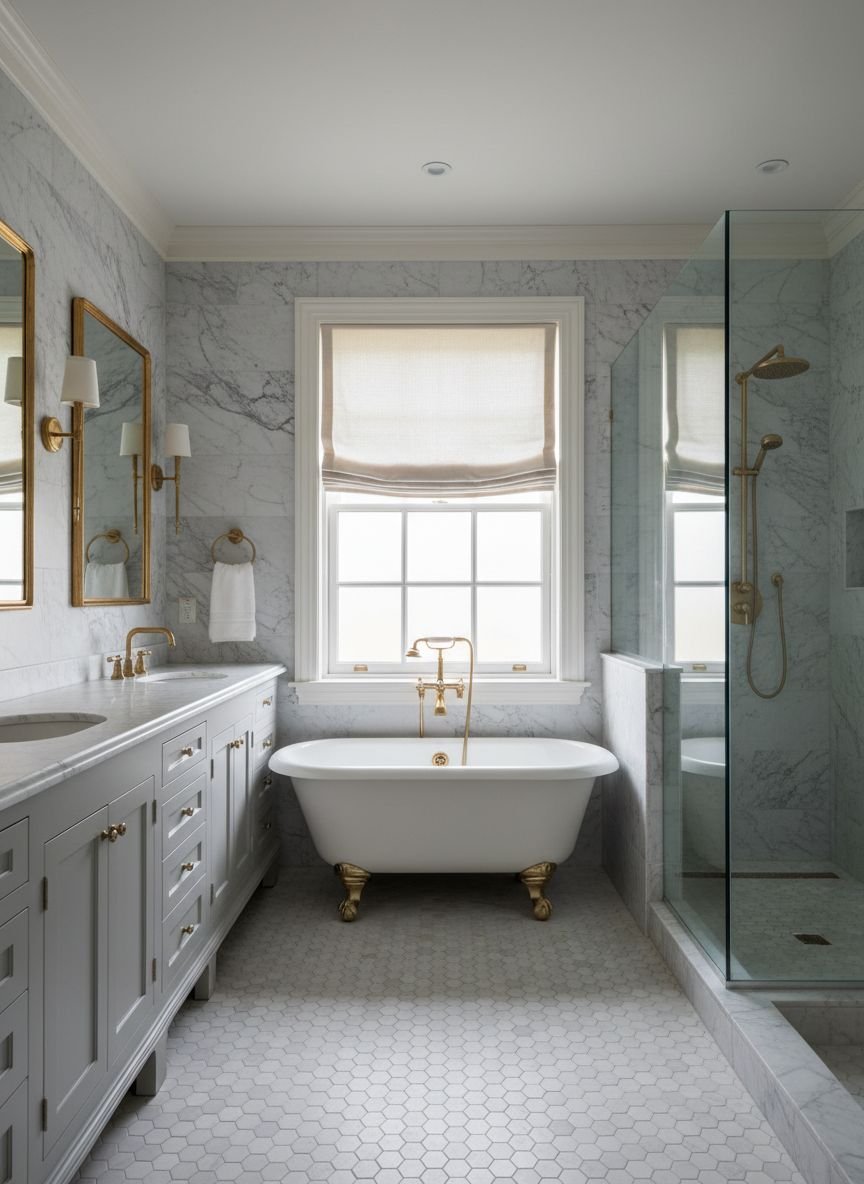
Small powder rooms are the perfect place to take design risks that might feel overwhelming in a larger space. The “moody” aesthetic embraces dark, rich colors like charcoal, navy, forest green, or even black. By wrapping the room in a deep hue—painting the walls, ceiling, and even the trim the same color—you blur the boundaries of the room. This optical illusion actually makes the small space feel infinite rather than cramped, creating a cozy, jewel-box effect.
Lighting is critical in a dark bathroom. You do not want a bright overhead light that creates harsh shadows. Instead, opt for low-wattage sconces or warm pendant lights that create a glow against the dark walls. Contrast the dark paint with metallic accents like unlacquered brass or polished nickel to catch the light. This high-contrast look feels incredibly luxurious and sophisticated, impressing guests immediately upon entry.
Pro Tip: Choose a paint with a satin or semi-gloss finish for dark walls. The slight sheen will reflect light and prevent the room from feeling flat or dead.
Floating Vanities
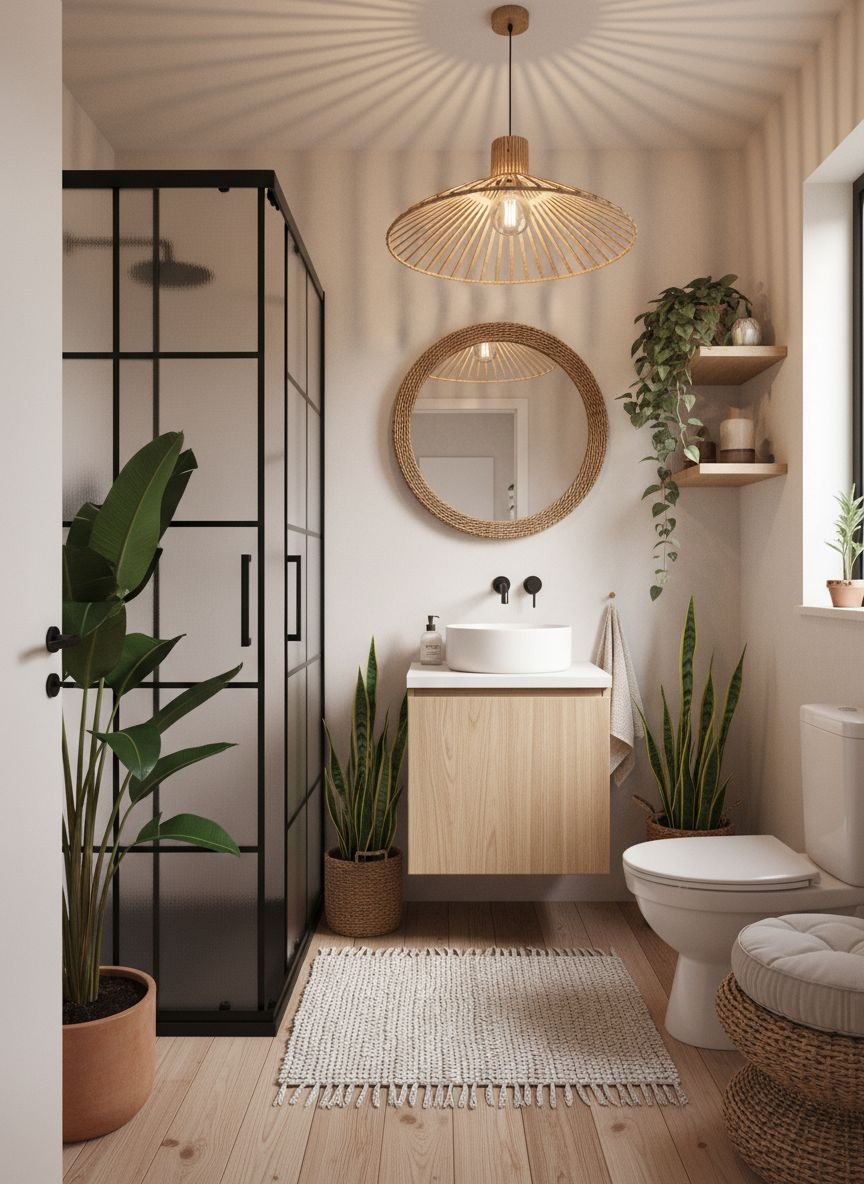
Floor space is a premium commodity in bathrooms, especially in apartments or guest baths. A floating vanity is mounted directly to the wall, leaving the floor area beneath it completely open. This simple design choice creates an uninterrupted line of sight across the floor, tricking the brain into perceiving the room as larger and airier. It removes the bulk of traditional cabinetry without necessarily sacrificing storage space, as many floating units feature deep drawers.
From a practical standpoint, floating vanities make cleaning significantly easier. You can sweep or mop all the way to the wall without navigating around awkward furniture legs. Visually, they lend a sleek, modern look that pairs well with minimalist or industrial decor. To style this, you can leave the space underneath empty for a clean look, or place woven baskets underneath to hold extra towels and toilet paper, adding texture to the sleek gap.
Pro Tip: Install motion-sensor LED strip lighting underneath the vanity. It acts as a perfect nightlight and adds a futuristic, high-end glow to the floor.
Vertical Tile Stacking
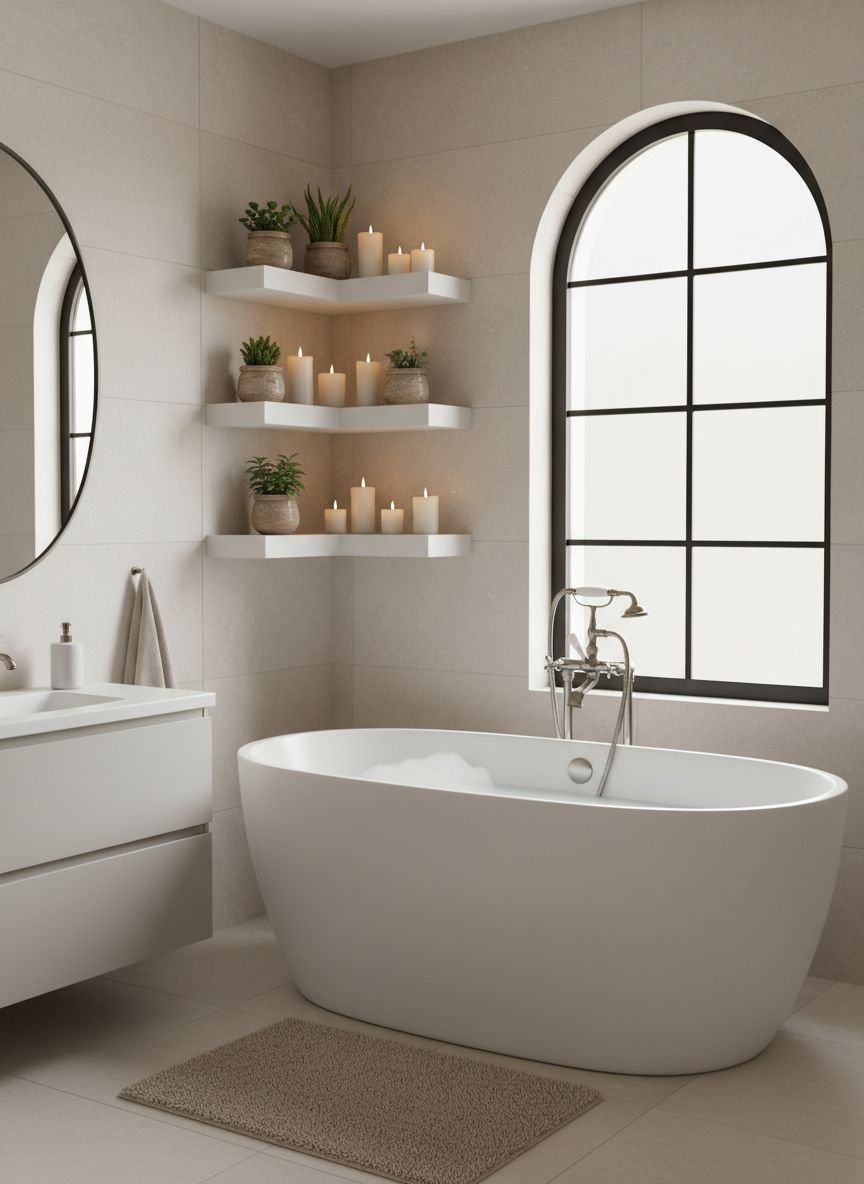
The way you lay your tile can completely alter the perceived proportions of your bathroom. The traditional “brick” pattern (horizontal offset) is classic, but stacking rectangular tiles vertically is a trend that creates height. By aligning the grout lines straight up and down, you draw the eye upward toward the ceiling. This is a powerful visual trick for bathrooms with low ceilings or small footprints, as it emphasizes verticality and makes the room feel grander.
This technique works with standard subway tiles, making it a budget-friendly way to achieve a high-design look. You can enhance the effect by using a contrasting grout color—dark grey grout with white tile, for example—to make the vertical lines pop. This linear structure adds a sense of order and modernity to the space. It works exceptionally well in shower enclosures or as a wainscoting feature behind the vanity.
Pro Tip: Take the tile all the way to the ceiling. Stopping halfway up the wall cuts the visual line; going to the top maximizes the height illusion.
Statement Vintage Rugs
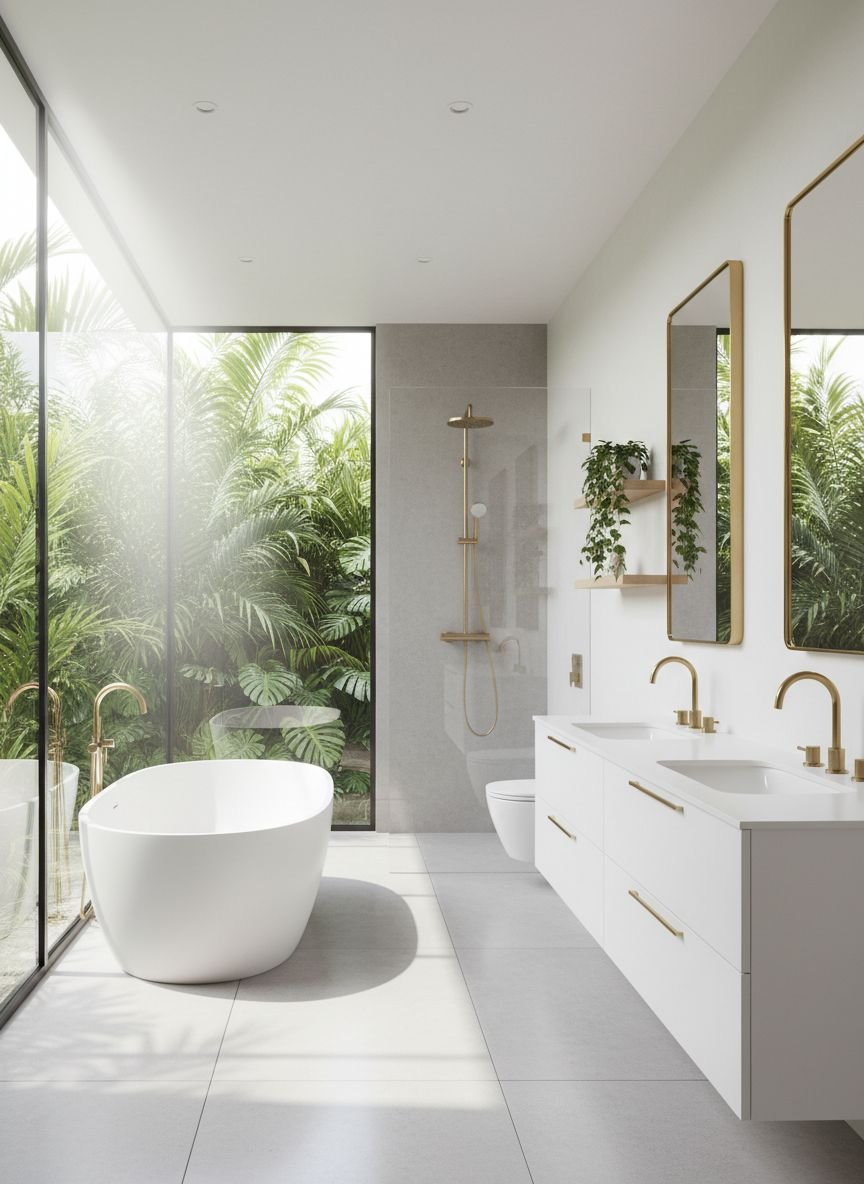
Bath mats are functional, but vintage runners are transformational. Replacing a standard, fluffy looped bath mat with a Persian or Turkish-style runner adds immediate soul and character to a bathroom. These rugs introduce complex patterns and rich colors that are often missing in sterile, tiled environments. The juxtaposition of a worn, soft wool rug against hard, shiny ceramic or marble floors creates a sophisticated “lived-in” aesthetic that feels curated rather than generic.
When choosing a rug, look for low-pile options, as they dry faster and are easier to clean. While genuine vintage rugs can be an investment, many washable synthetic options now mimic the distressed look perfectly. This decor choice anchors the room, warms up cold floors, and provides a soft landing for bare feet. It bridges the gap between the bathroom and the rest of your home’s decor, making it feel like a true living space.
Pro Tip: Use a high-quality rug pad underneath. It prevents slipping on wet floors and adds an extra layer of plushness underfoot.
Save this idea to your Pinterest.
Comparison: Paint vs. Wallpaper in Bathrooms
| Feature | Paint | Wallpaper |
|---|---|---|
| Durability | High (with proper sheen) | Moderate (needs ventilation) |
| Cost | Low ($30-$60) | Medium/High ($100+) |
| Installation | Easy DIY | Requires precision/patience |
| Visual Impact | Clean, solid color | Pattern, texture, drama |
| Best For | High-humidity showers | Powder rooms & half baths |
Biophilic Sanctuary
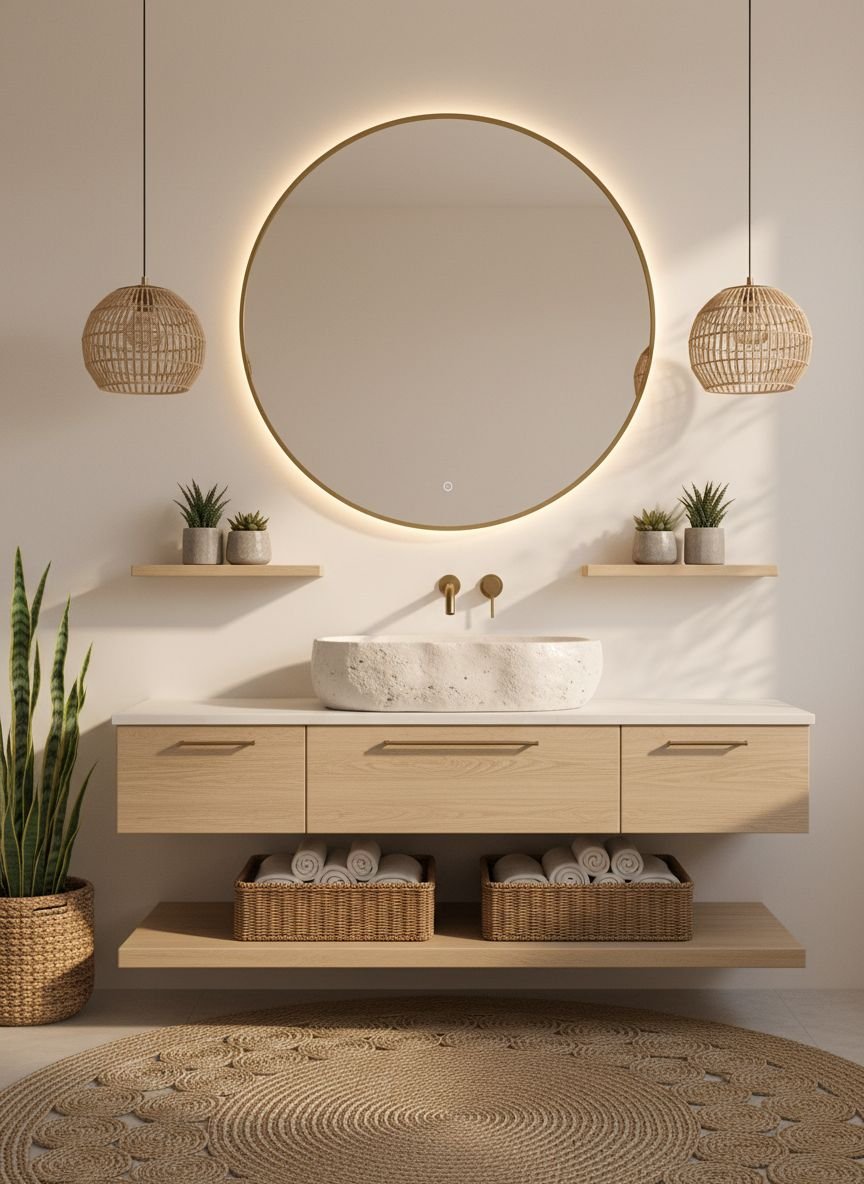
Biophilic design is the concept of connecting indoor spaces with the natural world. In a bathroom, this means more than just placing a succulent on the windowsill. It involves creating a lush, green environment that thrives on humidity. Plants soften the acoustics of a tiled room, clean the air, and introduce organic shapes that break up the rigid straight lines of showers and countertops. The visual of vibrant green against white or grey tile is instantly refreshing and calming.
To execute this, assess your lighting. If you have a window, hanging plants like Pothos or Ferns are excellent choices as they love moisture and indirect light. For windowless bathrooms, consider high-quality faux plants or hardy varieties like Snake Plants that tolerate low light. You can hang planters from the ceiling to save counter space or install a dedicated shelf for a “living wall” effect. The presence of greenery triggers a psychological response of relaxation, essential for a spa-like atmosphere.
Pro Tip: Place a bundle of fresh eucalyptus over your shower head. The steam releases natural oils that smell like a high-end spa and clear your sinuses.
Warm Brass Hardware
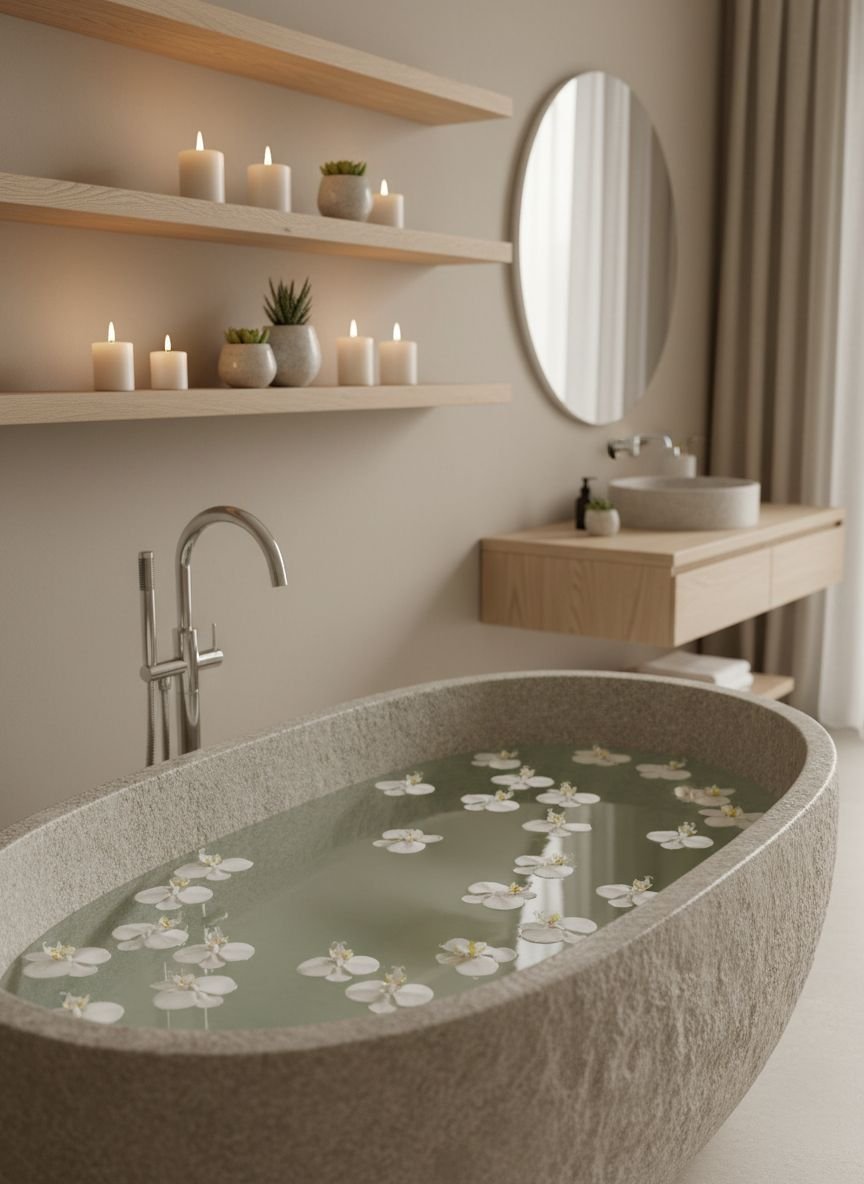
Chrome and brushed nickel have been the standard for decades, but warm brass and gold tones are the key to warming up a modern bathroom. Cool-toned bathrooms (lots of white, grey, and marble) can feel clinical. swapping your faucets, cabinet pulls, and towel bars to a brushed brass finish instantly adds warmth and a touch of vintage elegance. It acts as “jewelry” for the room, providing a focal point that catches the eye.
The finish matters here. Avoid shiny, yellow-lacquered brass which can look cheap. Opt for “champagne bronze,” “aged brass,” or “unlacquered brass” which develops a patina over time. You do not need to change every single metal element; mixing metals is a chic design move. For example, you can keep a black shower frame but use brass for the vanity hardware and light fixtures. This layered approach feels custom and high-end.
Pro Tip: If you are renting, you can swap out cabinet knobs for brass ones and put the old ones back when you move. It is a reversible upgrade with massive impact.
Japandi Fusion Style
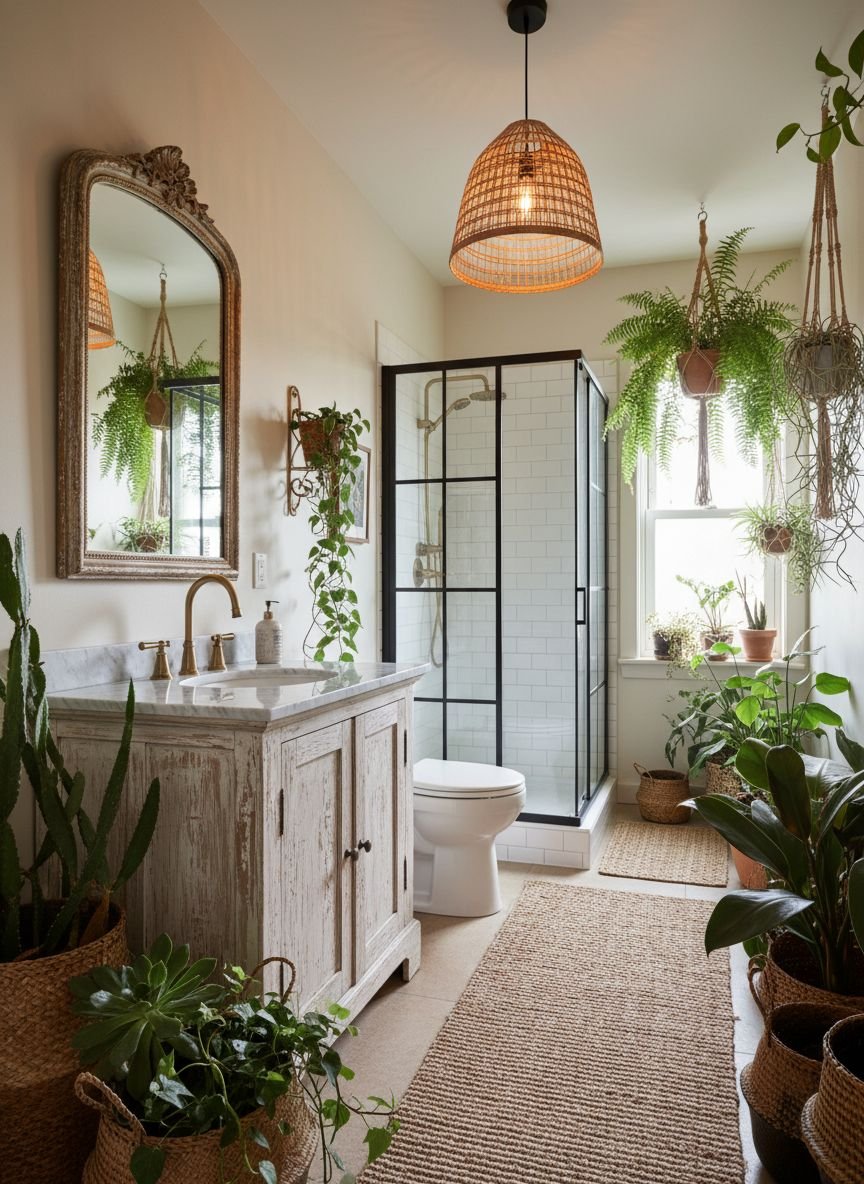
Japandi is the harmonious hybrid of Japanese rustic minimalism and Scandinavian functionality. This style is perfect for bathrooms because both design philosophies prioritize simplicity, natural elements, and clutter-free living. The color palette is muted and earthy—think stone greys, pale woods, cream, and soft black. The furniture features clean lines but low profiles, emphasizing a grounded feeling.
To achieve this look, focus on “intentional emptiness.” Clear your counters of everything except the essentials. Use storage solutions made of bamboo, rattan, or light wood to hide clutter. The textures should be matte and rough-hewn rather than glossy and polished. A Japandi bathroom feels serene and uncluttered, allowing your mind to rest. It is less about decoration and more about the beauty of the materials themselves and the space between them.
Pro Tip: Incorporate a wooden slat wall or a bamboo bath mat. The linear wood texture is a hallmark of Japandi design and adds warmth to the walls or floor.
The Curated Tray
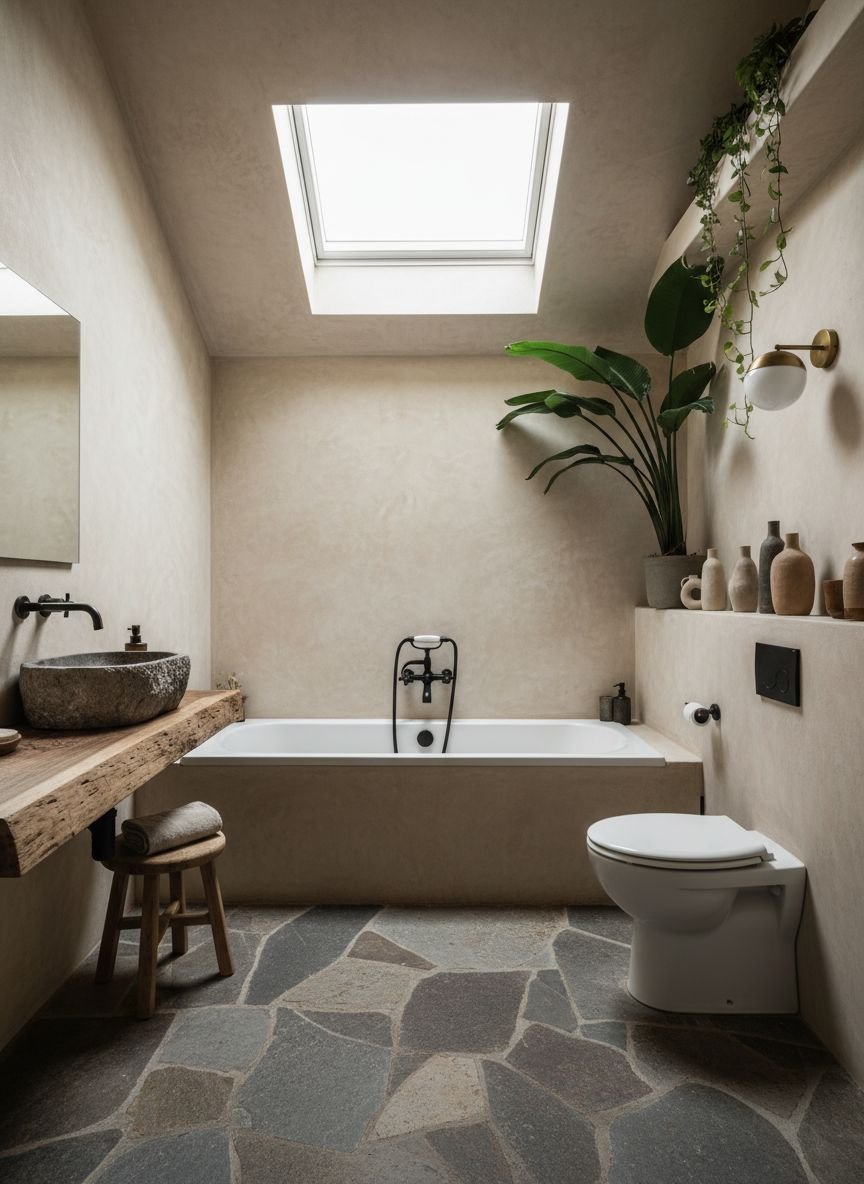
One of the secrets to a tidy bathroom is the concept of “corraling.” When small items like perfumes, lotions, and jewelry are scattered across a counter, it looks like clutter. When those same items are placed on a beautiful tray, it looks like a deliberate style vignette. A tray defines a zone for small objects, keeping the rest of the vanity surface clear and open.
Choose a tray that contrasts with your countertop. If you have white marble counters, choose a wood or dark slate tray. If you have a dark vanity, a white marble or brass tray looks stunning. Arrange items in groups of three (the rule of odds) with varying heights—for example, a tall vase, a medium lotion bottle, and a small ring dish. This simple addition makes your daily essentials look like a display in a boutique hotel.
Pro Tip: Add a small candle or a single flower stem to the tray. It adds a “living” element that prevents the display from looking too static or utilitarian.
Wall-Mounted Faucets
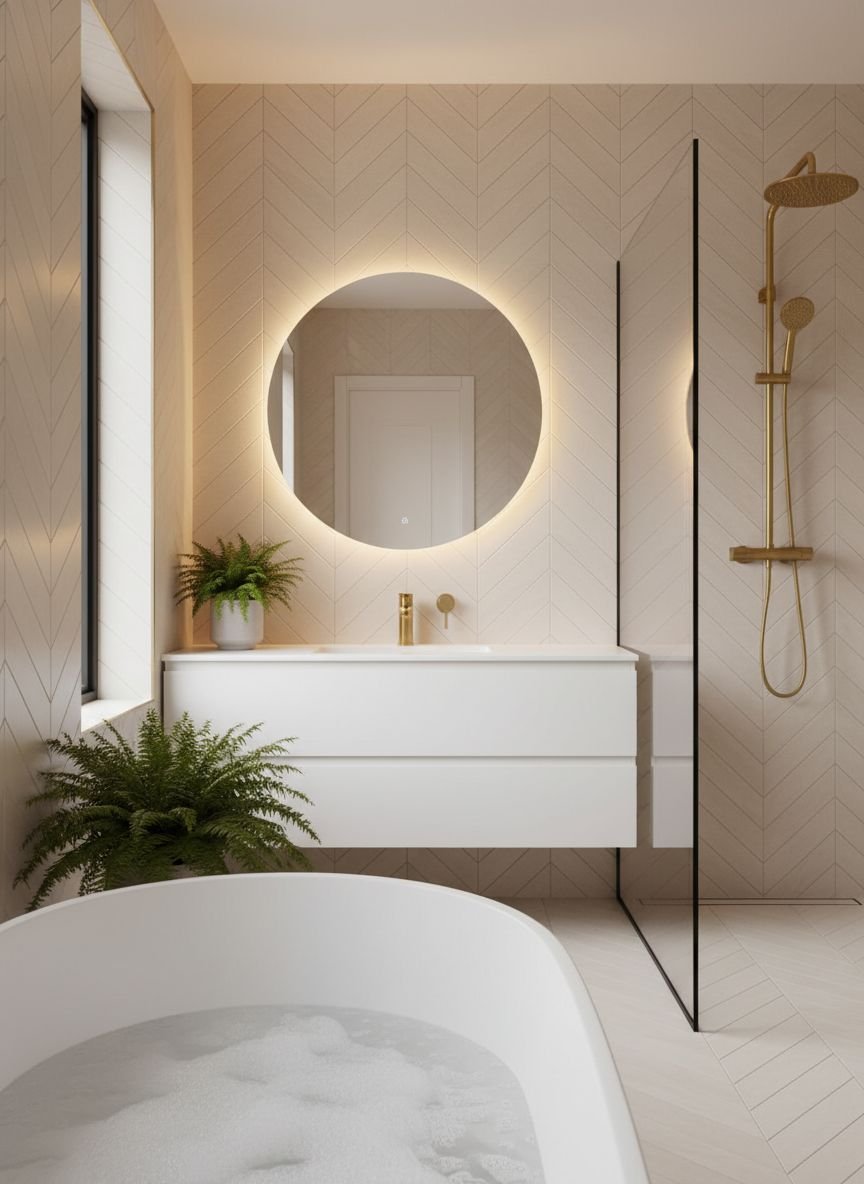
Moving your faucet from the sink deck to the wall is a design choice that screams luxury. Wall-mounted faucets save precious counter space, making them ideal for narrow vanities or small powder rooms. They also make cleaning the sink area incredibly easy, as there is no base plate or handles gathering grime and hard water deposits at the back of the sink.
Visually, a wall-mounted faucet acts as a piece of art. It draws the eye up to the backsplash, highlighting your tile choice. It requires some plumbing adjustment, so it is best tackled during a renovation, but the payoff is a sleek, custom look that sets your bathroom apart from builder-grade standards. Pair this with a vessel sink for a modern look, or an undermount sink for a seamless, minimalist aesthetic.
Pro Tip: Ensure you measure the “reach” of the spout carefully. The water stream should hit the center of the drain to prevent splashing, which is crucial with wall-mount installations.
Save this idea to your Pinterest.
Get The Look: Spa Essentials
- Waffle Weave Towels: Dries faster and adds texture.
- Amber Glass Bottles: Unifies mismatched product labels.
- Teak Shower Bench: Water-resistant seating and storage.
- Eucalyptus Bundle: Natural aromatherapy.
Amber Glass Uniformity
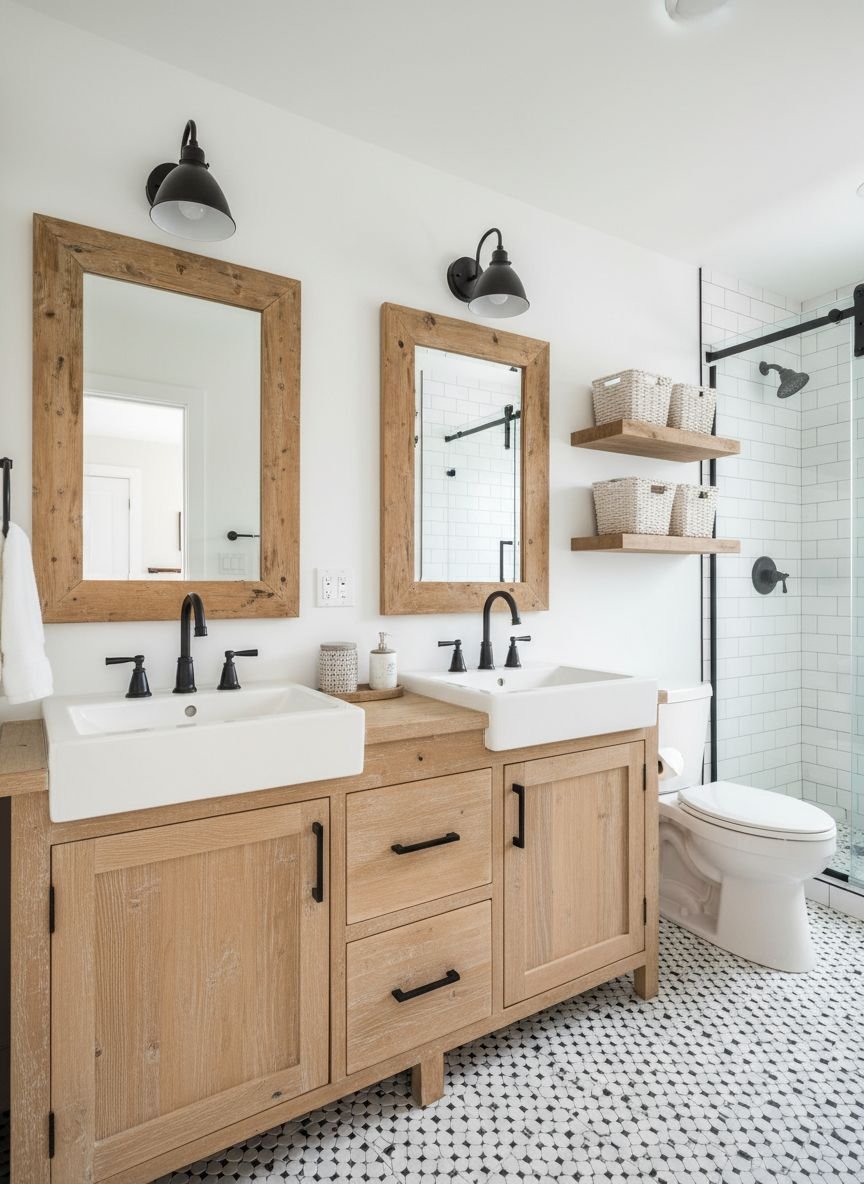
Visual noise is the enemy of a relaxing bathroom. Branded shampoo bottles, bright plastic lotion pumps, and mismatched soap dispensers create a chaotic visual environment. The solution is decanting your products into matching amber glass bottles. The warm amber tone mimics an apothecary aesthetic, instantly making your shower niches and countertops look organized and expensive.
This simple swap creates uniformity. Even if you use drugstore shampoo, putting it in a uniform bottle elevates the experience. You can buy waterproof, minimalist labels to identify the contents (Shampoo, Conditioner, Body Wash). This consistency allows the eye to glide over the space without being distracted by bright logos or clashing colors. It is one of the most affordable ways to “quiet” your bathroom design.
Pro Tip: Buy a funnel when you purchase your bottles. It makes the refill process mess-free and quick, ensuring you actually stick to the system.
Textured Limewash Walls
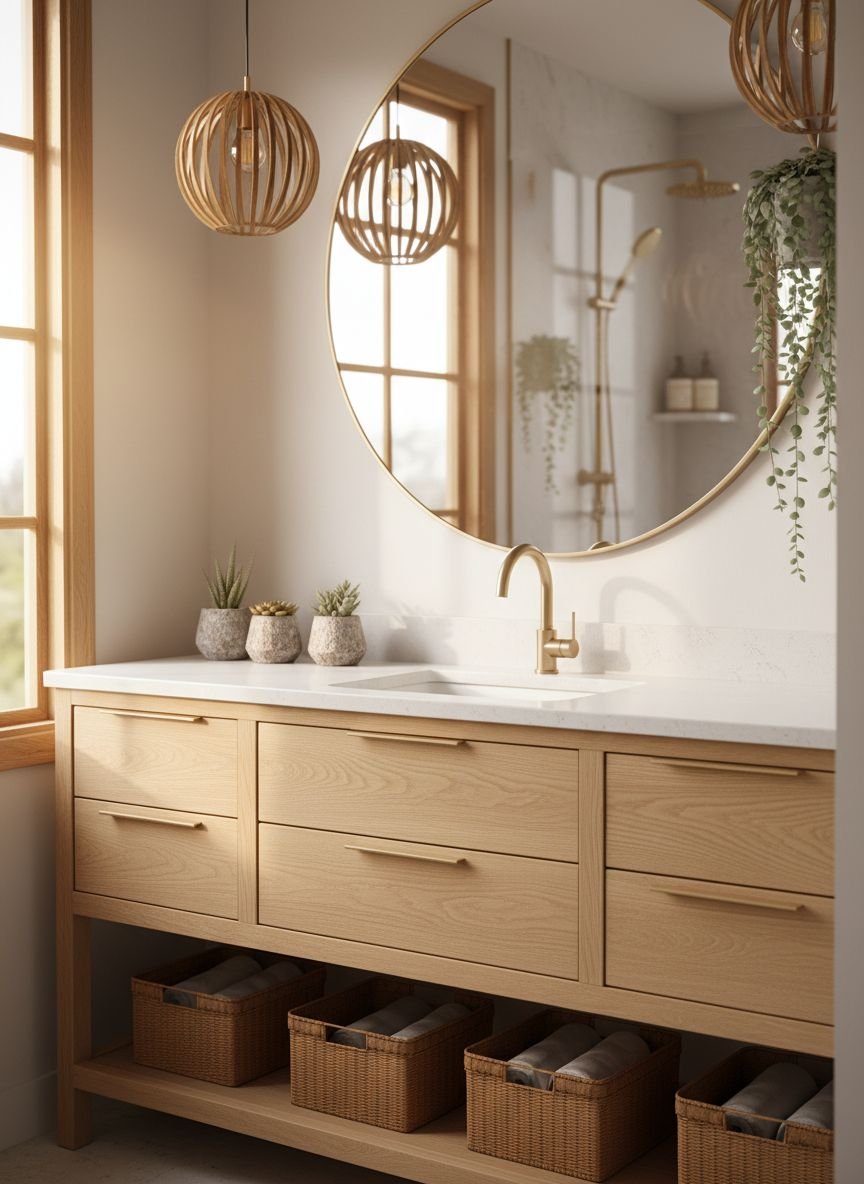
If you are tired of flat paint but cannot afford wall-to-wall tile, limewash is your answer. Limewash paint creates a cloudy, suede-like texture that adds incredible depth and movement to walls. It is breathable and naturally resistant to bacteria and mold, making it a functional choice for humid bathroom environments. The finish is matte and chalky, absorbing light rather than reflecting it, which creates a soft, enveloping atmosphere.
This finish works beautifully in neutral tones—terracotta, beige, sage, or charcoal. It gives the walls a historic, old-world feel, reminiscent of Mediterranean or Moroccan interiors. Unlike standard flat paint, limewash has character; it changes appearance slightly depending on the lighting and time of day. It turns the walls themselves into a decor feature, reducing the need for hanging art or shelves.
Pro Tip: Apply a clear matte sealer over the limewash in high-splash zones (like behind the sink) to prevent water spotting while maintaining the textured look.
Over-The-Toilet Ladders
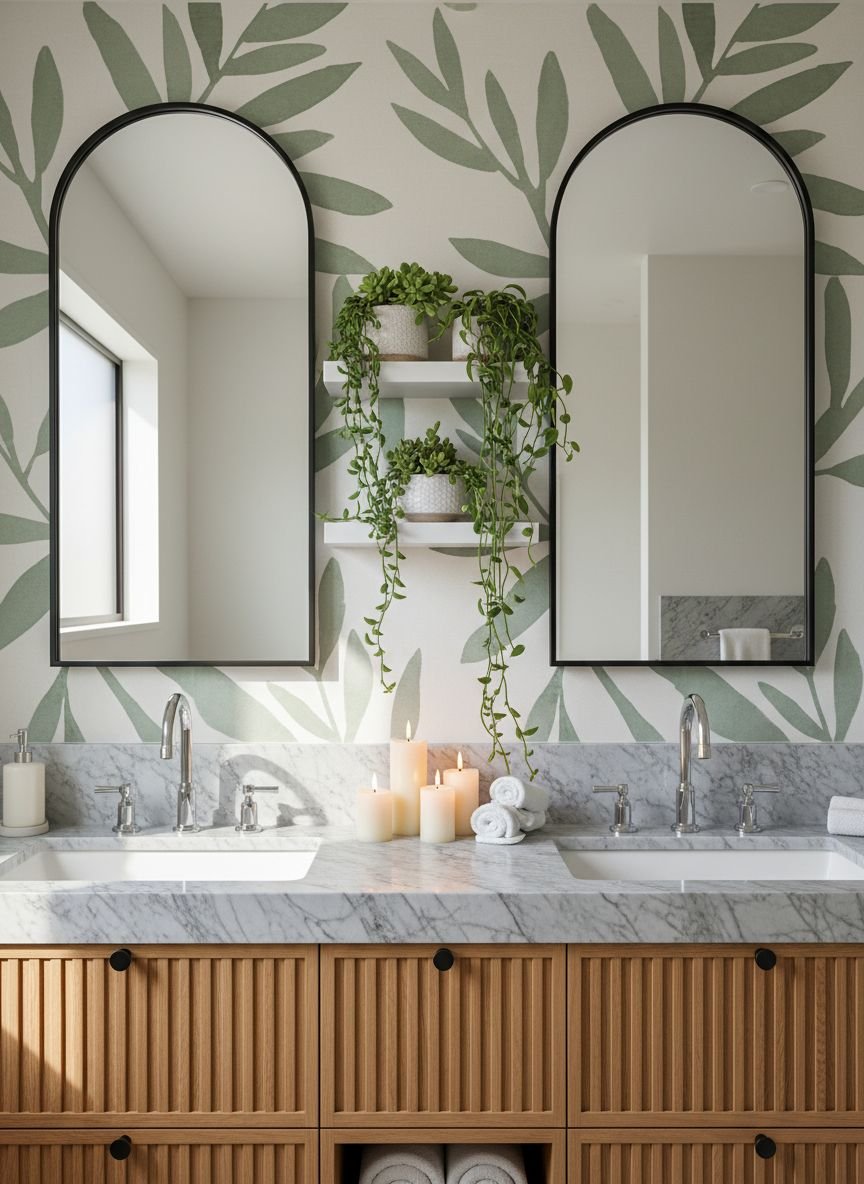
The space above the toilet is often the most underutilized real estate in a bathroom. While traditional cabinets can feel bulky and close in the room, a leaning ladder shelf is open and airy. It provides vertical storage without the visual weight of a box on the wall. The ladder design draws the eye upward, emphasizing height, while the rungs offer perfect spots for hanging towels or placing baskets.
You can style the ladder with a mix of functional and decorative items. Use the bottom rungs for baskets holding toilet paper or extra towels. Use the upper rungs for a trailing plant, a candle, or a small piece of art. The leaning silhouette is casual and relaxed, fitting perfectly into boho, farmhouse, or Scandinavian styles. It is also rental-friendly, requiring no drilling into the walls.
Pro Tip: Secure the top of the ladder to the wall with a small bracket or velcro strip if you have pets or children, to prevent accidental tipping.
Sconces Framing Mirrors
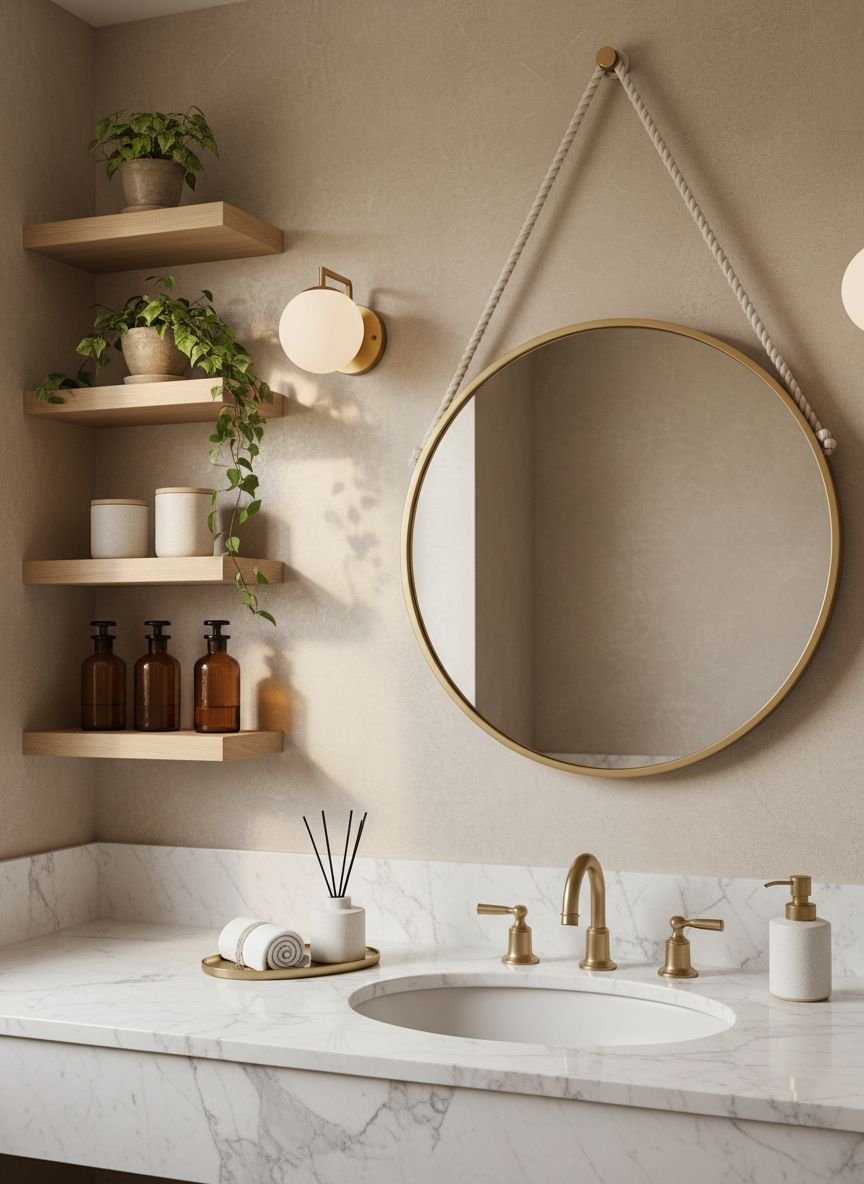
Lighting placement is just as important as the fixture itself. The standard builder-grade setup puts a light bar above the mirror, which casts shadows under your eyes and nose—the worst possible lighting for applying makeup or shaving. The hotel-approved upgrade is to place sconces on either side of the mirror. This “cross-illumination” lights your face evenly from both sides, eliminating unflattering shadows.
Aesthetically, flanking the mirror with sconces creates symmetry and balance. It frames the vanity area, making it the focal point of the room. You can choose sleek, tubular lights for a modern look or fabric shades for a softer, traditional vibe. If you don’t have the wiring for side sconces, look for extra-wide mirrors that allow you to mount lights directly onto the glass surface for a custom, integrated look.
Pro Tip: Install a dimmer switch for these sconces. Being able to lower the light level for a relaxing evening bath changes the entire mood of the room.
Freestanding Tub Focus

If you have the space, a freestanding tub is the ultimate symbol of bathroom luxury. Unlike built-in tubs, which are often boxed into a corner, a freestanding tub is sculptural. It has curves and presence, acting as the centerpiece of the room. Whether it is a vintage clawfoot or a sleek modern egg shape, it invites you to slow down and soak.
To style a freestanding tub, you need to consider the “zone” around it. A small side table is essential for holding a drink or book. A floor-mounted tub filler adds a touch of industrial elegance. If the tub is near a window, sheer curtains can provide privacy without blocking the light. Even in a modern bathroom, a tub softens the hard lines of tile and cabinetry, adding a fluid, organic shape to the layout.
Pro Tip: If your floor is tile, place a small, plush sheepskin or water-resistant rug beside the tub to keep your feet warm when you step out.
Save this idea to your Pinterest.
Shower Niche Styling
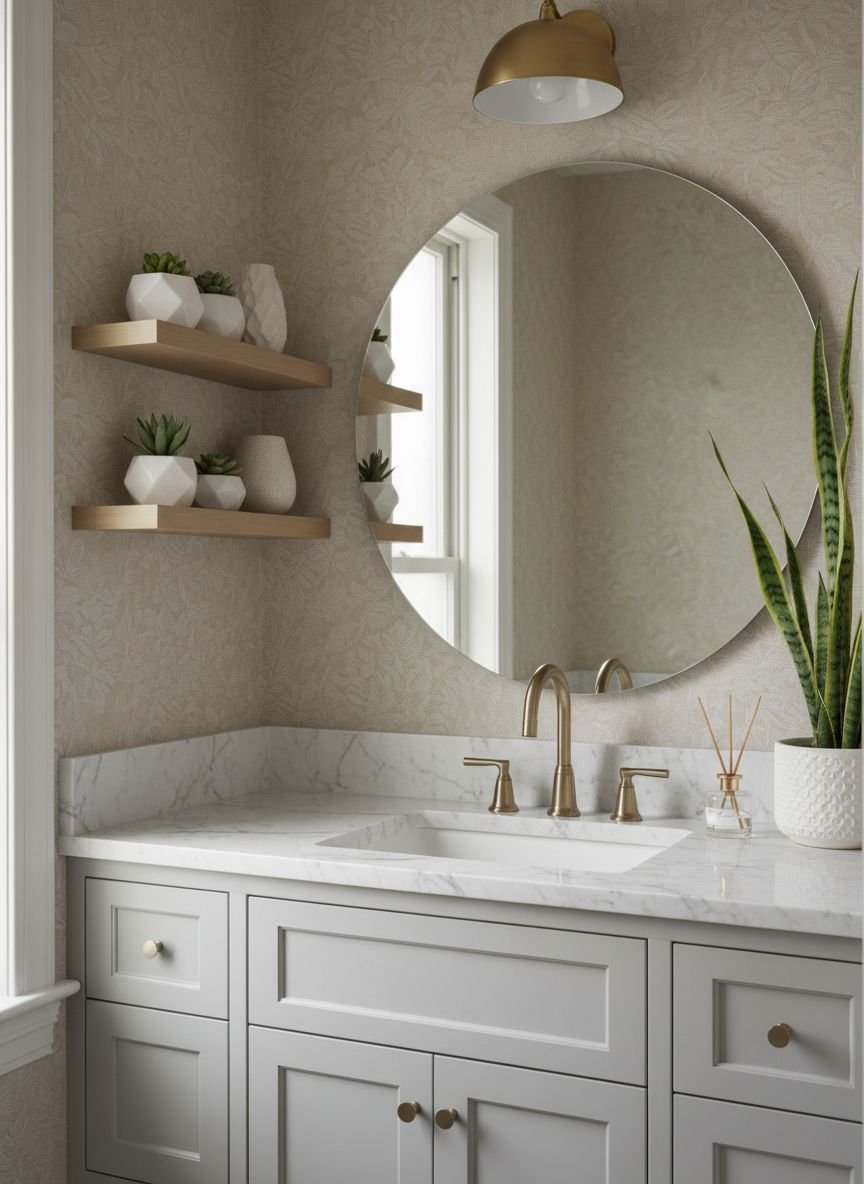
A shower niche is a recessed shelf built into the shower wall. It is practical for storage, but it is also a massive design opportunity. Instead of just tiling it with the same tile as the rest of the shower, treat it as a feature. Use a contrasting tile inside the niche—like a penny round, a herringbone mosaic, or a slab of marble—to create a “picture frame” effect.
Styling the niche is equally important. This is where your amber glass bottles come into play. Avoid overcrowding it with razors and half-empty tubes. Keep it minimal. The niche breaks up the monotony of a large tiled wall and adds depth. If you are renovating, consider a horizontal niche that spans the entire width of the shower wall for a dramatic, linear look that offers ample storage.
Pro Tip: Ensure the bottom shelf of the niche is slightly pitched (slanted) forward. This allows water to drain out into the shower rather than pooling and causing mold.
Eucalyptus Shower Bundles
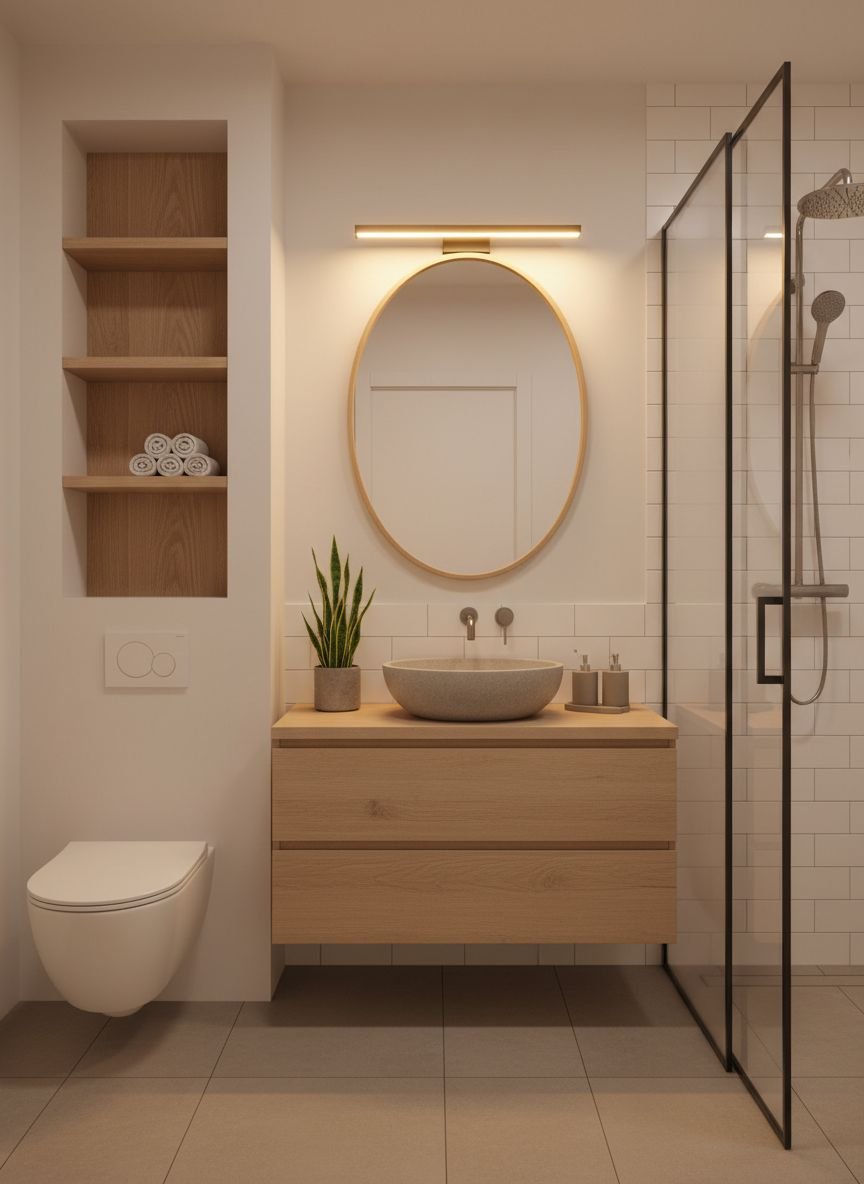
We mentioned this briefly in the Biophilic section, but it deserves its own spot as a specific decor trend. Hanging fresh eucalyptus from the showerhead is a functional decor hack that has gone viral for a reason. The heat and steam from the shower activate the essential oils in the leaves, releasing a refreshing, minty scent that clears the sinuses and relieves stress.
Visually, the dusty green leaves add a beautiful pop of color and organic texture against chrome or black shower fixtures. It looks effortless and intentional. You can buy fresh bundles at a florist or grocery store, or even use dried preserved eucalyptus which lasts for months. Tie the stems with natural twine for a rustic look. It is the cheapest way to make your bathroom feel like a 5-star spa every single day.
Pro Tip: Roll the leaves gently with a rolling pin or wine bottle before hanging them to bruise the leaves and release more scent.
Bold Wallpaper Accents
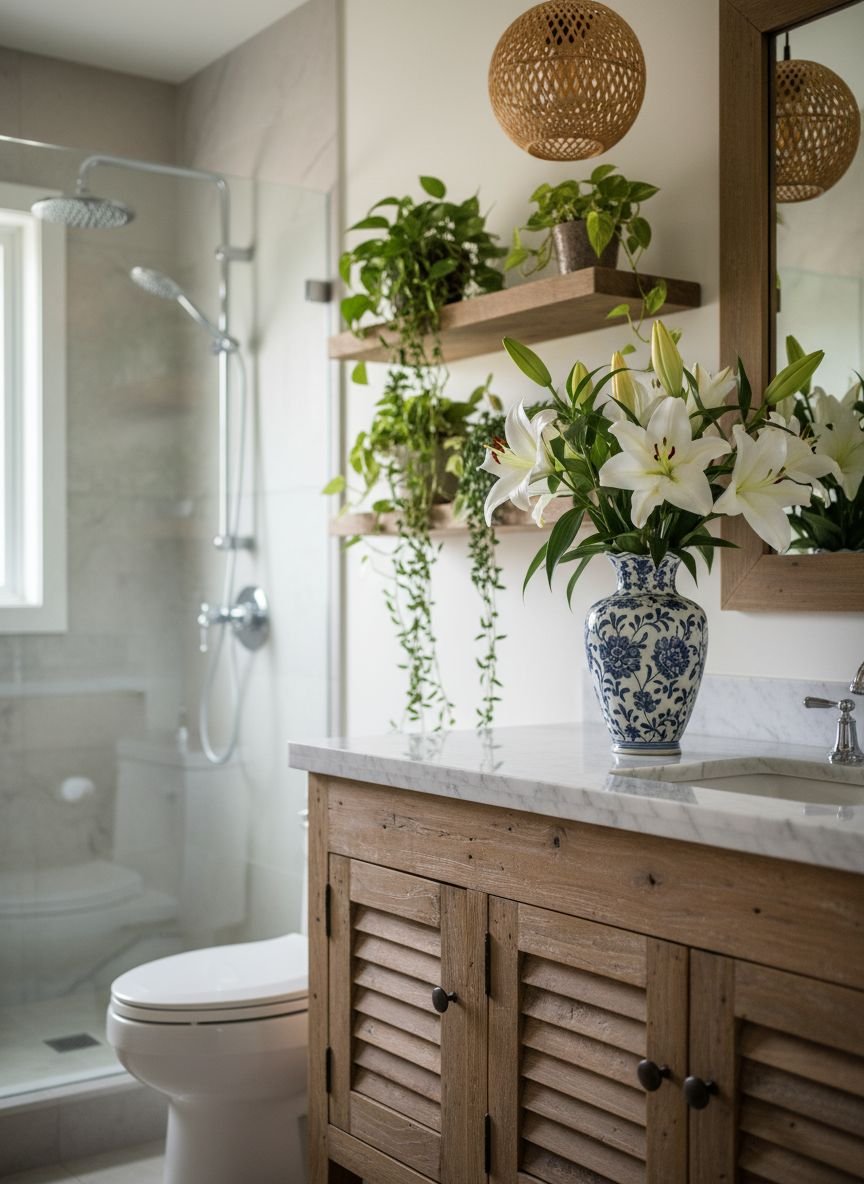
Bathrooms are the best place to experiment with wallpaper because they are enclosed spaces where you spend short bursts of time. You can get away with wild patterns, large-scale florals, or whimsical prints that might feel “too much” in a living room. Wallpaper adds personality and warmth that paint simply cannot achieve.
In a full bathroom with a shower, you need to be careful about humidity. Look for “vinyl” or “splash-proof” wallpapers designed for wet environments. Alternatively, use wallpaper only on the upper half of the wall (above wainscoting or tile) to keep it away from direct splashes. In a half-bath or powder room, the sky is the limit. A bold, dark floral wallpaper can turn a tiny toilet room into a dramatic, stunning jewel box.
Pro Tip: If you are nervous about commitment, use peel-and-stick wallpaper. It is durable enough for bathrooms but can be removed instantly without damaging the walls.
Minimalist Glass Partitions
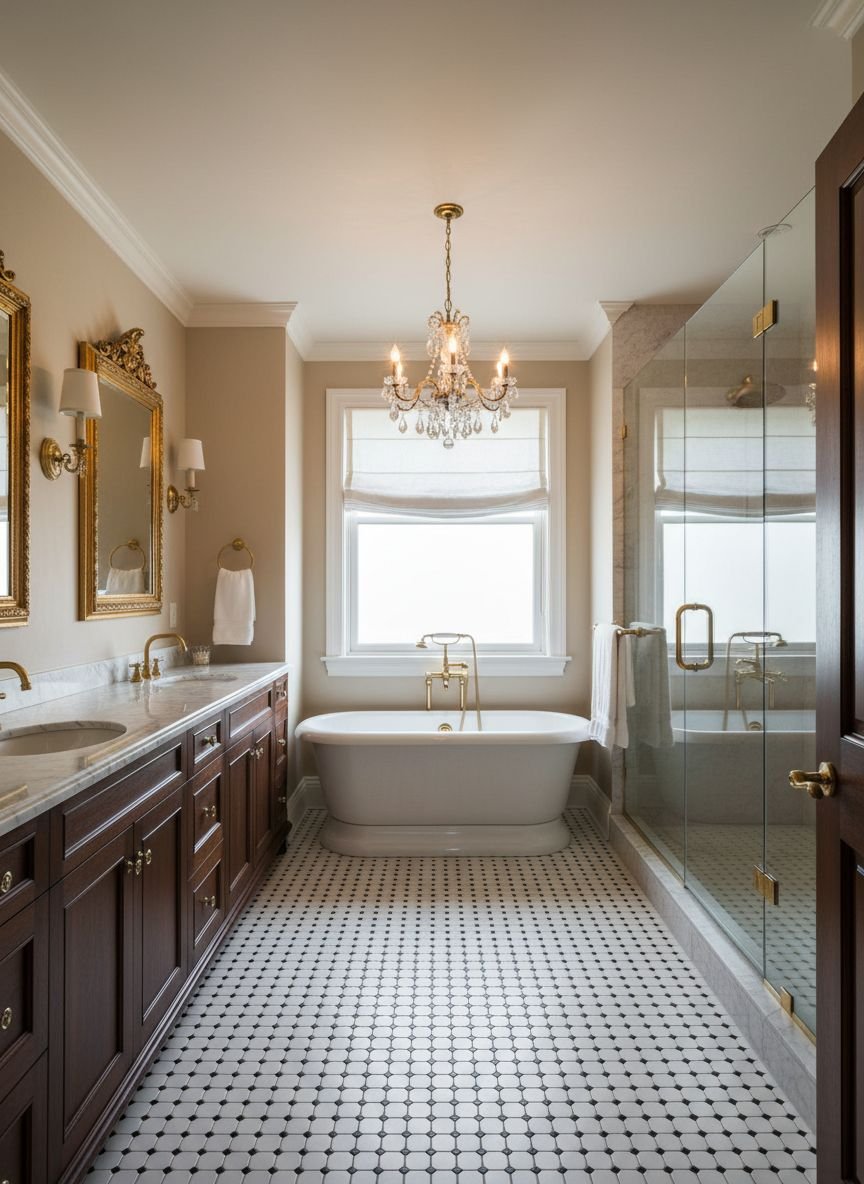
Shower curtains can sometimes make a small bathroom feel closed off and visually cluttered. Replacing a curtain with a fixed glass panel (or a frameless glass door) opens up the entire room. It allows light to travel freely from the shower area to the rest of the bathroom, making the space look twice as big. It showcases the beautiful tile work inside the shower rather than hiding it.
For a modern, industrial edge, look for glass panels with a black grid frame (Crittall style). For a pure minimalist look, go for completely frameless glass. While glass requires maintenance (squeegeeing is a must), the visual payoff is immense. It creates a seamless flow and modernizes even an older bathroom instantly.
Pro Tip: Treat the glass with a hydrophobic coating (like Rain-X for windshields) to make water bead up and roll off, significantly reducing water spots and cleaning time.
Art in the Bathroom
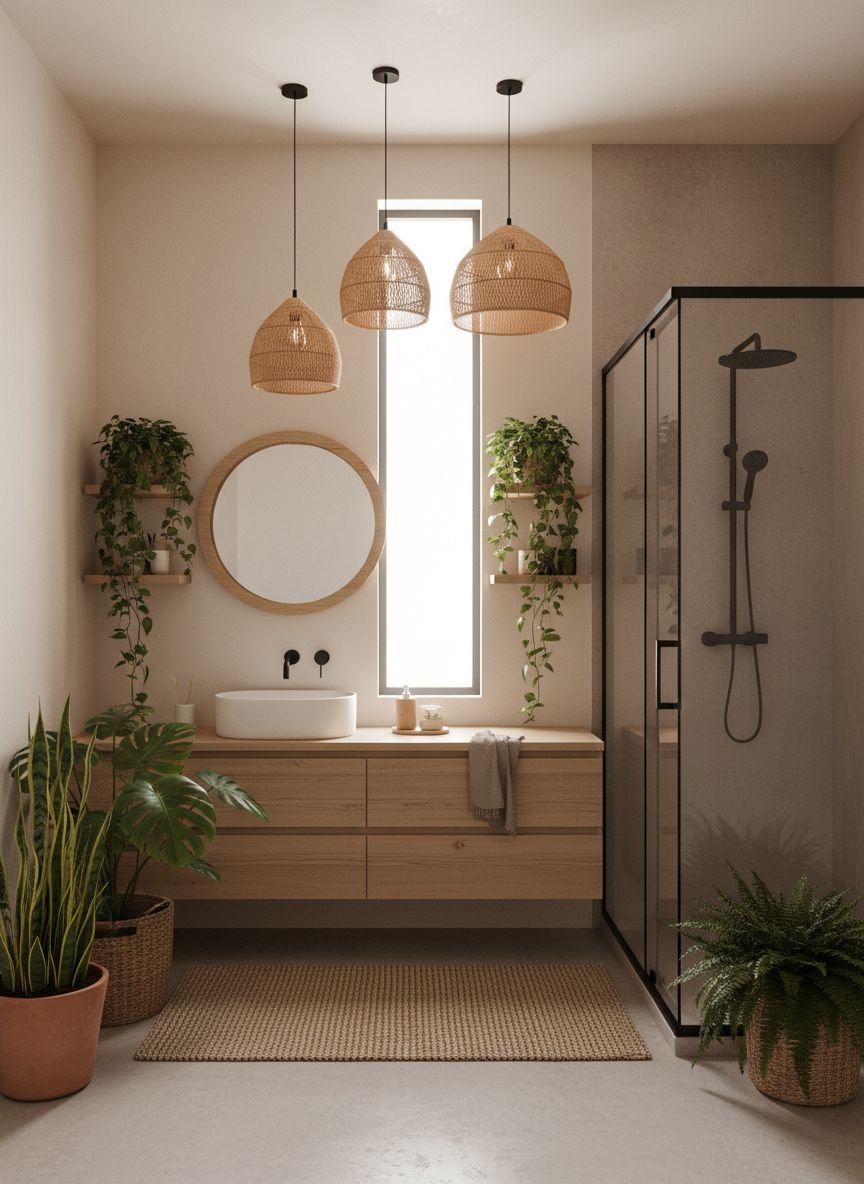
Many people forget to hang art in the bathroom, assuming the humidity will ruin it. However, adding framed art is what separates a utilitarian bathroom from a designed room. It adds color, culture, and a focal point. You can create a small gallery wall above the toilet, or lean a large framed print on a floating shelf.
To protect the art, choose inexpensive prints rather than original masterpieces. Ensure the frame is sealed well at the back. Landscapes, botanical prints, and abstract line drawings work beautifully in bathroom settings. The art should complement the color palette of your towels and tiles. This unexpected element makes the space feel finished and personal.
Pro Tip: Avoid glass if possible and opt for acrylic glazing in frames. It is lighter and safer on hard tile floors if it accidentally falls.
Spa-Quality Towel Display

Towels are not just for drying off; they are a major textural element in the room. Fluffy, high-quality white towels immediately signal “cleanliness” and “luxury.” How you display them matters. Instead of jamming them into a cupboard, roll them tightly and stack them in a pyramid on an open shelf or in a basket. This “rolled” technique is a classic spa trope that looks incredibly inviting.
If you lack shelf space, install a “train rack” (a shelf with a bar below) high on the wall. Stack folded towels on top and hang drying towels below. Upgrading your towels to a waffle weave or a Turkish cotton adds visual interest and elevates the daily experience of bathing. Treat your linens as decor.
Pro Tip: Wash your towels with vinegar and baking soda occasionally instead of detergent and softener. This strips away buildup, making them fluffy and absorbent again like they are brand new.
Save this idea to your Pinterest.
Popular Asked Questions
How to make a small bathroom look expensive?
To make a small bathroom look expensive on a budget, focus on uniformity and lighting. Swap out mismatched plastic bottles for matching glass dispensers. Replace the standard overhead light with warm-toned bulbs or add a small lamp on the counter. Finally, keep the counters 90% clear of clutter. Minimalism always looks more expensive than chaos.
What are the bathroom trends for 2026?
The top trends for 2026 focus on “Quiet Luxury” and organic warmth. We are seeing a move away from all-white, sterile bathrooms toward warm beiges, brown marble, and textured woods. Vertical tile stacking, biophilic design (plants), and mood lighting (sconces and under-cabinet glow) are also huge trends that prioritize relaxation over just function.
How to add storage to a tiny bathroom?
In a tiny bathroom, you must go vertical. Install shelves above the door frame for items you don’t use daily. Use a “ladder shelf” over the toilet. Utilize the inside of cabinet doors with stick-on organizers for hair tools. A mirrored medicine cabinet is also a secret weapon—it doubles your storage without taking up any extra wall space.
What colors are best for a relaxing bathroom?
The most relaxing colors are those found in nature. Soft Sage Green reduces stress and pairs well with plants. Warm Beige or Sand creates a cozy, earth-like cocoon. Pale Blue evokes water and sky, promoting tranquility. Avoid bright reds or jarring neons, which can induce anxiety rather than calm.
Conclusion
Creating a beautiful bathroom doesn’t require a celebrity budget or a massive footprint. As we move into 2026, the focus is shifting toward spaces that feel personal, grounded, and serene. Whether you choose to add a simple eucalyptus bundle to your shower, invest in a statement vintage rug, or finally tackle that limewash paint project, every small change adds up to a massive shift in how you start and end your day.
Leave a Comment