
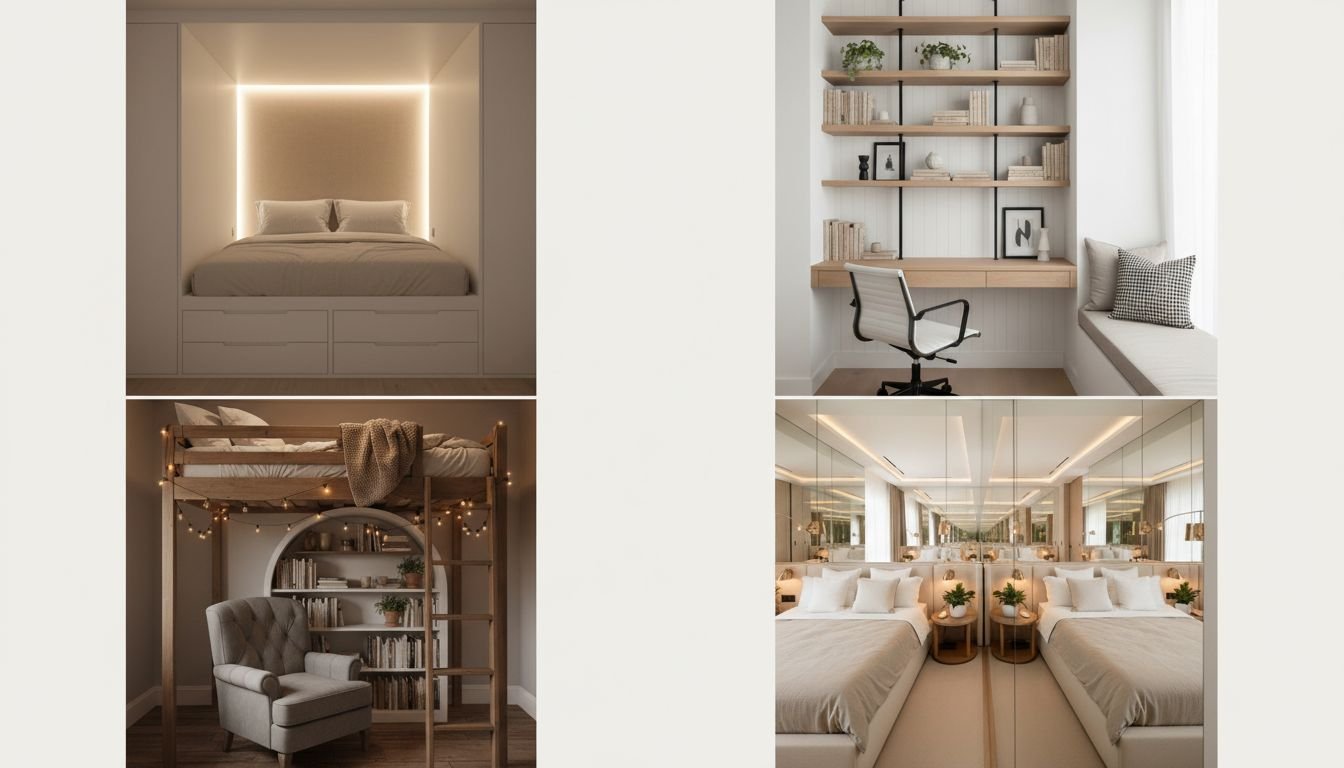
Living in a small space often feels like a constant battle between your belongings and your peace of mind. You might feel like you are living in a shoebox rather than a sanctuary. The good news is that square footage is not the only factor that defines comfort. With the right strategy, even the tiniest room can feel spacious, functional, and incredibly stylish.
This guide explores 14 innovative tiny bedroom ideas designed to maximize every inch of your floor plan. We are moving beyond basic decluttering tips to reveal structural hacks and furniture solutions that actually create space where there was none. From vertical storage to optical illusions, these methods will transform your cramped quarters into a breathable retreat.
Key Takeaways
- Go Vertical: The most underutilized space in a small bedroom is the air above you. High shelves and loft beds are essential.
- Dual-Purpose is King: Never buy furniture that only does one thing. Beds must have storage, and desks should fold away.
- Light and Reflection: Mirrors and transparent materials visually expand the room, making 100 square feet feel like 200.
Table of Contents
- Floating Bed with Underneath Storage
- Murphy Bed with Integrated Desk
- Loft Bed with a Cozy Reading Nook
- Mirrored Walls for Depth and Light
- Fold-Down Furniture for Flexibility
- Under-Stair Bedroom with Built-In Storage
- Transparent Furniture for a Lightweight Look
- Hidden Closet Behind a Sliding Art Panel
- Hanging Plants for Vertical Greenery
- Multi-Level Flooring for Defined Zones
- Bed Canopy with Hidden Storage
- Rolling Cart Nightstand
- Wall-Mounted Foldable Desk and Bed Combo
- Ceiling-Mounted Curtain Room Divider
- Popular Asked Questions
- Conclusion
Floating Bed with Underneath Storage
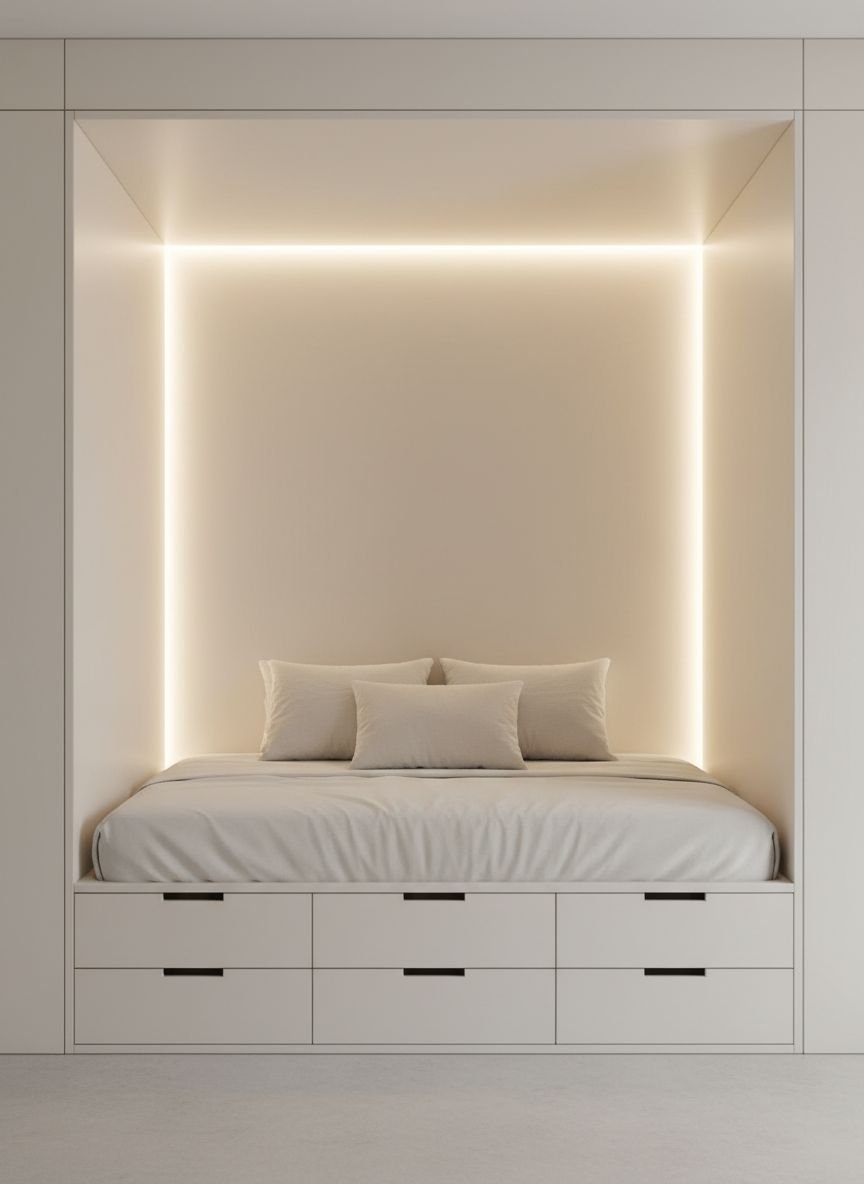
A floating bed frame is a brilliant architectural hack for tiny bedroom ideas because it creates an immediate sense of openness. By removing the legs and mounting the frame directly to the wall, you expose more floor area. The human eye perceives a room as larger when it can see more of the floor extending to the corners. This visual trickery is essential for preventing a claustrophobic atmosphere in tight quarters.
Beyond the visual benefits, the space beneath a floating bed is prime real estate for storage. Because there are no legs to navigate around, you can slide large, rolling storage bins completely underneath. This is the perfect spot for off-season clothing, shoes, or bulky bedding. To keep the look clean and minimalist, choose bins that match your floor color or use a long, custom drawer that blends seamlessly with the bed frame.
Pro Tip: Install LED strip lighting underneath the floating frame. It creates a soft, ambient glow that enhances the “floating” effect and serves as a nightlight without taking up nightstand space.
Murphy Bed with Integrated Desk
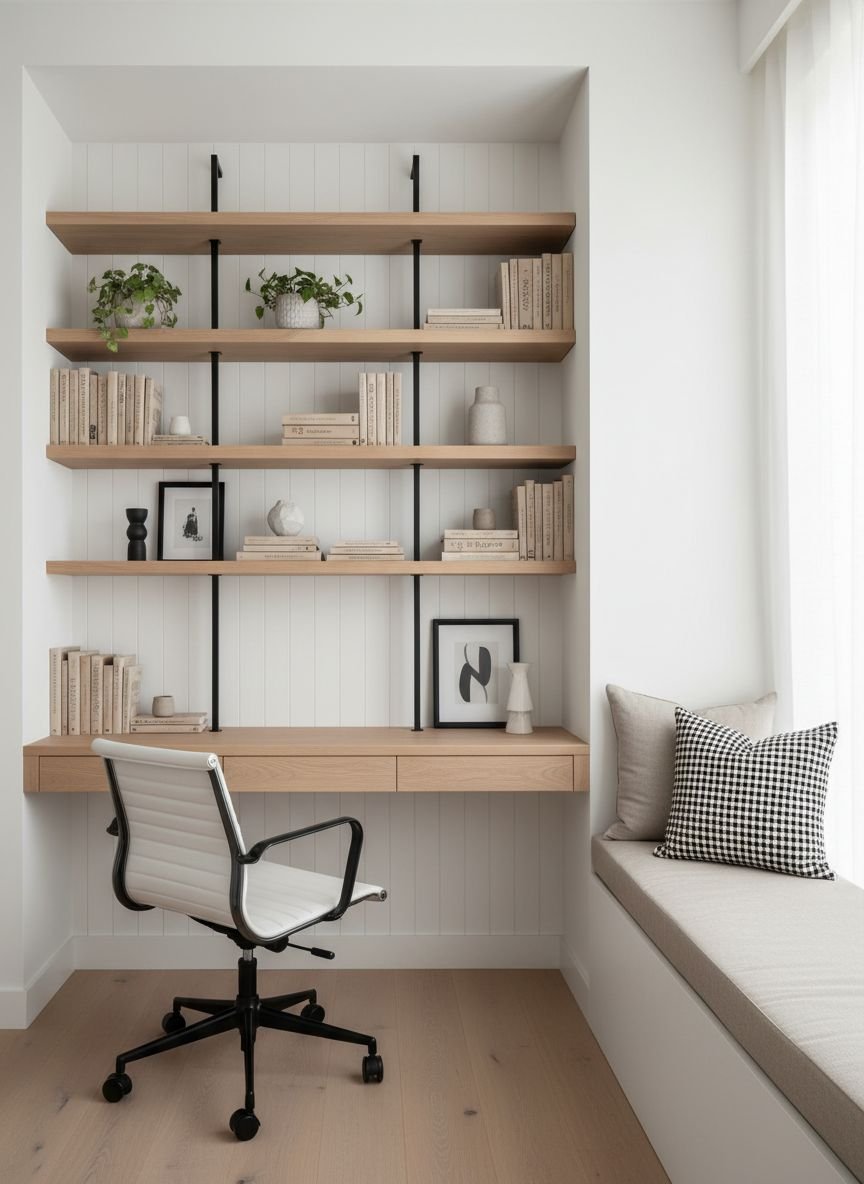
The modern Murphy bed has evolved far beyond the clunky, spring-loaded closets of the past. Today’s designs focus on seamless integration and multi-functionality, making them a top contender for maximizing small bedroom space. A Murphy bed with an integrated desk solves two major problems at once: the need for a comfortable workspace and the need for a full-sized bed. During the day, the bed folds up to reveal a sturdy desk, allowing you to work from home without feeling like you are sleeping in your office.
The mechanics of these beds are designed so that items on the desk often do not need to be moved when the bed comes down. The desk surface simply pivots to remain parallel to the floor. This eliminates the daily chore of clearing off your workspace before sleep. When choosing a unit, look for light-colored wood or white finishes to keep the large furniture piece from dominating the room visually.
Pro Tip: Choose a model with shelving on the sides or top. This utilizes the vertical wall space around the bed for books and decor, turning a functional mechanism into a stylish built-in feature.
Loft Bed with a Cozy Reading Nook
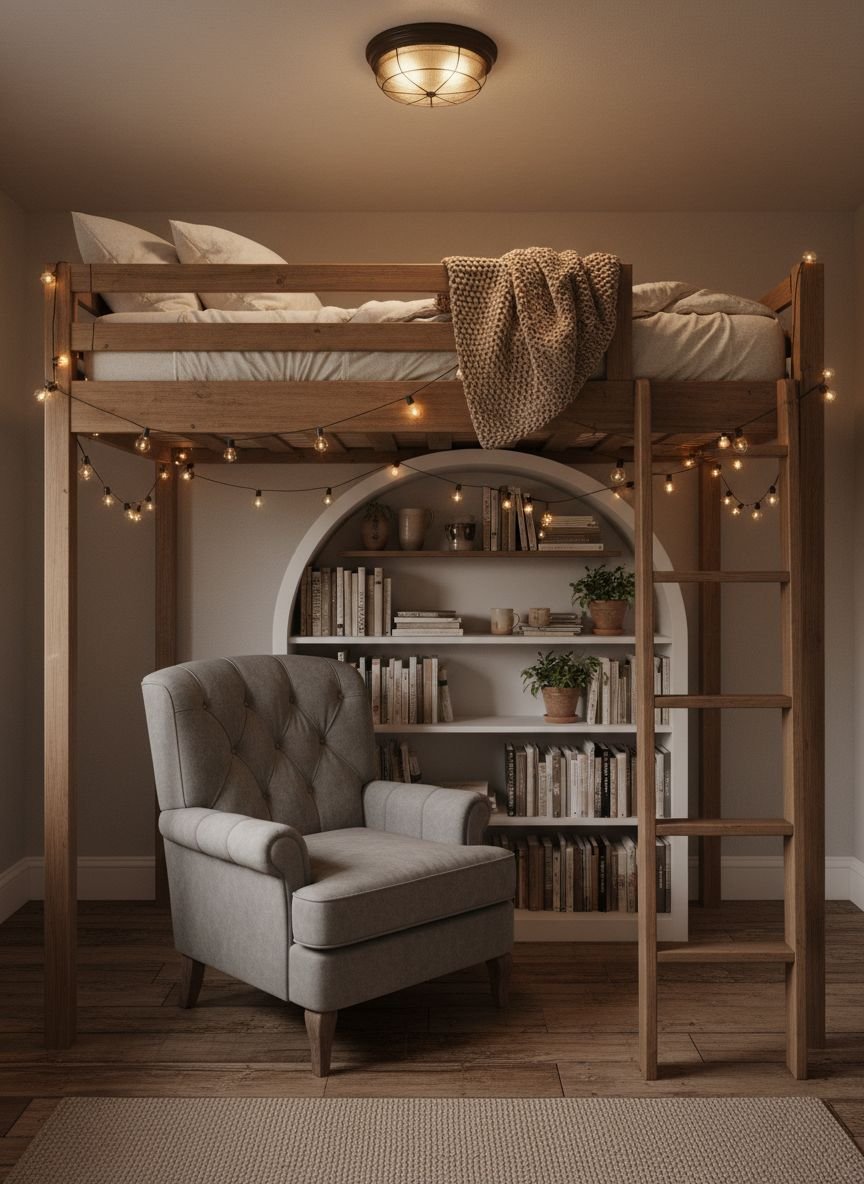
Loft beds are not just for children’s rooms or college dorms. Adult-grade loft beds are a sophisticated way to double the usable square footage of a tiny bedroom. By elevating the sleeping platform, you reclaim the entire footprint of the bed for other uses. Creating a cozy reading nook underneath provides a dedicated zone for relaxation that is separate from your sleeping area. This separation is psychologically important in small spaces to prevent cabin fever.
Style the nook with a comfortable armchair, a small rug, and warm lighting. Since the space is enclosed by the bed frame above, it naturally feels intimate and protected. You can line the supporting pillars with fairy lights or install a small bookshelf against the back wall. This setup works exceptionally well in rooms with high ceilings, as it takes advantage of the vertical volume that often goes wasted.
Pro Tip: If your ceiling is too low for a full standing-height loft, consider a “low loft.” It raises the bed just enough to place dresser drawers or a crawl-in storage den underneath.
Mirrored Walls for Depth and Light
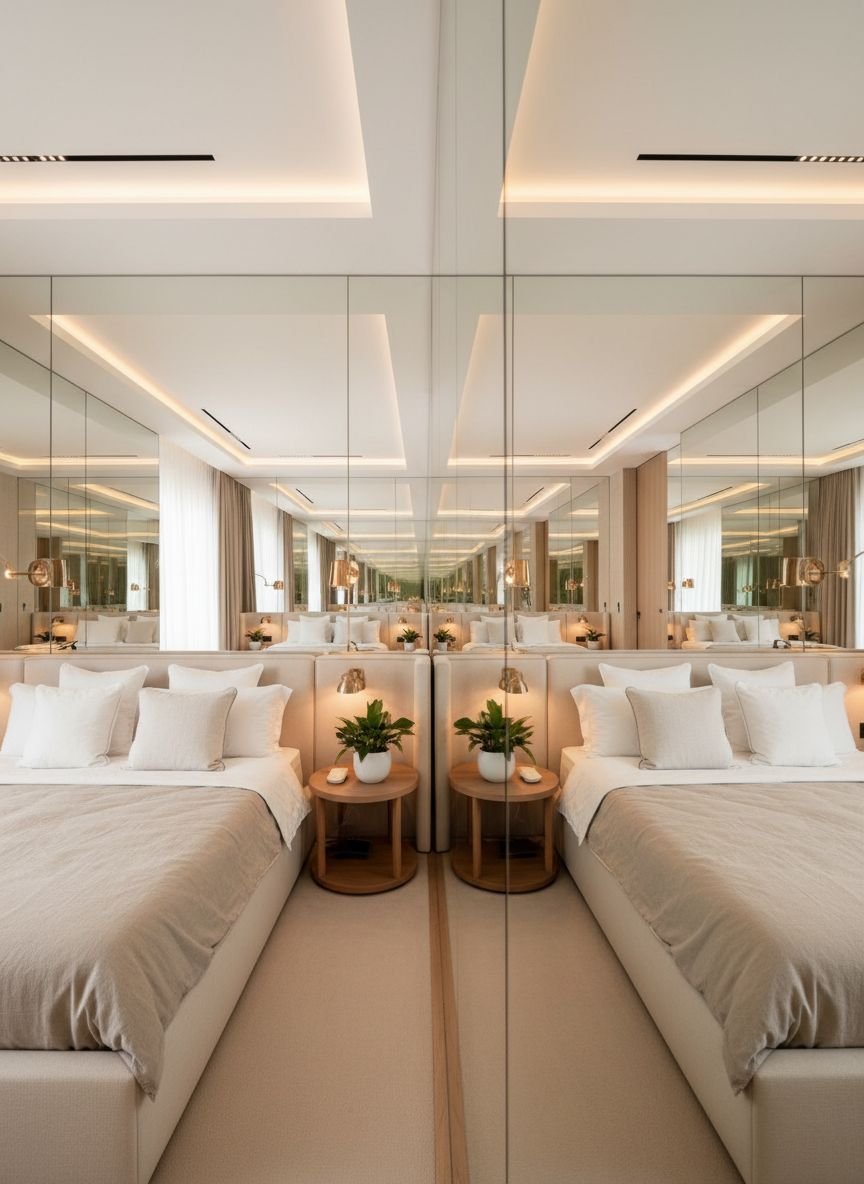
Mirrors are the oldest trick in the interior design book for a reason. In a tiny bedroom, a large mirrored surface acts like a window, bouncing natural light into dark corners and visually doubling the room’s depth. Instead of hanging a small vanity mirror, consider covering an entire wall or closet doors with mirrored panels. This blurs the boundaries of the room, making it difficult for the eye to register where the wall ends.
For a softer, more modern aesthetic, you can use antique or smoked glass. This provides the expansive benefits of a mirror without the harsh, high-definition reflection that some find distracting in a bedroom. Position the mirrored surface opposite your actual window to maximize the light-reflecting effect. This technique is particularly effective in narrow, rectangular rooms, as it breaks up the “tunnel” feeling.
Pro Tip: If a full mirrored wall feels too intense, lean an oversized floor mirror against the wall. It provides a similar depth-enhancing effect but can be moved if you decide to rearrange the layout.
Fold-Down Furniture for Flexibility
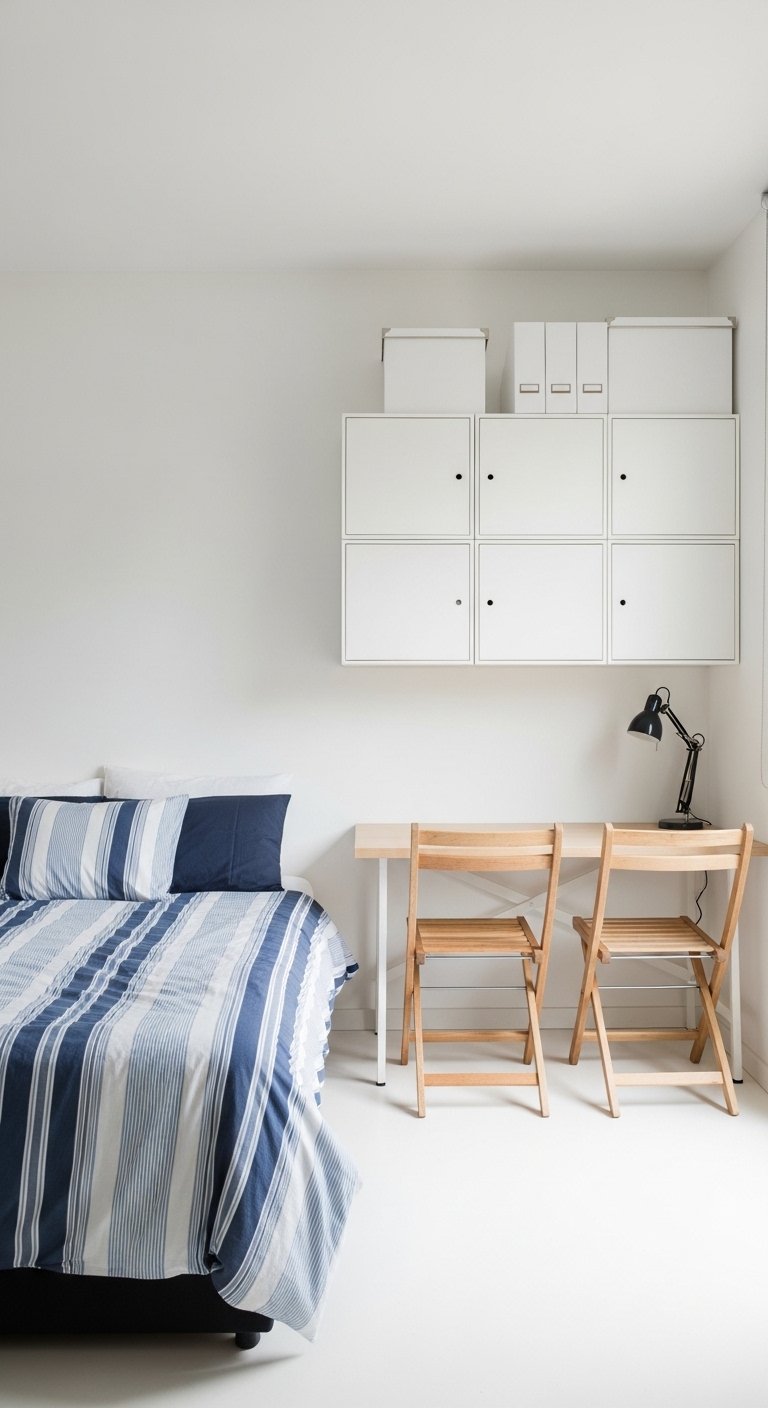
Flexibility is the ultimate luxury in a small footprint. Fold-down furniture, such as wall-mounted tables or drop-leaf desks, allows your bedroom to shift modes instantly. A fold-down table can serve as a vanity in the morning, a desk in the afternoon, and then disappear completely at night to leave a clear walkway. This “on-demand” furniture approach prevents the room from feeling cluttered with surfaces that are not constantly in use.
When installing fold-down pieces, ensure the hardware is robust and easy to operate. The friction of having to struggle with a latch will discourage you from using the feature. Look for designs with rounded edges to prevent bumps in tight spaces. Pairing these items with folding chairs that can be hung on the wall when not in use creates a completely adaptable environment.
Pro Tip: Paint the underside of your fold-down table the same color as the wall. When it is folded down, it will blend in perfectly, reducing visual noise.
Save this idea to your Pinterest.
Comparison: Loft Bed vs. Murphy Bed
| Feature | Loft Bed | Murphy Bed |
|---|---|---|
| Space Saved | Vertical space utilized; floor remains occupied by structure. | Floor space completely cleared when closed. |
| Daily Effort | Zero (bed is always ready). | Low to Medium (must lower/raise bed). |
| Storage Potential | High (space underneath for desk/closet). | Medium (often includes side cabinets). |
| Best For | High ceilings; renters (often freestanding). | Multi-purpose rooms (office/gym combo). |
Under-Stair Bedroom with Built-In Storage
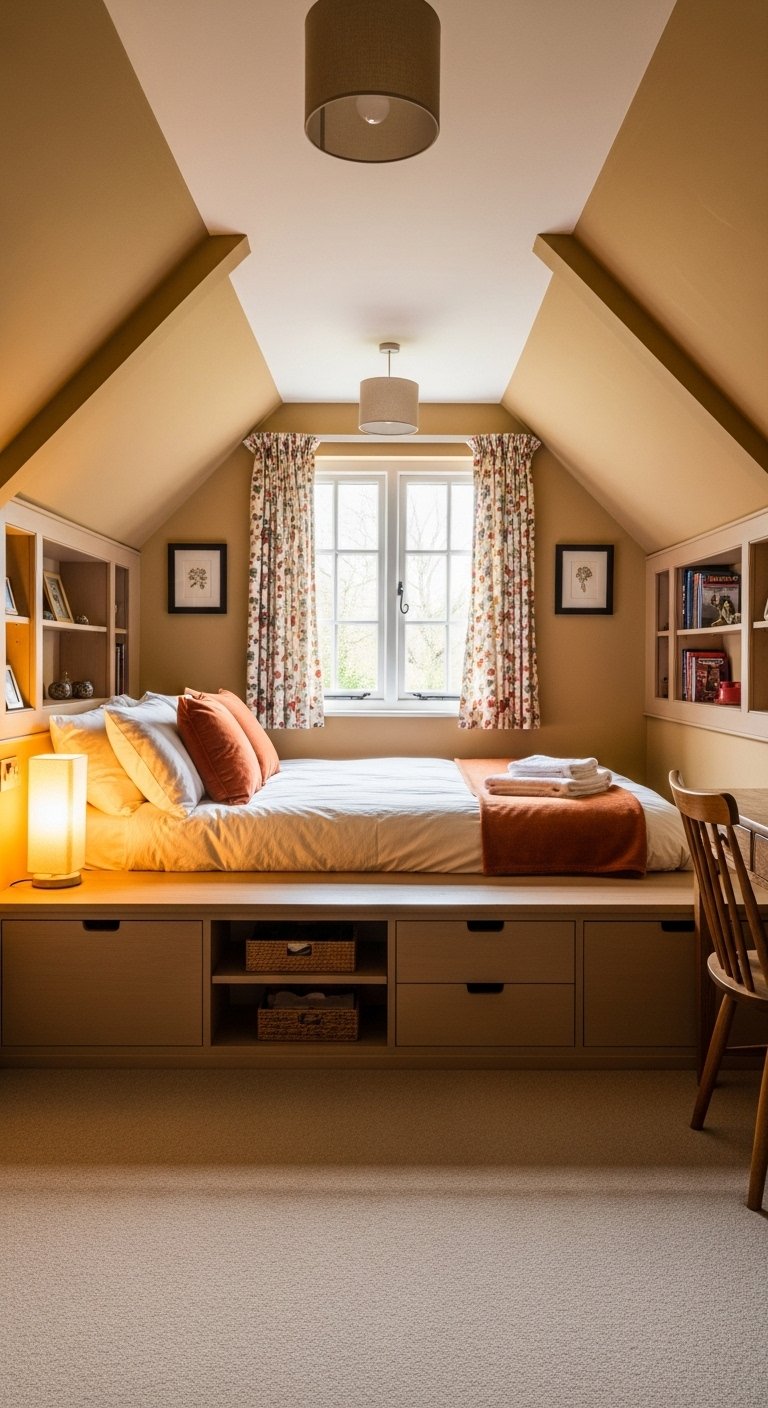
For those living in studio apartments or tiny homes with a mezzanine, the space under the stairs is often a dark, awkward void. Transforming this area into a sleeping nook is one of the most efficient tiny bedroom ideas available. By tucking the bed into this alcove, you free up the main living area. The structure of the stairs naturally creates a cozy, den-like atmosphere that is conducive to sleep.
The key to this layout is custom built-ins. Use the deep space under the higher steps for a wardrobe or drawers, and the shallow space under the lower steps for bookshelves or a nightstand. Every cubic inch under the staircase stringer can be converted into usable storage. Lighting is crucial here; wall sconces or recessed lights prevent the nook from feeling like a cave.
Pro Tip: Install drawers in the risers of the stairs themselves. This adds a massive amount of hidden storage for shoes or linens without requiring any extra floor space.
Transparent Furniture for a Lightweight Look
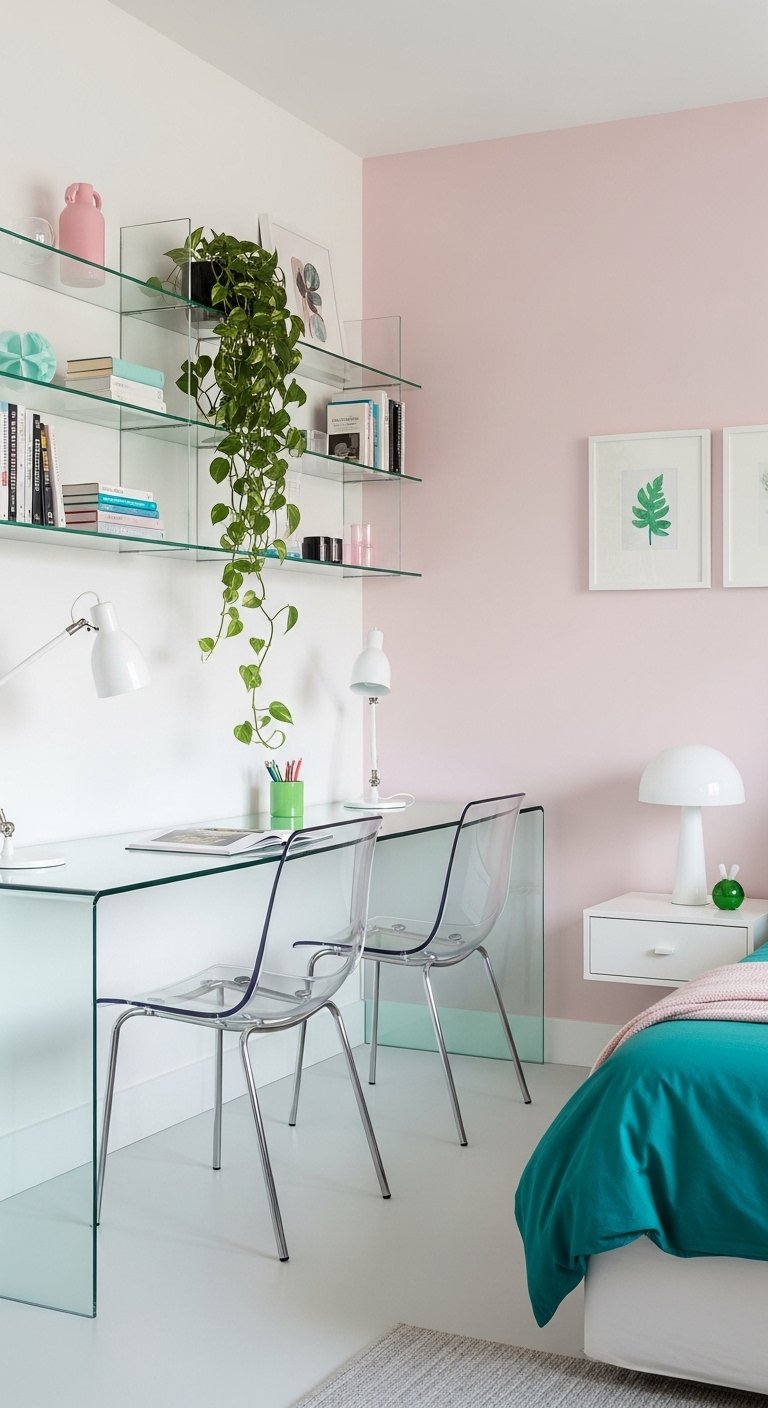
Visual weight is just as important as physical size in a small room. Opaque, bulky furniture stops the eye and makes a room feel stuffed. Transparent furniture, made from acrylic (Lucite) or glass, allows light and sightlines to pass right through. A clear acrylic chair or a glass bedside table fulfills its function without visually occupying the space. It essentially “disappears,” making the room look less crowded.
This style works beautifully with modern, minimalist, or glam decor. Because the furniture is clear, it does not clash with your color palette. You can layer textures like sheepskin throws or velvet pillows on an acrylic chair to add warmth and comfort without sacrificing the airy aesthetic. This trick preserves the flow of the room and keeps the focus on your decor accents rather than the bulk of the furniture.
Pro Tip: Keep transparent surfaces spotless. Smudges and dust are more visible on clear furniture, which can ruin the sleek effect. A quick wipe with a microfiber cloth keeps the look pristine.
Hidden Closet Behind a Sliding Art Panel
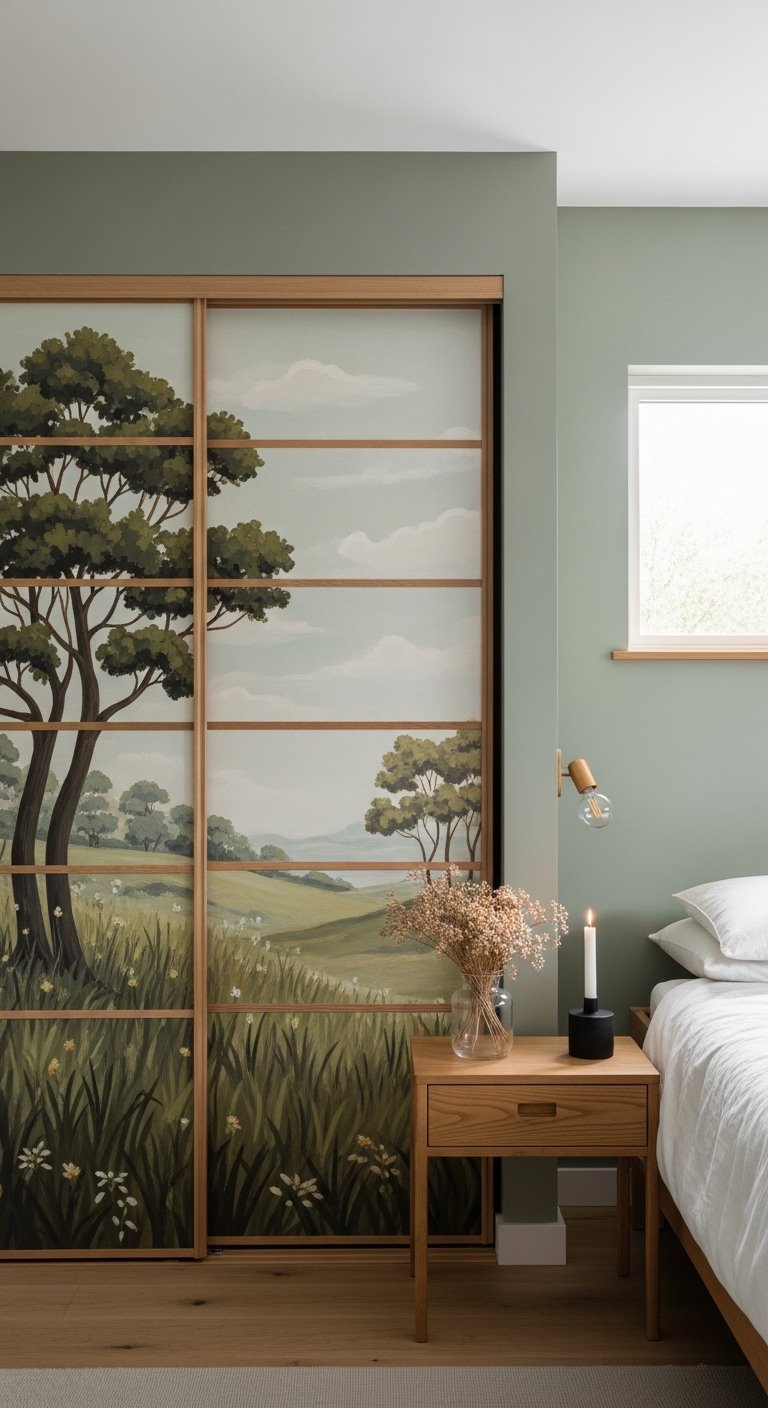
In many tiny bedrooms, there is simply no room for a standard swinging closet door, or the closet itself is non-existent. A hidden closet behind a sliding art panel is a sophisticated solution that doubles as decor. Instead of a utilitarian door, mount a large canvas or a framed piece of art on a sliding track system. When closed, it looks like a statement gallery wall; when slid open, it reveals your wardrobe or shelving.
This approach eliminates the “dead zone” required for a door to swing open. It also adds a significant design element to the room. You can build shallow shelving behind the panel for shoes, accessories, or folded clothes. If you are renting, you can achieve a similar effect with a tension rod and a heavy, decorative curtain that acts as a soft “wall” to conceal clutter.
Pro Tip: Use a heavy-duty barn door hardware kit for smooth operation. Ensure the art panel is wide enough to cover the storage area completely for a polished look.
Hanging Plants for Vertical Greenery
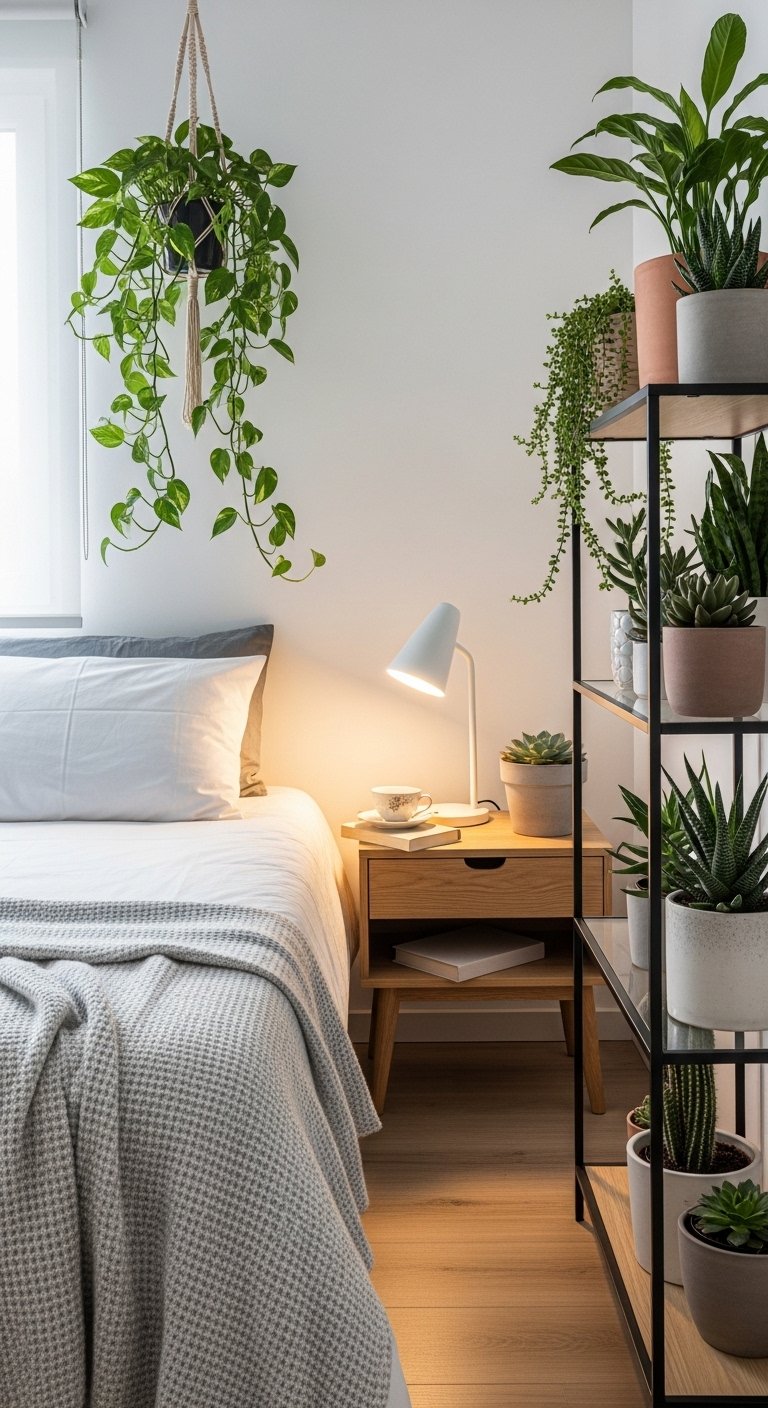
Bringing nature indoors is essential for a calming bedroom, but floor pots take up precious square footage. Hanging plants are the perfect solution for adding life and color without sacrificing floor space. By suspending greenery from the ceiling or mounting planters on the walls, you draw the eye upward, emphasizing the height of the room rather than its small footprint.
Trailing plants like Pothos, Ivy, or String of Pearls are ideal because they create lush, vertical lines. You can hang them in macramé holders for a boho vibe or in sleek ceramic pots for a modern look. Placing hanging plants near a window filters the incoming light, creating beautiful, dappled shadows that add texture to the room.
Pro Tip: Use a tension rod across a window frame to hang multiple small plants. This creates a “living curtain” that provides privacy while still letting light filter through.
Multi-Level Flooring for Defined Zones
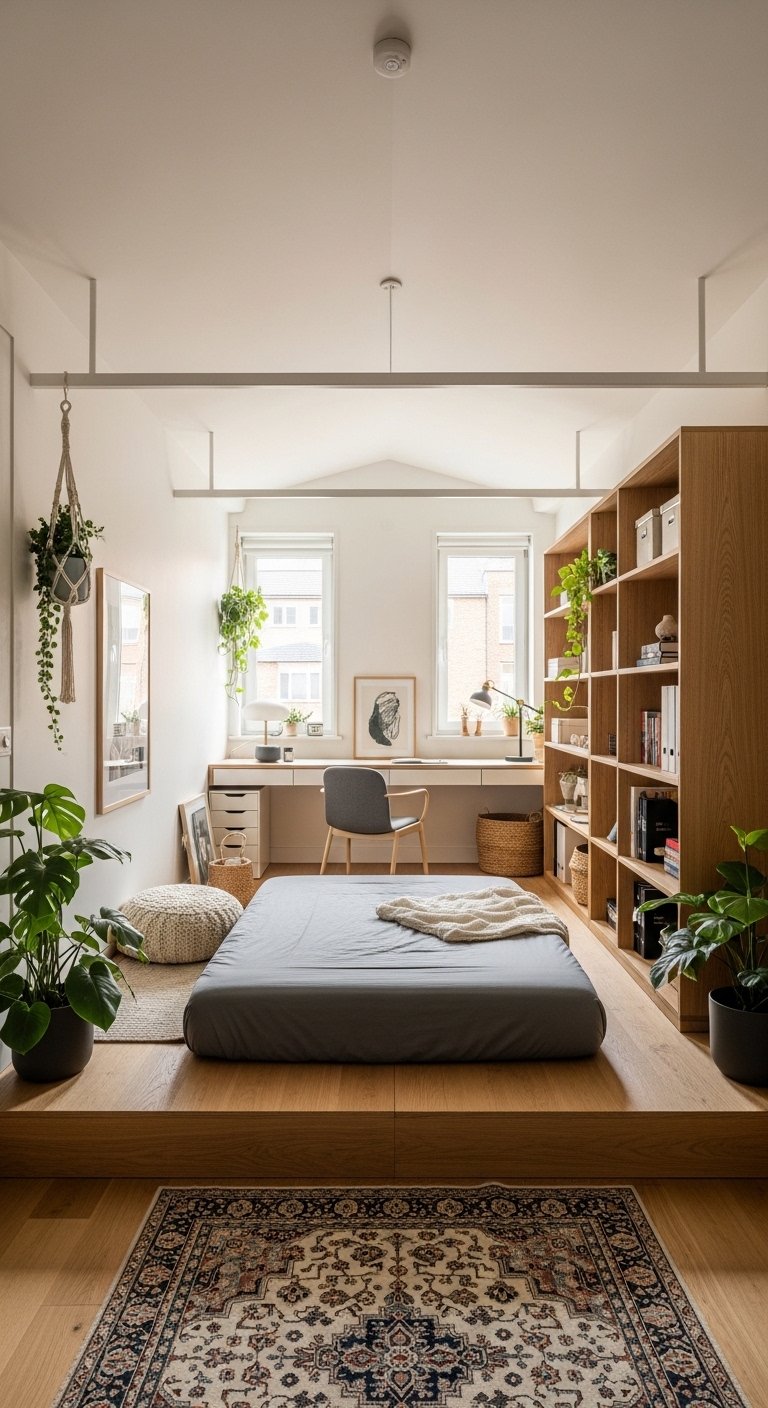
Creating a platform or raised floor section is a structural hack that defines zones without using walls. In a tiny bedroom, elevating the bed on a platform clearly separates the sleeping area from the dressing or working area. More importantly, the platform itself is a massive storage opportunity. You can build deep drawers into the side of the platform or install lift-up hatches to access the space underneath.
This technique works particularly well in long, narrow rooms. By raising the bed at the far end of the room, you create a theatrical, cozy effect. The change in floor height signals a change in function to the brain, making the room feel like it has multiple “rooms” within it.
Pro Tip: Carpet the platform for a soft, barefoot-friendly texture, while keeping the lower floor hard wood or laminate. The textural contrast reinforces the zoning.
Save this idea to your Pinterest.
Related posts :
- 15 Best 70s Bedroom Decor Ideas for a Retro-Inspired Space That Feel Nostalgic Yet Modern
- 7 Striking Gray Accent Wall Ideas for Farmhouse Living Rooms That Transform Your Space
Bed Canopy with Hidden Storage
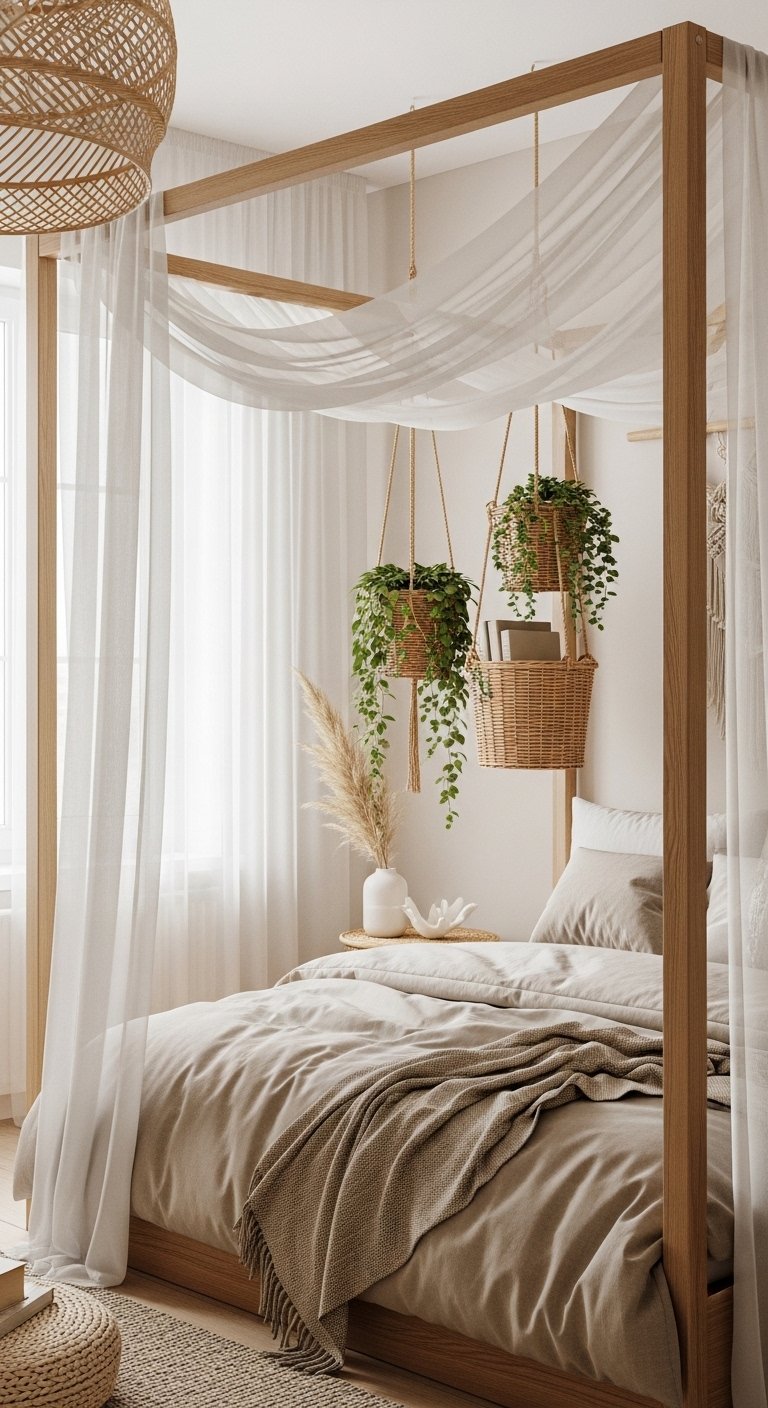
A canopy bed might seem counterintuitive for a small room, but a streamlined frame can actually frame the sleeping space and add vertical interest. The hack here is to utilize the canopy structure for storage. You can drape fabric that conceals pockets or slim organizers on the inner side of the canopy curtains. This is perfect for storing books, glasses, phone chargers, and other bedside essentials.
Additionally, the space above the canopy frame can sometimes be used. In rooms with very high ceilings, a sturdy canopy top can hold lightweight baskets. This utilizes the “dead air” directly above the bed. Visually, the vertical lines of the canopy draw the eye up, making the ceiling feel higher.
Pro Tip: Choose a canopy frame with a thin, metal profile rather than thick wood. This maintains the open feel while providing the structure you need.
Rolling Cart Nightstand
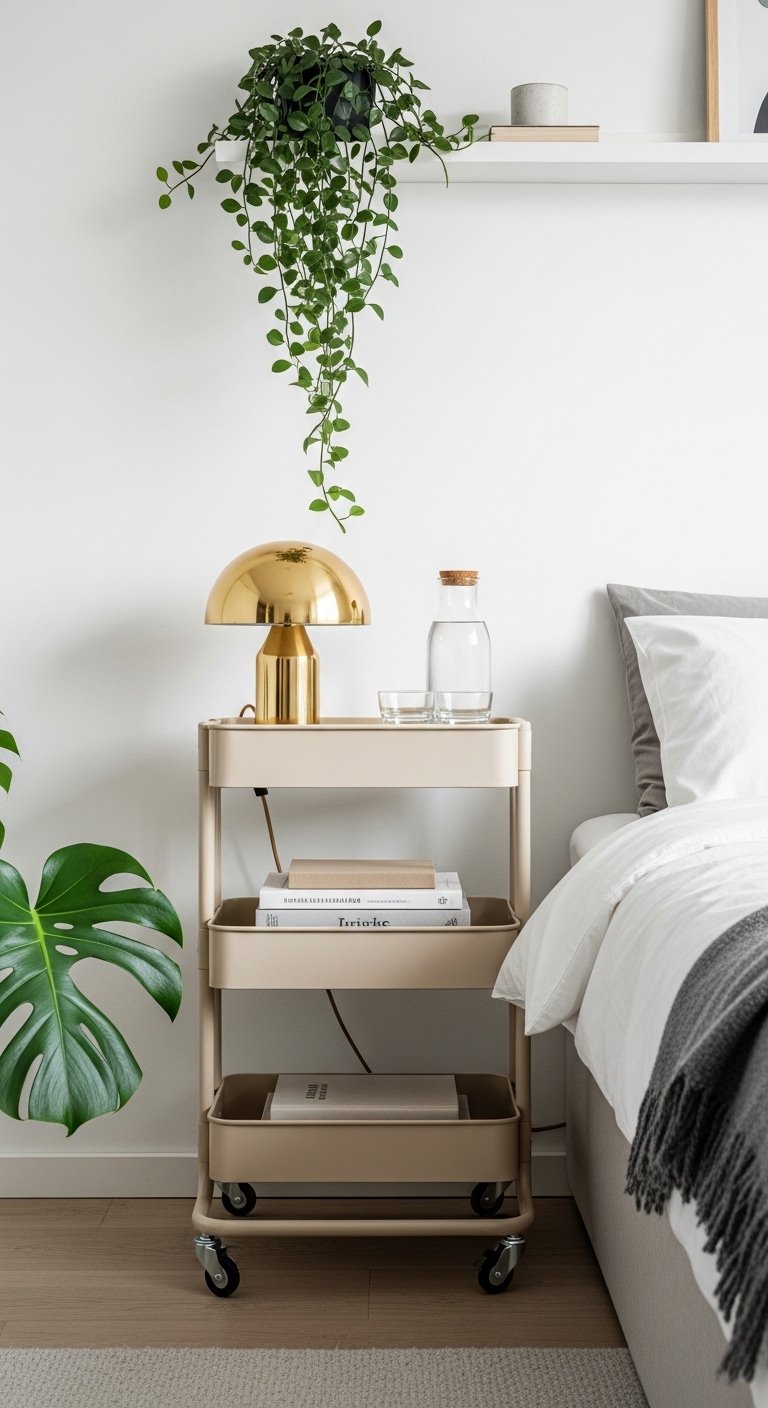
Stationary nightstands can be limiting in a tiny bedroom where you might need to access the space next to the bed or move furniture around for different activities. A multi-tier rolling cart is a versatile alternative. You can pull it close when you are in bed and push it into a corner or a closet when you need more floor space.
These carts typically have three tiers, offering triple the surface area of a standard nightstand. Use the top tier for your lamp and water, the middle for books and journals, and the bottom for extra blankets or electronics. The mobility allows the cart to serve multiple purposes; it can roll into the living area to serve as a bar cart or craft station when you have guests.
Pro Tip: Spray paint a standard metal utility cart in a gold or matte black finish to elevate it from “office supply” to “chic decor.”
Wall-Mounted Foldable Desk and Bed Combo
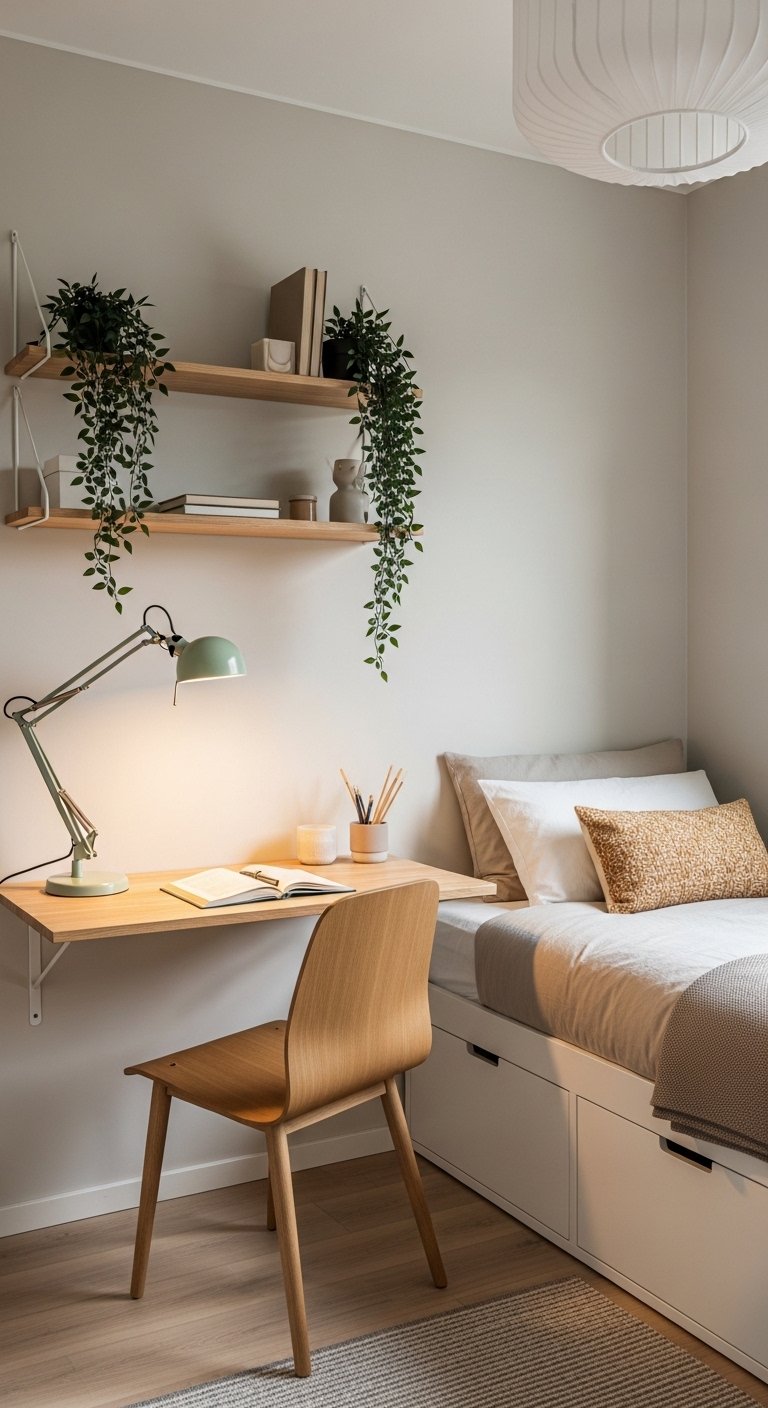
For the ultimate in tiny bedroom efficiency, consider a custom unit that combines a wall-mounted desk with a folding bed mechanism (often different from a standard Murphy bed). Some systems allow a desk to remain horizontal while the bed folds down over it. This engineering marvel means you do not have to clear your desk to go to sleep.
If a complex mechanism is out of budget, you can DIY a solution by mounting a drop-leaf desk on the wall next to a daybed. The desk folds flat against the wall when you need to pull out the trundle bed for guests. This modular approach allows the room to function as a full-time office and a part-time guest room without compromise.
Pro Tip: Ensure your wall anchors are rated for heavy loads. A wall-mounted desk must be absolutely secure to prevent accidents.
Ceiling-Mounted Curtain Room Divider
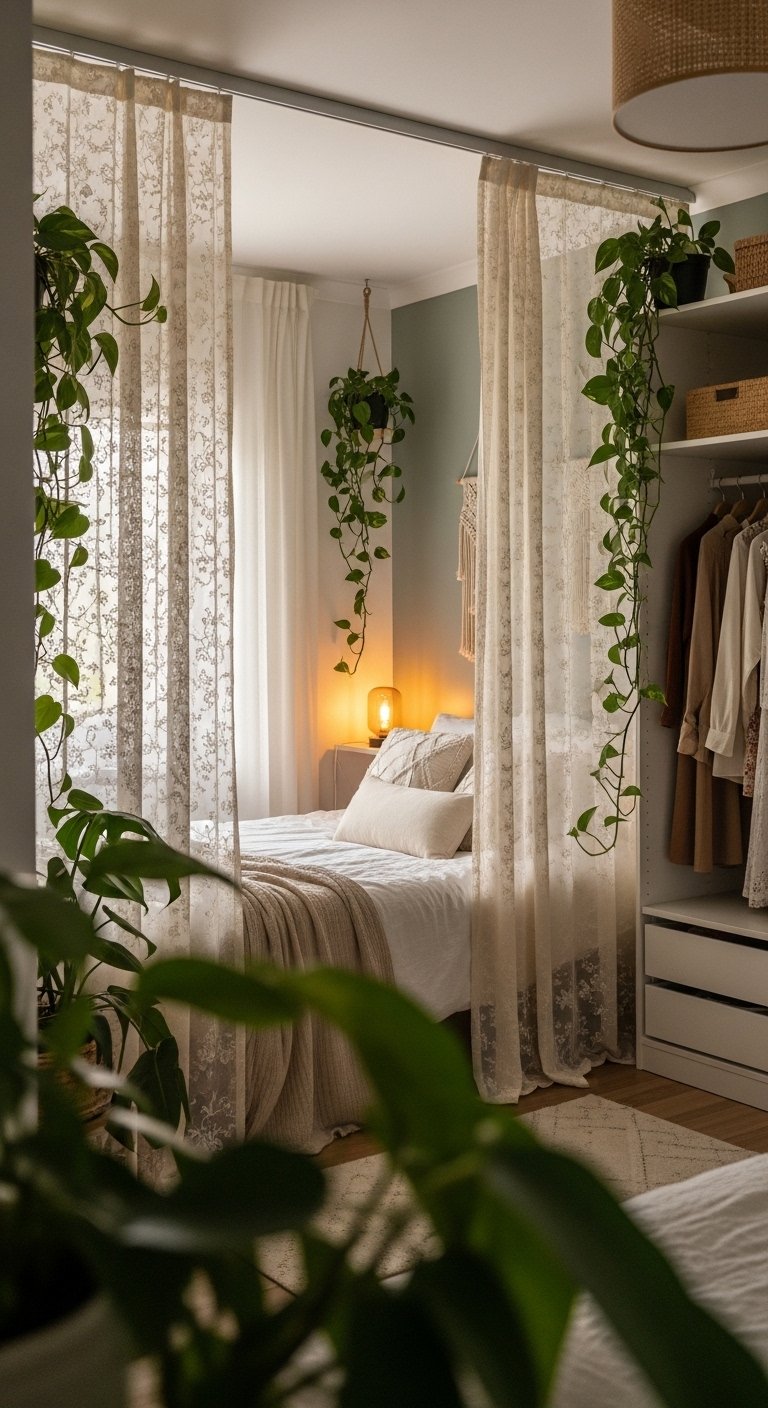
In studio apartments or shared spaces, privacy is often the biggest challenge. Building a permanent wall makes a small space feel even smaller and darker. A ceiling-mounted curtain track offers a flexible, soft solution. You can draw the curtain to enclose the bed for sleep or privacy, and sweep it open during the day to connect the spaces and let light flow through.
Use a light, semi-sheer fabric to maintain an airy feel, or a heavy velvet for sound dampening and light blocking. The curve of the track can be customized to wrap around the corner of the bed, creating a distinct “bedroom” zone within a larger room. This adds a layer of texture and softness that hard walls cannot achieve.
Pro Tip: Mount the curtain track recessed into the ceiling if possible, or use a sleek, minimal track. Hang the curtains so they just barely kiss the floor for a tailored, professional look.
Popular Asked Questions
How do I arrange furniture in a tiny bedroom?
Start by placing your largest item, usually the bed. In a tiny room, pushing the bed against a wall or into a corner is often necessary to maximize floor space. Avoid floating the bed in the center unless you have enough room for walkways on both sides. Place tall dressers or wardrobes in corners to keep sightlines open.
How can I maximize storage in a small bedroom?
Focus on vertical and hidden storage. Use the space under your bed with rolling bins or a platform base with drawers. Install shelves high up near the ceiling for items you use less often. Use the back of your door for hooks or shoe organizers. Every piece of furniture should ideally have built-in storage.
What colors make a small bedroom look bigger?
Light, neutral colors like white, cream, soft gray, and pastels reflect light and make walls recede, creating an open feel. Painting the ceiling the same color as the walls can also blur the boundaries of the room. If you love dark colors, use them on a single accent wall to add depth without closing the space in.
How to fit a desk in a small bedroom?
Look for a wall-mounted drop-leaf desk that folds flat when not in use. Alternatively, use a loft bed and place the desk underneath. You can also replace a traditional nightstand with a small writing desk to serve dual purposes.
Where should the bed go in a small room?
The best spot is usually against the longest wall or tucked into a corner. Ensure the bed placement does not block the door from opening fully. If the room is very narrow, placing the bed at the end of the room (wall-to-wall) can create a cozy sleeping alcove and leave the rest of the room open.
Conclusion
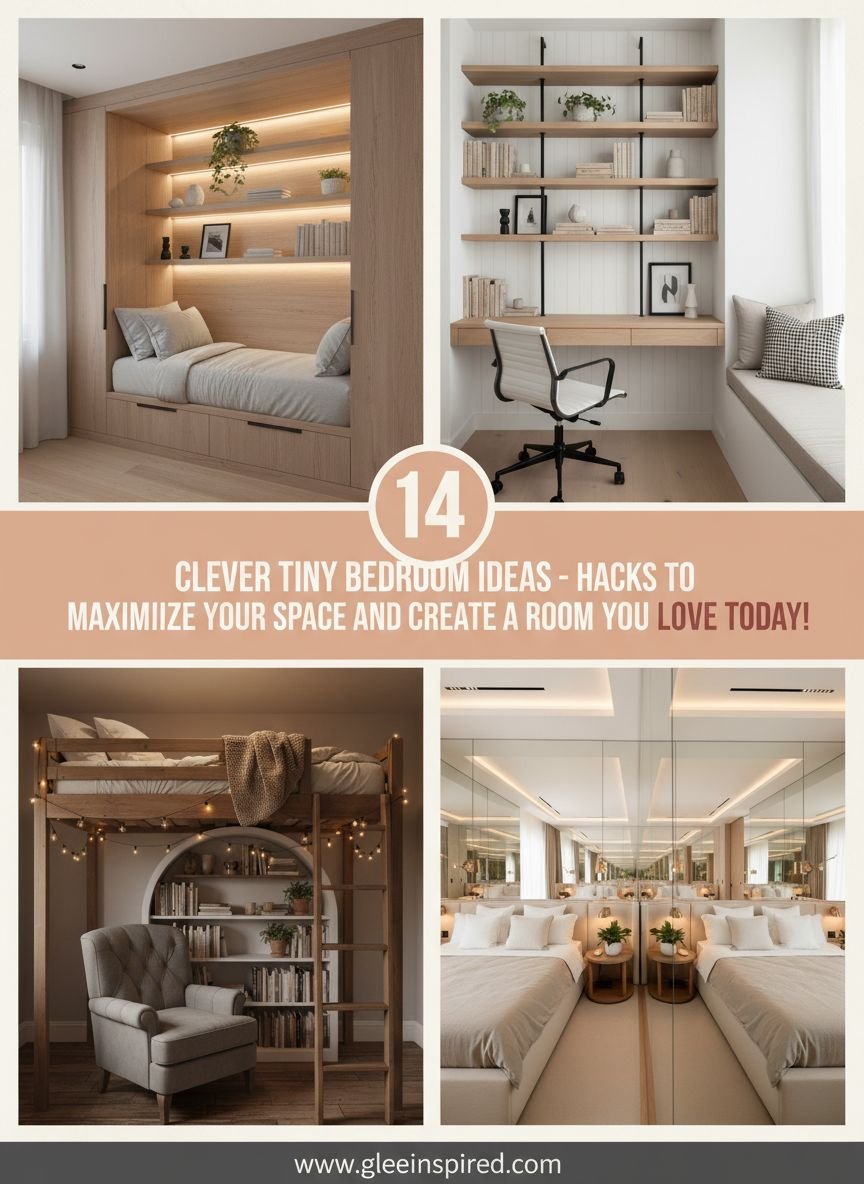
Designing a tiny bedroom is about shifting your perspective from “limitations” to “possibilities.” By embracing vertical space, investing in multifunctional furniture, and using visual tricks like mirrors and lighting, you can create a room that feels twice its size. These 14 tiny bedroom ideas prove that you do not need a mansion to have a stylish, organized, and restful retreat.




Leave a Comment