
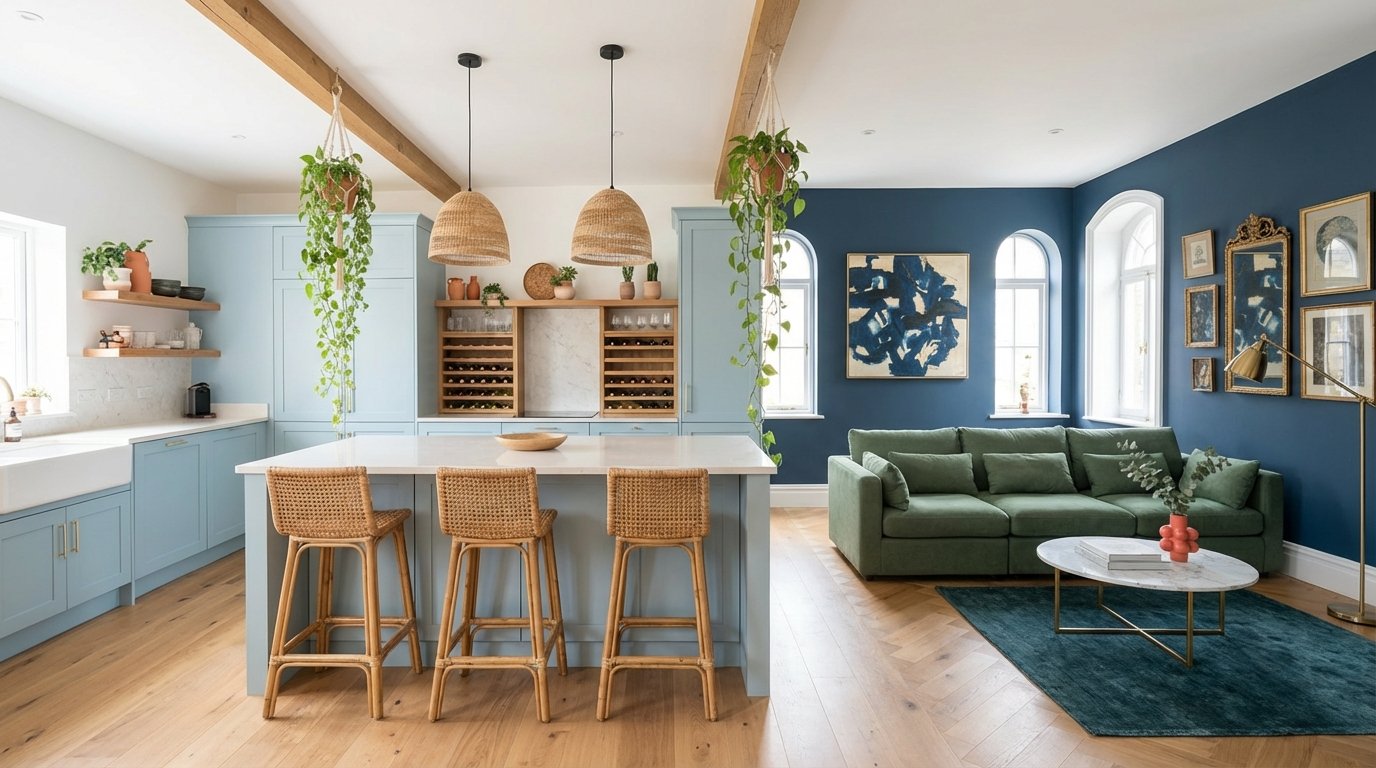
Living in a compact home often feels like a constant battle for square footage. You want the airy freedom of an open layout. Yet you fear the chaos of a kitchen that bleeds messily into your relaxation zone. The struggle to define spaces without building walls is real. A poorly planned open concept makes a small house feel smaller. It creates visual noise. It kills the vibe.
But you can fix this. With the right strategy, you can trick the eye. You can create distinct functional areas that feel cohesive yet separate. This guide provides actionable, high-impact design solutions to maximize your footprint. You will learn to wield light, color, and furniture to build a home that feels spacious and organized.
Key Takeaways
- Zoning is King: Use rugs, lighting, and flooring to create invisible walls that define purpose without blocking sightlines.
- Verticality Matters: Draw the eye up with high shelving and statement range hoods to create an illusion of volume.
- Cohesion is Crucial: A monochrome or limited color palette prevents visual clutter and makes the entire footprint feel like one grand space.
- Light Layers: Distinct lighting fixtures for the kitchen versus the lounge area subconsciously signal a change in function.
Table of Contents
- Invest in a good range hood
- Use rugs to create zones
- Use Paint To Define Different Zones
- Use lighting to highlight different areas
- Kitchen island without a sink or a hob
- Choose a Monochrome Palette
- Create Zones With Different Flooring
- Divide with shelving
- Place a Peninsula
- Planning for Your Needs
- Minimize Clutter
- Add Indoor Plants
- Popular Asked Questions
- Conclusion
Invest in a good range hood
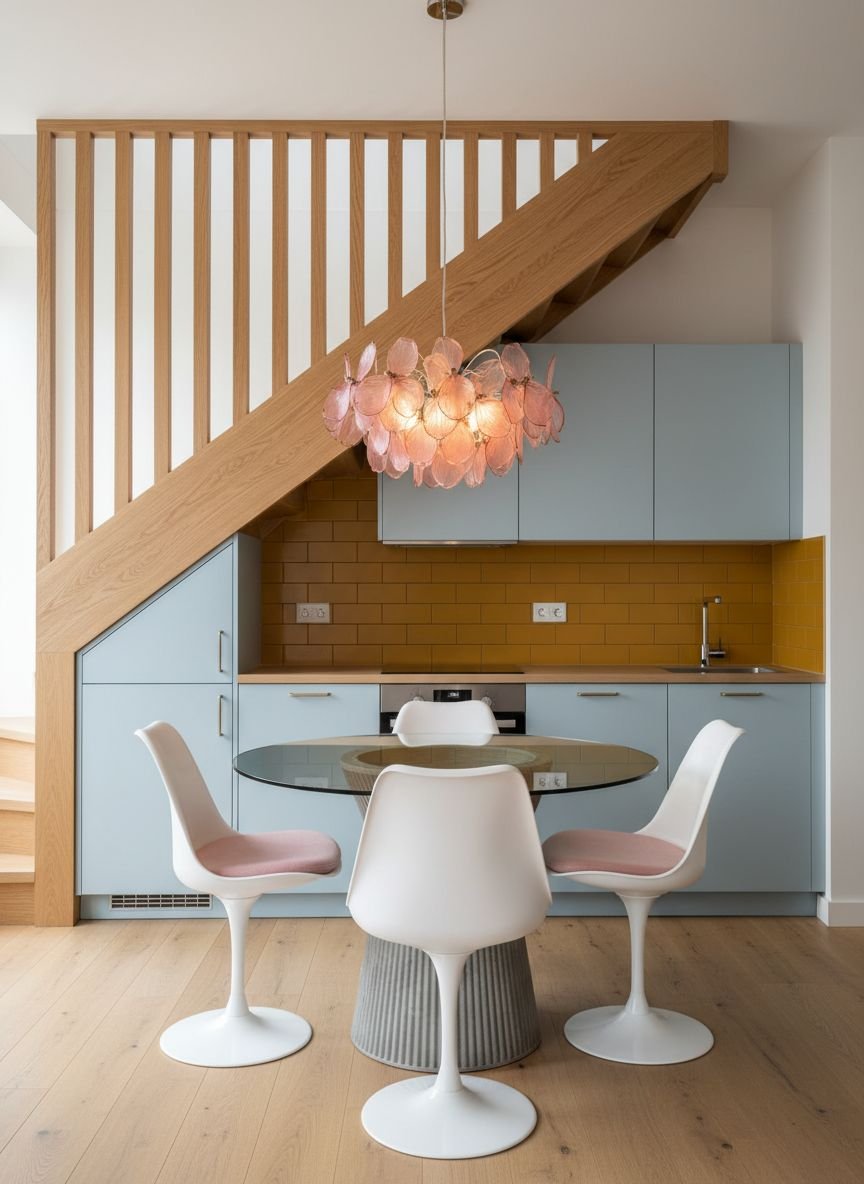
Smell travels fast in a small house. In an open concept layout, nothing ruins a cozy movie night on the sofa faster than the lingering scent of fried garlic or burnt toast. A high-quality, powerful range hood is not just an appliance. It is a necessity for livability. You need a unit with high CFM (Cubic Feet per Minute) suction to trap grease and odors before they settle into your living room upholstery.
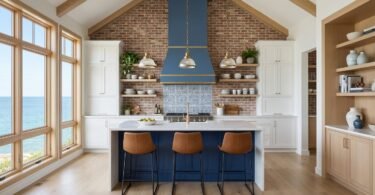
Beyond function, the range hood acts as a stunning visual anchor. In a small kitchen, cabinetry often blends into the background. A statement hood creates a focal point. Think of a sleek stainless steel chimney for a modern industrial look or a custom plaster hood for organic warmth. This draws the eye upward. It emphasizes the height of the room rather than the small footprint. By centering your kitchen design around this vertical element, you create a sense of grandeur. The kitchen feels intentional, not just a corner of the living room.
Pro Tip: Choose a hood that is slightly wider than your cooktop. This captures more steam and creates a more robust, professional aesthetic.
Use rugs to create zones
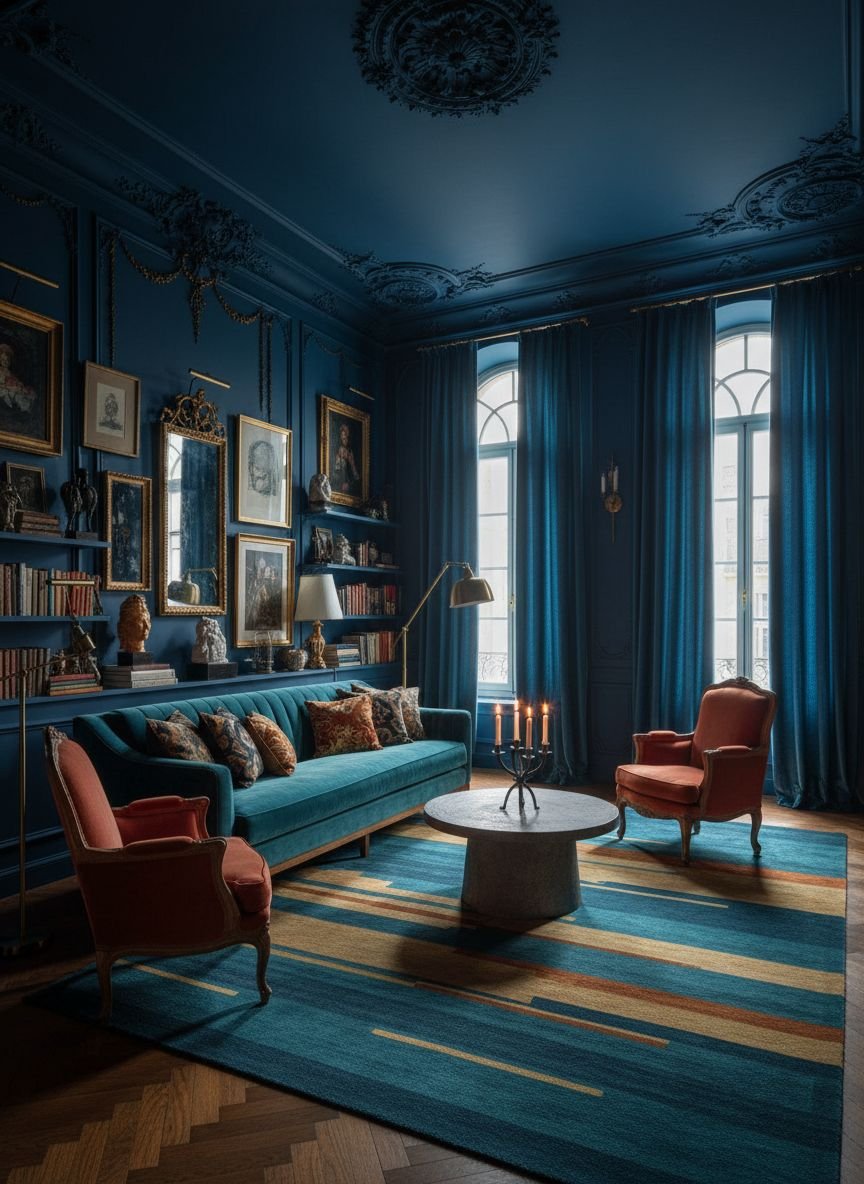
Flooring in an open concept house usually runs continuously to expand the space. This is great for flow but terrible for definition. Without boundaries, your furniture looks like it is floating in a warehouse. Rugs are your best tool to ground these floating elements. They act as islands of purpose. A large, plush area rug under your sofa and coffee table instantly screams “Living Room.” A durable, flat-weave runner in the kitchen signals “Work Zone.”
Texture plays a massive role here. Use a high-pile wool or shag rug in the living area to introduce softness and comfort. Contrast this with a natural jute or sisal rug under the dining table. The change in texture underfoot subconsciously tells your brain you have entered a new room. Ensure the front legs of all living room furniture sit on the rug. This ties the pieces together into a single conversation pit. If the rug is too small, the room looks disjointed and cheap.
Pro Tip: Use outdoor rugs in the dining area. They are indestructible, easy to clean, and now come in designs that look just like indoor textiles.
Save this idea to your Pinterest.
Use Paint To Define Different Zones
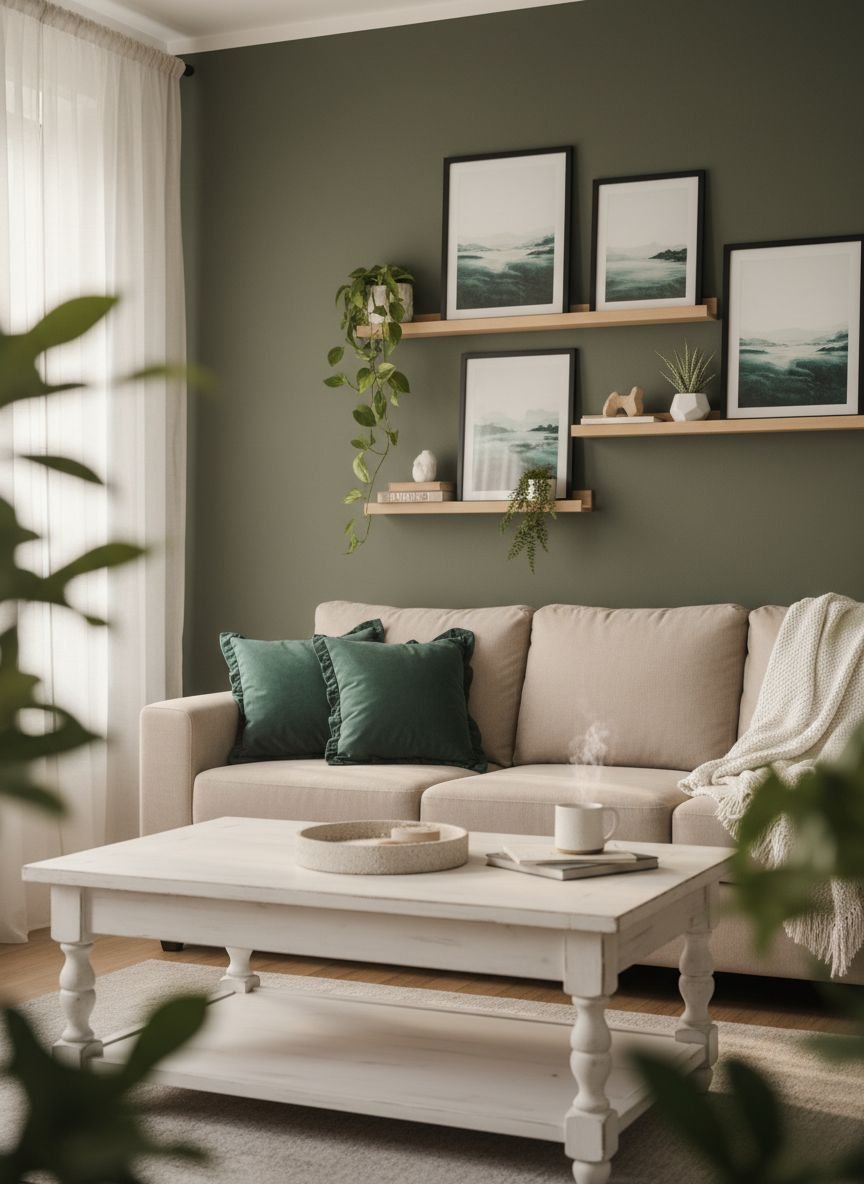
Walls are limited in a small house, but color is infinite. You do not need physical barriers to separate your kitchen from your lounge. Color blocking is a modern, bold solution. Paint the wall behind your kitchen cabinets a deep, moody charcoal or forest green. Keep the living room walls a crisp, airy white. This distinct shift in color creates a psychological threshold. The dark kitchen recedes visually, adding depth, while the light living area feels expansive.
You can also use paint on the ceiling. A painted ceiling in the dining nook creates a canopy effect. It feels intimate and separate from the rest of the open space. If you prefer a subtle approach, use the same color family but vary the sheen. Use a matte finish in the living room for softness. Use a satin or semi-gloss in the kitchen for durability and light reflection. These subtle cues guide the eye and organize the space without stealing square footage.
Pro Tip: Carry a small accent color from the kitchen paint into the living room throw pillows. This connects the two zones so they feel like cousins, not strangers.
Use lighting to highlight different areas
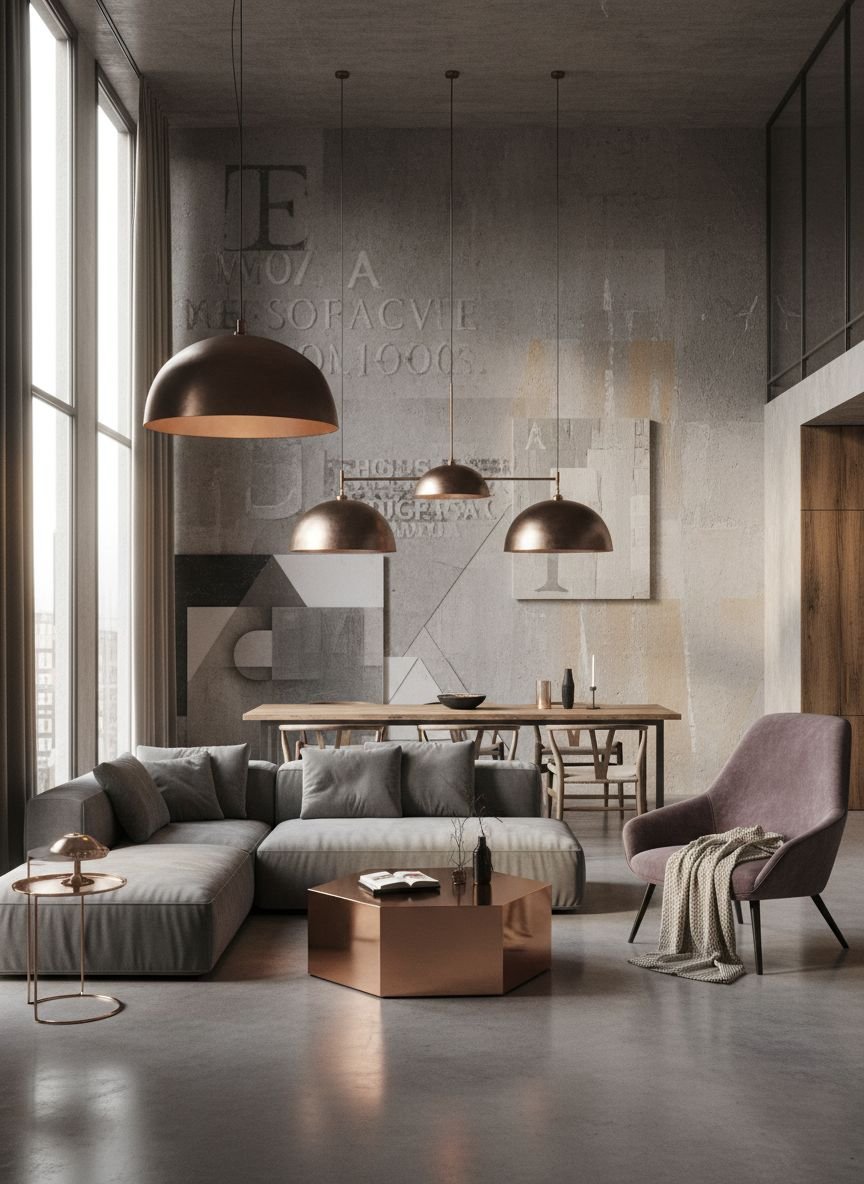
Lighting is the silent architect of your home. In a small open plan, a single central ceiling light flattens everything. It creates harsh shadows and makes the room feel like a waiting room. To fix this, you must layer your light. Give every zone its own lighting identity. Install pendant lights over the kitchen island or peninsula. These act as jewelry for the room and lower the visual ceiling for a more intimate cooking experience.
In the living area, avoid overhead lights if possible. Rely on floor lamps and table lamps. This creates pools of warm, soft light that invite relaxation. The contrast between the bright, focused task lighting in the kitchen and the moody, ambient glow in the living room creates separation. When you finish cooking, dim the kitchen lights. The messy counters disappear into the shadows, and your attention shifts entirely to the illuminated living space.
Pro Tip: Install dimmer switches on every circuit. Being able to control the intensity allows you to change the room’s function from “work mode” to “party mode” in seconds.
Kitchen island without a sink or a hob
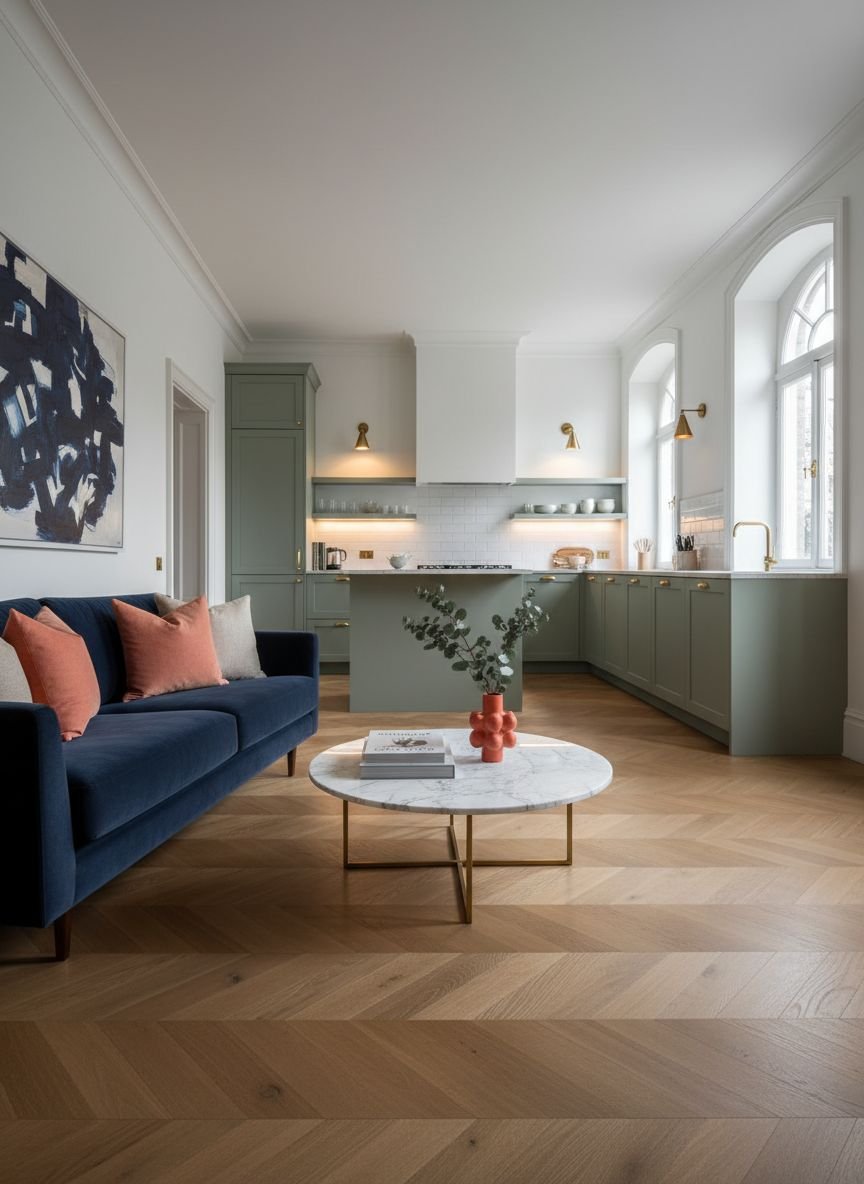
In a massive home, a kitchen island houses the sink, the dishwasher, and the trash. In a small open concept house, the island has a different job. It needs to be a multi-functional workhorse. Keep the surface completely clear. Do not install a sink or a stovetop on it. A clear expanse of stone or wood creates a calm visual break. It serves as a prep station, a dining table, a buffet for parties, and a desk for working from home.
When you clutter the island with fixtures, you break up that clean line. Dirty dishes pile up in the sink, right in the middle of your view from the sofa. A faucet sticking up interrupts the sightline. By keeping the island flat and clear, you bridge the gap between utility and leisure. It looks less like a “kitchen station” and more like a piece of furniture. This helps the kitchen blend seamlessly into the living area.
Pro Tip: Choose bar stools that tuck completely under the island overhang. This keeps walkways clear and maintains a streamlined look when the island is not in use.
Related posts :
- 16 Genius Small Kitchen Ideas to Maximize & Organize Your Space Like a Pro
- 15 Stunning Small Living Room Ideas to Transform Your Apartment Space Into a Spacious Sanctuary
- 14 Apartment Decor Inspiration Cozy Modern Ideas to Copy Now That Will Transform Your Space
Choose a Monochrome Palette
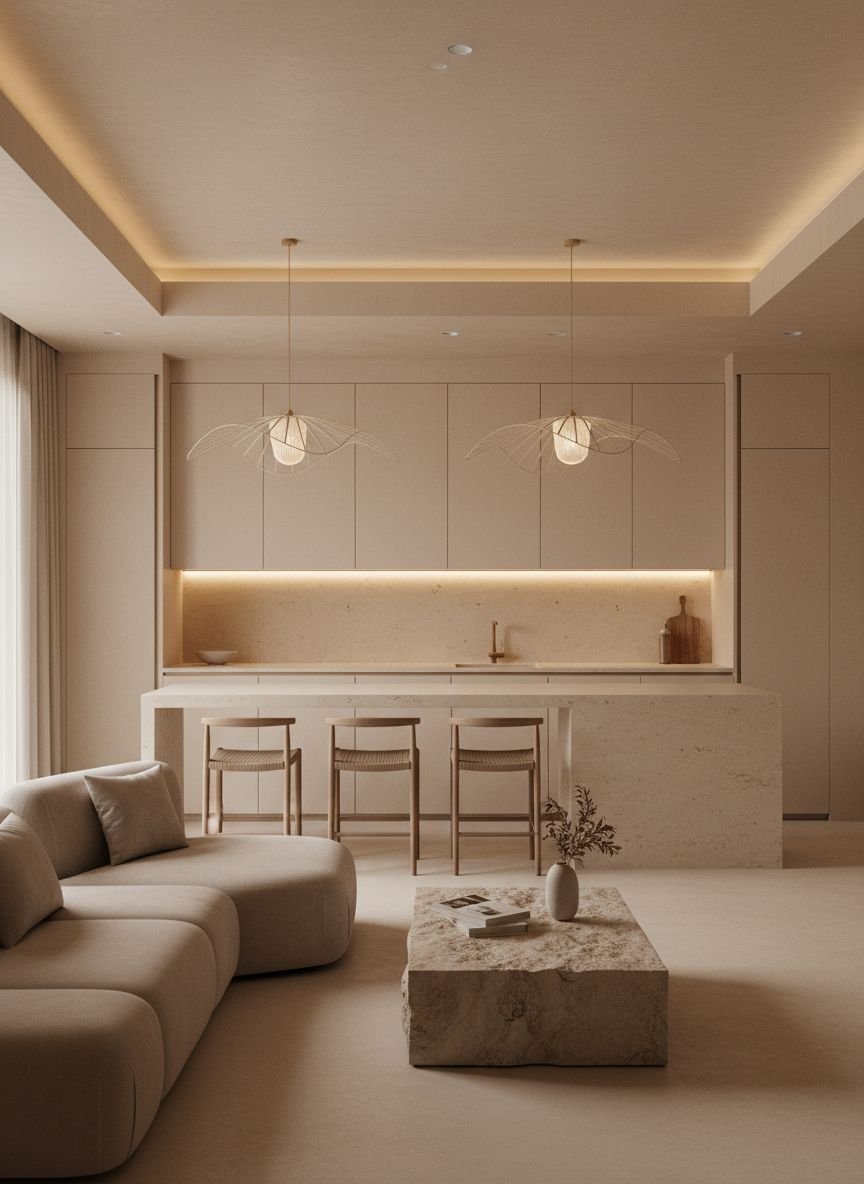
Visual clutter makes small spaces feel claustrophobic. Too many colors fighting for attention create chaos. A monochrome palette is the antidote. This does not mean boring. It means using varying shades, tints, and textures of a single hue. Imagine a space built on warm creams, beiges, and soft oaks. The eye glides effortlessly from the kitchen cabinets to the sofa to the curtains. There are no jarring stops.
This continuity blurs the boundaries of the room. You cannot tell where the kitchen ends and the living room begins, so the brain perceives one large, generous space. To prevent boredom, rely on texture. Mix smooth lacquer cabinets with a nubby boucle sofa. Pair a sleek marble countertop with a rough linen rug. The interest comes from the tactile experience, not from a riot of color. This approach feels sophisticated and high-end.
Pro Tip: Use black as a punctuation mark. Even in a light monochrome room, a few hits of black (a picture frame, a lamp base, a faucet) ground the space and add necessary contrast.
Create Zones With Different Flooring
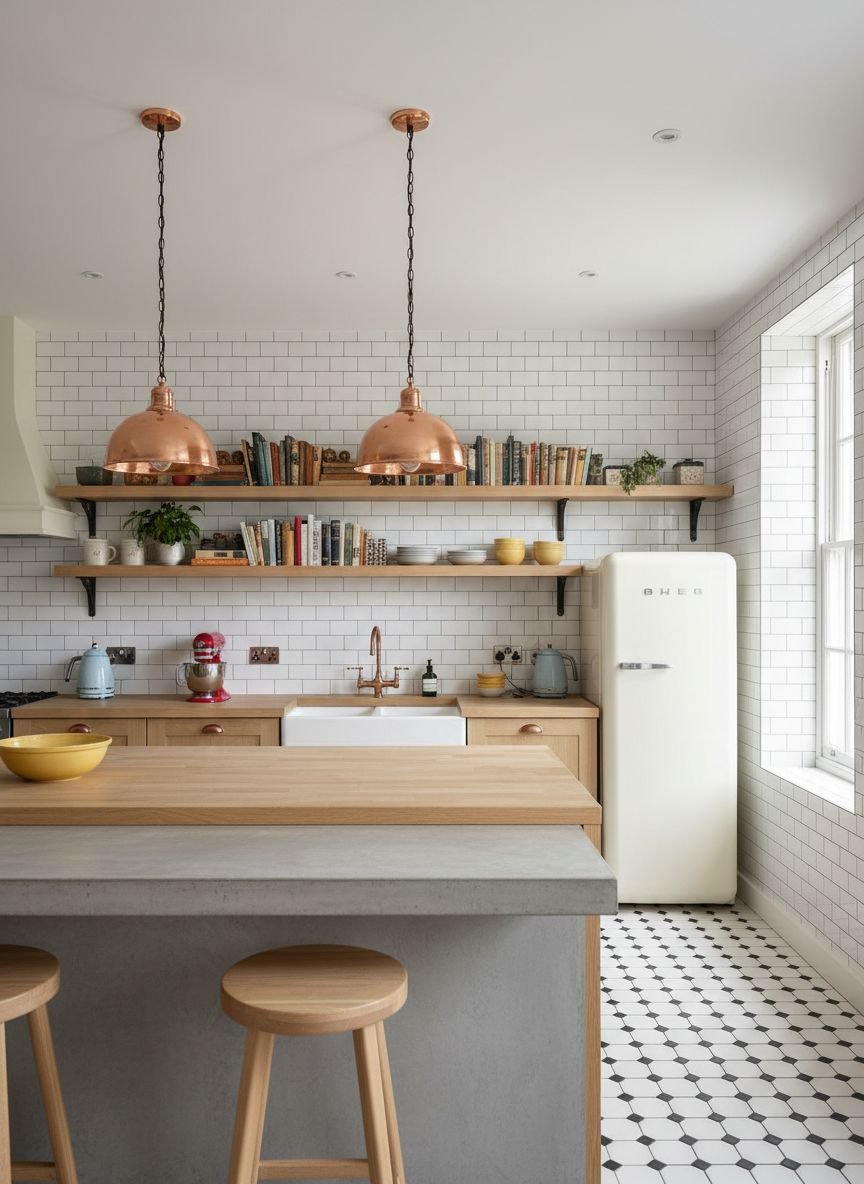
While continuous flooring expands a room, changing materials creates distinct “rooms” without walls. This is a bold move that requires precision. Tile is practical for the kitchen. It resists water and grease. Wood or carpet offers warmth in the living area. The transition line between these materials becomes the invisible wall.
You can make this transition a design feature. Instead of a straight line, use a hexagonal tile in the kitchen that “feathers” into the wooden floorboards of the living area. This organic edge looks custom and artistic. It acknowledges the open concept while respecting the functional needs of a wet zone versus a dry zone. Ensure the tones of the two materials complement each other. Cool grey tiles might clash with warm honey oak. Test your samples in natural light before installing.
Pro Tip: If you change flooring, keep the level flush. Tripping hazards ruin the flow. Use a high-quality transition strip or professional installation to ensure a seamless height match.
Divide with shelving

You need storage. You need separation. Open shelving gives you both. An open bookshelf placed perpendicular to the wall acts as a semi-transparent partition. It screens the kitchen from the living area but allows light to filter through. You maintain the airy feel of an open plan while gaining a sense of privacy.
Style the shelves carefully. This is a display piece, not a junk drawer. Mix books with sculptural objects, plants, and beautiful ceramics. Keep the bottom shelves for heavier storage (use baskets to hide clutter) and the top shelves for delicate items. This vertical divider draws the eye up, making low ceilings feel higher. It defines the “living zone” effectively, giving you a cozy corner to curl up in without staring directly at the refrigerator.
Pro Tip: Leave at least 30% of the shelf space empty. Negative space is essential to prevent the divider from feeling like a solid, blocking wall.
Save this idea to your Pinterest.
Place a Peninsula
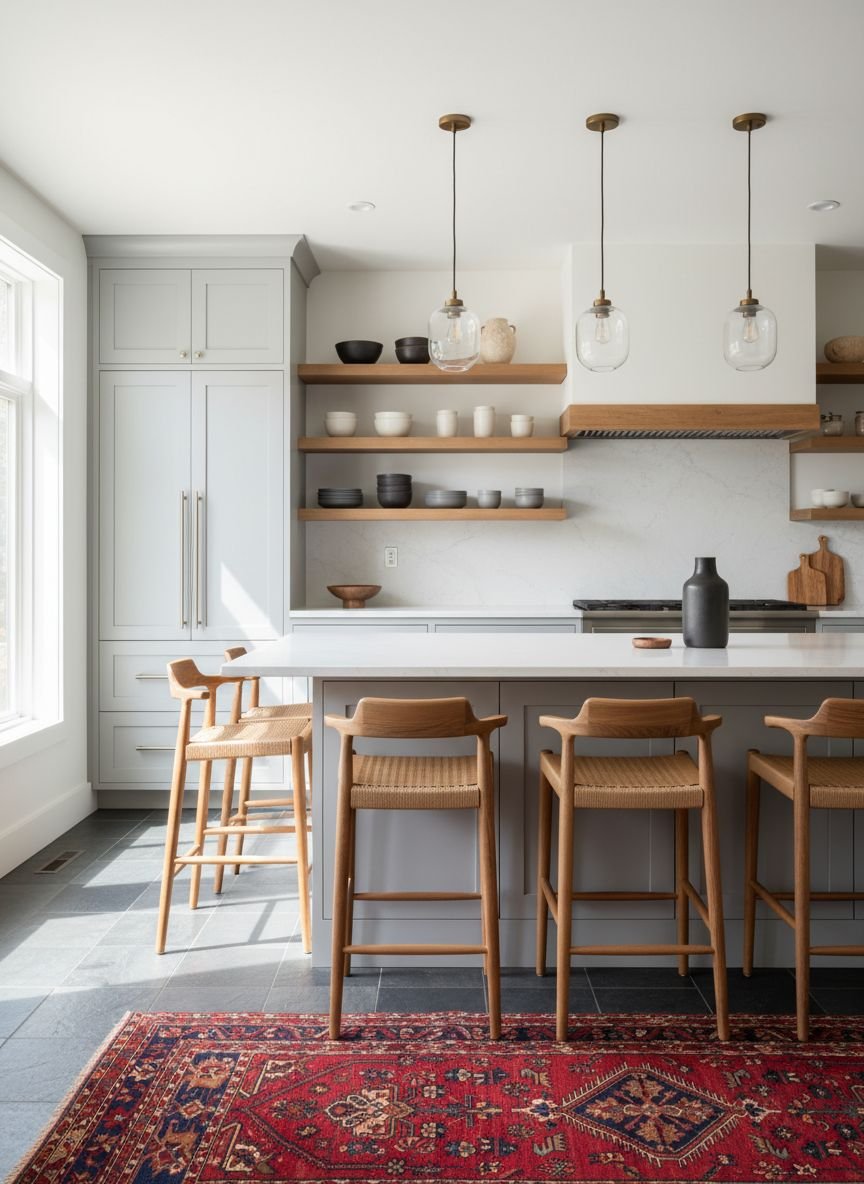
An island requires clearance on all four sides. In a very small house, you might not have that width. A peninsula is the solution. It is attached to one wall or existing cabinetry, creating a U-shaped or L-shaped kitchen layout. This naturally closes off the “work zone” from the “relax zone” while keeping the top half of the room open.
The peninsula acts as a hard barrier for foot traffic. Guests stay on the living room side, leaning on the counter with a drink, while you cook undisturbed on the kitchen side. It provides the same seating and prep space benefits as an island but uses less floor area. The back of the peninsula (facing the living room) can be finished with shiplap, beadboard, or the same paint color as the living room walls to help it blend in.
Pro Tip: Install outlets on the side of the peninsula facing the living room. It becomes the perfect charging station for laptops and phones, keeping cords away from your cooking prep.
Planning for Your Needs
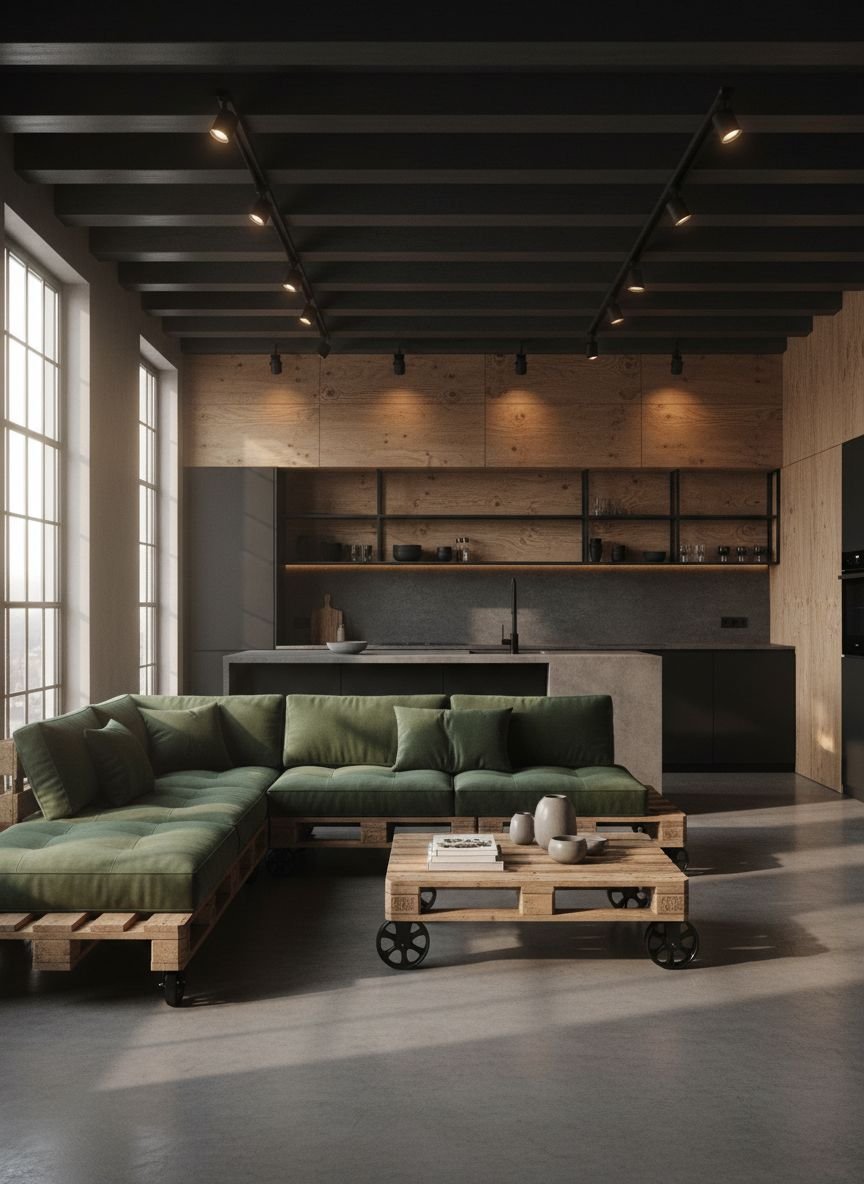
Design is not just about looks. It is about lifestyle. Before you buy a single piece of furniture, audit your life. Do you host dinner parties? Then a dining table is non-negotiable, perhaps one that extends. do you eat on the couch watching TV? Then skip the formal table. Use a larger coffee table or a breakfast bar and use that floor space for a bigger sectional.
In a small open concept, every square inch must earn its rent. If you never bake, do not waste space on a massive stand mixer display. If you work from home, your dining table might need to double as a desk. Choose furniture with dual purposes. An ottoman with storage inside. A console table that unfolds into a dining desk. Tailoring the layout to your actual behavior prevents the space from feeling cramped with useless items.
Pro Tip: Tape out your furniture layout on the floor with painter’s tape before buying. Walk through the space. Ensure you have clear paths to walk from the front door to the kitchen without hip-checking a chair.
Minimize Clutter
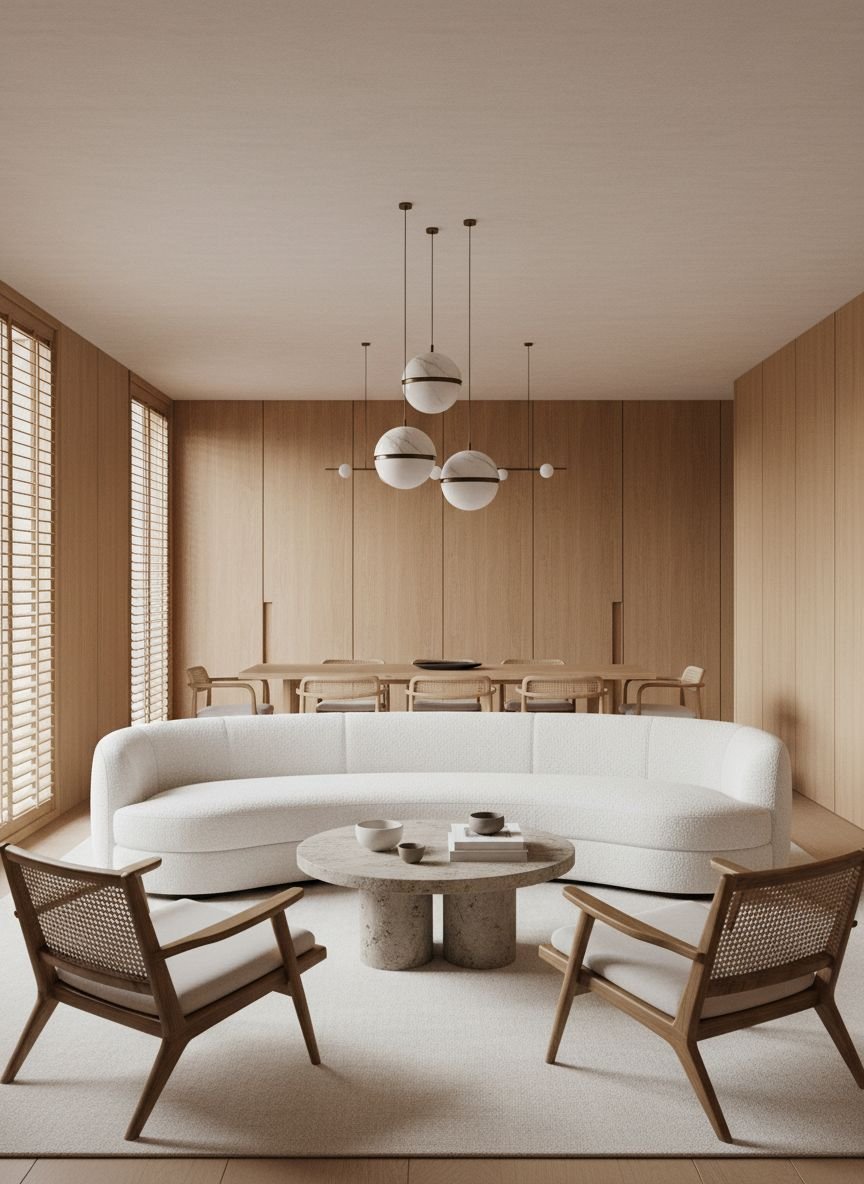
Clutter shrinks a room. In an open concept small house, there is nowhere to hide. A pile of mail on the counter is visible from the sofa. A stack of magazines on the coffee table creates visual stress while you cook. Minimalism is your best friend. Adopt a “one in, one out” policy.
Invest in closed storage. Open shelves are beautiful but require constant curation. Cabinets with doors hide the ugly reality of daily life—the cereal boxes, the blenders, the cords. Use floor-to-ceiling cabinetry in the kitchen to maximize vertical storage. In the living room, choose a media console with solid doors to hide gaming systems and routers. Clear surfaces reflect light and make the room feel breathable and calm.
Pro Tip: Create a “drop zone” near the entrance. A small basket or drawer for keys and sunglasses prevents them from migrating to the kitchen island or coffee table.
Add Indoor Plants
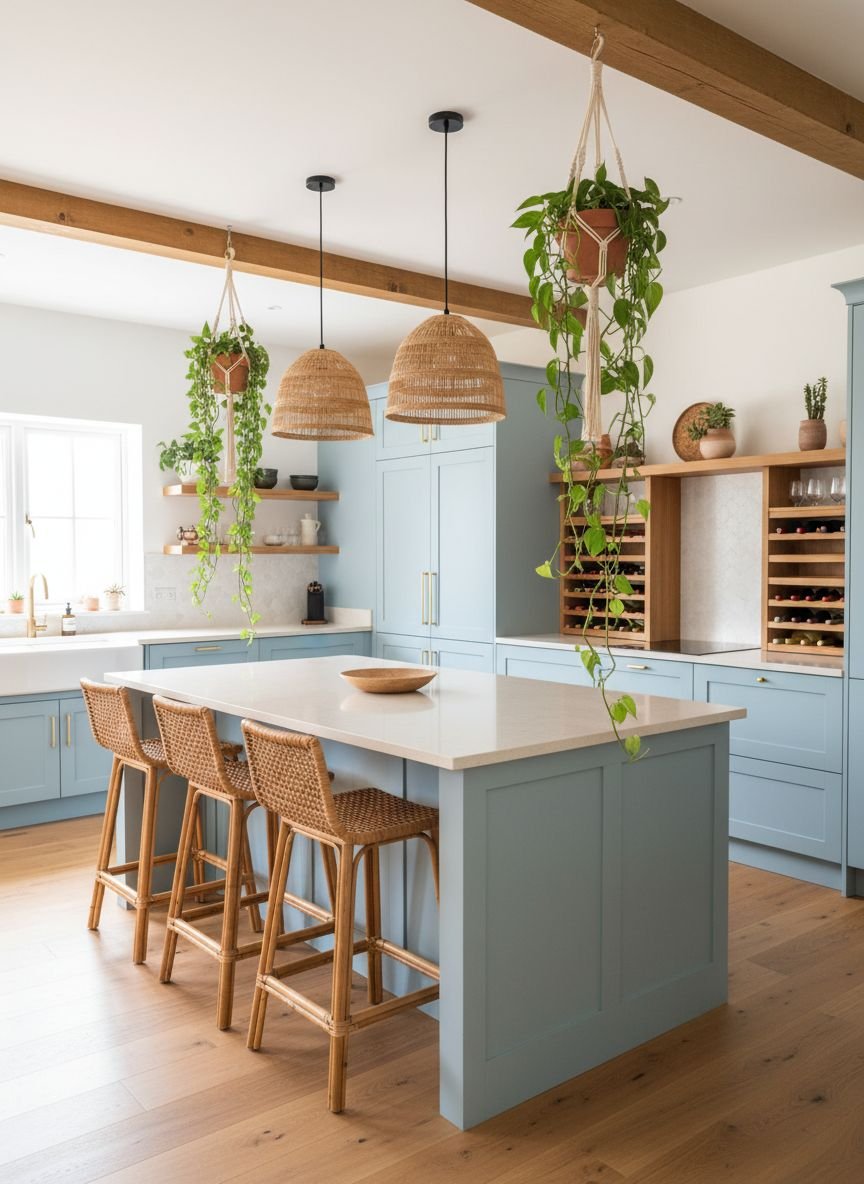
Plants breathe life into a small space. They add organic shape to the straight lines of cabinets and furniture. A tall fiddle leaf fig or a monstera in the corner draws the eye up and blurs the sharp corners of the room. Hanging plants are excellent for small open concepts because they take up zero floor space.
Use plants to bridge the gap between zones. A trailing pothos on top of the kitchen cabinets softens the hard edge. A large palm between the sofa and the dining area acts as a soft, living divider. The green color is a neutral that works with every palette. It adds vibrancy without adding visual weight. Plus, they improve air quality, which is vital in a smaller home.
Pro Tip: If you have low light, choose snake plants or ZZ plants. They are virtually unkillable and provide that necessary structural green element without needing a prime window spot.
Popular Asked Questions
How do you arrange furniture in a small open concept kitchen living room?
Start by floating your furniture. Push the sofa away from the walls. Place it facing the TV or a focal point, with its back to the kitchen. This back of the sofa acts as a low wall, defining the living space. Ensure you leave at least 30 inches of walking path between the sofa and the kitchen island or counters.
How do you separate a kitchen and living room in an open floor plan?
You can separate them visually without building walls. Use a large area rug to anchor the living room furniture. Change the lighting fixtures (pendants for kitchen, floor lamps for living). You can also use a physical divider like a sofa table behind the couch or an open bookshelf that allows light to pass through but stops the eye.
Is open concept good for small houses?
Yes, it is often the best choice. Removing walls allows natural light to travel through the entire home, making it feel brighter and larger. It eliminates “dead space” like hallways. However, it requires discipline to keep tidy, as the kitchen mess is always visible.
How to make a small open plan look bigger?
Stick to a light, neutral color palette to reflect light. Use mirrors to double the visual space. Choose furniture with legs (like a mid-century modern sofa) so you can see the floor underneath; this makes the room feel less heavy. Keep window treatments minimal to maximize natural light.
Conclusion

Designing a small house with an open concept kitchen and living room is a balance of flow and function. You do not need massive square footage to live luxuriously. By using smart zoning techniques like rugs, lighting, and paint, you create a home that feels organized and spacious.


Leave a Comment