
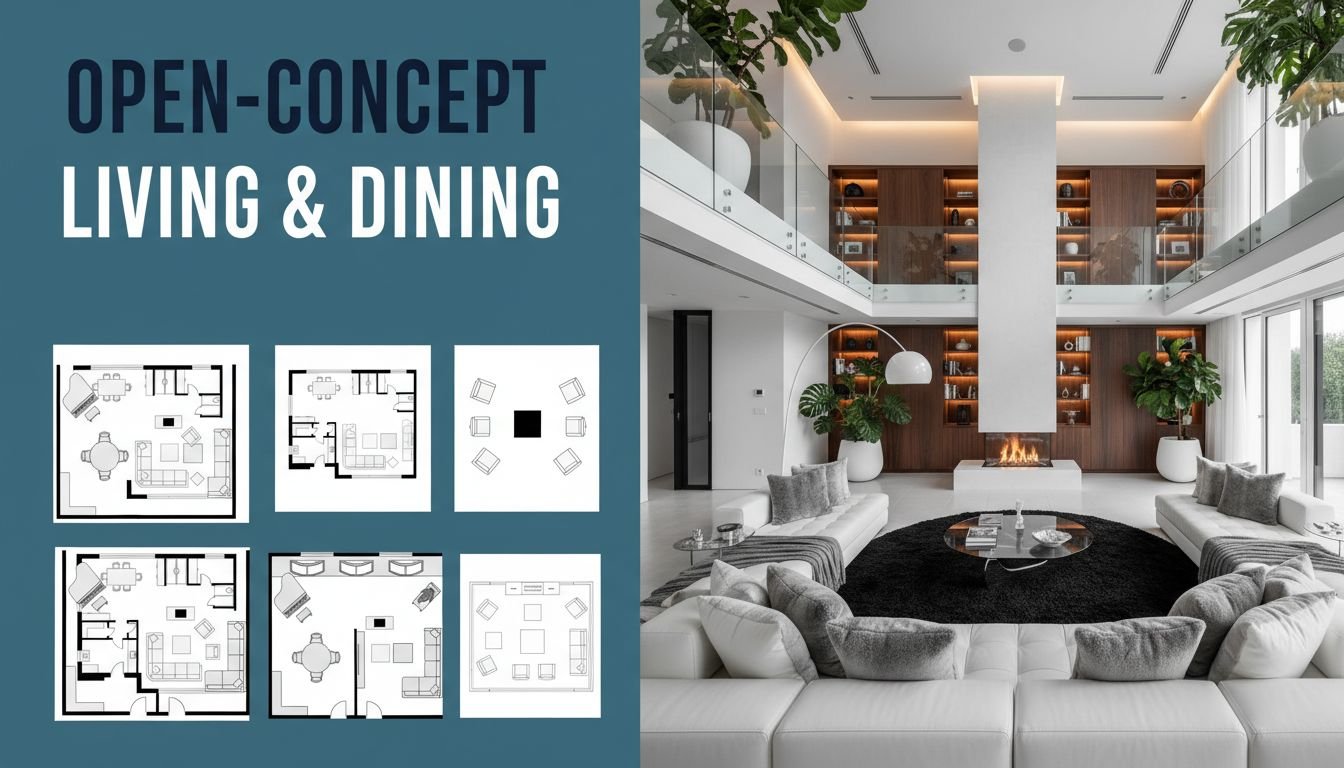
Large living rooms often present a surprising challenge. You might assume more space equals easier design. But massive square footage frequently leads to the “floating furniture” effect. The room feels cold. It lacks intimacy. You end up with awkward dead zones that collect dust rather than guests.
This guide fixes that. We break down five specific floor plan strategies to anchor your furniture. You will learn to zone massive areas effectively. We focus on flow, conversation circles, and visual weight. These layouts transform cavernous halls into cozy, functional sanctuaries.
Key Takeaways
- Zone Your Space: Never treat a large room as one single area. Break it into functions like conversation, reading, and media.
- Float the Furniture: Push pieces away from the walls. Anchoring furniture in the center creates intimacy.
- Rug Sizing is Non-Negotiable: All furniture legs must sit on the rug to define the zone.
- Lighting Layers: Use floor lamps and table lamps to lower the visual ceiling and add warmth.
Table of Contents
- Layout Idea #1 | A living room with a double entrance
- Layout Idea #2 | A long and narrow living room
- Layout Idea #3 | A long and narrow open concept living room
- Layout Idea #4 | A living room open to the dining room
- Layout Idea #5 | A large, open concept living room
- Comparison: Open Concept vs. Broken Plan
- Related posts :
- Popular Asked Questions
- Conclusion
Layout Idea #1 | A living room with a double entrance

Rooms with two entry points create a traffic highway. You cannot block the path. The goal here is to direct foot traffic around the conversation zone, not through it.
The Central Island Strategy
Position your main seating arrangement in the dead center of the room. Use two identical sofas facing each other. This creates a strong visual box. The symmetry calms the eye. It signals to guests that the center is for sitting, while the perimeter is for walking.
The Console Table Buffer
Place a narrow console table behind the sofa that faces the main entrance. This acts as a shield. It stops the energy of the entryway from hitting the seating area directly. Style it with tall vases or lamps. This adds height and further separates the “walkway” from the “sit-way.”
Lighting the Pathway
Do not ignore the walkways. Install sconces or place slim floor lamps along the perimeter walls. This draws the eye outward. It makes the walkway feel intentional rather than leftover space.
Pro Tip: Use a round coffee table between the facing sofas. The curves soften the harsh lines of the traffic paths.
Save this idea to your Pinterest.
Layout Idea #2 | A long and narrow living room
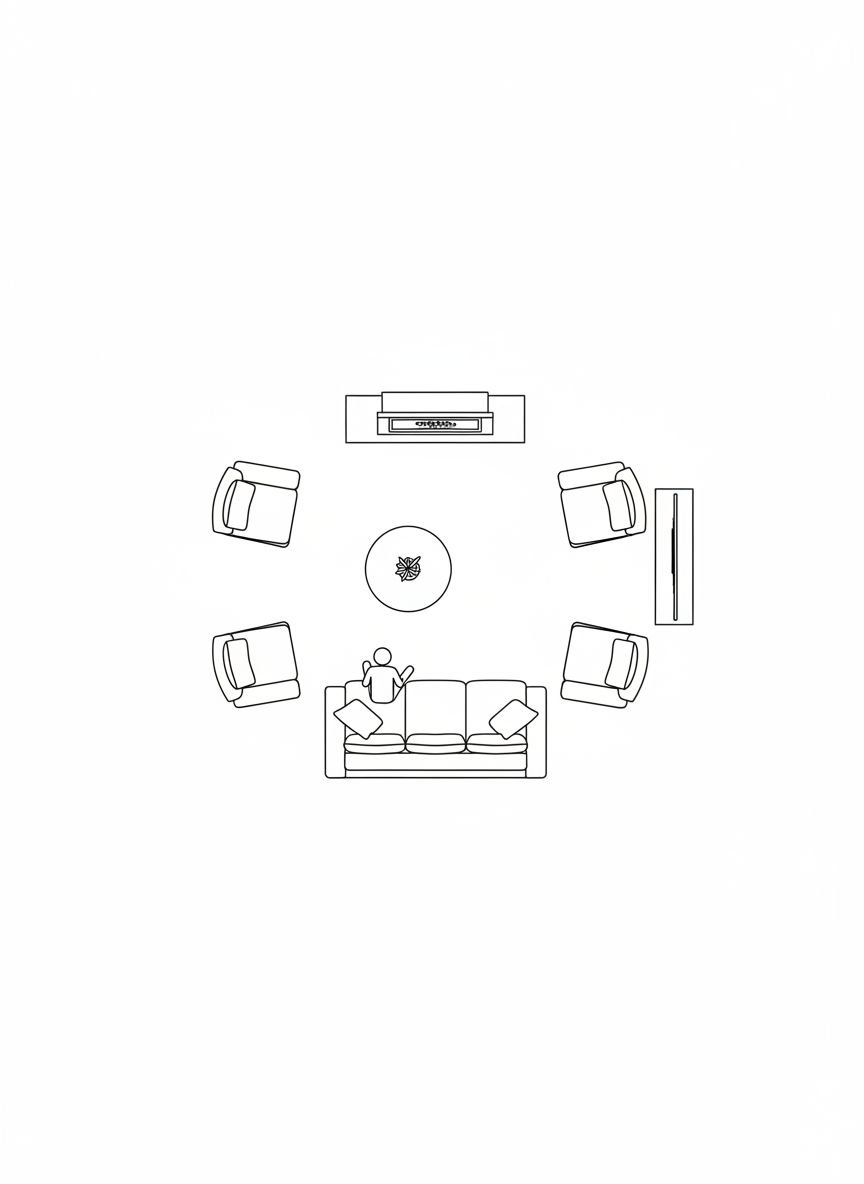
The “bowling alley” effect ruins many large homes. The room feels endless and uninviting. The solution is to slice the room into distinct square zones.
The Two-Zone Split
Divide the length into two separate functions. Zone A is for the television and main sofa. Zone B is for a secondary purpose. This could be a home office, a music corner, or a reading nook. Use the back of the main sofa to act as the dividing wall.
Perpendicular Placement
Never place your long sofa against the long wall. This exaggerates the tunnel effect. Place your main sofa perpendicular to the long walls. This visually cuts the room width. It stops the eye from shooting straight to the end of the room.
The Round Rug Trick
Use a large rectangular rug for the main TV zone. Use a round rug for the secondary zone. The contrasting shapes break up the monotony. The round rug introduces organic movement to a boxy room.
Pro Tip: Paint the far end wall a darker shade. Dark colors advance visually. This makes the room feel shorter and more proportional.
Layout Idea #3 | A long and narrow open concept living room
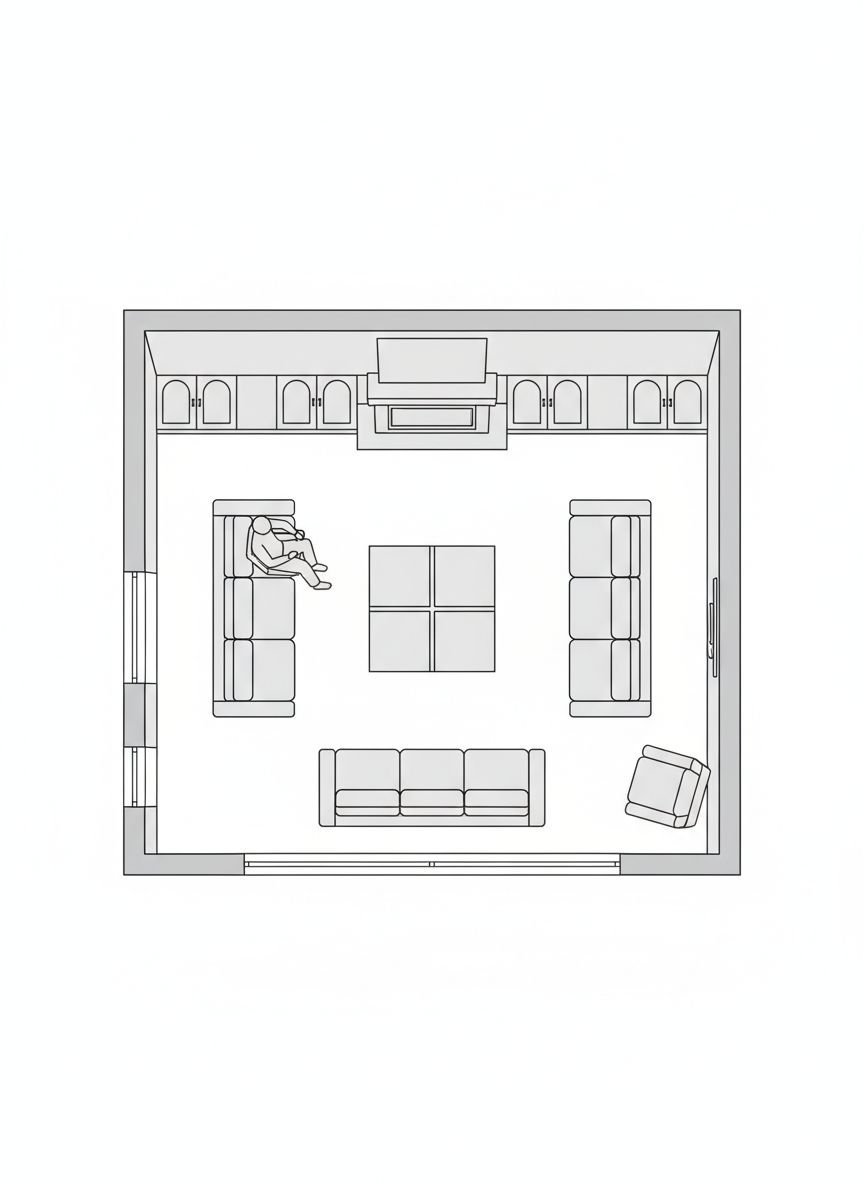
This layout shares the “bowling alley” shape but lacks walls to anchor furniture. You must build walls using furniture and decor.
The L-Sectional Anchor
An L-shaped sectional is your best friend here. The “arm” of the L creates a phantom hallway. It forces traffic to move along the side of the room rather than through the center. Orient the L-shape so it closes off the living area from the kitchen or dining space.
Vertical Storage Dividers
Use open shelving units as room dividers. Place a tall, open-back bookshelf between the living zone and the rest of the open space. This provides storage. It also allows light to pass through while defining the boundary.
Ceiling Treatment Zoning
Look up. Install a statement chandelier directly over the coffee table. Install a different lighting fixture over the adjacent zone. Distinct lighting fixtures signal to the brain that these are two different rooms, even without walls.
Pro Tip: Keep all furniture low profile. High-backed chairs can block sightlines in an open concept. Low furniture maintains the airy vibe.
Save this idea to your Pinterest.
Layout Idea #4 | A living room open to the dining room
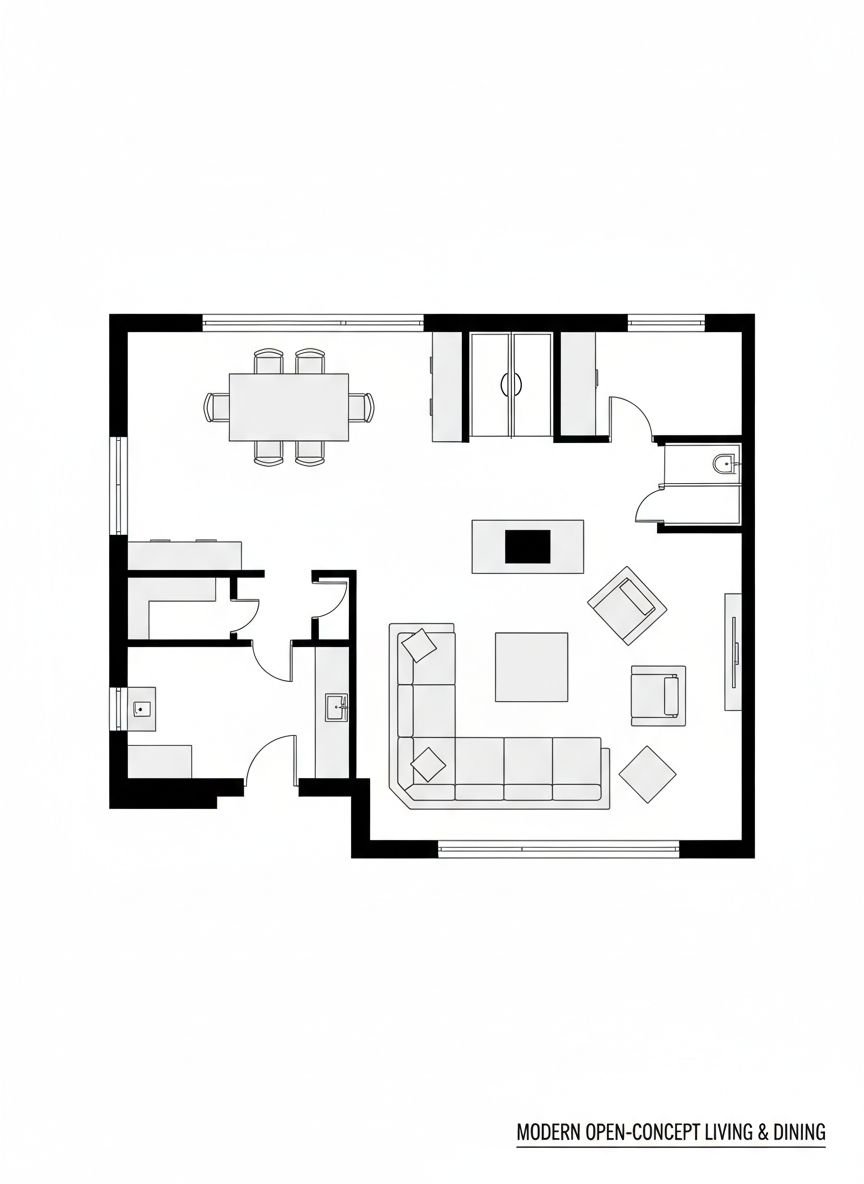
Connecting living and dining areas requires visual cohesion. You want them to feel like siblings, not strangers.
The Back-to-Back Arrangement
This is a classic for a reason. Place your living room sofa with its back to the dining table. Leave at least 36 inches of walking space between the sofa back and the dining chairs. This creates a clear separation of church and state.
Color Threading
Choose one accent color. Repeat it in both spaces. If you have navy throw pillows on the sofa, use navy placemats or a navy vase on the dining table. This connects the zones subconsciously.
Rug Harmony
The rugs do not need to match, but they must get along. If the living room rug is a busy Persian pattern, choose a solid textured sisal rug for the dining area. Clashing patterns create visual chaos in a shared space.
Pro Tip: Center the dining table under its light fixture first. Arrange the living room furniture second. Dining placement is less flexible due to lighting electrical boxes.
Layout Idea #5 | A large, open concept living room
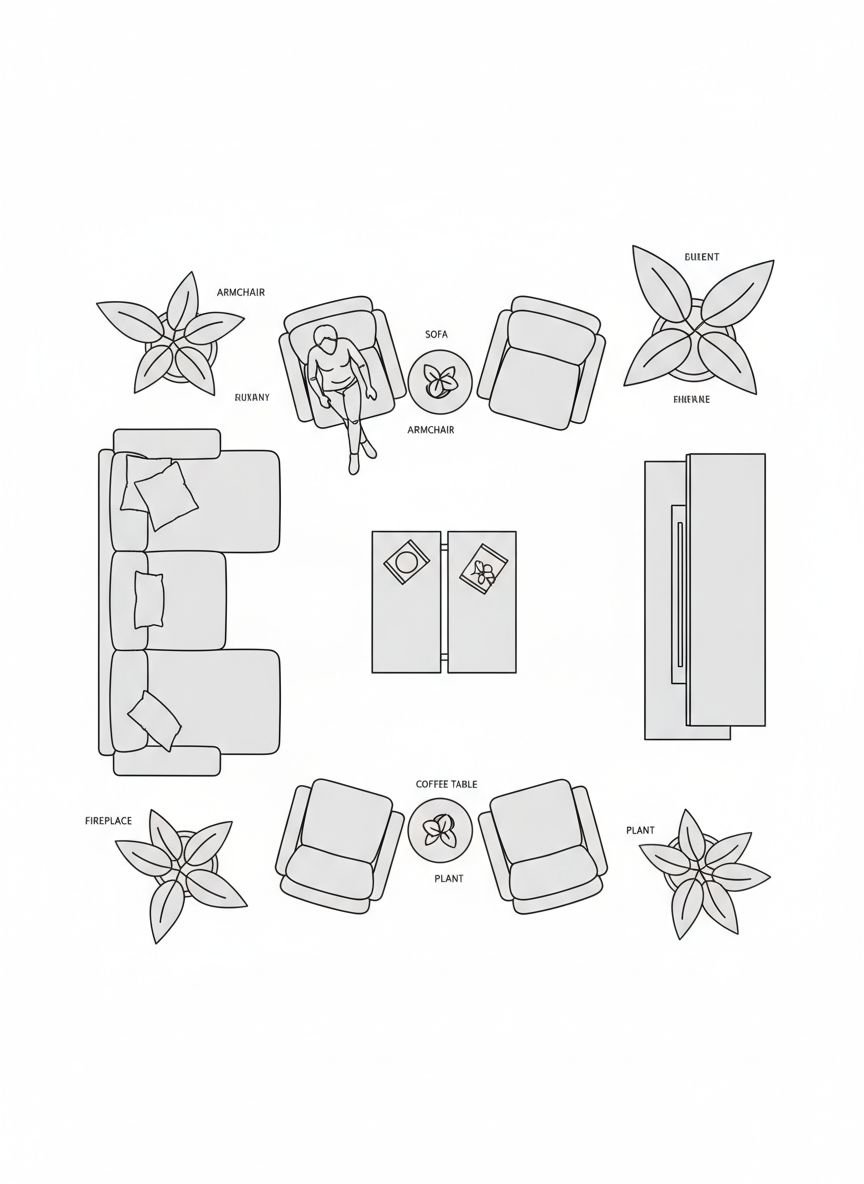
This is the “Great Room.” It is massive. It can feel like a hotel lobby if you are not careful. You need to fill the volume without cluttering it.
The Four-Chair Circle
Ditch the traditional sofa entirely for one zone. Create a conversation circle using four large armchairs around a round ottoman. This looks incredibly chic. It encourages face-to-face conversation. It fills a square space perfectly.
The Floating Media Wall
If your walls are too far away, bring the wall to you. Use a freestanding media console or a finished partition in the middle of the room. Mount the TV there. This allows you to float the entire living arrangement in the center of the room.
Oversized Greenery
Standard houseplants disappear in a great room. You need trees. Place a 7-foot Fiddle Leaf Fig or Olive Tree in the corner. The height bridges the gap between the low furniture and the high ceiling.
Multiple Coffee Tables
A single coffee table often looks like a postage stamp in a large room. Use two matching square tables side-by-side. Or use a cluster of three nesting tables. This covers more surface area and serves more seats.
Pro Tip: Use floor outlets. Floating furniture in a large room creates a cord hazard. Install electrical outlets in the floor under the sofa for lamps and chargers.
Save this idea to your Pinterest.
Comparison: Open Concept vs. Broken Plan
Here is a quick breakdown to help you decide how much separation you need.
| Feature | Open Concept Layout | Broken Plan (Zoned) Layout |
|---|---|---|
| Light Flow | Maximizes natural light throughout. | Uses shelves/screens to filter light. |
| Noise Level | High. Sound travels freely. | Moderate. Soft dividers dampen sound. |
| Privacy | Low. Everyone sees everything. | Medium. Nooks provide escape. |
| Social Vibe | Inclusive. Great for large parties. | Intimate. Better for small chats. |
| Best For | Families with young kids (supervision). | Couples or families with teens. |
Related posts :
- 15 Stunning Small Living Room Ideas to Transform Your Apartment Space into a Spacious Sanctuary
- 26 Living Room Mirror Ideas Designers Swear By to Instantly Brighten Your Home
- 12 Unique Classy Bedroom Ideas That’ll Make You Feel Like Royalty
Popular Asked Questions
How do you arrange furniture in a large awkward living room?
Start by ignoring the walls. Pull all furniture toward the center to create a floating arrangement. Identify the room’s focal point, like a fireplace or a view. Orient your main seating piece toward that point. Use rugs to define the area. Treat the awkward corners as separate mini-zones, like a reading nook or a plant sanctuary.
How do you fill dead space in a large living room?
Dead space kills the vibe. Fill corners with tall potted trees or a floor lamp. Use a console table behind a floating sofa. Add a bench or a pair of ottomans under a window. You can also create a “game zone” with a small card table and two chairs in an empty corner.
Where should a TV go in a large living room?
Place the TV away from direct sunlight to avoid glare. In a large room, the TV should be visible from the main sofa but not the sole focus. Consider a media console that stands alone if walls are too far. Ensure the distance between the TV and the sofa is roughly 1.5 to 2.5 times the diagonal screen size.
How do you divide a large living room into two zones?
Use furniture as dividers. The back of a sofa is the most common divider. Open bookshelves work well to separate spaces without blocking light. You can also use two different area rugs to visually mark where one zone ends and the next begins.
Conclusion
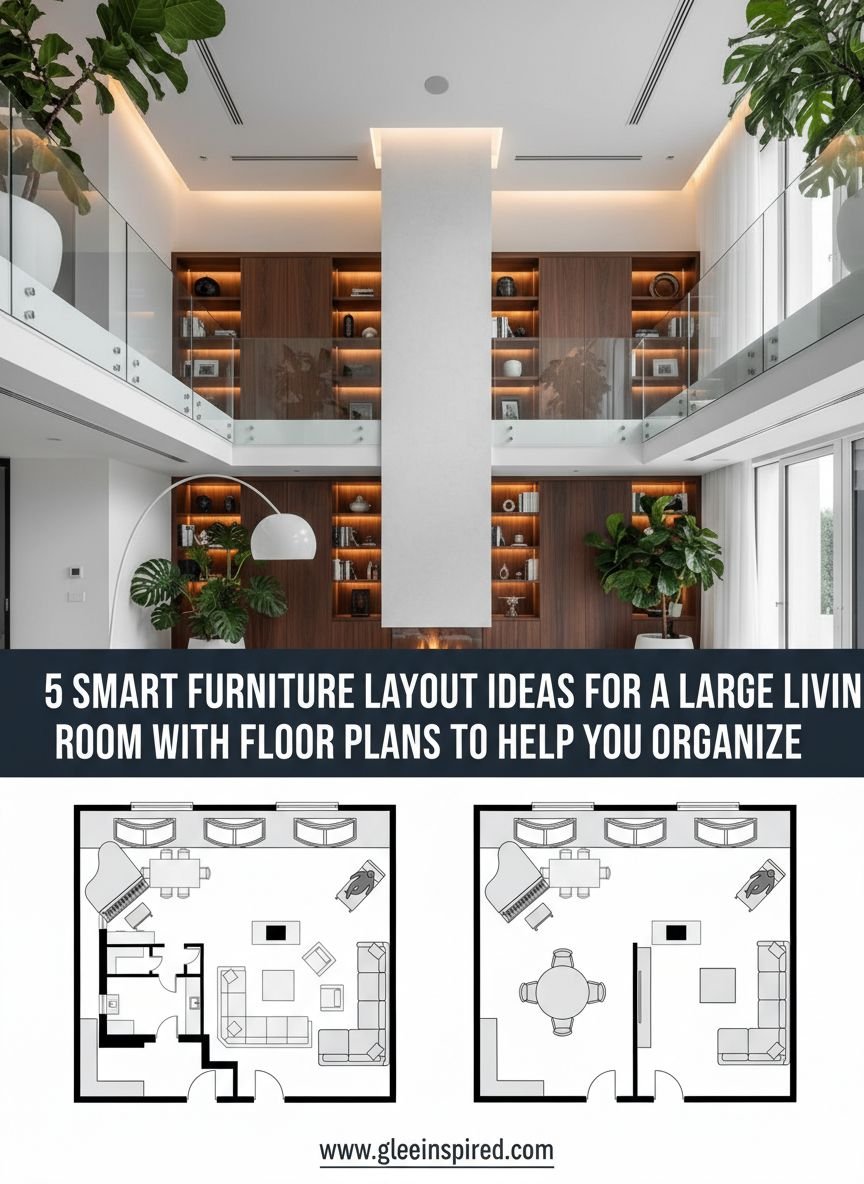
Designing a large living room requires bravery. You must be willing to pull furniture away from the walls. You must commit to large rugs and bold zoning. These five layouts provide the blueprint. Whether you have a double entrance or a bowling-alley shape, the solution lies in defining the space.

Leave a Comment