
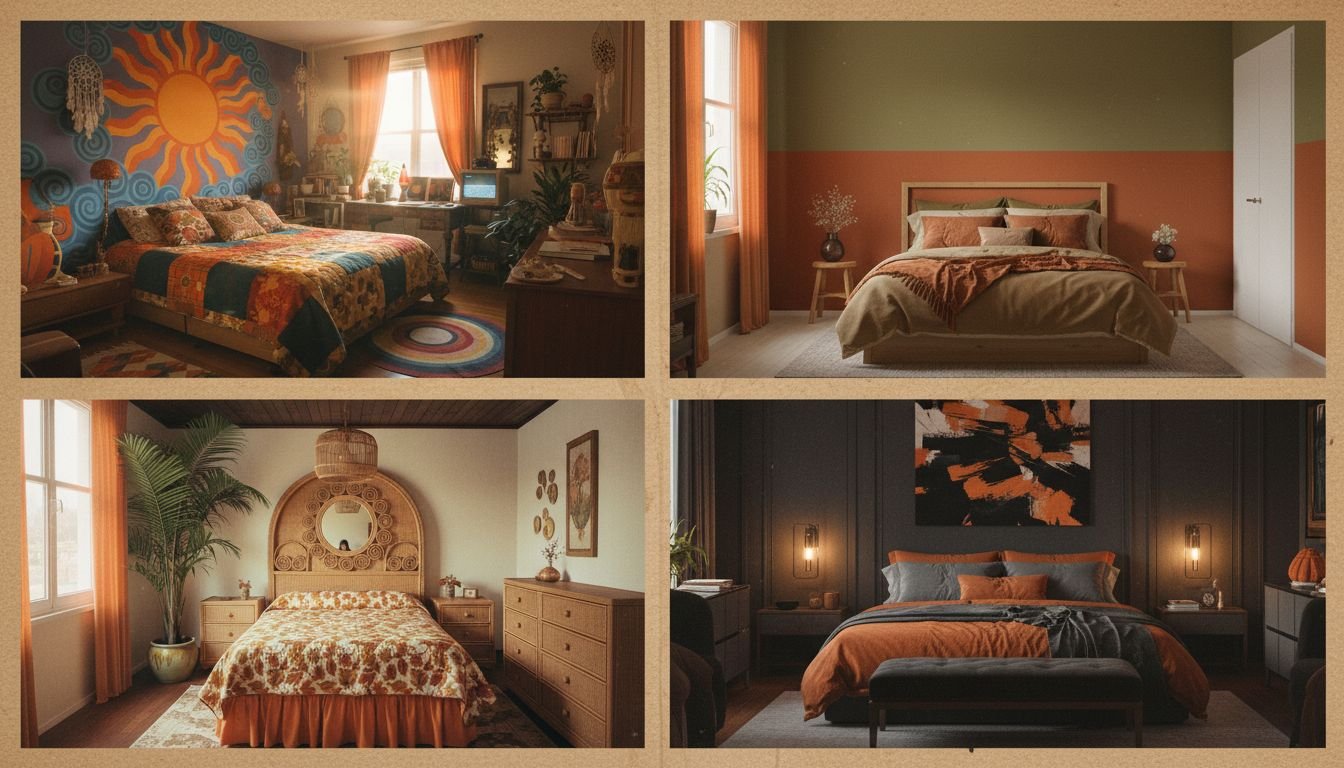
The 1970s are back in a major way. You see it in fashion, music, and now, it is taking over interior design. Homeowners are trading sterile, all-white minimalism for the warmth, texture, and unapologetic personality of the disco decade. This is not about creating a museum exhibit. It is about capturing a vibe that feels cozy, expressive, and undeniably cool.
You might feel overwhelmed by where to start. Maybe you worry that adding retro elements will make your room look dated rather than curated. We solve that problem here. This guide breaks down exactly how to blend vintage charm with modern sensibilities to create a bedroom sanctuary that feels both nostalgic and fresh. We will explore specific color palettes, iconic furniture shapes, and the exact textures you need to nail this look.
Key Takeaways
- Texture is King: The 70s aesthetic relies heavily on tactile experiences, from shag rugs to velvet headboards and rattan accents.
- Warmth Over Coolness: Swap cool greys for warm browns, burnt oranges, mustard yellows, and avocado greens to instantly set the mood.
- Low Profiles: Furniture in this era sits closer to the ground, creating a laid-back, lounge-like atmosphere essential for relaxation.
- Lighting Sets the Tone: Ambient, warm lighting using lava lamps or mushroom lamps is crucial for achieving that signature golden glow.
Table of Contents
- The Disco Decade: Setting the Stage for 70s Bedroom Style
- Embracing the Bold and Unconventional
- Cultural Influences on 70s Interior Design
- Color Me Funky: The Vibrant Palette of the 70s Bedroom
- Earthy Tones and Warm Hues
- Psychedelic Pops and Bold Accents
- Mixing and Matching Colors with Confidence
- Far Out Fabrics: Textiles That Defined the 70s Bedroom
- Groovy Patterns and Prints
- Shag Carpets: The Plush Foundation
- Velvet, Corduroy, and Other Happenin’ Fabrics
- Furniture Frenzy: Iconic Pieces of the 70s Bedroom
- Platform Beds: Low-Profile and Laid-Back
- Beanbag Chairs: The Ultimate Lounging Experience
- Wicker and Rattan: Bringing the Outdoors In
- Light Up Your Life: Illuminating the 70s Bedroom
- Popular Asked Questions
- Conclusion
The Disco Decade: Setting the Stage for 70s Bedroom Style
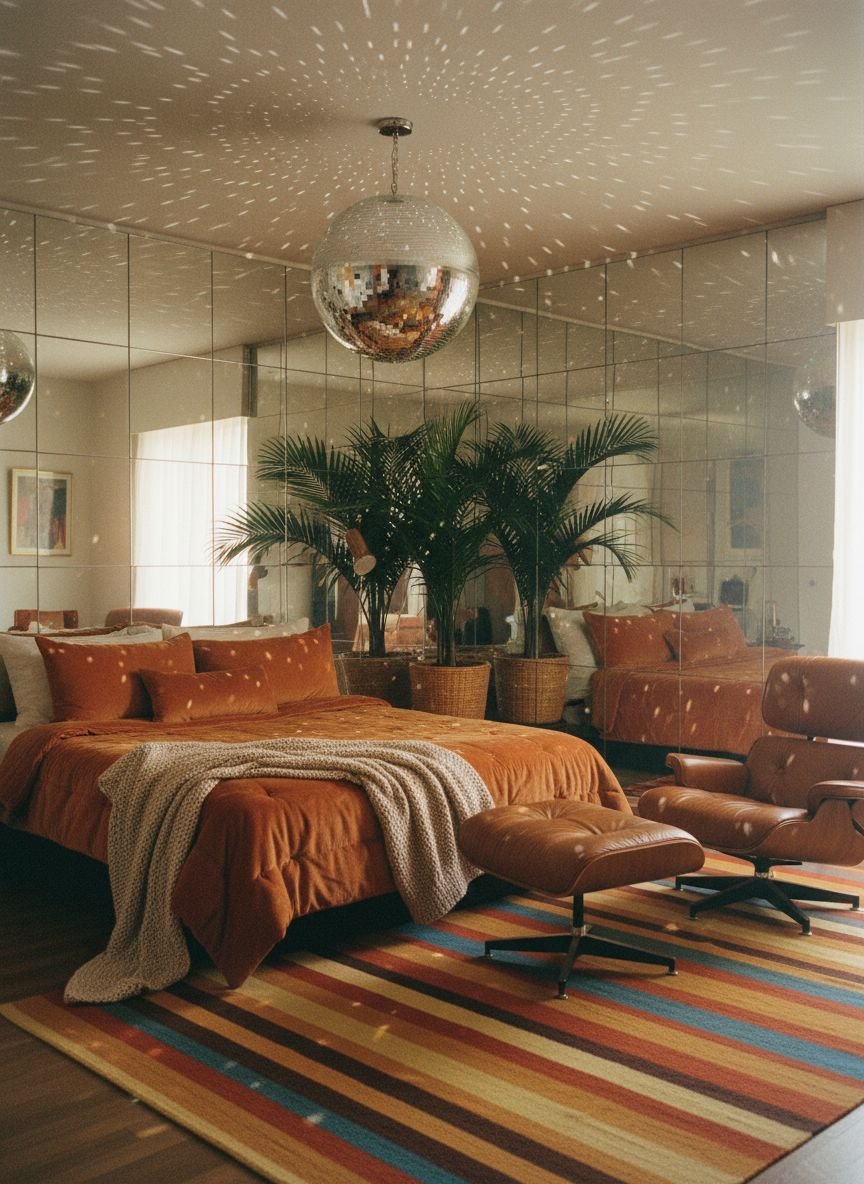
The 1970s represented a massive cultural shift that spilled directly into the home. Design moved away from the rigid, polished looks of the mid-century modern era into something far more relaxed and self-expressive. To recreate this in a modern bedroom, you must focus on the atmosphere first. Think of the bedroom not just as a place to sleep, but as a personal retreat for listening to records, reading, and lounging. The goal is to create a space that feels lived-in and authentic.
You can achieve this foundation by softening hard edges. Replace sharp, rectangular lines with curves and organic shapes. The “Disco Decade” style is less about glitter balls (though a metallic accent helps) and more about the freedom to experiment. It encourages you to break the rules of traditional symmetry. If you want a mattress on the floor or a wall covered in cork, this style welcomes it. It is about personal freedom manifested in interior design.
Pro Tip: Start small by adding a single statement piece, like a sunburst mirror or a macramé wall hanging, to establish the vibe without committing to a full renovation.
Embracing the Bold and Unconventional
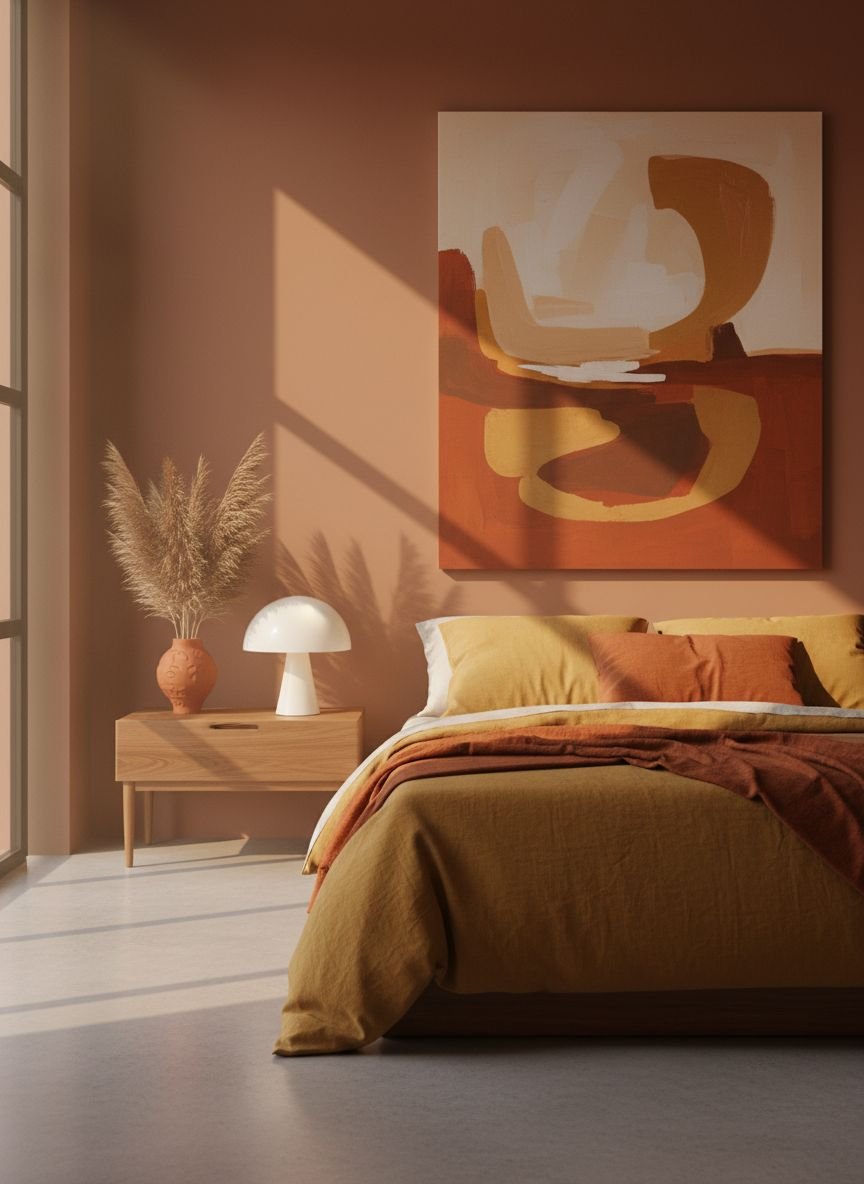
Self-expression defines this era. Homeowners in the 70s stopped caring what the neighbors thought and started decorating for themselves. This means your bedroom should reflect your personality loudly. Do not fear clashing patterns or oversized art. The “unconventional” aspect often manifests in unique structural choices, such as sunken conversation pits or, in the case of a bedroom, a bed tucked into a carpeted alcove.
To bring this look into the 2020s, focus on statement walls. Wallpaper experienced a renaissance in the 70s, featuring massive geometric prints and foil finishes. You can replicate this with peel-and-stick options that feature bold arches or super-sized florals. The key is to let one element dominate the room while the rest supports it. If your walls are shouting, let your bedding whisper. If your furniture is wild, keep the walls neutral.
Save this idea to your Pinterest.
Cultural Influences on 70s Interior Design
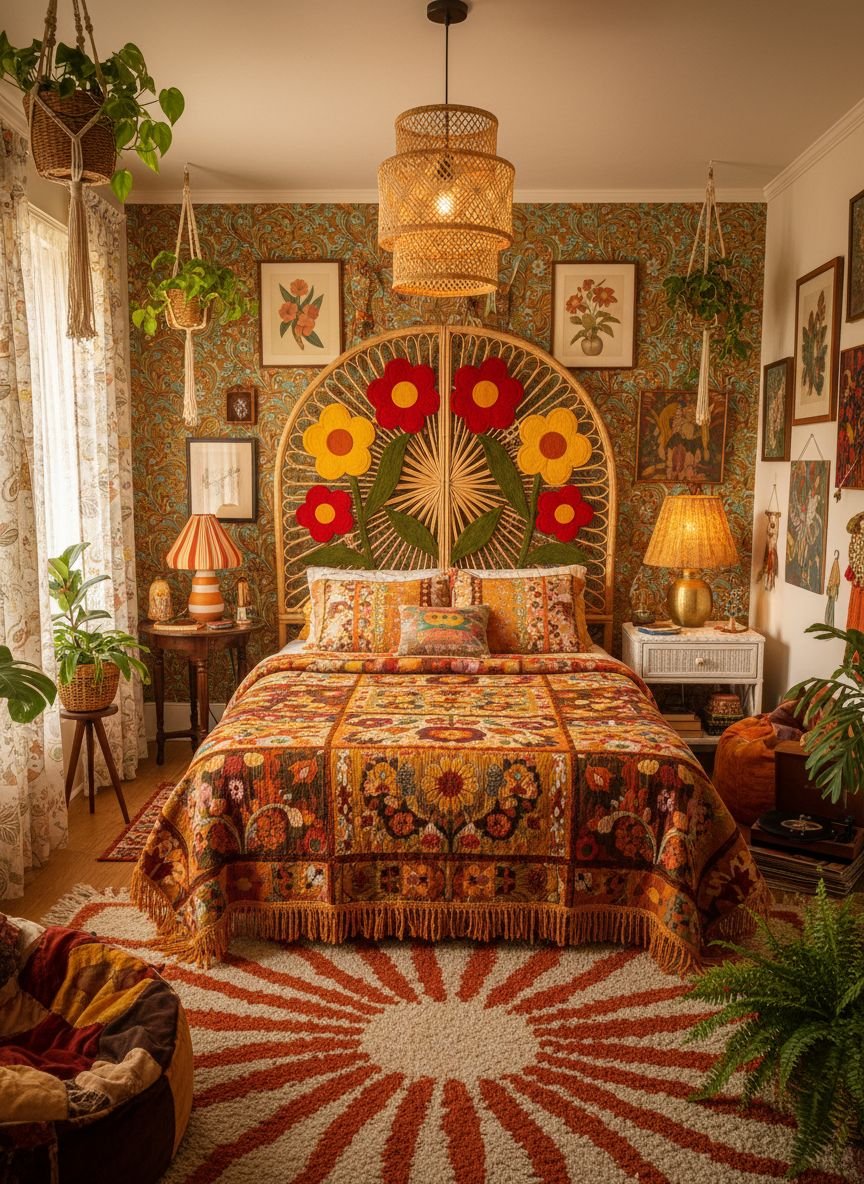
Global travel became more accessible in the 70s, and people brought the world back to their bedrooms. You will see heavy influences from Moroccan rugs, Indian block prints, and East Asian bamboo structures. This global eclecticism prevents the room from feeling like a rigid set piece. It adds layers of history and storytelling to the space.
incorporate this by mixing origins. Pair a sleek Italian plastic lamp with a hand-woven Peruvian blanket. Use a Japanese-style low bed frame with a Turkish kilim rug. The cohesion comes from the warm color palette rather than matching furniture sets. This approach creates a “boho-chic” look that feels collected over time rather than bought from a catalog. It adds soul to the bedroom that modern minimalist styles often lack.
Pro Tip: Visit local flea markets to find authentic global decor pieces. A genuine vintage item carries a patina that new reproductions cannot match.
Color Me Funky: The Vibrant Palette of the 70s Bedroom
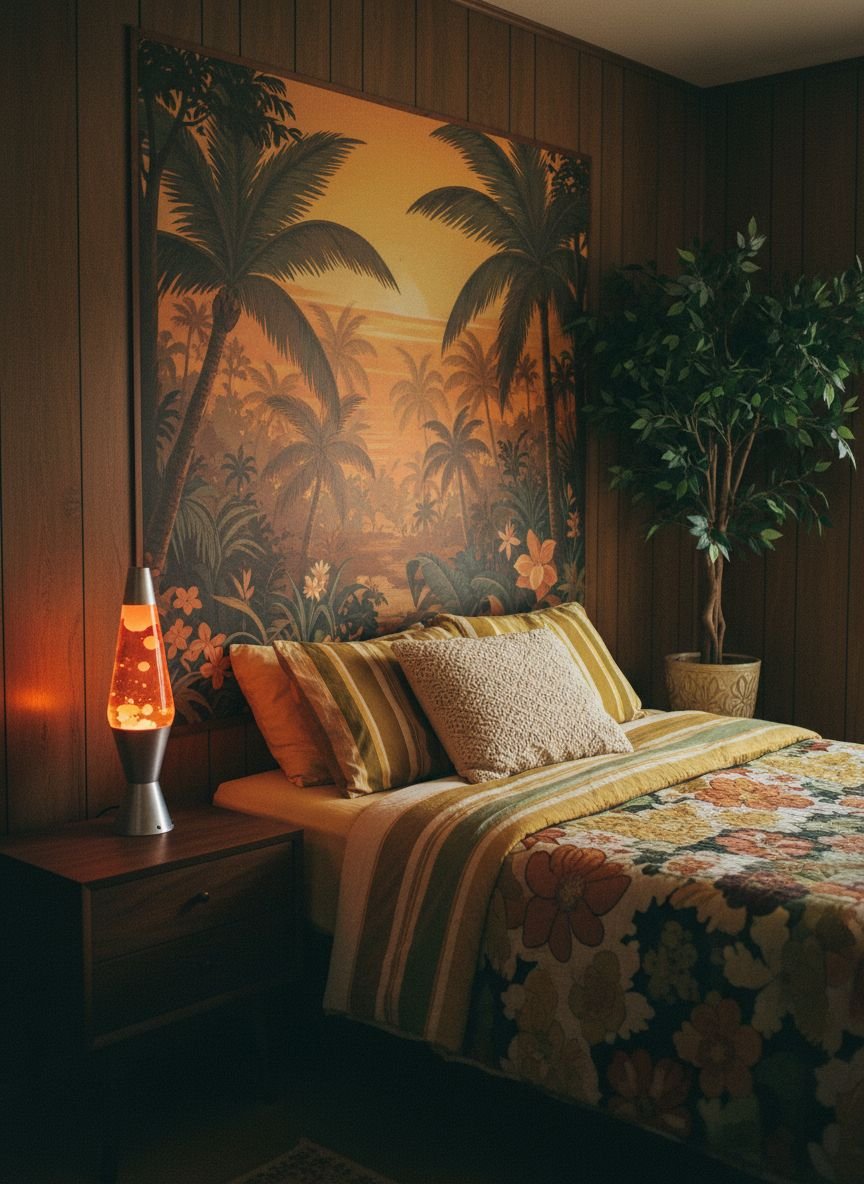
Color is the heartbeat of 1970s design. If you remove the color, you lose the essence. The 70s palette is famous for being saturated and warm. We are moving away from the “greige” (grey-beige) that dominated the 2010s. Instead, we embrace colors that mimic nature in its most vivid states: sunsets, forests, and earth.
When planning your bedroom, choose three main colors. A dominant base color (like cream or warm brown), a secondary color (like olive green or terracotta), and an accent color (like mustard yellow or teal). This triad ensures the room feels cohesive. Paint is the easiest way to transform the space. Consider painting the ceiling a color other than white. A soft peach or sage green ceiling wraps the room in warmth and lowers the visual height, making the bedroom feel intimately cozy.
Earthy Tones and Warm Hues
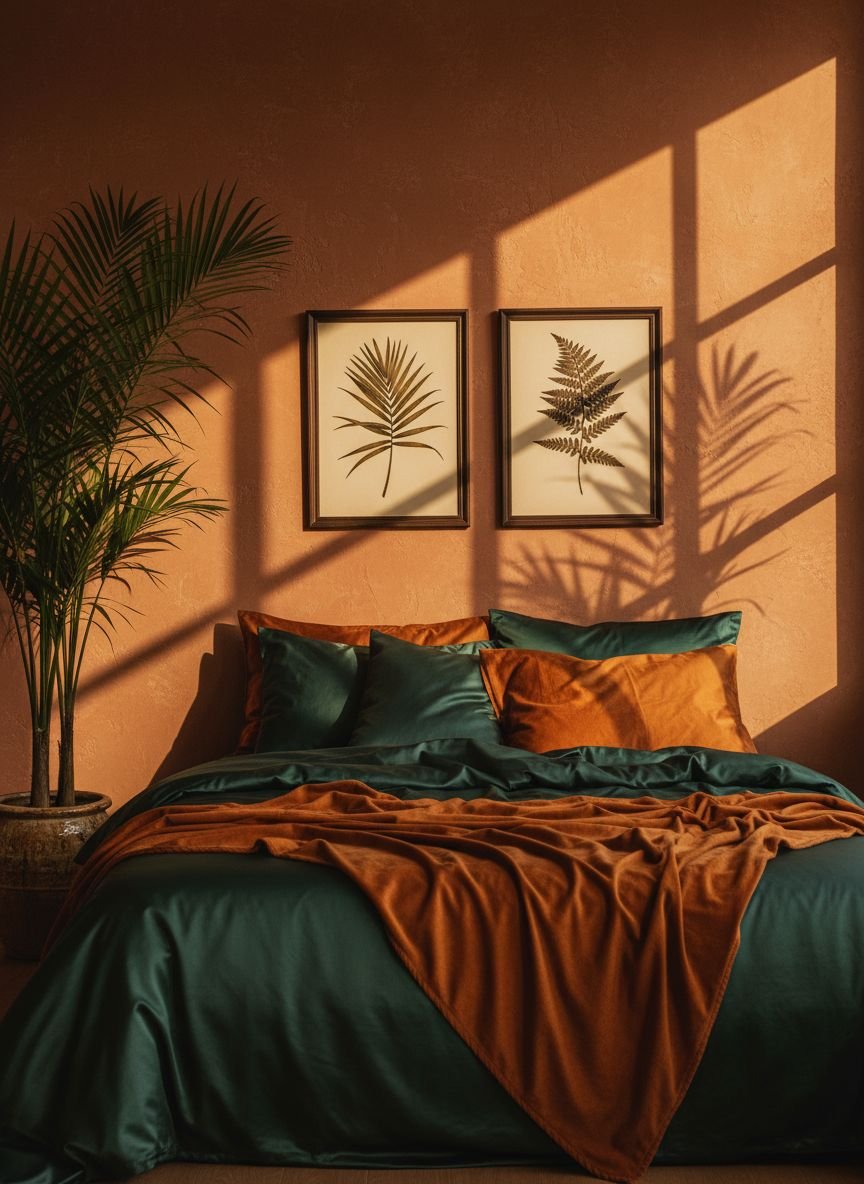
Brown is the new black in 70s-inspired interiors. From chocolate to caramel to beige, brown grounds the space and provides a neutral backdrop that feels warm rather than sterile. These earthy tones connect the interior to the outdoors, a major theme of the decade. They promote relaxation and sleep, making them perfect for a bedroom setting.
Layer these tones through different materials. A walnut wood dresser, a leather armchair, and linen bedding in oatmeal create a monochromatic look that is rich in texture. To avoid the room looking muddy, vary the shades. deeply saturated rust orange pillows pop beautifully against a sandy beige wall. This spectrum of warmth mimics the natural light of the “golden hour,” ensuring your bedroom looks stunning at any time of day.
Pro Tip: Use natural wood stains instead of painted wood to keep the earthy vibe authentic.
Comparison: Earthy vs. Psychedelic Palettes
| Feature | Earthy Palette | Psychedelic Palette |
|---|---|---|
| Primary Colors | Brown, Terracotta, Sage, Cream | Hot Pink, Electric Blue, Lime, Purple |
| Mood | Grounded, calming, cozy, natural | Energetic, stimulating, bold, artistic |
| Best For | Master bedrooms, relaxation spaces | Guest rooms, creative studios, accents |
| Materials | Wood, leather, linen, rattan | Plastic, acrylic, velvet, foil wallpaper |
| Lighting | Warm white, amber glow | Neon signs, colored bulbs |
Psychedelic Pops and Bold Accents
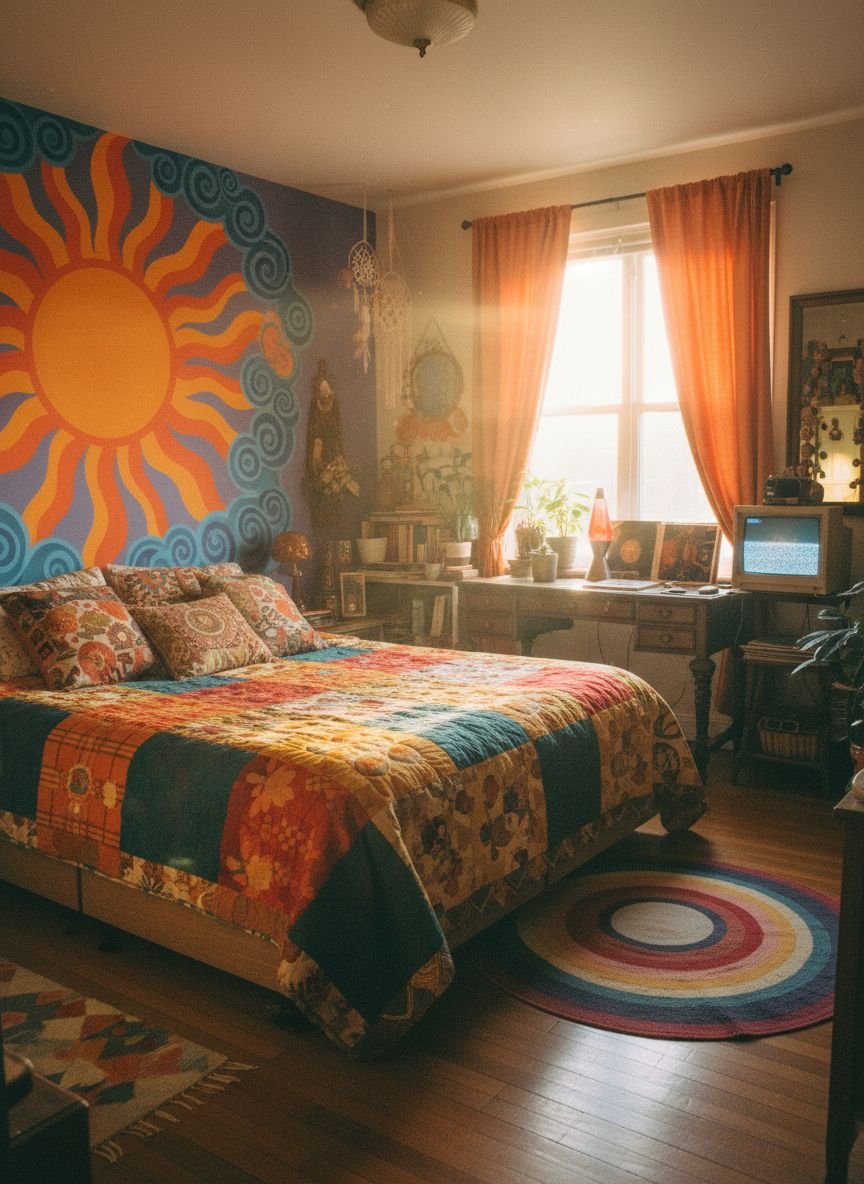
While earth tones provided the base, the 70s also loved a psychedelic trip. This style draws from the pop art movement and the counterculture revolution. It uses color to shock and delight. In a bedroom, you might not want a full psychedelic assault, but small doses create incredible energy.
Introduce “pops” through accessories. A neon sign above the bed, a throw pillow with a swirling marble pattern, or a bright purple vase can disrupt the calmness just enough to make it interesting. These accents act as jewelry for the room. They show you don’t take the design too seriously. The contrast between a grounded, earthy room and a single, electric blue chair is high-design at its finest.
Save this idea to your Pinterest.
Mixing and Matching Colors with Confidence
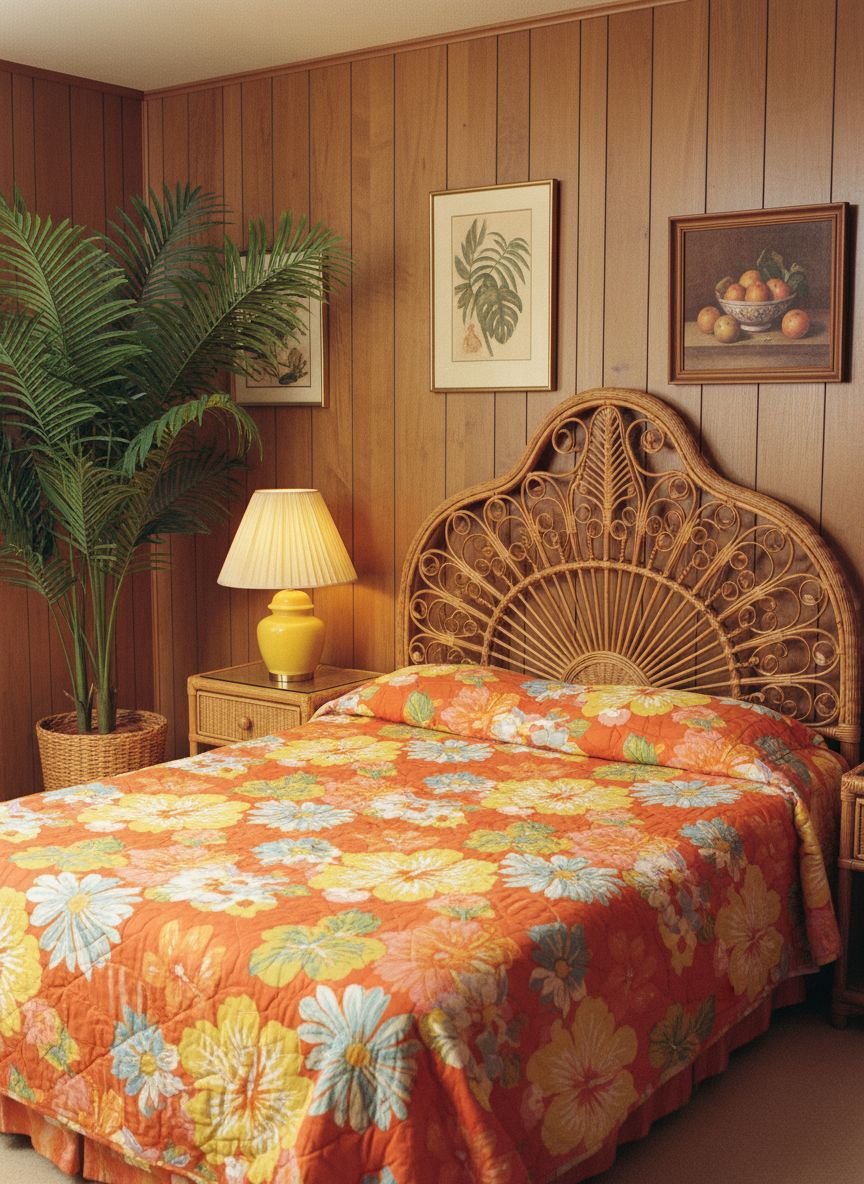
The fear of clashing colors did not exist in the 1970s. The rule was: if you like it, it matches. Today, we call this “maximalism.” To pull this off in a bedroom without causing headaches, rely on the color wheel. Analogous colors (neighbors on the wheel, like orange and red) create a harmonious, hot look. Complementary colors (opposites, like blue and orange) create dynamic tension.
A successful mix often involves a “bridge” fabric. Find a duvet cover or a rug that contains all the colors you want to use in the room. This item anchors the design. If your rug has pink, green, and brown, you can freely use those three colors anywhere else in the room, and the eye will accept it as a planned scheme. Trust your gut. If it feels happy, it works.
Pro Tip: Keep the flooring neutral if you plan to go wild with wall and bedding colors.
Far Out Fabrics: Textiles That Defined the 70s Bedroom
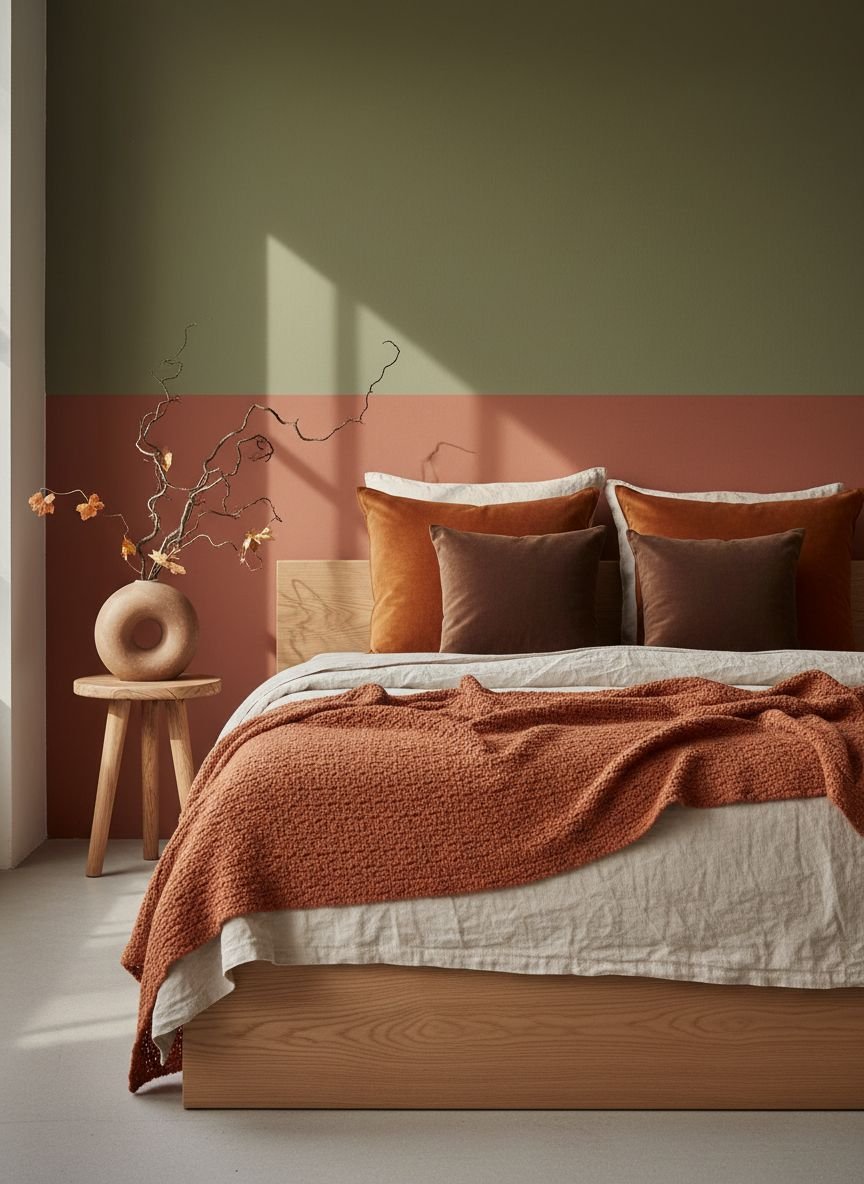
You cannot have a 70s bedroom without addressing textiles. The era was obsessed with touch. Everything was soft, fluffy, or woven. This obsession with tactile feedback makes the bedroom incredibly comfortable. It invites you to touch the walls, the floor, and the furniture.
Layering is the strategy here. Do not just put a sheet and a comforter on the bed. Add a woven blanket, a faux fur throw, and pillows of varying materials. Hang fabric on the walls. Tapestries were huge in the 70s and they serve a dual purpose: they look cool and they dampen sound, making your bedroom quieter and more private.
Groovy Patterns and Prints
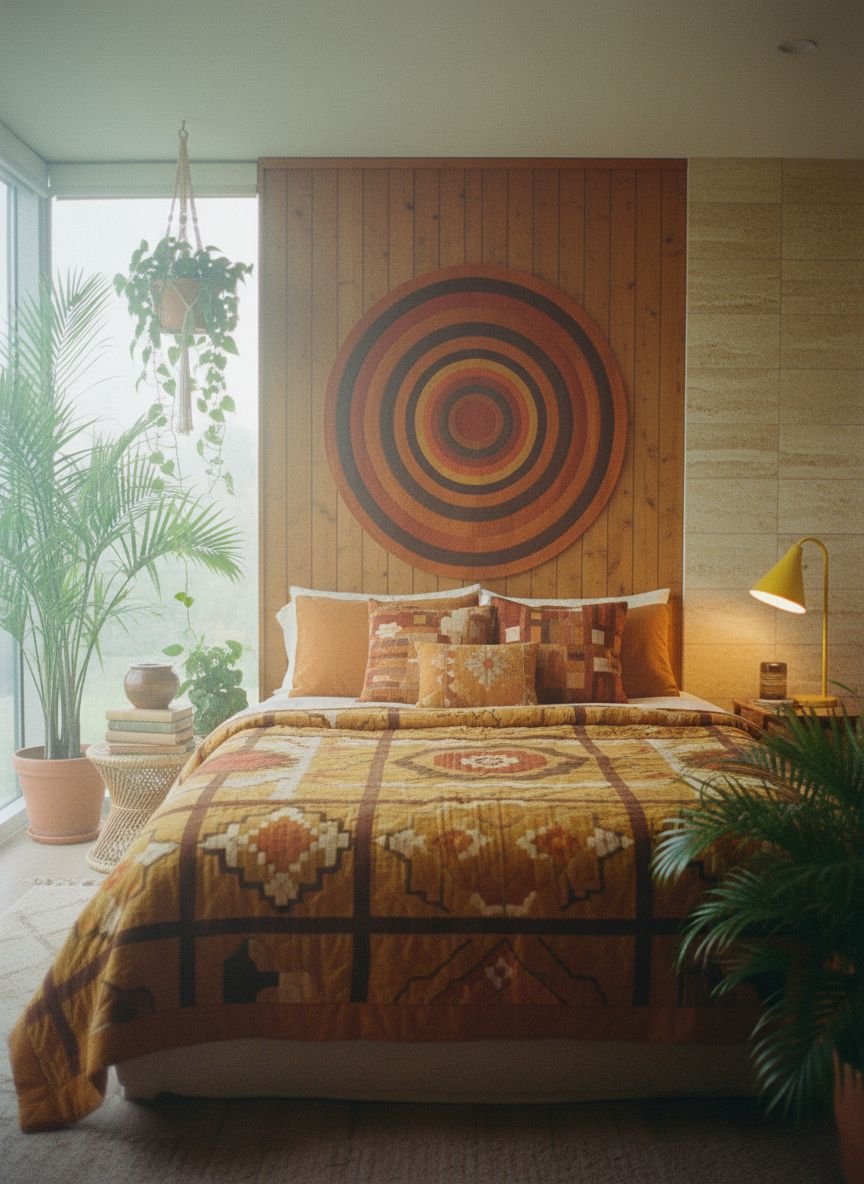
Geometric shapes, paisley, and oversized florals defined the era’s print language. These patterns were often busy and complex. In a modern context, you can use these patterns to create focal points. A geometric headboard or a paisley curtain set can define the room’s character immediately.
Scale is important. If you have a small room, massive prints can make it feel smaller. Opt for tighter, repetitive patterns like a small-scale floral or a checkered print. If you have a large room, go big. A mural-style wallpaper with giant arches or super-graphics can fill the visual void. Mix organic prints (flowers) with geometric prints (squares) to keep the eye moving.
Save this idea to your Pinterest.
Shag Carpets: The Plush Foundation
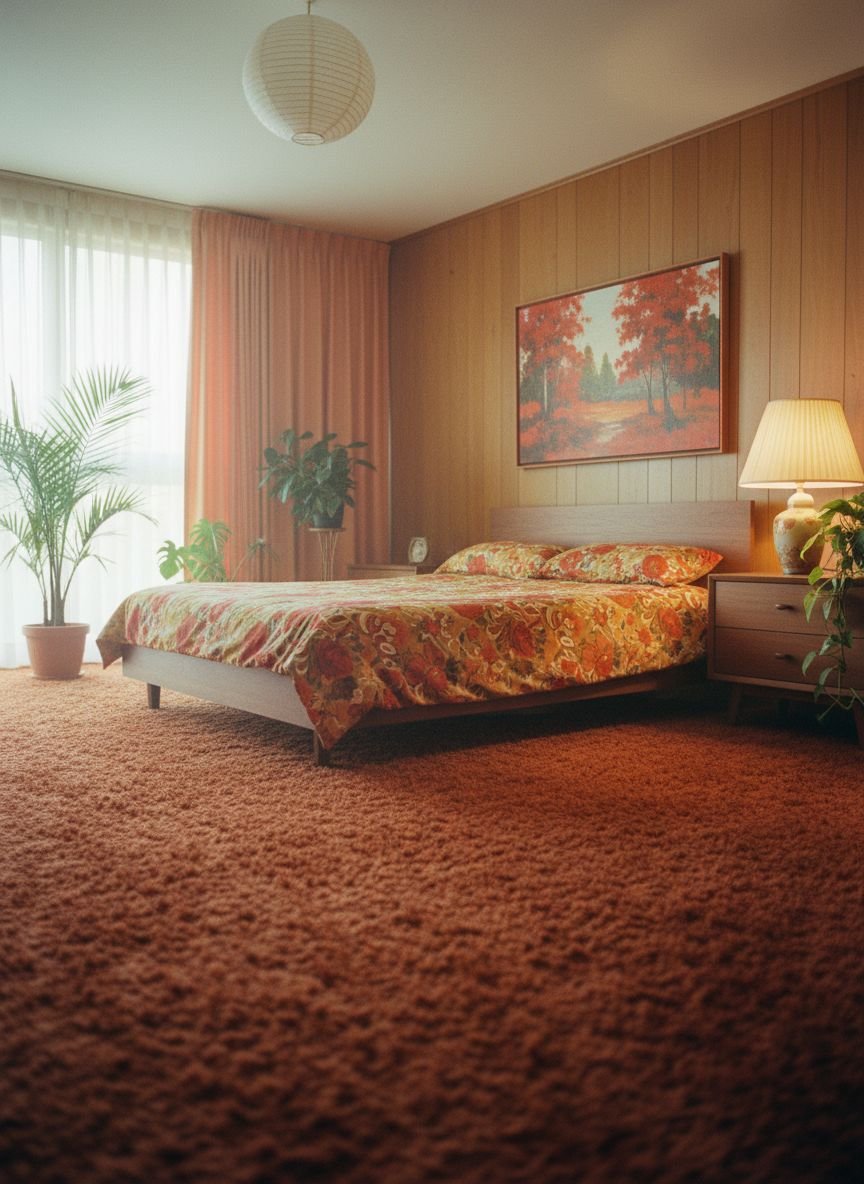
Nothing screams 1970s like a shag carpet. It is the ultimate comfort move. Stepping out of bed onto a deep, high-pile rug is a luxury experience. While wall-to-wall shag might be a cleaning nightmare today, area rugs offer the perfect compromise. They give you the look and feel without the commitment.
Look for “flokati” style rugs or high-pile wool rugs. Cream or off-white is a classic choice that brightens the room, but a burnt orange shag rug can anchor an earthy room beautifully. The texture of the rug softens the acoustics of the room, absorbing echo and making the space feel intimate and enclosed. It is a functional piece of decor that transforms the physical feeling of the room.
Pro Tip: Invest in a high-quality rug pad to keep your shag rug plush and prevent it from slipping.
Related posts :
- 20 Chic Black and Dark Green Bedroom Ideas for a Trendy Look that Redefine Cozy Luxury
- 26 Living Room Mirror Ideas Designers Swear By to Instantly Brighten Your Home
- 21 Beautiful Bathroom Decor Ideas You Will Love! (2026 Trend Guide)
Velvet, Corduroy, and Other Happenin’ Fabrics
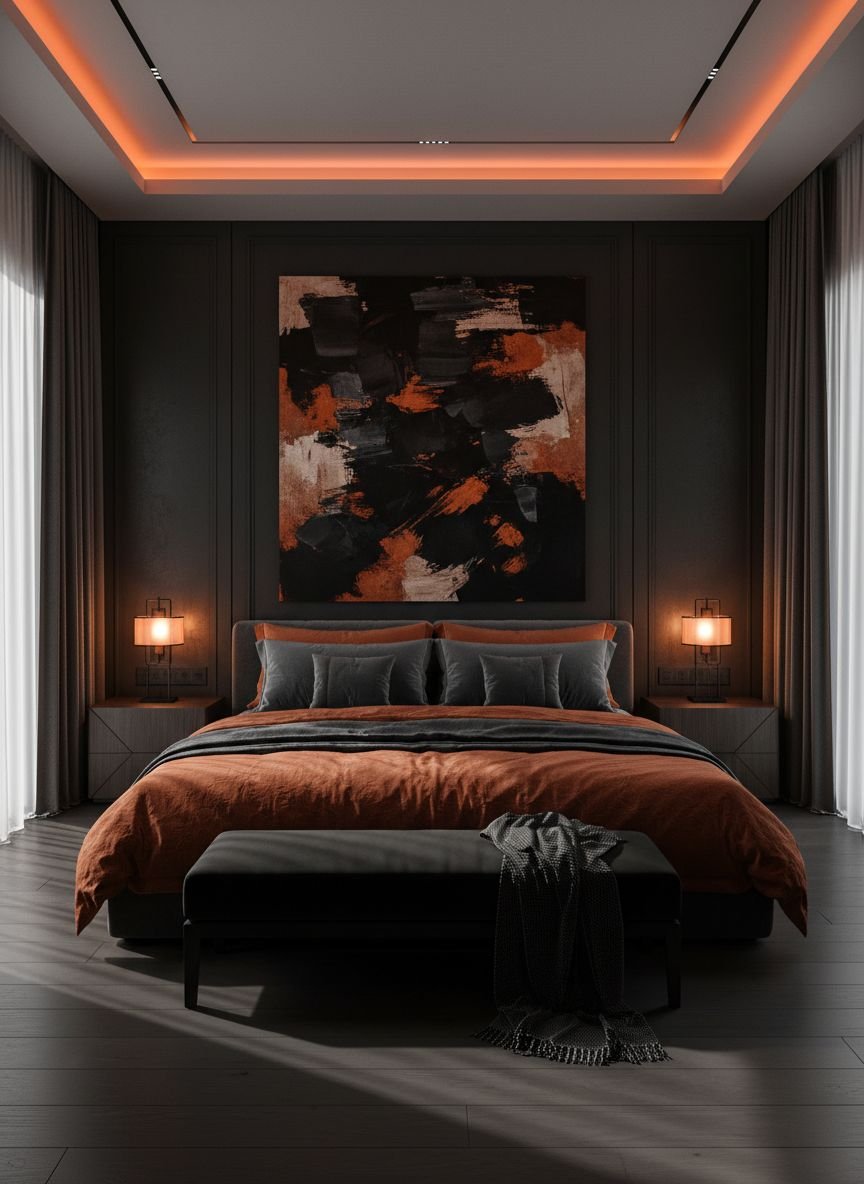
Beyond the rug, your furniture needs texture. Velvet was a staple for headboards and armchairs. It catches the light and adds a dimension of glamour. Corduroy is the casual cousin of velvet. It is durable, ridged, and feels distinctly retro. A wide-wale corduroy throw pillow is an inexpensive way to nod to the trend.
Macramé is another essential texture. These knotted rope decorations add a handmade, bohemian touch. Use them as plant hangers or wall art. The mix of the smooth velvet against the rough rope creates “visual friction,” which is a fancy way of saying it makes the room look interesting and professionally designed.
Furniture Frenzy: Iconic Pieces of the 70s Bedroom
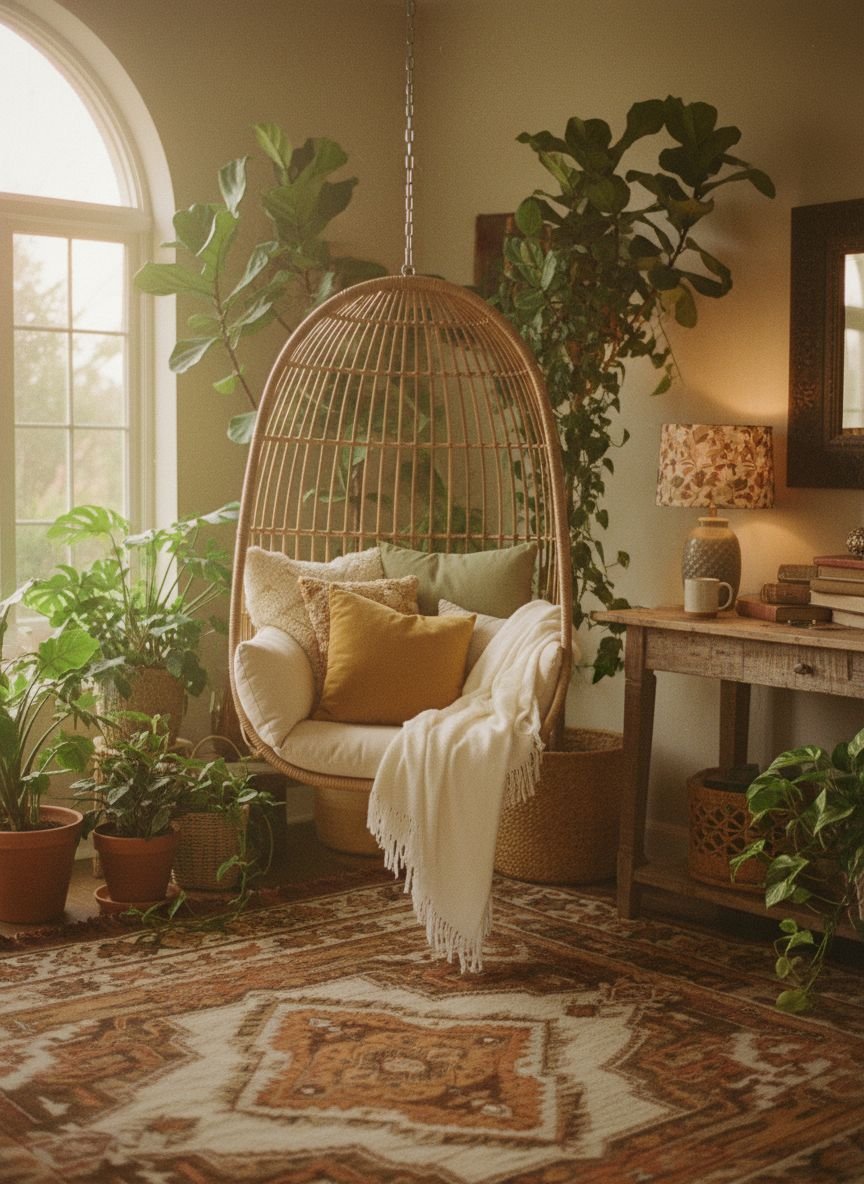
Furniture in the 70s moved away from the spindly legs of the 50s and 60s. It became chunkier, lower, and more solid. We saw the rise of modular furniture that could be rearranged to fit the social needs of the room. In the bedroom, this translates to pieces that feel substantial and permanent.
Look for rounded edges. “Waterfall” desks and dressers, where the edge curves down smoothly, were very popular. Plastic and acrylic (Lucite) also made an appearance, usually as nightstands or chairs. These clear pieces take up less visual weight, making them great for smaller bedrooms where you want to add functionality without clutter.
Save this idea to your Pinterest.
Platform Beds: Low-Profile and Laid-Back
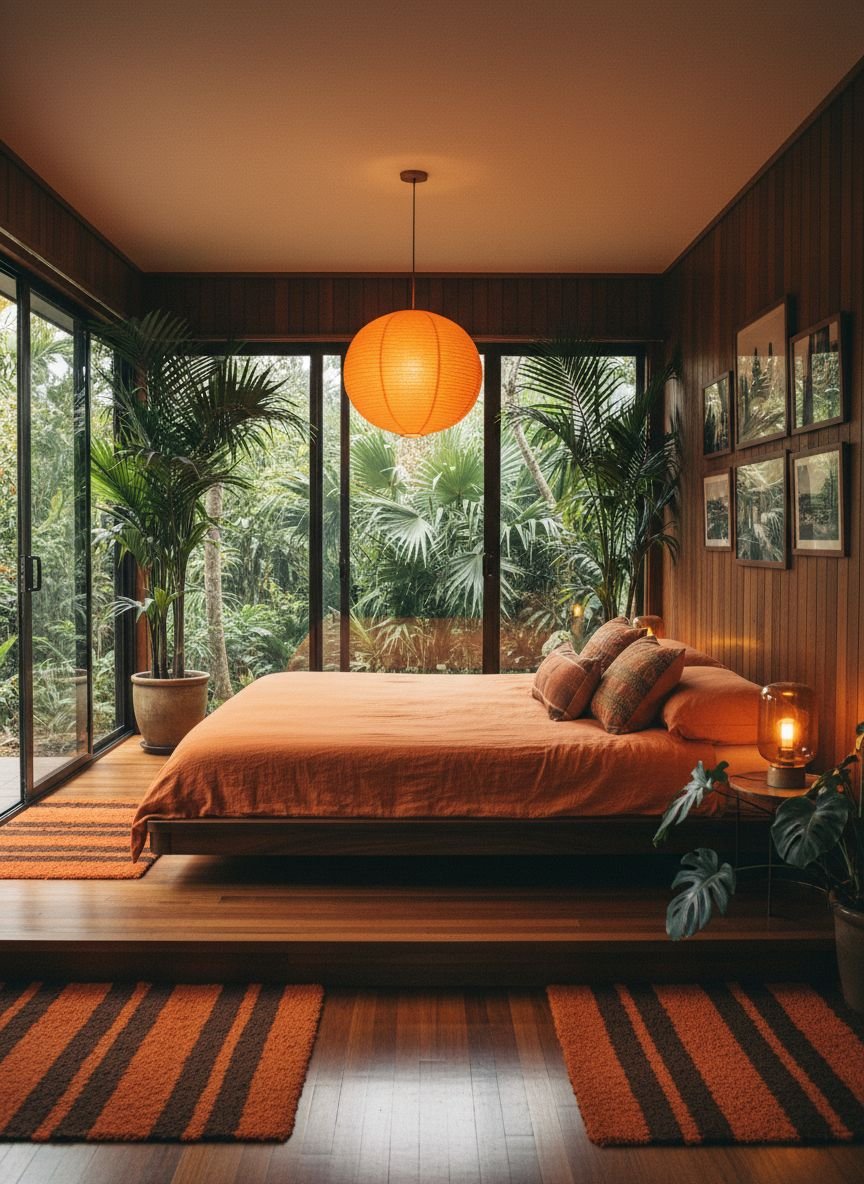
The platform bed is perhaps the most significant furniture contribution of the era. By removing the box spring and lowering the mattress, the bed becomes less of a throne and more of a lounge area. It changes the vertical proportions of the room, making the ceilings feel higher.
Many 70s platform beds integrated nightstands directly into the frame, creating a sleek, single unit. This “floating” look is incredibly stylish. If you are handy, building a simple wooden platform bed is a fantastic DIY project. Stain it a dark walnut for that authentic vintage appeal. The low height encourages a slower pace of life, literally grounding you as you sleep.
Pro Tip: Ensure your nightstand lamps are low enough to be reached easily from a platform bed height.
Beanbag Chairs: The Ultimate Lounging Experience
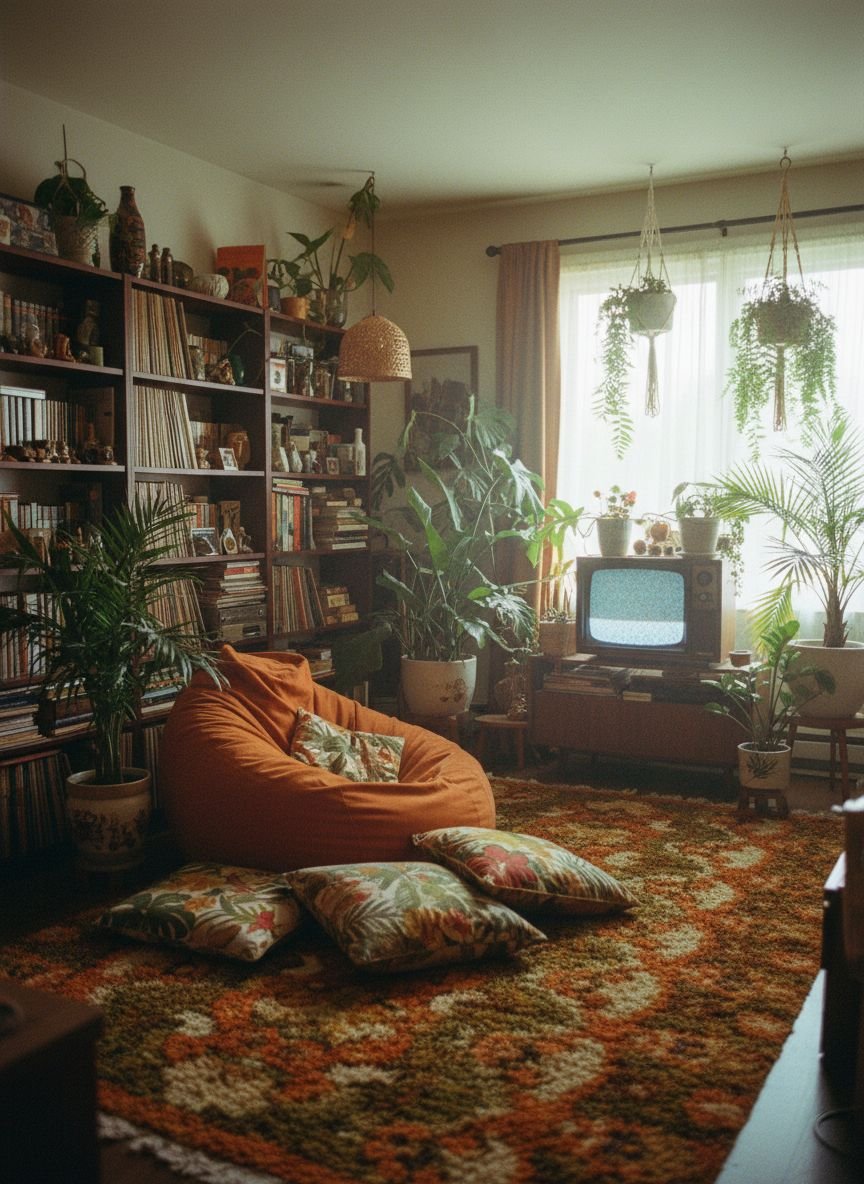
Forget the cheap, vinyl beanbags of the 90s. The 70s beanbag was a piece of legitimate furniture, often made of leather, suede, or corduroy. It represents the casual nature of the era. A bedroom should have a spot to sit that isn’t the bed, and a structured beanbag provides that without the bulk of an armchair.
Place one in a corner with a floor lamp to create a reading nook. It signals that this room is for relaxing, not just sleeping. Modern versions come filled with memory foam rather than beans, offering superior support while maintaining that slouchy, retro silhouette. It is the perfect blend of 70s style and modern comfort tech.
Wicker and Rattan: Bringing the Outdoors In
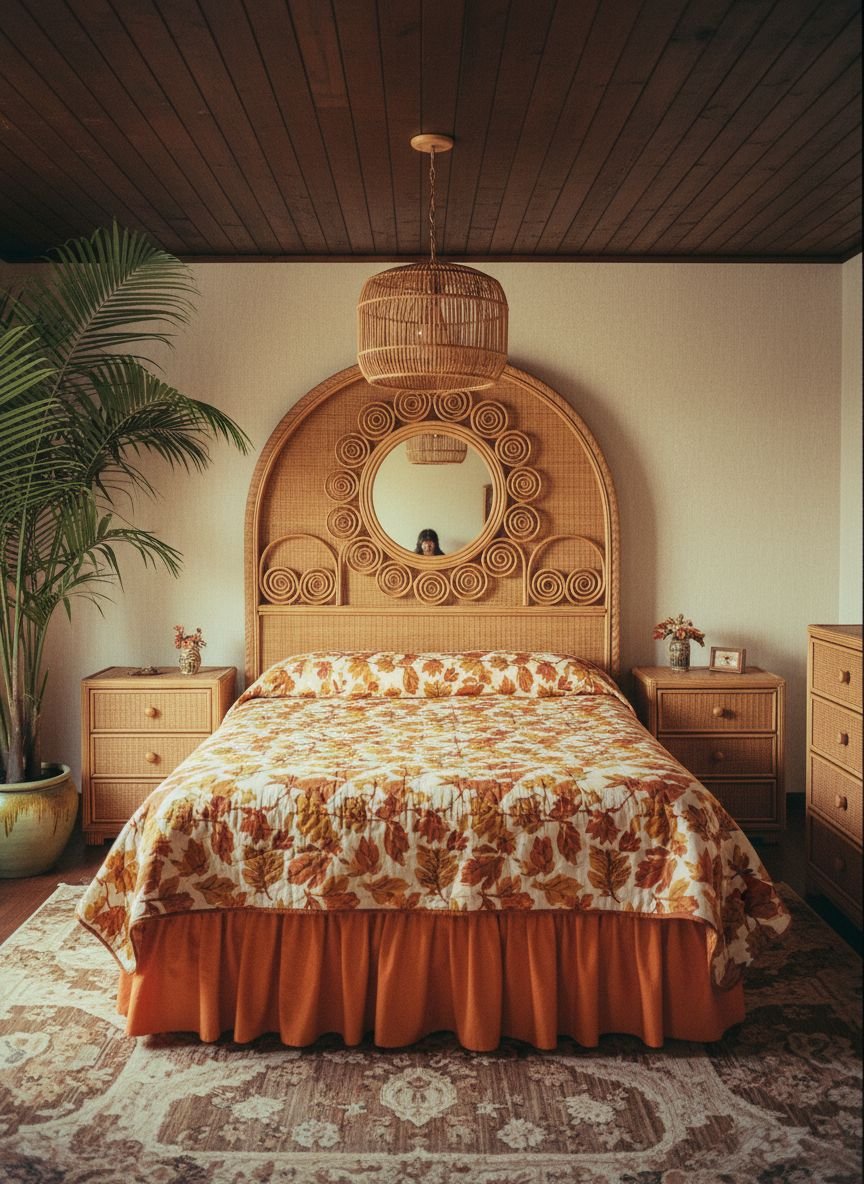
The 70s saw a massive revival of Victorian-era wicker, but with a boho twist. Rattan headboards are everywhere right now for a reason. They are lightweight, airy, and add natural texture. A peacock chair is the ultimate statement piece—regal, intricate, and undeniably 70s.
Rattan works well because it breaks up the heaviness of the wood and velvet. If your room feels too dark or heavy, swap a solid wood nightstand for a wicker one. It allows light to pass through, making the room feel larger. It pairs perfectly with the green plants that are essential to this aesthetic.
Save this idea to your Pinterest.
Light Up Your Life: Illuminating the 70s Bedroom
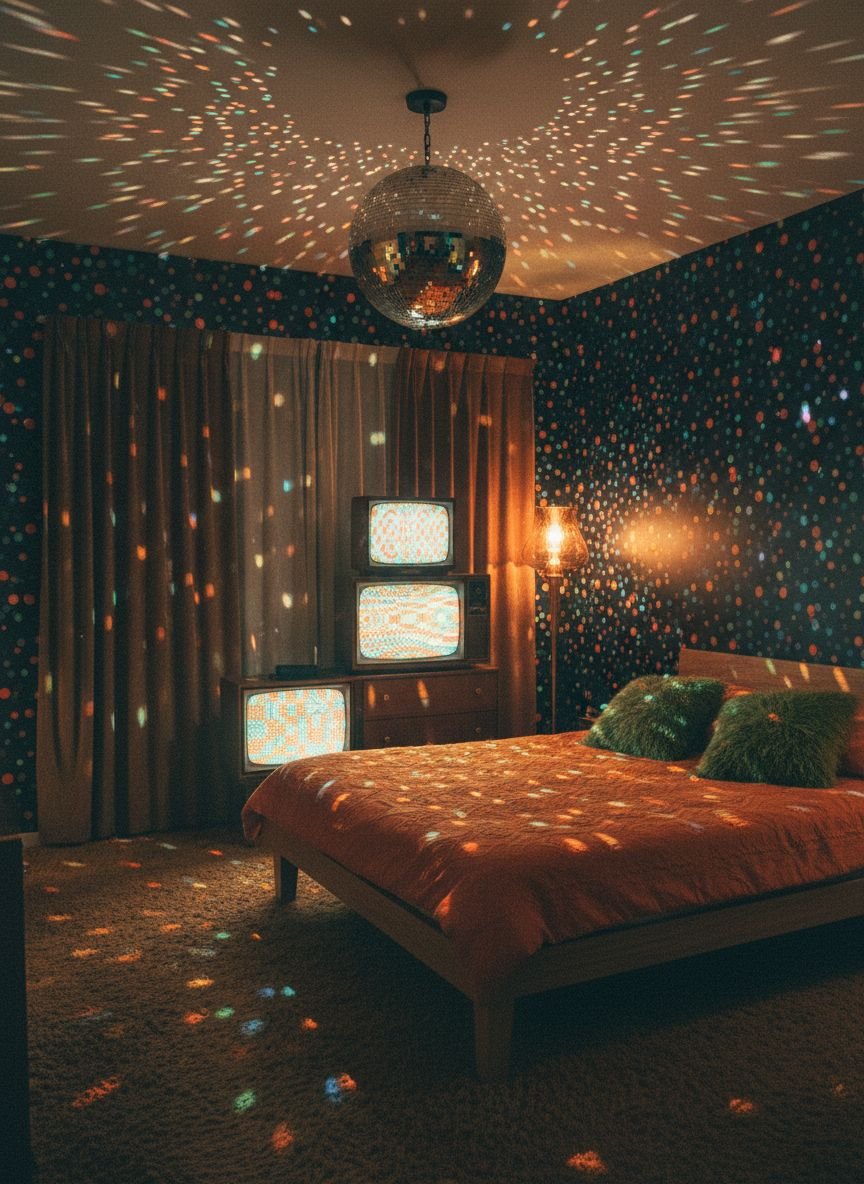
Lighting in the 70s was moody. Overhead lighting was often harsh, so people relied on lamps to create pockets of warm light. The “mushroom lamp” with its dome shade is an icon of the era. Its curved shape mimics the organic trends of the time.
Lava lamps and colored bulbs are also back. A small amber or pink bulb in a bedside lamp changes the entire color temperature of the room, instantly making it feel warmer and more nostalgic. Chrome lighting fixtures offer a nice contrast to the warm earth tones. The reflection of a chrome lamp against a dark wall adds a touch of disco sparkle that keeps the room from feeling too rustic.
Pro Tip: Use dimmer switches on all lights to control the mood perfectly.
Popular Asked Questions
What colors were popular for bedrooms in the 70s?
The 1970s bedroom palette was dominated by warm, earthy tones. The most popular colors included Harvest Gold (a deep yellow), Avocado Green, Burnt Orange (terracotta), and various shades of Brown. For brighter accents, people used turquoise, sunshine yellow, and bright poppy red.
How can I make my bedroom look 70s but modern?
To achieve a “Retro Revival” look, balance vintage elements with modern clean lines. Use a neutral wall color (like cream or warm white) as a base, then add 70s flair through accessories like a shag rug, a velvet headboard, or a rattan chair. Avoid clutter; keep the layout open and airy while using vintage textures to add warmth.
Is 70s furniture style coming back in 2026?
Yes, 70s furniture is trending heavily. Specifically, curved furniture (sofas and headboards), low-profile platform beds, and rattan/cane accents are very popular. Homeowners are looking for comfort and character, which the 70s aesthetic provides in abundance compared to the sharp lines of modern minimalism.
What is the “conversation pit” style in bedrooms?
While conversation pits were usually in living rooms, the concept translated to bedrooms through sunken beds or designated lounging areas within the room using bean bags and floor cushions. It focuses on creating a cozy, enclosed space for relaxation that feels separate from the rest of the house.
Conclusion
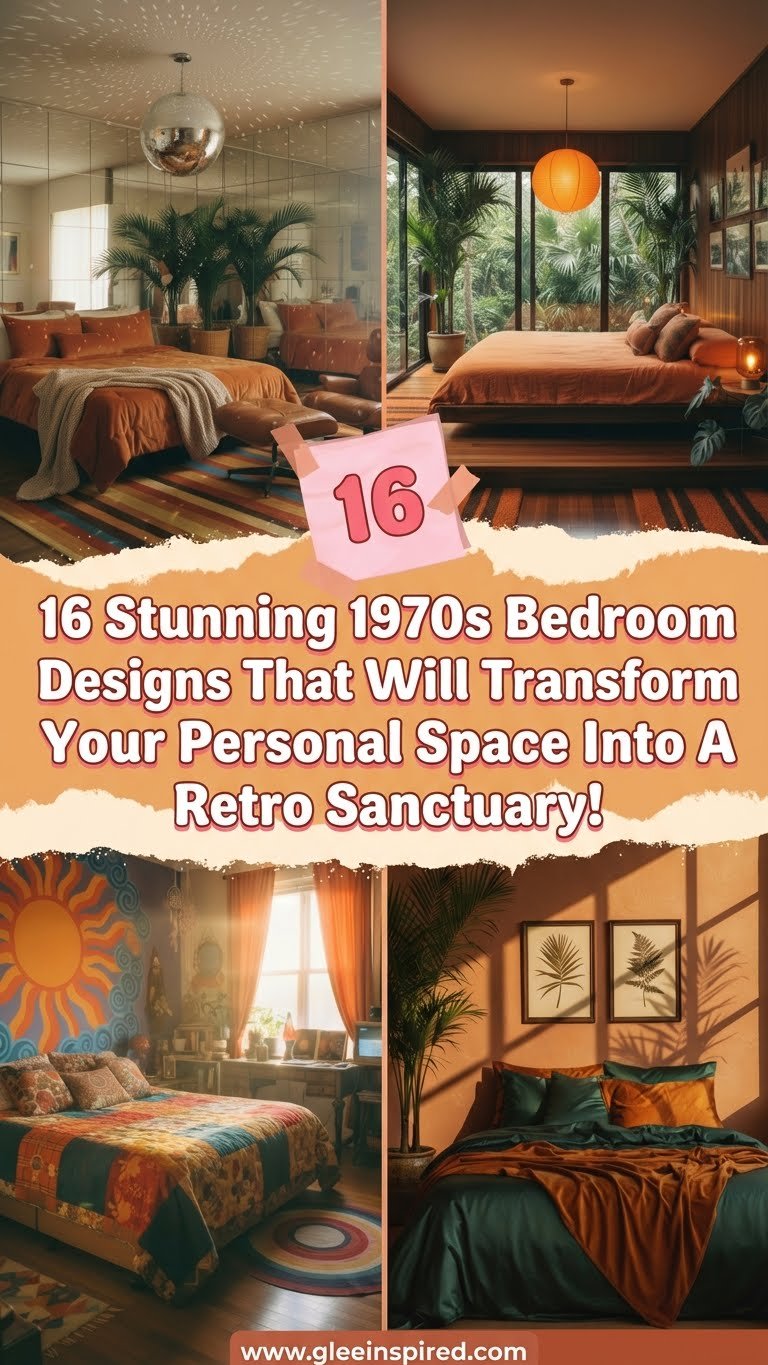
The 1970s offered a design freedom that we are finally embracing again. It was a decade that prioritized feeling over perfection and warmth over sterility. By incorporating these 16 stunning 1970s bedroom designs—from platform beds and earthy palettes to shag rugs and moody lighting—you can build a space that feels deeply personal.
You do not need to time travel to get the look. You just need to be brave enough to mix patterns, embrace color, and prioritize comfort above all else.
Leave a Comment