
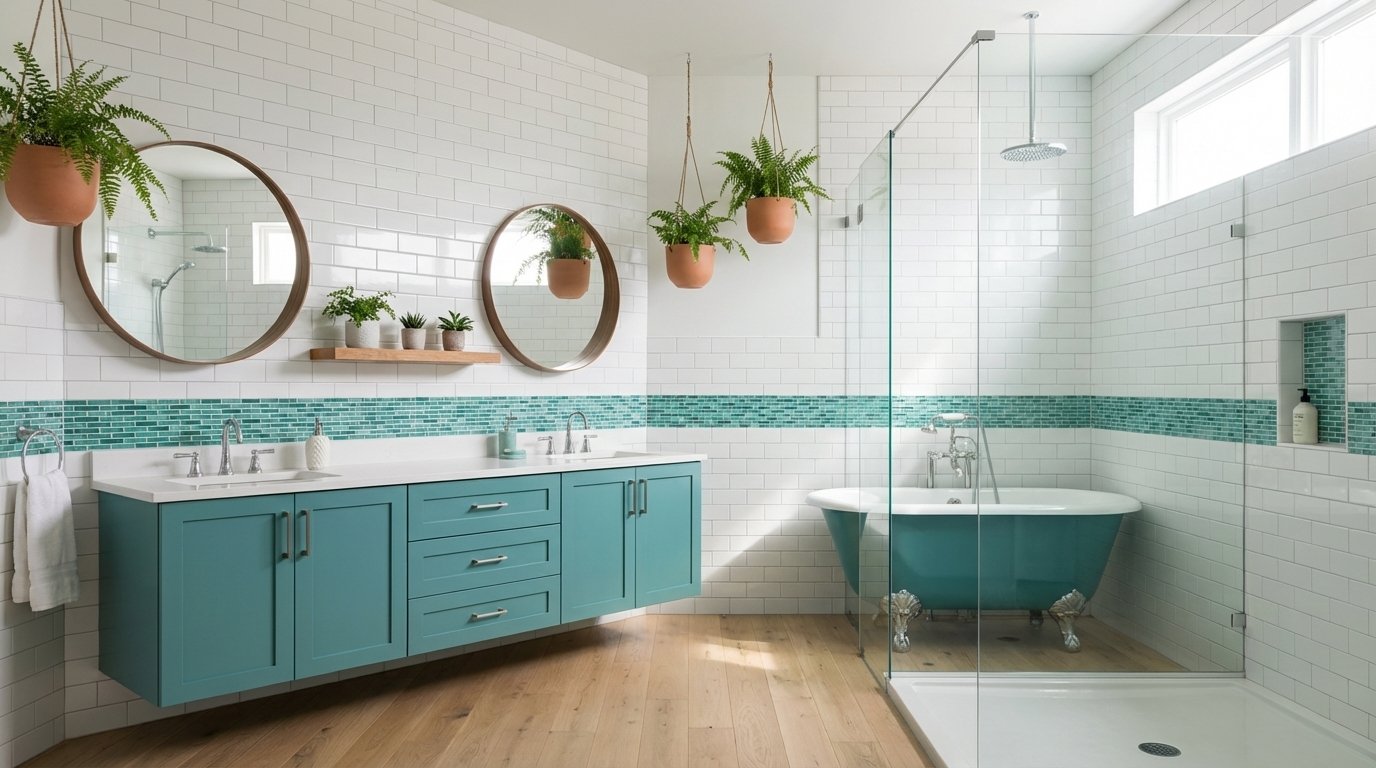
Teal is currently dominating interior design trends for a reason. It is the perfect equilibrium between the calming stability of blue and the renewing optimism of green. If you are struggling with a bathroom that feels sterile, outdated, or simply uninspired, introducing teal is the most effective way to inject personality without sacrificing tranquility. This color adapts to any style, from coastal luxury to moody maximalism, offering a versatile solution for small powder rooms and master baths alike.
In this guide, we will explore 13 specific design concepts that prove teal is the ultimate bathroom color. Whether you are planning a full renovation with custom tiling or looking for a budget-friendly weekend refresh using paint and textiles, these ideas will help you achieve a high-end look. We will cover color theory, material selection, and lighting adjustments to ensure your space looks professionally styled.
Key Takeaways
- Versatility: Teal works with almost any metal finish, particularly brushed gold and matte black.
- Space Illusion: Darker teal shades can actually make small bathrooms feel larger by blurring the corners of the room.
- Texture Matters: Glossy teal tiles reflect light to brighten a space, while matte teal paint creates a moody, velvet-like atmosphere.
- Pairing: Crisp white provides a modern contrast, while natural wood tones ground teal for a spa-like organic feel.
Table of Contents
- Seafaring Beauty
- Calmly Contemporary
- Shades Of Teal
- Going A Little Grey
- Scale It Up
- Mod Squad
- Be Teal My Heart
- Yee Haw!
- Flowers And Fish
- Carpet It
- Exotic Florals
- Easy, Peasy
- NYC Glamour
- Popular Asked Questions
- Conclusion
Seafaring Beauty
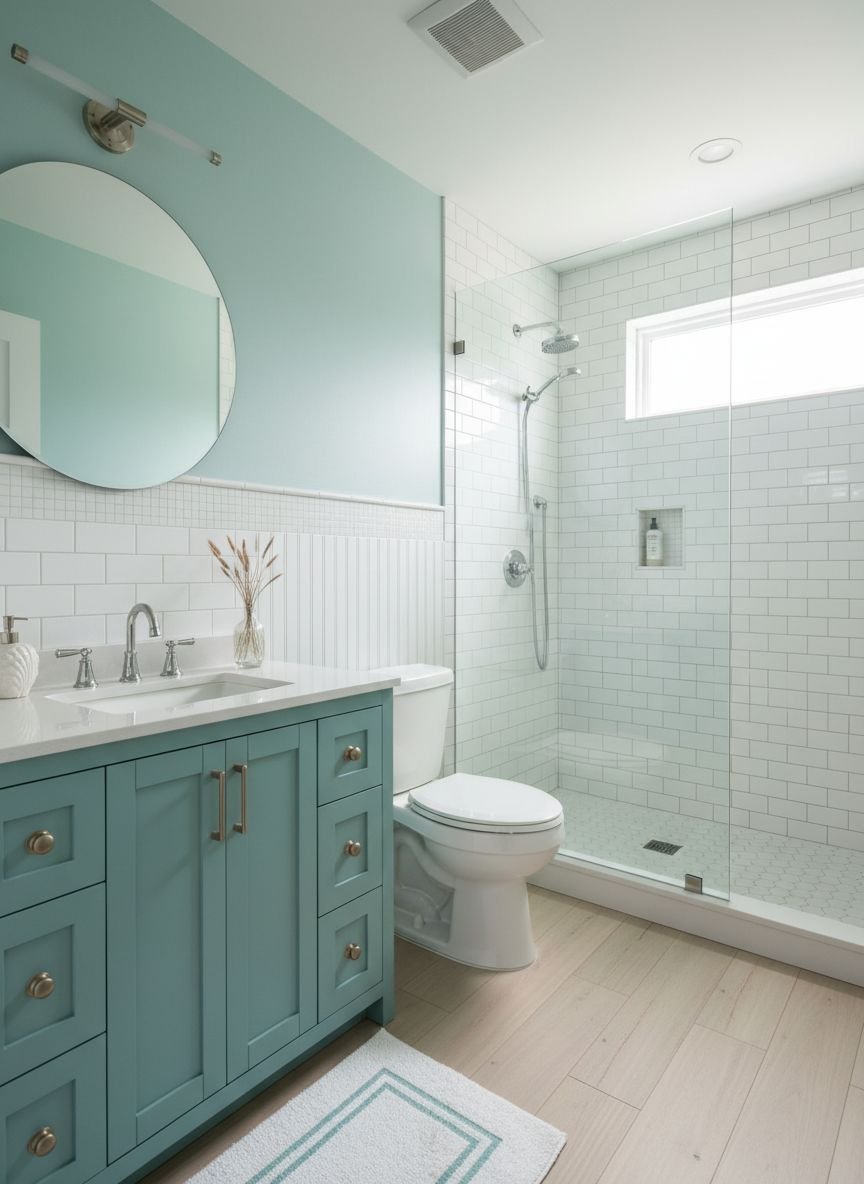
Achieving a nautical aesthetic without falling into kitschy clichés is a delicate balance, but teal serves as the perfect anchor for this look. Instead of predictable navy and white stripes, use a deep, oceanic teal as your primary wall color. This shade mimics the depth of the deep sea and immediately sets a sophisticated tone. Pair this rich backdrop with polished brass hardware and mirrors reminiscent of portholes. The warmth of the brass cuts through the cool teal tones, creating a luxurious contrast that feels like a high-end yacht interior rather than a beach shack.
To implement this style, focus on natural textures that evoke the coast. Incorporate a vanity made of weathered oak or teak to bring in the element of driftwood. White shiplap on the lower half of the walls can brighten the space and add architectural interest, keeping the room from feeling too dark. Lighting should be warm and soft to enhance the relaxing atmosphere. A glass pendant light with a rope detail or a simple industrial sconce works beautifully here.
Pro Tip: Use woven jute or seagrass baskets for storage to add texture and reinforce the maritime theme without being too literal.
Calmly Contemporary
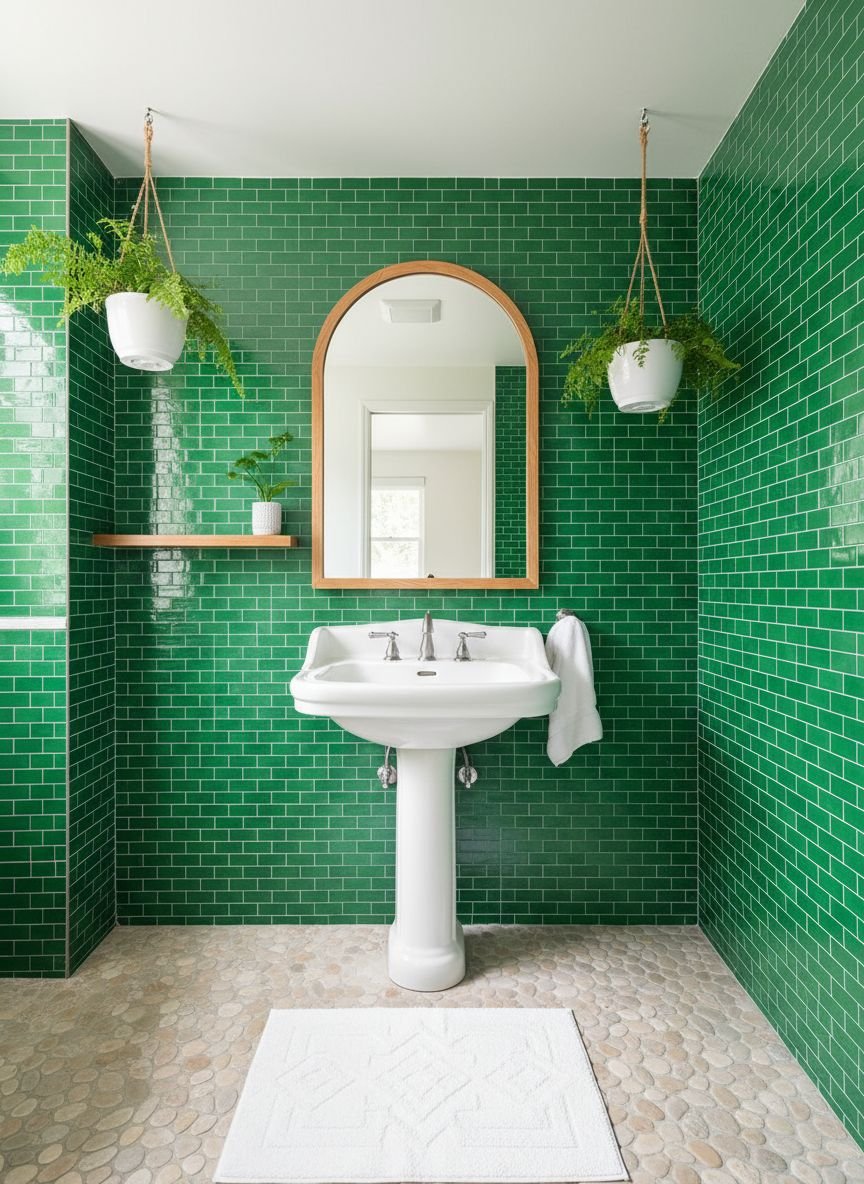
For those who prefer clean lines and minimalism, a contemporary teal bathroom offers a refreshing departure from the standard all-white spa look. The key here is to use a muted, grey-leaning teal that feels sophisticated and airy. Apply this color to a feature wall or the vanity cabinetry while keeping the rest of the room crisp white. This approach maintains the brightness of a modern bathroom but adds a layer of depth and interest that white alone cannot achieve.
The design principle at play is “color blocking.” By isolating the teal to specific architectural elements, you create a focal point that draws the eye. Combine this with sleek, handleless cabinetry and floating vanities to enhance the sense of space. Chrome or brushed nickel fixtures complement the cool undertones of a grey-teal, resulting in a cohesive and polished look. Large-format floor tiles in a neutral grey or white stone will keep the visual clutter to a minimum, allowing the teal accents to shine.
Pro Tip: Install a large, frameless mirror with integrated LED backlighting to amplify the modern vibe and ensure the teal tones look true to color.
Shades Of Teal
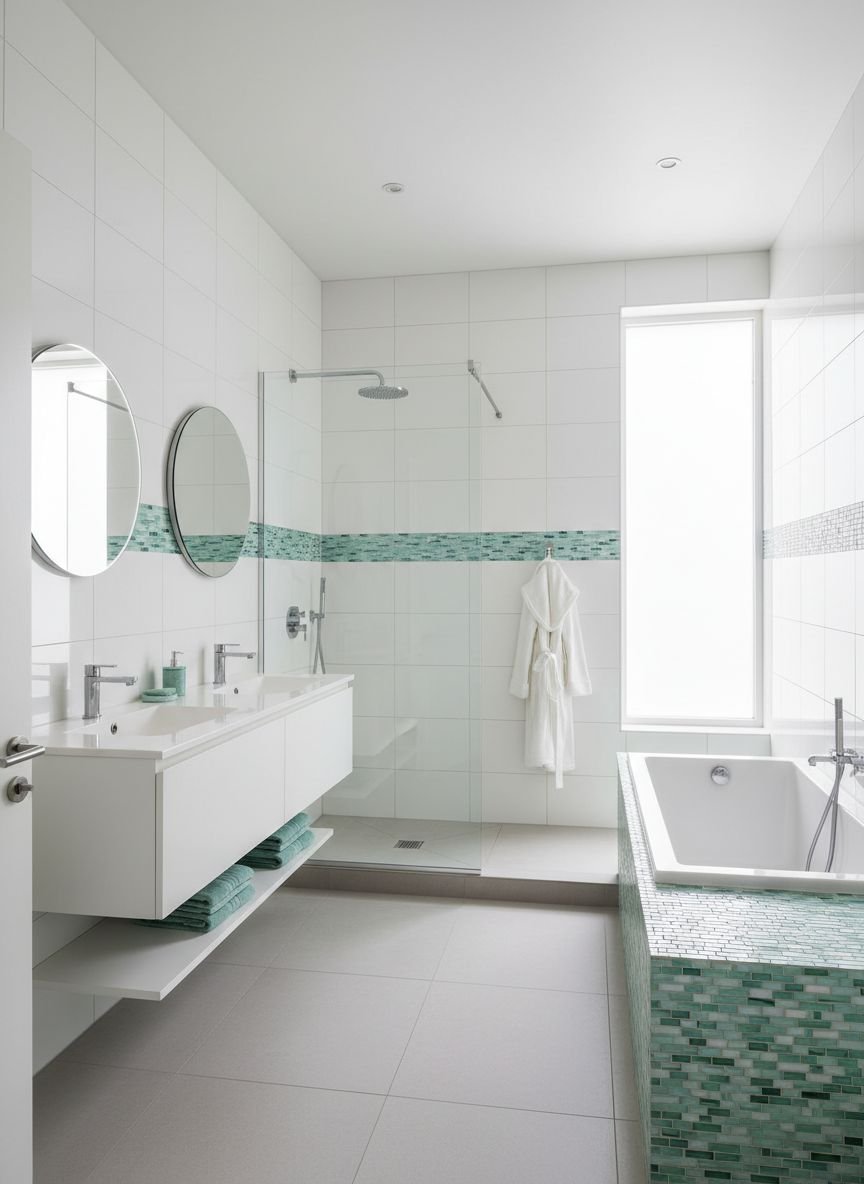
Monochromatic color schemes are a bold choice that pays off when executed correctly. “Shades of Teal” involves layering various saturations of the color throughout the space to create an immersive and jewel-box effect. You might start with dark teal floor tiles, transition to a medium teal wainscoting, and finish with a lighter, airy teal paint near the ceiling. This gradient effect draws the eye upward and can make the ceiling appear higher.
Visually, this technique envelops the user in color, creating a cozy and cocooning sensation perfect for a relaxing bath. To prevent the room from looking flat, vary the textures significantly. Use glossy subway tiles on the walls, a matte finish on the vanity, and plush teal towels. The difference in light reflection across these surfaces adds necessary dimension. Break up the color slightly with white porcelain fixtures and perhaps a quartz countertop to provide visual resting points.
Pro Tip: When layering the same color, ensure all shades share the same undertone (either all blue-leaning or all green-leaning) to prevent clashing.
Going A Little Grey
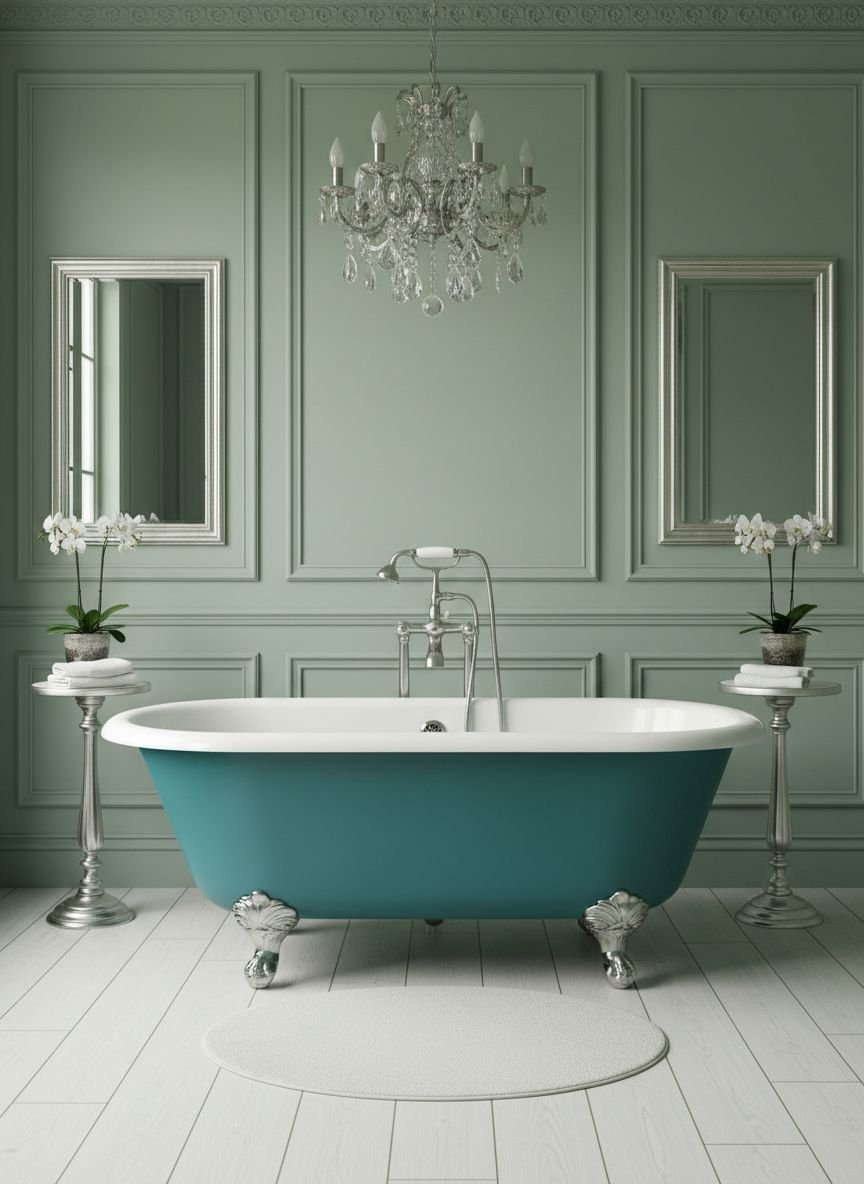
If a vibrant teal feels too energetic for your taste, a slate-teal or “greyl” is the perfect compromise. This sophisticated hybrid color reads as a neutral in many lights but offers more character than a standard grey. It is an excellent choice for a transitional bathroom that blends traditional and modern elements. The color works exceptionally well on wainscoting or beadboard, paired with a soft white or cream on the upper walls.
This aesthetic relies on subtle contrast. The grey-teal creates a grounding effect, making it ideal for cabinetry or lower wall treatments. Pair it with marble countertops featuring grey veining to tie the palette together. For the floor, a patterned encaustic tile that incorporates both grey and teal can bridge the gap between the two tones seamlessly. This look is timeless and improves resale value, as it is distinct yet safe enough to appeal to a wide range of buyers.
Pro Tip: Swap out standard plastic switch plates for brushed metal or ceramic ones that match your tile to elevate the finish level of the room.
Scale It Up
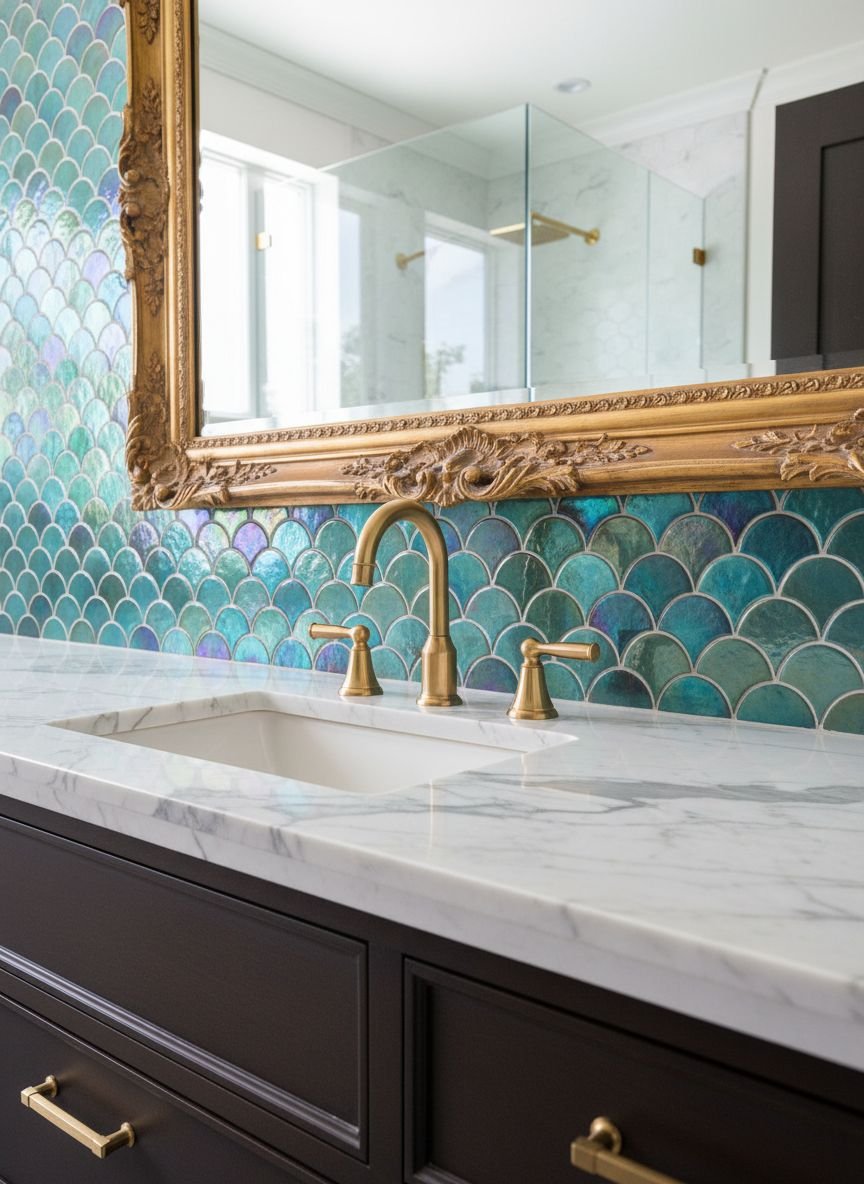
“Scale It Up” refers to playing with the size of your tiles, specifically using oversized teal tiles or “fish scale” (scallop) tiles to make a dramatic statement. Large-format teal porcelain slabs in a shower enclosure create a seamless, monolithic look that feels incredibly expensive and modern. Alternatively, using small, scallop-shaped tiles in a bright turquoise teal creates a playful, mermaid-esque texture that catches the light beautifully.
The visual impact of scale cannot be overstated. Large tiles reduce grout lines, making a small bathroom feel less cluttered and more expansive. Scallop tiles, on the other hand, add intense movement and organic rhythm to the walls. If you choose the busy pattern of fish scale tiles, keep the rest of the bathroom relatively simple. A glass shower screen is essential here to show off the tile work rather than hiding it behind a curtain.
Pro Tip: Use a light grey or white grout with teal tiles to highlight the shape of the tile. Dark grout will make the pattern disappear and look muddy.
Save this idea to your Pinterest.
Comparison: Teal Paint vs. Teal Tile
| Feature | Teal Paint | Teal Tile |
|---|---|---|
| Cost | Low (DIY friendly) | High (Material + Labor) |
| Durability | Low (Needs repainting in humid areas) | High (Waterproof, lasts decades) |
| Texture | Flat/Matte/Satin | Glossy/Textured/3D |
| Best For | Quick updates, upper walls | Shower walls, backsplashes, floors |
| Commitment | Low (Easy to change) | High (Permanent fixture) |
Mod Squad
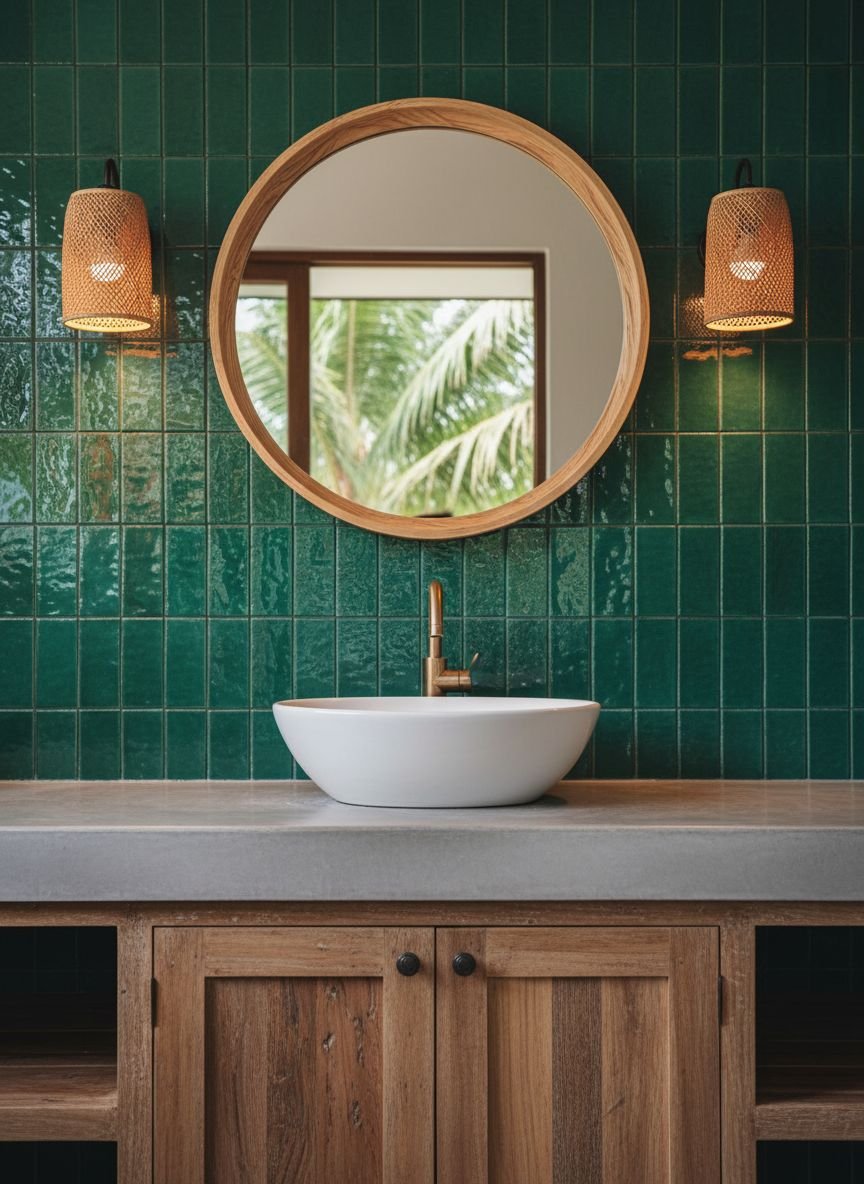
Channel the swinging sixties with a “Mod Squad” bathroom that embraces retro futurism. This look uses a vibrant, saturated teal paired with geometric shapes and stark contrasts. Think teal square tiles stacked vertically (rather than the traditional brick pattern) or a bold teal geometric wallpaper. The vibe is energetic, fun, and unapologetically bold. It is a style that works particularly well in powder rooms where you can afford to take more design risks.
To nail this aesthetic, incorporate mid-century modern elements. A floating vanity with tapered legs, a round mirror with a thin black frame, and globe lighting fixtures are hallmarks of this style. Black and white penny tiles on the floor provide a classic base that allows the teal walls to pop. The high contrast between the teal, black, and white creates a dynamic visual rhythm that keeps the eye moving.
Pro Tip: Look for vintage or reproduction mid-century accessories, like a ceramic soap dish or a retro clock, to add authentic charm to the space.
Be Teal My Heart
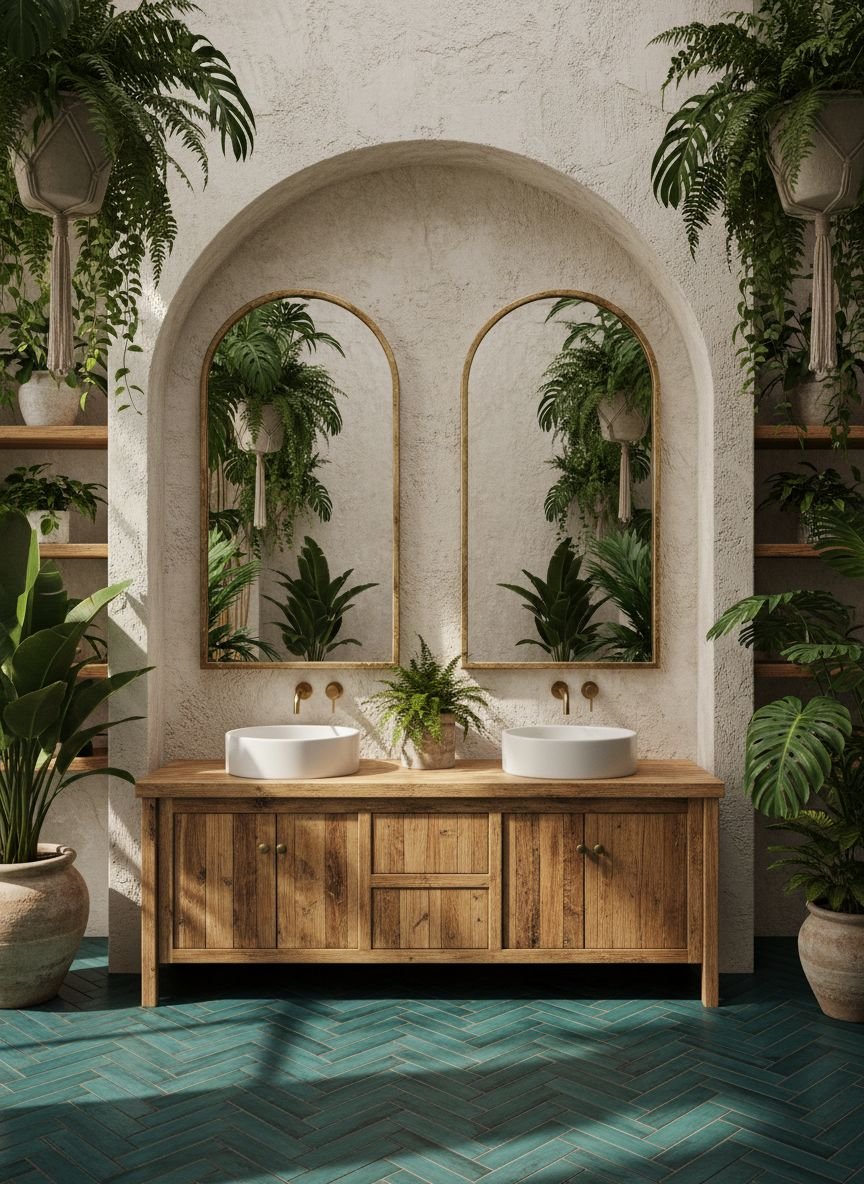
This concept focuses on the romantic and soft side of teal. By selecting a lighter, pastel-leaning teal (often called robin’s egg blue or aqua), you can create a space that feels feminine and delicate. This shade pairs beautifully with soft pinks, creams, and whites. It is a departure from the moody, dark bathrooms and moves towards a light, airy sanctuary.
The implementation involves soft textures and curved lines. Consider a clawfoot tub painted in a soft teal, or a vanity with curved doors. Textiles play a huge role here; use fluffy white towels, a plush rug, and perhaps a shower curtain with a floral or lace motif. Lighting should be diffuse and flattering. Crystal accents, such as a small chandelier or crystal knobs on the vanity, add a touch of glamour without being overpowering.
Pro Tip: Add fresh flowers, specifically white hydrangeas or pink peonies, to emphasize the romantic and soft color palette.
Yee Haw!
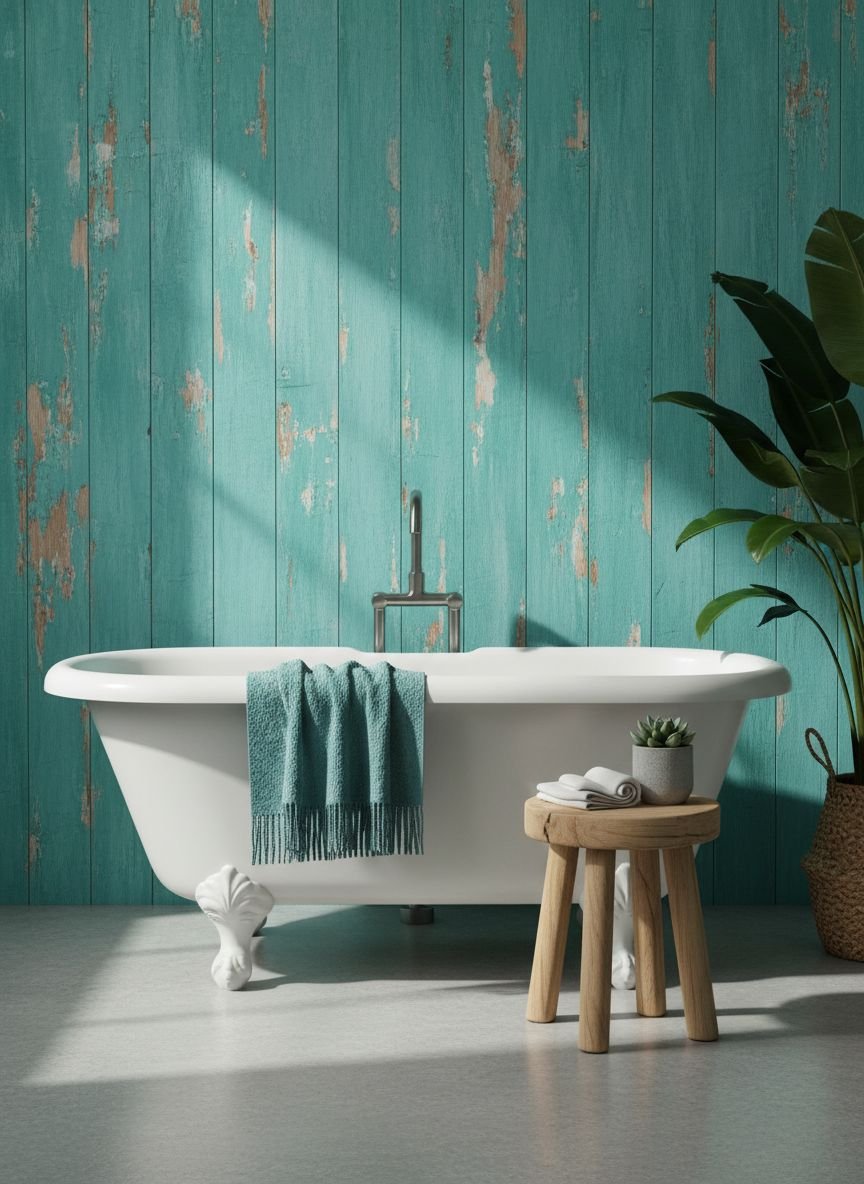
Rustic charm meets bold color in this “Yee Haw!” western-inspired bathroom. This is not your typical brown and beige rustic style; it is a modern take that uses teal to breathe life into reclaimed wood and farmhouse aesthetics. A deep, greenish-teal pairs incredibly well with the orange and red undertones found in natural wood, leather, and copper.
To achieve this look, consider a vanity made from repurposed barn wood set against a dark teal shiplap wall. Copper sinks and oil-rubbed bronze fixtures add to the rustic, lived-in feel. You might incorporate cowhide textures through a rug or a stool cover. The contrast between the cool, sophisticated teal and the warm, rough-hewn wood creates a balanced and inviting space that feels grounded and earthy.
Pro Tip: Use warm-toned Edison bulbs in your light fixtures to enhance the cozy, rustic atmosphere and complement the wood tones.
Flowers And Fish
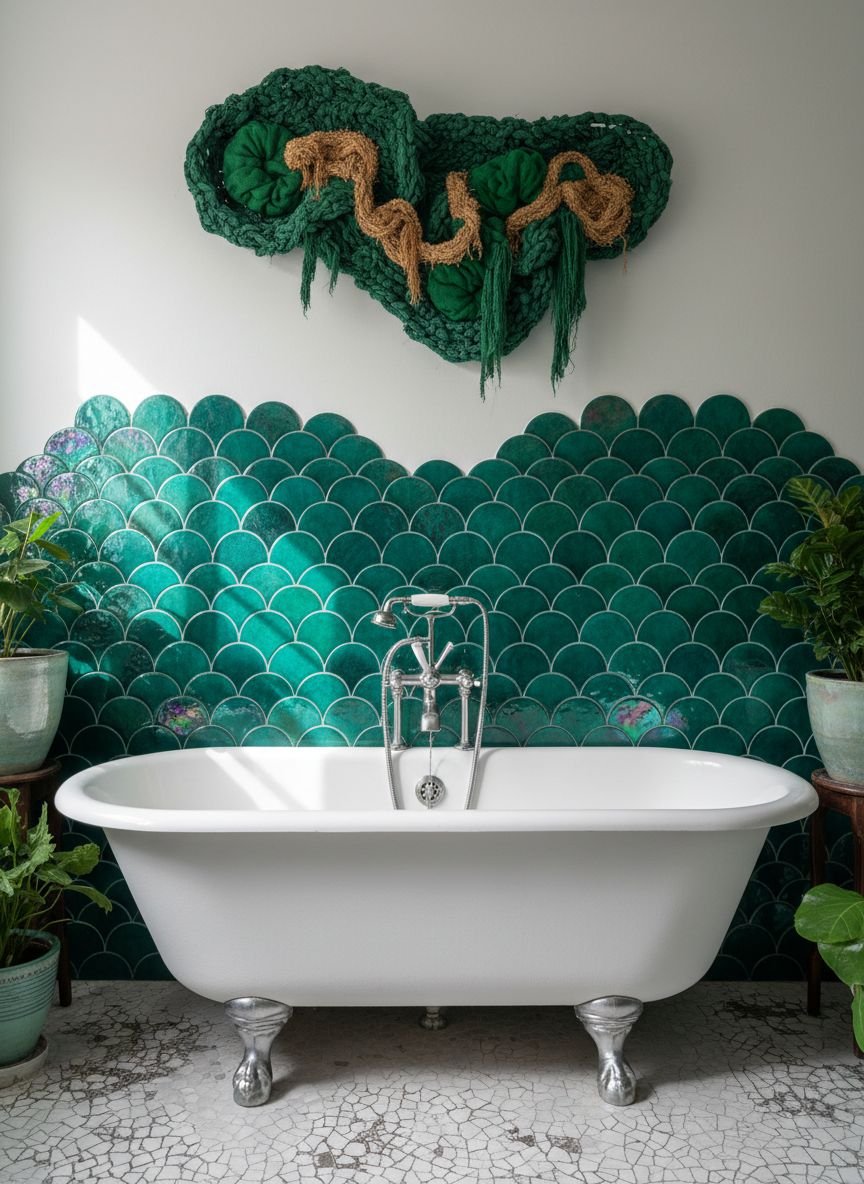
Wallpaper is back in a big way, and the “Flowers and Fish” concept embraces bold, nature-inspired prints. A wallpaper featuring a teal background with oversized floral or aquatic motifs can turn a boring bathroom into an art installation. This is maximalism at its finest. The busy pattern camouflages the boundaries of the room, which can actually make a small space feel infinite.
When using such a bold wallpaper, the supporting elements must be chosen carefully. Wainscoting painted in a color pulled from the wallpaper (either the background teal or a secondary color) protects the lower walls from splashes and grounds the design. Keep the floor simple—a classic white hexagonal tile works well to not compete with the walls. This design choice is perfect for guest bathrooms where you want to make a memorable impression.
Pro Tip: Ensure you use “vinyl” or “non-woven” wallpaper specifically designed for high-humidity areas to prevent peeling or mold.
Carpet It
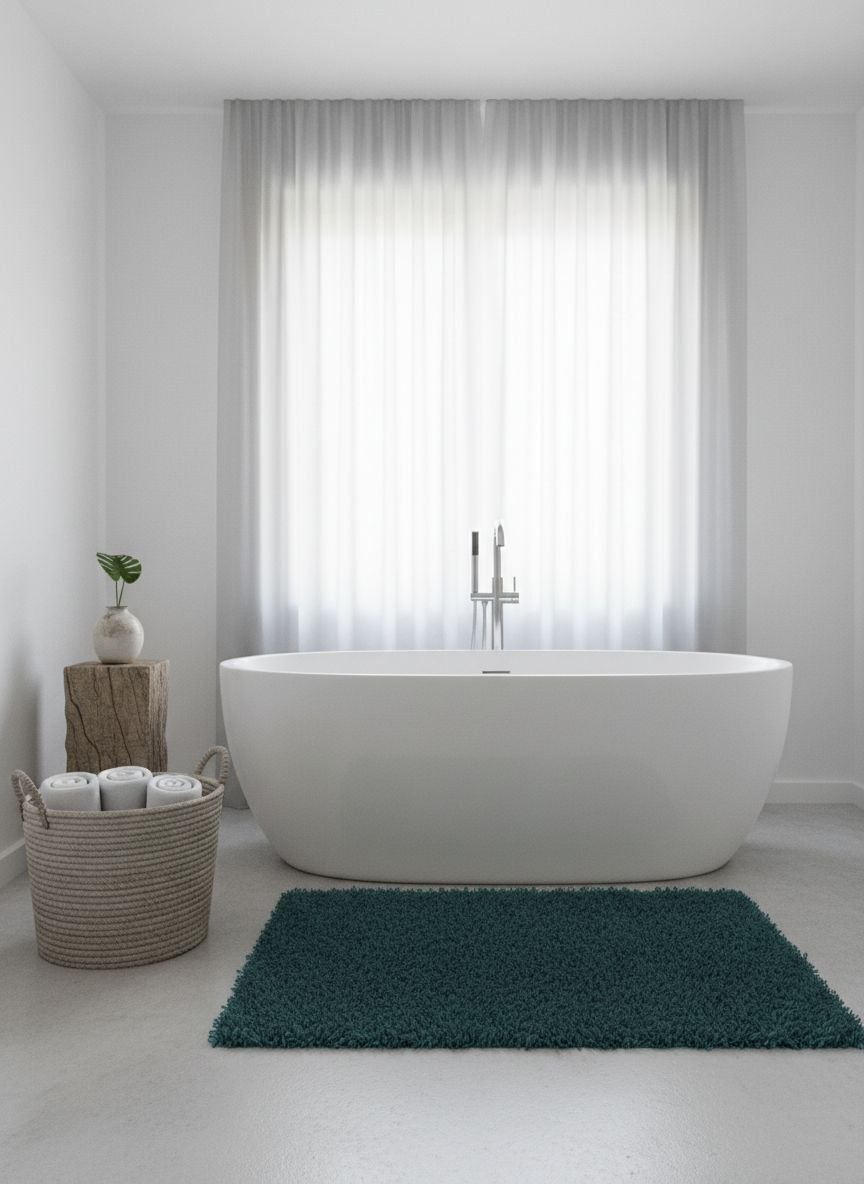
Before you panic, we are not suggesting wall-to-wall shag carpet in a damp bathroom. “Carpet It” refers to the trend of using large, vintage-style area rugs (often Persian or Kilim styles) to cover cold tile floors. A rug with deep teal, red, and navy patterns adds instant warmth and luxury to a bathroom. It softens the acoustics of the room and provides a comfortable place to stand.
This styling trick is perfect for rental bathrooms where you cannot change the ugly floor tiles. A large runner or area rug can hide the flooring and introduce the teal color palette without any renovation. Choose a rug made from synthetic fibers like polypropylene that are water-resistant and easy to clean, or a flat-weave cotton rug that can be tossed in the washing machine. Visually, the intricate pattern of the rug adds a layer of sophistication that mimics a living room aesthetic.
Pro Tip: Always use a high-quality non-slip rug pad underneath to prevent accidents and keep the rug from bunching up on the tile.
Save this idea to your Pinterest.
Related posts :
Exotic Florals
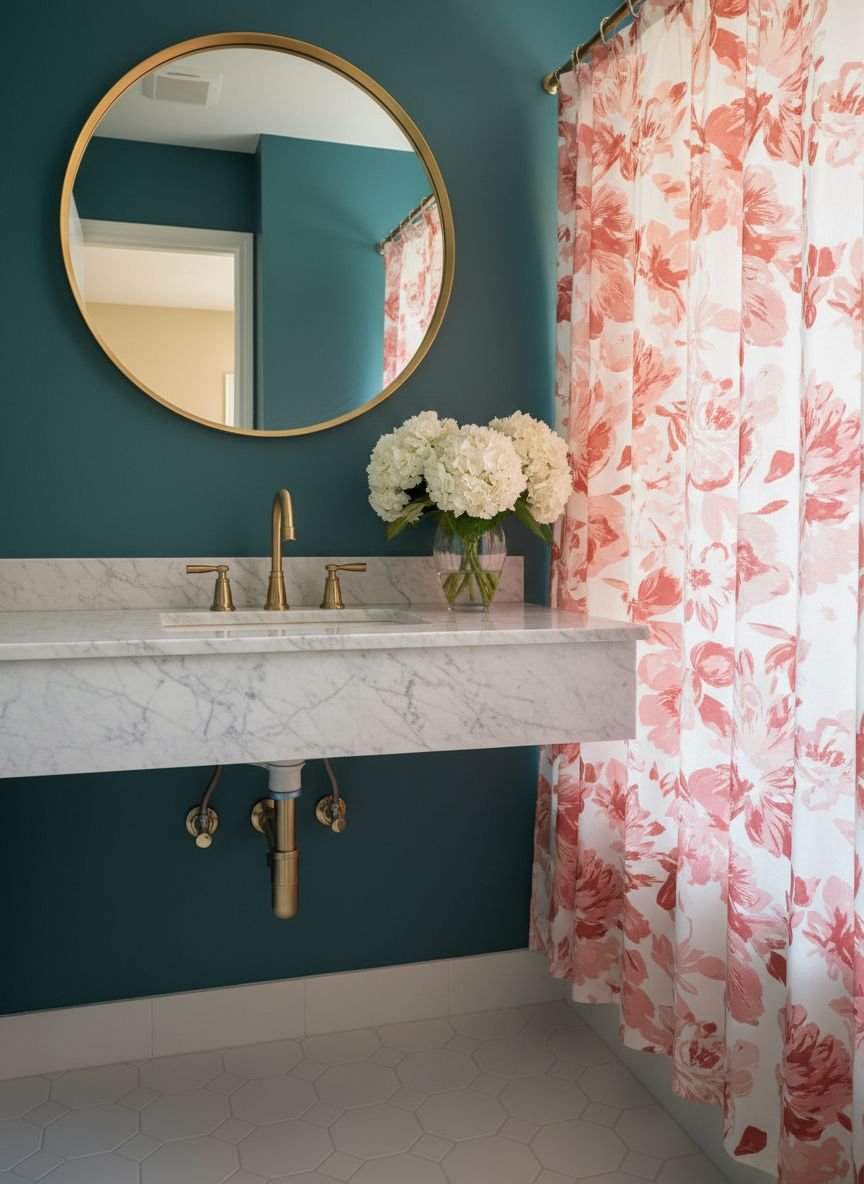
Take a trip to the tropics with an “Exotic Florals” theme. This style uses a vibrant, jungle-green teal as the base. It evokes the feeling of a lush rainforest. Pair this verdant color with live plants—ferns, pothos, and monsteras thrive in the humidity of a bathroom and look stunning against a teal backdrop.
The design relies on biophilic principles, connecting the indoors with nature. Use bamboo or rattan accessories to enhance the tropical vibe. A shower curtain with a large palm leaf print can serve as a focal point if you are not ready to paint the walls. Gold fixtures add a touch of sunset warmth to the cool jungle tones. This look is energizing and fresh, making it a great space to start your morning.
Pro Tip: If your bathroom lacks natural light for live plants, high-quality faux plants can achieve the same visual effect without the maintenance.
Easy, Peasy
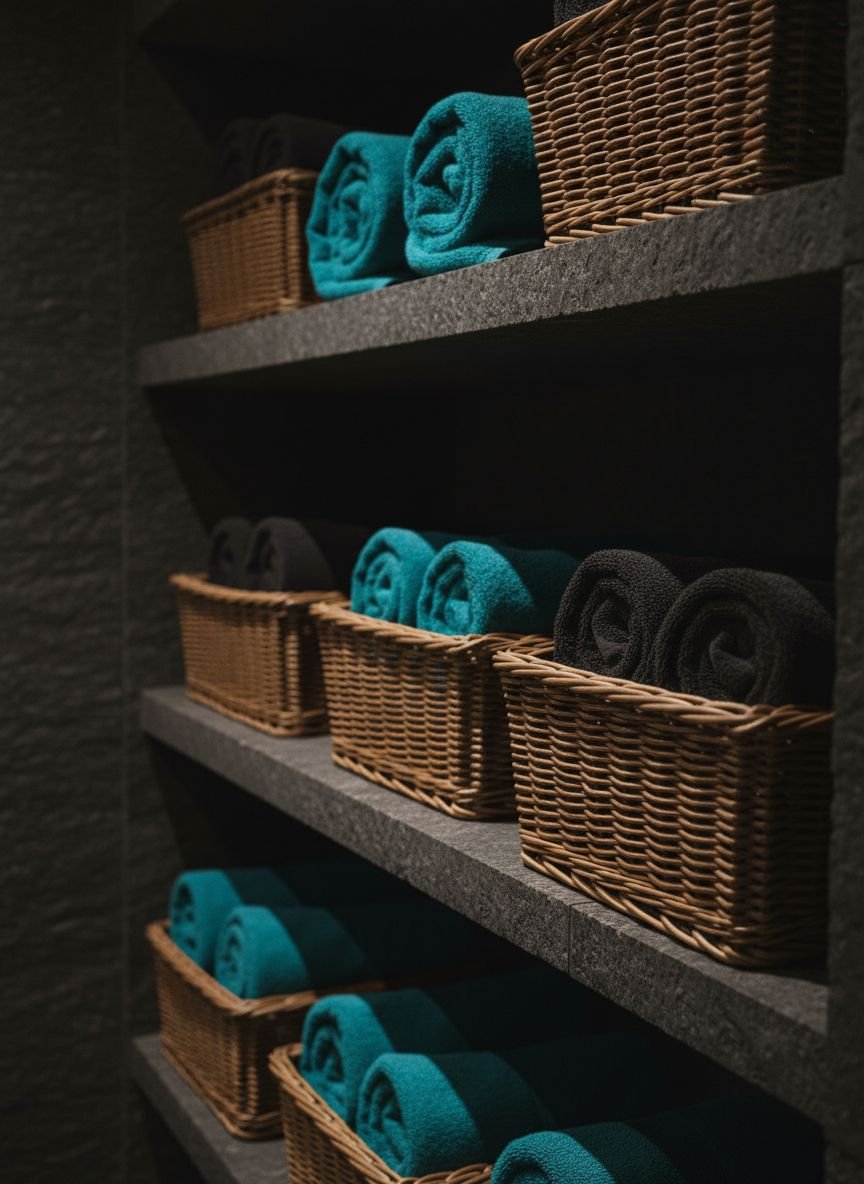
Sometimes the best design solutions are the simplest. The “Easy, Peasy” approach focuses on achieving a teal transformation with zero renovation. This is about the power of accessories. Start with a neutral bathroom (white, beige, or grey) and swap out every textile and accessory for a coordinated teal set.
Replace the shower curtain, bath mat, towels, soap dispenser, and wastebasket with matching teal items. To make it look intentional rather than accidental, ensure the teal shades match closely. Add a piece of wall art that incorporates the same teal tone. This method allows you to test drive the color before committing to paint or tile. It is low risk, low cost, but high impact because the repetition of color creates a cohesive visual theme.
Pro Tip: Roll your towels spa-style and display them on an open shelf to turn your linens into a decor element.
NYC Glamour
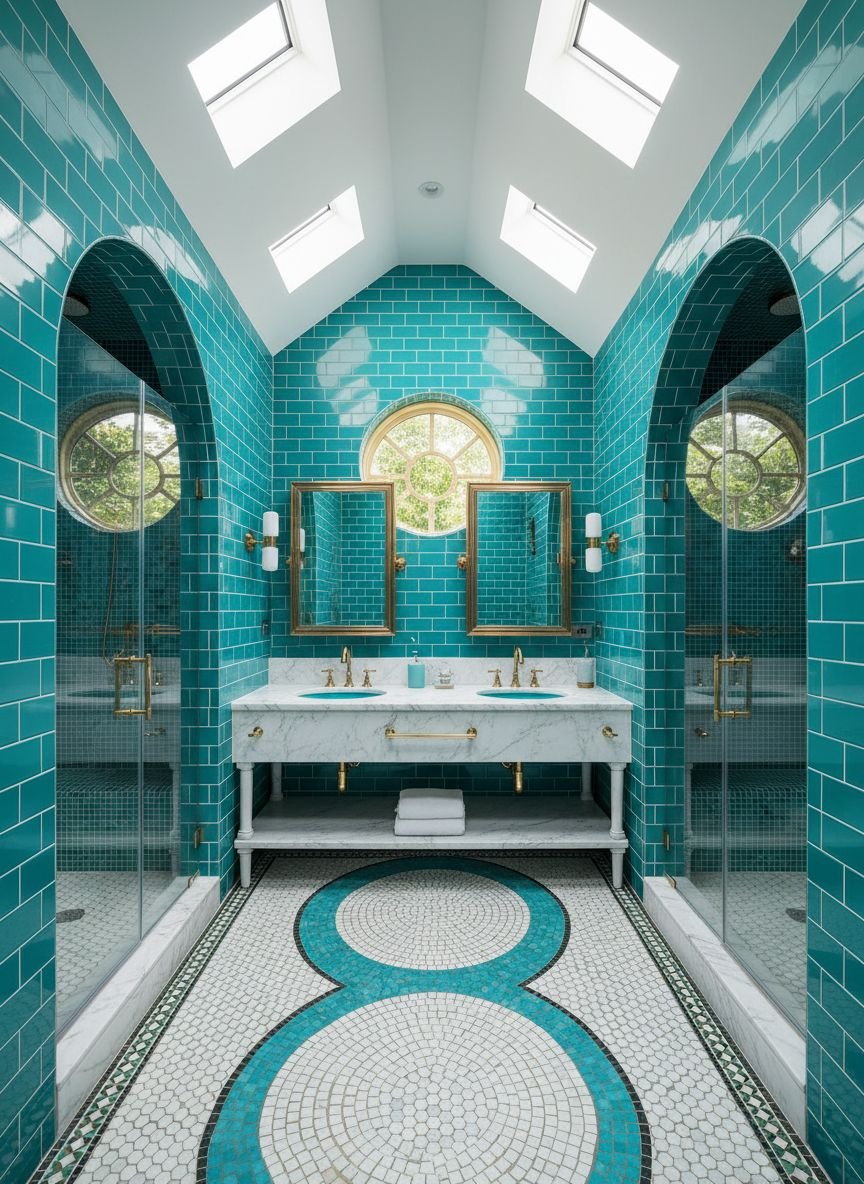
Inspired by the Art Deco architecture of New York City, this style combines dark, moody teal with geometric patterns and luxe finishes. Think Great Gatsby meets modern spa. Use a dark teal paint with a slight sheen or emerald-teal subway tiles. The defining feature of this look is the use of black and white geometric floor tiles (like basketweave or hexagon mosaics) and polished chrome or nickel fixtures.
Lighting is crucial for NYC Glamour. Sconces with frosted glass shades and metal detailing provide that vintage metro feel. A console sink with metal legs instead of a bulky cabinet opens up the floor space and adds to the retro industrial vibe. This style is sophisticated, urban, and incredibly chic. It creates a bathroom that feels like a boutique hotel in Manhattan.
Pro Tip: Add a glass shelf above the sink to display vintage perfume bottles or apothecary jars, enhancing the old-world glamour.
Popular Asked Questions
What colors go with teal in a bathroom?
Teal is surprisingly versatile. It pairs best with crisp white for a clean, nautical look, and grey for a modern, moody vibe. For a warmer contrast, mustard yellow, coral, or terracotta create a vibrant, energetic palette. Gold and brass metallics look stunning against teal, adding a touch of luxury.
Is teal a good color for a small bathroom?
Yes, absolutely. While many people fear dark colors in small spaces, a deep teal can actually blur the corners of the room, creating an illusion of depth that makes the space feel larger. It adds character and coziness that white powder rooms often lack.
How do I style a teal bathroom without painting the walls?
You can introduce teal through textiles and accessories. Swap out your shower curtain, bath mats, and towels for teal versions. Add teal ceramic vases, soap dispensers, or wall art. A large teal area rug can also cover neutral flooring to bring the color in from the ground up.
What color towels look best in a teal bathroom?
If you have teal walls, bright white towels create a classic, spa-like contrast. Mustard yellow towels add a fun, trendy pop of color. Grey towels offer a subtle, sophisticated look. Avoid matching the towels exactly to the wall color, as this can make the room feel flat.
Conclusion
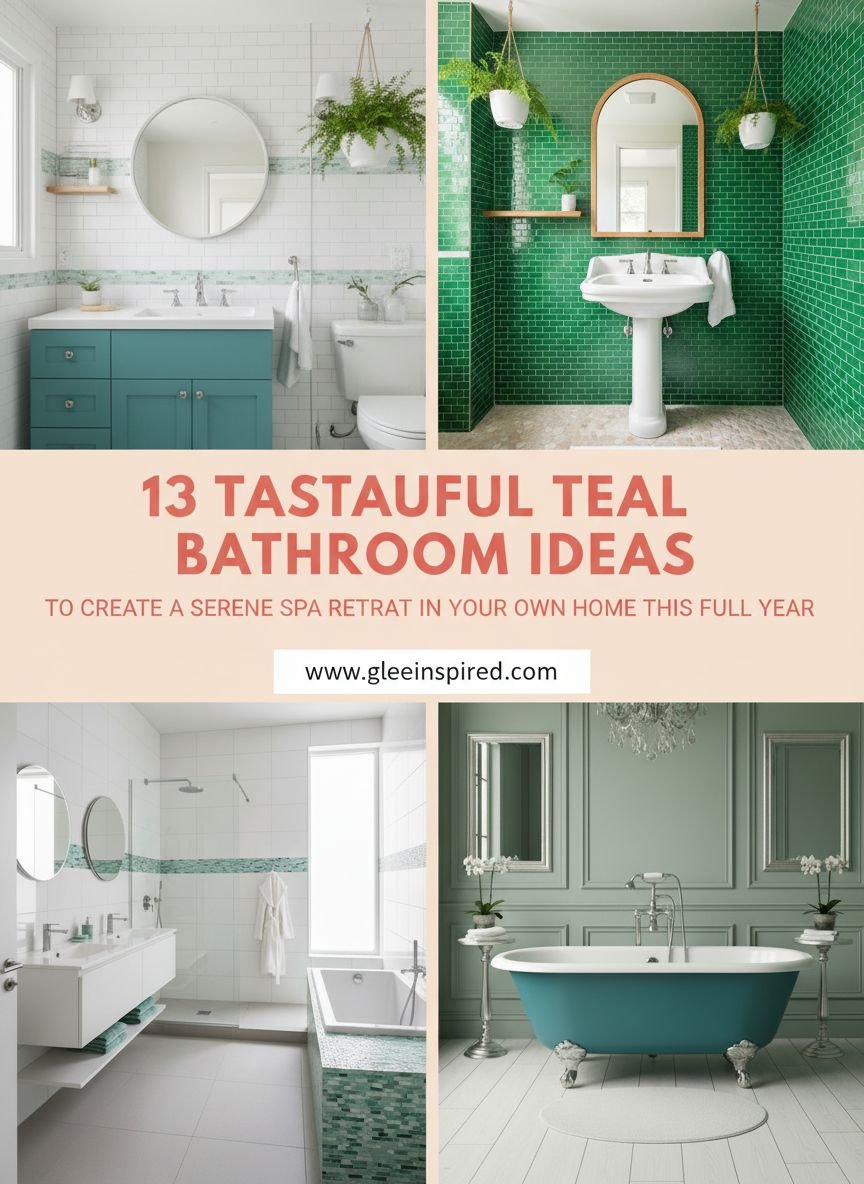
Teal is more than just a passing trend; it is a design powerhouse that brings depth, serenity, and style to any bathroom. Whether you opt for the dramatic flair of “NYC Glamour,” the rustic warmth of “Yee Haw!,” or the simple elegance of “Calmly Contemporary,” there is a teal application for every home. By balancing this bold hue with the right textures, lighting, and complementary colors, you can transform a utilitarian space into a personal sanctuary.
Leave a Comment