
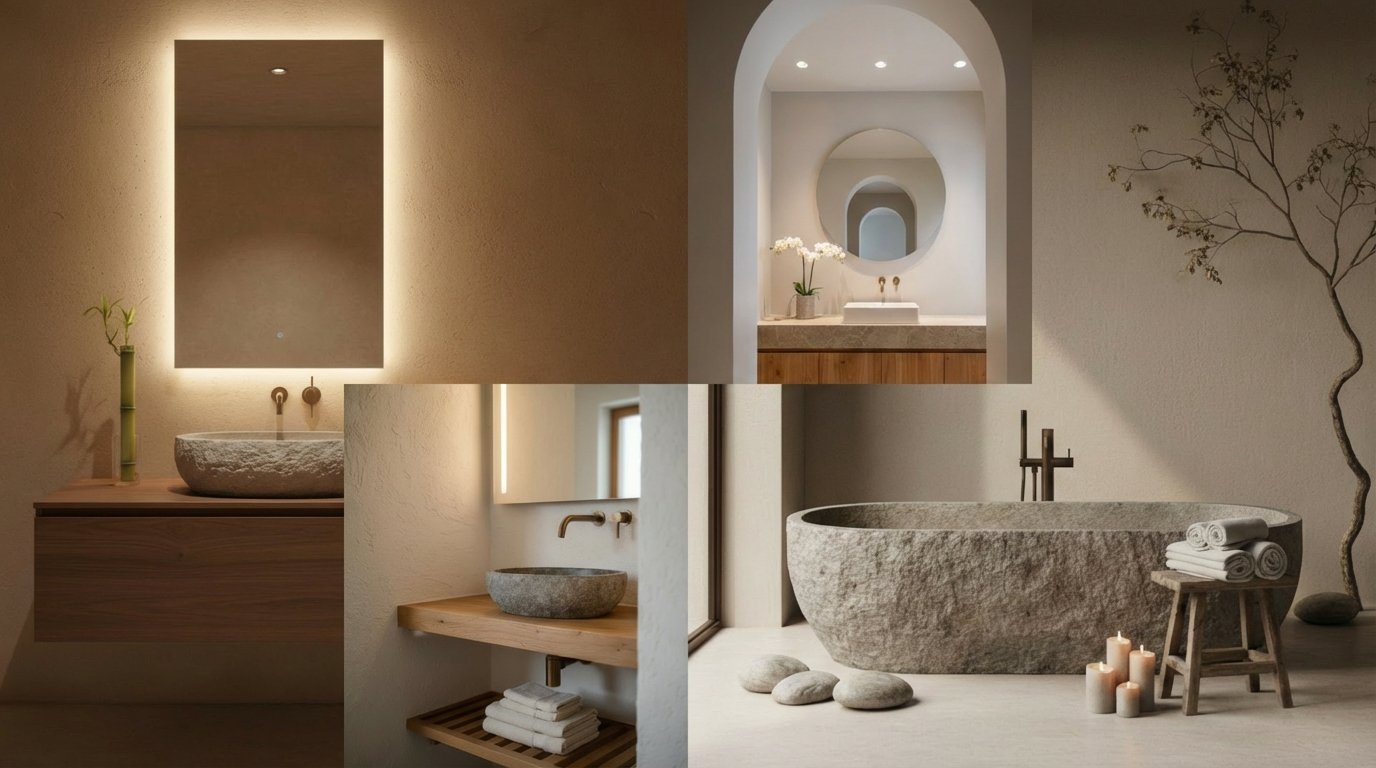
In a world that never stops moving, your bathroom should be the one place where time stands still. We all crave a sanctuary where the noise of the day fades into the background, replaced by the gentle sound of running water and the soothing scent of eucalyptus. Creating a Zen bathroom isn’t just about aesthetics. It is about crafting an environment that physically lowers your cortisol levels and invites deep relaxation.
This guide explores 20 transformative ideas to turn your ordinary bathroom into a high-end spa retreat. Whether you have a sprawling master bath or a tiny powder room, these principles of minimalism, natural textures, and calming light will help you reclaim your peace. You don’t need a massive renovation budget to start. Sometimes, a simple shift in lighting or the addition of organic materials is all it takes to shift the energy of the room.
Key Takeaways
- Nature is Key: Incorporating stone, wood, and water elements grounds the space and connects you to the earth.
- Light Matters: Soft, layered lighting is essential for transitioning from a functional space to a relaxing sanctuary.
- Declutter for Calm: A minimalist approach with hidden storage reduces visual noise and promotes mental clarity.
- Sensory Experience: Engage all senses with texture, scent, and sound to create a truly immersive spa vibe.
Table of Contents
- Natural Stone Accents
- Peaceful Earthy Color Scheme
- Minimalist Wooden Vanities
- Freestanding Soaking Tubs
- Indoor Plants for a Burst of Life
- Minimalist Design
- Natural Materials
- Neutral Color Palette
- Indoor Plants
- Soft Lighting
- Open Space Layout
- Natural Scents
- Water Features
- Wooden Elements
- Soft Textiles
- Simplified Storage Solutions
- Natural Stone
- Zen-inspired Accessories
- Bathing Rituals
- Open Showers
- Popular Asked Questions
- Conclusion
Natural Stone Accents
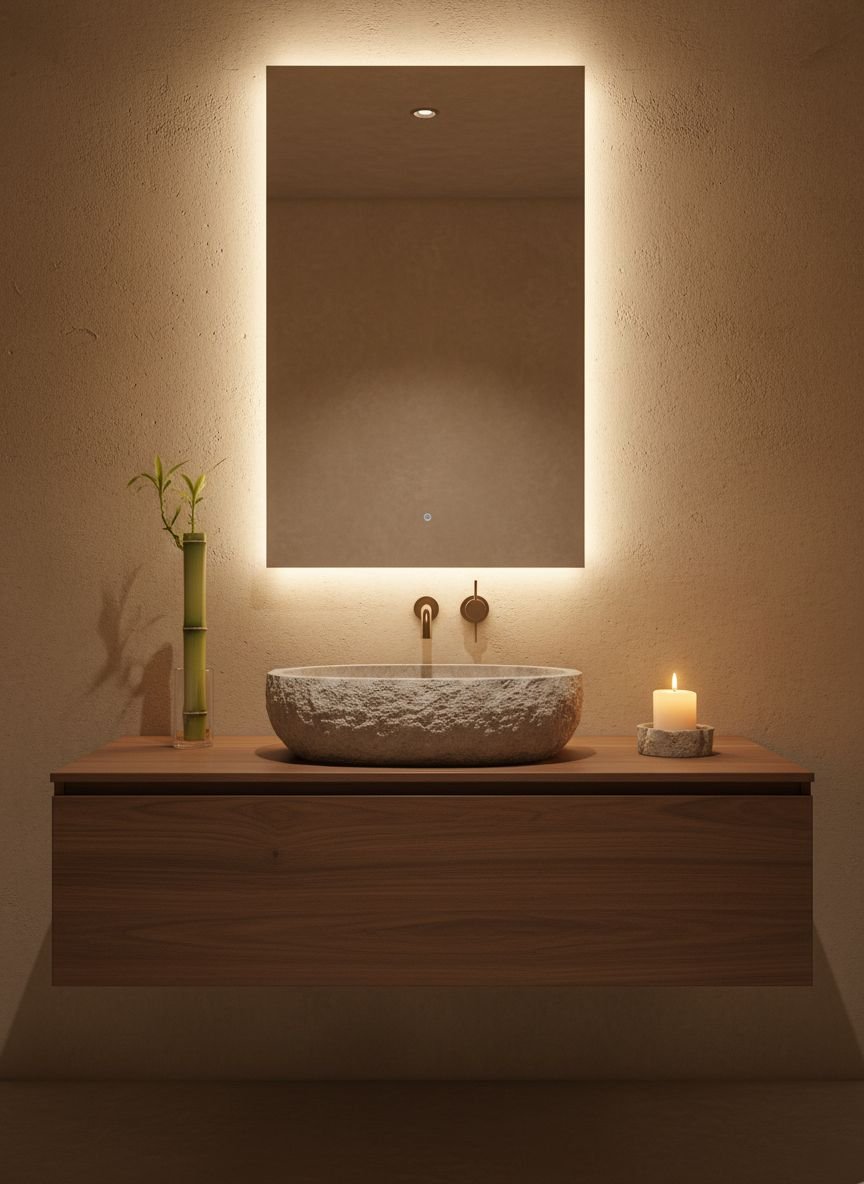
Bringing the outdoors in is a fundamental principle of Zen design, and natural stone accents are the perfect way to ground your space. Think beyond standard tiles. River rocks, pebbles, or rough-cut slate can introduce an organic texture that feels incredible underfoot and pleasing to the eye. You might consider a pebble floor in the shower to massage your feet while you wash, or a stone vessel sink that serves as a sculptural focal point. The irregularity of natural stone reminds us of the Japanese concept of Wabi-Sabi, finding beauty in imperfection.
To implement this without a full renovation, look for accessories made of solid stone. A heavy granite soap dispenser, a marble tray for your toiletries, or a stack of smooth river stones placed artfully on a shelf can shift the energy of the room. These elements add weight and permanence, creating a sense of stability. When choosing stone, opt for matte or honed finishes rather than high-gloss polish. The muted, tactile surface absorbs light rather than reflecting it, contributing to a softer and more serene atmosphere.
Pro Tip: Place a shallow bowl of smooth black river stones on your vanity and fill it with water to add a mini reflective pool element.
Peaceful Earthy Color Scheme
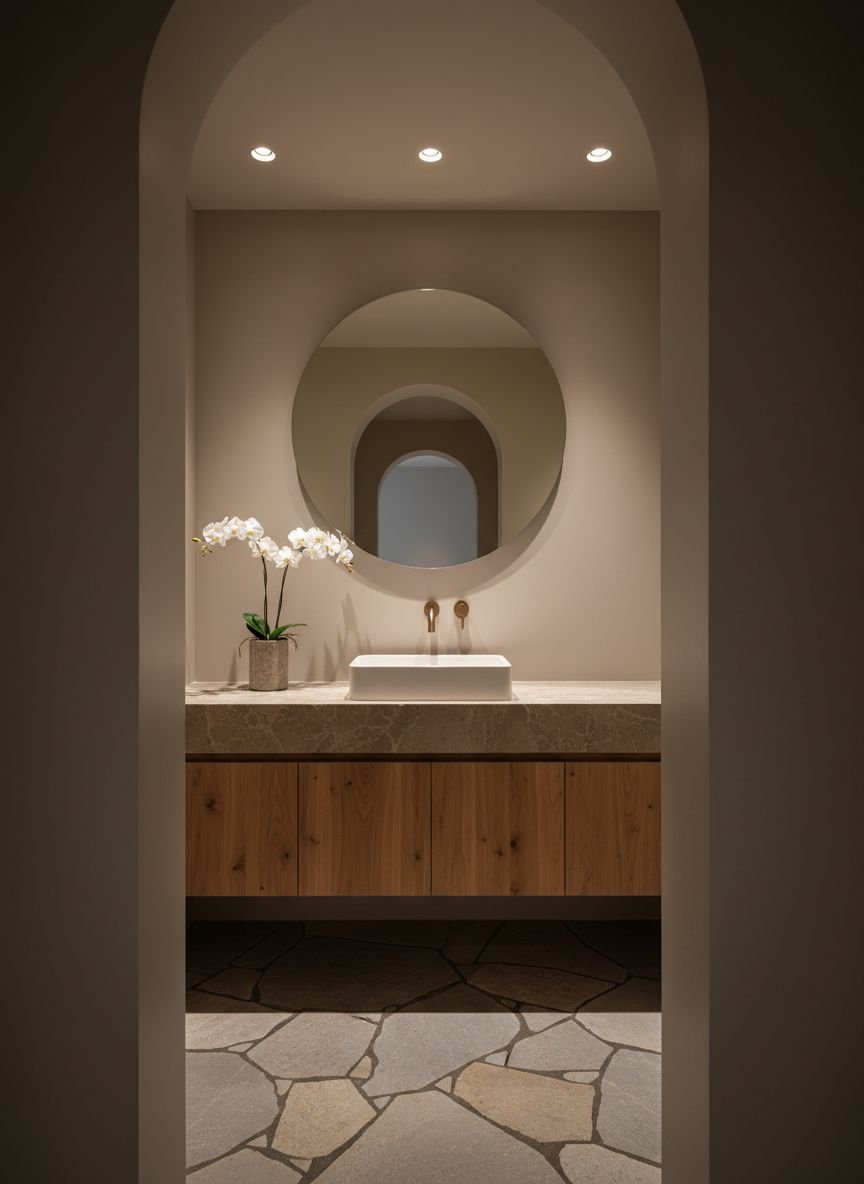
Color has a profound impact on our psychological state. For a Zen oasis, you want to step away from harsh brights and clinical whites. Instead, embrace a palette drawn directly from nature. Warm beiges, soft terracottas, muted sage greens, and sandy browns create a cocoon-like effect that feels safe and warm. These colors mimic the hues found in forests, deserts, and beaches, instantly signaling your brain to relax. The goal is to create a seamless visual flow where no single color screams for attention.
When painting your walls or choosing tiles, look for “muddy” tones that have a grey or brown undertone. These complex neutrals change subtly with the light throughout the day, adding depth and interest without visual clutter. You can layer these shades by using slightly different tones for the walls, towels, and rugs. A monochromatic approach with high textural contrast is a hallmark of sophisticated Zen design. Avoid high-contrast patterns that can feel chaotic. Instead, let the shadows and textures provide the visual interest.
Pro Tip: Test paint colors at different times of day. A “calm beige” can turn “yellow” in morning light, so ensure the undertone remains soothing 24/7.
Minimalist Wooden Vanities
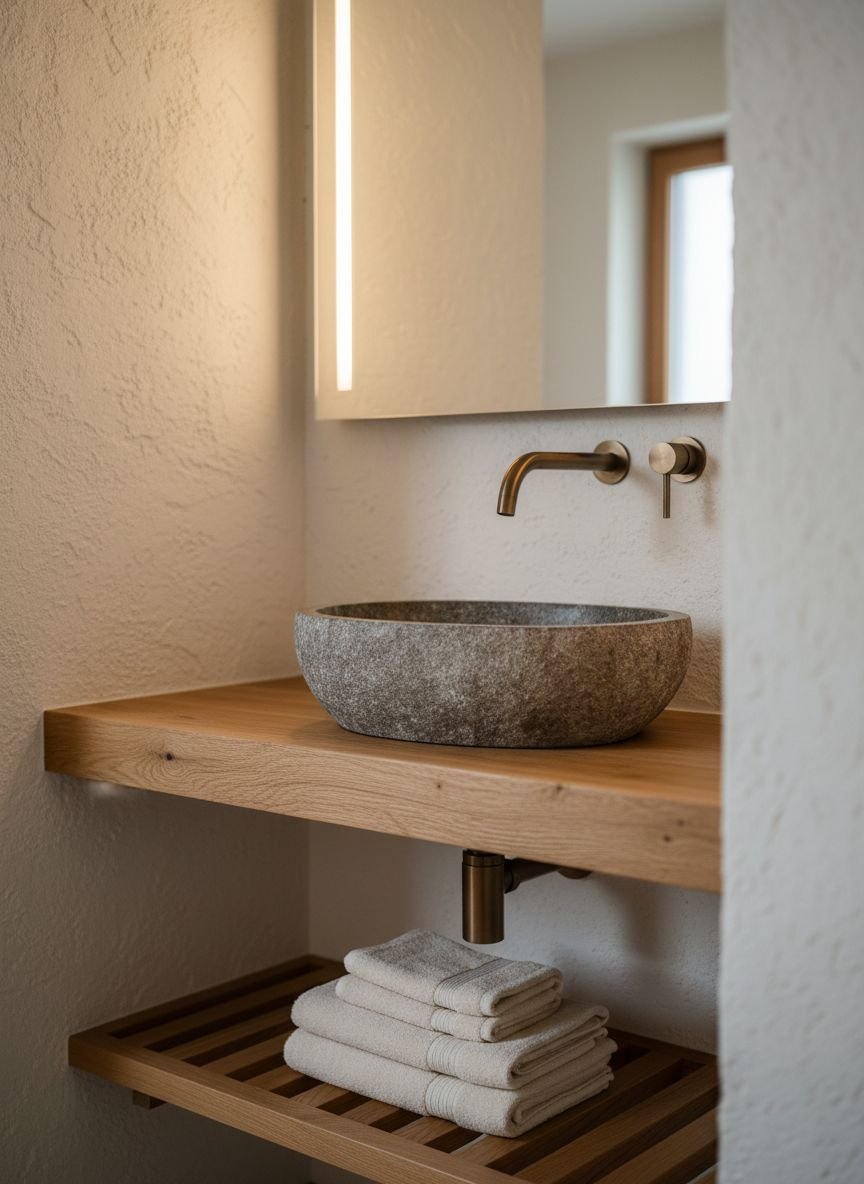
The vanity is often the largest piece of furniture in the bathroom, so its design dictates the room’s vibe. A minimalist wooden vanity brings warmth and clean lines that are essential for a Zen aesthetic. Look for floating designs that keep the floor visible. This not only makes the room feel larger and airier but also enhances the flow of energy, or “Chi,” throughout the space. Light woods like white oak, bamboo, or maple are excellent choices as they reflect light and maintain a fresh, open feel.
Functionality is just as important as form here. A Zen vanity should have ample closed storage to hide clutter. The countertop should remain clear, holding only the absolute essentials. Handleless drawers or simple integrated pulls maintain the sleek profile. The wood grain itself becomes the decoration, so choose a timber with a beautiful, subtle pattern. If you are worried about water damage, ensure the wood is properly sealed with a marine-grade finish or opt for a high-quality wood-effect laminate that offers the look without the maintenance.
Pro Tip: Install motion-sensor under-cabinet lighting beneath a floating vanity for a soft night-light glow that enhances the floating effect.
Freestanding Soaking Tubs
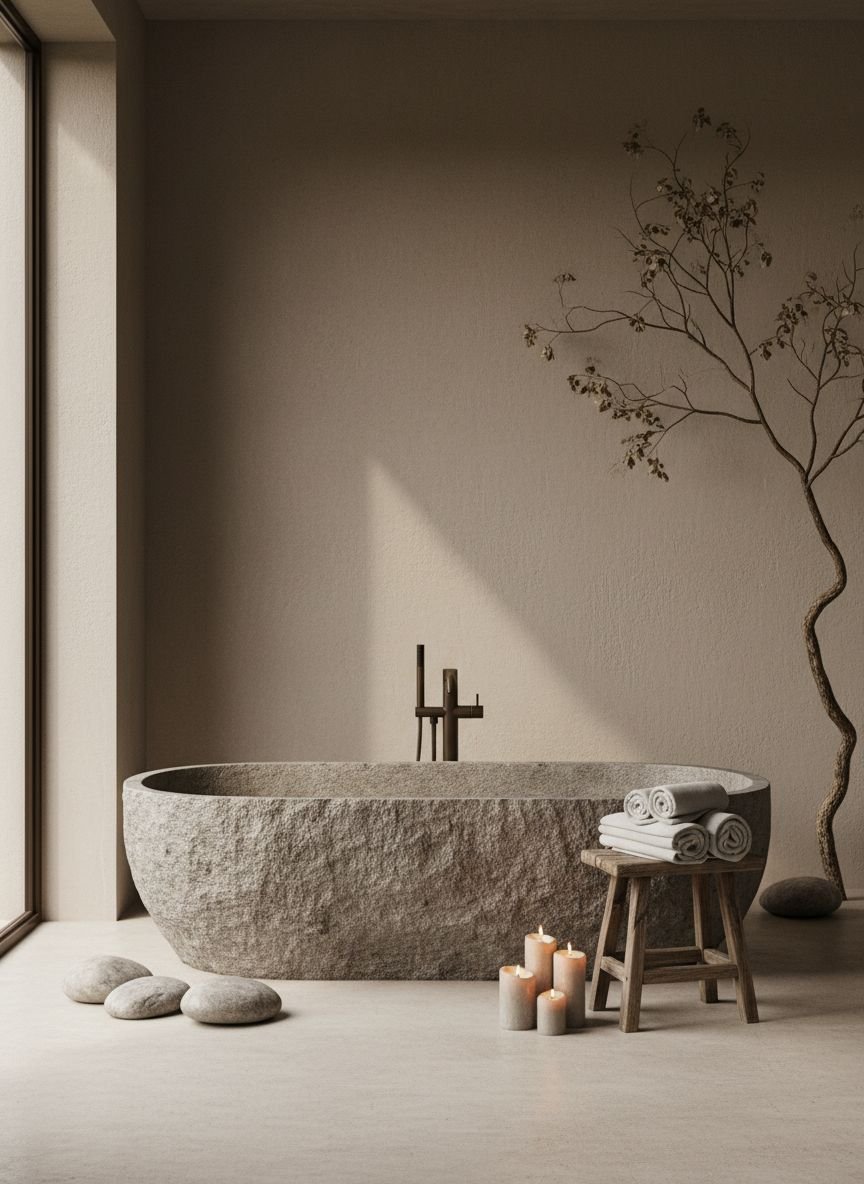
A freestanding soaking tub is the ultimate symbol of relaxation and the centerpiece of a spa bathroom. Unlike built-in tubs that are often boxed into a corner, a freestanding tub stands proudly as a sculptural element. Its curves soften the hard lines of the room and invite you to slow down. Deep soaking tubs, particularly those inspired by Japanese “Ofuro” tubs, allow you to submerge up to your chin, providing a weightless, comforting experience that relieves muscle tension.
Placement is key. If possible, position the tub near a window with a view of nature or beneath a skylight. If privacy is an issue, use frosted glass or top-down/bottom-up shades. The material of the tub also matters. Stone resin or copper retains heat longer than acrylic, allowing for longer, more luxurious soaks. Keep the area around the tub uncluttered. A simple wooden stool for a book and a candle is all you need. This is your dedicated zone for decompression, separate from the functional areas of the bathroom.
Pro Tip: If space is tight, look for “petite” freestanding tubs that offer deep soaking depth with a smaller footprint, often as short as 55 inches.
Indoor Plants for a Burst of Life
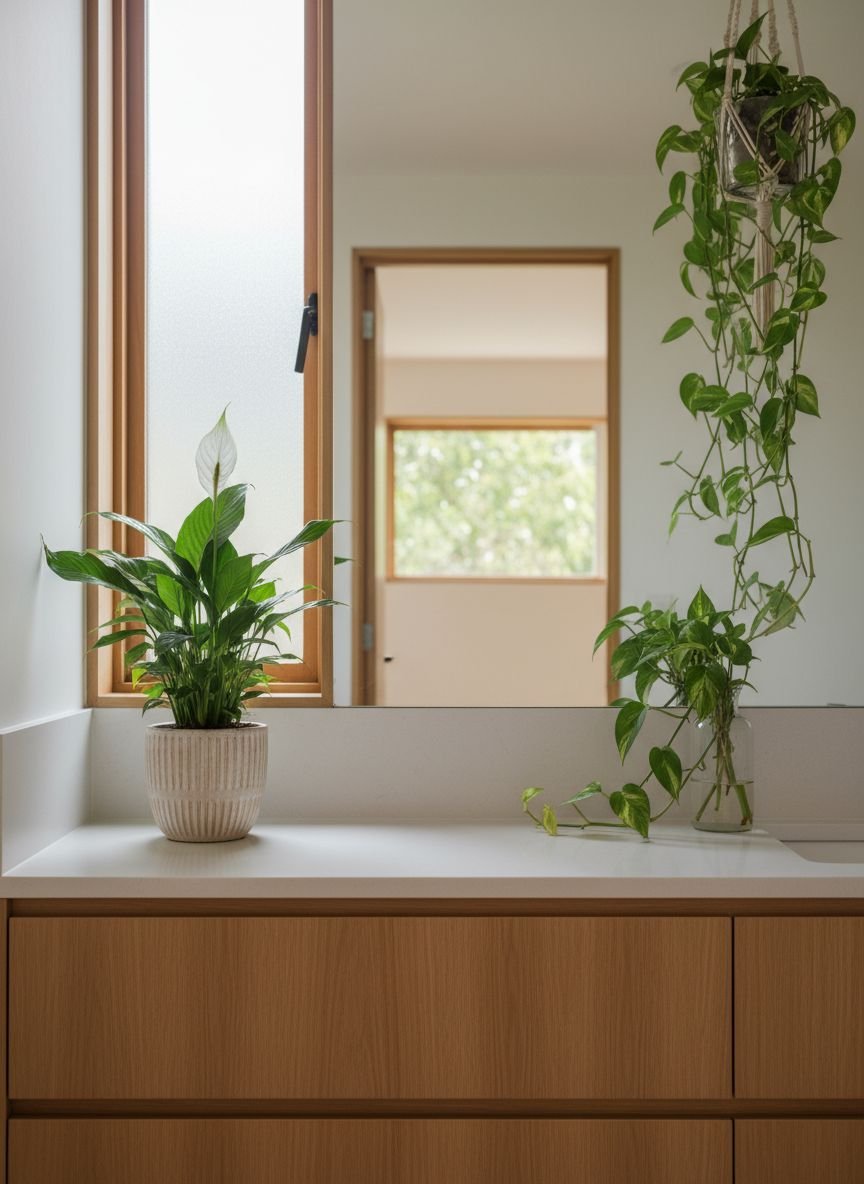
Large, statement greenery is one of the most effective ways to breathe life into a sterile bathroom. A single, large potted plant can transform the corner of a room into a lush oasis. Plants not only purify the air but also soften the acoustics of tiled spaces, reducing echoes and making the room feel quieter and more intimate. Species like the Fiddle Leaf Fig, Monstera, or a tall Bamboo palm thrive in the humid environment of a bathroom and provide a stunning visual connection to nature.
When selecting a planter, stick to natural materials like terracotta, woven seagrass, or concrete. Avoid plastic pots that look cheap and disrupt the organic vibe. If your bathroom lacks natural light, don’t despair. High-quality faux trees have come a long way and can provide the same visual benefit without the need for sunlight. However, if you have a window, live plants are always superior for their air-cleaning properties and the subtle energy they bring to a living space.
Pro Tip: Wipe the leaves of your bathroom plants weekly. Dust blocks sunlight and makes the plant look neglected, which disrupts the clean Zen aesthetic.
Comparison: Natural Stone Types for Zen Bathrooms
| Stone Type | Aesthetic Vibe | Best Use | Maintenance Level |
|---|---|---|---|
| River Rock | Organic, tactile, spa-like | Shower floors, accent borders | Medium (Grout cleaning) |
| Slate | Moody, earthy, textured | Floors, feature walls | Low (Very durable) |
| Travertine | Warm, soft, classic | Wall tiles, vanity tops | High (Needs sealing) |
| Marble (Honed) | Luxurious, cool, bright | Countertops, small accessories | High (Prone to staining) |
| Basalt | Deep, grounding, volcanic | Vessel sinks, heavy accents | Low to Medium |
Minimalist Design

Minimalism in a Zen bathroom is not about creating an empty, cold space. It is about intentionality. Every object in the room should have a purpose or bring you joy. Start by ruthlessly decluttering. Countertops should be almost entirely bare. This visual silence allows your mind to rest. When the eye isn’t darting around looking at bottles, cords, and knick-knacks, the brain naturally settles into a calmer state.
Adopt the “less is more” philosophy for your fixtures as well. Choose faucets with simple, arched lines and matte finishes. Avoid ornate details or complex patterns. The architecture of the room should speak for itself. If you are renovating, consider wall-mounted faucets to free up counter space and make cleaning easier. The goal is to create a seamless, frictionless experience where everything works perfectly and nothing is in the way.
Pro Tip: Use the “one in, one out” rule. For every new product or accessory you bring into the bathroom, an old one must be recycled or thrown away.
Natural Materials
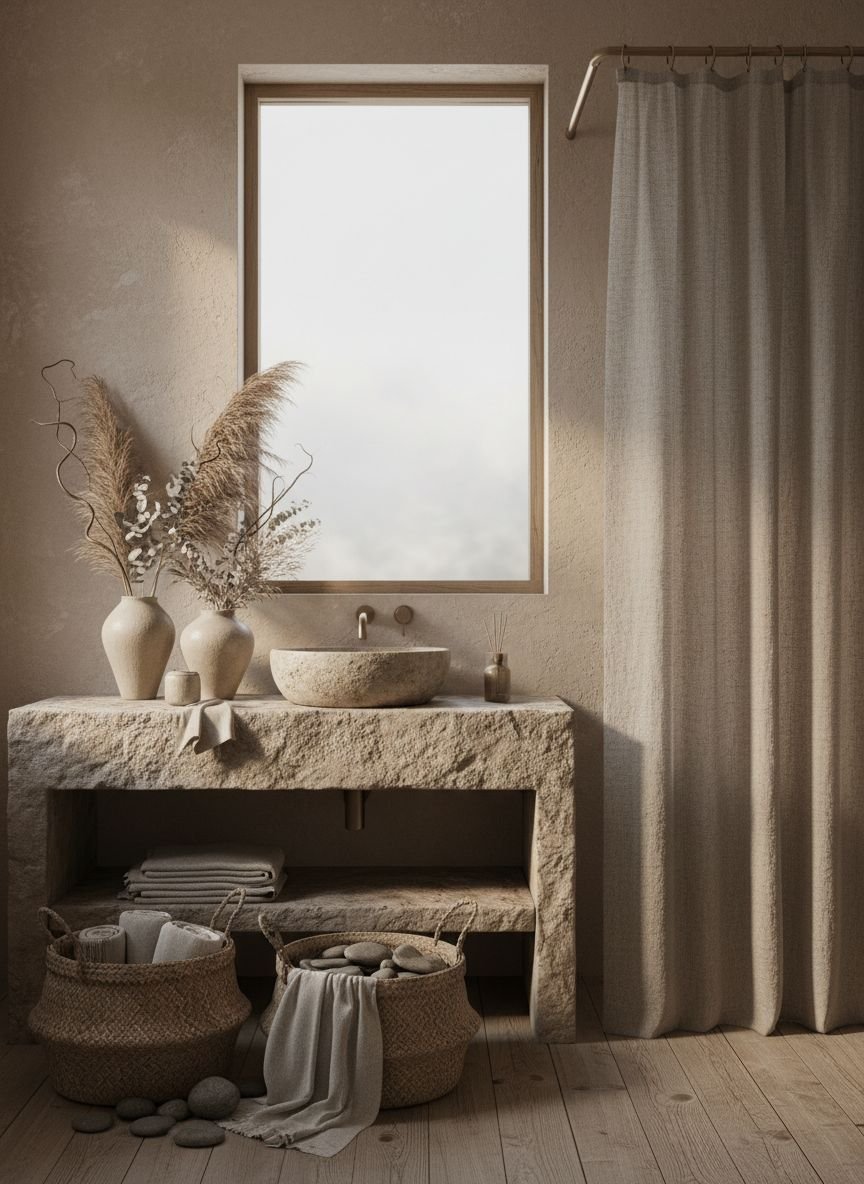
Layering different natural materials creates a rich, sensory experience that synthetic materials simply cannot match. Combine the coolness of stone with the warmth of wood and the softness of cotton. Bamboo is a quintessential Zen material that is sustainable, water-resistant, and beautiful. You can use it for flooring, bath mats, or even wall cladding.
Don’t forget about other organic textures like rattan, jute, and linen. A rattan laundry hamper or a jute rug adds instant warmth and prevents the room from feeling too sterile. These materials age beautifully, developing a patina over time that adds character. The interplay of rough and smooth textures mimics the diversity found in nature, making the space feel authentic and grounded.
Pro Tip: Swap out plastic shower curtain rings and synthetic liners for a high-quality hemp or linen shower curtain that dries quickly and looks elegant.
Neutral Color Palette
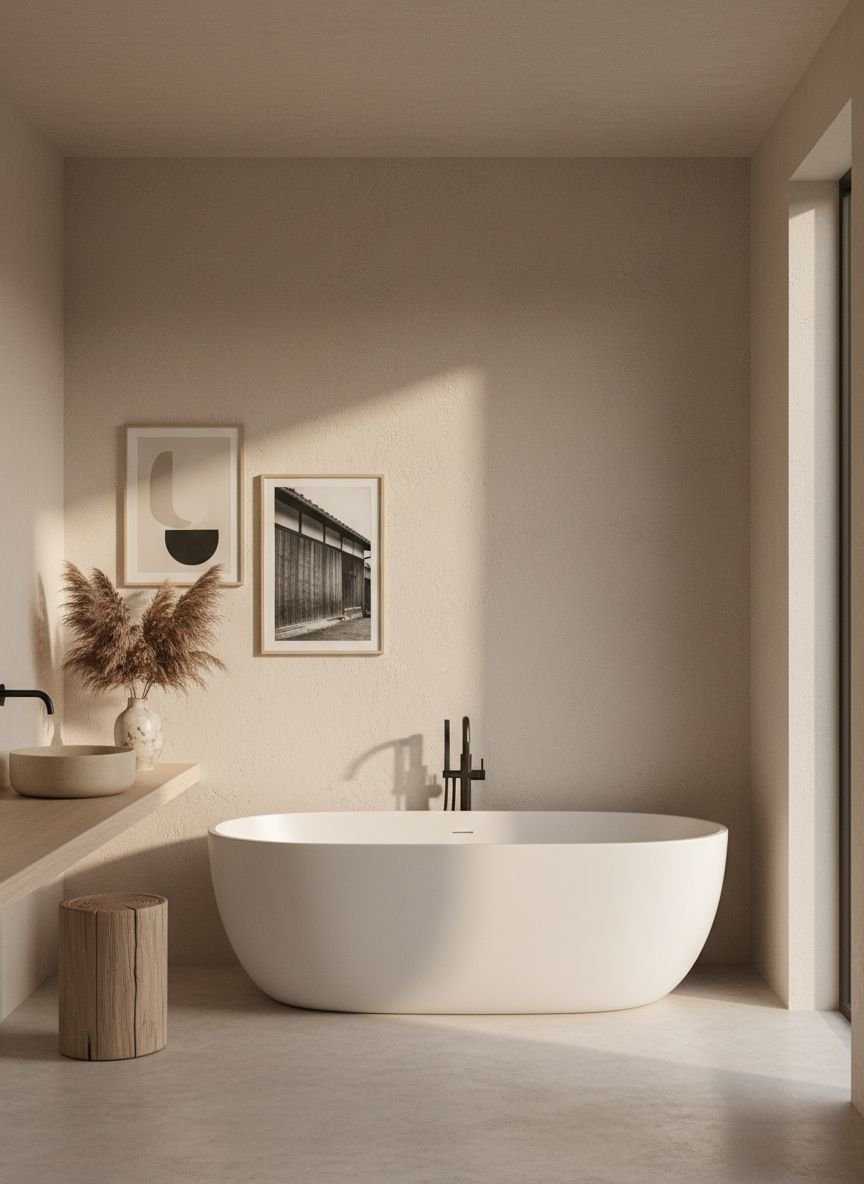
While the “Earthy Color Scheme” section focused on warm tones, a neutral palette can also include cooler, airy shades that evoke mist and sky. Soft greys, creamy whites, and pale blues can create a refreshing and cleansing atmosphere. The key to a successful neutral palette is texture. A white subway tile wall looks very different from a white Zellige tile wall, where each tile has a slightly different surface and sheen.
Layering shades of white and cream is a designer trick to make a small bathroom feel luxurious and expansive. Use a slightly darker shade of grout to highlight the shape of the tiles, or paint the ceiling a shade lighter than the walls to lift the eye. This palette serves as a blank canvas, allowing the green of your plants and the brown of your wood accents to truly pop.
Pro Tip: If an all-neutral room feels too flat, add metallic accents in brushed brass or copper. These warm metals act as “jewelry” for the room without breaking the color scheme.
Indoor Plants
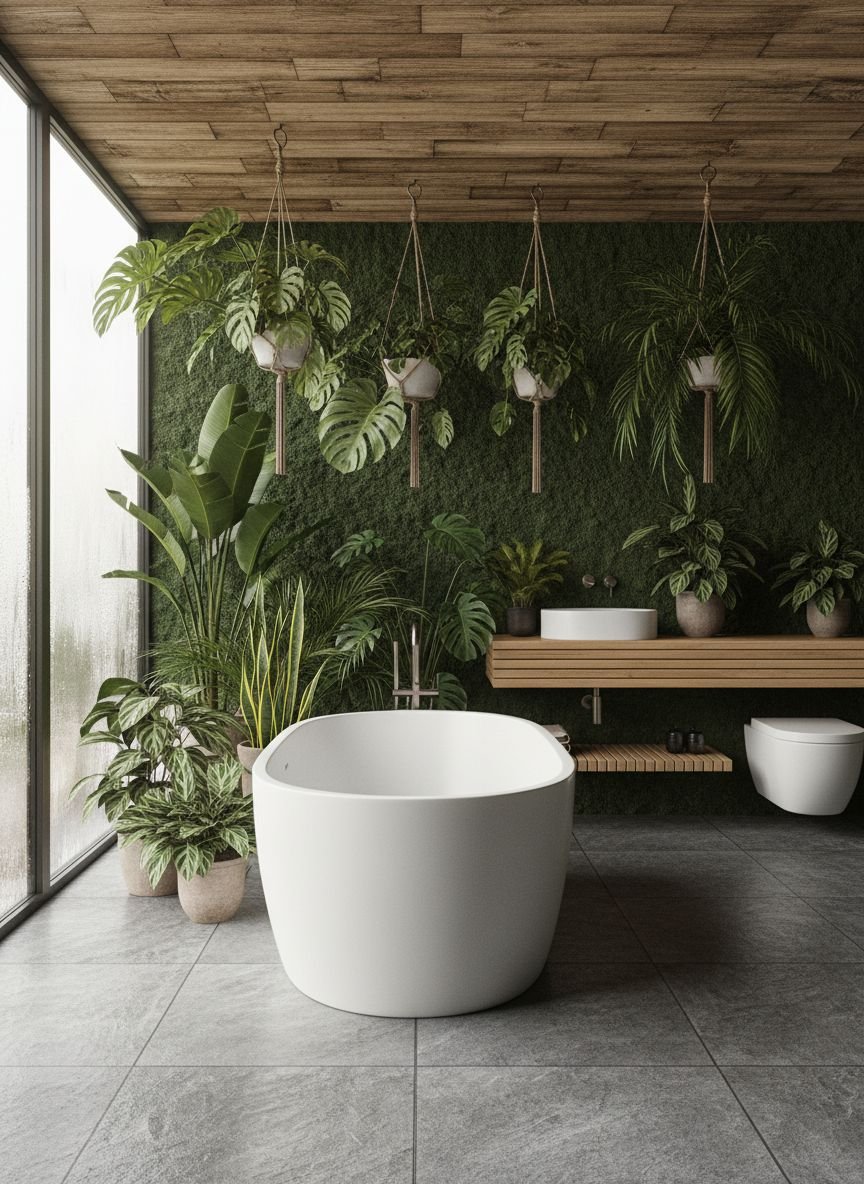
While we discussed large statement plants earlier, this section focuses on the small, detailed botanical accents that fit in nooks and crannies. Hanging plants are perfect for saving counter space while drawing the eye upward. A trailing Pothos or String of Pearls placed on a high shelf or in a macrame hanger adds a cascading element of greenery that softens hard corners.
Consider the shower area as a prime spot for plants. Eucalyptus bundles tied to the showerhead are a classic spa trick. The steam releases the essential oils, creating a natural aromatherapy steam room experience that clears the sinuses and relaxes the mind. Air plants (Tillandsia) are another great option for bathrooms as they require no soil and thrive on the ambient humidity. Place them on driftwood or in small glass orbs for a delicate, floating look.
Pro Tip: Rotate your bathroom plants with plants in other rooms every few weeks to ensure they get enough sunlight, especially if your bathroom is windowless.
Soft Lighting
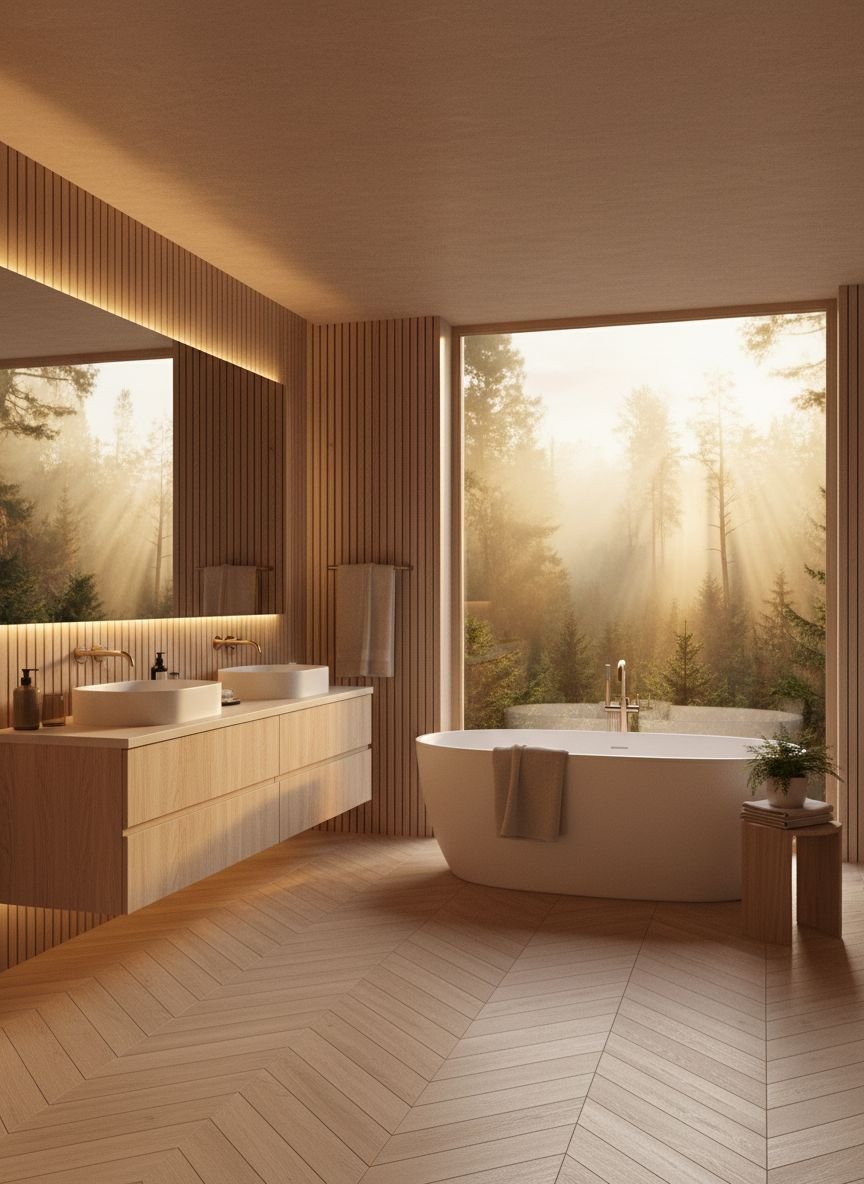
Lighting is perhaps the most critical element in setting the mood. Harsh, overhead fluorescent lighting is the enemy of relaxation. Instead, aim for layered lighting that allows you to control the ambiance. Dimmable switches are a non-negotiable requirement for a Zen bathroom. They allow you to have bright light for grooming in the morning and a soft, candle-like glow for your evening bath.
Incorporate sconces at eye level to flatter the face and avoid casting deep shadows. Warm-colored LED strips tucked under the vanity or behind a mirror create a floating, ethereal glow that is perfect for late-night visits. If you can, avoid “daylight” or “cool white” bulbs (5000K+). Stick to “warm white” (2700K-3000K) bulbs that mimic the soothing warmth of sunset or candlelight.
Pro Tip: Place a small, waterproof, battery-operated LED candle on a shelf in the shower niche for a spa shower experience without the fire hazard.
Open Space Layout
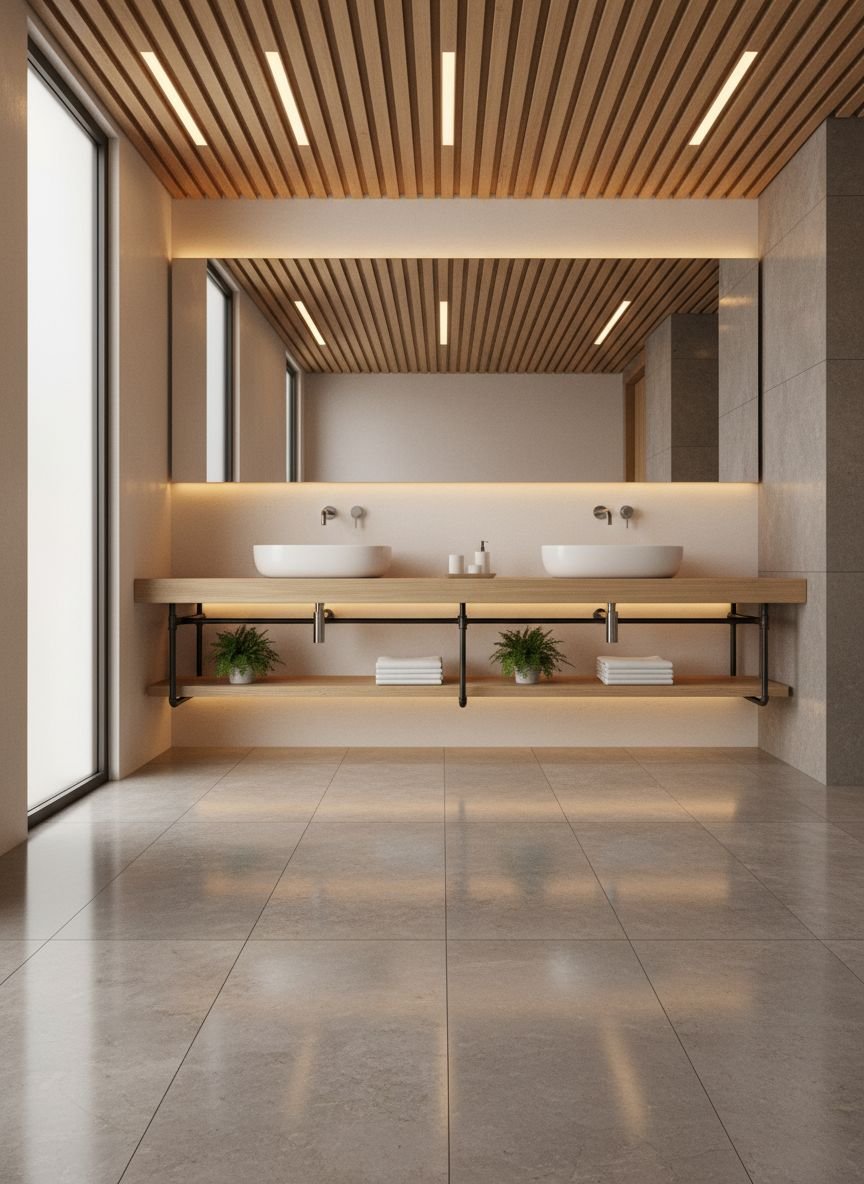
A Zen bathroom should feel spacious and unencumbered. If you have the budget for a remodel, consider an open layout that removes unnecessary barriers. A “wet room” style, where the shower and tub are in the same tiled zone behind a single glass partition, makes the room feel twice as big. This seamless transition from dry to wet areas mimics the flow of water and eliminates the visual chopping up of the space.
For smaller bathrooms where moving walls isn’t possible, you can create the illusion of open space. Use a clear glass shower door instead of a frosted one or a curtain. Keep the floor material consistent throughout the room to avoid visual breaks. Wall-hung toilets and vanities also contribute to this feeling of openness by revealing more floor area, tricking the brain into perceiving the room as larger than it is.
Pro Tip: Use a large, frameless mirror to reflect the room and the window. This doubles the visual space and bounces natural light into dark corners.
Natural Scents
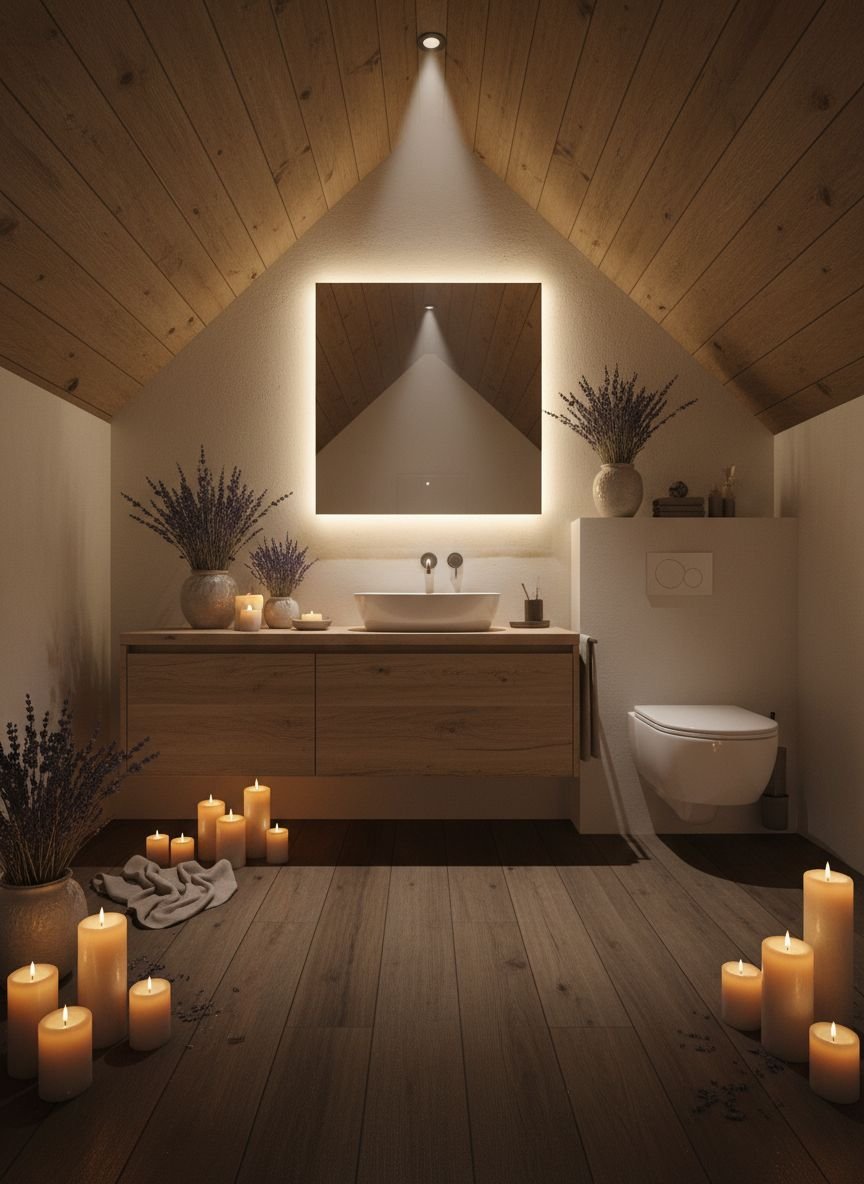
A truly immersive Zen experience engages the sense of smell. Artificial air fresheners can trigger headaches and smell chemical. Instead, rely on natural sources of fragrance. Essential oil diffusers are a safe and effective way to fill the room with calming scents like lavender, chamomile, sandalwood, or bergamot. The gentle mist from the diffuser also adds a visual element of tranquility.
Scented candles made from soy or beeswax are another excellent option, adding both fragrance and ambient light. For a more subtle approach, use reed diffusers with high-quality oils. You can also incorporate scent through your choice of bath products. A cedarwood body wash or a eucalyptus bath salt soak can turn a routine shower into a forest bathing experience.
Pro Tip: Keep a small bundle of dried lavender or a sachet of cedar chips in your towel storage. The warmth of the towels will release a subtle, comforting scent when you wrap yourself up.
Water Features

The sound of running water is universally relaxing. While the shower and tap provide this function, adding a dedicated water feature can elevate the Zen vibe to a new level. Small tabletop fountains are affordable and easy to install. Placing one on a vanity or a shelf introduces a constant, gentle background noise that masks traffic sounds or household chatter, helping you stay in the present moment.
For a more integrated approach, consider the type of faucet you choose. A “waterfall” faucet creates a wide, ribbon-like stream of water that is mesmerizing to watch and quieter than a standard aerated stream. If you are renovating, a rain showerhead is a must. It mimics the sensation of standing in a gentle warm rain, which is far more soothing than a high-pressure jet.
Pro Tip: If you have a tub, install a bamboo bath spout. The water flows smoothly over the bamboo, creating a beautiful visual and a soft, natural sound.
Wooden Elements
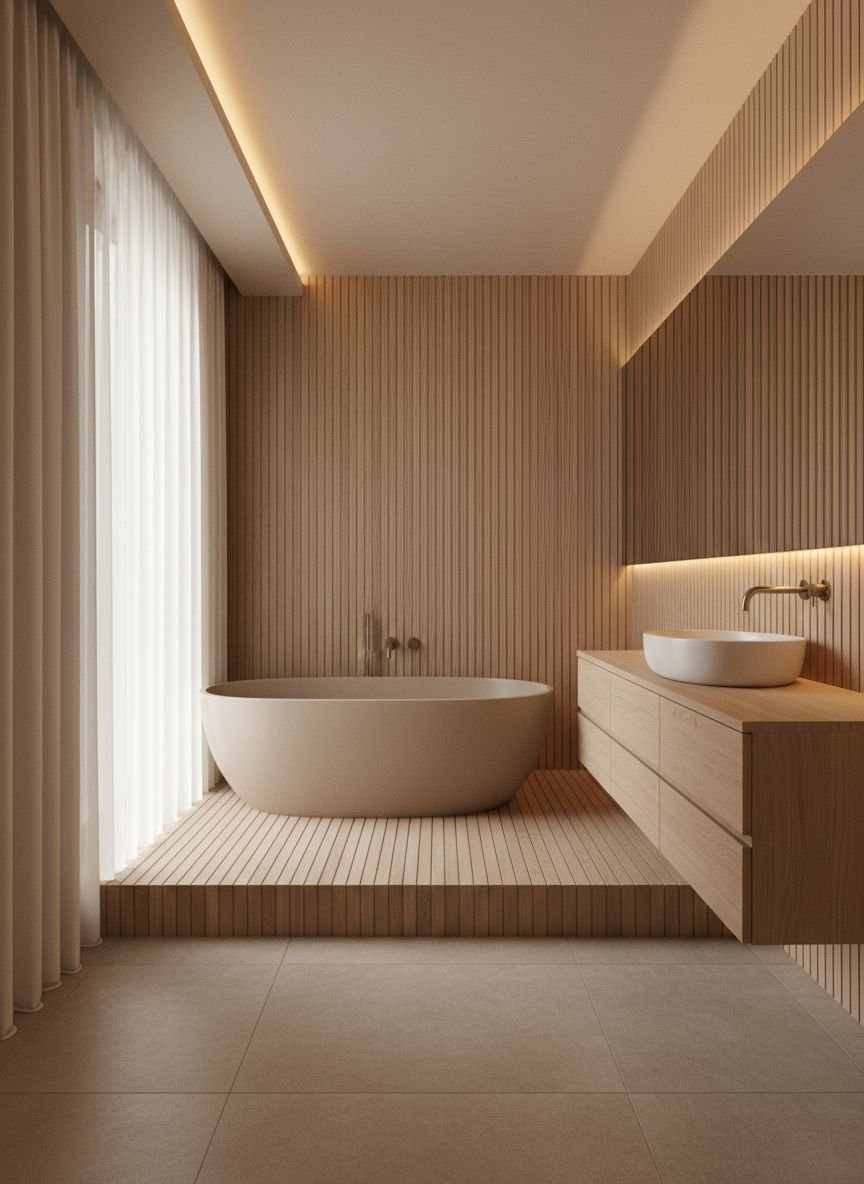
Beyond the vanity, wood can be introduced in architectural ways to warm up the space. Wood slat walls are a major trend in Zen design. Vertical slats draw the eye up, making the ceiling feel higher, while the wood texture dampens sound. You can use a slat wall as a backdrop for the vanity or the bathtub.
Teak is the gold standard for bathroom wood because of its high oil content, which makes it naturally water-resistant. A teak floor mat in the shower or a teak bench provides a warm, non-slip surface that feels much better on bare feet than cold tile. Even small wooden elements, like a cedar bath tray or bamboo blinds, contribute to the overall feeling of organic warmth and connection to nature.
Pro Tip: Use “wood-look” porcelain tiles for the shower walls. They offer the stunning aesthetic of timber but are completely waterproof and maintenance-free.
Soft Textiles
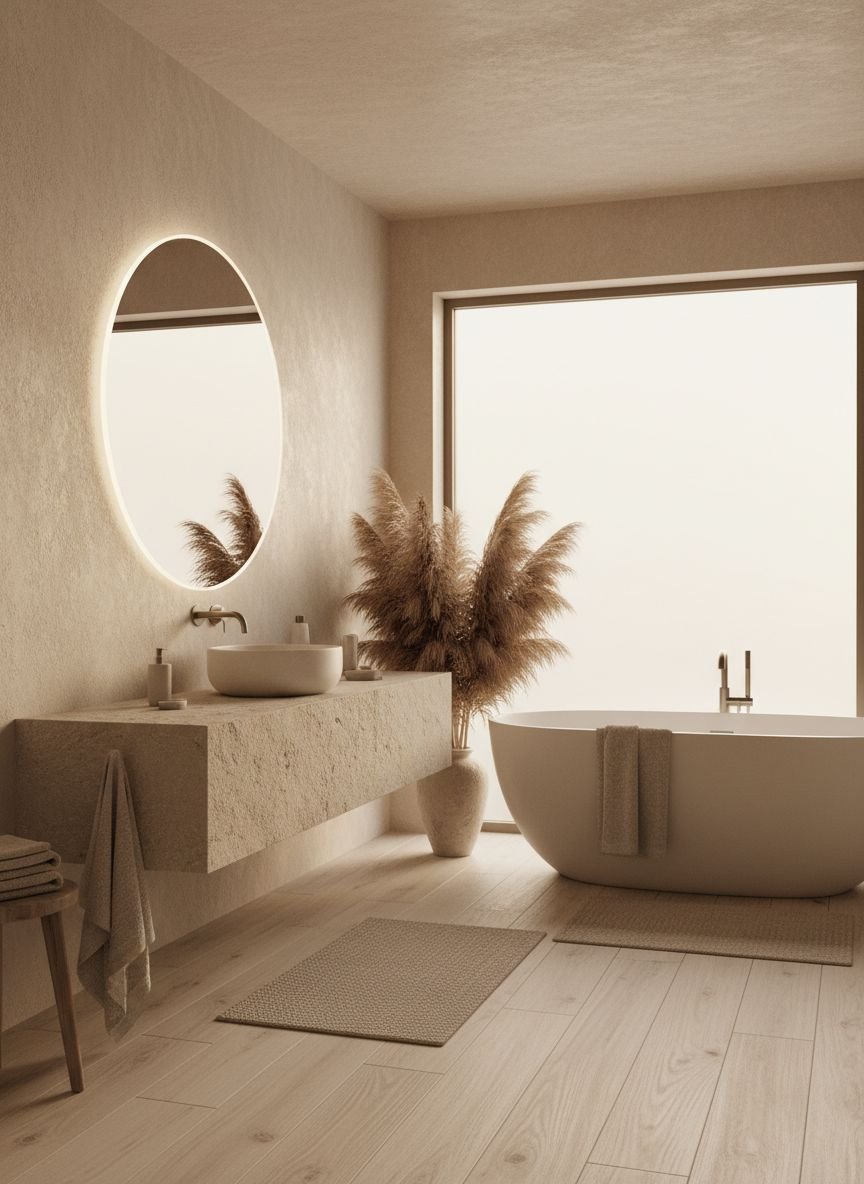
Hard surfaces like tile and stone dominate bathrooms, so balancing them with soft textiles is crucial for comfort. Invest in high-quality, plush towels made from Egyptian cotton or bamboo blends. Display them rolled up in a basket or neatly folded on an open shelf, spa-style. The tactile experience of drying off with a soft, fluffy towel is a simple luxury that makes a big difference.
Don’t overlook the bath rug. A shaggy, high-pile rug or a memory foam mat creates a soft landing pad that protects your feet from the cold floor. Choose textiles in your neutral color palette—whites, creams, greys, or earth tones. Avoid busy patterns on towels; simple textures like waffle weaves or ribbed cotton look more high-end and are more absorbent.
Pro Tip: Install a heated towel rack. Stepping out of a bath and wrapping yourself in a warm towel is one of the most comforting experiences you can have in your home.
Get The Look: Zen Essentials
| Item Category | Recommendation | Why It Works |
|---|---|---|
| Towel Storage | Woven Seagrass Baskets | Hides clutter, adds texture. |
| Shower Curtain | Waffle Weave Cotton (White) | Hotel-spa feel, allows light flow. |
| Accessory Set | Matte Black or Concrete | Grounding, modern contrast. |
| Bath Mat | Hinoki Wood or Teak Slat | Natural scent, antimicrobial, dry. |
| Lighting | Rattan Pendant Light | Filters light softly, organic shape. |
Simplified Storage Solutions
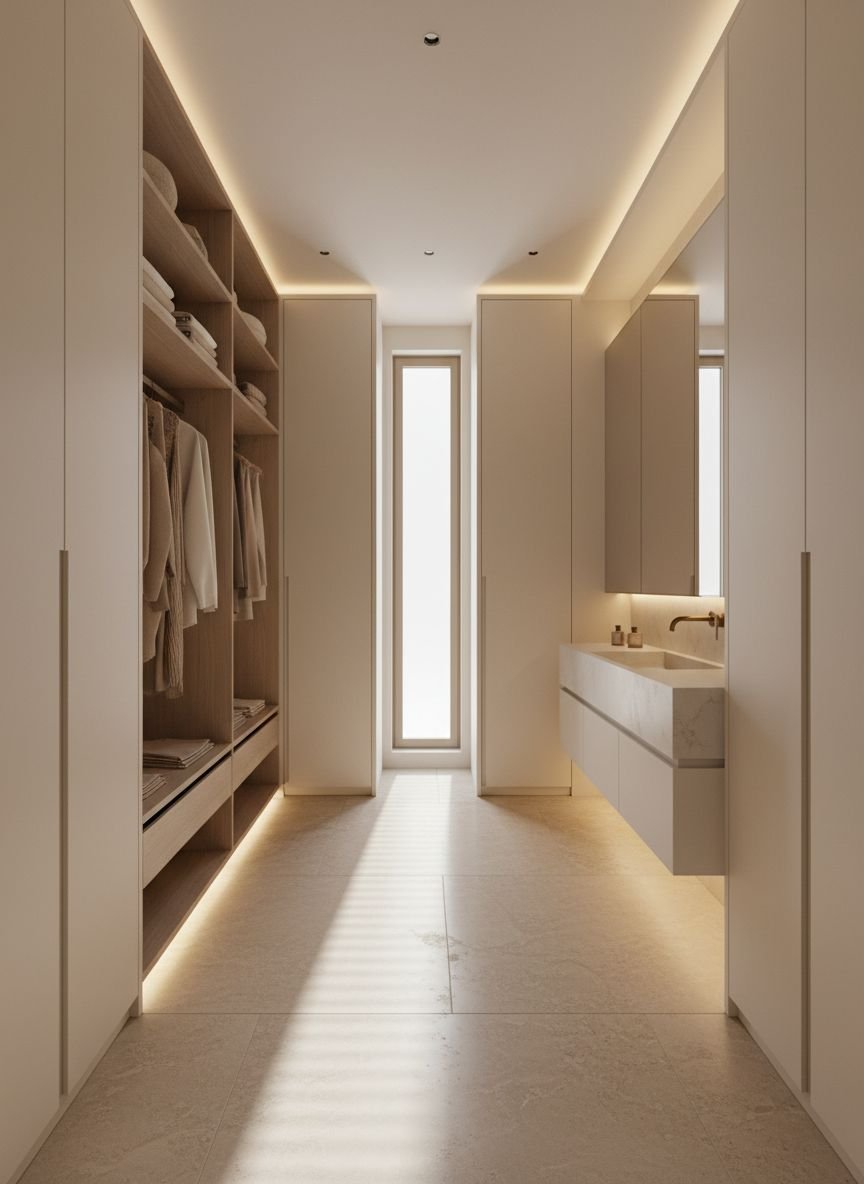
Clutter is the enemy of Zen. To maintain a serene environment, you need smart storage solutions that hide the daily mess. “A place for everything and everything in its place” is the mantra here. utilize vertical space with tall, narrow cabinets that can hold linens and bulk items without taking up much floor space. Inside drawers, use dividers to organize makeup and toiletries so they don’t become a jumbled mess.
For items that must remain visible, decant them. Transfer shampoos, conditioners, and soaps into matching amber glass or ceramic pump bottles. This eliminates the visual noise of branded labels and mismatched colors. It creates a uniform, cohesive look that instantly makes the bathroom feel more expensive and organized. Baskets are your best friend for hiding hair dryers, toilet paper, and cleaning supplies.
Pro Tip: Use the space above the door. A simple shelf installed above the door frame is a great place to store extra towels or baskets of rarely used items, keeping them out of your direct line of sight.
Natural Stone
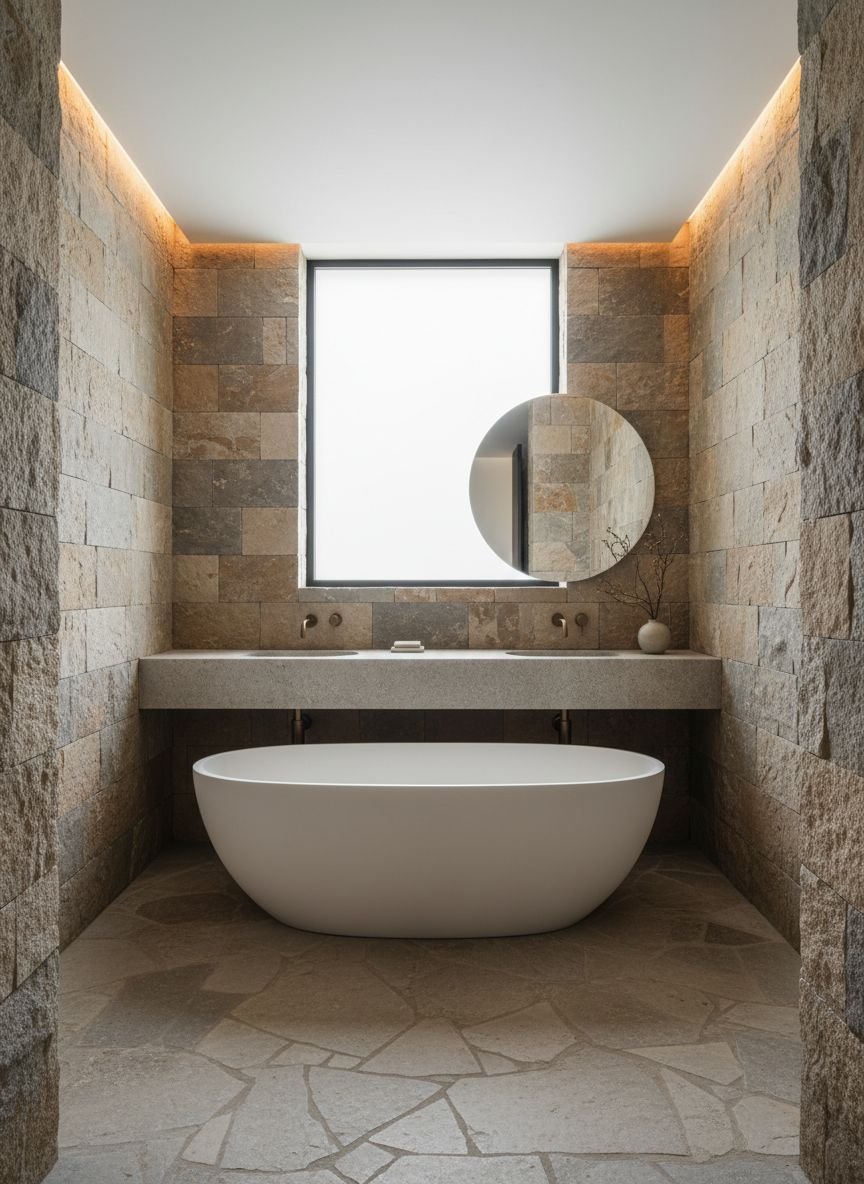
While we touched on accents earlier, using natural stone as a primary surface material creates a powerful connection to the earth. Large-format stone tiles on the walls or floor minimize grout lines, creating a seamless, cave-like appearance that feels protective and enclosing. Travertine, limestone, and slate are excellent choices. Their natural variation in color and veining means no two tiles are alike, adding interest without the need for artificial patterns.
If you can’t afford to stone the whole room, create a feature wall behind the tub or inside the shower. A rough-faced stacked stone wall adds incredible drama and texture. Use lighting to wash down the wall, highlighting the ridges and shadows of the stone. This creates a focal point that feels ancient and grounding, perfect for a space dedicated to relaxation.
Pro Tip: Seal natural stone annually. Stone is porous and can absorb lotions and oils. A good sealer protects the stone and keeps it looking pristine for years.
Zen-inspired Accessories
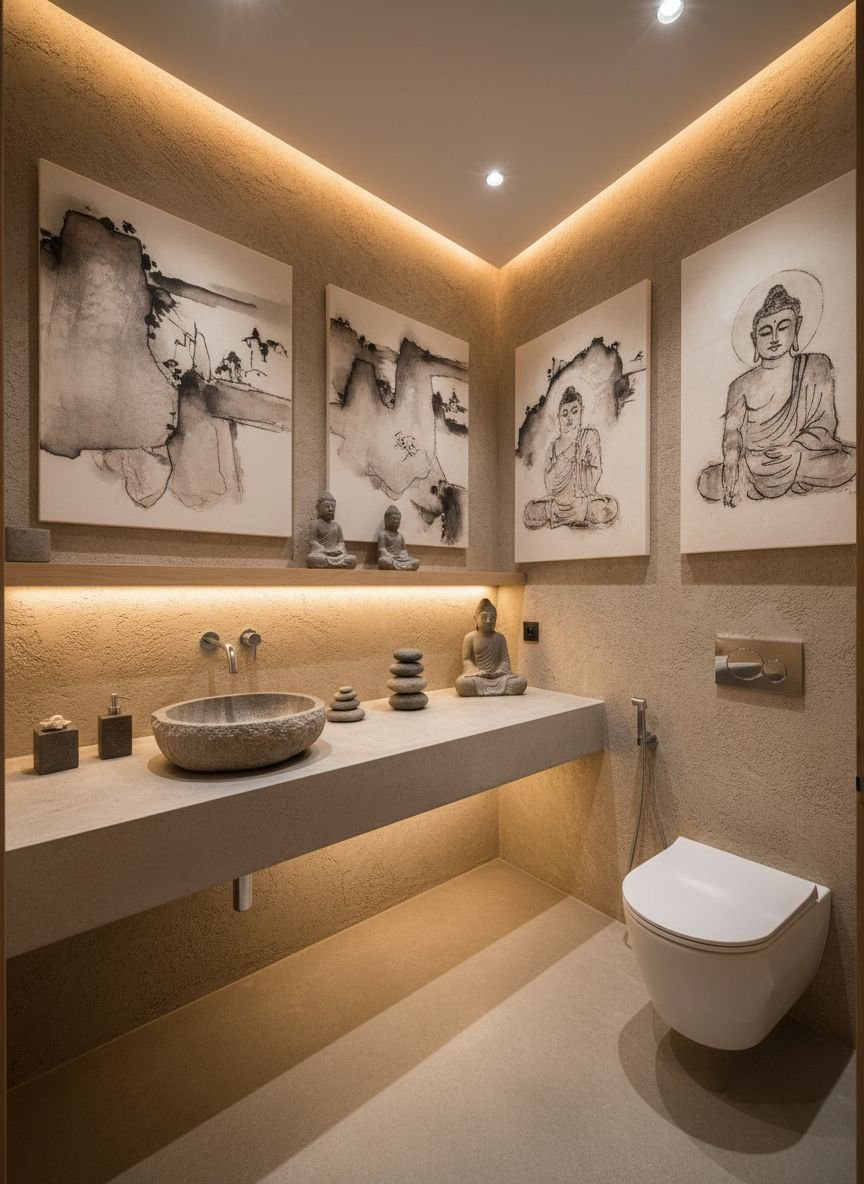
The final touches define the style. Zen accessories should be chosen with care and restraint. A bamboo ladder leaning against the wall is a stylish way to hang towels. A wooden bath bridge allows you to keep a book and a drink handy while soaking. Look for accessories with simple, geometric shapes or organic, irregular forms.
Avoid plastic at all costs. Choose glass, ceramic, wood, or metal. A small Buddha statue or a stack of balancing stones can be a literal nod to Zen philosophy, but abstract shapes work just as well. A simple ceramic vase with a single stem flower is a classic Ikebana-style arrangement that celebrates simplicity and the beauty of nature.
Pro Tip: Keep your counter accessories on a tray. Grouping items like the soap dispenser, toothbrush holder, and a small plant on a tray makes them look like one cohesive unit rather than scattered clutter.
Bathing Rituals
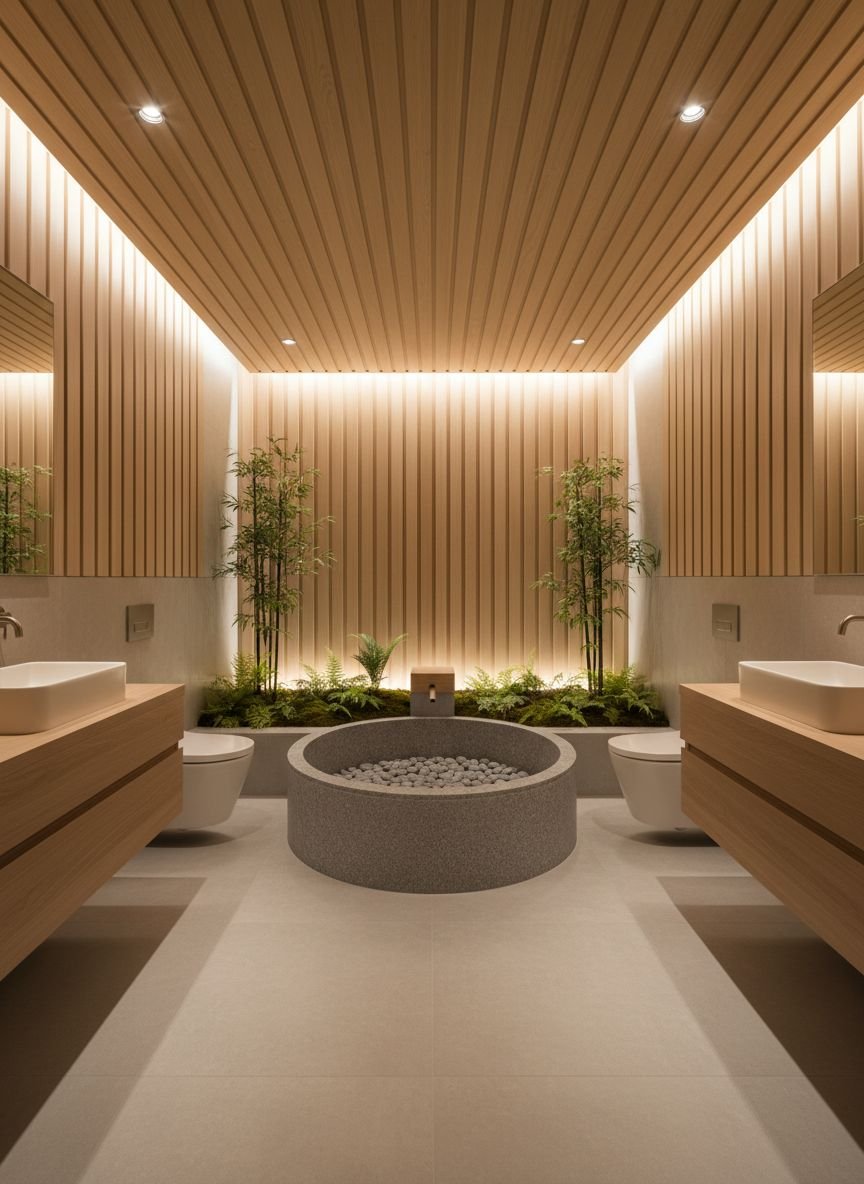
A Zen bathroom is designed for use, not just for looking at. Elevate your daily routine into a ritual. Keep a jar of high-quality bath salts, a natural loofah, and a dry brush on display. These tools encourage self-care. The act of dry brushing before a bath or scrubbing with a loofah connects you to your body and improves circulation.
Create a “bath menu” for yourself. Maybe Friday nights are for deep soaking with Epsom salts and candles, while Sunday mornings are for an invigorating scrub. having the tools for these rituals visible and accessible encourages you to take the time for them. It shifts the mindset from “getting clean” to “restoring the self.”
Pro Tip: Invest in a high-quality bath pillow. It supports your neck and allows you to truly relax and lean back in the tub without discomfort.
Open Showers
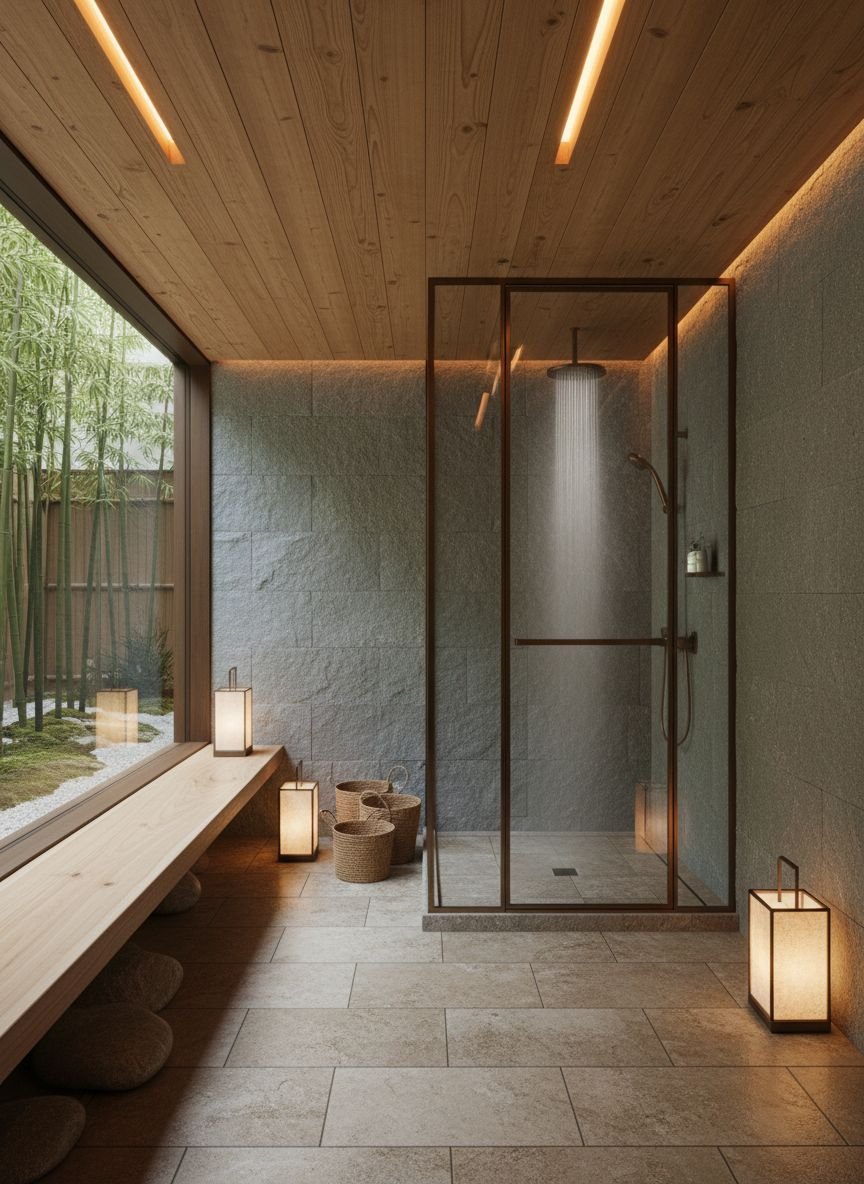
The open shower, or “walk-in” shower, is a staple of modern Zen design. By eliminating the curb and the door, you remove physical and visual barriers. The floor flows seamlessly into the shower area, making the room feel expansive. This design is also highly accessible, allowing you to age in place.
Use a linear drain to facilitate the slope of the floor and keep the look clean. A single fixed glass panel is usually enough to contain the splash. Inside the shower, keep it simple. A built-in niche for bottles keeps them off the floor. A teak bench provides a place to sit and let the water wash over you. The openness feels liberating and luxurious, like showering in a high-end resort every day.
Pro Tip: Install a heated floor system in the shower area. Not only does it dry the floor quickly to prevent mold, but standing on warm stone while you shower is the height of luxury.
Related posts :
- 17 Aesthetic Bedroom Shelving Ideas That Combine Style & Function for Instant Organization
- 15 Genius Tiny Bathroom Ideas That Instantly Double Your Space
- 10 Gorgeous Bathroom Vanity Designs to Upgrade Your Space That Will Instantly Increase Home Value
Popular Asked Questions
Can I create a Zen bathroom on a tight budget?
Yes, absolutely. You do not need a full remodel. Start by decluttering and removing all unnecessary items from surfaces. Paint the walls a soft, neutral color like warm beige or sage green. Add a few low-cost natural elements, such as a bamboo bath mat, a potted plant, and a wooden tray. Swapping out bright, mismatched towels for a matching white or neutral set also makes a huge difference instantly.
What are the most important elements of a Zen bathroom?
The four pillars of Zen bathroom design are Nature, Light, Minimalism, and Texture.
- Nature: Use wood, stone, and plants.
- Light: maximize natural light or use soft, warm LED lighting.
- Minimalism: Keep surfaces clear and hide clutter.
- Texture: Mix rough stone with smooth ceramics and soft towels to engage the senses.
Which plants are best for a windowless bathroom?
If your bathroom has no natural light, you have two options. First, you can use high-quality faux plants, which look very realistic today. Second, you can use low-light tolerant plants like the Snake Plant (Sansevieria) or the ZZ Plant. However, even these need some light, so you might need to rotate them out to a sunny room every week or install a grow light bulb in one of your fixtures.
How do I make a small bathroom feel like a spa?
In a small space, reduce visual noise. Use a monochromatic color palette (all light grey or all cream) to blur the lines between walls and fixtures. Use a large mirror to double the light. clear the counters completely and use vertical storage. Add one luxury touch, like a high-quality rainfall showerhead or a really plush rug, to create that “hotel” feeling without taking up space.
What colors are most relaxing for a bathroom?
The most relaxing colors are those found in nature. Soft Earth Tones (sand, beige, taupe), Greens (sage, olive, moss), and Blues (sky blue, slate, watery teal) are best. Avoid bright reds, oranges, or jarring neons, as these are energizing rather than relaxing. Warm whites are better than stark, clinical whites.
Conclusion

Creating a cozy Zen bathroom is about more than just following a design trend. It is about intentionally carving out a space in your home that prioritizes your well-being. By incorporating natural materials, soothing colors, and smart storage, you can transform a purely functional room into a personal retreat that restores your energy every single day.
Start small—maybe with a plant or a new set of towels—and slowly layer in these elements until your bathroom feels like the sanctuary you deserve.
Leave a Comment