
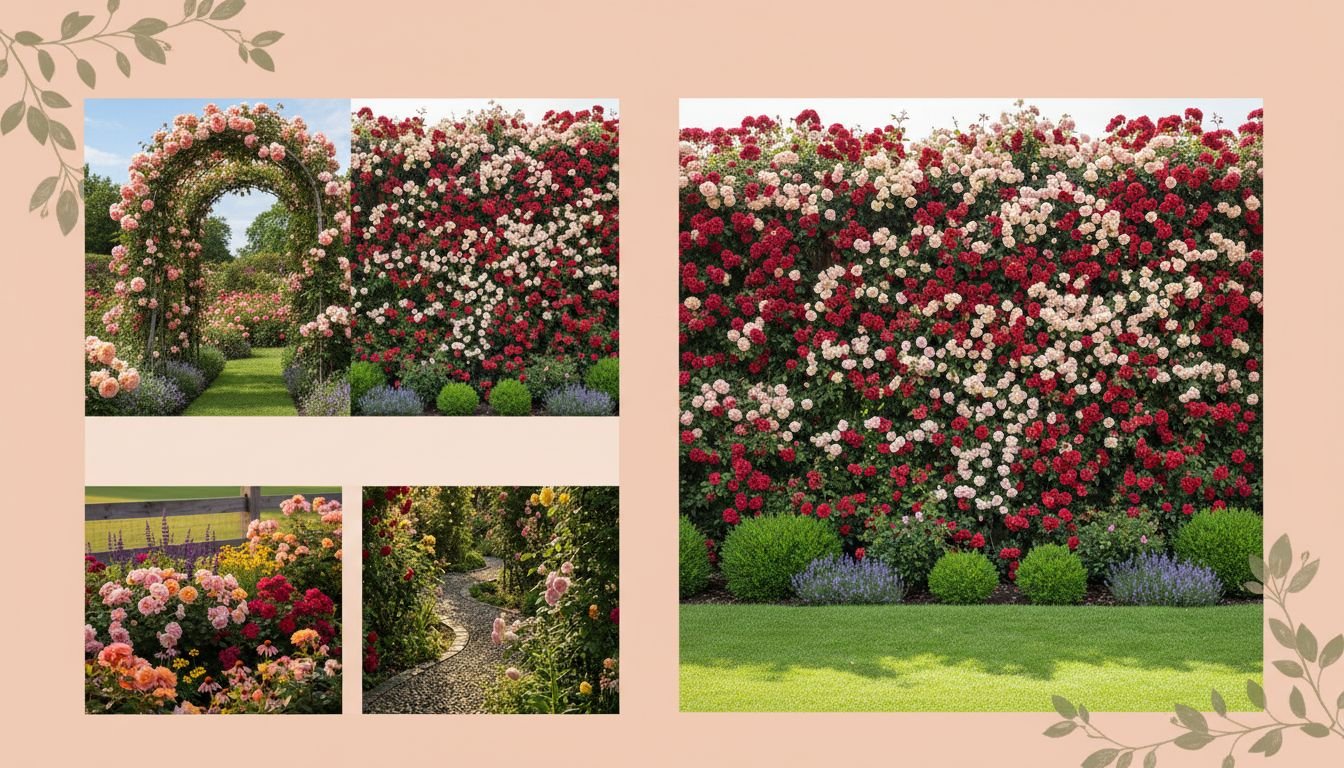
You look at your backyard and see potential, but you lack a clear plan. You want a lush, romantic escape, yet the thought of designing a rose garden feels overwhelming. Many homeowners struggle to arrange roses in a way that looks intentional rather than chaotic. A well-planned rose garden adds value to your property and provides a daily sensory retreat. We curated 14 specific layouts and styling tricks to turn your outdoor area into a floral paradise.
Key Takeaways
- Verticality is key: Using archways and trellises maximizes small footprints while adding dramatic height.
- Sensory layering: Combining fragrant roses with herbs like lavender creates an immersive experience for sight and smell.
- Structure matters: Hardscaping elements like pebble paths and vintage barrels define the space and reduce visual clutter.
- Seasonal planning: Mixing roses with tulips or perennials ensures color remains long after the main rose bloom fades.
Table of Contents
- Plant climbing roses on a charming archway for a dreamy entrance
- Create a rose wall with vibrant climbing roses for vertical drama
- Mix shrub roses with perennials for a low-maintenance, colorful combo
- Add a pebble pathway winding through your rose beds for a stroll-worthy vibe
- Install rustic wooden trellises for your climbing roses to show off their swag
- Incorporate fairy lights around rose bushes for magical evening blooms
- Use vintage barrels as rose planters to keep it quirky and portable
- Set up a cozy bench surrounded by roses for the perfect sipping-tea spot
- Plant fragrant old garden roses to attract butterflies and hummingbirds
- Combine roses with lavender for a scent explosion and pollinator party
- Design a symmetrical rose bed layout for that dainty, fancy garden look
- Go wild with heirloom rose varieties for nostalgia and uniqueness
- Add seasonal flowers like tulips near your roses to keep the color popping year-round
- Plant dwarf rose varieties in containers if your backyard space is limited
- Popular Asked Questions
- Conclusion
Plant climbing roses on a charming archway for a dreamy entrance
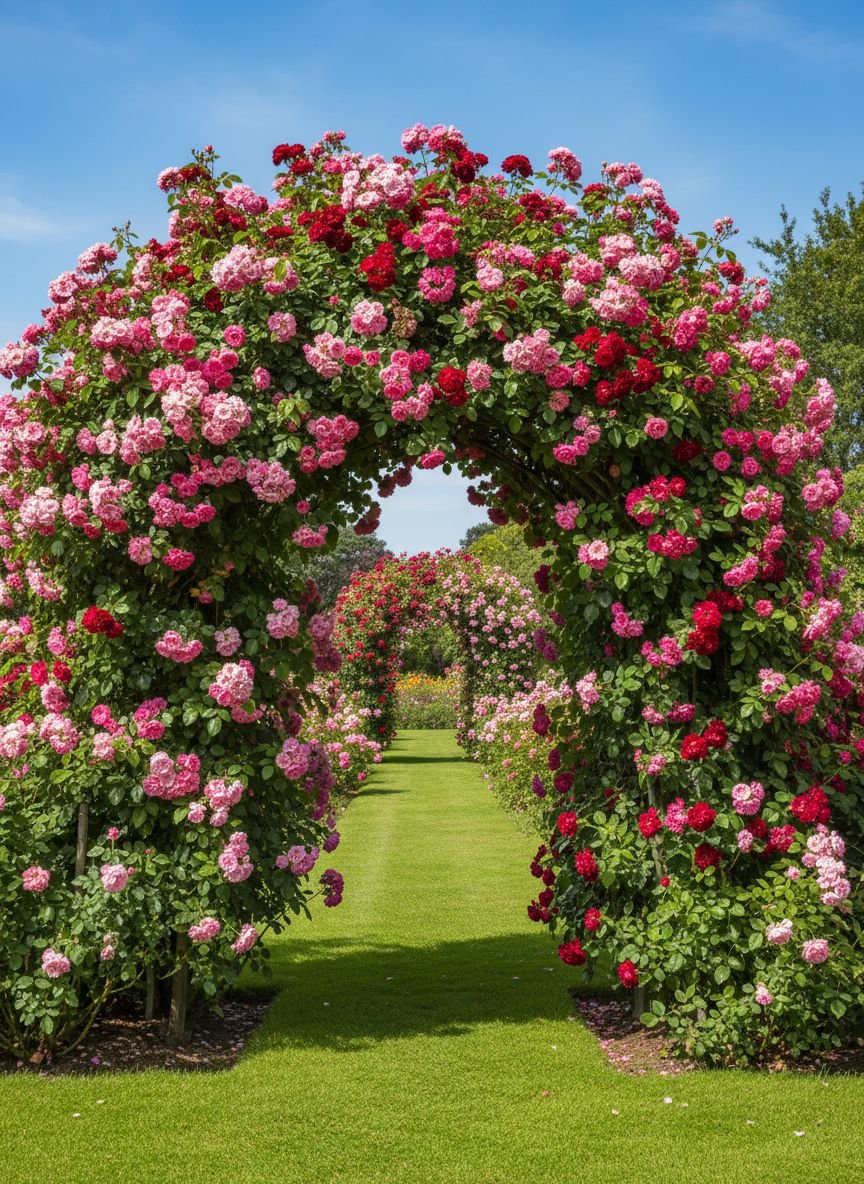
A garden arch draped in roses acts as a portal. It signals a transition from the ordinary world into your personal sanctuary. Metal arches work best for heavy climbers as they offer rigid support, while wood offers a softer, natural look. You want to train the canes horizontally as they grow. This encourages the plant to produce more lateral shoots, which means more blooms.
Choose varieties like ‘New Dawn’ or ‘Eden’ for that classic pale pink aesthetic. The contrast between the dark green foliage and the soft petals against the sky creates immediate visual impact. Place the arch at the start of a path or the entrance to a specific garden zone. This structure draws the eye upward and makes even small yards feel grander.
Pro Tip: Anchor your arch deeply in the ground with concrete footings to prevent it from tipping during high winds when the rose bush becomes heavy.
Create a rose wall with vibrant climbing roses for vertical drama
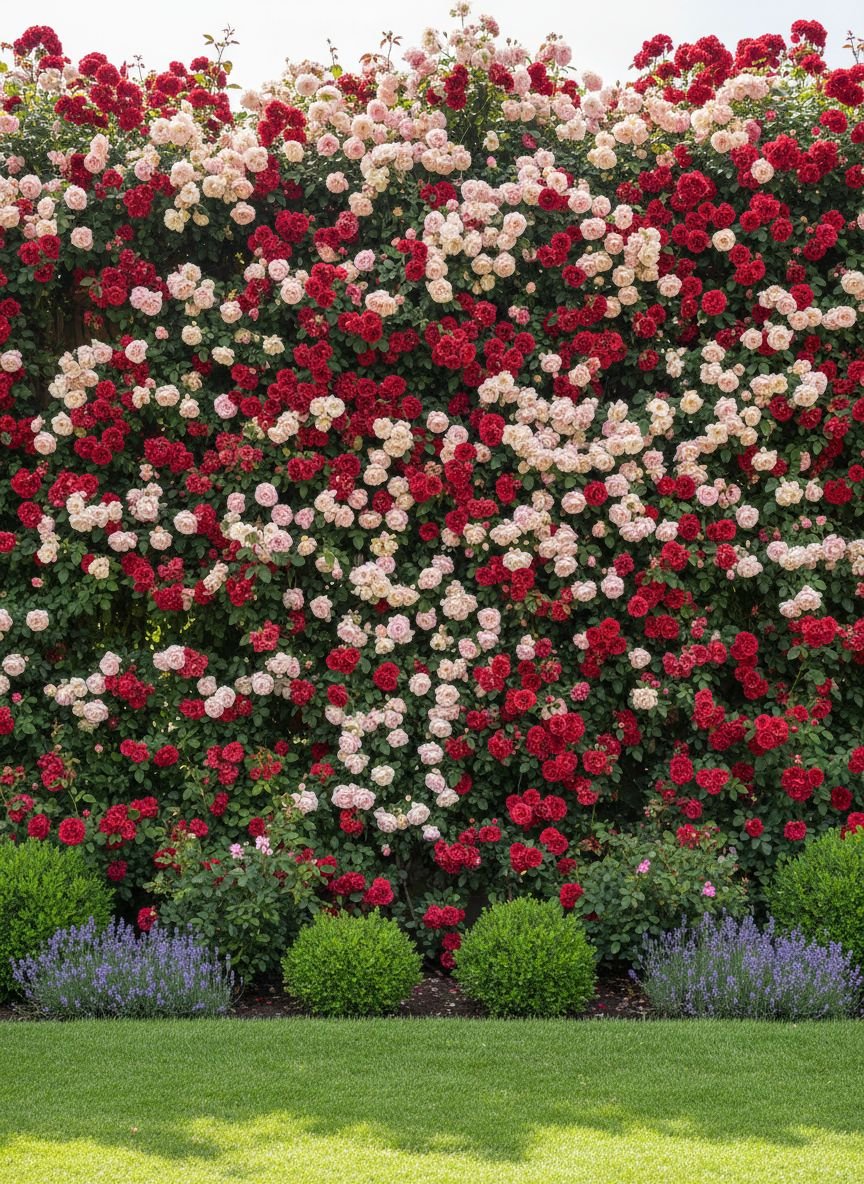
Privacy often poses a challenge in backyard design. A living wall of roses solves this problem with elegance. You can transform a plain wooden fence or a brick wall into a tapestry of color. Use sturdy wire or eye hooks to guide the stems. This method covers unsightly boundaries and turns them into a focal point.
Red climbers like ‘Blaze’ or ‘Santana’ offer intense color saturation that pops against neutral fencing. The repetition of blooms across a vertical plane creates a sense of rhythm in the garden. This technique saves ground space, leaving room for furniture or lawn areas. It acts as a natural sound buffer and cools the surrounding air.
Pro Tip: Leave about 3 to 4 inches of space between the trellis and the wall to allow air circulation, preventing fungal diseases like black spot.
Mix shrub roses with perennials for a low-maintenance, colorful combo
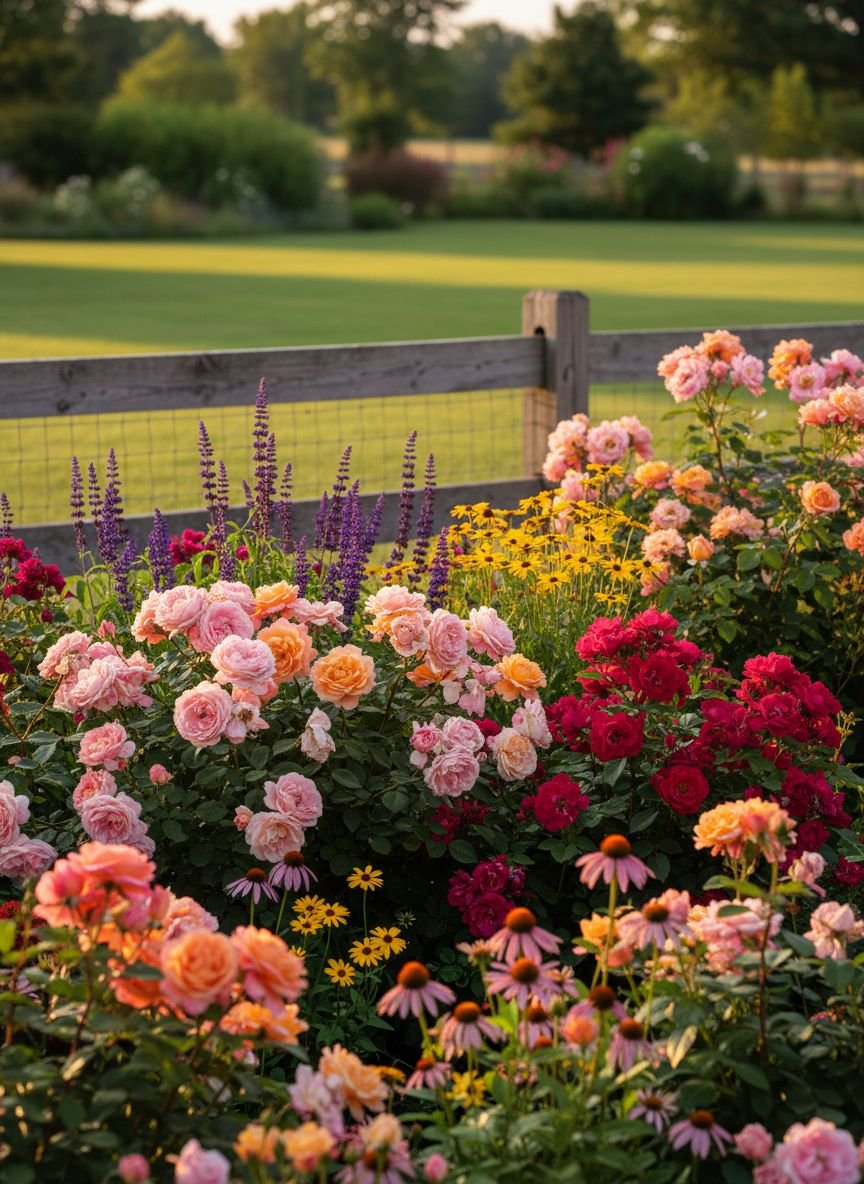
Monocultures of roses can look bare in the winter or between blooming cycles. Interplanting shrub roses with hardy perennials ensures your garden looks full all season. Plants like Salvia, Catmint, or Geraniums fill the gaps near the base of the rose bushes. These companions hide the often “leggy” or bare lower stems of the rose plant.
The texture contrast here is vital. The glossy, broad leaves of roses sit beautifully against the feathery foliage of perennials. Choose colors that complement your roses; purple perennials make yellow or pink roses pop. This strategy also suppresses weeds by covering the soil, reducing your workload significantly.
Pro Tip: Select perennials with similar water and sun requirements to your roses to ensure both thrive without competition.
Add a pebble pathway winding through your rose beds for a stroll-worthy vibe
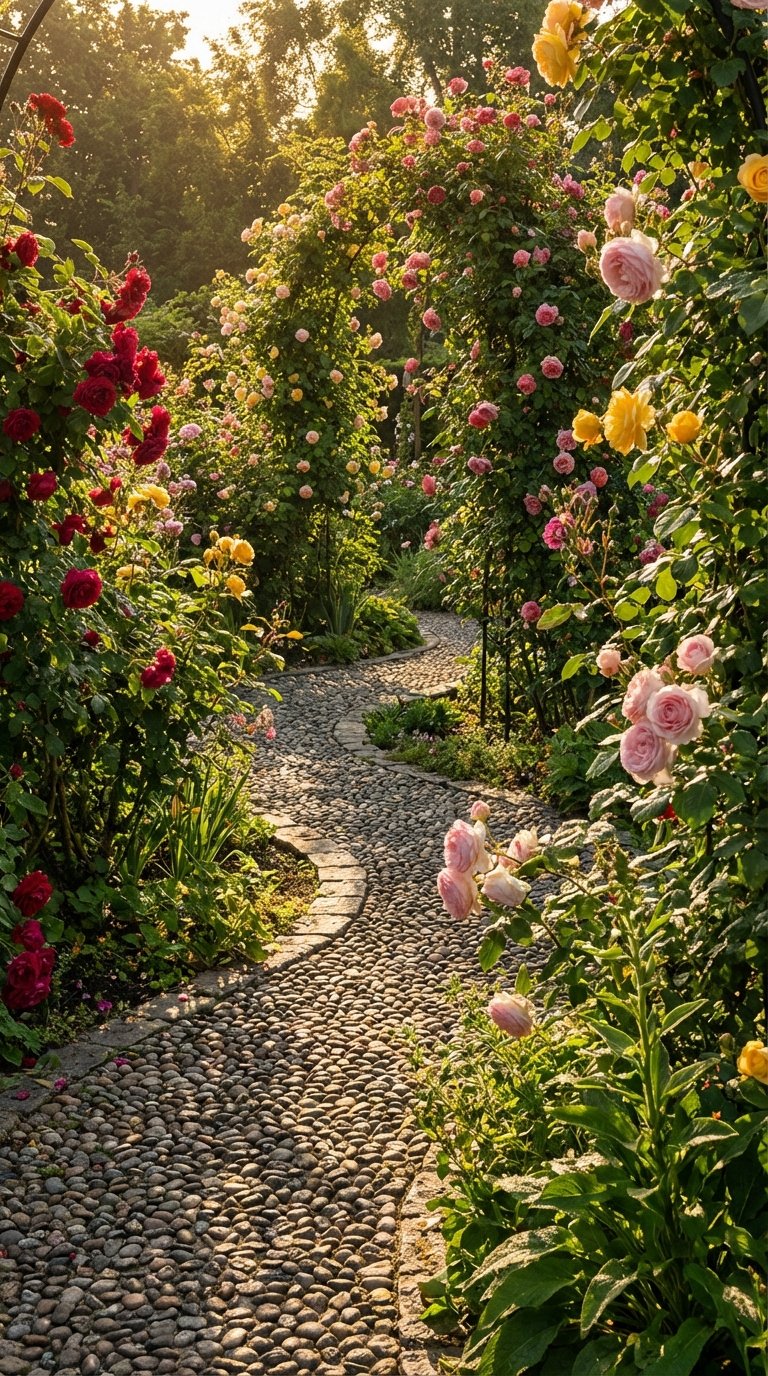
Hardscaping defines the flow of a garden. A pebble pathway invites you to slow down and wander. The crunch of gravel underfoot adds an auditory element to the garden experience. Light-colored stones reflect sunlight, illuminating the lower branches of your rose bushes.
Curve the pathway to create a sense of mystery. A straight path reveals everything at once, but a winding one makes the garden feel larger. Use metal or stone edging to keep the pebbles from spilling into the soil. The grey or beige tones of the stone provide a neutral canvas that allows the bright reds, pinks, and whites of the roses to take center stage.
Pro Tip: Lay down a weed barrier fabric beneath the pebbles to keep the path clean and maintenance-free for years.
Install rustic wooden trellises for your climbing roses to show off their swag
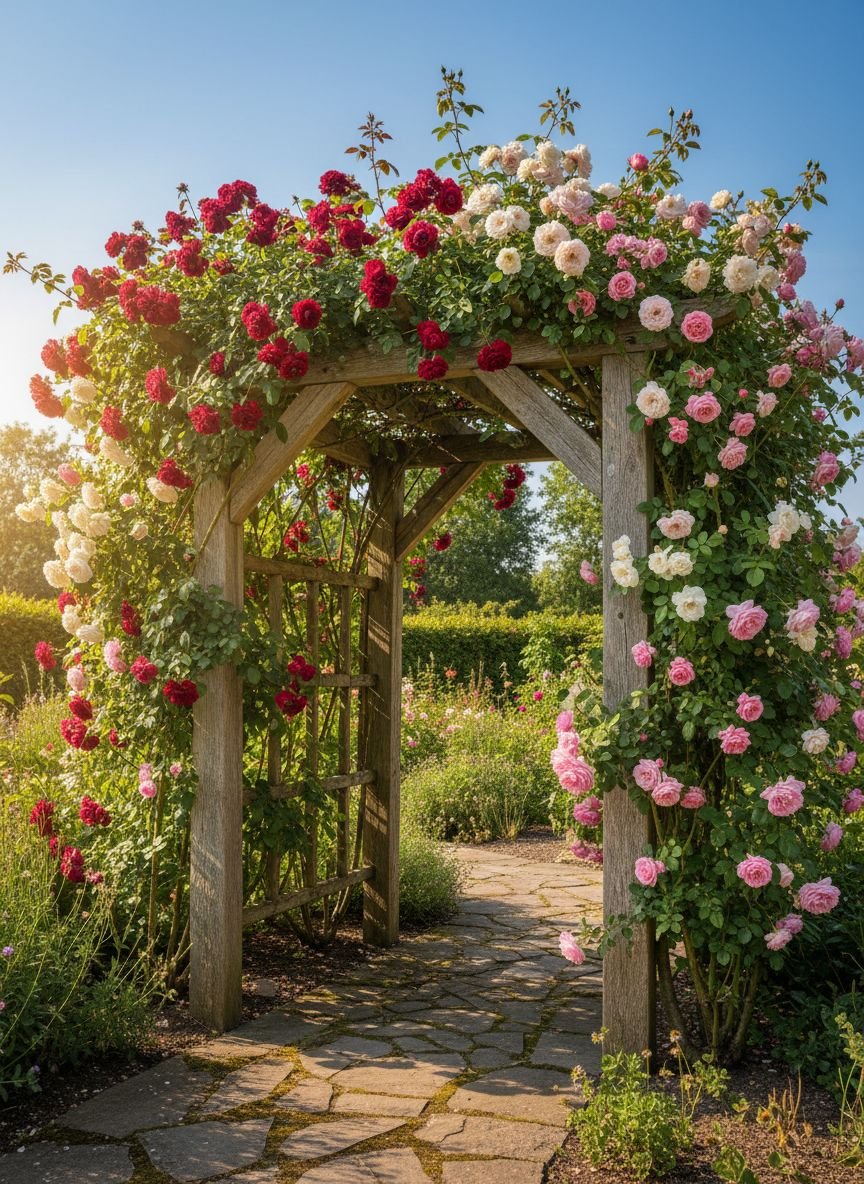
Wooden trellises add an architectural element that looks good even in winter when the roses are dormant. The natural grain of the wood fits perfectly with a cottage-core or rustic garden theme. You can place these freestanding in a bed or attach them to the side of a shed or garage.
Cedar or redwood are top choices as they resist rot naturally. Over time, the wood will weather to a soft grey, blending seamlessly with the greenery. Train the main canes of the rose in a fan shape across the trellis. This distribution ensures sunlight reaches every part of the plant, promoting bloom production from the bottom to the top.
Pro Tip: Treat the wood with a non-toxic sealant every two years to extend its life without harming the plants.
Comparison: Metal vs. Wooden Trellis
| Feature | Metal Trellis | Wooden Trellis |
|---|---|---|
| Durability | High (Rust-resistant coatings) | Medium (Needs sealing) |
| Aesthetic | Modern, Elegant, Thin profile | Rustic, Warm, Chunky profile |
| Weight Capacity | Excellent for heavy climbers | Good, but can warp over time |
| Maintenance | Low (Wipe down) | Medium (Stain/Seal) |
| Cost | Generally Higher | Generally Lower |
Incorporate fairy lights around rose bushes for magical evening blooms
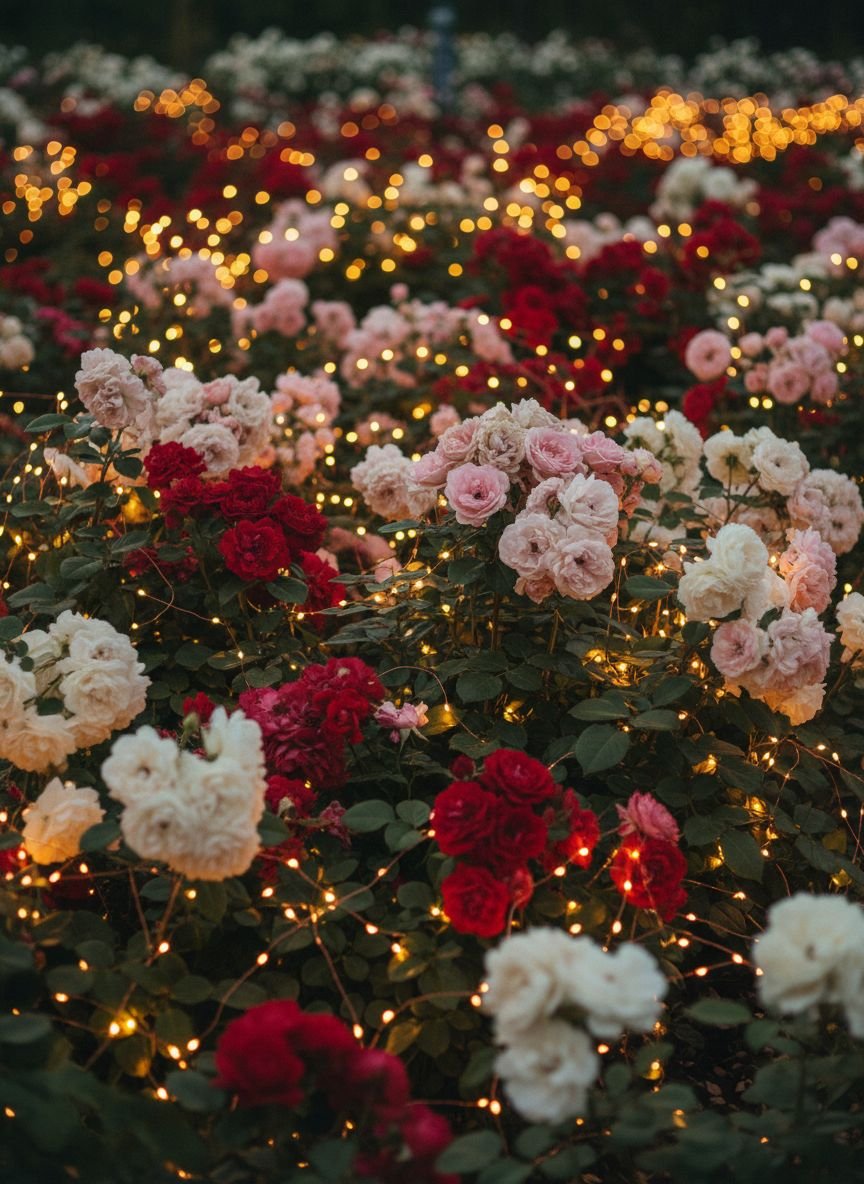
Your garden enjoyment should not end when the sun goes down. Fairy lights interwoven through rose bushes or draped on nearby structures create an enchanting atmosphere. The soft, warm glow illuminates the petals, making them look translucent and ethereal against the dark night.
Solar-powered string lights are the easiest option. You do not need to worry about extension cords or electricity bills. Wrap them loosely around the base of the bushes or an archway. The lighting adds depth to the backyard, highlighting the shapes and shadows of the foliage. It turns your rose garden into a perfect setting for late-night conversations.
Pro Tip: Choose warm white LEDs rather than cool white or blue tones to maintain a cozy, natural look.
Save this idea to your Pinterest.
Use vintage barrels as rose planters to keep it quirky and portable
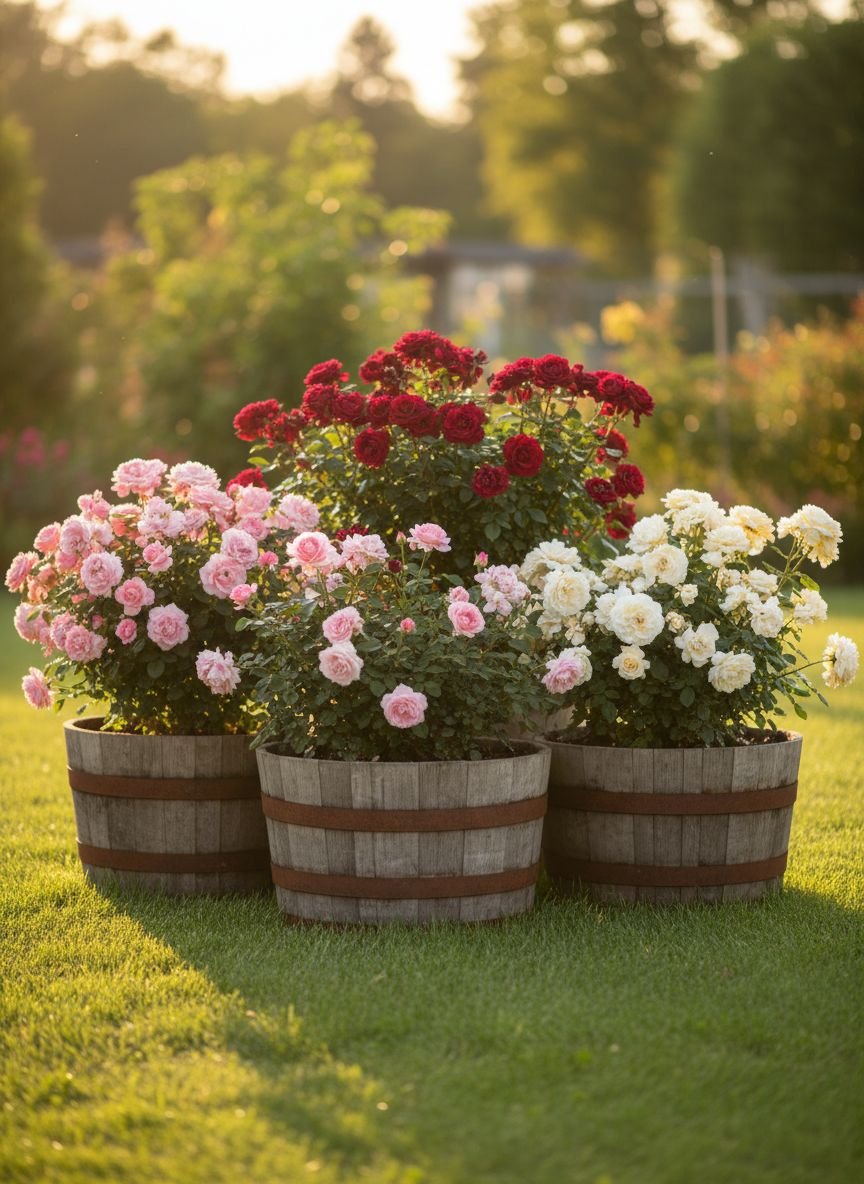
Container gardening offers flexibility, and whiskey or wine barrels bring instant character. These large planters provide ample root space for rose bushes, which is critical for their health. The wood and metal hoop aesthetic pairs wonderfully with the romantic look of roses.
This setup works perfectly for renters or those with concrete patios. You can move the roses to follow the sun or rearrange your layout whenever you want a fresh look. Ensure the barrels have drainage holes drilled in the bottom. Without drainage, rose roots will rot quickly. The height of the barrel brings the blooms closer to eye level, making it easier to admire them.
Pro Tip: Place the barrels on pot feet or bricks to prevent the wood bottom from sitting in water and rotting.
Set up a cozy bench surrounded by roses for the perfect sipping-tea spot

A garden is for living, not just looking. Placing a bench right in the middle of your rose beds invites you to sit and stay. Position the bench so it faces the best view of the yard or tuck it into a corner for privacy. Surrounded by tall rose bushes, you feel enclosed in a fragrant bower.
Materials matter for the bench. Teak or wrought iron withstand the elements and age gracefully. Add weather-resistant cushions for comfort. This spot becomes a destination for morning coffee or reading. The physical presence of a bench transforms a decorative garden into a functional outdoor room.
Pro Tip: Plant highly fragrant rose varieties like ‘Double Delight’ or ‘Gertrude Jekyll’ immediately next to the bench for aromatherapy.
Plant fragrant old garden roses to attract butterflies and hummingbirds
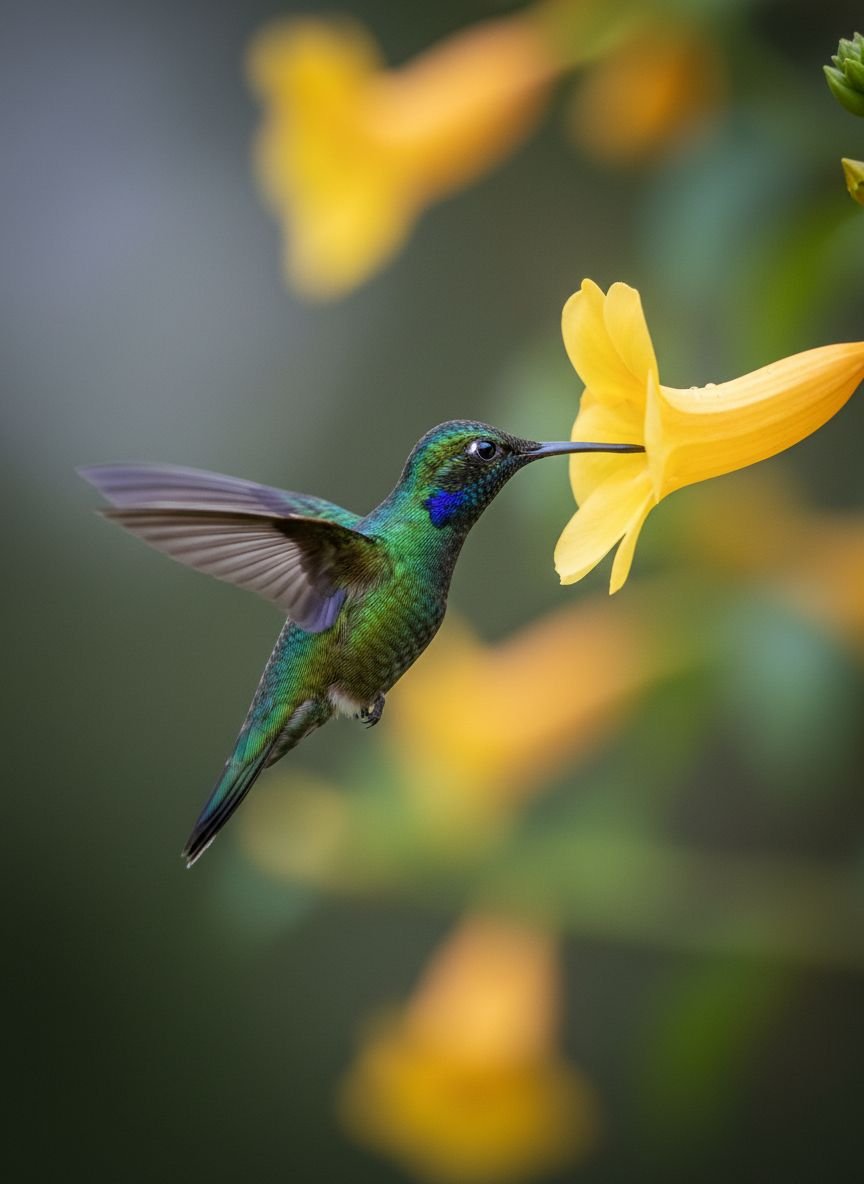
Modern roses often sacrifice scent for disease resistance, but “Old Garden Roses” (heirlooms) deliver powerful fragrances. Varieties like Damasks or Bourbons fill the air with that classic rose perfume. This scent, along with the open flower shapes, acts as a magnet for pollinators.
Butterflies and hummingbirds add movement and life to your backyard. They prefer single or semi-double blooms where the nectar is easily accessible. Creating a pollinator-friendly space helps the local ecosystem. The visual of a butterfly landing on a soft pink petal is the ultimate garden picture.
Pro Tip: Avoid using chemical pesticides in this zone to keep your garden safe for beneficial insects.
Combine roses with lavender for a scent explosion and pollinator party
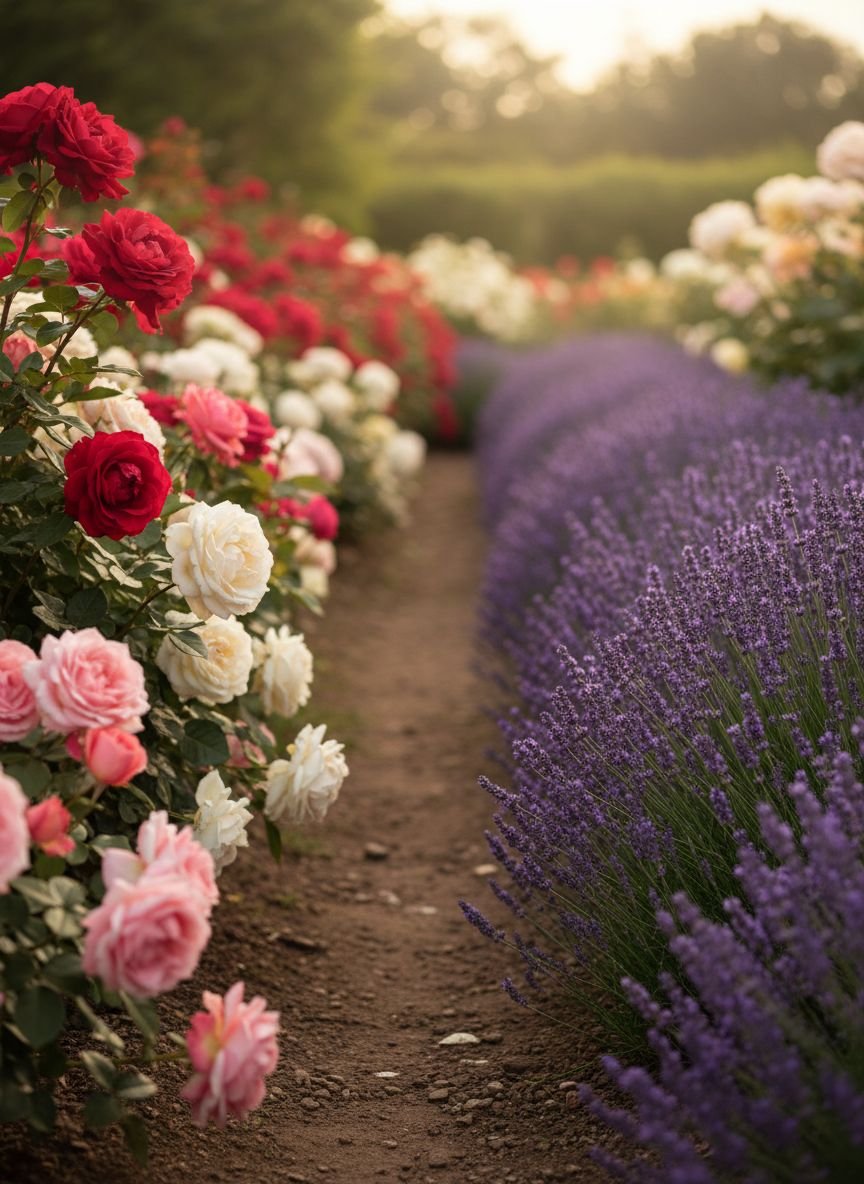
Lavender and roses are the classic Mediterranean power couple. They thrive in similar conditions: full sun and well-draining soil. The silvery-green foliage of lavender contrasts sharply with the dark green rose leaves. The purple spikes look stunning against pink, yellow, or white roses.
Beyond aesthetics, lavender acts as a natural pest deterrent. Its strong scent confuses aphids, which often plague roses. This companion planting strategy reduces the need for chemical interventions. The combined fragrance of rose and lavender is stress-relieving and potent, washing over the patio on warm afternoons.
Pro Tip: Plant the lavender at least 12 inches away from the rose base to ensure good airflow for both plants.
Related posts :
- 20 Breathtaking Dream Garden Ideas for Your Ultimate Backyard Oasis
- 22 Inspiring Gazebo Designs for Your Backyard That Transform Outdoor Living
- 18 Enchanting Fairy Garden Designs You’ll Want to Try This Weekend
Design a symmetrical rose bed layout for that dainty, fancy garden look
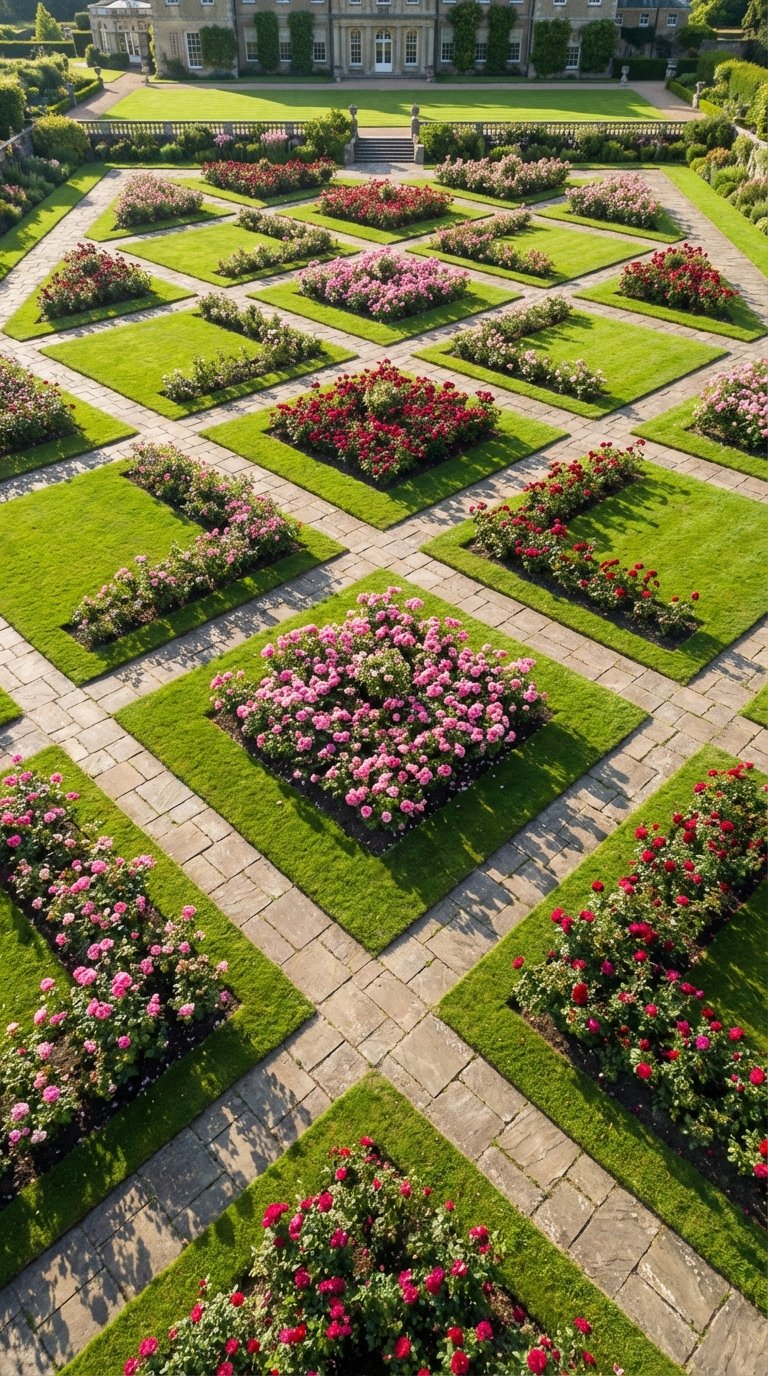
Symmetry brings a sense of calm and order. A formal layout with mirrored beds creates a high-end, estate-like feel, even in a small backyard. Use boxwood hedges to outline the beds and contain the roses. This sharp geometry contrasts with the organic, wild growth of the flowers.
Center the design around a focal point, such as a birdbath, a sundial, or a central standard rose tree. Keep the color palette restrained—perhaps just white and green, or pink and purple—to maintain elegance. This design style looks fantastic from second-story windows, offering a patterned view from inside the house.
Pro Tip: Use a measuring tape and string lines when digging your beds to ensure perfect squares or rectangles.
Go wild with heirloom rose varieties for nostalgia and uniqueness
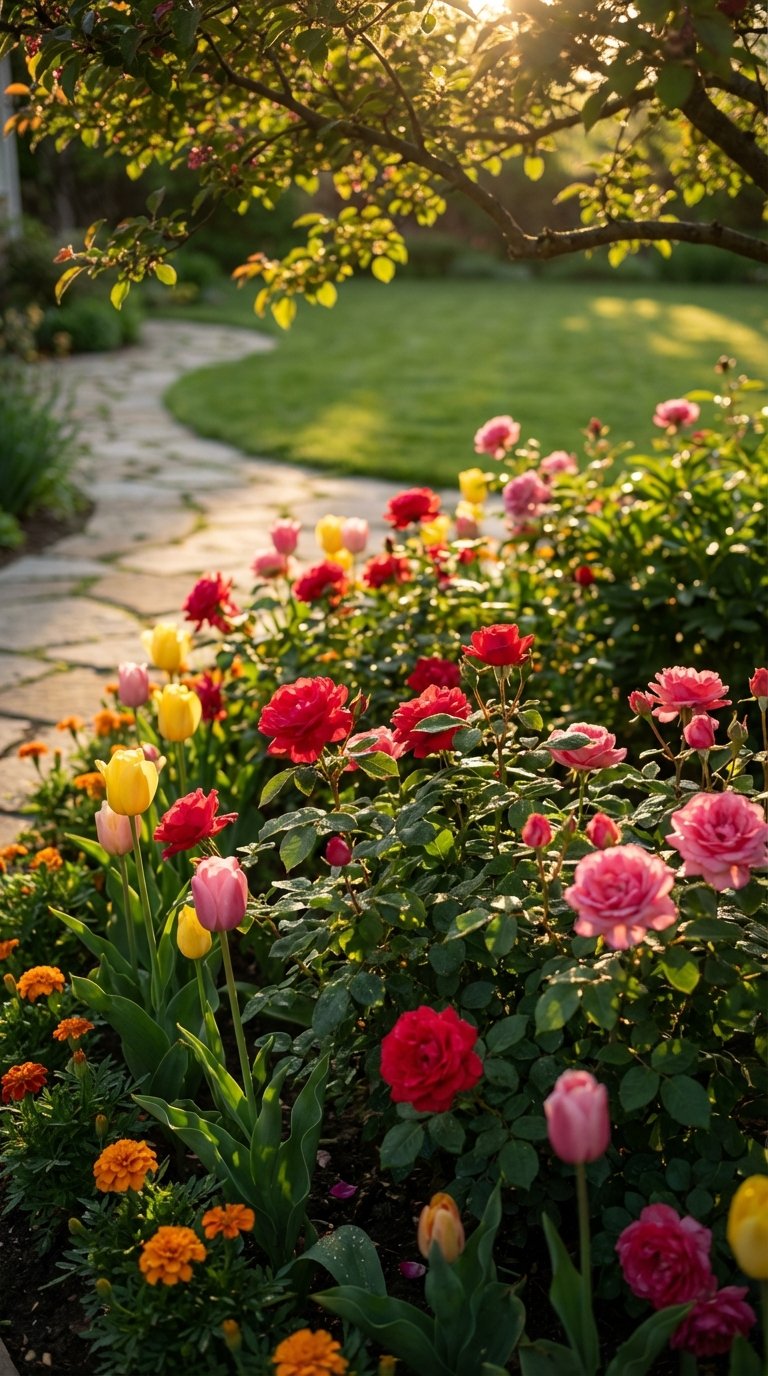
Heirloom roses offer shapes and colors you rarely see in standard bouquets. Some have “quartered” blooms, where the petals fold into four distinct sections. Others are striped or mossed. Planting these varieties connects your garden to history, as many date back to the 18th or 19th centuries.
These roses often grow larger and more shrub-like than modern hybrid teas. Give them space to spread. They work well in the back of the border or as a standalone specimen plant. Their resilience is legendary; many have survived in old cemeteries or abandoned homesteads for decades without care.
Pro Tip: Check if the heirloom variety is “once-blooming” or “repeat-blooming” so you know what to expect regarding flower duration.
Add seasonal flowers like tulips near your roses to keep the color popping year-round
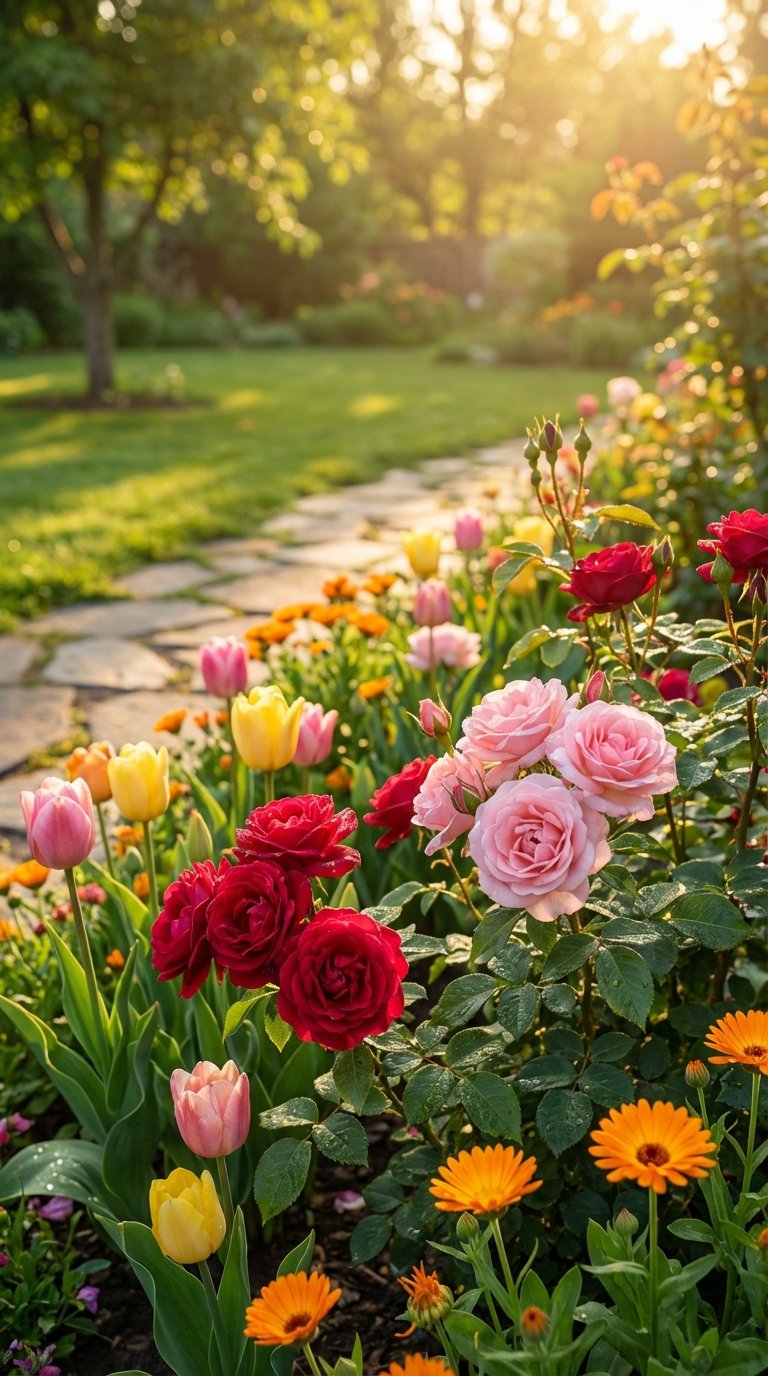
Roses have a dormancy period. To avoid a barren garden in early spring, plant bulbs like tulips, daffodils, or hyacinths around the base of your rose bushes. These bulbs bloom before the roses wake up, providing early color.
As the bulb foliage dies back, the roses leaf out and hide the fading greens. This succession planting maximizes every square inch of soil. Choose tulip colors that will harmonize with your roses if they happen to overlap, or go for contrasting brights to welcome spring.
Pro Tip: Plant bulbs deep enough so you do not accidentally dig them up when fertilizing your roses later in the season.
Plant dwarf rose varieties in containers if your backyard space is limited
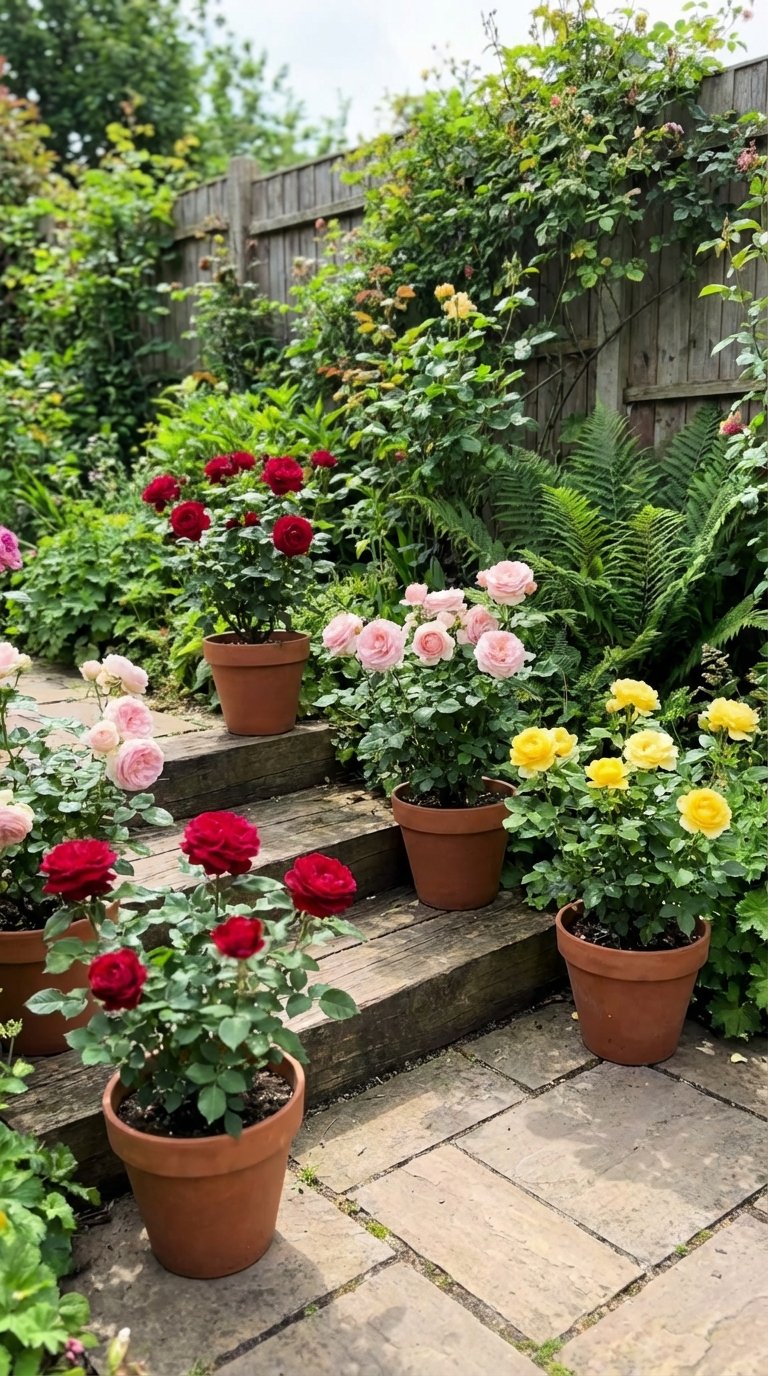
You do not need a sprawling lawn to enjoy roses. Miniature and dwarf varieties are bred specifically for small spaces and pots. These plants stay compact, usually under 2 feet tall, but produce an abundance of flowers. They are perfect for patios, balconies, or small decks.
Group three or four pots of different sizes together to create a tiered effect. This adds visual weight and makes the arrangement look like a mini garden. Since containers dry out faster than the ground, you need to water them more frequently. However, the maintenance is minimal compared to a full-sized bed.
Pro Tip: Feed container roses with a liquid fertilizer every two weeks during the growing season, as nutrients wash out of pots quickly.
Save this idea to your Pinterest.
Popular Asked Questions:
How much sun do roses actually need?
Most roses thrive with at least 6 to 8 hours of direct sunlight per day. Morning sun is ideal because it dries the dew off the leaves, which helps prevent disease. If you have a shady yard, look for specific varieties like Rosa rugosa or ‘Iceberg’ that can tolerate partial shade better than others.
What is the best time of year to plant a rose garden?
Spring is generally the best time to plant roses, just after the last frost has passed. This gives the plant time to establish its roots before the summer heat hits. You can also plant in early autumn, at least six weeks before the first hard freeze, to give roots a head start for the following year.
How often should I water my rose bushes?
Roses love water but hate “wet feet.” In the summer, soak the soil deeply once or twice a week rather than sprinkling a little bit every day. Deep watering encourages roots to grow down to find moisture. Always water at the base of the plant, avoiding the leaves, to stop mold and mildew from forming.
Do I really need to prune my roses?
Yes, pruning is helpful. It encourages new growth, improves air circulation, and shapes the plant. For most roses, a major prune in late winter or early spring (when the buds begin to swell) is perfect. Simply cut out dead wood and trim back the remaining canes by about one-third.
Conclusion

Creating a rose garden in your backyard changes how you use your outdoor space. It shifts from a simple patch of grass to a sensory destination. Whether you choose a vertical rose wall for privacy or a few dwarf varieties in vintage barrels, these 14 rose garden ideas offer a starting point for every skill level. Start with one small bed or an archway this season.




Leave a Comment