
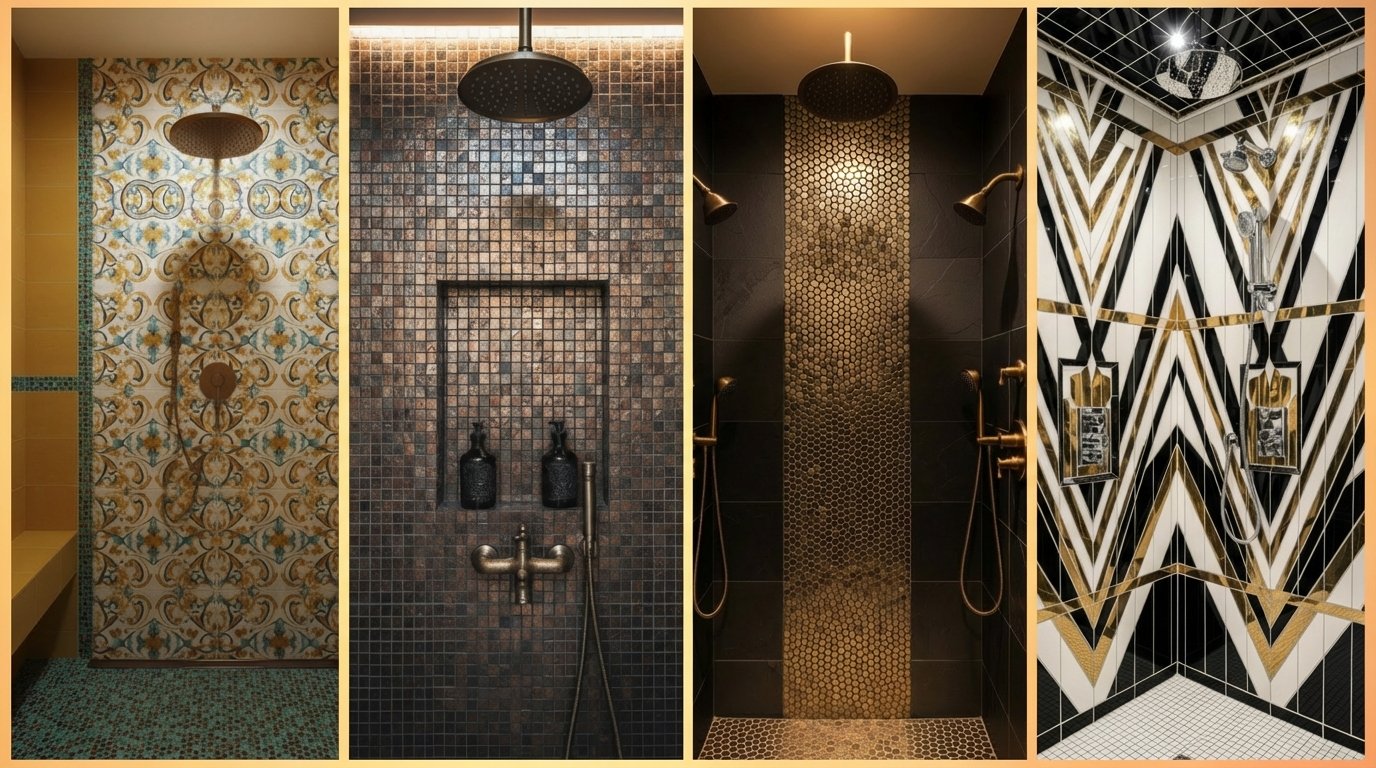
Choosing the right shower tile can feel like navigating a maze without a map. You want a bathroom that feels like a luxury sanctuary, but the fear of picking clashing patterns or outdated materials often leads to safe, boring choices. The truth is, the perfect shower isn’t just about one beautiful tile; it is about the combination of textures, shapes, and colors that work in harmony.
Whether you are renovating a tiny guest bath or designing a sprawling master wet room, the right tile pairing can double the perceived value of your space. In this guide, we have curated 16 stunning shower tile combinations that range from timeless classics to bold, modern statements. These ideas are designed to solve common design headaches, such as making small spaces feel larger or adding warmth to a sterile room.
Key Takeaways
- The Rule of Three: Stick to a maximum of three different tile types to maintain visual balance without chaos.
- Texture Over Color: If you prefer neutral palettes, mixing finishes (matte vs. glossy) adds necessary depth.
- Scale Matters: Pairing large-format wall tiles with smaller floor mosaics creates a pleasing visual contrast and improves slip resistance.
- Grout is a Design Element: Don’t treat grout as an afterthought; contrasting grout defines patterns, while matching grout creates a seamless “drenched” look.
Table of Contents
- Classic Marble and Subway Tile
- Mosaic Medley
- Wood-look Porcelain and White Subway Tiles
- Black and White Contrast
- Moroccan-inspired Patterns
- Blue Hues
- Natural Stone and Glass
- Geometric Patterns
- Terrazzo and Subway Tiles
- Earthy Tones
- Subway Tiles with Colored Grout
- Herringbone Pattern
- Hexagonal Tiles
- Metallic Accents
- Monochromatic Palette
- Art Deco-inspired Designs
- Popular Asked Questions
- Conclusion
Classic Marble and Subway Tile
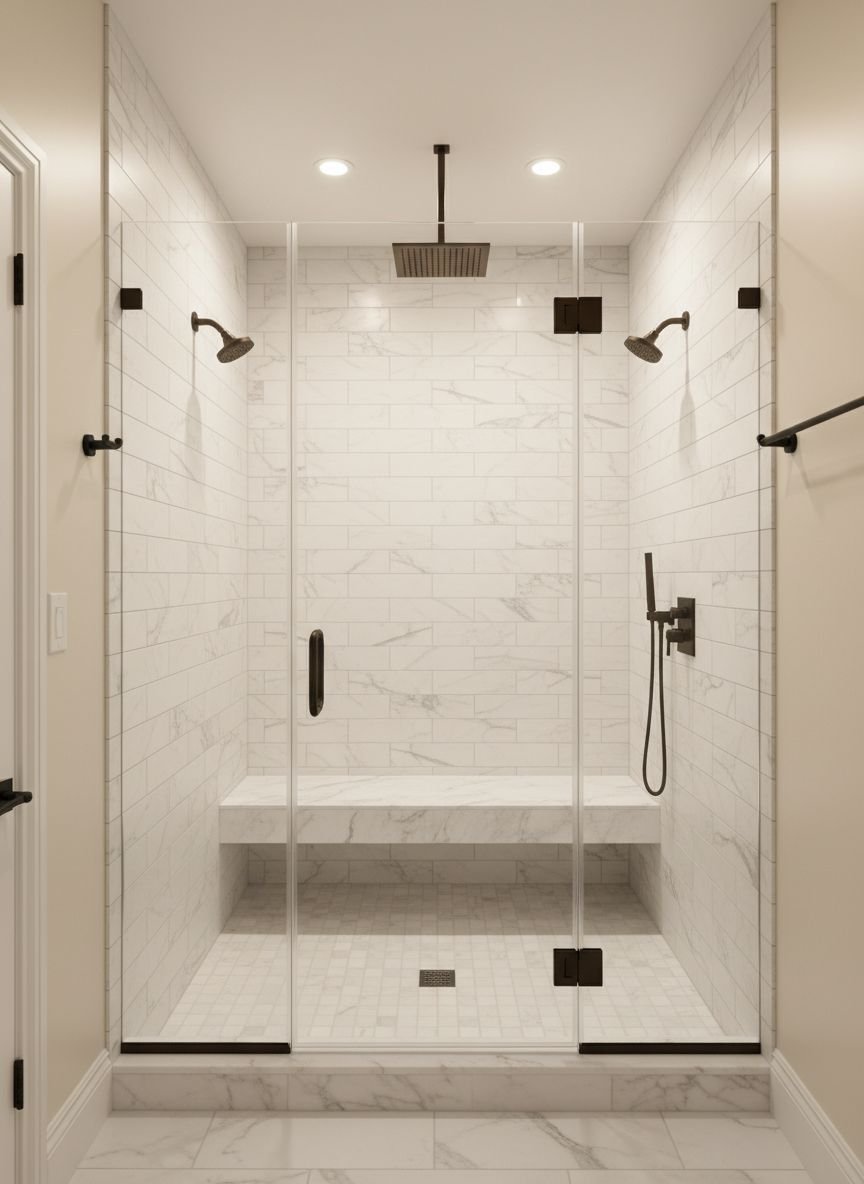
There is a reason this combination sits at the top of nearly every designer’s list. It effortlessly bridges the gap between high-end luxury and approachable traditionalism. Typically, this look involves using large-format Carrara or Calacatta marble tiles on the main shower walls, paired with crisp white ceramic subway tiles in a niche or on the adjacent wainscoting. The subtle grey veining in the marble provides organic movement that breaks up the rigidity of the rectangular subway tiles.
To keep this look current rather than clinical, pay close attention to the finish. A honed marble offers a softer, more matte appearance that feels modern and hides water spots better than polished stone. When installing, consider running the subway tiles to the ceiling to draw the eye upward, making the shower feel taller. This pairing reflects light beautifully, making it an ideal choice for bathrooms that lack natural window light.
Pro Tip: Use a light grey grout for the subway tiles to tie in with the marble veining, ensuring the two distinct materials feel connected.
Mosaic Medley
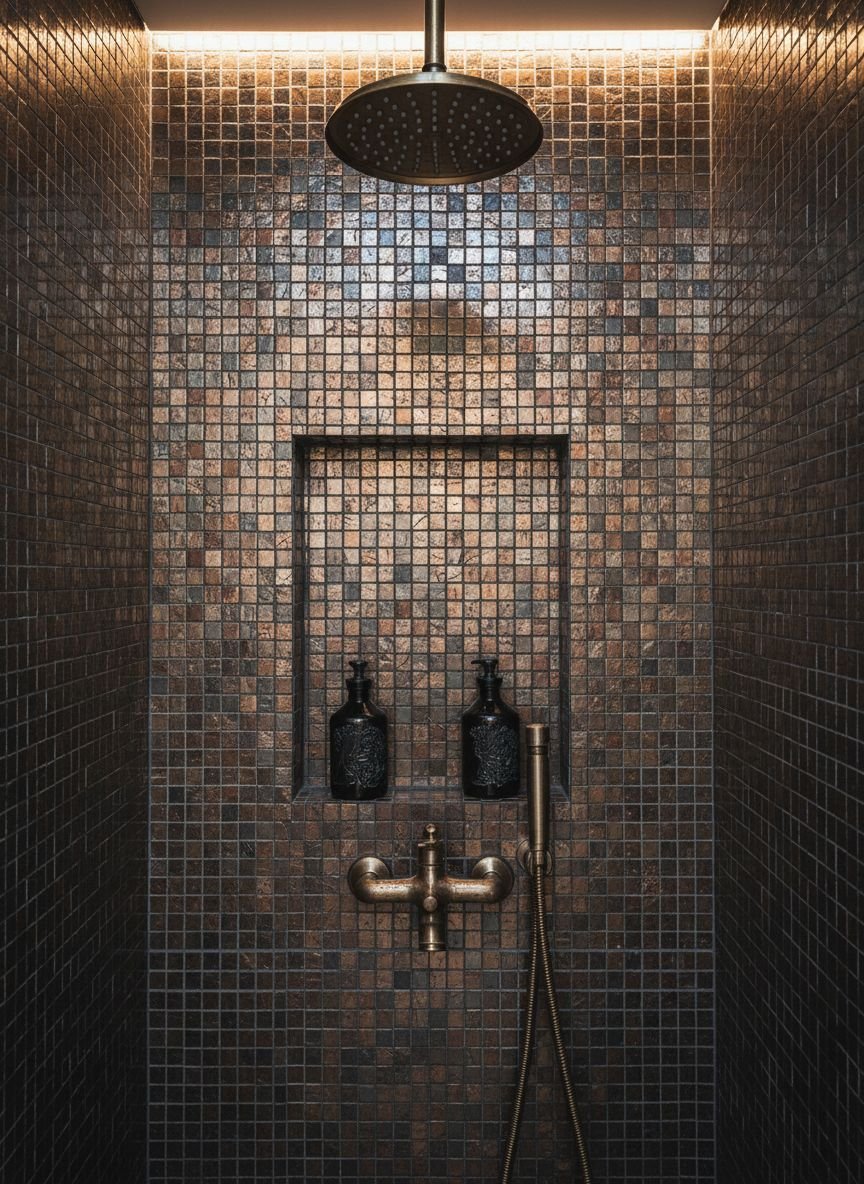
A mosaic medley is perfect for those who view the shower as a focal point rather than just a functional space. This approach often features a “feature wall” of intricate glass or stone mosaics, framed by larger, quieter tiles on the side walls. The small scale of mosaic tiles allows for complex storytelling through color and shimmer, acting almost like a piece of art within the shower enclosure. It is particularly effective in small showers where you want to add personality without overwhelming the room with large patterns.
From a practical standpoint, mosaics are excellent for shower floors. The high density of grout lines provides superior grip, making them a safe non-slip option. When designing this look, try to pull one color from the mosaic mix to use for the larger wall tiles. This creates a cohesive narrative where the busy pattern feels grounded by the solid surrounding colors.
Pro Tip: Choose a high-quality epoxy grout for glass mosaics to prevent discoloration and ensure a waterproof seal that lasts for years.
Save this idea to your Pinterest.
Wood-look Porcelain and White Subway Tiles
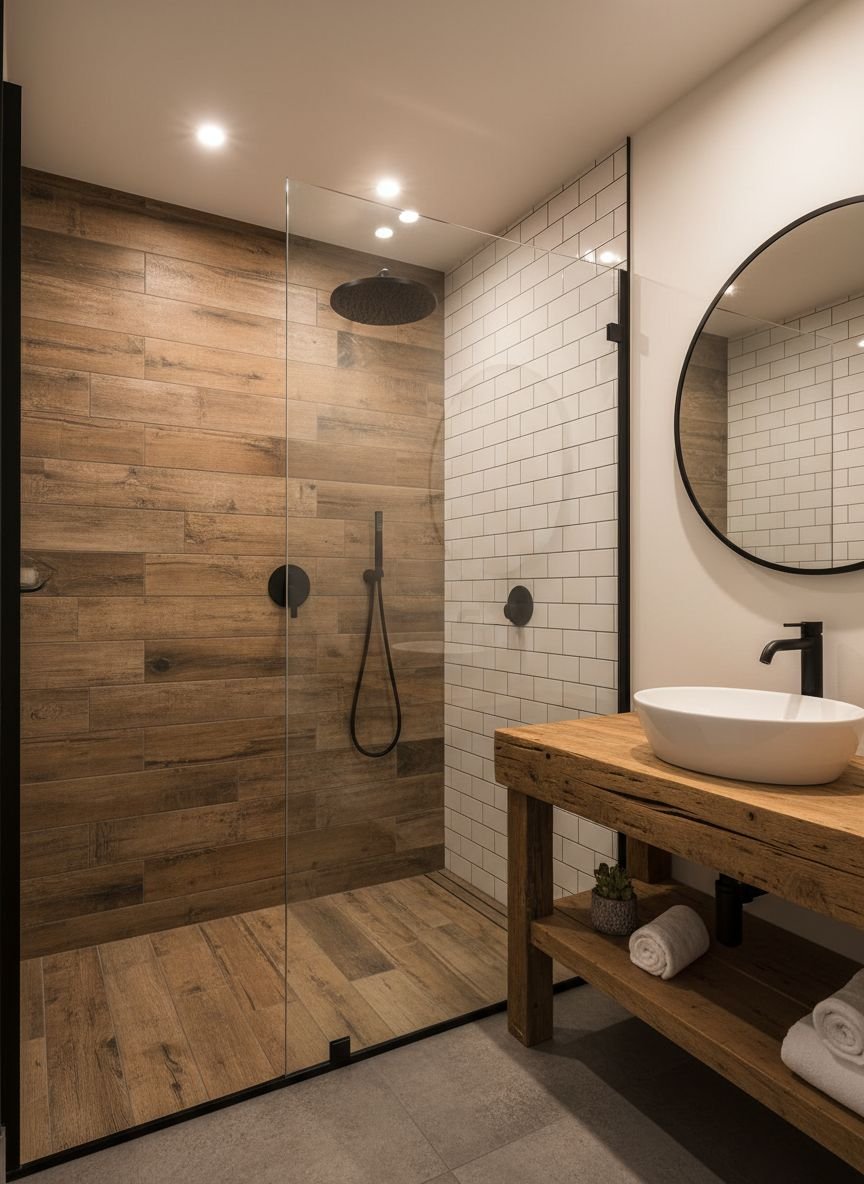
Bringing the warmth of wood into a wet environment was once a recipe for disaster, but wood-look porcelain tiles have revolutionized bathroom design. This combination pairs the rustic, spa-like vibe of wood grain with the clean, sanitary feel of white subway tiles. It creates a “Scandi-Spa” aesthetic that is incredibly popular for its calming properties. The wood tiles are often used on the shower floor or as a vertical accent strip, grounding the airy white walls with earthy texture.
The contrast here is key. The smooth, glossy surface of the subway tile highlights the matte, textured finish of the wood porcelain. This interplay stimulates the senses and prevents the white tiles from feeling too cold. It is a budget-friendly way to achieve a high-end sauna look, as porcelain is durable, water-resistant, and far easier to maintain than real teak or cedar.
Pro Tip: Lay the wood-look tiles with a minimal grout joint (1/16 inch) and use a grout color that matches the darkest tone in the “wood” to mimic real planks.
Black and White Contrast
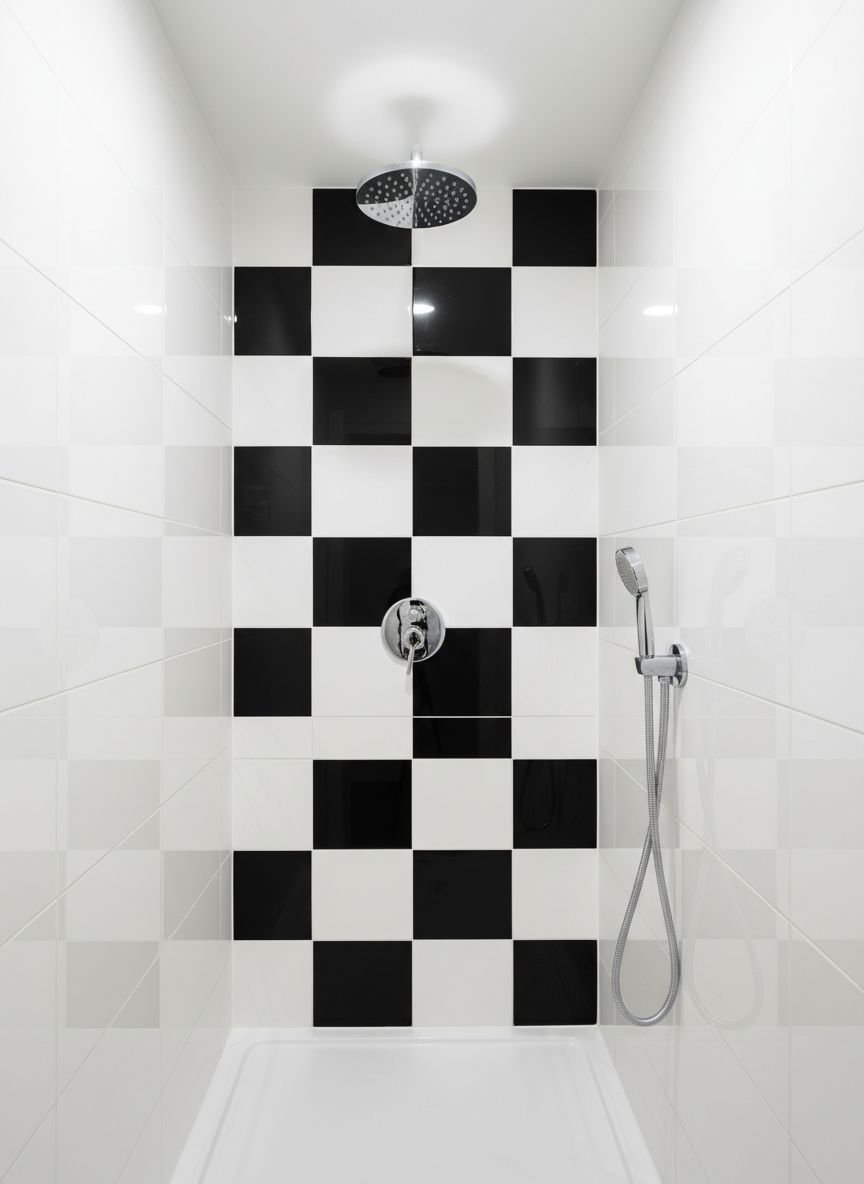
For a bathroom that demands attention, nothing beats the sharp sophistication of black and white. This monochromatic scheme relies on high contrast to define the space. You might see matte black hexagonal tiles on the floor paired with bright white vertical stack bond tiles on the walls. The visual tension between the two extremes creates a dynamic, graphic look that feels architectural and bold.
This style works exceptionally well with industrial or modern farmhouse fixtures, such as matte black showerheads or steel-framed glass doors. The key to mastering this look is balance; if the floor is dark and heavy, keep the walls light and airy to prevent the shower from feeling like a cave. You can soften the harshness by introducing natural textures, such as a wooden stool or a woven bath mat just outside the glass.
Pro Tip: Black tiles can show soap scum more easily than lighter ones, so opt for a matte or textured charcoal finish rather than a solid glossy black to minimize cleaning.
Moroccan-inspired Patterns
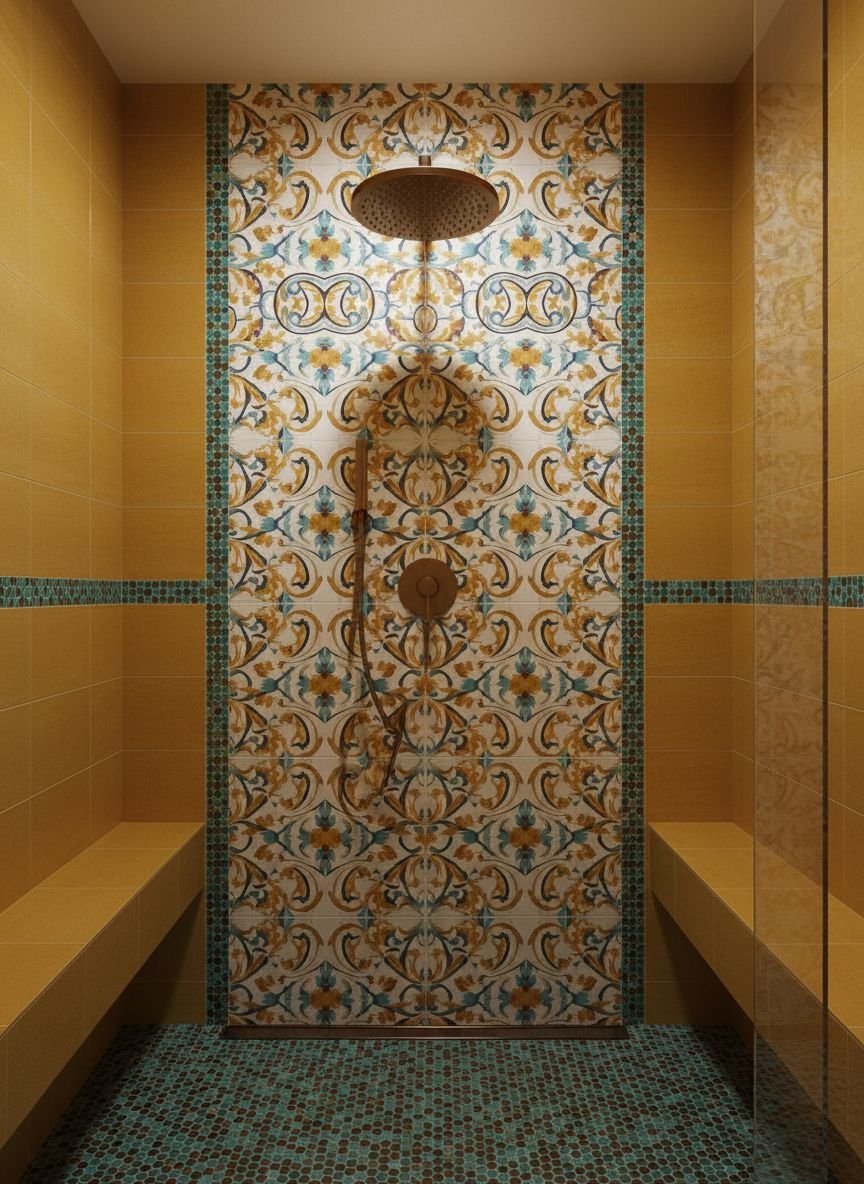
If you crave a shower that feels like a global retreat, Moroccan-inspired tiles are the answer. These often feature encaustic cement tiles (or porcelain look-alikes) with intricate geometric or floral motifs in muted blues, greens, and terracottas. The busy pattern is usually reserved for the floor or a single accent wall, while the remaining walls are kept simple with a creamy Zellige-style tile. The irregular surface of Zellige tiles reflects light in a shimmering, water-like way that complements the handmade feel of the patterned floor.
This combination is all about “perfect imperfection.” It rejects the sterile, machine-made look in favor of warmth and character. It creates a cozy, enveloping atmosphere that is perfect for long, relaxing showers. The patterns often hide dirt and hair remarkably well, making them a practical choice for busy households.
Pro Tip: If using real cement tiles, they must be sealed annually. For a lower maintenance option, look for “porcelain encaustic” tiles that mimic the look without the porosity.
Comparison: Ceramic vs. Porcelain Tiles
| Feature | Ceramic Tile | Porcelain Tile |
|---|---|---|
| Water Resistance | High (if glazed), but more porous body. | Very High (impervious), ideal for steam showers. |
| Durability | Good, but easier to chip. | Excellent, harder and denser. |
| Cost | Generally more affordable. | Typically more expensive. |
| Best Use | Wall tile (lighter weight). | Floors and Walls (heavy traffic/wet areas). |
| DIY Friendly | Easier to cut. | Harder to cut, requires diamond blade. |
Blue Hues
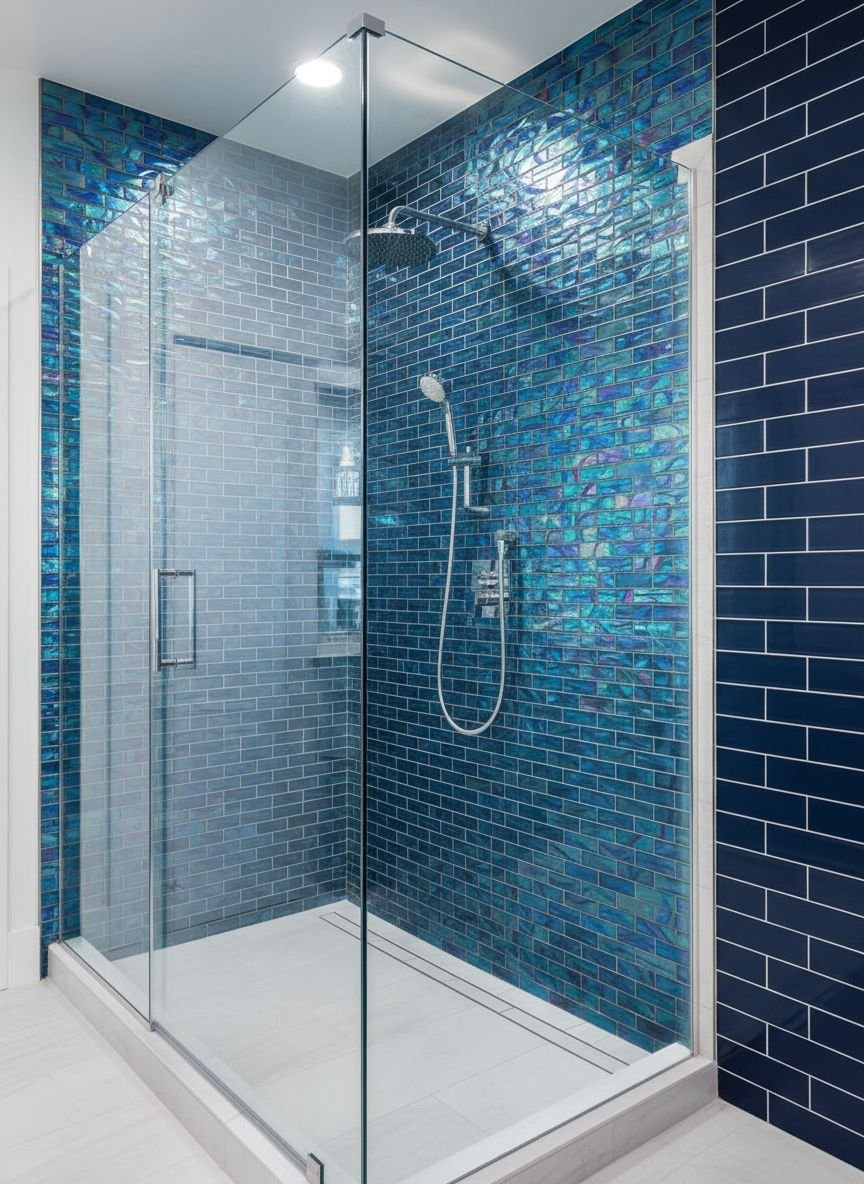
Blue is the color of water and sky, making it a natural fit for the bathroom. The trend for 2026 is shifting away from navy and toward softer, dusty blues, teals, and aquas that evoke a sense of calm. A popular execution is “tile drenching,” where varied shades of blue kit-kat (finger) tiles or subway tiles are used to cover the entire shower area. This creates an immersive, underwater feeling that instantly lowers your heart rate.
To avoid the space feeling too cold, pair these cool tones with warm metal fixtures like brushed brass or copper. The gold tones warm up the blue and add a touch of vintage elegance. Mixing sizes—such as a large blue slate floor tile with a smaller blue glass wall tile—adds visual interest while maintaining a monochromatic serenity.
Pro Tip: Use a light grey or white grout to make the blue color pop. Dark grout can make blue tiles look muddy and reduce the fresh, airy vibe.
Natural Stone and Glass
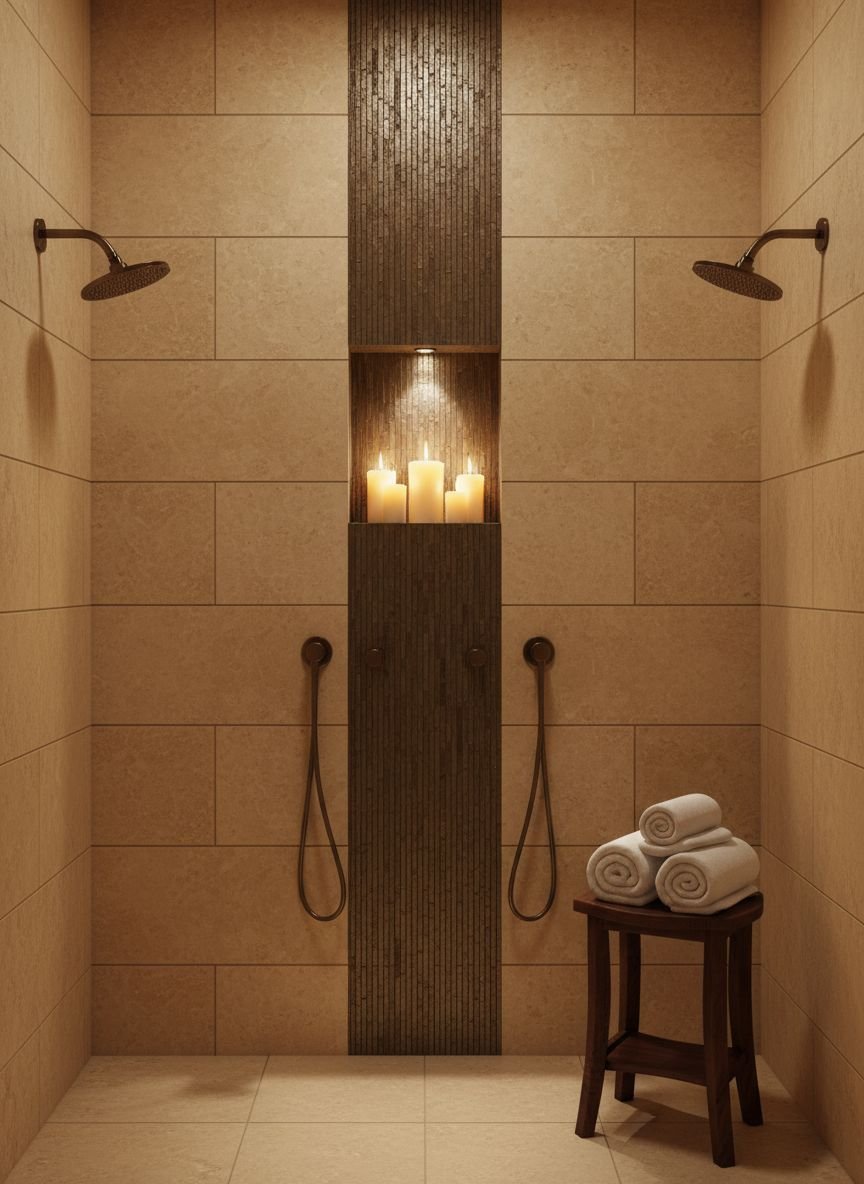
This combination is for the nature lover who wants to bring the outdoors in. It typically involves a floor of river rock or pebble mosaic, which provides a therapeutic foot massage, paired with translucent glass tiles on the walls. The glass mimics the look of water, while the stone grounds the design in the earth. The result is a texture-rich environment that feels organic and spa-like.
Lighting plays a crucial role here. Glass tiles have a unique ability to capture and refract light, giving the shower a luminous quality. When paired with the matte, rugged texture of natural stone, the contrast is striking. This design works particularly well in walk-in showers with skylights, where natural light can enhance the translucency of the glass.
Pro Tip: Ensure your pebble floor is installed by a pro who knows how to slope it correctly towards the drain, as the irregular surface can sometimes trap water if not pitched perfectly.
Save this idea to your Pinterest.
Geometric Patterns
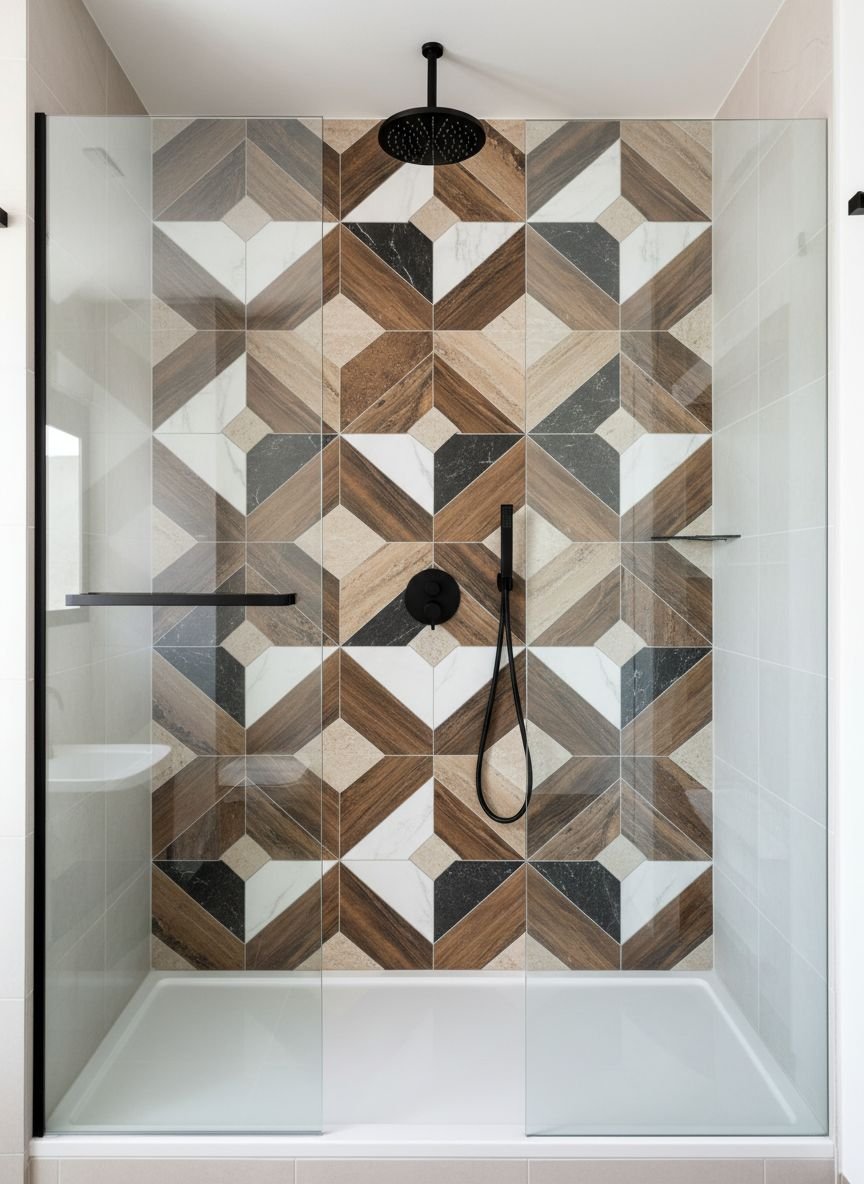
Geometric tiles are fantastic for tricking the eye and altering the perceived proportions of a room. A 3D cube pattern or a bold chevron can make a narrow shower feel wider or a low ceiling feel higher. The strategy here is to use the geometric tile as the “hero” on the back wall of the shower, flanked by large-format neutral tiles on the sides. This draws the eye straight to the back, creating depth.
This style is inherently modern and playful. It allows you to introduce color and shape without committing to a busy pattern on every surface. It is a favorite among younger homeowners and those looking to add a specific architectural edge to their home. Keep the rest of the bathroom minimal to let the geometric pattern stand out.
Pro Tip: When using a bold geometric pattern, keep your shower fixtures simple and streamlined (like chrome or matte black) so they don’t compete with the tile design.
Terrazzo and Subway Tiles
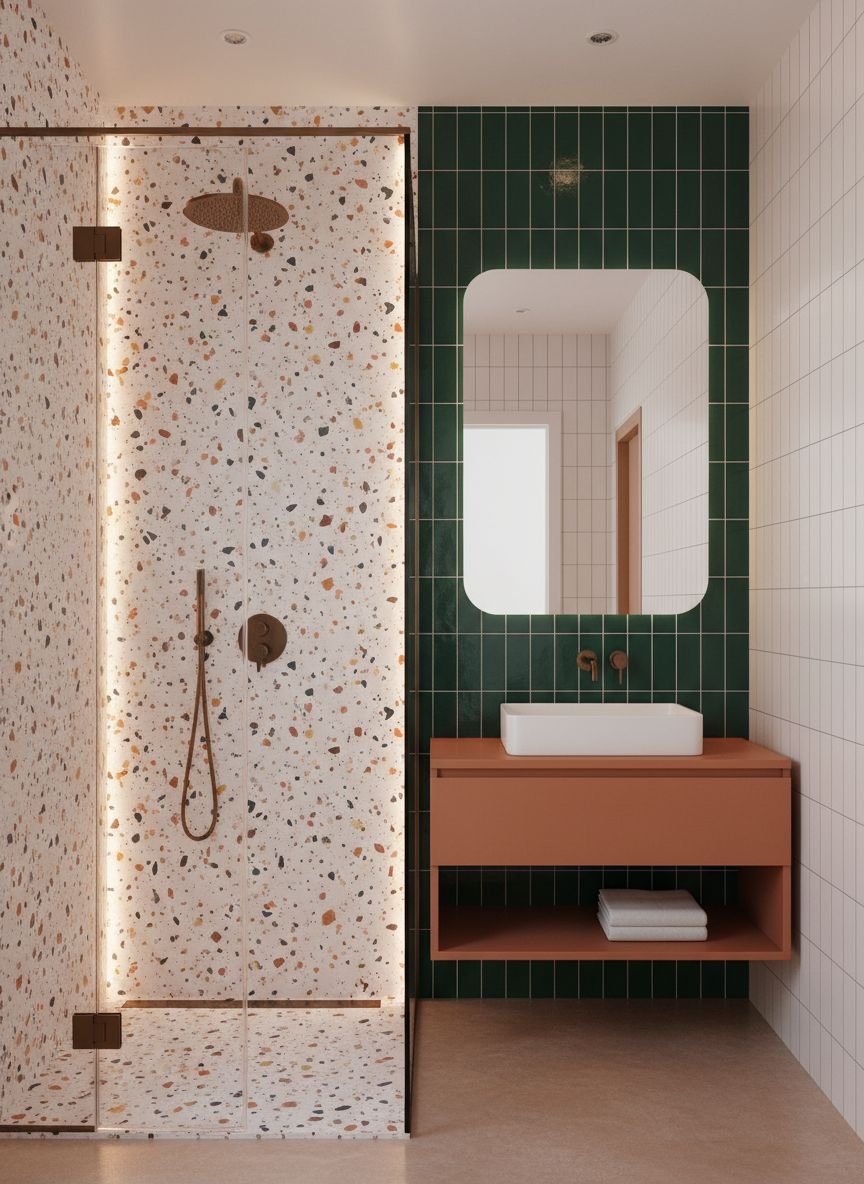
Terrazzo has made a massive comeback and is here to stay. Its speckled appearance, made from chips of marble, quartz, and glass set in concrete, creates a playful confetti effect that hides everything. Pairing a bold, colorful terrazzo floor with simple white or blush subway tiles on the walls creates a balanced look that is both retro and contemporary. The solid color of the subway tiles gives the eye a place to rest, preventing the terrazzo from becoming overwhelming.
This combination is incredibly versatile because you can pull any color from the terrazzo chips to use for your towels, paint, or accessories. It allows for easy style updates just by changing your soft goods. Terrazzo is also incredibly durable and slip-resistant, making it a practical choice for families.
Pro Tip: Choose a large-format terrazzo tile rather than poured-in-place concrete for an easier installation that is more budget-friendly but looks just as authentic.
Earthy Tones
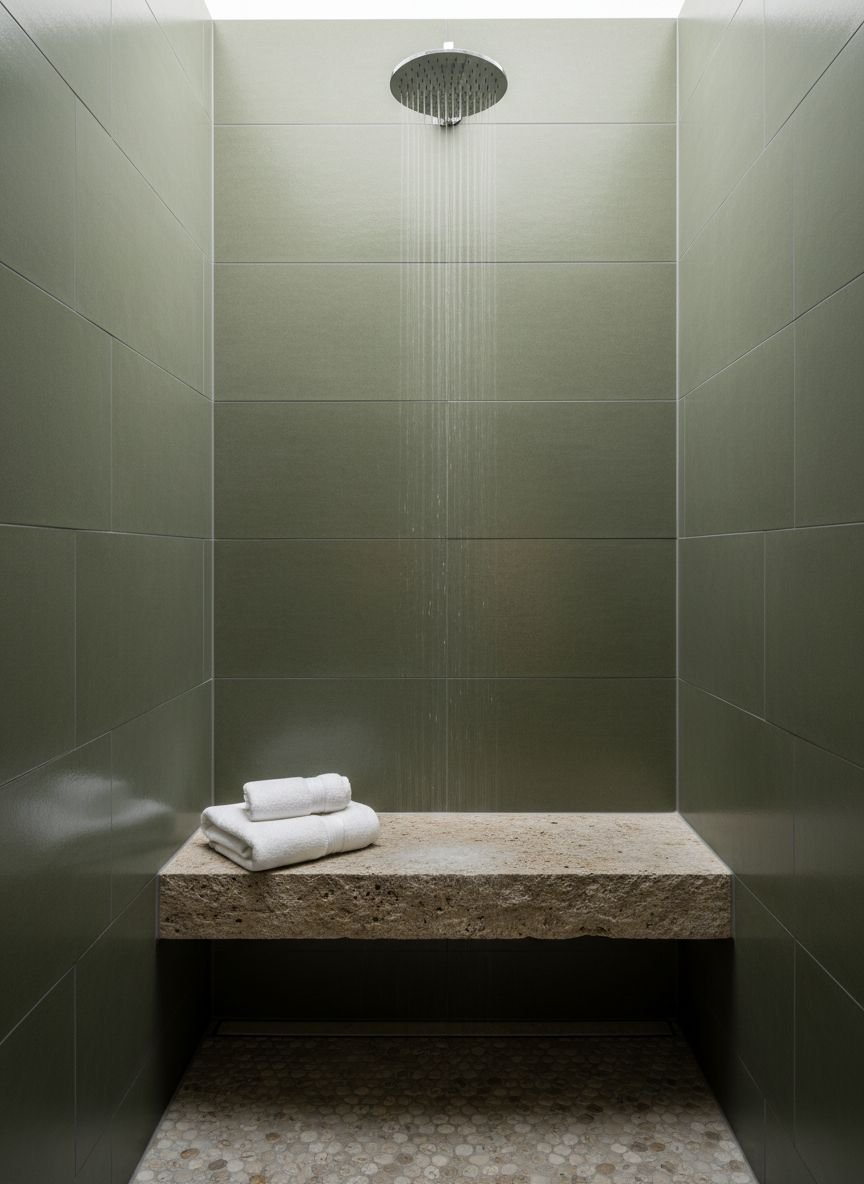
As we move into 2026, sterile greys are being replaced by warm, earthy tones like terracotta, sand, beige, and olive green. This palette creates a “sanctuary” feel that is grounding and restorative. A popular combination involves matte beige limestone-look tiles on the walls paired with a terracotta hexagon floor. The look is reminiscent of a Mediterranean villa or a desert retreat.
The focus here is on matte finishes and natural variation. You don’t want the tiles to look like plastic; you want them to look like stone or clay. This style pairs beautifully with natural wood vanities and woven storage baskets. It creates a soft, warm glow in the bathroom that is flattering and cozy.
Pro Tip: Use “warm white” LED lighting (2700K-3000K) in your bathroom. Cool daylight bulbs will wash out the earthy tones and make them look drab.
Get The Look: Essential Tiling Tools
- Notched Trowel: Essential for spreading adhesive with the correct ridges.
- Tile Spacers: Use “T-spacers” for grid patterns to ensure perfectly even grout lines.
- Laser Level: A must-have for keeping your first row of wall tiles perfectly straight.
- Rubber Grout Float: For pushing grout into the joints without scratching the tile surface.
Subway Tiles with Colored Grout
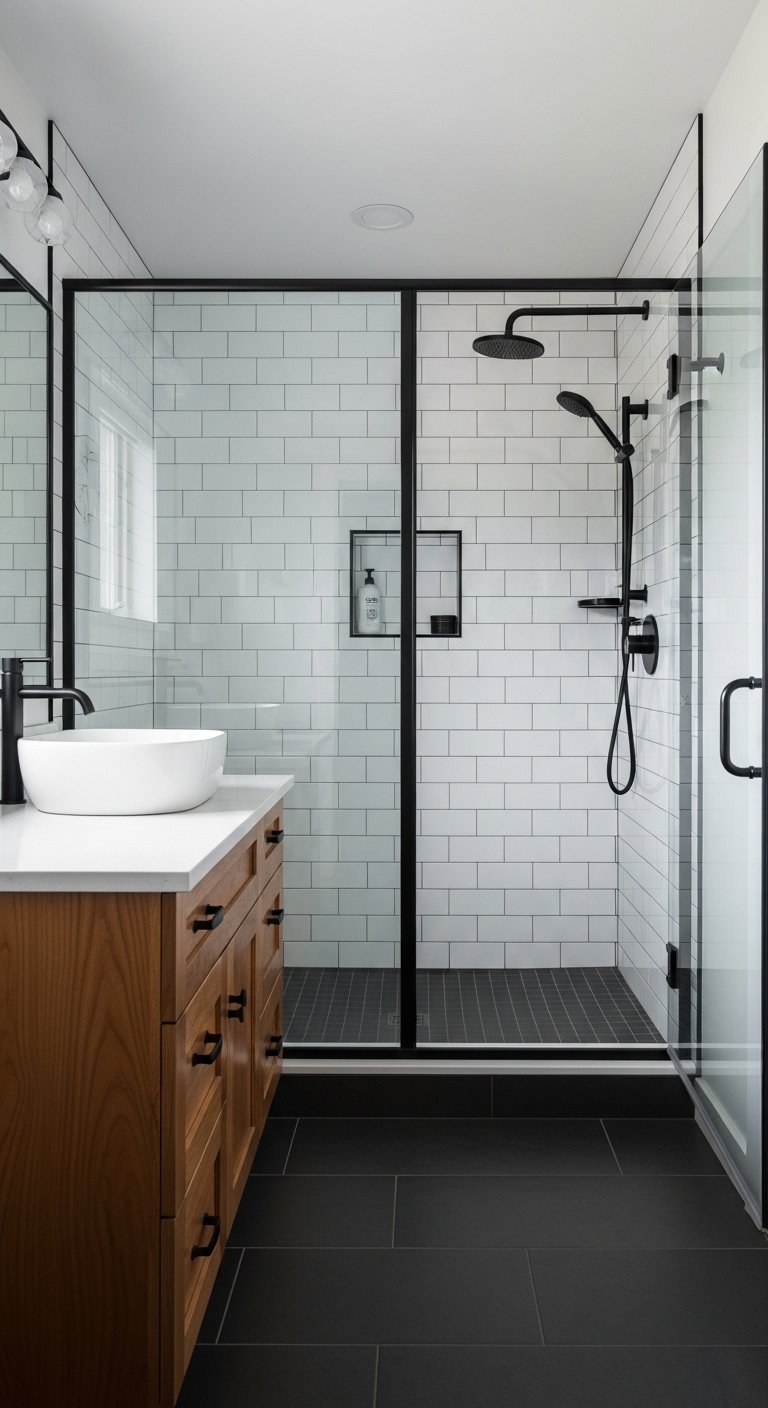
This is the ultimate budget-friendly hack for a high-design look. Standard white subway tile is one of the most affordable materials available. However, by pairing it with a bold, colored grout—such as electric blue, sunny yellow, or terracotta—you transform a basic staple into a custom design feature. The grout becomes the pattern, outlining each brick and adding a graphic pop that is unexpected and fun.
This technique works best in modern, eclectic, or teen bathrooms. It allows you to inject color without committing to expensive colored tiles. If you ever tire of the trend, regrouting is a labor-intensive but possible task, making it less permanent than replacing the tile itself. It is a low-risk, high-reward design choice.
Pro Tip: Colored grout can fade over time with harsh cleaners. Use pH-neutral cleaners and apply a high-quality grout sealer immediately after installation to lock in the color.
Herringbone Pattern
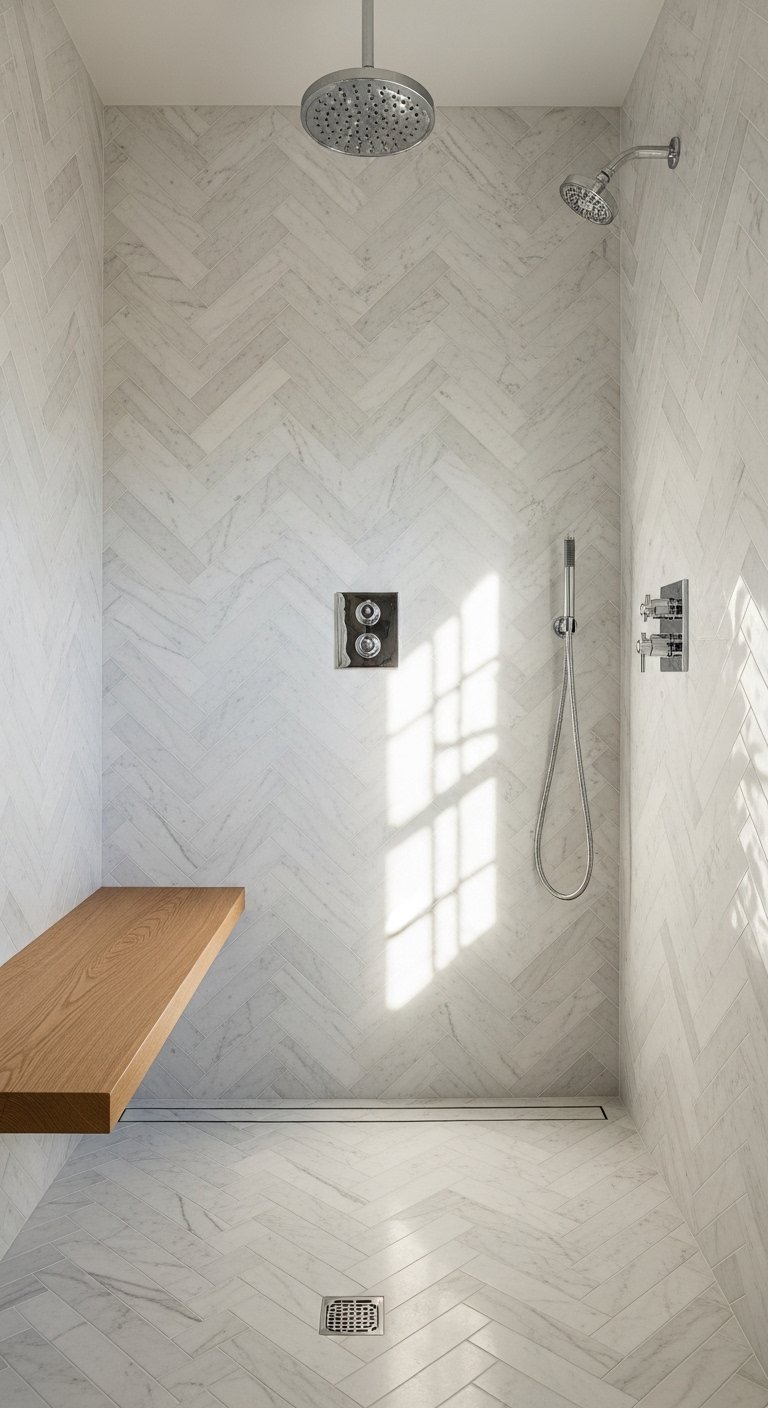
The herringbone pattern is a classic layout that instantly elevates simple rectangular tiles. By laying tiles at a 90-degree angle to each other, you create a zigzag pattern that suggests movement and energy. A popular combination is a marble herringbone floor paired with large horizontal plank tiles on the walls. The busy floor pattern hides potential slips and stains, while the calm walls keep the space open.
This layout requires more cuts and more tile (add 15-20% for waste), but the visual payoff is immense. It adds a tailored, bespoke quality to the shower. It works with almost any material, from ceramic to glass to stone, making it a versatile layout choice for any style.
Pro Tip: For a subtle look, use grout that matches the tile. For a bold look that highlights the zigzag, use a contrasting grout.
Hexagonal Tiles
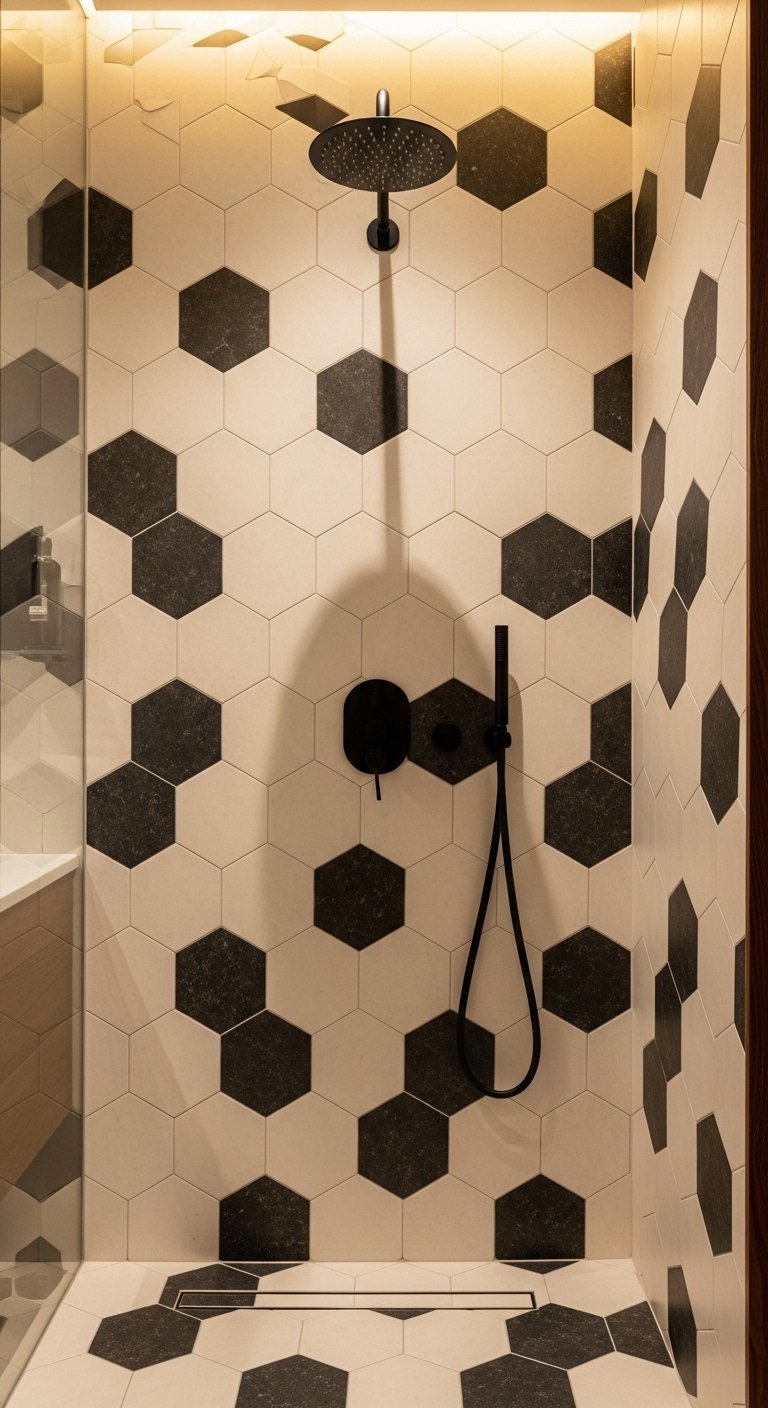
Hexagons are nature’s perfect shape, and they look stunning in a shower. A trending combination is “hex on hex,” using large hexagonal tiles on the walls and smaller mosaic hexagons on the floor. To define the zones, you might use a light marble hex on the wall and a dark slate hex on the floor. The repetition of the shape creates a satisfying geometric harmony.
Hex tiles are easier to install on shower floors than large squares because their many grout lines allow the installer to easily slope the floor toward the drain without awkward cuts. They fit together like a puzzle, creating a seamless surface that is both functional and beautiful.
Pro Tip: Use “elongated hex” or “picket” tiles for a variation on the classic shape that feels slightly more modern and unique.
Metallic Accents
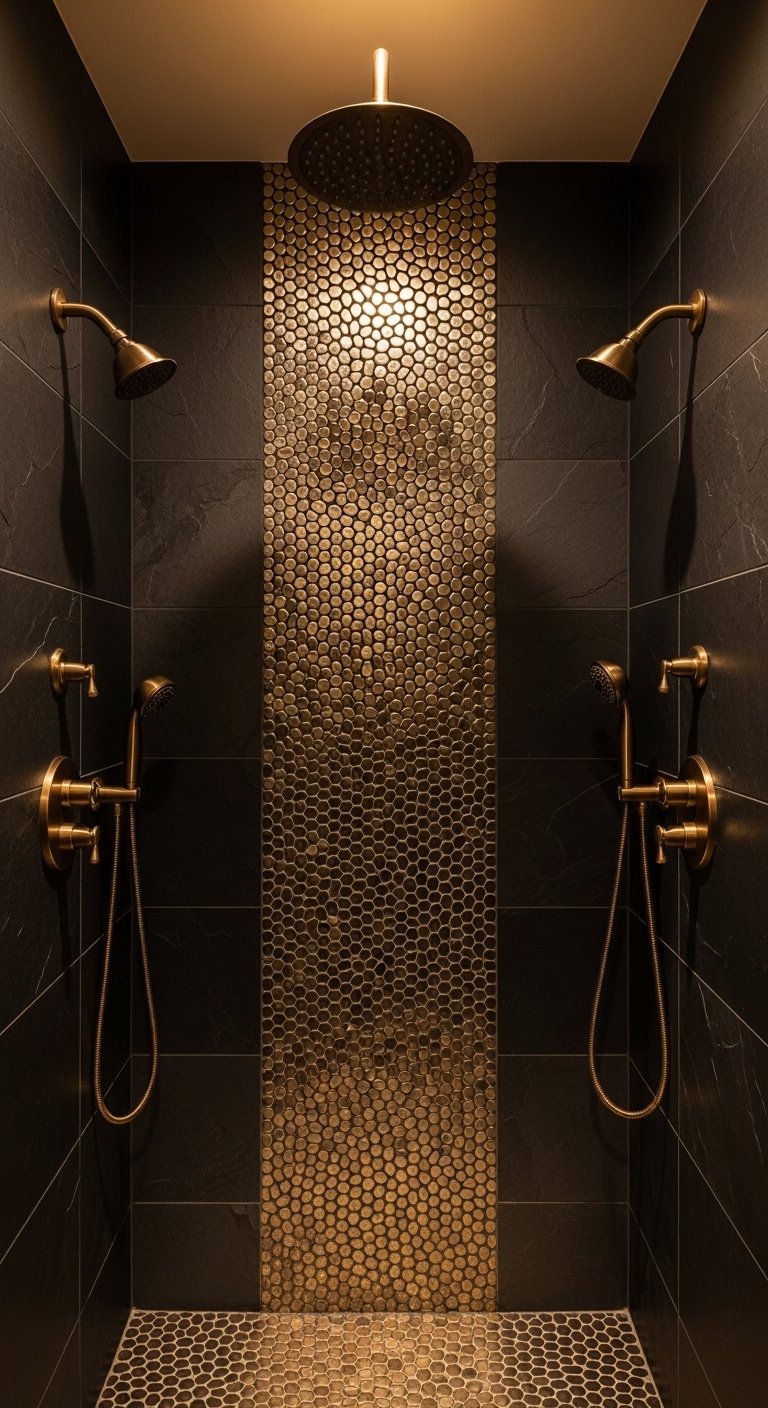
For a touch of glamour, metallic accents are the way to go. This doesn’t mean tiling your whole shower in gold (unless you want to!). Instead, it involves using metal strip inlays or metallic-finish glass tiles as a border or niche backing. Pair these shimmering accents with matte black or dark grey stone tiles. The contrast between the dull, dark stone and the shiny metal creates a luxurious, moody aesthetic.
This look is often found in high-end hotels. It reflects light in interesting ways and adds a jewelry-like quality to the bathroom architecture. It pairs exceptionally well with the “mixed metals” trend in fixtures, allowing you to coordinate with your faucets and showerheads.
Pro Tip: Avoid using abrasive scrubbers on metallic tiles, as they can scratch the finish. Stick to soft microfiber cloths and mild soap.
Save this idea to your Pinterest.
Monochromatic Palette
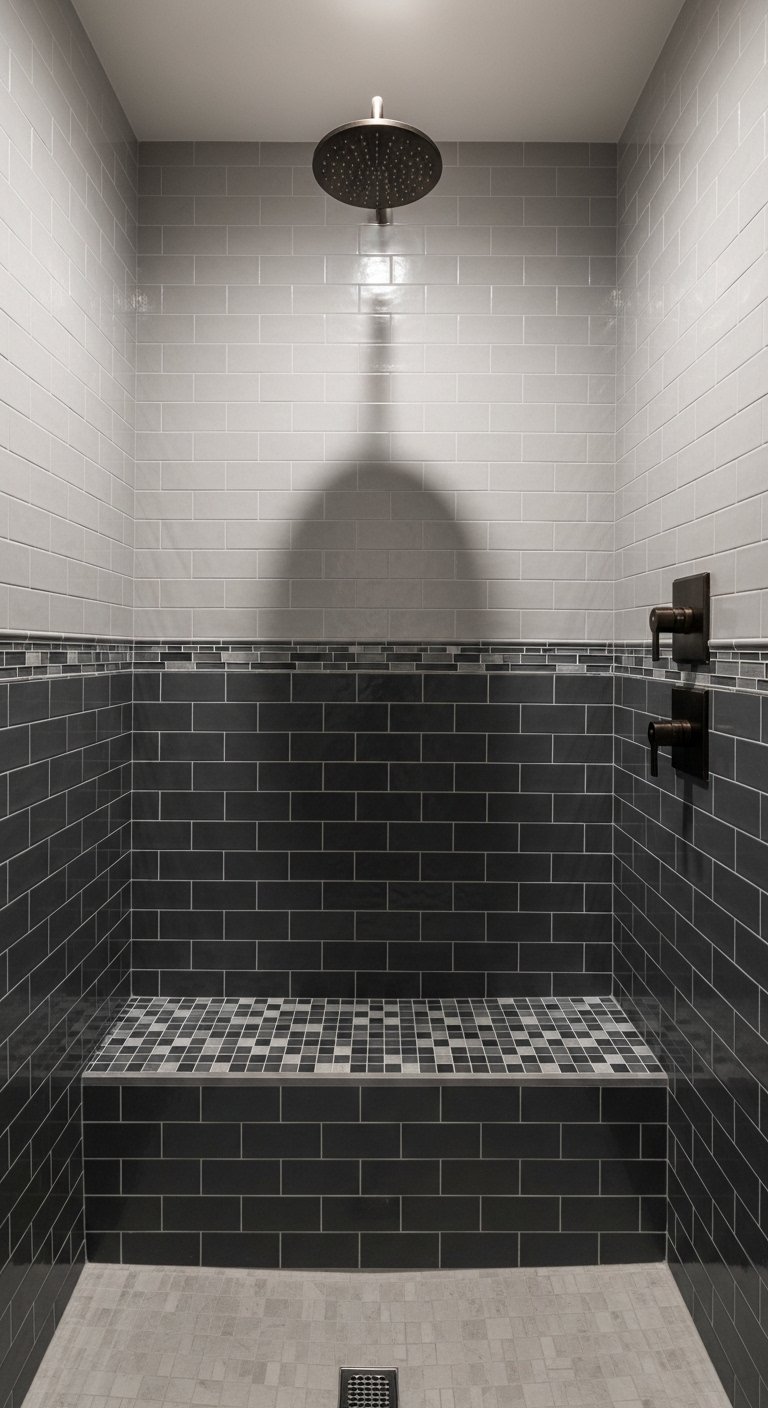
Monochromatic does not mean boring. It means using a single color in various shades and textures. A stunning example is an all-green shower: emerald glazed tiles on the walls, a mossy matte mosaic on the floor, and a sage green ceiling. This creates a cocoon-like effect that is incredibly soothing. The variation in texture—glassy, matte, rough—keeps the eye interested despite the lack of color contrast.
This approach makes a small bathroom feel larger because there are no harsh breaks in the visual field. The boundaries of the room seem to dissolve. It is a bold commitment to a color, but when done right, it is incredibly sophisticated and editorial.
Pro Tip: Vary the scale of the tiles significantly (e.g., tiny mosaics vs. large slabs) to prevent the room from looking like a public pool.
Related posts :
Art Deco-inspired Designs
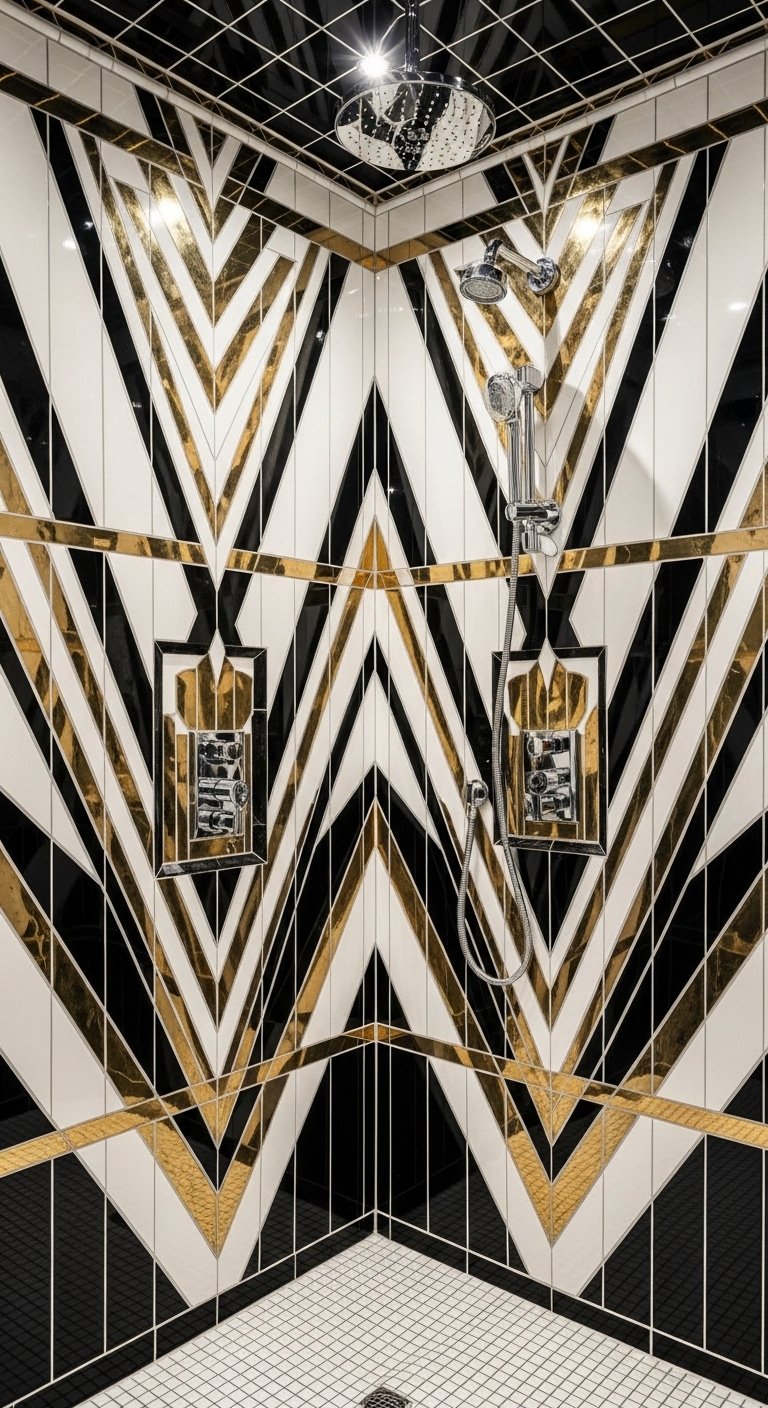
Art Deco is all about glamour, symmetry, and bold geometry. To recreate this 1920s vibe, combine black and white tiles with gold accents. Think fan-shaped (fish scale) tiles in a glossy finish on the walls, paired with a checkerboard floor. The fan shape evokes the classic Deco arch, while the black and white palette remains timeless.
This style is perfect for vintage homes or for adding a touch of drama to a powder room shower. It feels curated and expensive. Finish the look with brass fixtures and perhaps a frosted glass shower door with a geometric motif.
Pro Tip: Fish scale tiles can be installed with the “fan” pointing up (energizing) or down (calming). Choose the orientation that suits the mood you want to create.
Popular Asked Questions
What is the rule of three for bathroom tiles?
The “Rule of Three” suggests that you should use no more than three different types of tiles in a single bathroom to avoid a cluttered or chaotic look. A common formula is: 1) A primary floor tile, 2) A primary wall tile (often neutral), and 3) An accent tile (used in a niche or feature wall). This keeps the design cohesive and balanced.
Should shower floor and wall tiles match?
They do not have to match, but they should coordinate. Using the same tile on both the floor and walls (called “tile drenching”) makes a small shower look bigger and more seamless. However, contrasting them (e.g., a dark floor with light walls) is a classic design choice that grounds the space. If you choose different tiles, ensure the floor tile is slip-resistant (matte or small mosaic), while wall tiles can be glossy.
What is the best tile size for a small shower?
For small showers, you generally have two great options. Large-format tiles (like 12×24 inches) are excellent because they have fewer grout lines, which reduces visual clutter and makes the space feel expansive. Alternatively, vertical stacked tiles draw the eye upward, making low ceilings feel higher. Avoid medium-sized square tiles, which can make a grid pattern that boxes the room in.
How do I choose the right grout color?
Grout can either blend in or stand out.
- Matching Grout: (e.g., white grout with white tile) creates a seamless, monolithic look that makes the space feel larger.
- Contrasting Grout: (e.g., grey grout with white tile) highlights the shape and pattern of the tile. This is great for geometric or subway tiles but adds “visual noise.”
- Practicality: Darker grout (grey or beige) hides stains and discoloration much better than bright white grout, especially on floors.
Conclusion

Creating the perfect shower tile combination is about balancing your personal style with practical design principles. Whether you opt for the timeless elegance of marble and subway tile or the bold statement of a monochromatic blue drench, the goal is to build a space that brings you joy every morning.
Remember, the best designs often come from a simple mix of textures rather than an explosion of color. Start with a floor tile you love, pick a complementary wall tile, and don’t forget the power of grout to tie it all together.


Leave a Comment