
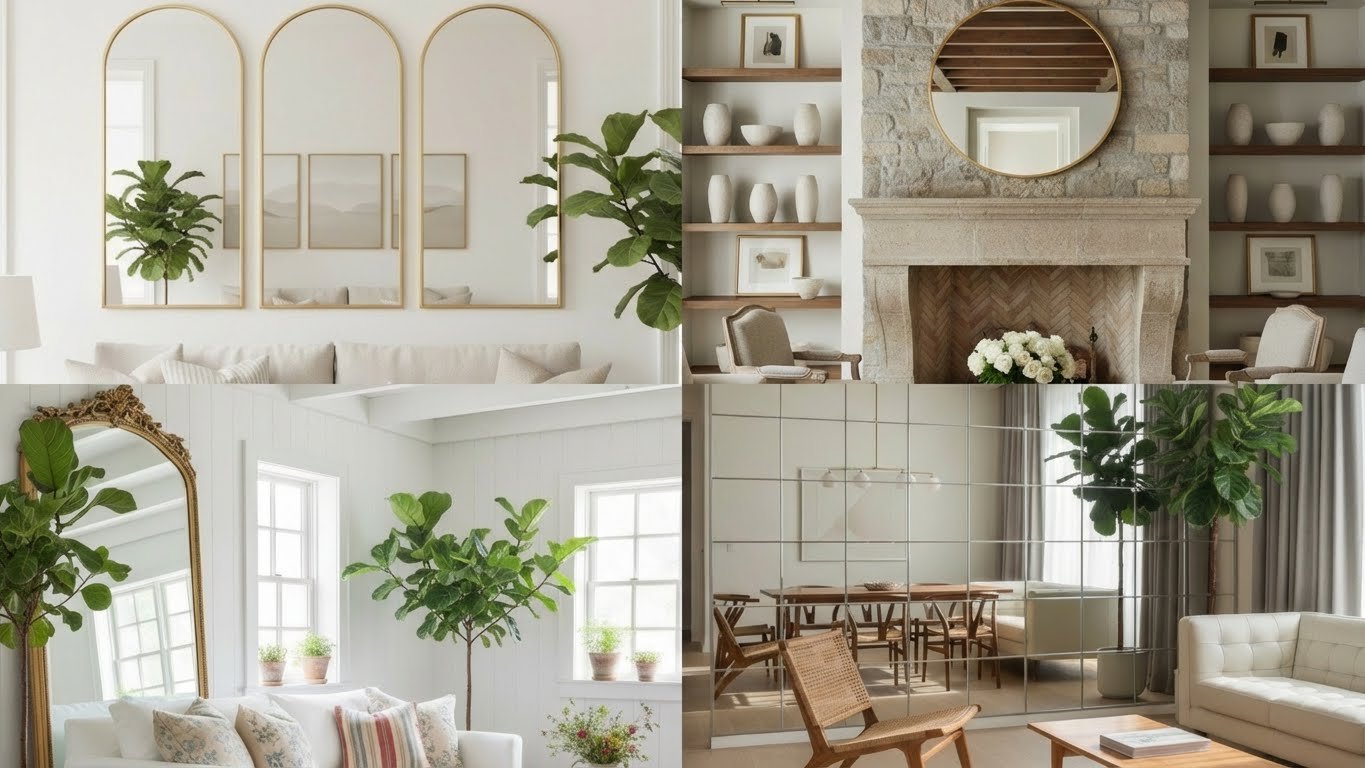
Dark living rooms feel small. Cramped spaces kill your mood. You want a home that feels open and airy without knocking down walls. The solution hangs right in front of you. Mirrors transform spaces instantly. They bounce light into dark corners and trick the eye into seeing more room than exists. Designers use them as secret weapons to fix architectural flaws.
You do not need a massive renovation budget. A single well-placed piece changes everything. This guide shows you exactly where to place them for maximum impact. We cover styling tricks that double your natural light. You will find ideas for every aesthetic from modern minimalism to rustic charm. Get ready to see your home in a whole new light.
Check out our related guide on Small Living Room Layouts.
Key Takeaways
- Placement matters because facing a mirror opposite a window doubles your natural light source immediately.
- Scale creates impact so do not be afraid to use floor-to-ceiling glass to fake a renovation.
- Shape dictates mood since round mirrors soften sharp modern lines while geometric shapes add edge.
- Safety comes first when securing heavy vintage frames or leaning large pieces against high traffic walls.
Table of Contents
- Hang a Round Mirror Above the Fireplace
- Place a Large Floor Mirror Behind a Sofa
- Install a Gallery Wall of Small Mirrors
- Lean a Tall Mirror Against the Wall
- Go Bold with a Sunburst Mirror
- Frame a Mirror with Reclaimed Wood
- Use a Frameless Mirror for a Minimalist Aesthetic
- Position a Mirror Opposite a Window
- Incorporate Mirrored Furniture
- Create a Vintage Vibe with an Ornate Mirror
- Install a Mirror-Backed Shelving Unit
- Pair a Geometric Mirror with Modern Décor
- Hang a Trio of Matching Mirrors Above a Sofa
- Add a Mirrored Accent Wall
- Install a Mirrored Coffee Table
- Frame Your TV with Mirrors
- Add a Statement Mirror with Metallic Accents
- Use a Mirror as a Room Divider
- Go for an Antique Mirror for Vintage Charm
- Hang a Mirror Over a Console Table
- Use a Decorative Mirror as a Tray
- Hang a Trio of Elongated Oval Mirrors
- Stick a Tiled Wall Mirror Behind the Sofa
- Place a Large Mirror Above the Mantel That Touches the Ceiling
- Create a Mirror with a Door-Like Frame to Create an Illusion of Another Room
- Place a Wall Mirror Between Two Windows
- Popular Asked Questions
- Conclusion
Hang a Round Mirror Above the Fireplace
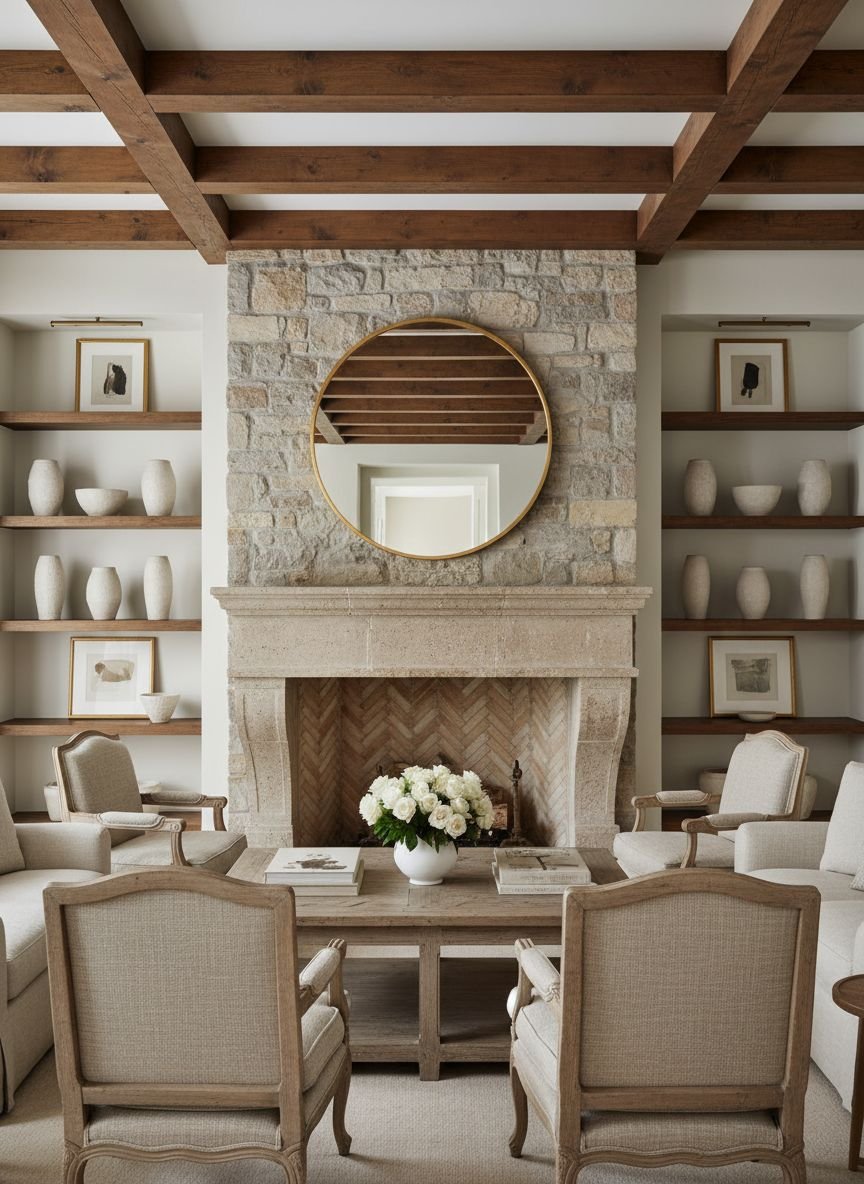
Fireplaces often feature sharp lines and heavy brick. The mantel creates a strong horizontal break in the room. You can soften this architectural rigidity with a round mirror. The curve of the glass contrasts beautifully with the square firebox. This creates a balanced focal point that draws the eye upward. Designers love this trick because it breaks up the boxy feel of standard living rooms.
Choose a frame that complements your hardware. A thin black metal frame works well in modern spaces. A chunky wood frame suits farmhouse styles. Ensure the mirror width is roughly two-thirds the width of the mantel. This proportion keeps the design grounded. The reflection captures the ceiling fixture or the opposing wall art. It adds depth to the chimney breast without clutter.
Pro Tip: Hang the mirror three to five inches above the mantel shelf to let the décor breathe.
Place a Large Floor Mirror Behind a Sofa
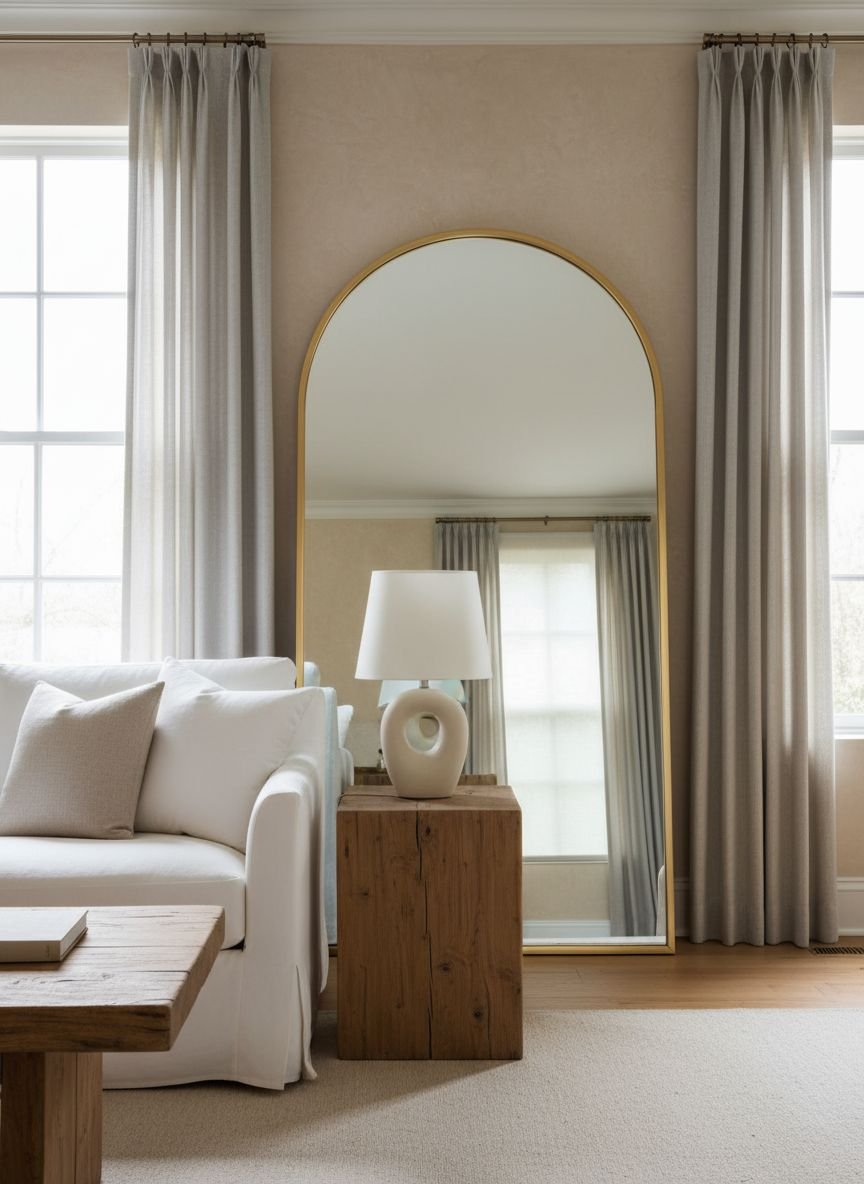
Most people hang art behind the sofa. You can disrupt the norm by placing a large floor mirror there instead. This works best if you float your sofa away from the wall. The mirror acts as a backdrop that expands the visual field. It reflects the back of the room and makes the seating area feel like an island in a much larger space.
This technique requires a sturdy mirror with a heavy base. The glass catches the light from side windows and pushes it behind the seating area. Dark corners vanish instantly. The reflection adds layers to your room design. You see the texture of the sofa fabric and the back of the room simultaneously. It creates a sophisticated studio apartment vibe even in a suburban home.
Pro Tip: Secure the top of the mirror to the wall with an anchor kit to prevent tipping accidents.
Install a Gallery Wall of Small Mirrors
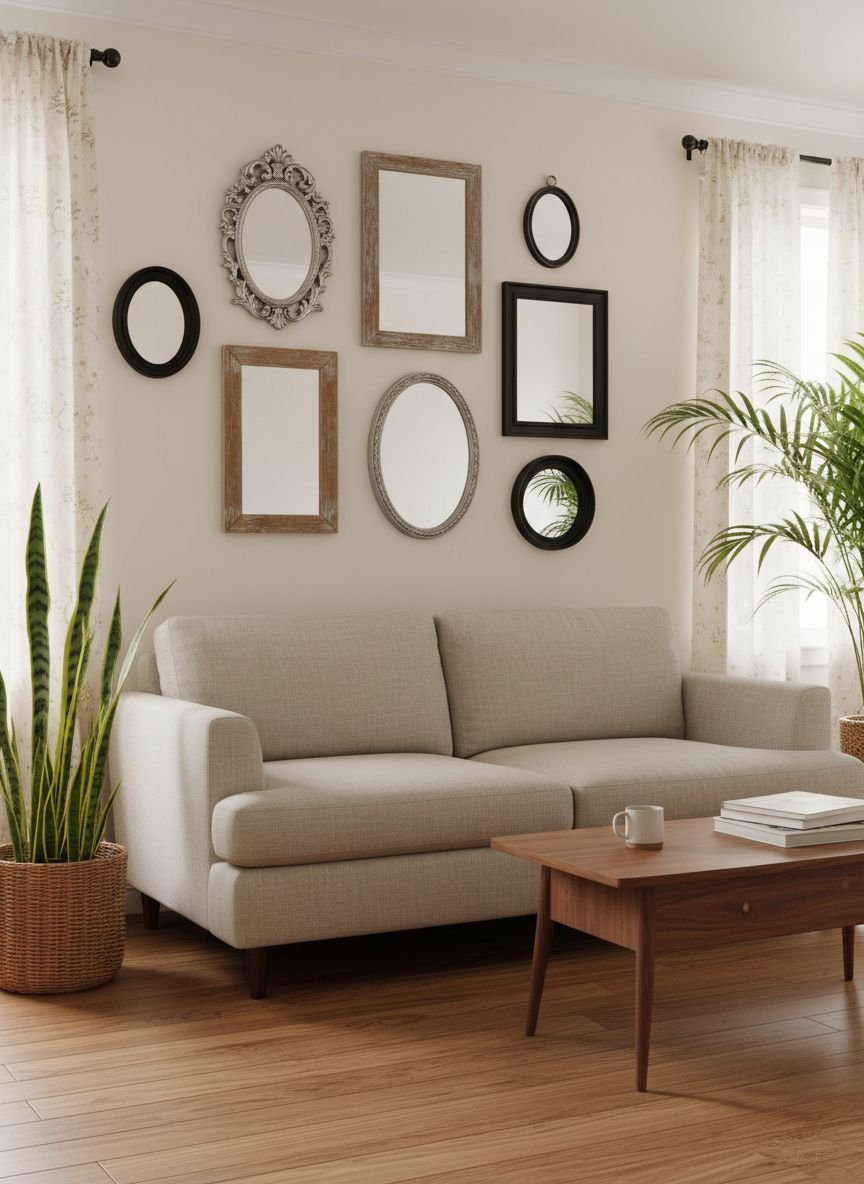
One large mirror might feel too imposing. A collection of smaller mirrors creates a playful alternative. You can mix shapes and sizes to form a dynamic gallery wall. This approach mimics an art display but with more functionality. Each small piece of glass catches a different slice of light. The result is a sparkling effect that changes as you move through the room.
Scout thrift stores for vintage hand mirrors or small framed pieces. Unified frames create a cohesive look. Mismatched frames offer eclectic charm. Arrange them in a cloud shape or a strict grid. The gaps between the mirrors allow the wall color to show through. This prevents the installation from overwhelming the space. It adds texture and shine without the weight of a single heavy object.
Pro Tip: Cut paper templates of each mirror and tape them to the wall to perfect your layout before hammering nails.
Lean a Tall Mirror Against the Wall
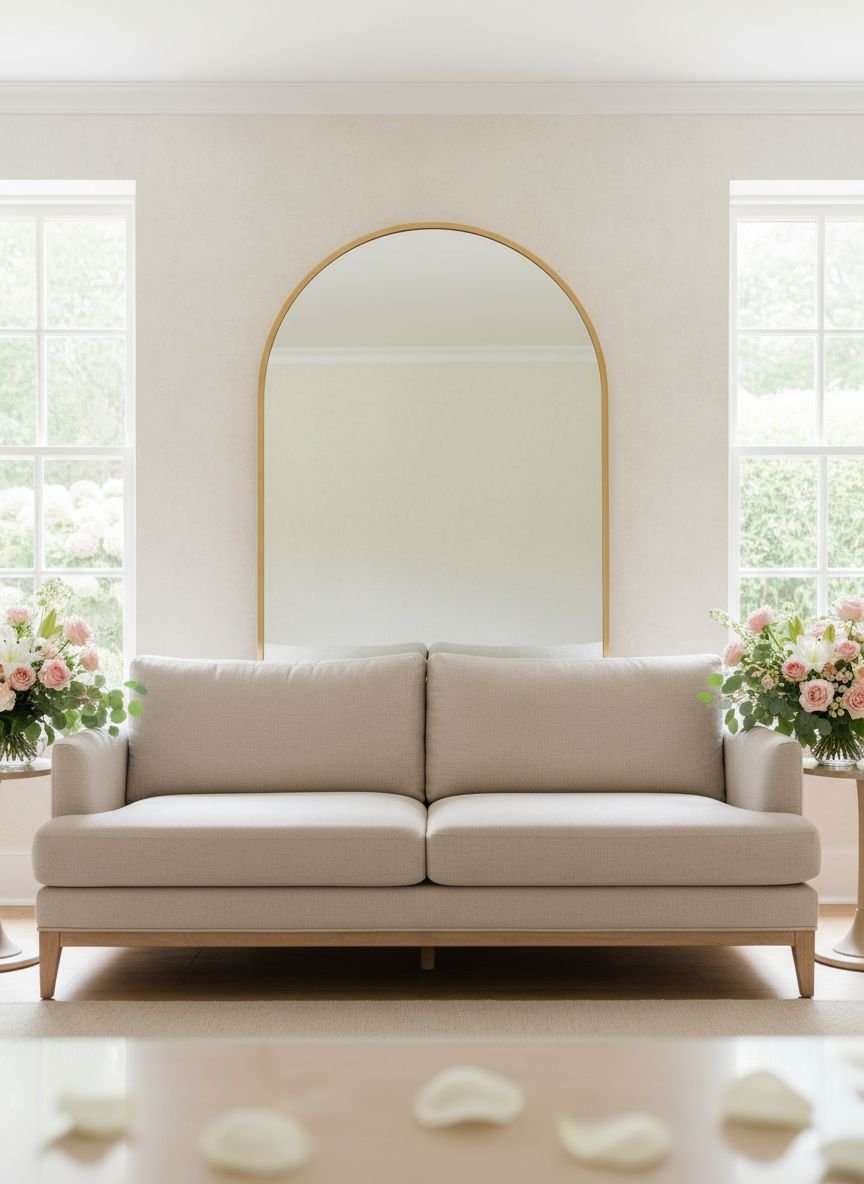
Leaning a mirror looks effortless and casual. It suggests a relaxed luxury found in Parisian apartments. A tall mirror resting against the wall elongates the ceiling height. The vertical lines draw the eye up. This is perfect for rooms with low ceilings or limited architectural interest. The angle of the lean reflects more of the ceiling and upper walls.
You do not need to drill holes for this look. It is ideal for renters who want high impact with zero damage. Choose a mirror with a substantial frame to support the weight. The bottom creates a natural spot for floor styling. You can place a basket of blankets or a potted plant next to the base. This grounds the mirror and integrates it into the room.
Pro Tip: Place a rubber grip pad under the mirror feet to keep it from sliding on hardwood floors.
Go Bold with a Sunburst Mirror
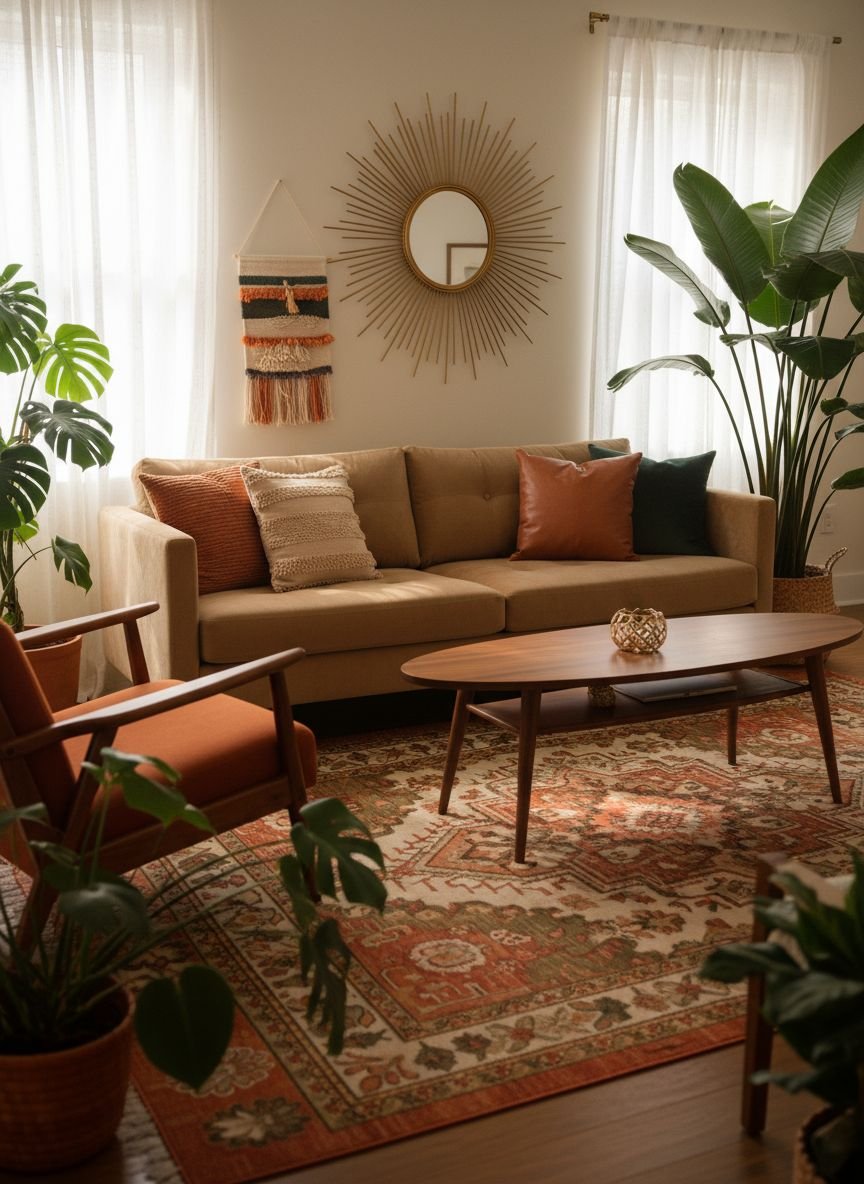
Sunburst mirrors act as jewelry for your walls. They are less about checking your reflection and more about making a statement. The radiating spokes draw attention immediately. This style works exceptionally well above a console table or a small loveseat. The gold or metallic finish usually found on sunbursts adds warmth to neutral walls.
Mid-century modern homes thrive with this addition. The shape mimics the atomic design era. It brings energy to a stagnant wall. The central glass is often small. This focuses the light into a concentrated beam. It creates a glittery effect rather than a full reflection. Use this when you want art that also brightens the room.
Pro Tip: Center a sunburst mirror on the wall like a painting rather than aligning it with furniture height.
Save this idea to your Pinterest.
Comparison: Mirror Shapes & Effects
| Shape | Best For | Visual Effect |
|---|---|---|
| Round | Above mantels, blocky furniture | Softens sharp angles, organic feel |
| Rectangular | Leaning, narrow walls | Maximizes height, structured look |
| Sunburst | Accent walls, small spaces | Decorative focal point, adds energy |
| Geometric | Modern, eclectic rooms | Adds edge, artistic statement |
Frame a Mirror with Reclaimed Wood
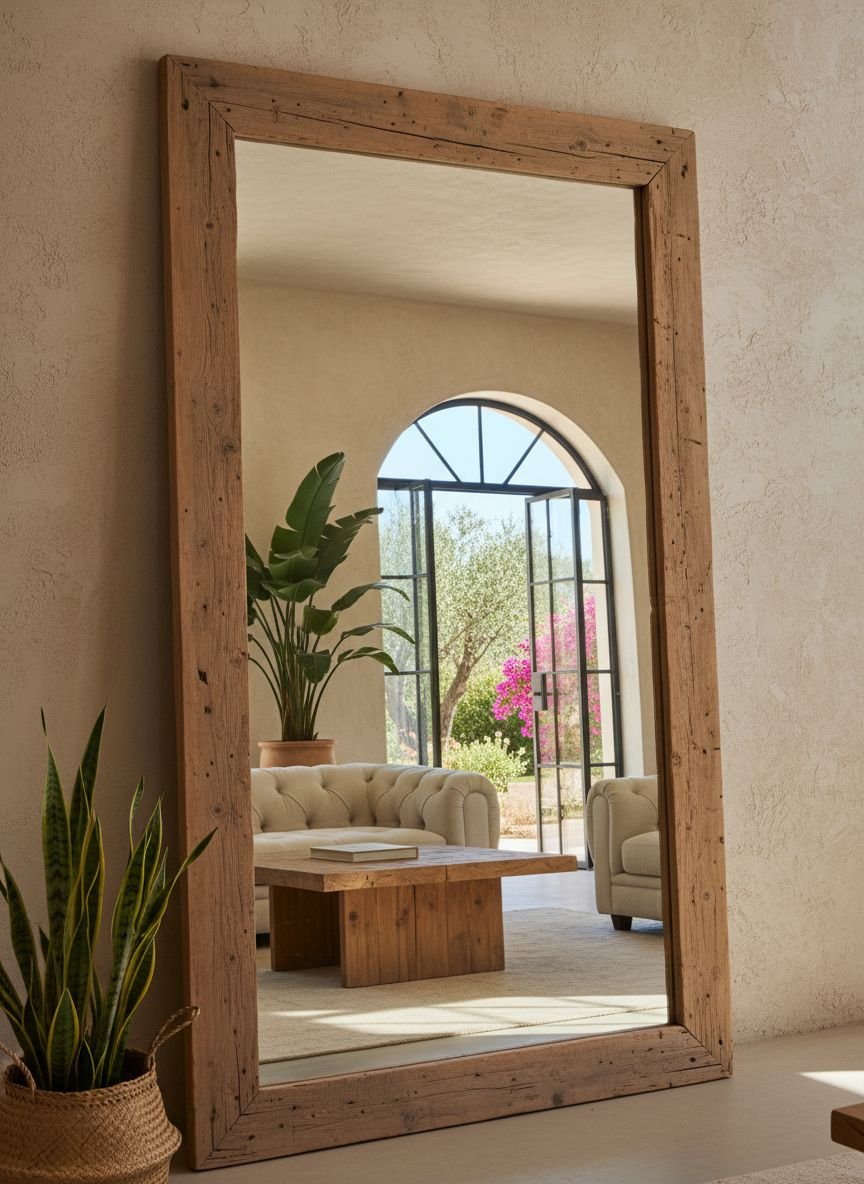
Rustic interiors demand texture. A sleek glass mirror can feel too cold in a cozy farmhouse living room. Reclaimed wood frames bridge this gap. The rough grain and weathered finish contrast with the smooth surface of the mirror. This juxtaposition creates visual interest. It brings an element of nature indoors.
Look for wood with history. Barn wood or old fence planks offer unique gray and brown tones. The imperfections in the wood tell a story. This type of mirror works well as a standalone piece. It does not need accompanying art. The frame itself is the attraction. The reflection becomes a secondary benefit to the architectural weight of the wood.
Pro Tip: Seal the reclaimed wood with a matte clear coat to prevent splinters and dust accumulation.
Use a Frameless Mirror for a Minimalist Aesthetic
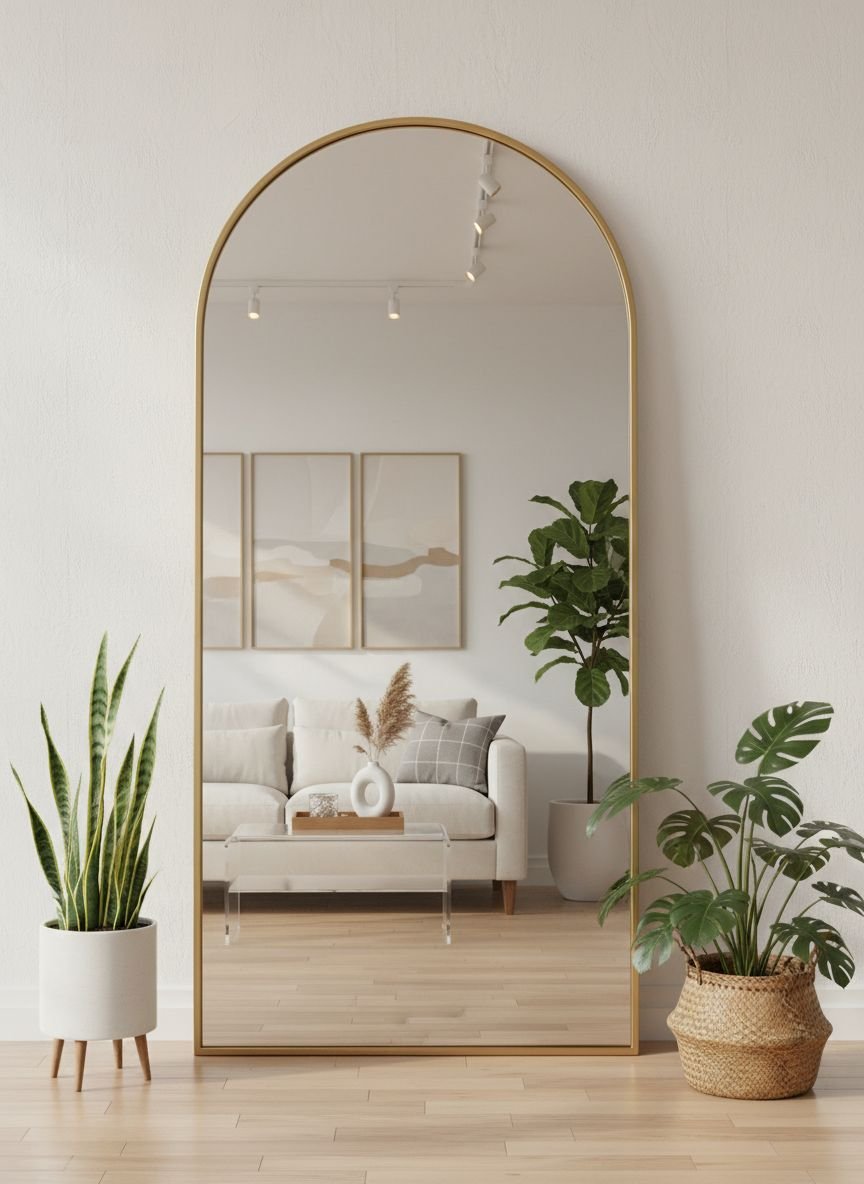
Minimalism relies on clean lines and zero clutter. Frames can sometimes add unnecessary bulk. A frameless mirror offers pure function and sleek form. It blends seamlessly into the wall. The glass appears to float. This is excellent for small living rooms where every inch counts. There is no visual border to stop the eye.
Polished edges are essential here. They give the mirror a finished look without a heavy border. You can use large sheets of frameless glass to cover entire sections of a wall. It feels architectural rather than decorative. The focus remains entirely on the reflection. The room simply repeats itself. It is the ultimate trick for disappearing design.
Pro Tip: Use mirror mastic adhesive for a flush mount that eliminates visible clips or screws.
Position a Mirror Opposite a Window
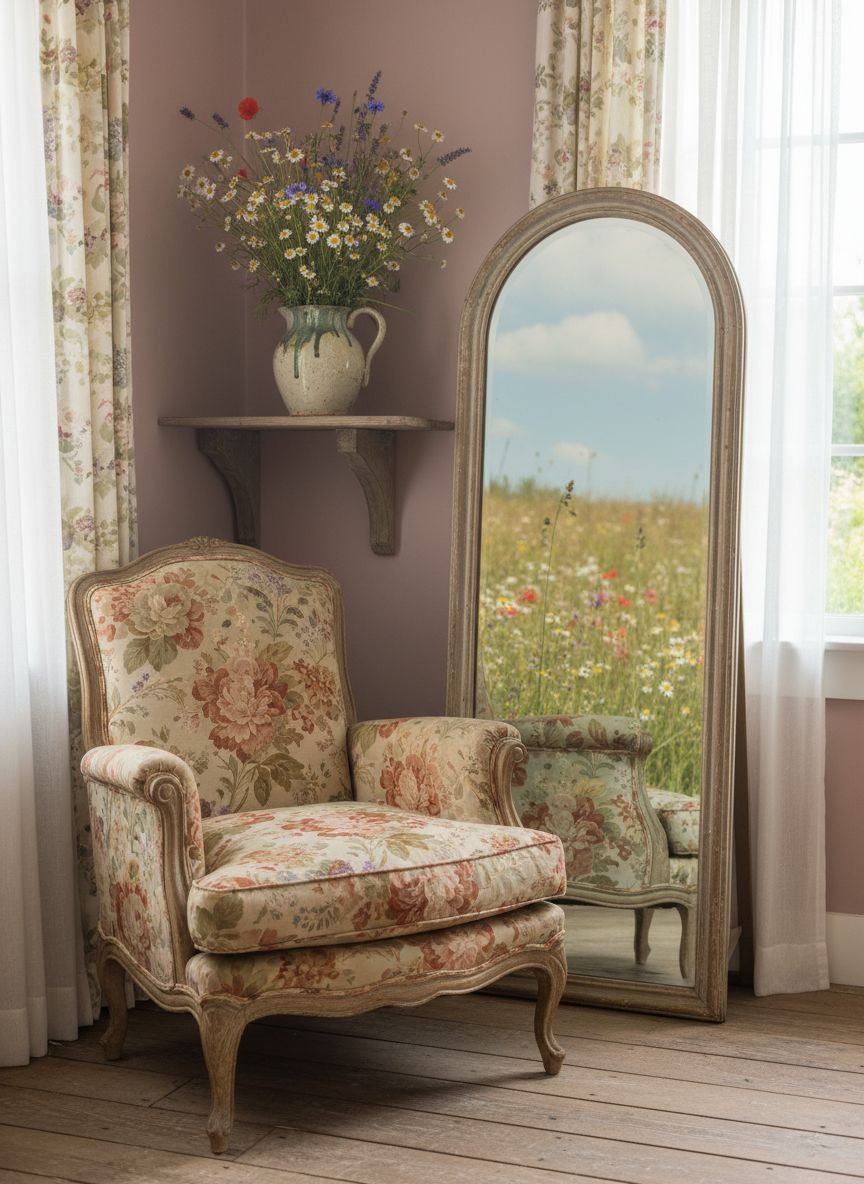
This is the golden rule of mirror placement. Placing glass directly across from a window acts like a second window. It captures the natural light and throws it back into the room. It also reflects the outdoor view. You get double the greenery and double the sky. This connects your interior space with the outdoors.
Check the angle of the sun throughout the day. You want to avoid blinding glare during peak hours. A slight tilt can resolve this. The reflection creates a sense of airiness. It breaks down the solid wall barrier. Your living room feels open and breathable. This layout is non-negotiable for north-facing rooms that struggle with light.
Pro Tip: Ensure the window treatment is tidy because the mirror will duplicate any clutter on the sill.
Incorporate Mirrored Furniture
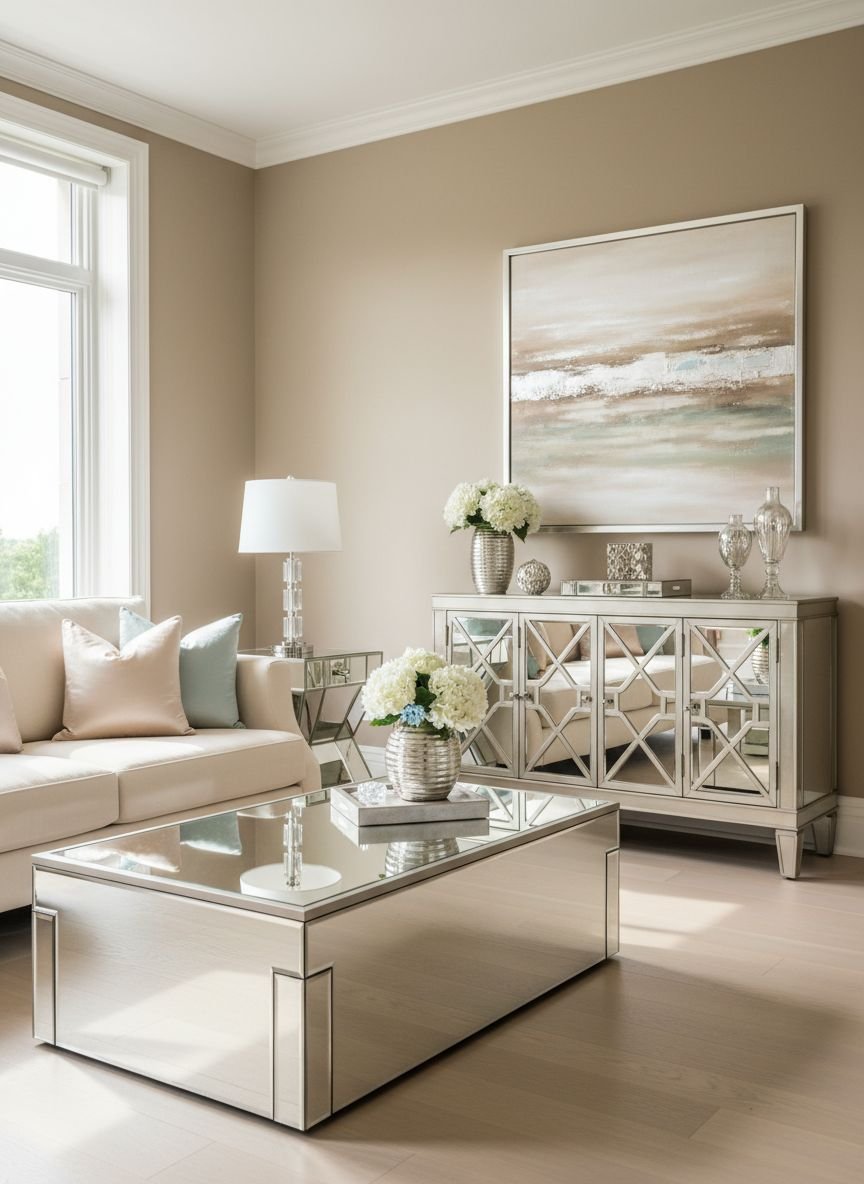
Mirrors do not have to hang on walls. Mirrored furniture brings the reflective quality down to the floor level. A mirrored console or side chest disappears into the surroundings. It reflects the rug and the floorboards. This makes the furniture footprint seem smaller. It is a smart choice for tight seating arrangements.
The surfaces catch ambient light from lamps and candles. This creates a low-level glow in the evening. It adds glamour and a touch of Hollywood Regency style. Be mindful of fingerprints. High-touch surfaces need regular wiping. However, the visual payoff is worth the maintenance. The piece looks expensive and elevates the entire room design.
Pro Tip: Use coasters on mirrored surfaces to prevent scratches and water rings.
Create a Vintage Vibe with an Ornate Mirror
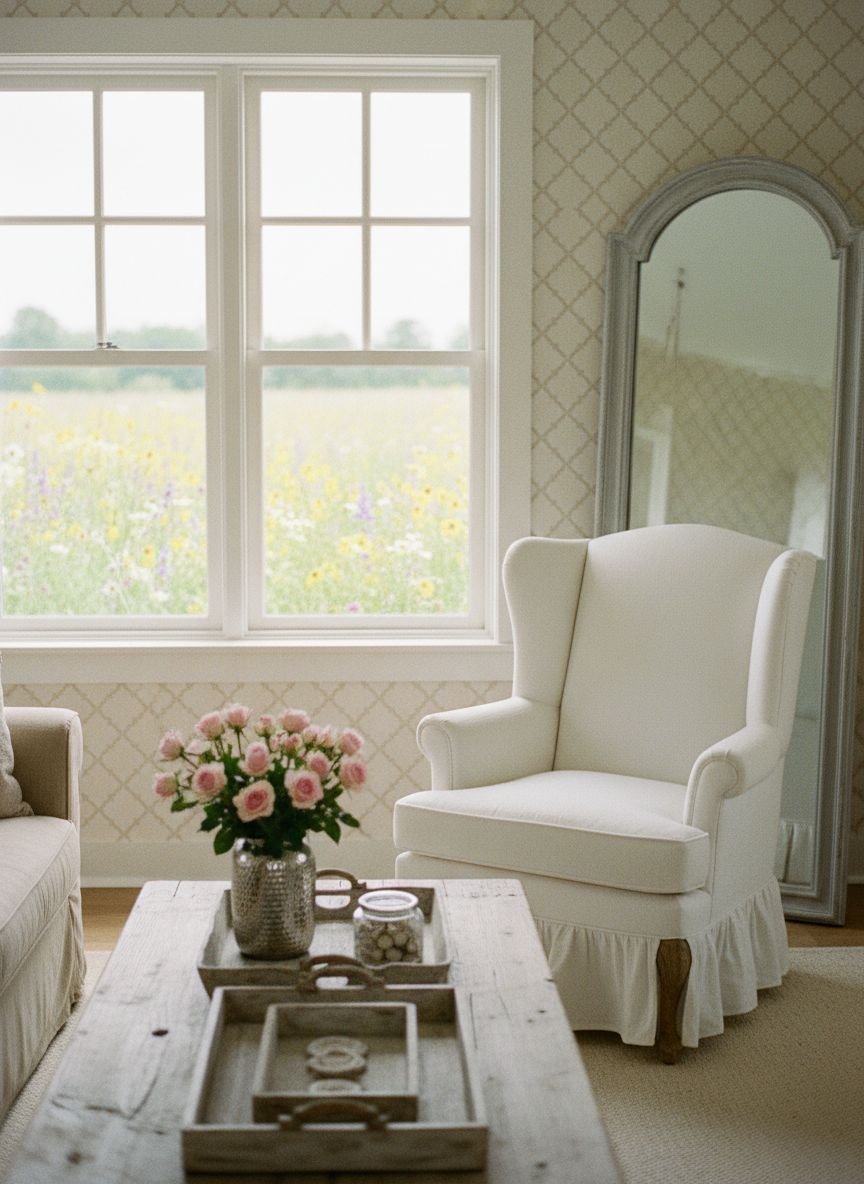
Gold leaf and intricate carvings bring drama. An ornate mirror serves as a stark contrast in a modern room or a complement in a traditional one. The heavy detailing frames the reflection like a master painting. It commands attention. You can find these gems at estate sales or antique shops.
The patina on an old frame adds character. It suggests the home has a history. Do not worry if the gold is chipped. That imperfection adds to the charm. Lean a heavy ornate mirror on a mantel or hang it in a hallway leading to the living room. It sets a tone of elegance. The complex frame shadows catch the light differently than smooth modern frames.
Pro Tip: Inspect the back of vintage mirrors to ensure the hanging wire is not rusted or fraying.
Save this idea to your Pinterest.
Get The Look: Mounting Essentials
- Heavy Duty Wall Anchors: Do not trust dry wall alone.
- French Cleat System: Best for wide, heavy mirrors.
- Laser Level: Ensures perfect alignment.
- Microfiber Cloth: For streak-free cleaning after installation.
Install a Mirror-Backed Shelving Unit
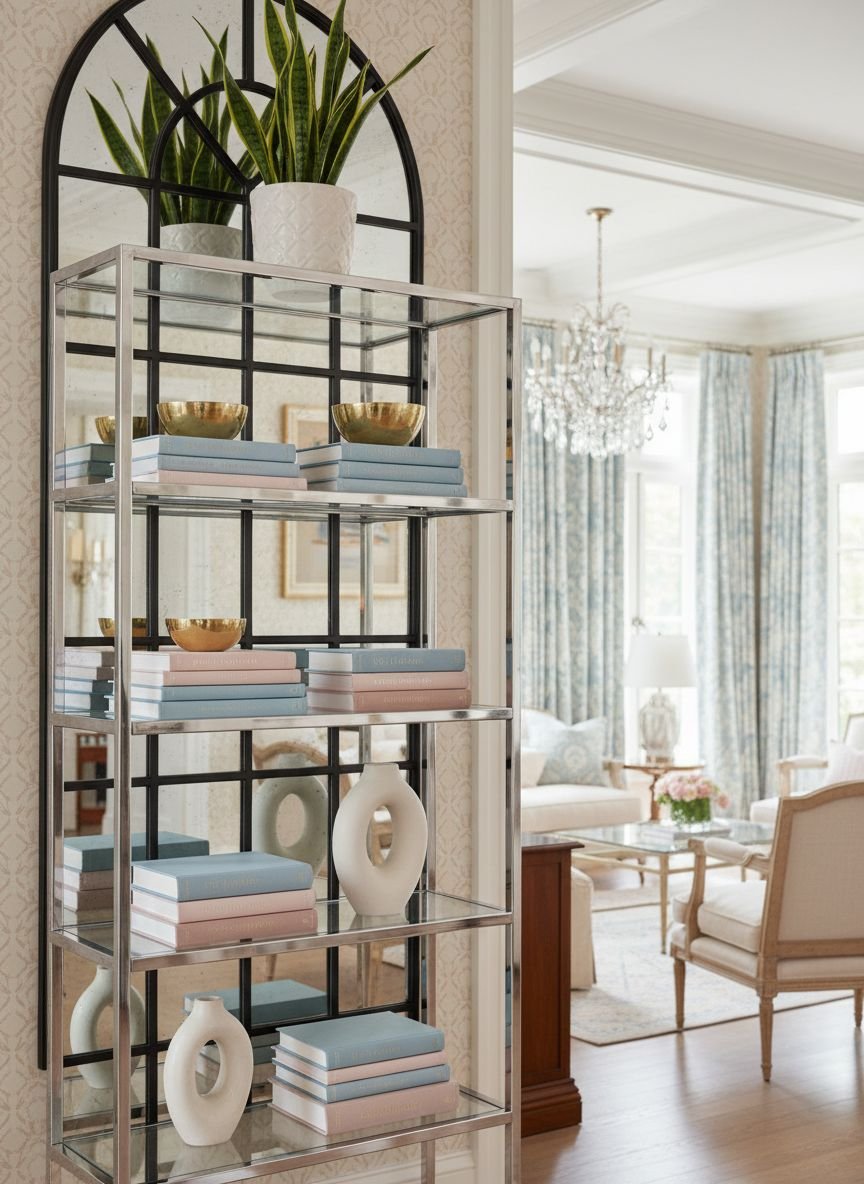
Bookshelves can suck light out of a room. The shadows in the back of the cubbies make the wall look dark. Adding mirrors to the back of the shelves solves this. The glass reflects the objects on the shelf. It also bounces light from the room into the deep recesses of the unit.
Your collectibles look better with 360-degree visibility. Glassware and metallic decor pop against the mirrored background. It turns storage into a display case. The depth of the shelving unit seems infinite. This works particularly well for built-ins flanking a fireplace. It lightens the visual weight of the cabinetry.
Pro Tip: Use peel-and-stick mirror tiles for an easy DIY upgrade to existing IKEA bookcases.
Pair a Geometric Mirror with Modern Décor
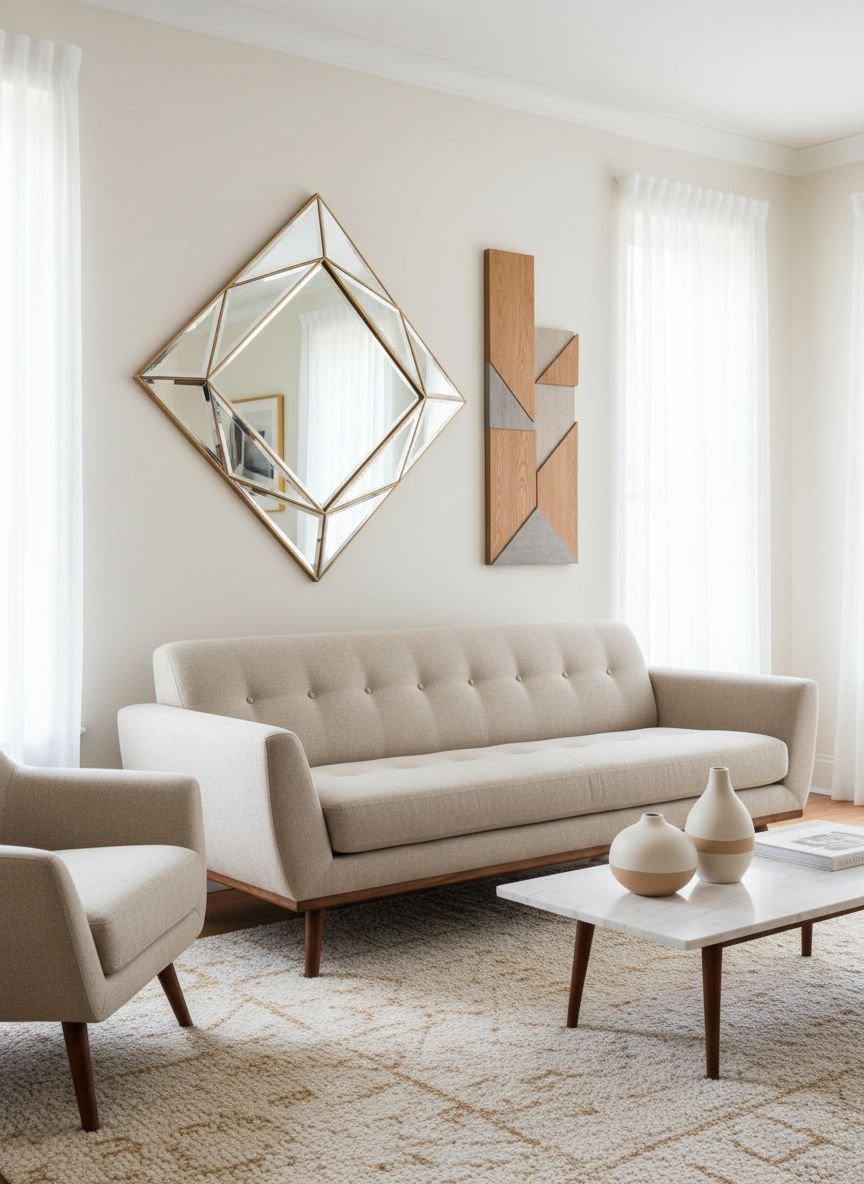
Rectangles and circles are safe. Hexagons, octagons, and irregular shapes are bold. Geometric mirrors act as modern art. They break the monotony of standard right angles in a room. The sharp lines of a hexagonal mirror complement mid-century furniture legs. It adds a mathematical precision to the design.
Group a few geometric mirrors together. Leave space between them to let the wall color breathe. The fragmented reflection creates an abstract effect. It is less about vanity and more about visual rhythm. This style suits industrial lofts and contemporary apartments. It shows you are not afraid of unconventional design choices.
Pro Tip: Use painter’s tape to map out the geometric shape on the wall before buying to check the scale.
Hang a Trio of Matching Mirrors Above a Sofa
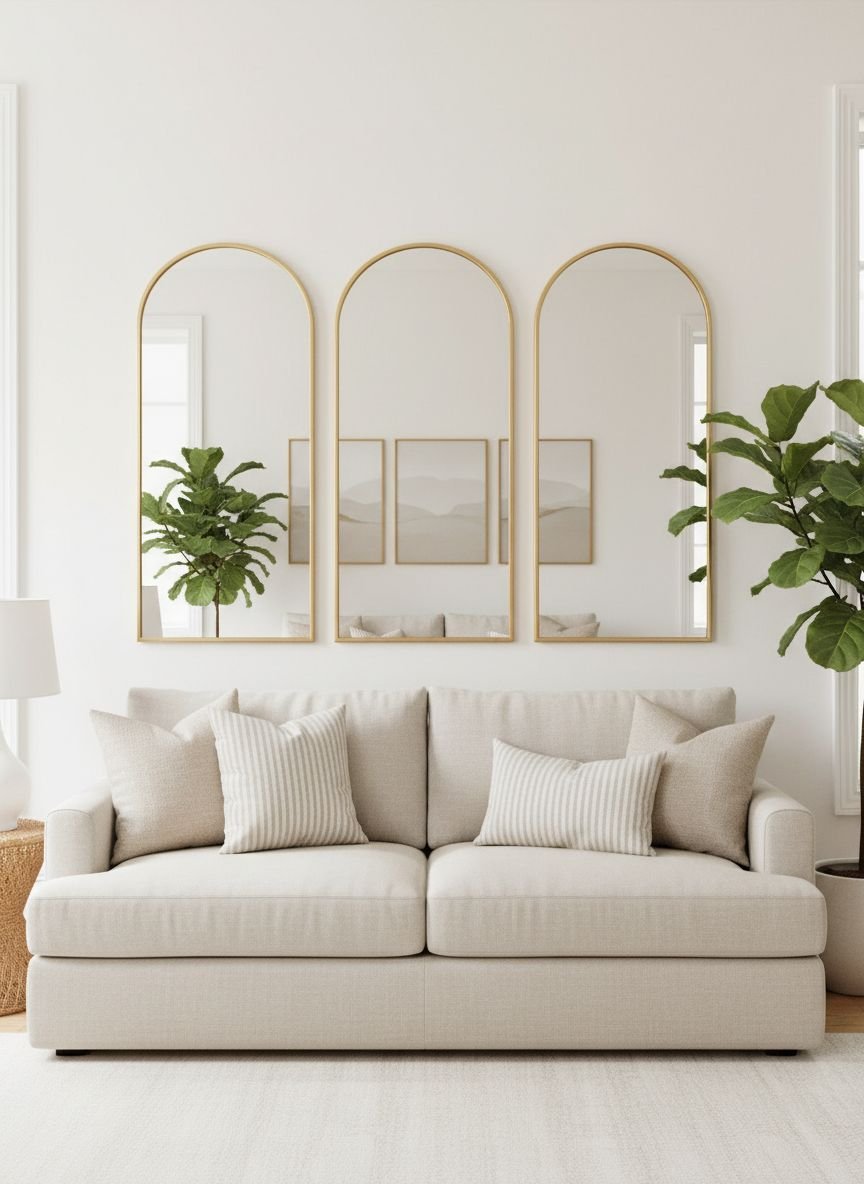
One small mirror looks lost above a large sofa. Three matching mirrors span the width perfectly. This creates symmetry and order. The repetition is pleasing to the human eye. It mimics the look of traditional windows. You get the benefit of a large panoramic reflection broken into manageable segments.
Vertical rectangles work best here. They add height to the room while covering the horizontal space. Keep the spacing consistent. Two to three inches between frames is standard. This layout works with any style depending on the frame. Bamboo frames feel coastal. Black metal feels industrial. The trio commands the wall without dominating it.
Pro Tip: Use a long level to ensure the tops of all three mirrors align perfectly.
Add a Mirrored Accent Wall
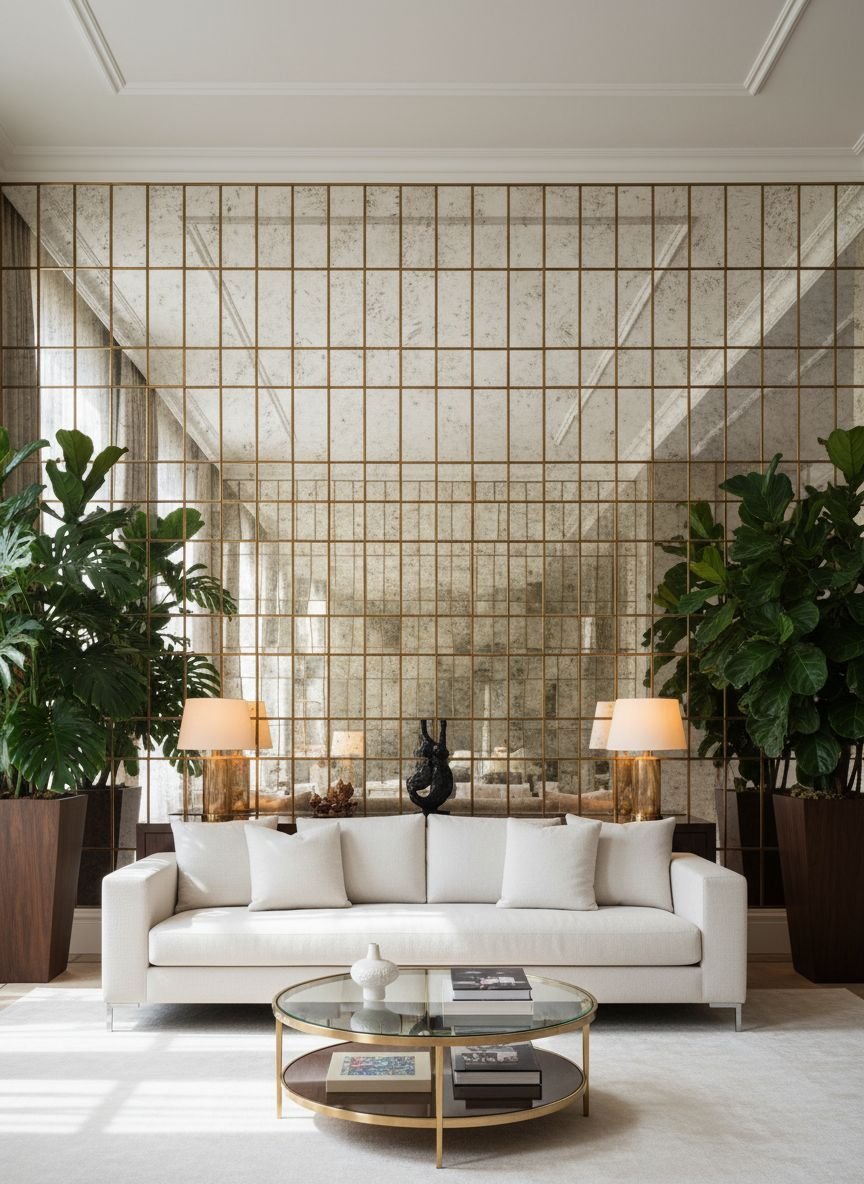
Go big or go home. A full mirrored wall doubles the perceived square footage. It is the oldest trick in the designer handbook for tiny rooms. The wall disappears entirely. The room reflects back on itself. It creates a seamless visual loop. This is high drama and high impact.
You can use large panels for a sleek look. Alternatively, use antique mirror tiles for a softer, moodier vibe. The antique finish hides smudges better. A mirrored wall behind a dining area in an open-concept living room defines the zone. It reflects the chandelier and the table setting. It creates a festive atmosphere for entertaining.
Pro Tip: Place a large piece of furniture like a buffet or sofa in front of the wall to ground it.
Install a Mirrored Coffee Table

A solid wood coffee table can weigh down the center of a room. A mirrored table reflects the ceiling and the sky from the windows. It creates a hole in the visual density of the floor plan. The rug underneath gets twice the attention. This is perfect for showing off a patterned Persian rug.
The table becomes a chameleon. It takes on the colors of the room. It does not clash with other wood tones because it has no color of its own. It adds a touch of glam without forcing a specific color palette. Keep the styling on top simple. A stack of books and a candle are enough.
Pro Tip: Choose a table with tempered glass for safety and durability against scratches.
Save this idea to your Pinterest.
Comparison: Mirror Finishes
| Finish | Vibe | Maintenance |
|---|---|---|
| Clear Glass | Modern, crisp, functional | High (shows every smudge) |
| Antique / Smoked | Vintage, moody, soft | Low (hides dust/spots) |
| Beveled Edge | Traditional, elegant, expensive | Medium (edges catch dust) |
| Acrylic | Playful, kid-safe, budget | High (scratches easily) |
Frame Your TV with Mirrors
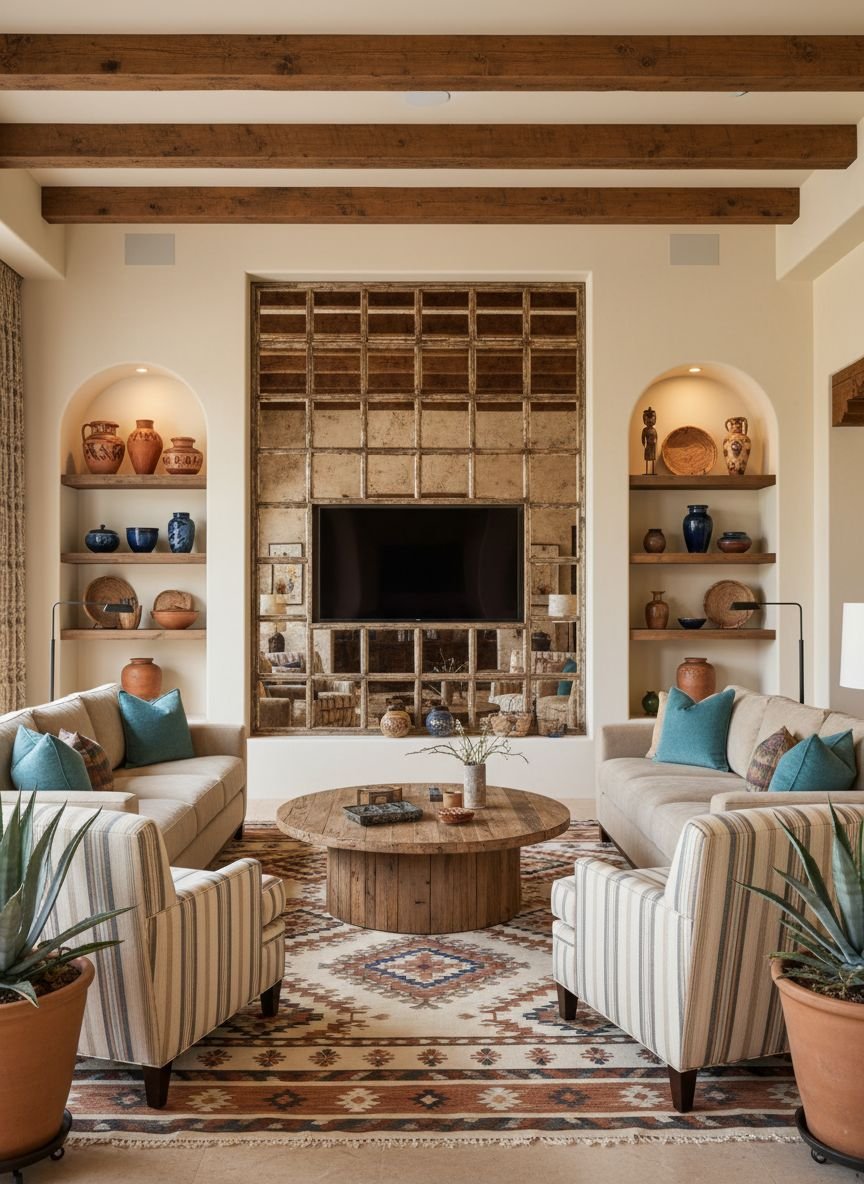
The black rectangle of a TV is an eyesore. You can camouflage it by incorporating it into a mirror arrangement. Flanking the TV with two vertical mirrors balances the dark screen. The mirrors distract the eye. They pull focus away from the technology when it is off.
Some custom solutions hide the TV behind a two-way mirror. The image shines through when on and vanishes when off. This is the ultimate luxury integration. For a budget version, simply balance the visual weight. If the TV is wide, the mirrors should be tall. This creates a composition rather than just a tech wall.
Pro Tip: Ensure the mirrors do not reflect a light source directly into the viewer’s eyes while watching TV.
Add a Statement Mirror with Metallic Accents
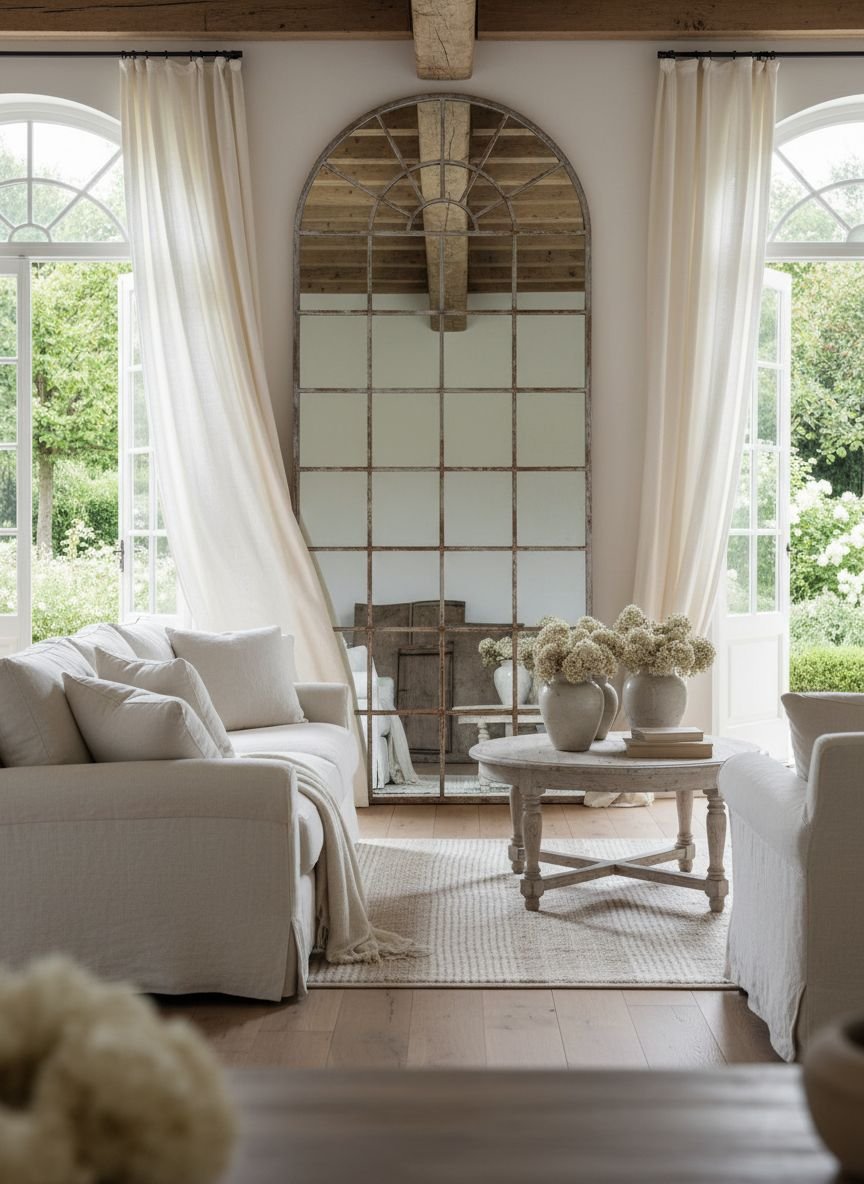
Metals add warmth. Silver is cool and crisp. Gold is rich and inviting. Bronze is earthy and industrial. A mirror with a prominent metallic frame acts as the jewelry of the room. It ties together other hardware elements. Match the mirror frame to your lamp bases or curtain rods.
Mixed metals are also trending. A frame that combines black iron and brass offers versatility. It allows you to change other decor items without clashing. The metallic sheen catches the light even when the mirror is not directly reflecting a window. It adds a layer of gloss to matte walls.
Pro Tip: Clean metallic frames with a specialized metal polish to prevent tarnish over time.
Use a Mirror as a Room Divider
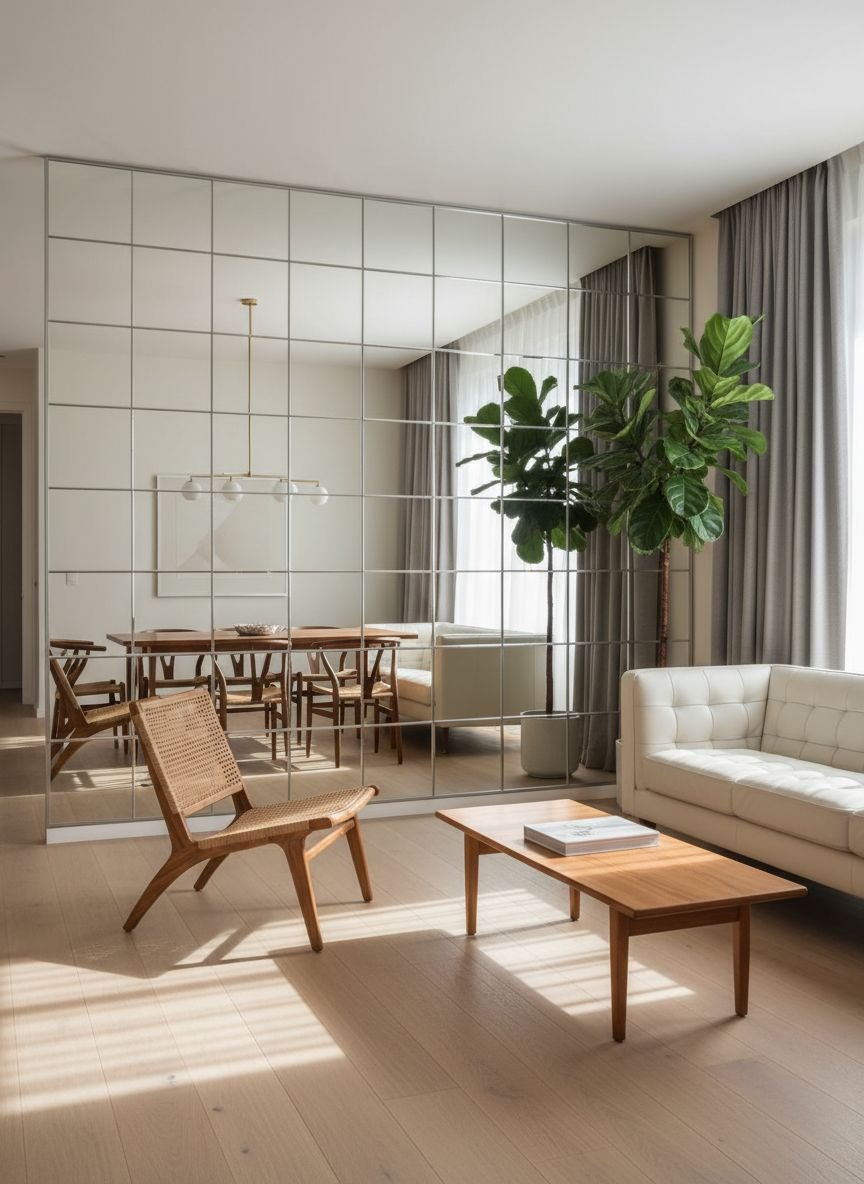
Studio apartments need zones. A screen divider is functional but blocks light. A mirrored room divider separates the space while keeping it bright. The reflection confuses the boundary. It makes both sides of the divider feel larger.
You can find folding screens with mirrored panels. These are portable and flexible. You can angle the panels to catch specific views. Use it to hide a home office corner or a messy entryway. It adds vertical interest and glamour. It turns a functional necessity into a design feature.
Pro Tip: Place the divider near a light source to bounce illumination into the darker separated zone.
Go for an Antique Mirror for Vintage Charm
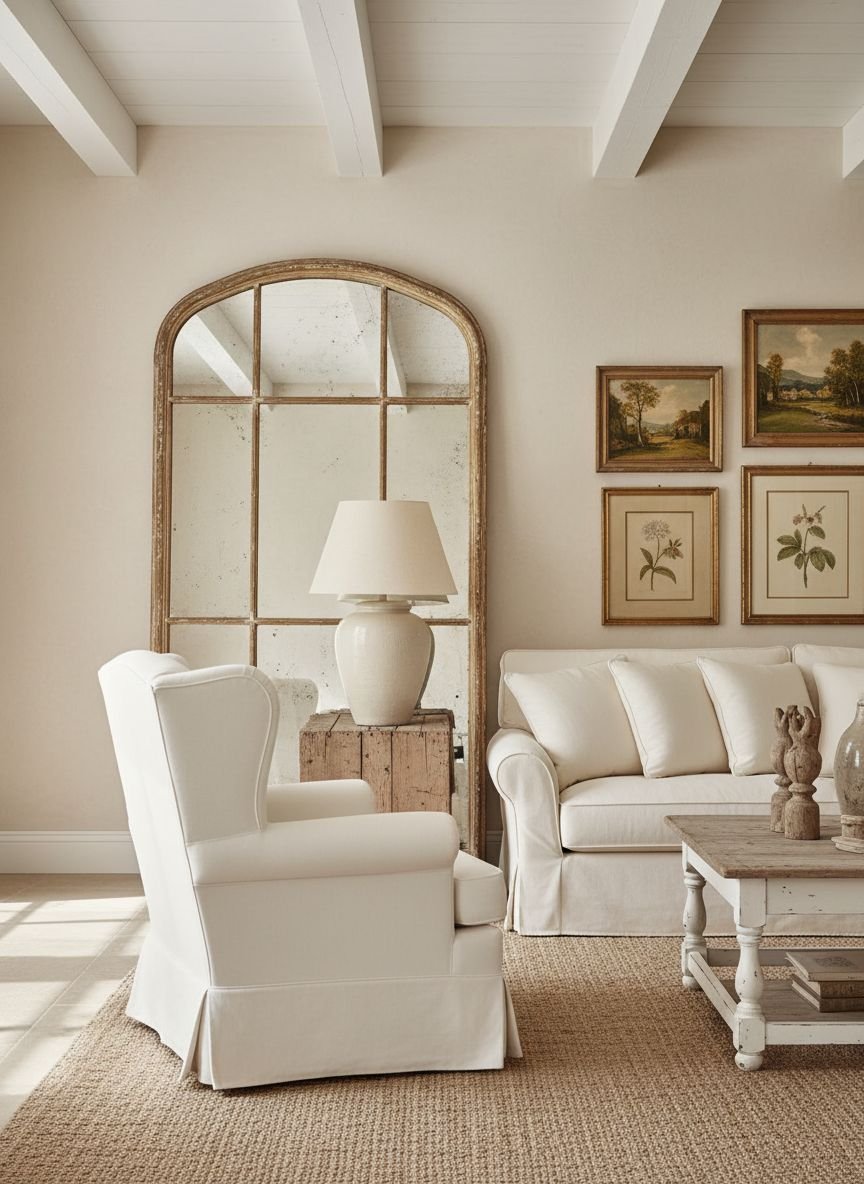
New mirrors can feel sterile. Antique mirrors have “foxing.” This is the silvering that degrades over time to create spots and smoky swirls. This imperfection is highly sought after. It diffuses the reflection. You do not see a perfect image. You see a soft, ghostly version of the room.
This adds instant soul to a new build. It creates atmosphere. An antique mirror works well in a gallery wall or as a standalone piece. It feels collected and curated. It softens the glare of modern LED lighting. The mood becomes intimate and cozy.
Pro Tip: Do not try to clean the “spots” off; they are under the glass and part of the value.
Hang a Mirror Over a Console Table
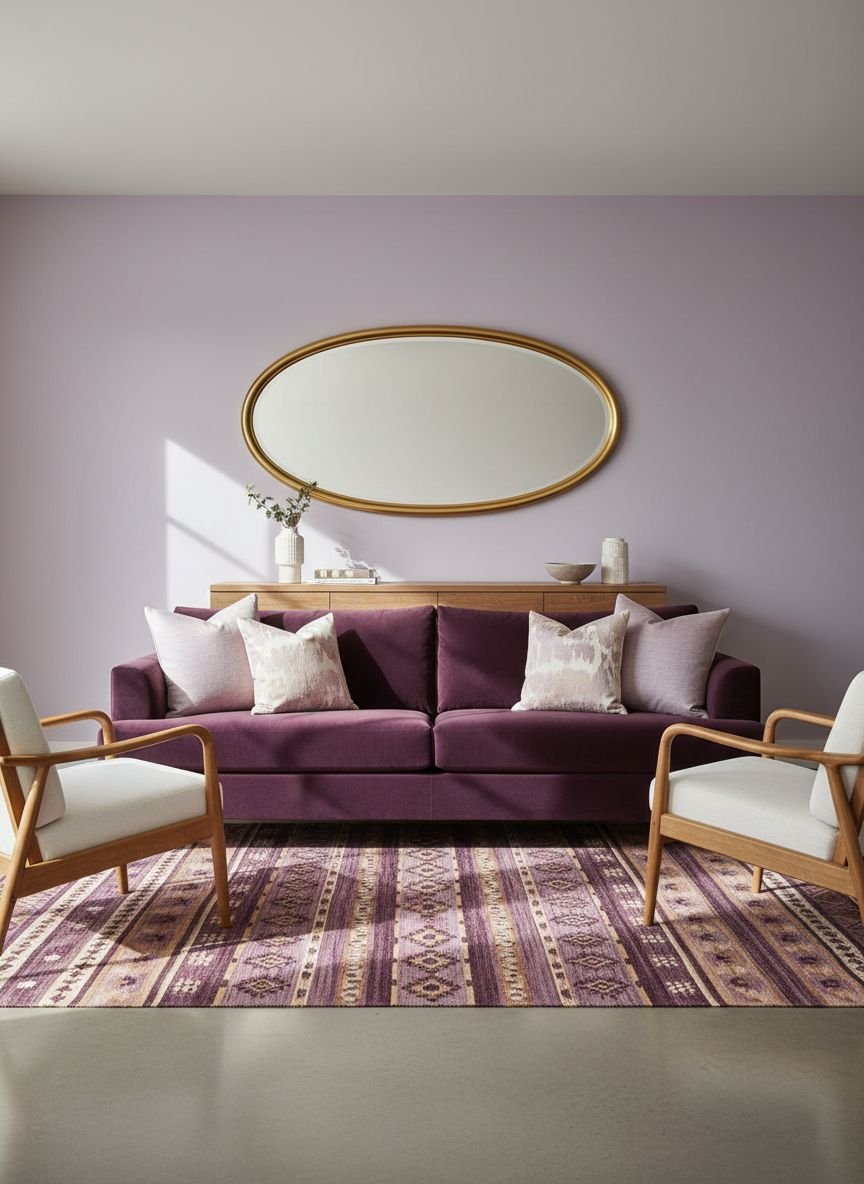
This is a classic entryway or living room vignette. The console table anchors the mirror. The mirror reflects the decor on the table. It creates a complete design moment. The vertical mirror balances the horizontal table.
Scale is key here. The mirror should not be wider than the table. It should feel supported by the furniture below. This setup provides a final check spot before leaving the house. It also welcomes guests with light and brightness immediately upon entry.
Pro Tip: Add a tall lamp on the console to double the illumination through the reflection.
Save this idea to your Pinterest.
Get The Look: Styling Accessories
- Tall Candlesticks: Place in front of mirrors for double the flame.
- Greenery: Ferns look lush when reflected.
- Table Lamps: Choose shades that diffuse light softly.
- Trays: Organize small items on mirrored surfaces.
Use a Decorative Mirror as a Tray
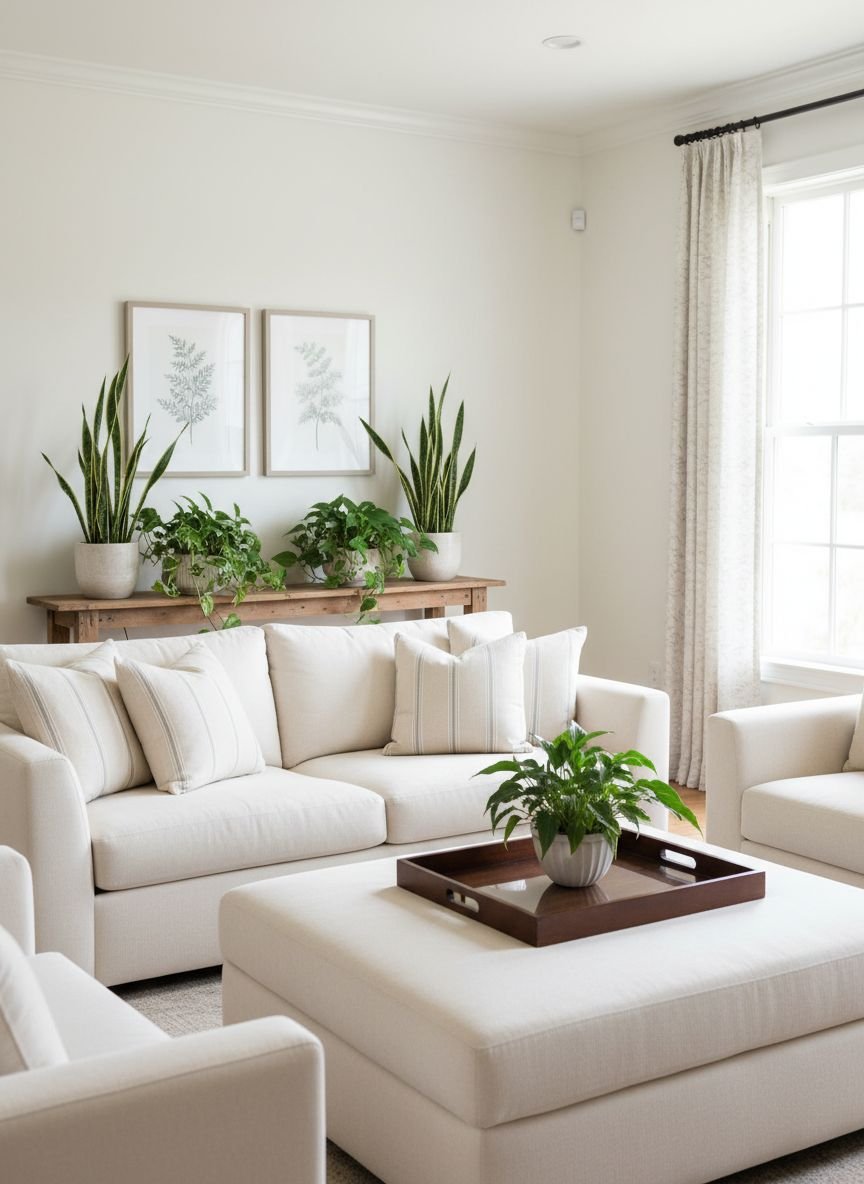
Mirrors work horizontally too. A small framed mirror makes an excellent tray for a coffee table or ottoman. It acts as a base for your decor. Candles, vases, and books sit on top. The glass surface reflects the bottoms of these objects. It adds dimension to a flat display.
This defines the clutter. It corrals small items into one zone. The reflective base bounces candlelight upwards. It creates a warm, glowing centerpiece. You can repurpose an old wall mirror for this. Just add felt pads to the back to protect your table.
Pro Tip: Ensure the frame has a lip to keep items from sliding off.
Hang a Trio of Elongated Oval Mirrors
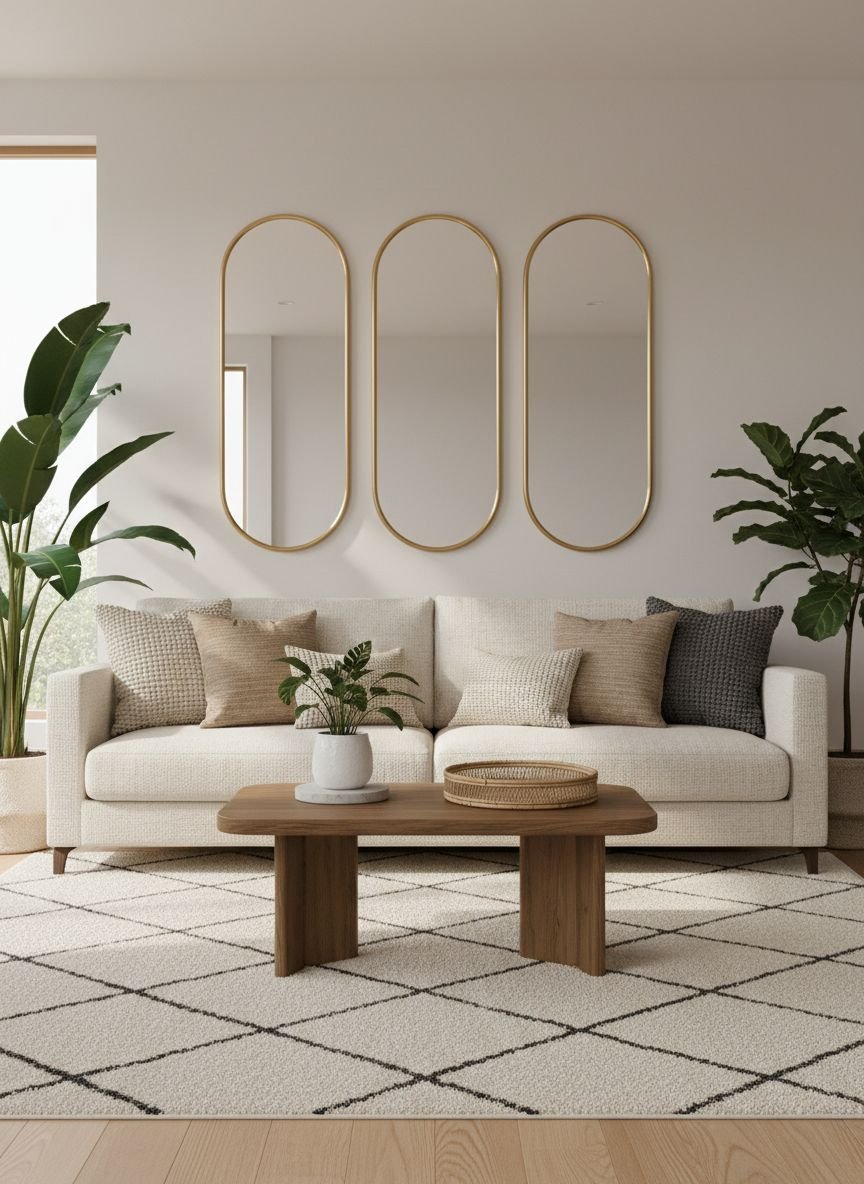
Ovals offer the best of both worlds. You get the height of a rectangle and the softness of a circle. Three tall ovals side-by-side create a rhythmic pattern. The curves break up the straight lines of furniture. This shape is elegant and organic.
Spacing them out covers a large wall area. It is a great solution for the empty space above a long sectional. The elongated shape draws the eye up and down. It emphasizes ceiling height. Gold or brass frames enhance the elegance of the curves.
Pro Tip: Keep the bottom of the mirrors at eye level for the best interaction.
Stick a Tiled Wall Mirror Behind the Sofa

Mirror tiles are budget-friendly and versatile. You can create a grid pattern behind your sofa. This mimics the look of a high-end industrial window. The grid lines add structure. The glass adds depth.
You can space them out with gaps or butt them together. Gapped tiles allow the wall color to frame each piece. This reduces the intensity of a full mirrored wall. It looks like a custom art installation. It is a modern, graphic approach to mirrors.
Pro Tip: Use a laser level to ensure your grid is perfectly straight.
Place a Large Mirror Above the Mantel That Touches the Ceiling

Maximize verticality. A mirror that fills the space from the mantel to the ceiling looks built-in. It becomes part of the architecture. It draws the eye all the way up. This makes the room feel grander and taller.
This works well in traditional homes with crown molding. The mirror sits flush against the molding. It reflects the ceiling detail. It creates a seamless transition. It eliminates the awkward gap that often exists above standard mantel art.
Pro Tip: Have a glass cutter trim the mirror to fit exactly if your walls are uneven.
Create a Mirror with a Door-Like Frame to Create an Illusion of Another Room
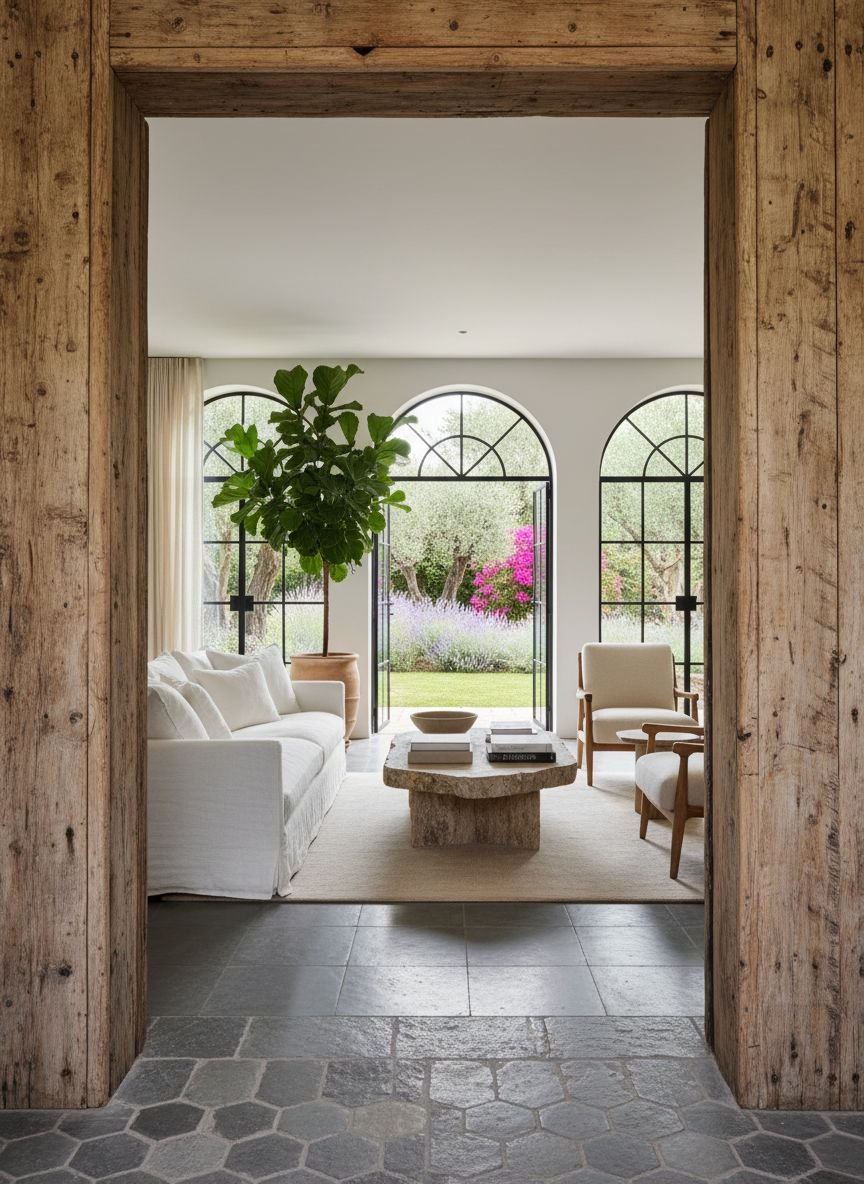
Trick the eye completely. Mirrors framed like French doors or arched windows suggest a passage. The brain registers a doorway. It assumes there is another room beyond. This is the ultimate space-expanding illusion.
Place this on a blank wall that creates a dead end. Suddenly, the room has flow. The arch shape adds architectural interest to plain boxes. It creates a faux architectural feature. It brings the charm of an old villa to a modern drywall box.
Pro Tip: Install a small curtain rod above it to heighten the “window” illusion.
Place a Wall Mirror Between Two Windows
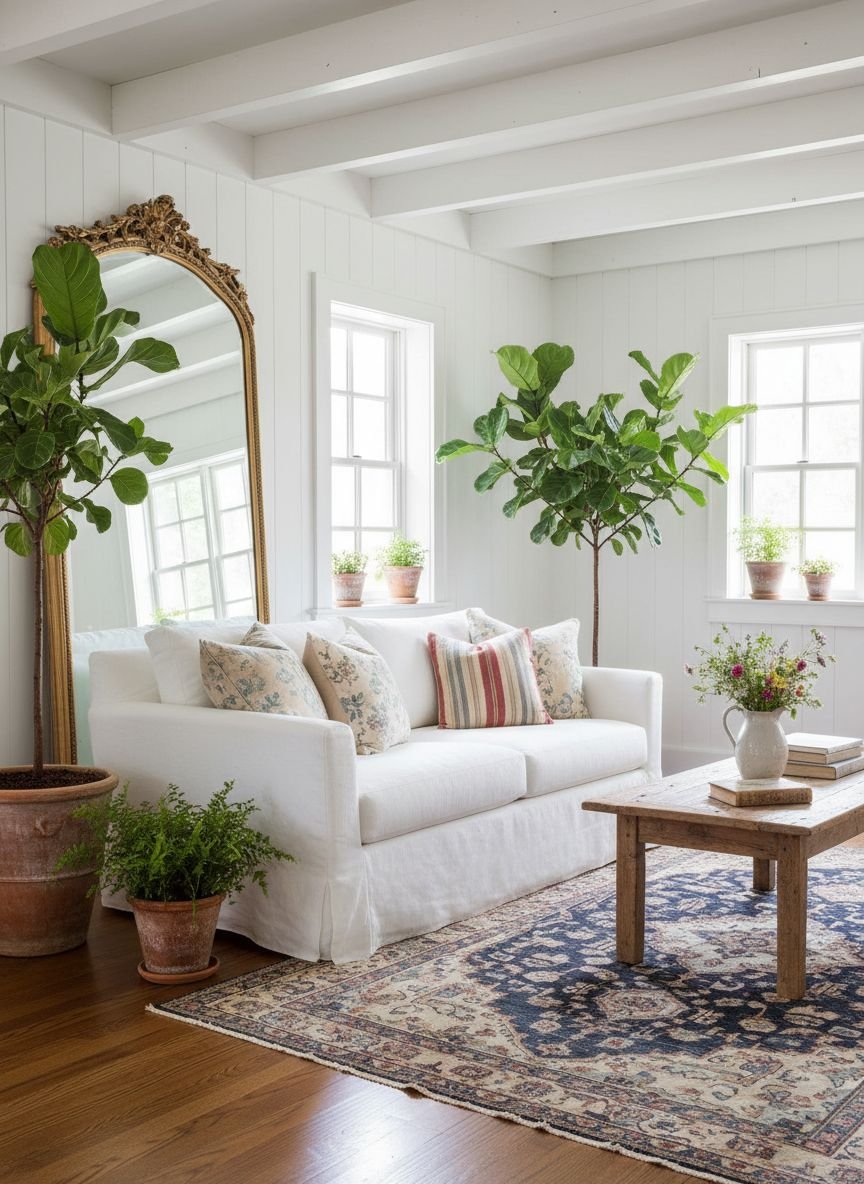
The space between two windows is often dark. A mirror here bridges the gap. It connects the light sources. It creates a continuous band of brightness. The mirror reflects the room while the windows show the outdoors.
This creates a rhythm of light-reflection-light. It eliminates the dark patch on the wall. It makes the window wall feel like one massive glass expanse. Use a mirror that matches the height of the window frames for continuity.
Pro Tip: Match the mirror frame color to the window trim for a cohesive look.
Popular Asked Questions
Where should you not put a mirror in the living room?
Avoid placing mirrors where they reflect clutter. Do not hang them facing the toilet or a messy kitchen area. Also, avoid placing them on walls that get direct, harsh sunlight for hours, as this can blind you and fade furniture fabrics.
Does a mirror make a living room look bigger?
Yes. Mirrors reflect light and the view of the room. This tricks the brain into perceiving more depth and square footage than actually exists. It eliminates visual boundaries, making walls feel further away.
How high should a mirror be hung in a living room?
The center of the mirror should sit at eye level, which is roughly 57 to 60 inches from the floor. If it is above furniture like a sofa or console, leave a gap of 4 to 8 inches between the bottom of the mirror and the top of the furniture.
Is it okay to put a mirror facing a window?
Yes, this is often the best spot. It catches the natural light and bounces it deep into the room. It also reflects the outdoor view, bringing nature inside. Just be mindful of glare during certain times of the day.
Conclusion
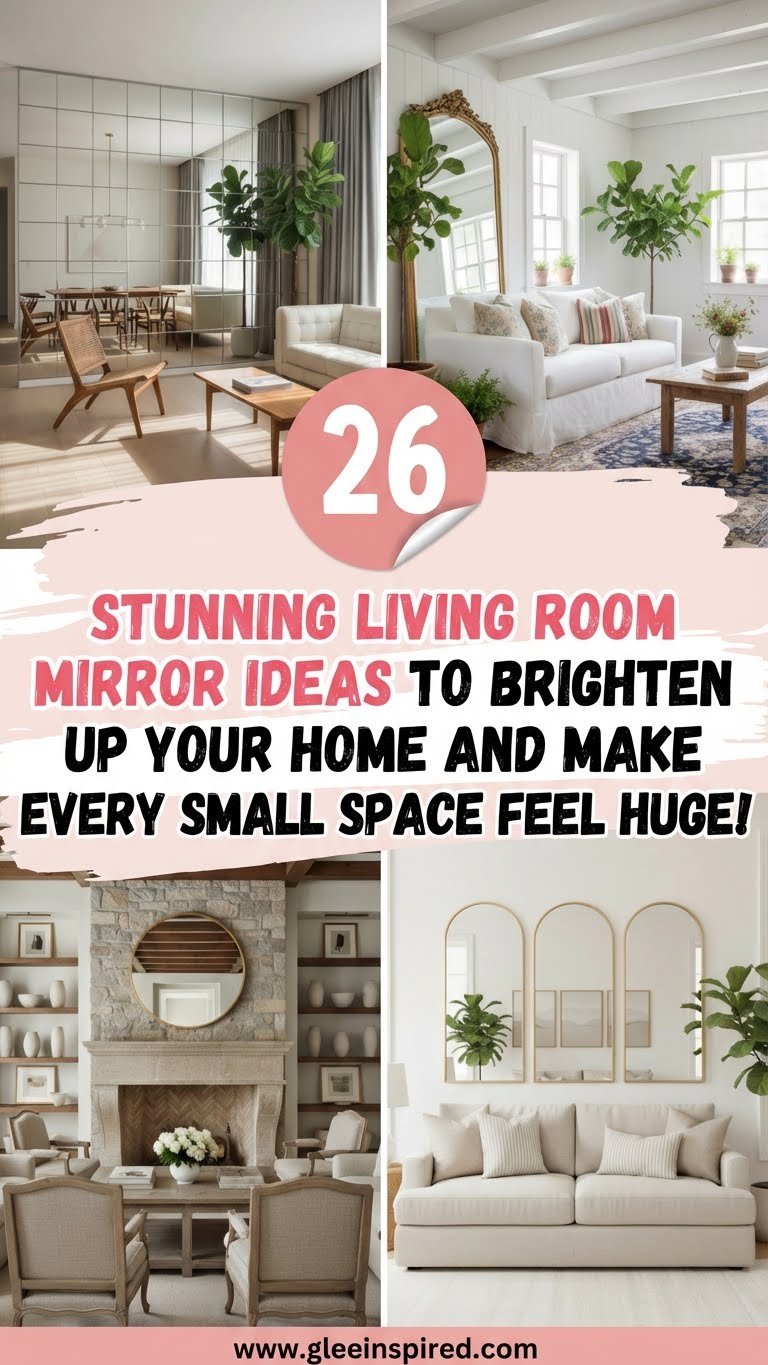
Mirrors are more than glass. They are design powerhouses. They fix lighting issues, expand small footprints, and add instant style. Whether you choose a bold sunburst or a sleek floor mirror, the impact is immediate. You now have 26 ways to brighten your home. Start with one wall. Observe the light. Watch your living room transform.



Leave a Comment