
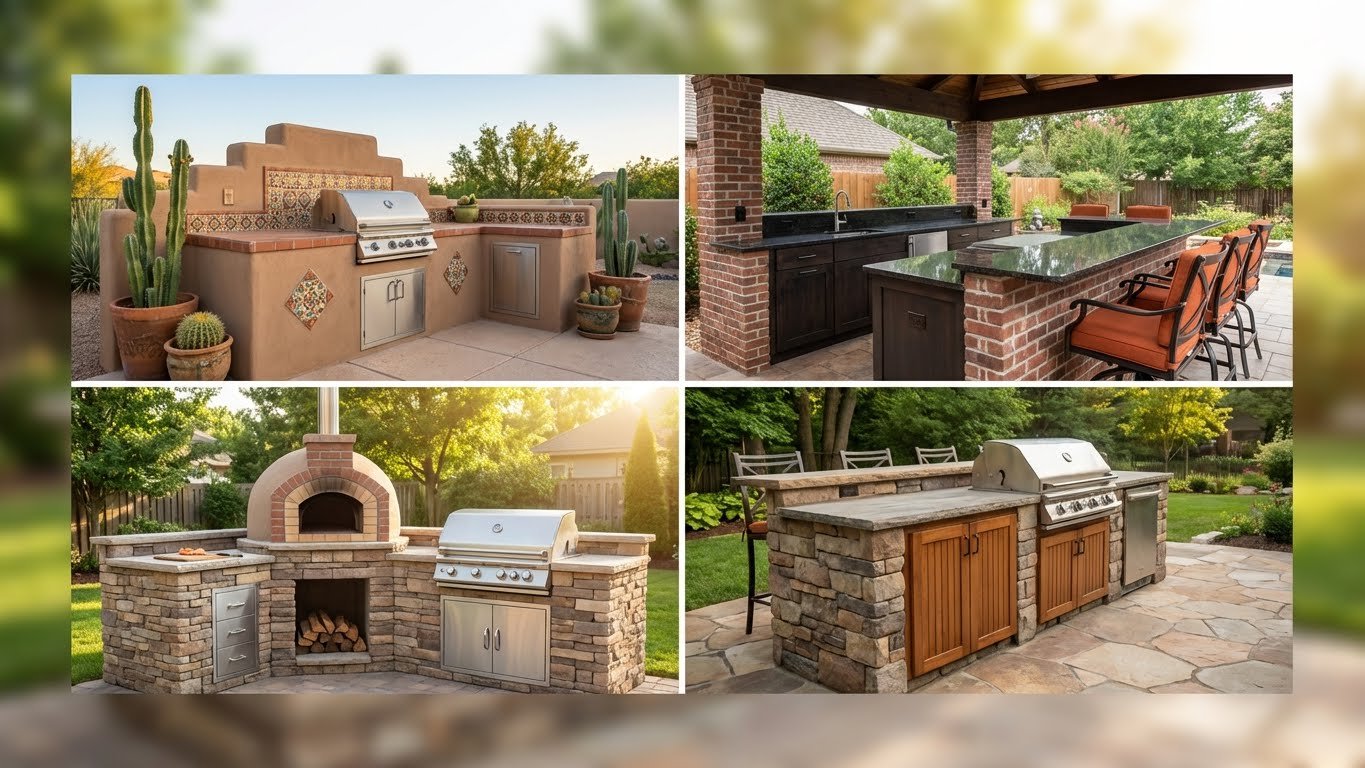
Outdoor kitchens increase home value and expand living space. You want a functional cooking area that looks good. A standard grill cart often lacks prep space and storage. This creates clutter and makes outdoor cooking harder than it should be.
A dedicated BBQ island solves these issues. It centralizes your cooking tools. It provides counter space for prep work. It turns a simple patio into a full entertainment zone. This guide covers twenty-five distinct styles to match your specific needs. We look at material choices, layout efficiency, and aesthetic themes. You will find options for small urban balconies and sprawling country estates.
Key Takeaways
- Flow is critical. Place your prep zone, cooking zone, and plating zone in a logical order to prevent cross-contamination and crowding.
- Materials matter. Select weather-resistant materials like stainless steel, stone, or concrete to minimize maintenance and maximize longevity.
- Lighting sets the mood. Integrate task lighting for cooking safety and ambient lighting for evening entertainment.
- Shelter extends use. Adding a pergola or roof structure allows you to cook comfortably during rain or intense mid-day sun.
Table of Contents
- Rustic Stone BBQ Island
- Modern Minimalist BBQ Island
- L-Shaped BBQ Island
- BBQ Island with Pergola
- Portable BBQ Island
- Mediterranean-Style BBQ Island
- BBQ Island with Fire Pit
- Island with Built-In Bar
- Tropical Tiki BBQ Island
- Eco-Friendly BBQ Island
- Compact Urban BBQ Island
- BBQ Island with Pizza Oven
- Coastal-Themed BBQ Island
- U-Shaped BBQ Island
- DIY Pallet BBQ Island
- BBQ Island with Outdoor Sink
- Pergola-Covered BBQ Island
- Industrial-Style BBQ Island
- BBQ Island with Ice Chest
- Southwestern BBQ Island
- BBQ Island with Smoker
- BBQ Island with Built-In Storage
- Island with Raised Bar Seating
- Nature-Inspired BBQ Island
- BBQ Island with Outdoor Entertainment System
- Popular Asked Questions
- Conclusion
Rustic Stone BBQ Island
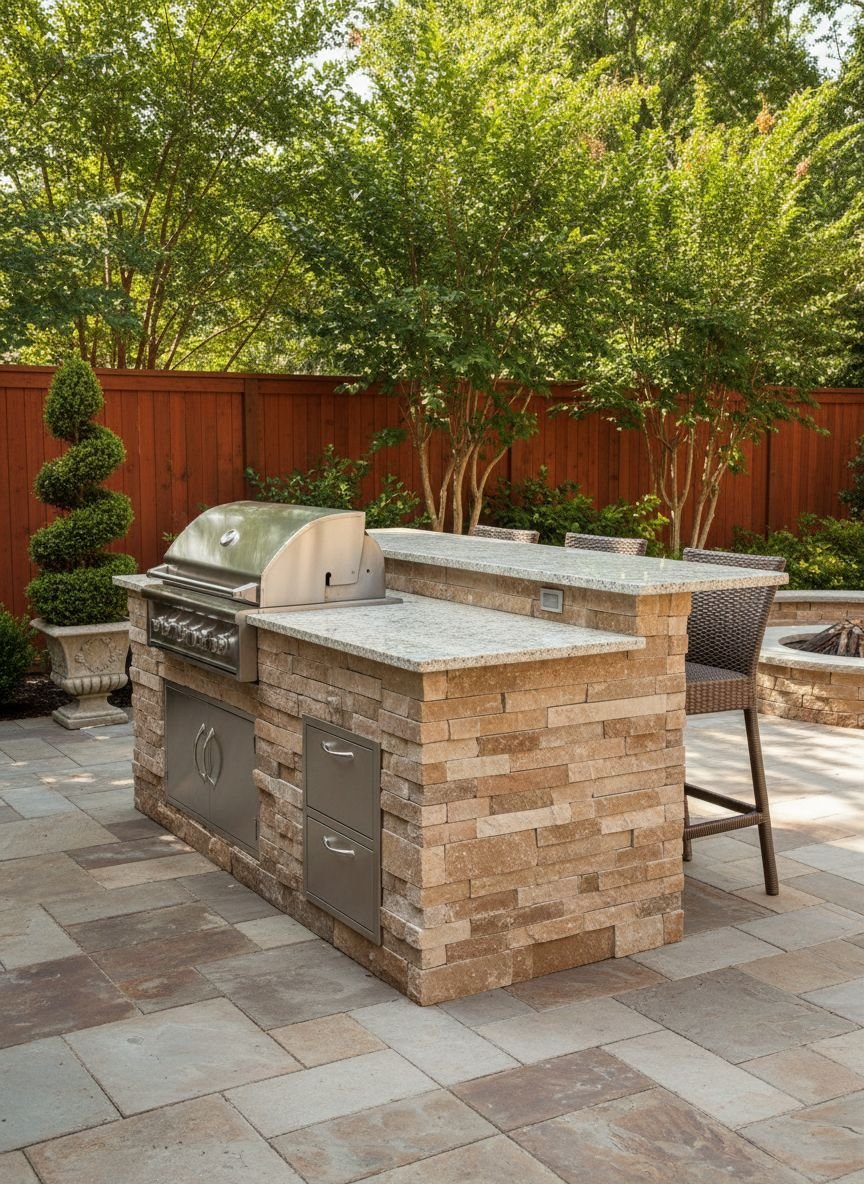
Stacked stone creates a timeless foundation for outdoor kitchens. This design uses irregular fieldstones or manufactured stone veneer to blend with the natural environment. The textured surface hides dirt well and withstands harsh weather. Dark granite countertops often top the stone base to provide a sleek contrast. This combination anchors the space visually.
The weight of the stone suggests permanence. It works best in gardens with mature trees or traditional landscaping. You can incorporate built-in niches within the stone for firewood or charcoal storage. This keeps fuel handy but out of sight. The rough texture of the stone plays against the smooth metal of the grill. This contrast adds visual interest without needing extra decoration.
Pro Tip: Seal natural stone every two years to prevent water absorption and freeze-thaw damage.
Modern Minimalist BBQ Island
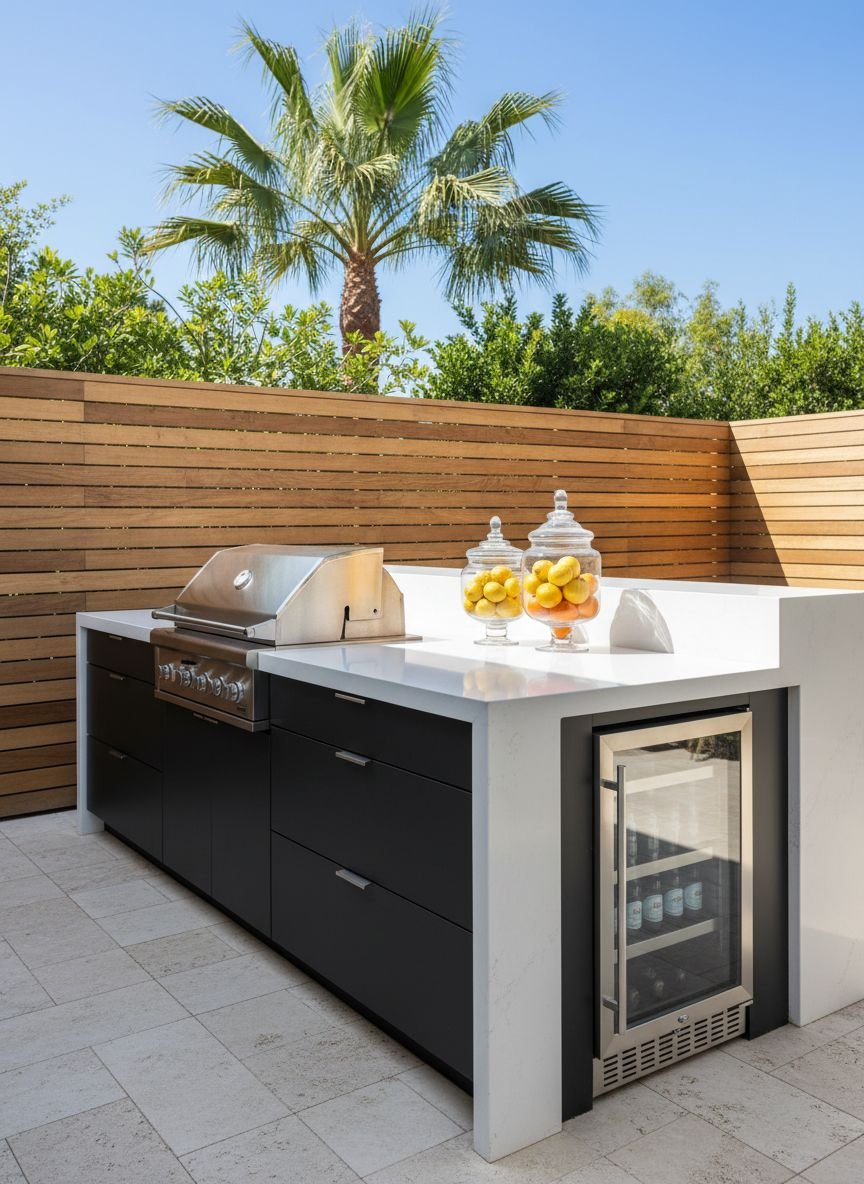
Clean lines define the modern minimalist approach. This style strips away ornamentation. It focuses on pure form and function. Concrete or smooth stucco finishes are common here. The color palette usually stays monochromatic. Think shades of grey, white, or black. The grill head sits flush with the countertop for a seamless look.
Hardware is often hidden or non-existent. Push-to-open cabinets keep the facade smooth. This design suits contemporary homes with flat roofs or large glass windows. The lack of crevices makes cleaning easy. You simply wipe down the flat surfaces. Lighting is usually subtle. LED strips under the counter edge provide a floating effect at night.
Pro Tip: Use a matte sealer on concrete countertops to stop oil stains from grilling.
L-Shaped BBQ Island
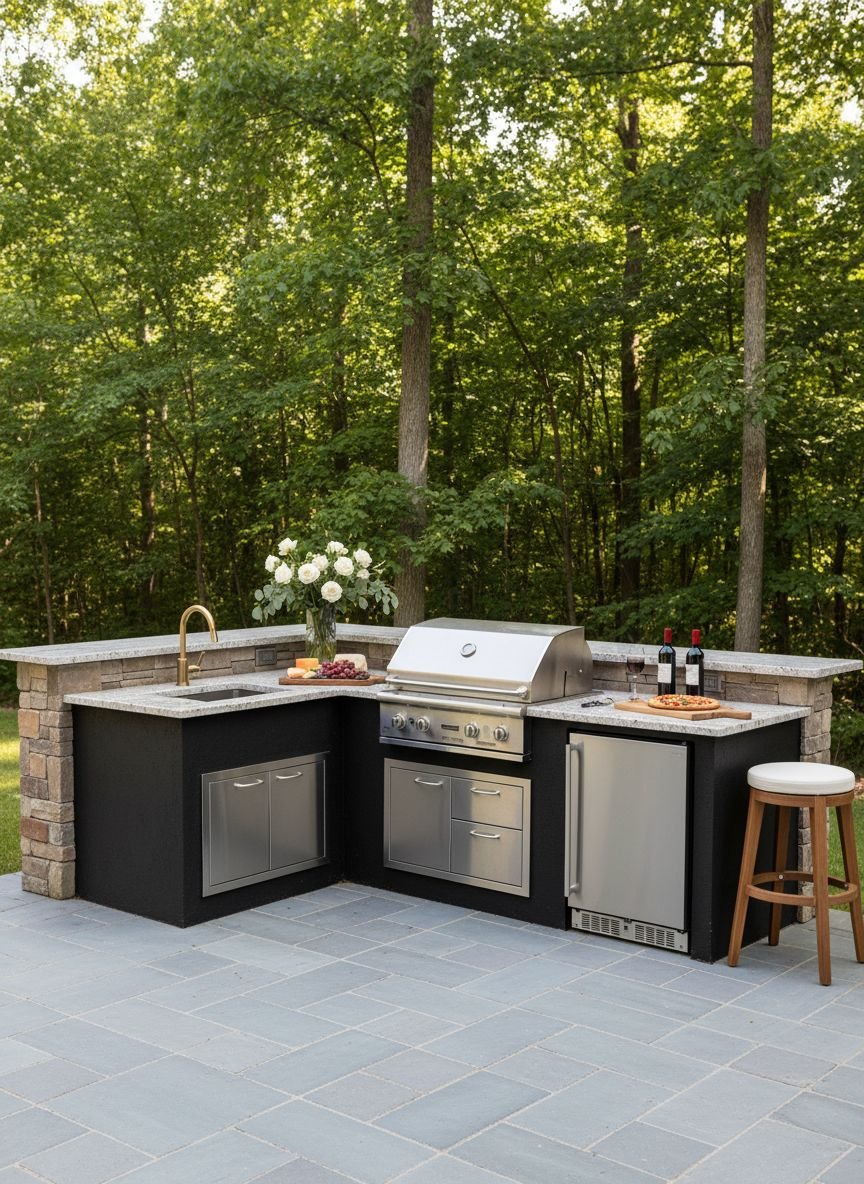
An L-shaped layout maximizes corner efficiency. It creates two distinct zones. One side handles the hot work like grilling and smoking. The other side handles prep and plating. This separation keeps the chef organized. It also prevents guests from crowding the hot grill while reaching for snacks.
This shape works well on patios that border the house. It directs traffic flow away from the cooking danger zone. You can add bar seating on the outer edge of the longer wing. This lets guests chat with the cook safely. The inner corner often houses storage or a trash pull-out. Every inch of space gets used.
Pro Tip: Place the grill on the short arm of the “L” to keep smoke away from the seated guests on the long arm.
BBQ Island with Pergola
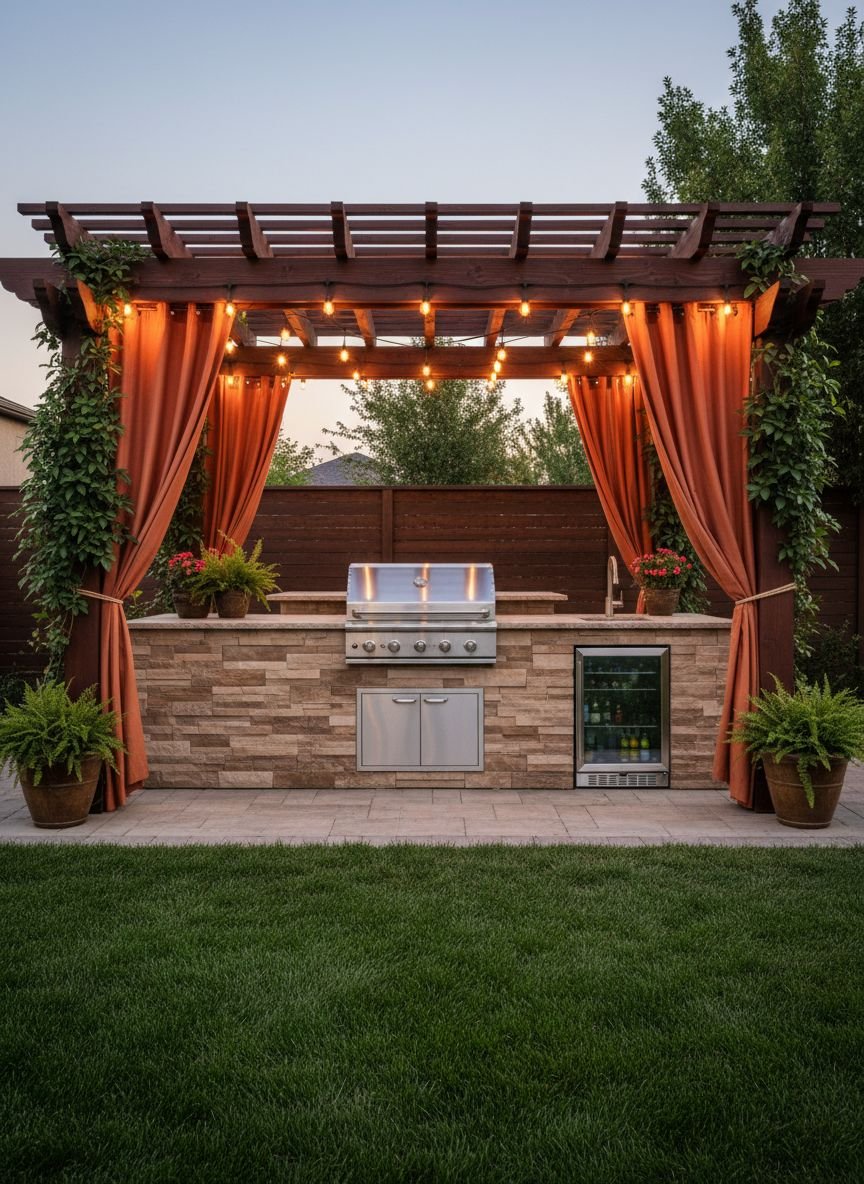
A pergola adds vertical structure to your BBQ island. It defines the cooking area as a distinct room. The overhead beams provide partial shade. This makes grilling at noon much cooler. You can grow climbing vines like wisteria or grapes up the posts. This softens the hardscape with greenery.
The structure also offers mounting points. You can hang string lights or pendant lamps for night cooking. The shadow play from the beams adds drama to the patio floor. Wood pergolas bring warmth to stone or metal islands. Metal pergolas offer a sleek, maintenance-free alternative. The roof structure frames the view of the yard.
Pro Tip: Install a polycarbonate sheet on top of the pergola beams to block rain while letting light through.
Portable BBQ Island
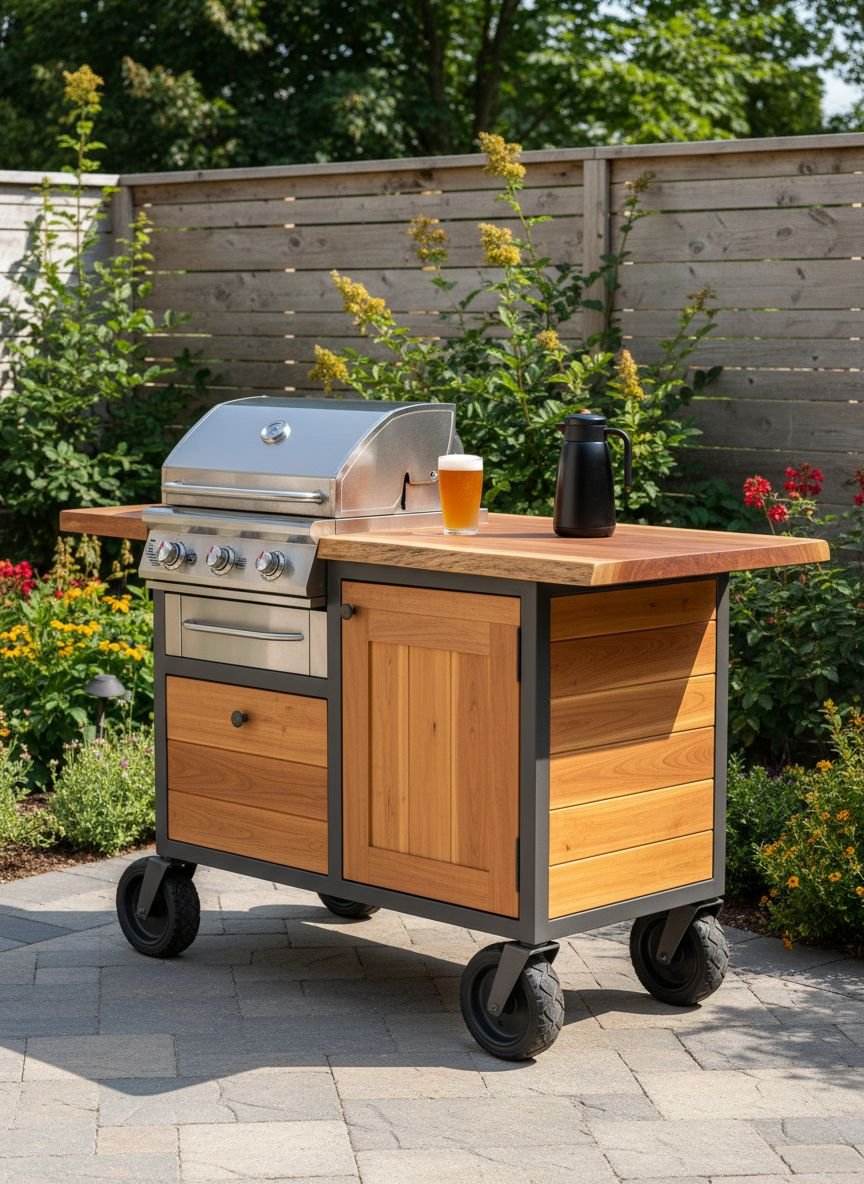
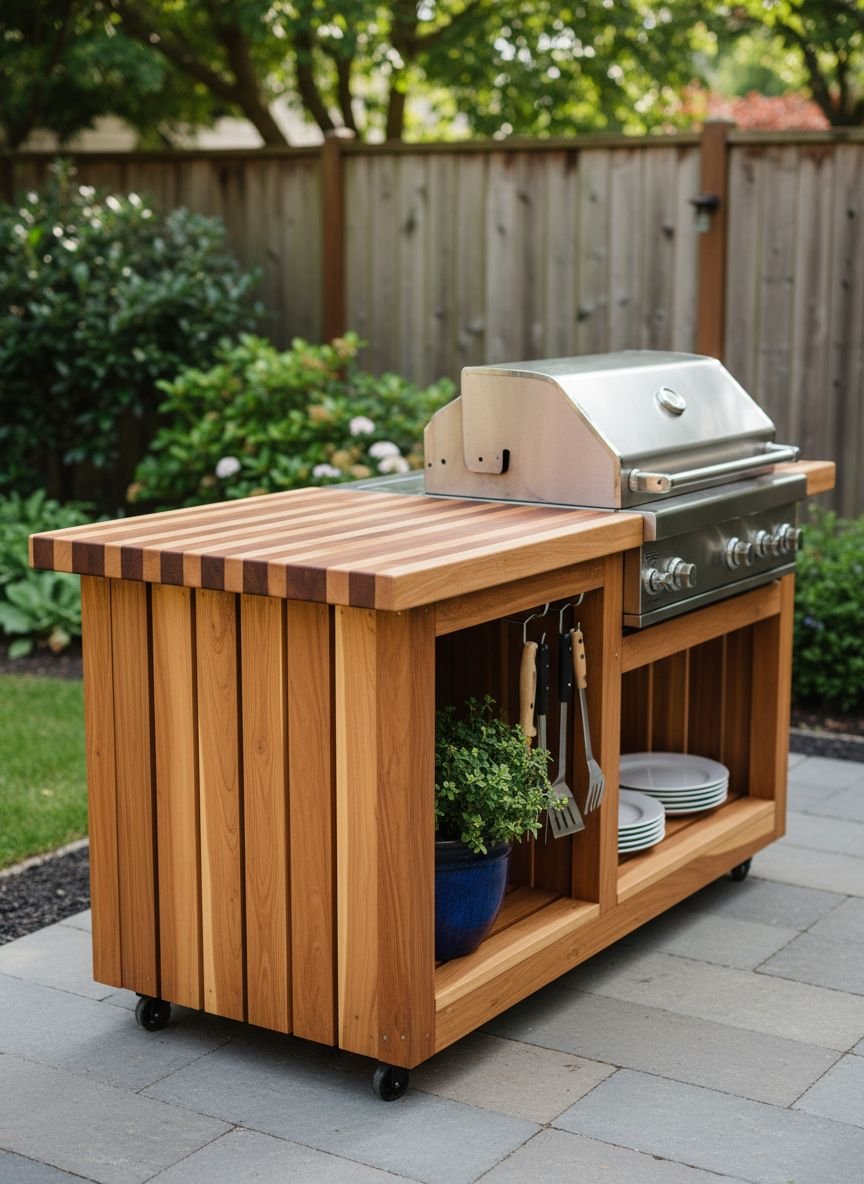
Flexibility drives the design of a portable BBQ island. Heavy-duty casters allow you to move the station. You can roll it into the shade during the day or under cover during a storm. This is perfect for renters or those with small patios. The unit usually combines a grill cart with attached fold-down prep tables.
Materials must be lightweight yet strong. Powder-coated aluminum or treated wood are top choices. The design is compact. It focuses on essentials like a cutting board surface and tool hooks. When not in use, you can push it against a wall to free up floor space. It adapts to the size of your party.
Pro Tip: Choose locking casters for all four wheels to ensure the island stays stable while you flip burgers.
Comparison: Built-in vs. Portable
| Feature | Built-in Island | Portable Island |
|---|---|---|
| Cost | High ($3,000+) | Low ($500+) |
| Space | Permanent footprint | Flexible / Storable |
| Installation | Professional / Heavy DIY | Instant / Minimal assembly |
| Durability | 10+ Years | 3-5 Years |
| Best For | Homeowners | Renters / Small Patios |
Mediterranean-Style BBQ Island
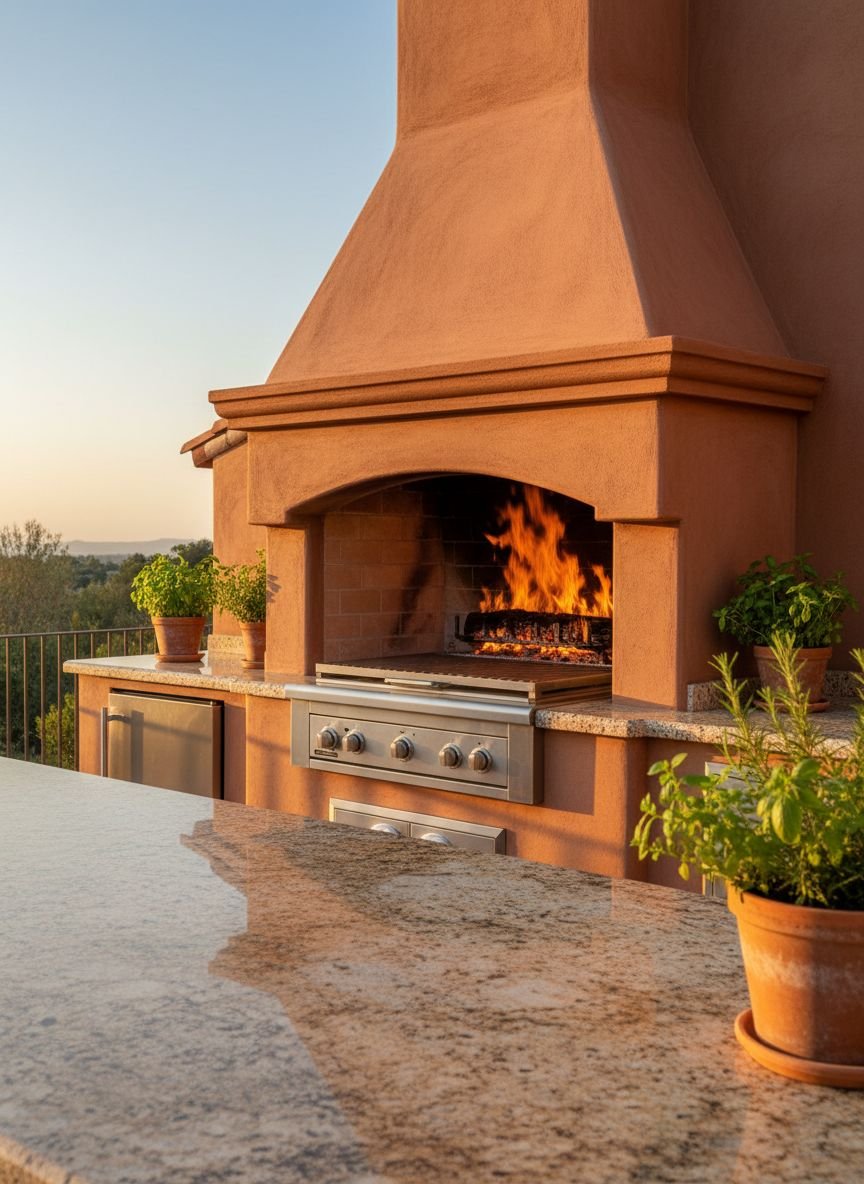
Warm tones and stucco textures characterize the Mediterranean style. Terracotta tiles often line the floor or the countertop edge. The base is usually white or cream stucco. This reflects heat and keeps the structure looking bright. Arched cabinet doors can mimic classic Italian architecture.
Iron hardware adds a rustic touch. The design invites leisurely cooking and long meals. It pairs well with clay pots filled with herbs like basil and rosemary. Placing these herbs right on the counter makes seasoning easy. The overall vibe is relaxed and sun-baked. It transports you to a villa on the coast.
Pro Tip: Use ceramic tiles for the backsplash to add a pop of color and pattern.
BBQ Island with Fire Pit
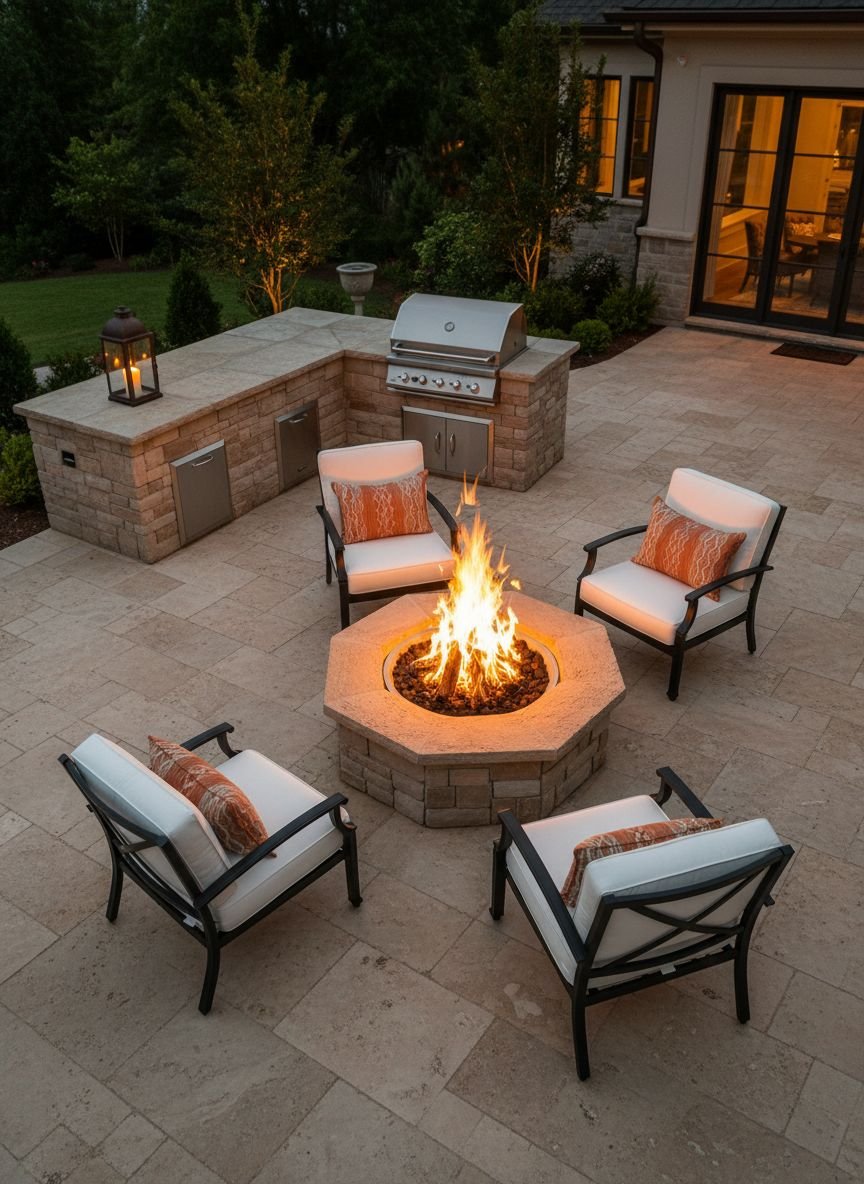
Combining a BBQ island with a fire pit creates a social hub. The cooking happens on one side. The relaxing happens on the other. You can arrange the island in a semi-circle around the fire feature. This keeps the chef involved in the conversation.
The fire pit provides warmth for late-night gatherings. It extends the outdoor season into autumn. You can match the stone of the fire pit to the BBQ island base. This creates a cohesive look. Gas fire pits are easier to control and cleaner than wood. They require a gas line connection similar to the grill.
Pro Tip: Keep a minimum of 36 inches between the fire pit edge and the seating area for safety.
Island with Built-In Bar
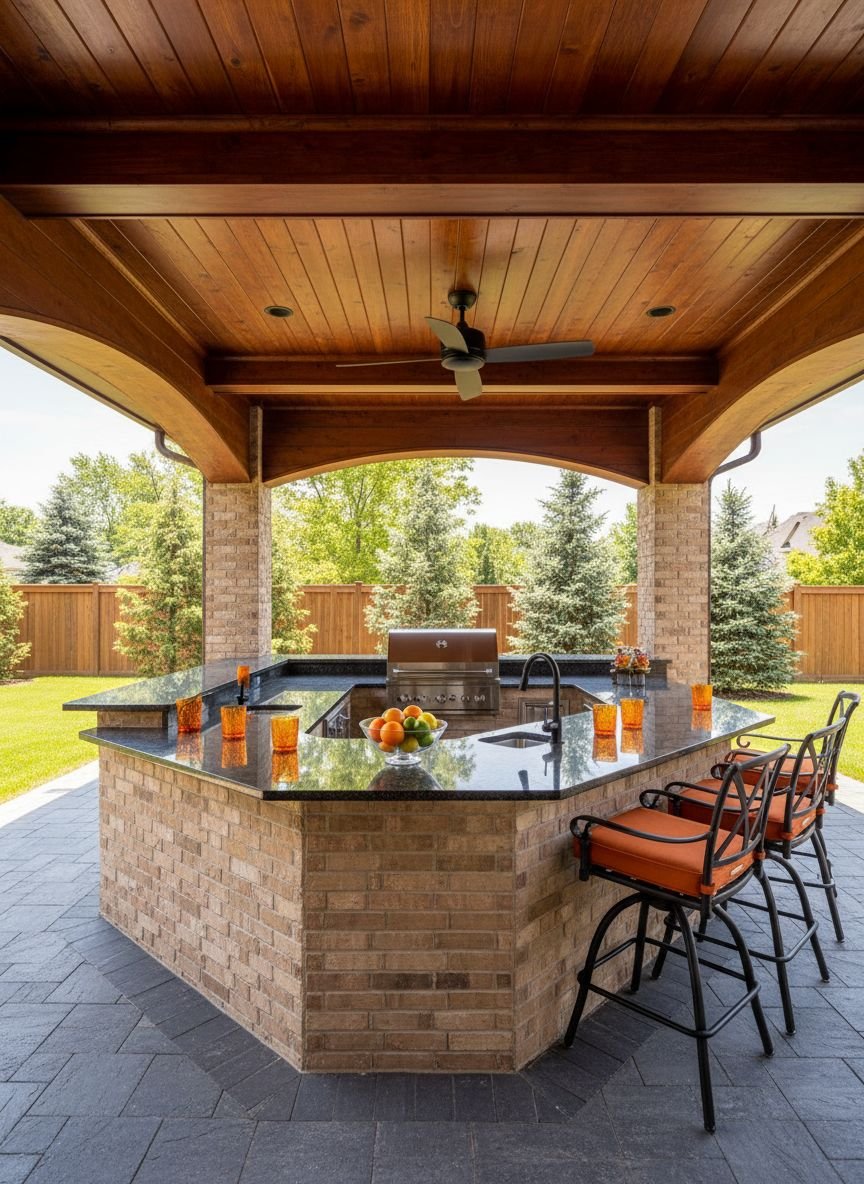
A built-in bar elevates the entertainment factor. This design features a split-level counter. The lower level is for cooking and prep. The upper level is for serving drinks and seating. This height difference hides the mess of grilling from the guests.
You can install a beverage center or wine cooler under the bar counter. A small prep sink helps with making cocktails. The bar overhang should be at least 12 inches to accommodate knees. Comfortable bar stools encourage guests to linger. This setup turns the cook into a bartender and host simultaneously.
Pro Tip: Install a footrail along the bottom of the bar side to make sitting more comfortable.
Tropical Tiki BBQ Island
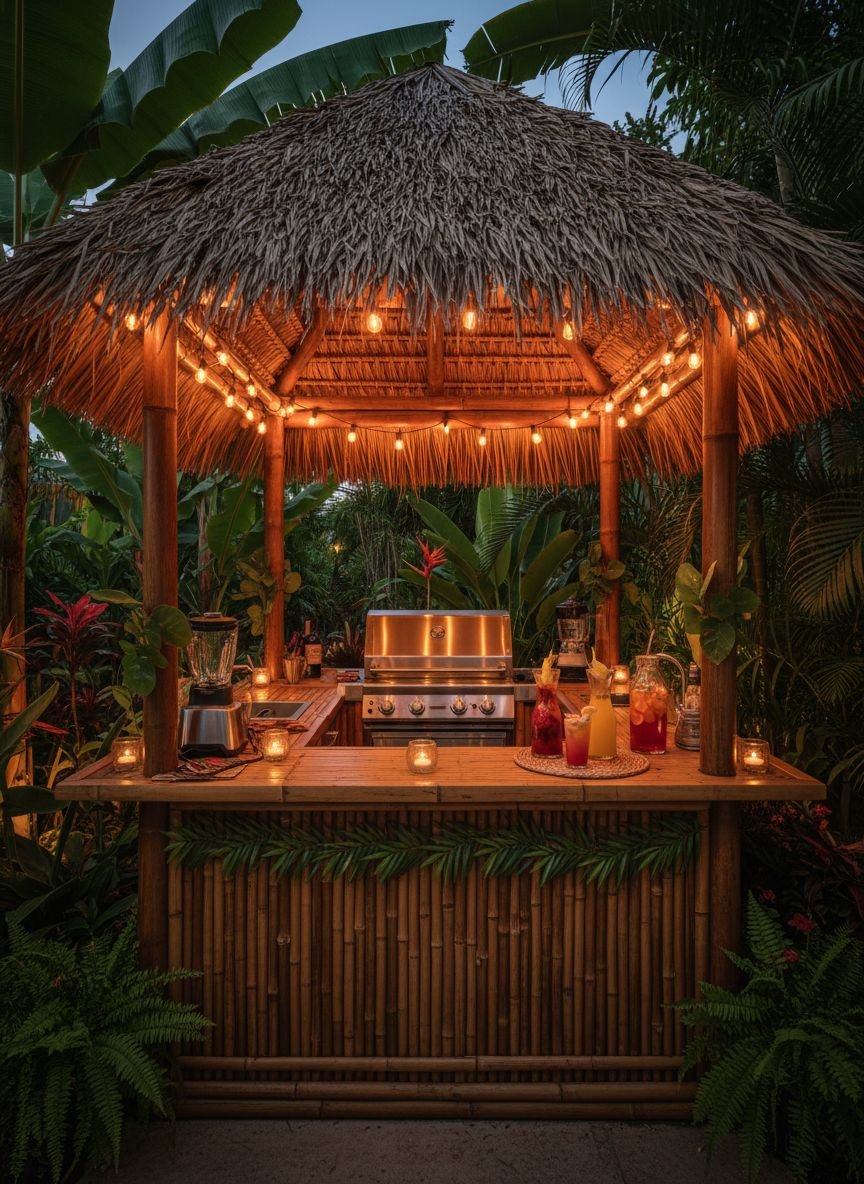
Bamboo and thatch bring the vacation vibe home. A Tiki-style BBQ island uses natural materials to create a resort feel. Bamboo cladding covers the base structure. A thatched roof provides shade and distinct style. This theme works well near pools.
Tropical wood countertops like teak resist moisture and look great. You can add tiki torches around the perimeter for lighting. The design is casual and fun. It encourages barefoot dining. Bright colors in the cushions or decor pop against the brown natural tones. It feels like a permanent staycation.
Pro Tip: Treat bamboo surfaces with a UV-resistant varnish to prevent them from turning grey in the sun.
Eco-Friendly BBQ Island
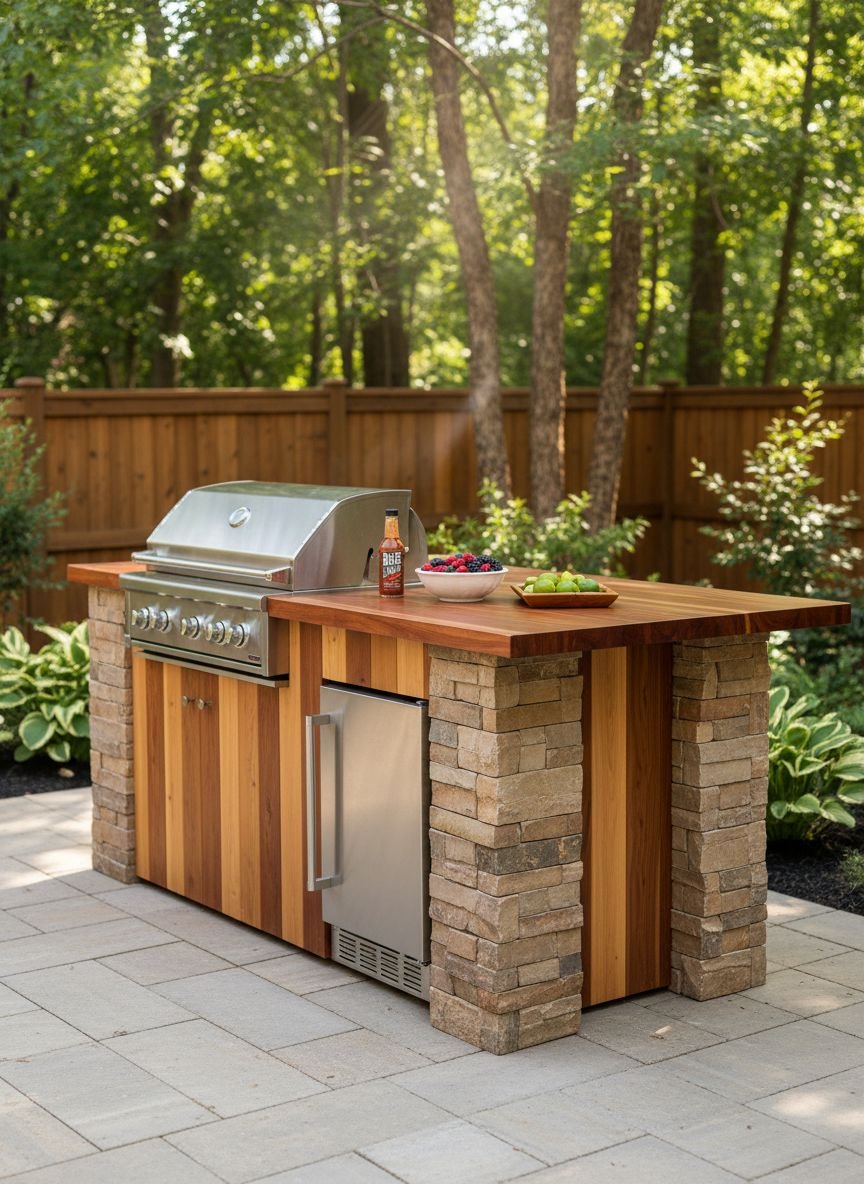
Sustainability focuses on recycled and reclaimed materials. You can build the frame from reclaimed lumber or recycled steel. Countertops made from recycled glass and concrete offer durability and unique looks. This style reduces the carbon footprint of your renovation.
Solar-powered lights reduce energy consumption. A rain barrel system can be integrated for washing down the patio. The grill itself might be a high-efficiency pellet smoker or a charcoal unit using sustainably sourced lump charcoal. The aesthetic is often raw and earthy. It shows the history of the materials used.
Pro Tip: Look for “FSC-certified” wood to ensure it comes from responsibly managed forests.
Get The Look: BBQ Essentials
- Stainless Steel Drawers: Keeps bugs out and tools dry.
- Under-Counter Fridge: Saves trips to the indoor kitchen.
- Trash Pull-Out: Hides waste and keeps the patio clean.
- Rotisserie Kit: Expands your cooking options.
- Heavy Duty Cover: Protects your investment in winter.
Compact Urban BBQ Island
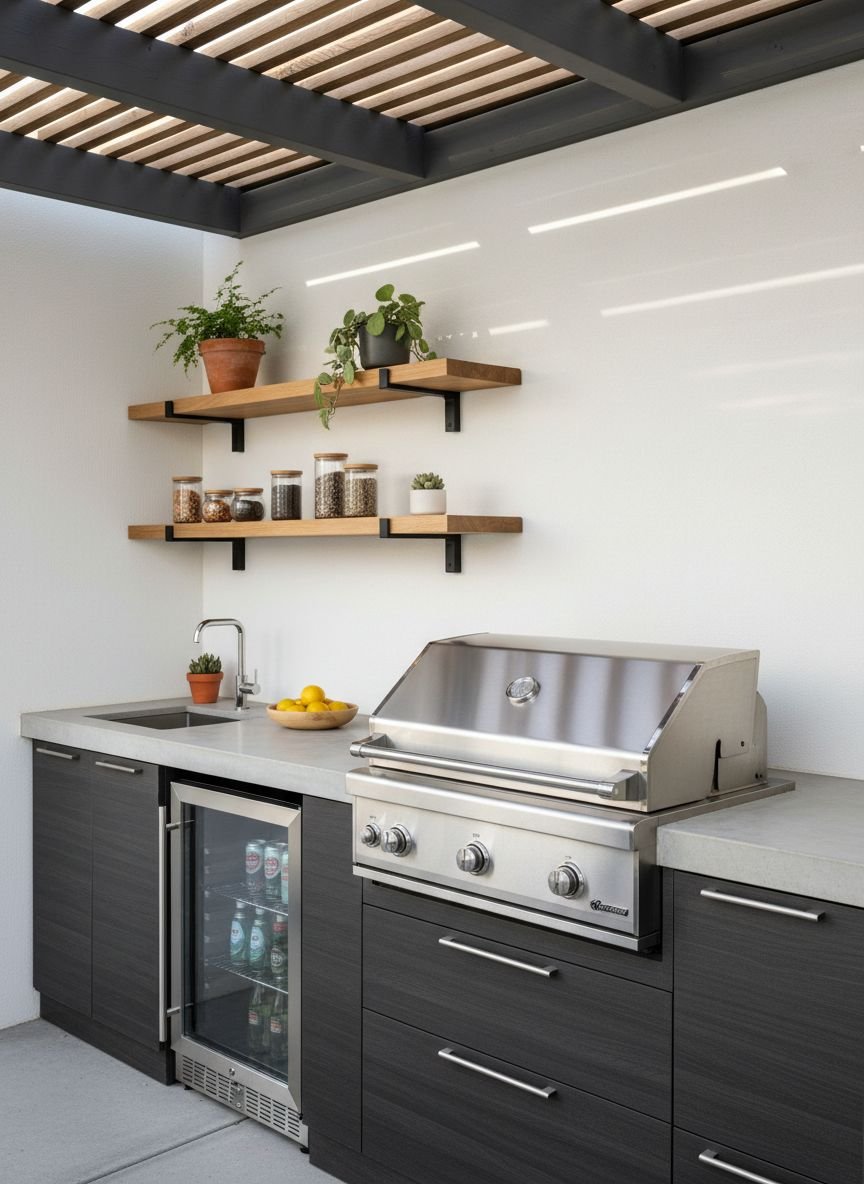
City living often means limited outdoor space. A compact urban island fits on balconies or small decks. It prioritizes vertical storage over horizontal spread. Hooks on the side hold tongs and spatulas. Shelves below hold the propane tank and minimal gear.
The footprint is small, often just 4 feet wide. Despite the size, it improves workflow compared to a standalone grill. Folding side shelves offer temporary prep space. The materials are usually sleek metal or composite wood to match modern apartment aesthetics. It proves you don’t need a huge yard to cook outside.
Pro Tip: Use a magnetic strip on the backsplash to hold knives and metal tools securely.
BBQ Island with Pizza Oven
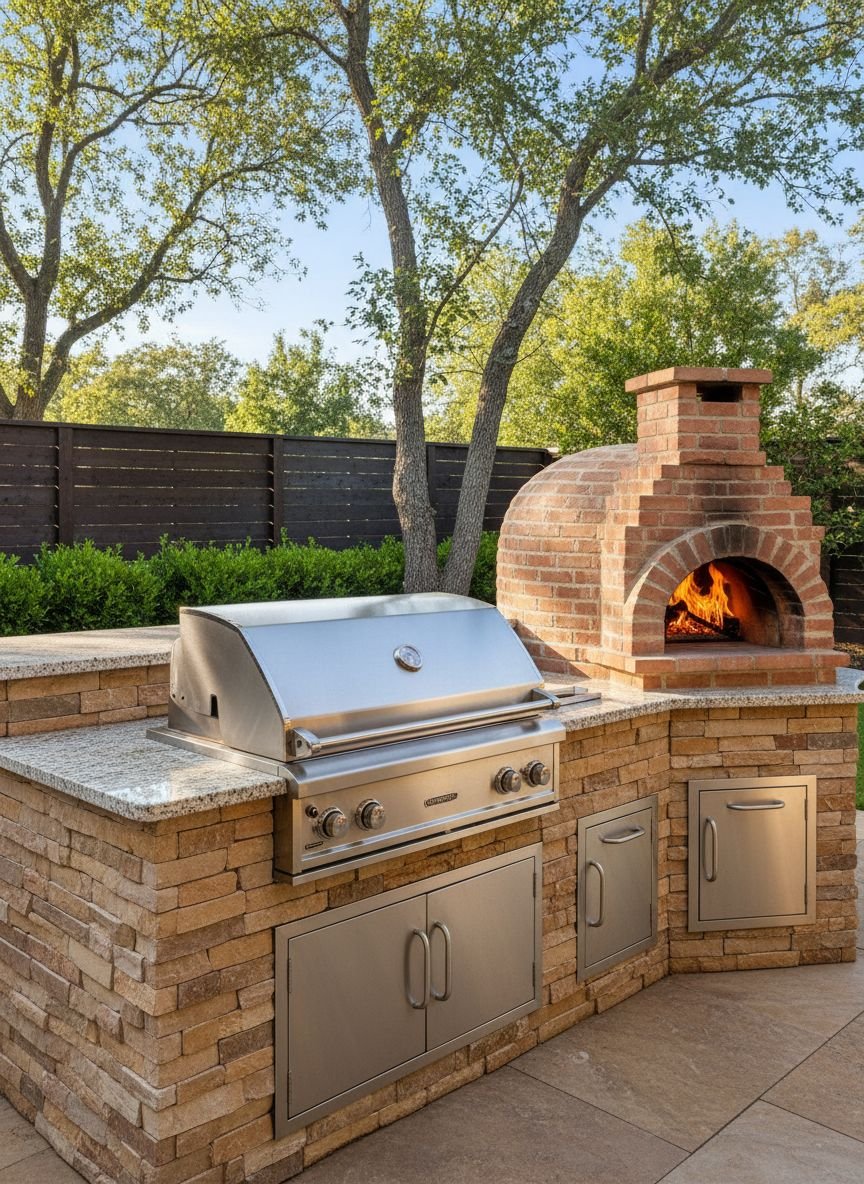
A pizza oven acts as a stunning focal point. It sits adjacent to the standard grill. The dome shape breaks up the straight lines of the counter. Wood-fired ovens require storage for logs. You can build large open cubbies beneath the oven for this purpose.
This setup offers dual cooking methods. You can slow-roast meats in the oven while searing vegetables on the grill. The high heat of the pizza oven radiates warmth. It draws people in. Tiling the exterior of the oven allows for artistic expression. Mosaic patterns are popular.
Pro Tip: Ensure the foundation is extra reinforced, as pizza ovens are extremely heavy.
Coastal-Themed BBQ Island
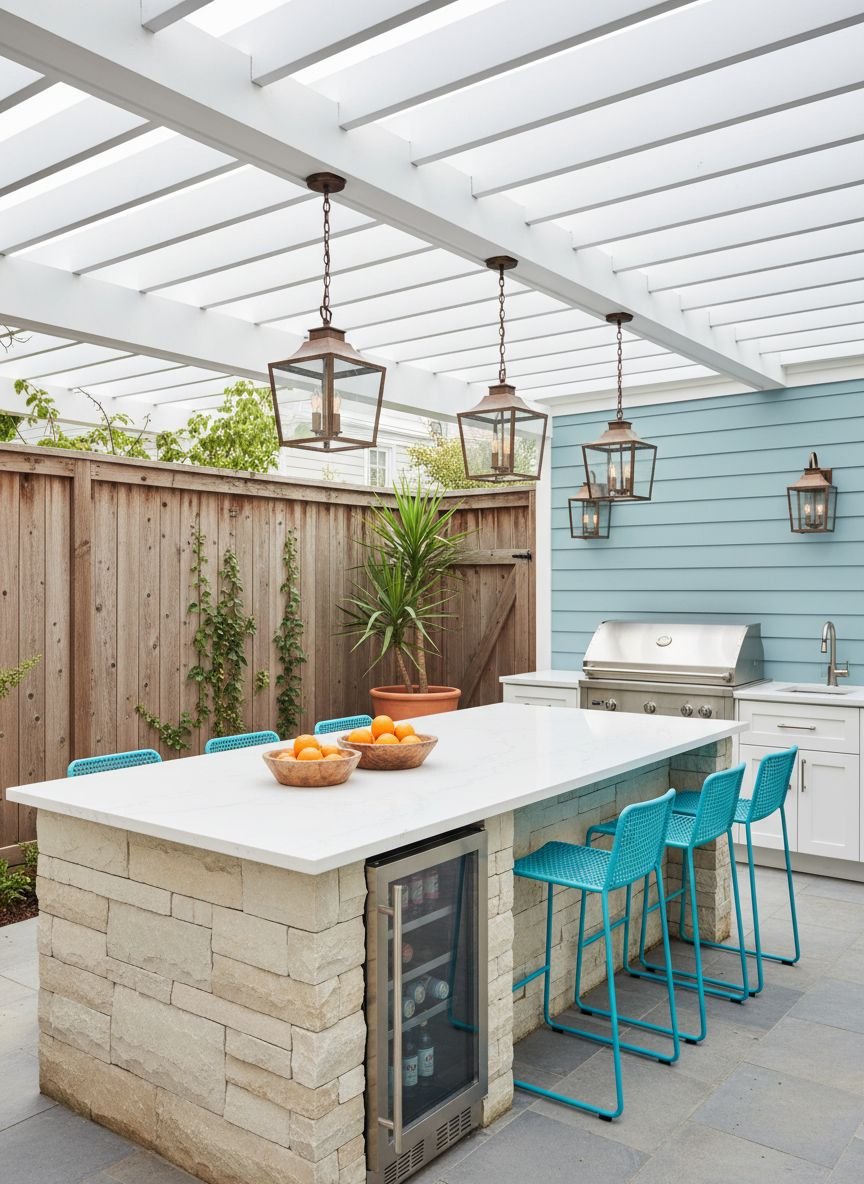
White shiplap and blue accents define the coastal look. The siding mimics a beach cottage. The countertop might be a light-colored quartz or concrete. This style feels airy and fresh. It reflects the brightness of the seaside sun.
Marine-grade hardware is essential if you live near salt water. Stainless steel needs to be high quality (316 grade) to resist rust. Decor includes nautical lanterns or rope details. The vibe is breezy and casual. It suits seafood boils and grilled fish perfectly.
Pro Tip: Avoid wood countertops in coastal areas as the humidity can cause warping; stick to stone.
U-Shaped BBQ Island
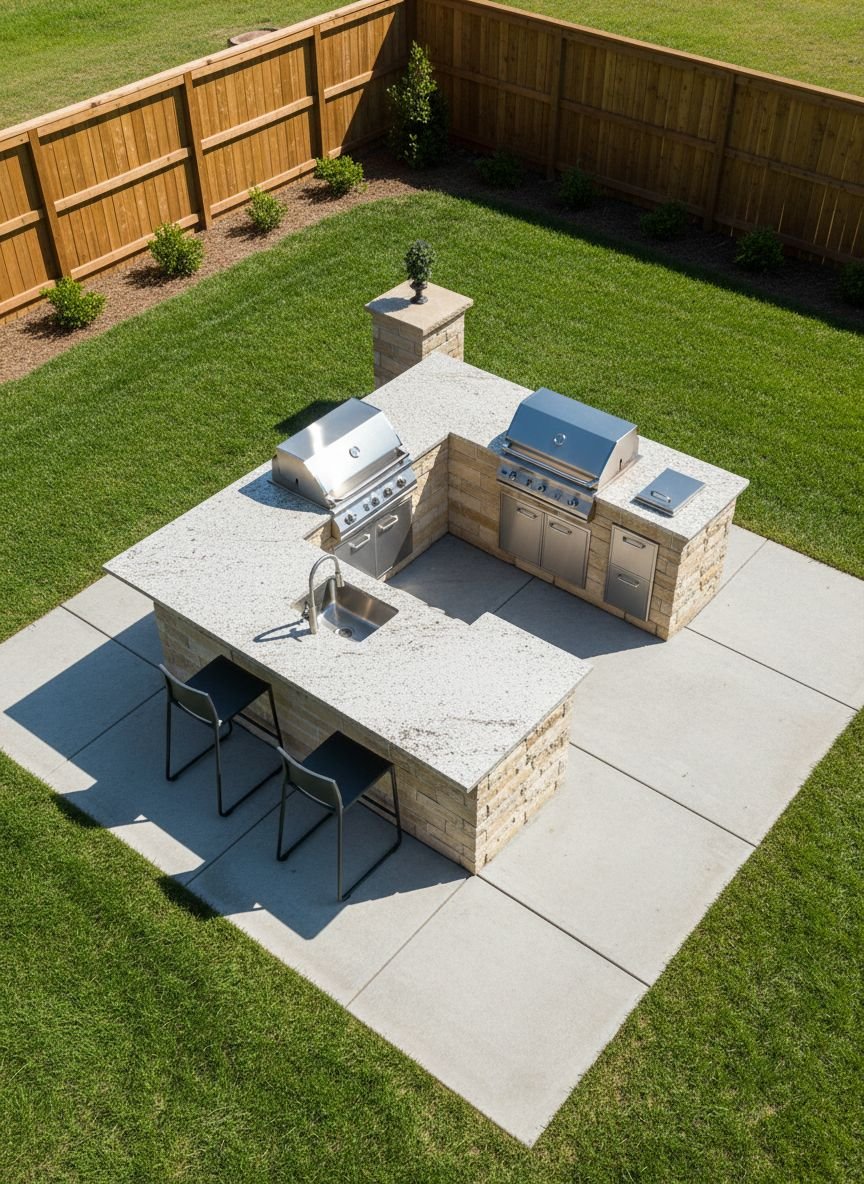
The U-shape offers the ultimate kitchen workflow. It surrounds the chef on three sides. You have zones for prep, cooking, cleaning, and serving. This layout provides the most counter space of all designs. It works best in large backyards.
One leg of the “U” usually acts as a bar for guests. The center creates a dedicated workspace where everything is within reach. You can fit multiple appliances here. A fridge, sink, and side burner all fit easily. It feels like a professional kitchen moved outdoors.
Pro Tip: Leave at least 42 inches of width in the center of the “U” for easy movement.
DIY Pallet BBQ Island
Pallets offer a budget-friendly building material. You can stack and screw them together to form the island frame. This is a great weekend project. The wood has a rustic, industrial character. You must sand the wood thoroughly to remove splinters.
Top the pallets with a simple concrete paver surface or tiled plywood. The gaps in the pallets can be used as shelves for small items. You can paint the pallets to match your house or leave them raw. It is a low-risk way to test if you like having a BBQ island.
Pro Tip: Only use pallets marked “HT” (Heat Treated). Avoid “MB” (Methyl Bromide) pallets as they contain toxic chemicals.
Comparison: Fuel Types
| Fuel Type | Flavor Profile | Convenience | Cleanup |
|---|---|---|---|
| Gas (Propane/NG) | Neutral | High (Instant on) | Easy |
| Charcoal | Smoky / Rich | Low (Wait for coals) | High (Ash) |
| Pellet | Wood-fired | Medium (Auto-feed) | Medium |
| Electric | None | High (Plug in) | Easy |
BBQ Island with Outdoor Sink
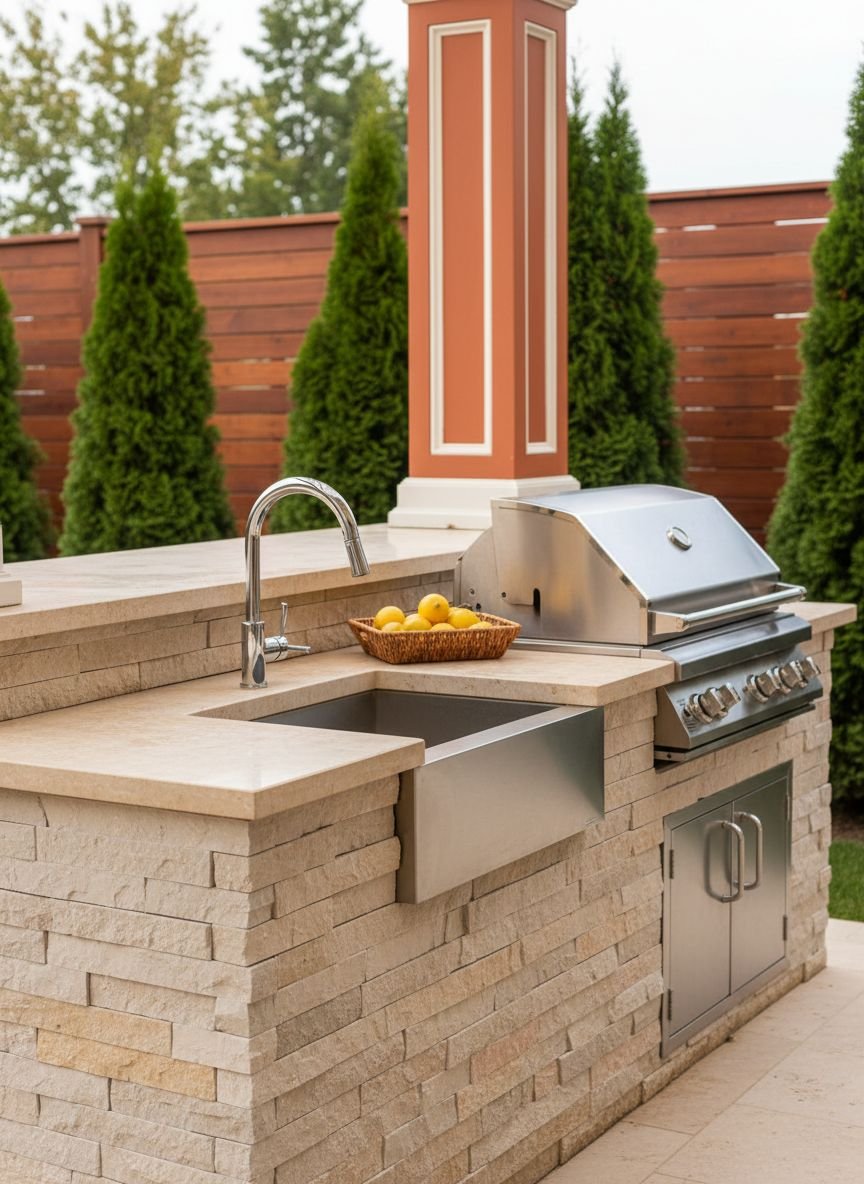
Running water changes the game. An outdoor sink lets you wash hands after handling raw meat. You can rinse vegetables right at the grill. It saves you from touching the back door handle with greasy fingers.
You need to plan for plumbing. A simple cold-water line is often enough. Drainage can go to a dry well or tie into the house sewer. The sink should be stainless steel to resist corrosion. A high-arc faucet makes filling pots easy. It transforms the island from a grilling station to a full kitchen.
Pro Tip: Install a shut-off valve inside the house to drain the outdoor pipes before winter freezes.
Pergola-Covered BBQ Island
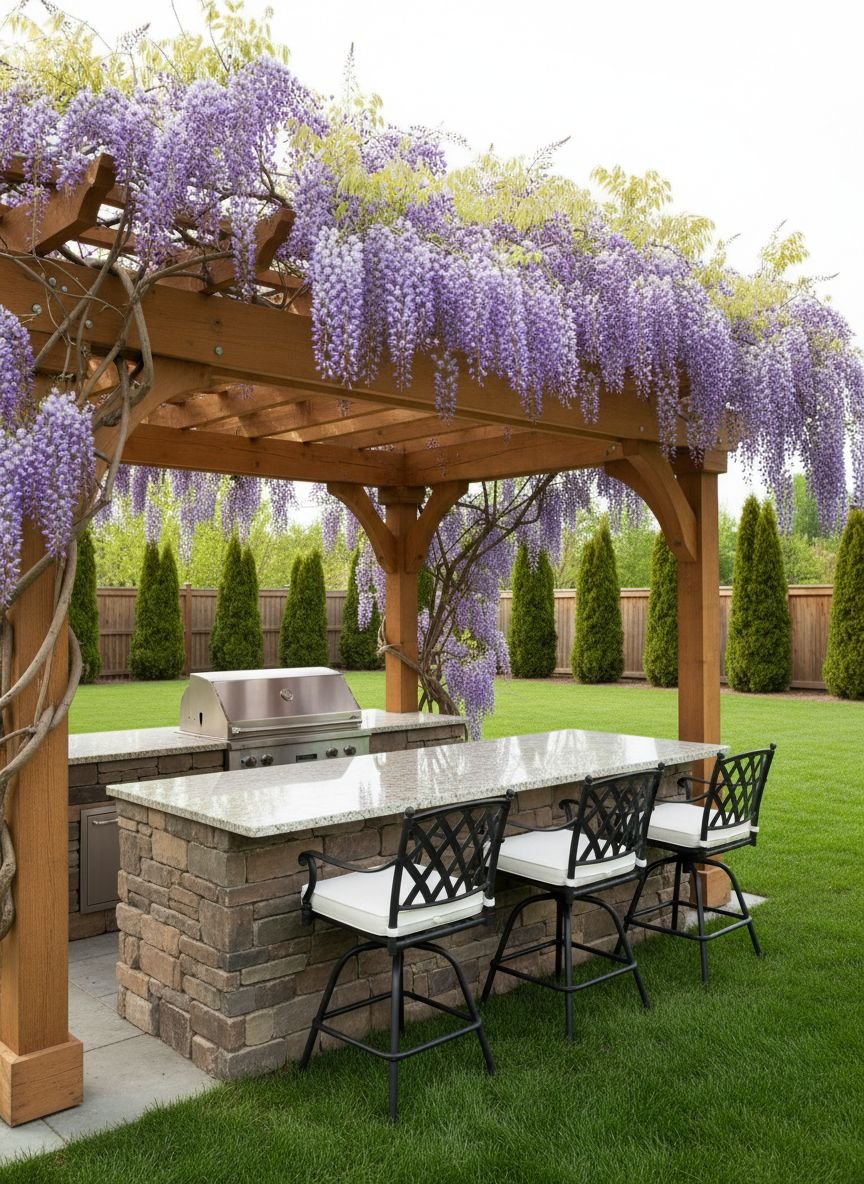
Save this idea to your Pinterest. Combining the island structure directly with the pergola posts creates a unified look. The posts can anchor the corners of the island. This saves space on the patio. It makes the structure feel solid and permanent.
The overhead coverage defines the cooking zone. You can install a fan on the pergola beam. This keeps bugs away and cools the chef. The vertical posts offer spots for mounting spice racks or utensil hooks. It creates a “room within a room” effect in your garden.
Pro Tip: Match the wood stain of the pergola to the cabinet doors for a seamless design.
Industrial-Style BBQ Island
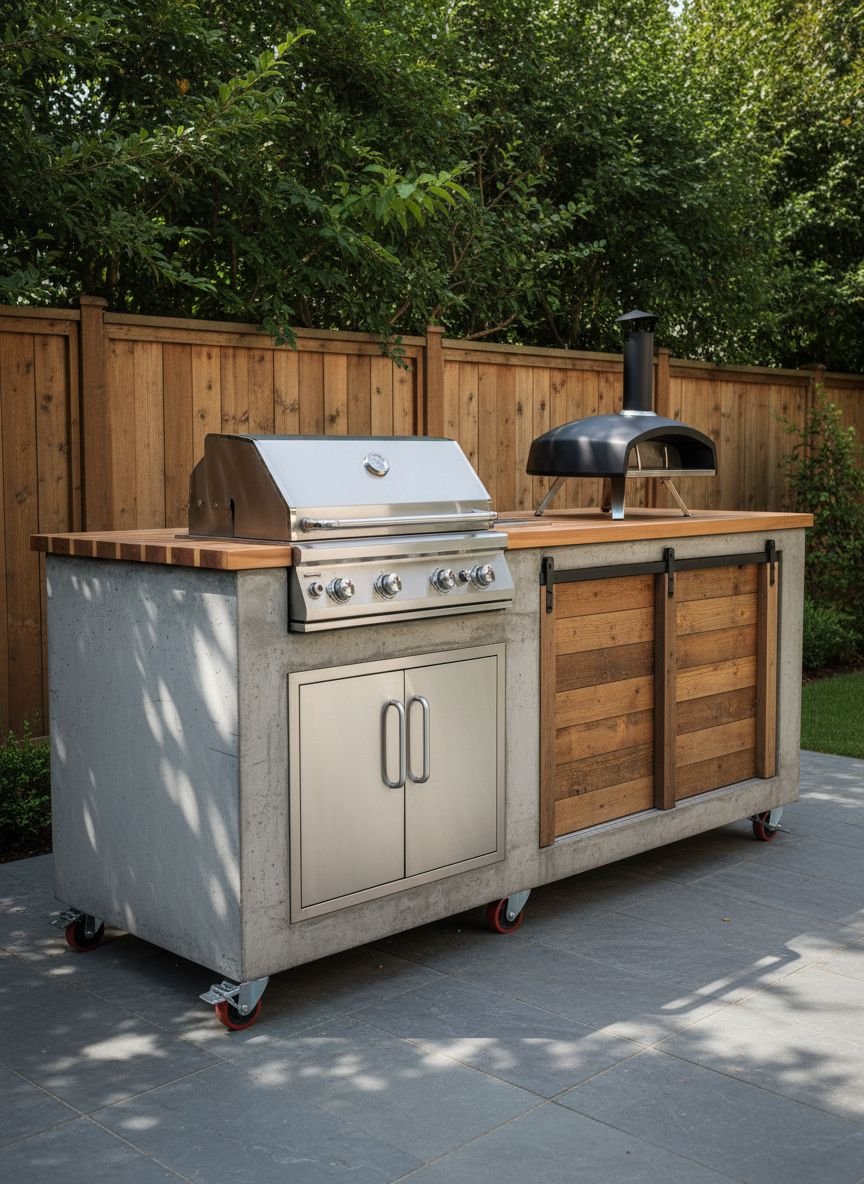
Raw materials shine in industrial design. Exposed brick, concrete, and black metal are key elements. The look is gritty but sophisticated. You might use corrugated metal sheets for the side panels. The countertop is often poured concrete left in its natural grey state.
Pipe shelving can replace closed cabinets. This displays your cast iron pans and wood piles. The aesthetic is tough and durable. It hides wear and tear well. Scratches or dents just add to the character. It fits well with urban lofts or converted warehouse spaces.
Pro Tip: Use black iron pipe for support legs and handle pulls to reinforce the industrial theme.
BBQ Island with Ice Chest
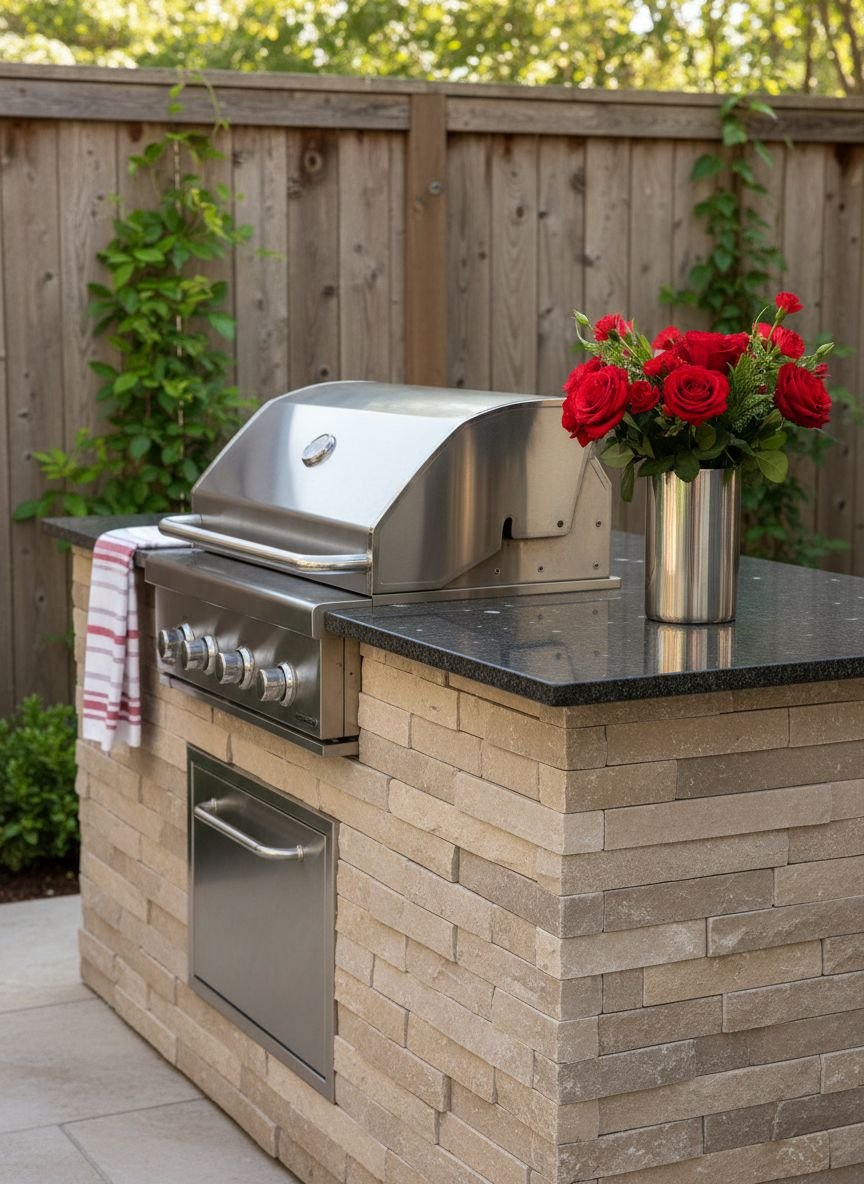
A built-in ice chest is a party essential. It is cheaper than an outdoor fridge and uses no electricity. The chest drops into the countertop. It keeps beers and sodas ice-cold for hours. A drain plug at the bottom connects to a hose for easy emptying.
This feature frees up fridge space for food. It allows guests to grab drinks without entering the cooking zone. Some models come with condiment trays. This keeps burger toppings fresh and cool. It is a simple addition that adds huge utility.
Pro Tip: Look for a “drop-in” cooler with double-walled insulation to keep ice frozen longer.
Southwestern BBQ Island
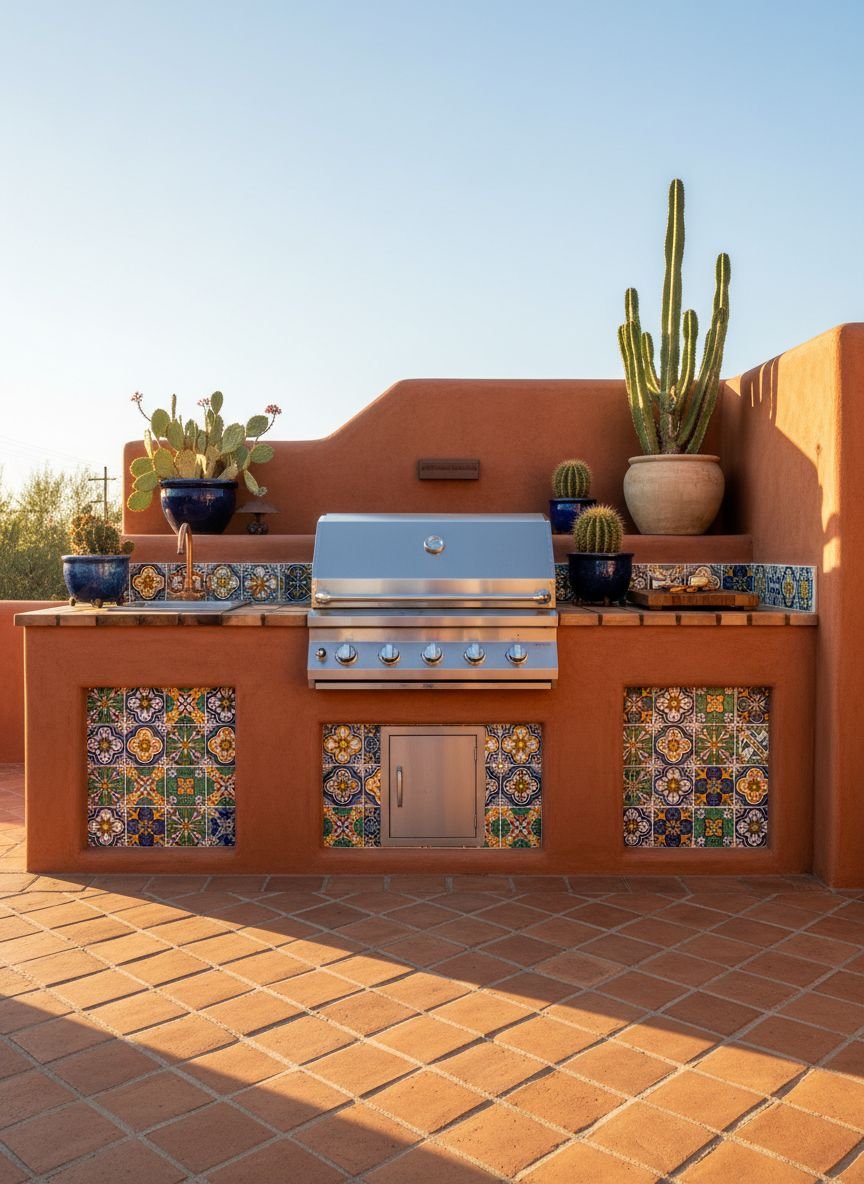
Desert hues inspire the Southwestern style. Stucco in shades of terracotta, beige, or sage green covers the base. Tiles with vibrant geometric patterns decorate the backsplash or waterline. This style feels warm and inviting.
A Kiva-style fireplace often accompanies the grill. The rounded edges of the stucco soften the look. It blends perfectly with xeriscaped yards and cactus gardens. Iron accents and rustic wood doors complete the picture. It captures the spirit of the American Southwest.
Pro Tip: Incorporate a built-in salsa garden nearby with peppers and tomatoes.
Maintenance Checklist
- Weekly: Wipe down counters, clean grill grates, check gas lines.
- Monthly: Polish stainless steel, clean sink trap, check cabinet hinges.
- Seasonally: Seal stone/concrete, deep clean grill burners, wash cover.
- Annually: Inspect structure for cracks, touch up paint/stain.
BBQ Island with Smoker
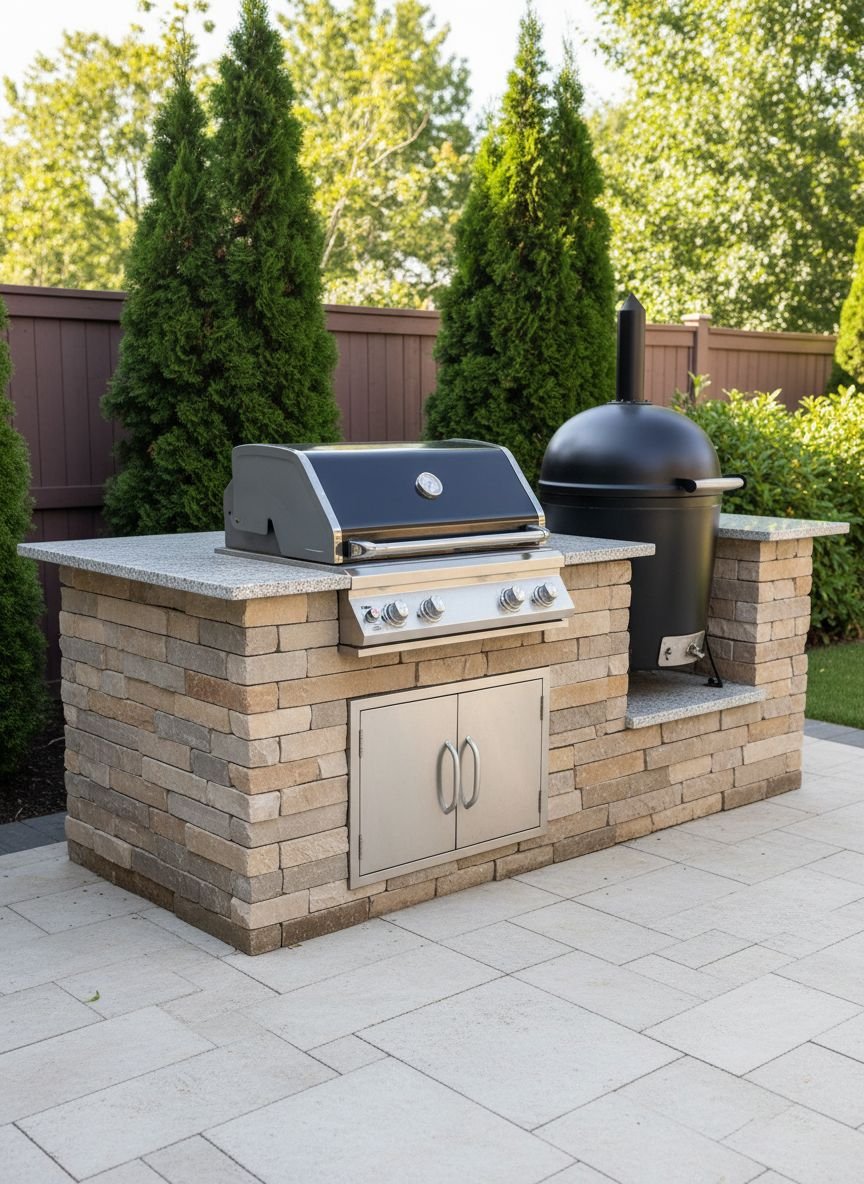
Serious BBQ fans need a smoker. Integrating a ceramic egg smoker or an offset smoker into the island requires custom cutouts. The smoker usually sits lower than the grill. This accounts for its height and makes lid opening easier.
This setup allows for low-and-slow cooking. You can smoke a brisket while grilling sides. The island provides the necessary prep space for rubs and sauces. Storage drawers below the smoker hold wood chips and charcoal. It is the ultimate setup for flavor enthusiasts.
Pro Tip: Ensure there is a heat-resistant buffer or air gap between the smoker and the island material.
BBQ Island with Built-In Storage
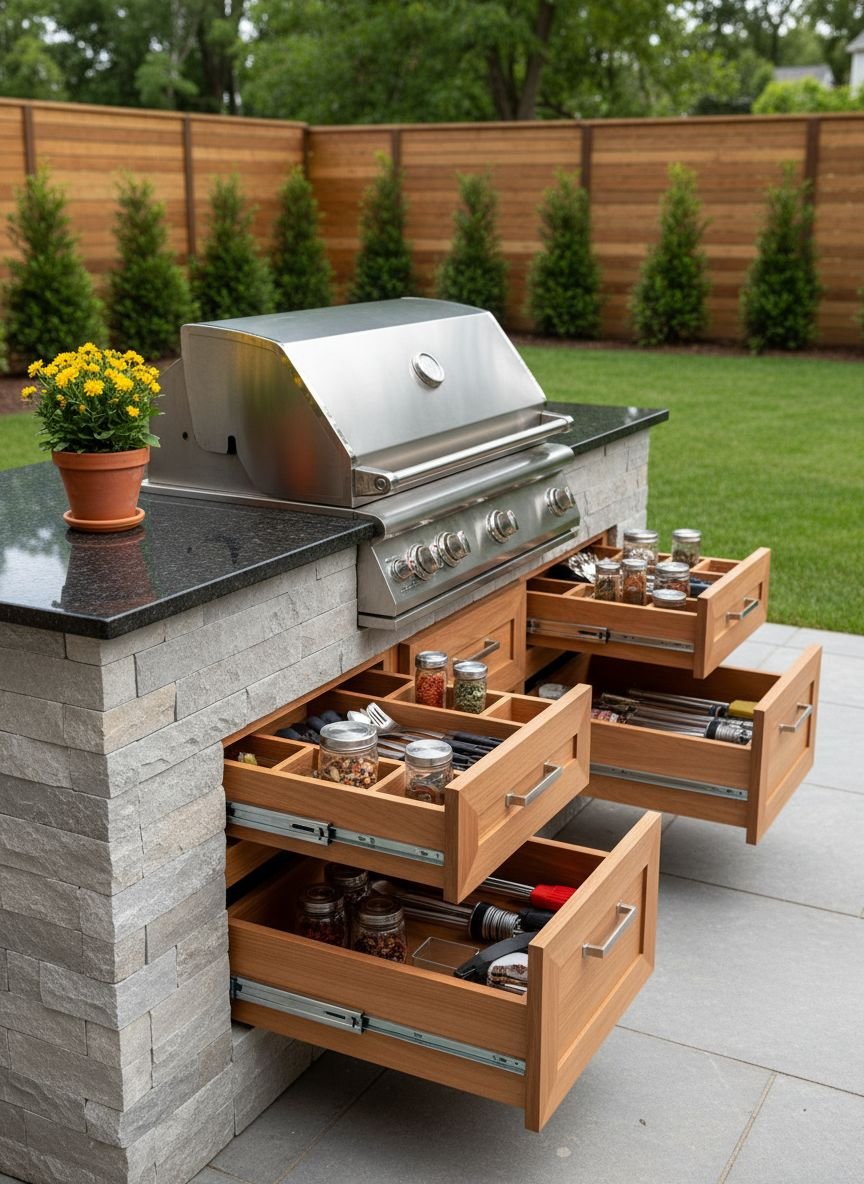
Clutter kills the vibe of an outdoor kitchen. Built-in storage hides the mess. You need more than just empty cavities. Install drawers for long tools. Use pull-out shelves for heavy pots. Vertical slots work well for cutting boards and trays.
Weather-sealed cabinets are vital. They keep mice and moisture out. Magnetic gaskets ensure a tight seal. Dedicated storage means you don’t have to carry bins in and out of the house. Everything you need is right there. It makes spontaneous grilling much easier.
Pro Tip: Add a paper towel holder inside a cabinet door to keep them dry but accessible.
Island with Raised Bar Seating
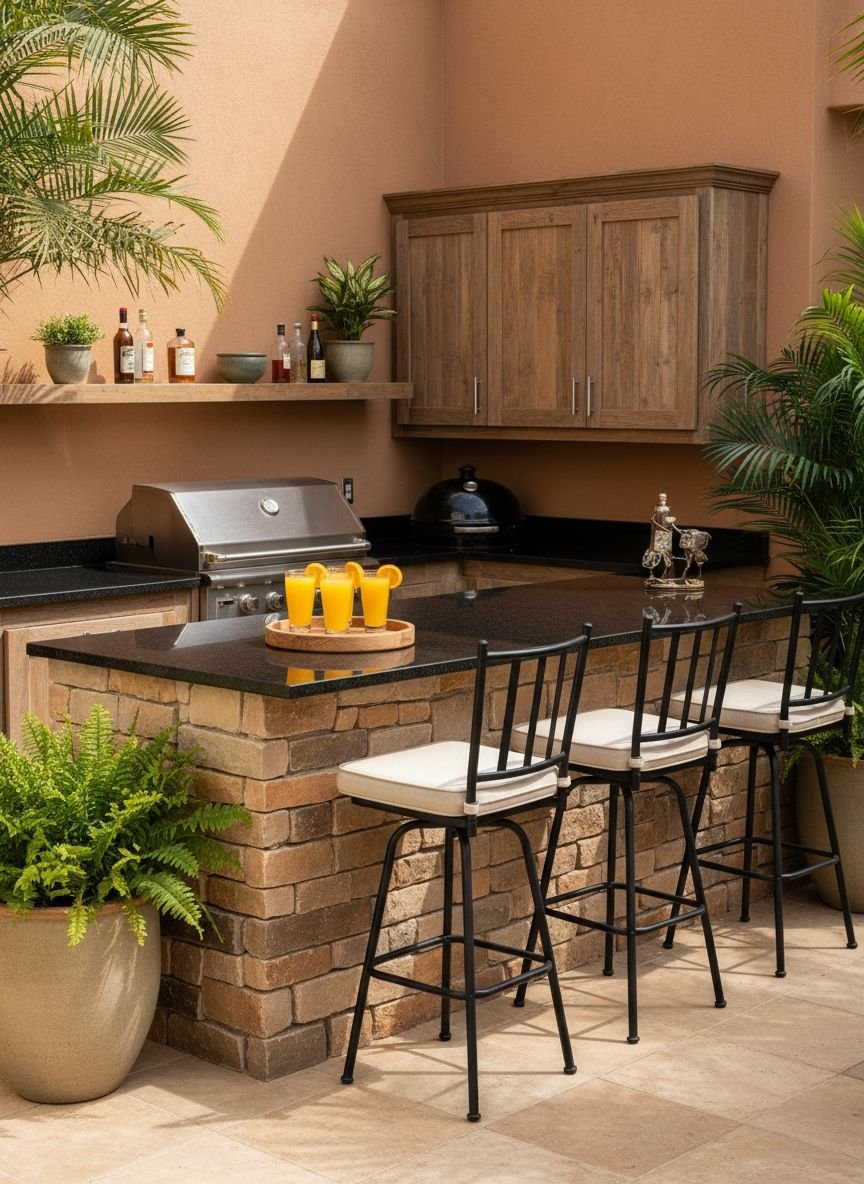
Elevation creates separation. A raised bar counter sits about 6 to 10 inches higher than the work surface. This hides the dirty grill and prep mess from the guests’ view. They see a clean surface and their drinks.
The raised section also acts as a backsplash for the counter below. It prevents grease from splattering onto the guests. You can finish the vertical riser with decorative stone or tile. This becomes a major design feature. It adds dimension and hierarchy to the island.
Pro Tip: Ensure the overhang is supported by heavy-duty brackets to prevent sagging or breaking.
Nature-Inspired BBQ Island
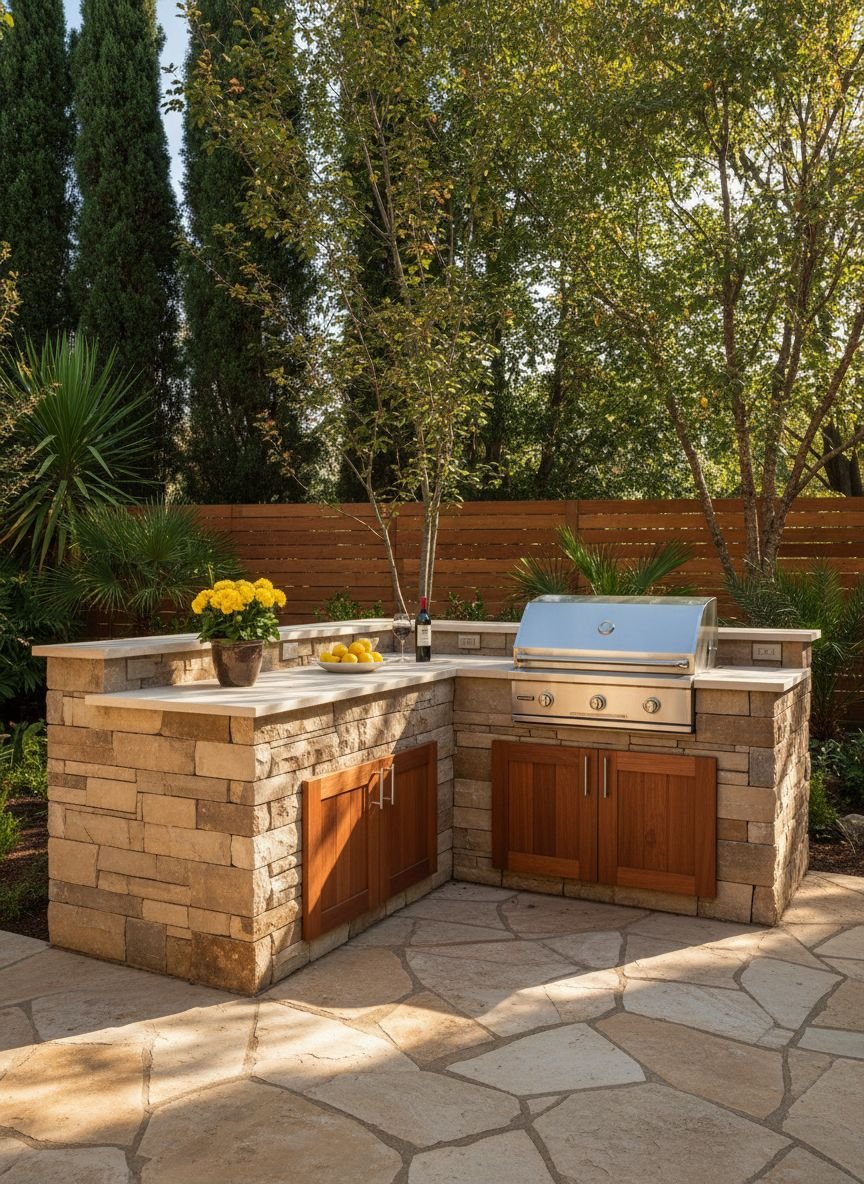
Blending in is the goal here. The island uses materials found on the property. River rock, rough-hewn timber, and flagstone dominate. The shape might be organic and curved rather than square. It follows the landscape.
Planters can be built directly into the structure. Ferns or grasses growing from the island make it look like it grew there. The colors are earth tones. Browns, greens, and greys. It feels like an extension of the garden rather than a separate structure.
Pro Tip: Use a “live edge” wood slab for the bar top to emphasize the natural aesthetic.
BBQ Island with Outdoor Entertainment System
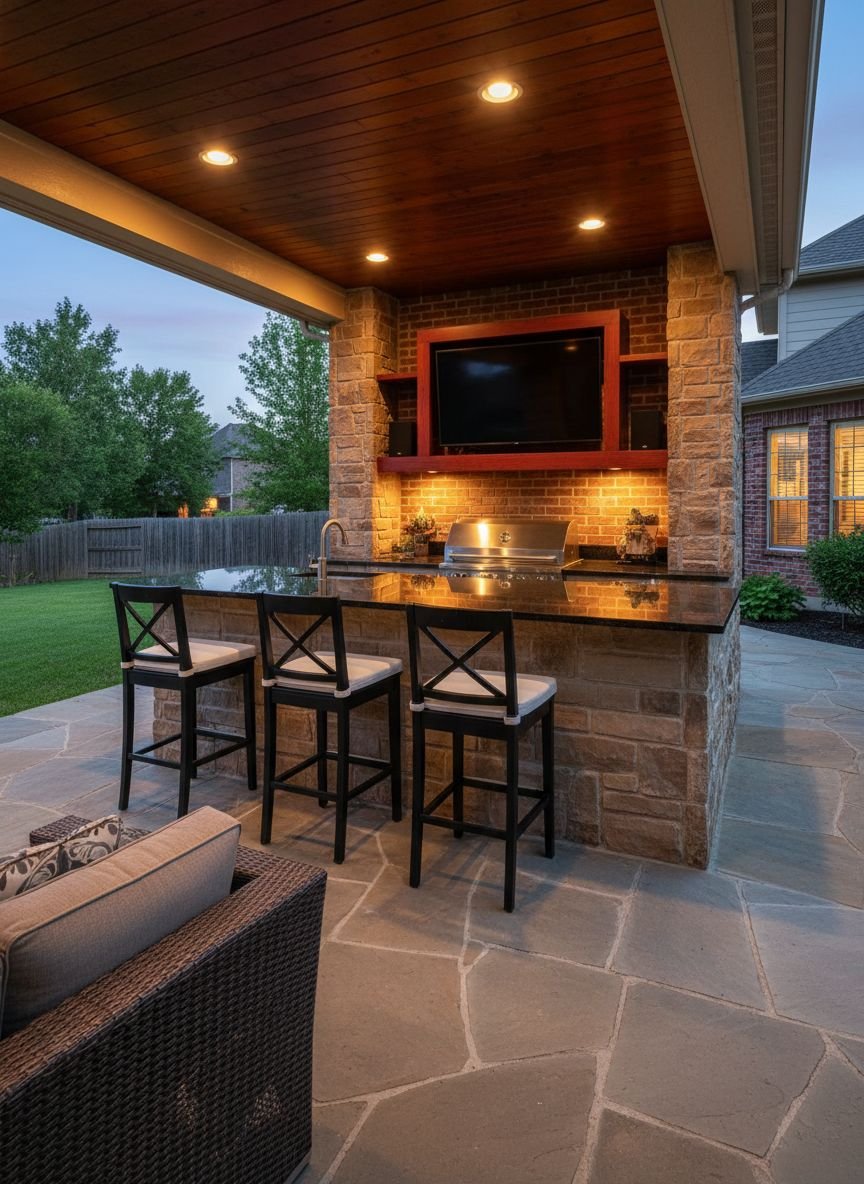
The ultimate host brings the living room outside. This island includes mountings for an outdoor-rated TV. Speakers are integrated into the base or surrounding hardscape. You can watch the game while flipping burgers.
Wiring must be rated for outdoor use. The TV needs a weatherproof enclosure or cover. Place the screen away from the direct heat of the grill. This setup turns the BBQ island into a sports bar. It guarantees your house is the go-to spot for big events.
Pro Tip: Position the TV to avoid glare from the setting sun for the best viewing experience.
Popular Asked Questions
How much does a BBQ island cost to build?
A simple DIY island using a prefabricated frame might cost around $1,500 to $3,000. Custom islands built by contractors with stone veneer and high-end appliances typically range from $5,000 to over $15,000. The price depends heavily on the materials and the grill brand you choose.
Do I need a permit for a backyard BBQ island?
Yes, in most cases. If you are running gas, electricity, or plumbing lines, you almost certainly need a permit. Even for simple structures, local zoning laws might dictate how close the island can be to your property line. Always check with your local city planning office before starting.
What is the best material for an outdoor countertop?
Granite and concrete are the top choices. Granite is extremely hard, heat resistant, and handles weather well, though it needs sealing. Concrete is durable and customizable but can stain if not sealed correctly. Tile is cheaper but grout lines can be hard to keep clean outdoors.
How deep should a BBQ island be?
The standard depth for the base cabinets is usually 24 to 30 inches. If you add a bar overhang for seating, you need to add another 12 to 18 inches. This makes the total depth around 36 to 48 inches. This ensures enough room for the grill and for guests to sit comfortably.
Can I build a BBQ island on a wooden deck?
Yes, but you need to be careful. The deck must be strong enough to support the heavy weight of the island (stone and concrete are very heavy). You also need to use a grill mat or non-combustible material under the grill area to prevent fire hazards.
Conclusion
A BBQ island upgrades your lifestyle. It encourages you to spend more time outside, cooking healthier meals and connecting with friends. Whether you choose a rustic stone setup or a sleek modern bar, the key is functionality. Plan your workflow, pick durable materials, and add the features that match your hosting style.






Leave a Comment