
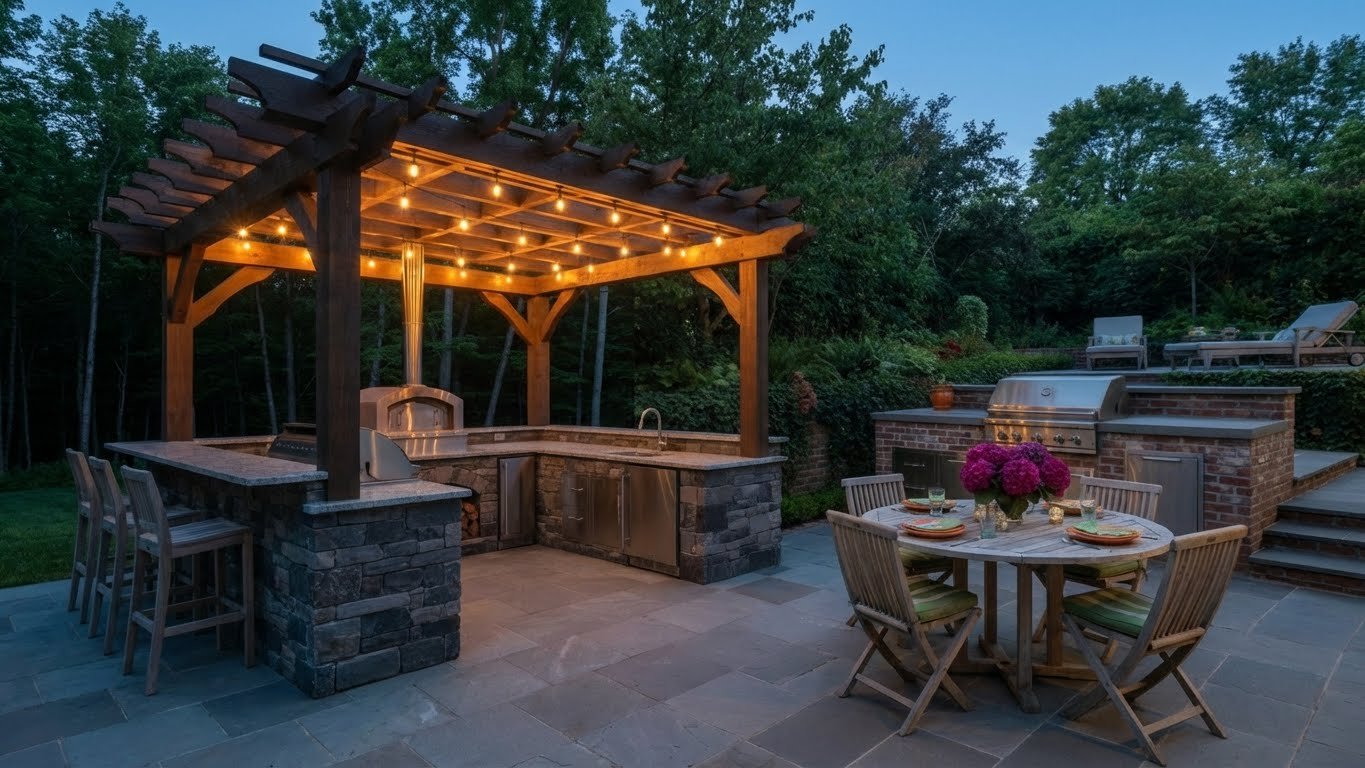
The Utility Hook
You want to cook outside, but your current setup involves a lonely grill and a folding table. You are tired of running back and forth to the indoor kitchen, missing the conversation while you prep food. The trend for 2026 is clear: outdoor kitchens are no longer just “nice to have”—they are full-scale culinary zones that rival their indoor counterparts. A well-designed patio kitchen solves the isolation problem, increases your home’s value by up to 200%, and expands your usable square footage. Whether you have a sprawling lawn or a tiny balcony, this guide delivers 10 specific, actionable designs to turn your backyard into a functional resort.
Key Takeaways
- Zoning is Critical: Separate your hot zones (grills/pizza ovens) from your cold zones (fridges/ice makers) to maximize energy efficiency and flow.
- Material Matters: For 2026, Quartzite and Dekton are outperforming granite for UV resistance and low maintenance.
- Lighting Sets the Mood: Don’t rely on a single floodlight. Layered LED task lighting and ambient string lights extend usability well past sunset.
- High ROI: A permanent outdoor kitchen offers one of the highest returns on investment of any home improvement project, often recouping over 100% of costs in resale value.
Table of Contents
- Stainless Steel And Stone Kitchen
- Modern Pool Bar And Kitchen Combo
- Kitchen With An Island
- Rustic Outdoor Kitchen
- Compact Free-standing Kitchen
- Rustic Kitchen With Wood Storage
- Tropical Scenery
- Italian Dream Kitchen
- Bar And Grill Station
- Outdoor Kitchen And Living Room
- Comparison: Countertop Materials
- Get The Look: Essentials
- Related posts :
- Popular Asked Questions
- Conclusion
Stainless Steel And Stone Kitchen
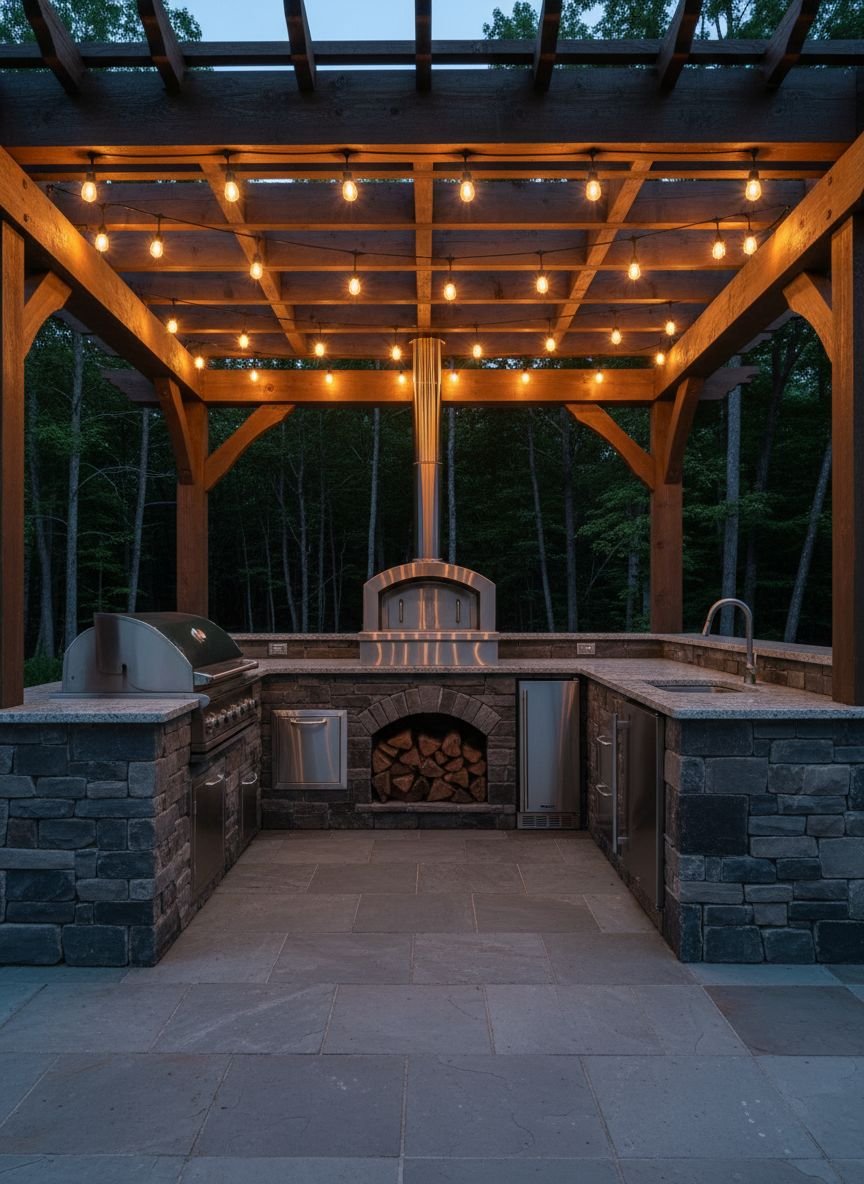
The combination of stainless steel and natural stone creates a striking visual balance that defines modern luxury. The cool, industrial gleam of high-grade 304 stainless steel appliances cuts through the rugged, organic texture of stacked stone veneer. This design works because it merges durability with aesthetics; the steel resists rust and corrosion, while the stone anchors the structure visually, preventing it from looking too sterile.
To implement this, choose a “stacked stone” or “ledger panel” veneer for the cabinet bases. These panels are easy to install over a concrete block or cement board frame. For the countertops, opt for a dark granite or soapstone to contrast with the silver appliances. Keep the layout linear or L-shaped to maximize efficiency. The stone acts as a natural heat barrier, protecting the surrounding area from the high temperatures of a gas grill.
Pro Tip: Use a stainless steel cleaner with a protective oil barrier once a month to prevent “tea staining” (surface rust) if you live in a humid or coastal climate.
Modern Pool Bar And Kitchen Combo
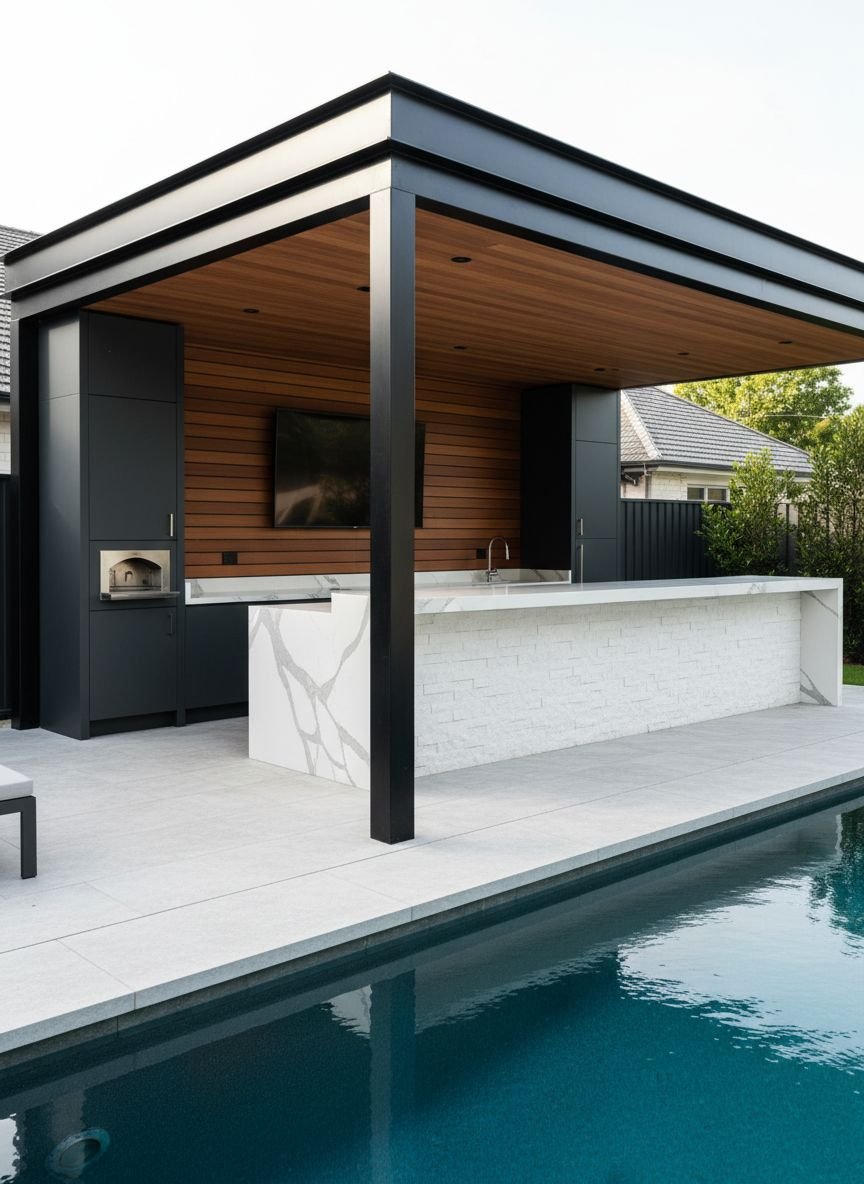
Integrating your kitchen directly with your pool creates the ultimate “swim-up” resort experience. This design eliminates the barrier between the swimmer and the chef, allowing for seamless social interaction. The structure usually features a sunken floor on the dry side, bringing the bartender down to eye level with guests floating in the pool.
Water resistance is the primary design principle here. Standard wood cabinetry will rot quickly in this splash zone. Instead, utilize marine-grade polymer (HDPE) cabinetry which is impervious to water and chlorine. For the counter, a waterfall edge using concrete or quartz creates a sleek, continuous line that mimics the water’s surface. Ensure you install a deep overhang on the pool side (at least 12-15 inches) to allow swimmers to rest their arms or drinks comfortably without splashing into the prep area.
Pro Tip: Install a specialized “outdoor rated” ice maker. Indoor models cannot handle the ambient heat next to a pool and will fail to produce ice on hot days.
Kitchen With An Island
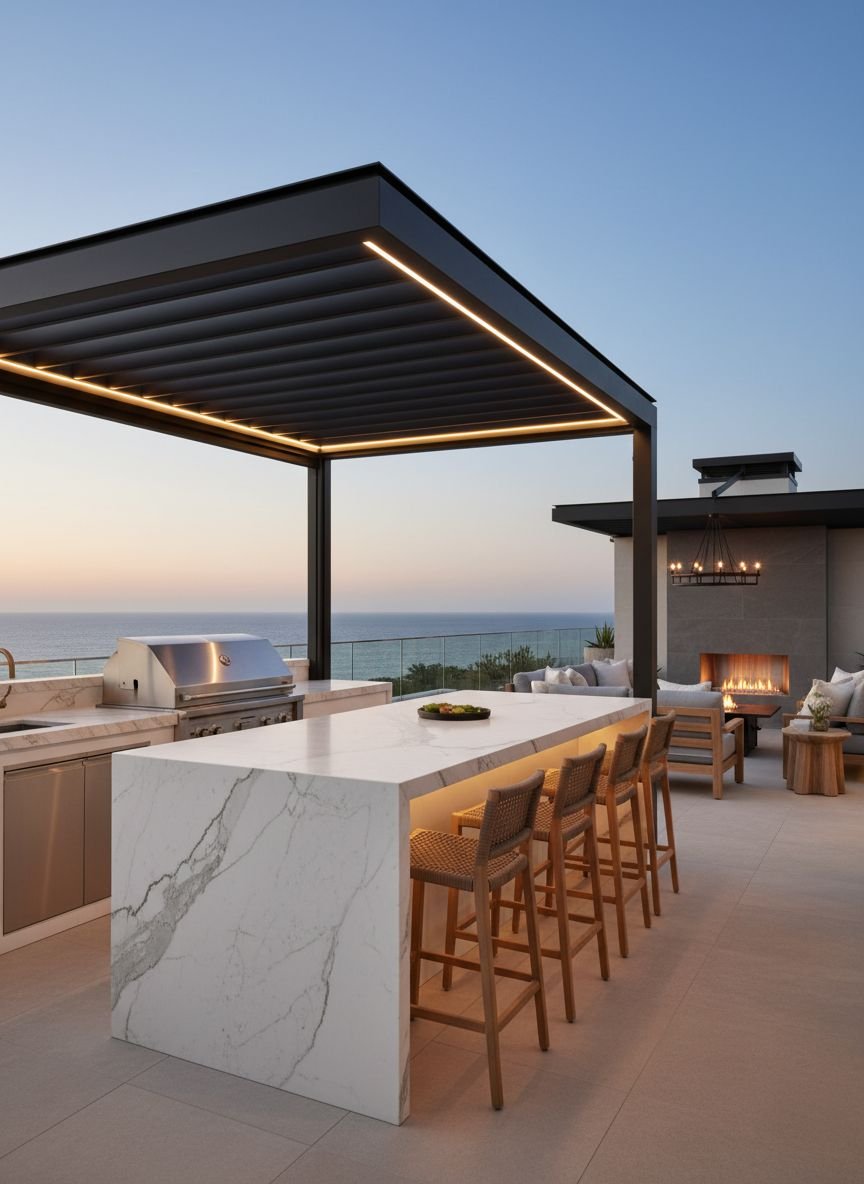
Just like indoors, the island is the heart of the outdoor kitchen. It solves the problem of “back-to-guests” cooking. By placing the grill or a beverage center in a central island, you face your friends and family while you work. This layout requires a bit more patio space but offers superior traffic flow, allowing people to circulate the entire cooking station without bottlenecks.
Visually, the island allows for a two-tone design strategy. You might use a stucco finish for the perimeter counters and a bold, reclaimed wood or cedar cladding for the island base to create a focal point. Lighting is crucial here; install pendant lights rated for exterior use above the island to define the space as a “room” without walls. The island surface also doubles as a buffet line for serving, keeping hot grills away from children while keeping food accessible.
Save this idea to your Pinterest.
Rustic Outdoor Kitchen
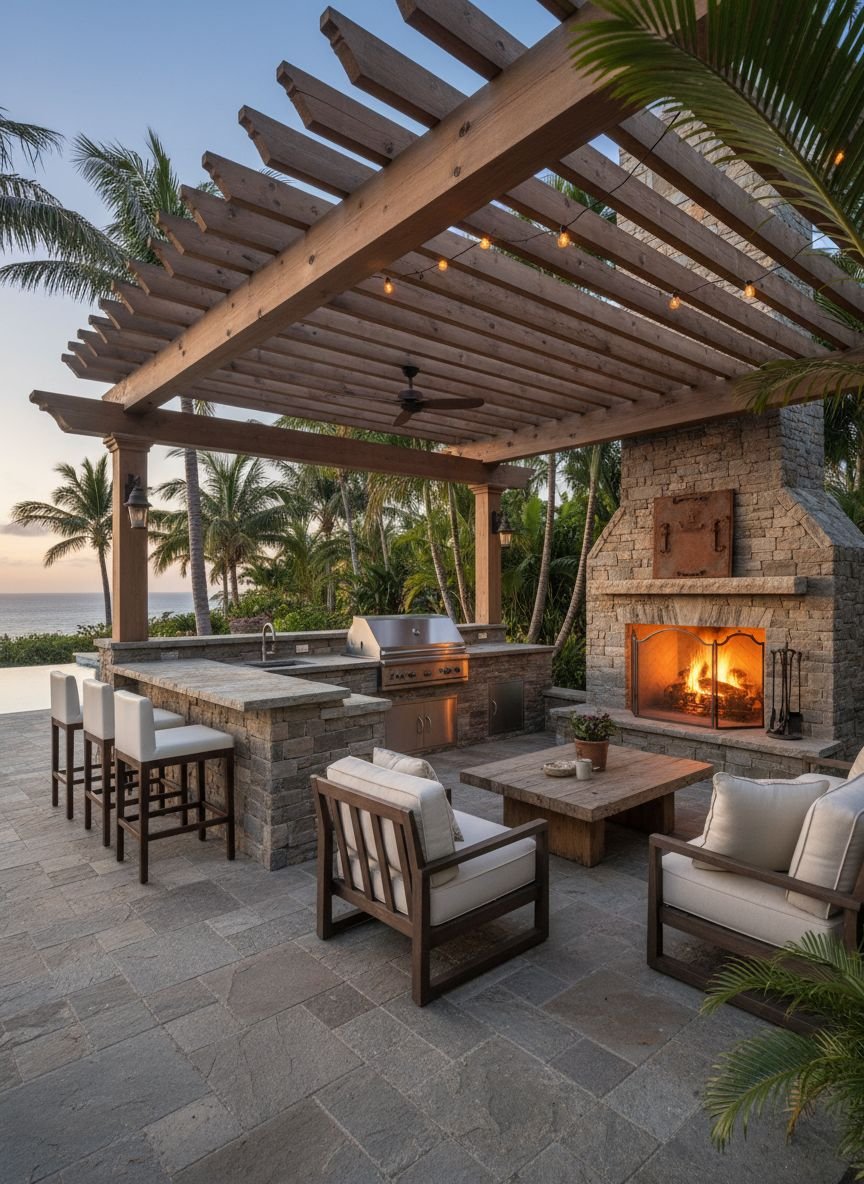
A rustic design embraces imperfections and natural materials to create a cozy, lived-in atmosphere. This style relies heavily on warm earth tones, rough-hewn timber, and tumbled pavers. Unlike sleek modern designs, a rustic kitchen feels like it has always been part of the landscape. It bridges the gap between a manicured garden and the wilder elements of nature.
To achieve this, avoid high-gloss finishes. Use flagstone or travertine for the flooring and countertops. If you use wood for a pergola or cover, leave it unpainted—perhaps stained in a rich walnut or cedar tone—to expose the grain. Copper sinks and oil-rubbed bronze hardware complement this aesthetic perfectly, as they develop a patina over time that enhances the rustic vibe.
Pro Tip: Incorporate a “living wall” or vertical herb garden directly behind the prep station. It adds lush greenery to the rustic look and provides fresh basil and rosemary within arm’s reach.
Compact Free-standing Kitchen
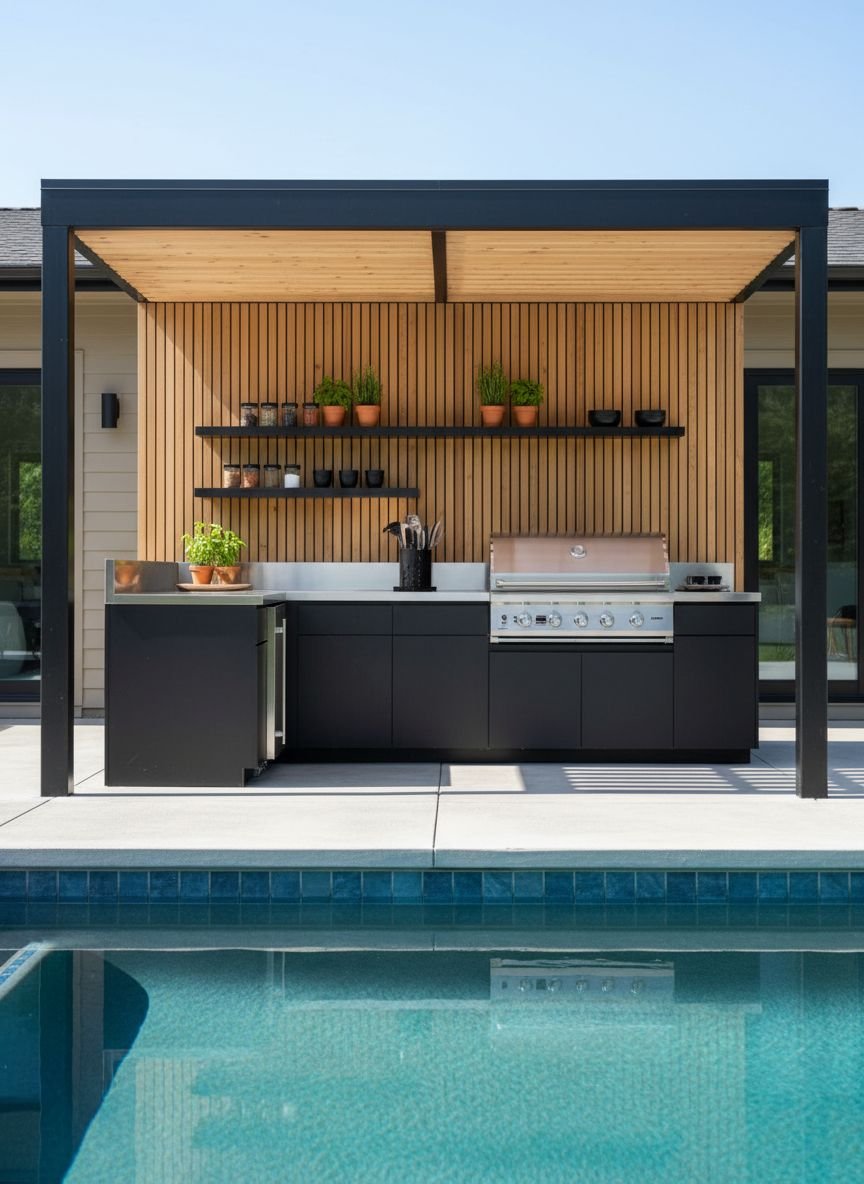
Not everyone has a massive backyard or the budget for a custom build. The compact, free-standing kitchen is the problem-solver for renters and small patio owners. These modular units come pre-fabricated and often include a grill, a small sink, and storage in a single 6-to-8-foot footprint. They require zero masonry work and can be taken with you if you move.
The design focus here is verticality and multi-functionality. Since horizontal counter space is limited, look for units with fold-down side shelves or integrated hooks for tools. Visually, these units often lean towards a sleek, powder-coated metal finish (often black or dark grey) which recedes visually, making a small space feel less cluttered.
Pro Tip: Place your free-standing unit on a set of heavy-duty locking casters. This allows you to wheel the kitchen out of the way when you need the patio space for other activities.
Comparison: Countertop Materials
| Material | Durability | Maintenance | Cost | Best For |
|---|---|---|---|---|
| Granite | High | Medium (Seal yearly) | $$ – $$$ | All-weather exposure |
| Quartzite | Very High | Low | $$$$ | Luxury & UV resistance |
| Concrete | High | High (Stains easily) | $$ | Industrial/Custom shapes |
| Tile | Medium | High (Grout cleaning) | $ | Budget & DIY projects |
| Stainless Steel | High | Low (Scratches) | $$$ | Modern/Pro Chef looks |
Rustic Kitchen With Wood Storage
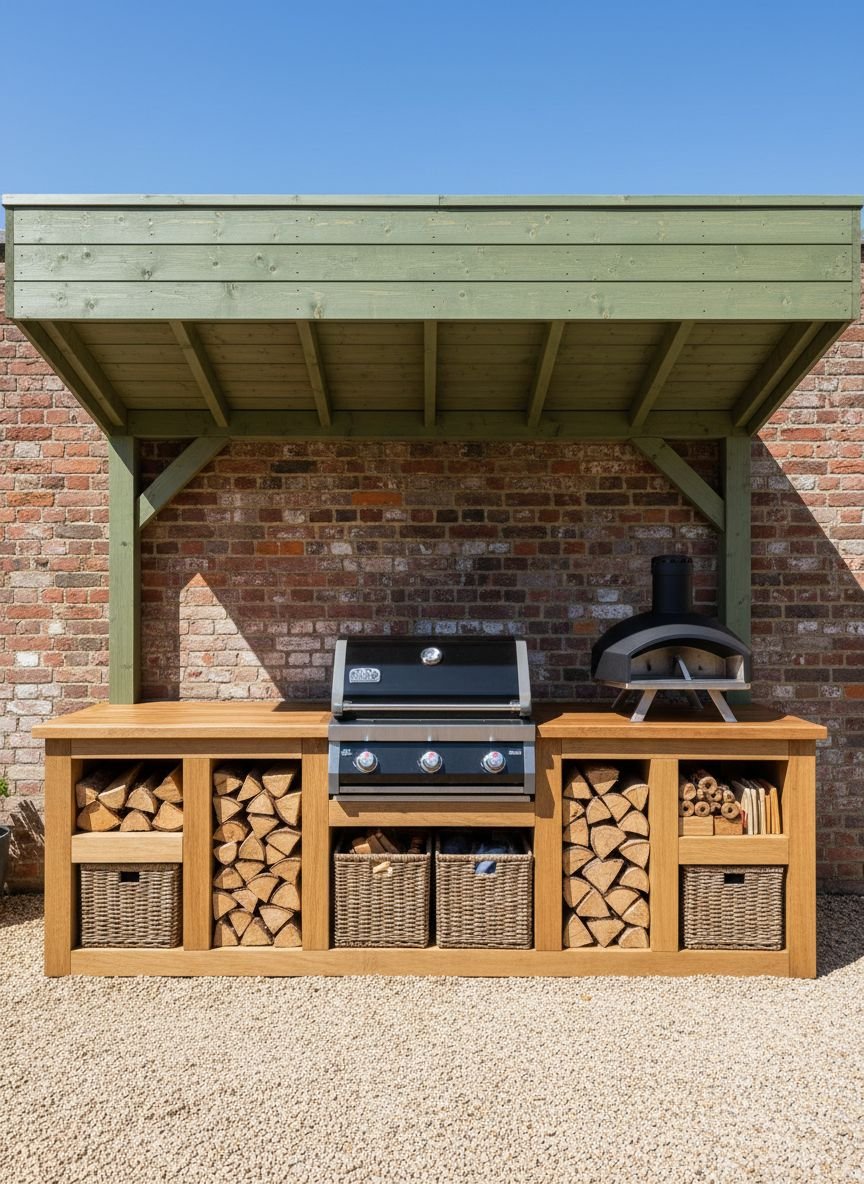
This variation of the rustic kitchen turns functional fuel into a design feature. By incorporating open niches specifically designed to stack firewood, you add texture, warmth, and a wonderful woodsy scent to the patio. The stacked wood creates a repeating pattern that breaks up large expanses of stone or stucco, adding visual interest and depth.
Structurally, these niches are usually built into the base of the pizza oven or the fireplace surround. Ensure the floor of the storage niche is raised at least 2 inches off the ground to prevent moisture from wicking into the logs. Framing the storage area with brick or a contrasting stone header draws the eye and makes the wood pile look intentional, not messy.
Pro Tip: Sort your wood by size within the niches—kindling on top, large logs on the bottom—for an organized, graphic look that is also practical for fire building.
Tropical Scenery
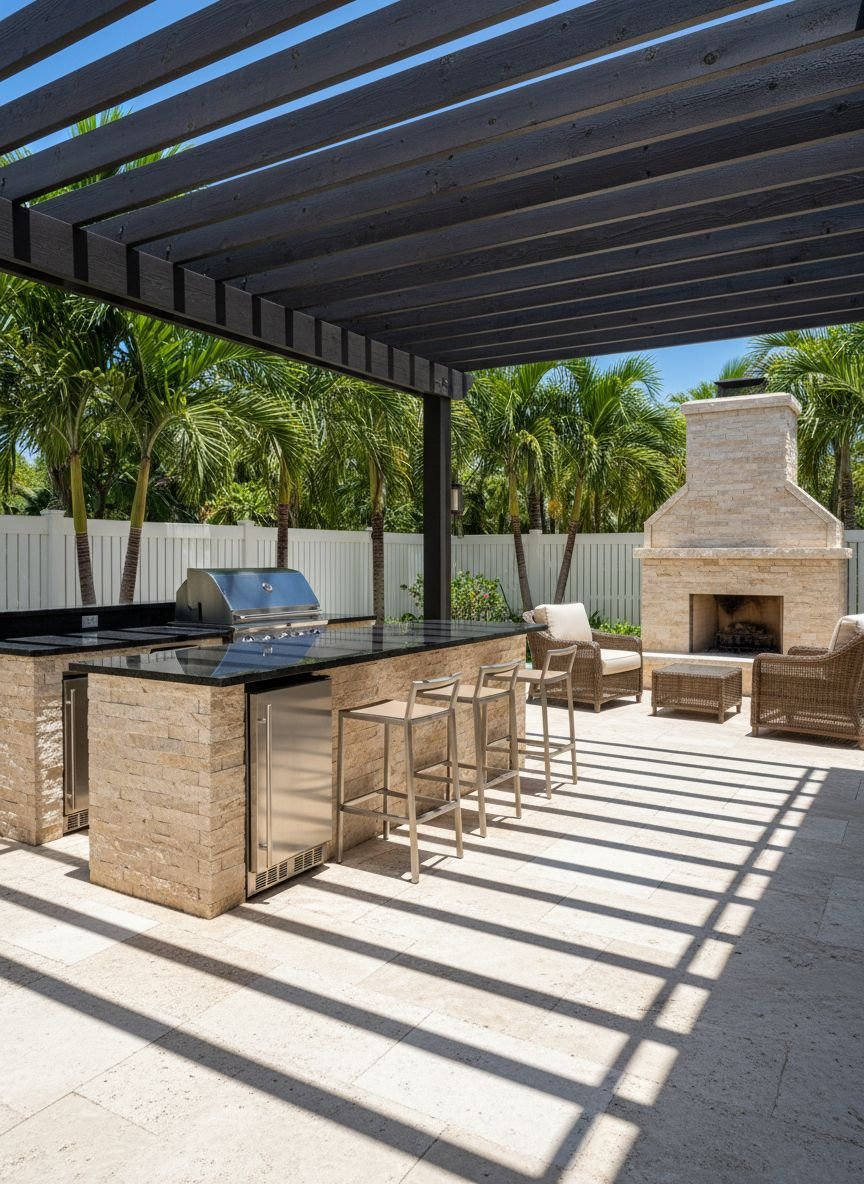
Transport yourself to Bali or Hawaii without leaving your property. A tropical outdoor kitchen relies on lush landscaping and specific material choices to create a vacation vibe. The goal is to blur the lines between the built environment and the garden. Bamboo, thatch, and teak are the primary materials, paired with vibrant greens and pops of floral color.
To implement this, consider a bamboo-slatted roof for your pergola (often called a “palapa”). It provides dappled shade that keeps the kitchen cool while allowing air circulation. Use light-colored stone or concrete for countertops to reflect heat. Surround the perimeter with large-leaf plants like Elephant Ears, Cannas, or Palms to create a natural privacy screen and sound barrier.
Save this idea to your Pinterest.
Italian Dream Kitchen
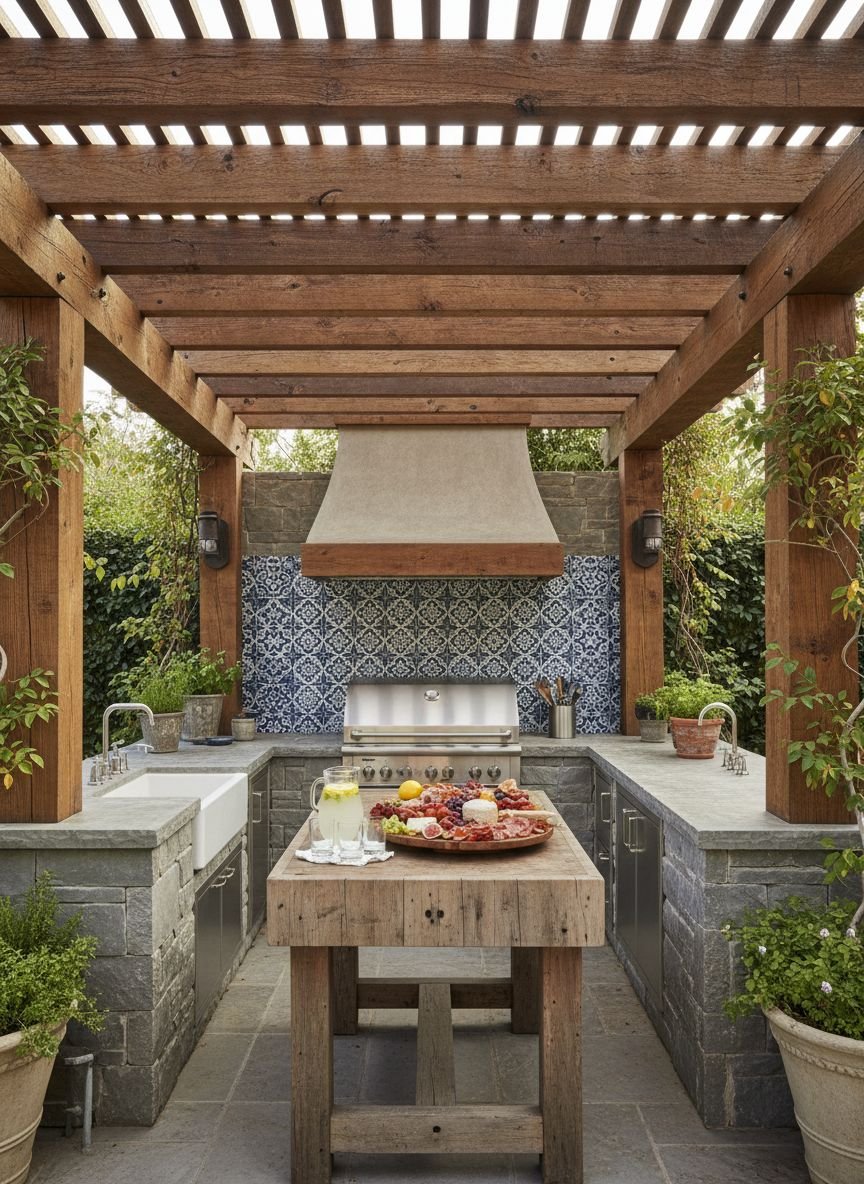
The Italian-inspired kitchen centers entirely around the wood-fired pizza oven. This isn’t just a cooking appliance; it is an architectural statement piece, often featuring a dome shape covered in stucco, brick, or mosaic tiles. The design encourages “al fresco” dining, where the cooking process is slow and communal.
The palette should be warm and Mediterranean: terracotta tiles, cream stucco, and wrought iron accents. A large, farmhouse-style sink is essential for washing garden vegetables. If possible, grow grapevines or wisteria over a trellis above the dining area. The dappled light filtering through the leaves creates the quintessential Tuscan atmosphere.
Pro Tip: When building a pizza oven, ensure the foundation is reinforced concrete. These ovens are incredibly heavy (often exceeding 1,000 lbs) and will crack a standard patio slab.
Bar And Grill Station
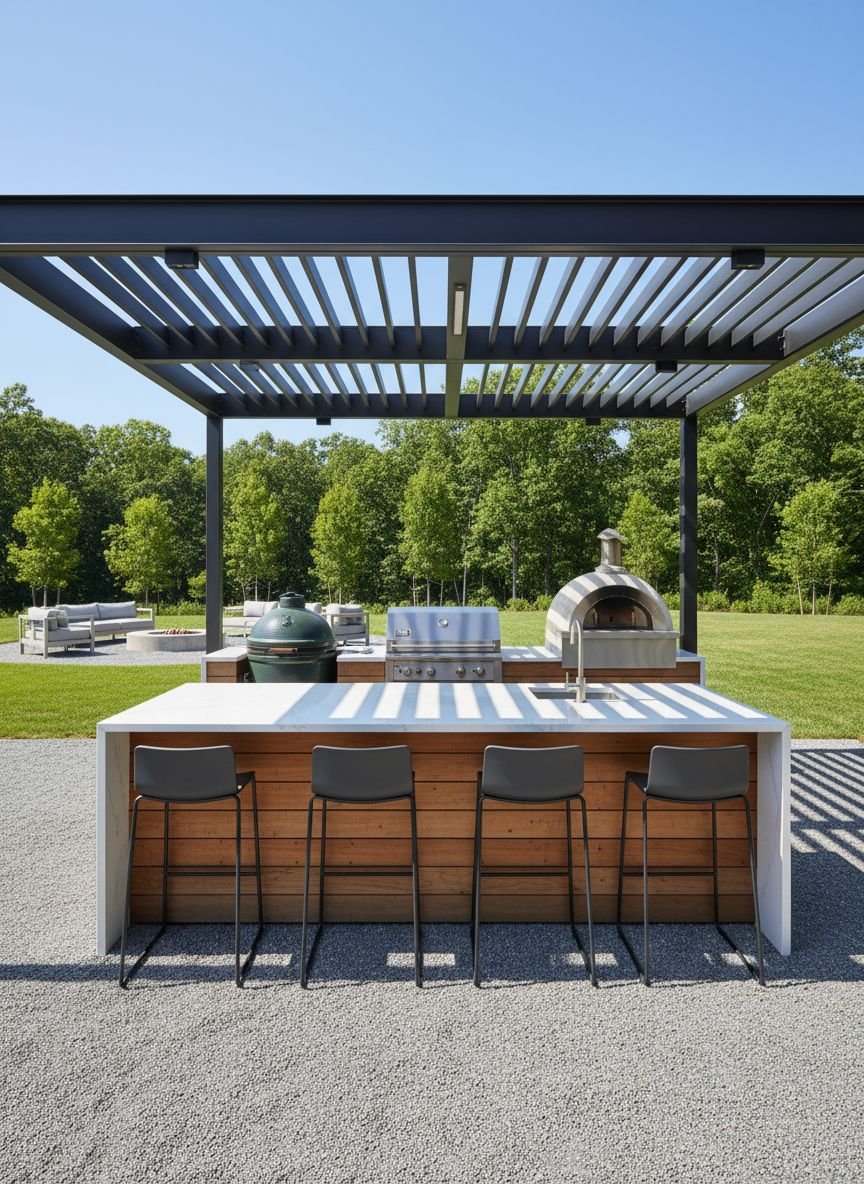
This is the classic “entertainer’s layout.” It prioritizes the beverage station as much as the grill, acknowledging that outdoor parties are 50% food and 50% drinks. The layout typically features a raised bar counter (42 inches high) that hides the lower prep counter (36 inches high) from the guests’ view. This keeps the mess of grilling hidden while allowing guests to sit comfortably with a drink.
Include a “kegerator” or a wine fridge directly under the bar counter. For the bar surface, choose a material that is smooth and cool to the touch, like polished granite or glass-infused concrete. Install LED strip lighting under the bar overhang to illuminate the footwell and create a sophisticated lounge vibe at night.
Outdoor Kitchen And Living Room
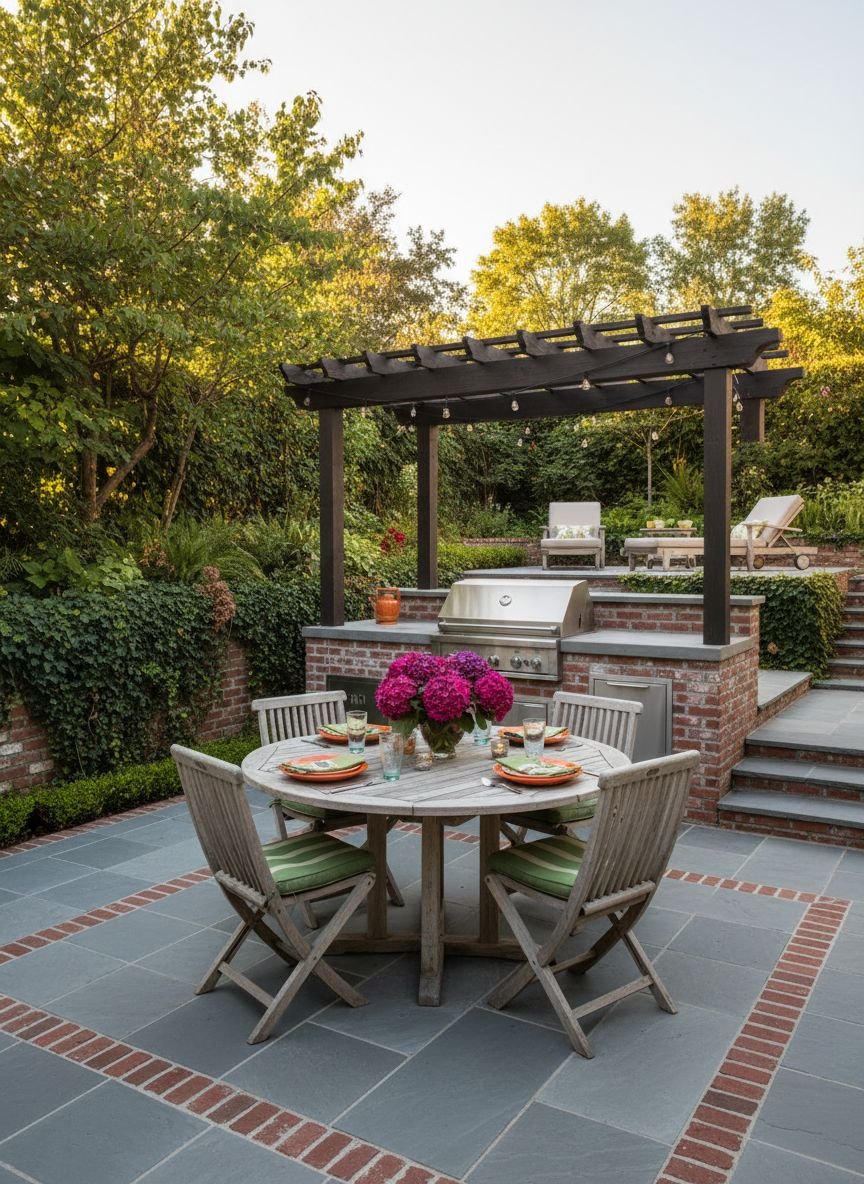
The ultimate luxury is a seamless flow between the cooking zone and a comfortable lounging zone. This concept treats the outdoor space as a singular “great room” without walls. The kitchen transitions into a seating area featuring outdoor sofas, a coffee table, and often a fireplace or television.
Cohesion is the design principle here. The flooring should be continuous—using the same pavers or decking material for both zones to unify the space. Use an area rug (outdoor rated) to visually anchor the living room section. A large pergola or solid roof covering both areas protects furniture from UV damage and rain, making the “living room” usable in almost any weather.
Pro Tip: Position your outdoor TV in a shaded corner facing south (in the Northern hemisphere) to minimize glare, and ensure the seating area faces the kitchen so the cook is never left out of the movie night or the big game.
Get The Look: Essentials
- Lighting: Solar-powered LED path lights and bistro string lights.
- Textiles: Sunbrella fabric cushions for fade resistance.
- Cooling: High-velocity outdoor ceiling fan (wet rated).
- Cooking: 36-inch built-in gas grill with rotisserie.
Related posts :
- 25 Stunning BBQ Island Ideas To Transform Your Backyard Oasis
- 12 Very Small Garden Ideas On a Budget That Will Transform Your Tiny Outdoor Space Into a Paradise
- 15 Stunning Small Living Room Ideas to Transform Your Apartment Space Into a Spacious Sanctuary
Popular Asked Questions
Does an outdoor kitchen add value to my home?
Yes, absolutely. In 2026, real estate data shows that a well-built outdoor kitchen can yield a Return on Investment (ROI) between 55% and 200%. Homes in warmer climates see the highest returns. Buyers view these spaces as expanded square footage, often increasing the overall home value by significantly more than the cost of installation.
What is the best low-maintenance countertop for outdoors?
Quartzite and Dekton are currently the top choices. Unlike standard Quartz (which can fade and yellow under UV rays), Quartzite is a natural stone that resists sun damage. Dekton is an ultra-compact engineered surface that is practically indestructible—it resists heat, scratches, stains, and UV light, requiring zero sealing.
How much does it cost to build a patio kitchen?
As of 2026, the national average for a custom outdoor kitchen is around $16,000. However, prices vary wildly. A simple DIY modular setup can cost as little as $5,000, while a luxury custom build with plumbing, gas lines, and high-end appliances can easily exceed $50,000.
Do I need a permit for an outdoor kitchen?
In most cases, yes. If you are running new electrical, plumbing, or gas lines, you will almost certainly need a permit from your local municipality. Even if you are just building a structure (like a pergola cover) or a masonry island, local zoning laws regarding “setbacks” (distance from the property line) will apply.
Conclusion
The shift toward outdoor living is not slowing down. By investing in one of these 10 Fantastic Outdoor Patio Kitchen Ideas, you are not just buying a grill; you are buying a lifestyle shift that encourages fresh air, family connection, and healthier cooking. Whether you choose the sleek look of stainless steel or the warm embrace of a rustic Italian oven, the key is to start planning now for the upcoming season.



Leave a Comment