
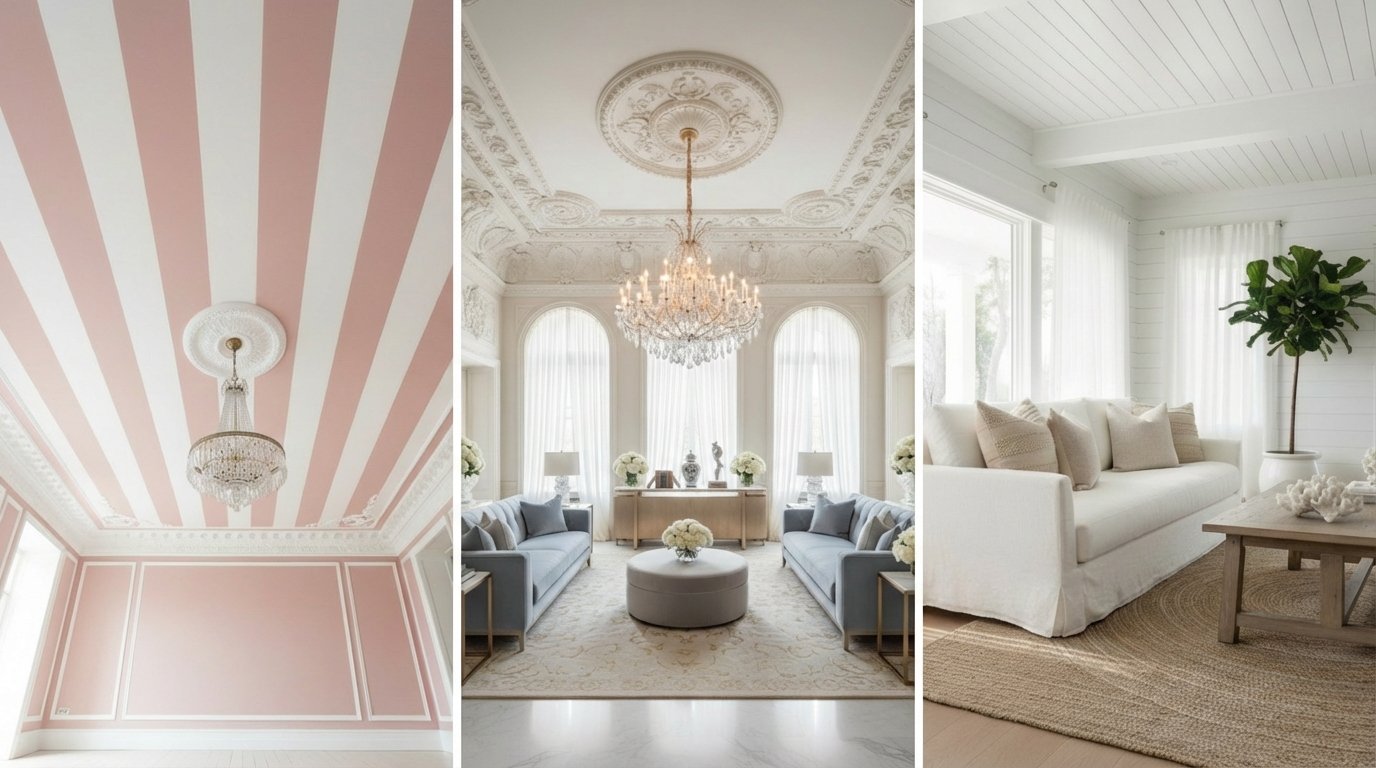
The “fifth wall” remains the most neglected surface in interior design. Most homeowners spend hours selecting rug textures or wall colors but leave the ceiling a stark, boring white. This missed opportunity costs you valuable design real estate. A treated ceiling draws the eye upward. It creates an illusion of height. It transforms a sterile box into a curated sanctuary.
You want a home that feels finished. You need design solutions that maximize your vertical space without cluttering the floor. Whether you crave the warmth of timber or the drama of high-gloss paint, treating your ceiling changes the entire atmosphere of a room. This guide provides actionable, high-impact strategies to turn that blank canvas above your head into a stunning focal point.
Key Takeaways
- Paint changes perception. Dark colors lower a ceiling for coziness; light colors lift it for airiness.
- Texture hides flaws. Wood cladding, beadboard, and tin tiles mask uneven surfaces or old popcorn textures effectively.
- Lighting is structural. Recessed LEDs and architectural pendants define zones within an open-plan space.
- Wallpaper creates focus. A patterned ceiling works best in small rooms like powder rooms or entryways to create a “jewelry box” effect.
- Faux beams add character. You do not need structural support to install lightweight faux wood beams for a rustic modern look.
Table of Contents
- The Wallpapered Ceiling
- Painted Ceiling
- Get Experimental with a Painted Ceiling
- Flat on a Hot Tin Roof
- Wood and Timber
- Exposed Wooden Beams
- DIY Ceiling
- Enhance Your Lighting
- Recessed LED Lighting
- Add Architectural Details
- Beadboard/Wainscoting Ceiling Design
- Popular Asked Questions
- Conclusion
The Wallpapered Ceiling
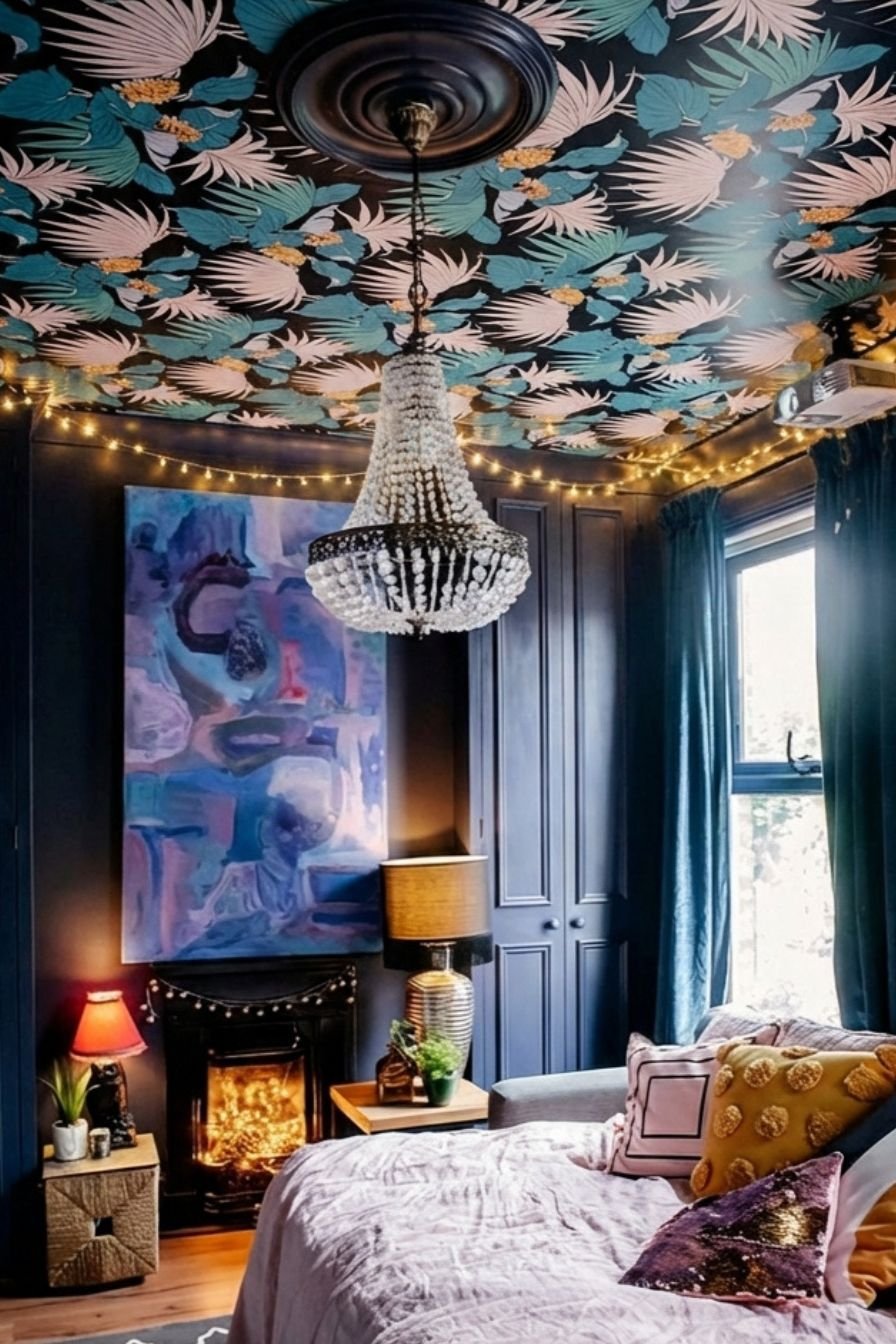
Wallpaper on the ceiling brings instant drama to a room. It acts as a surprise element that guests notice immediately upon entering. This technique works exceptionally well in smaller spaces where wall space is limited by cabinets or windows. The pattern draws the eye up and keeps the room from feeling boxy.
Peel-and-stick options make this a renter-friendly upgrade. You can choose a subtle geometric pattern to add texture without overwhelming the space. Alternatively, bold florals create a moody, maximalist vibe. The key lies in the direction of the paper. Run the pattern parallel to the longest wall to elongate the room. Ensure the ceiling surface is smooth and clean before application to prevent bubbles.
Pro Tip: If you choose a busy wallpaper pattern for the ceiling, keep the walls a solid, neutral color. This prevents the room from feeling chaotic and lets the ceiling remain the star.
Painted Ceiling
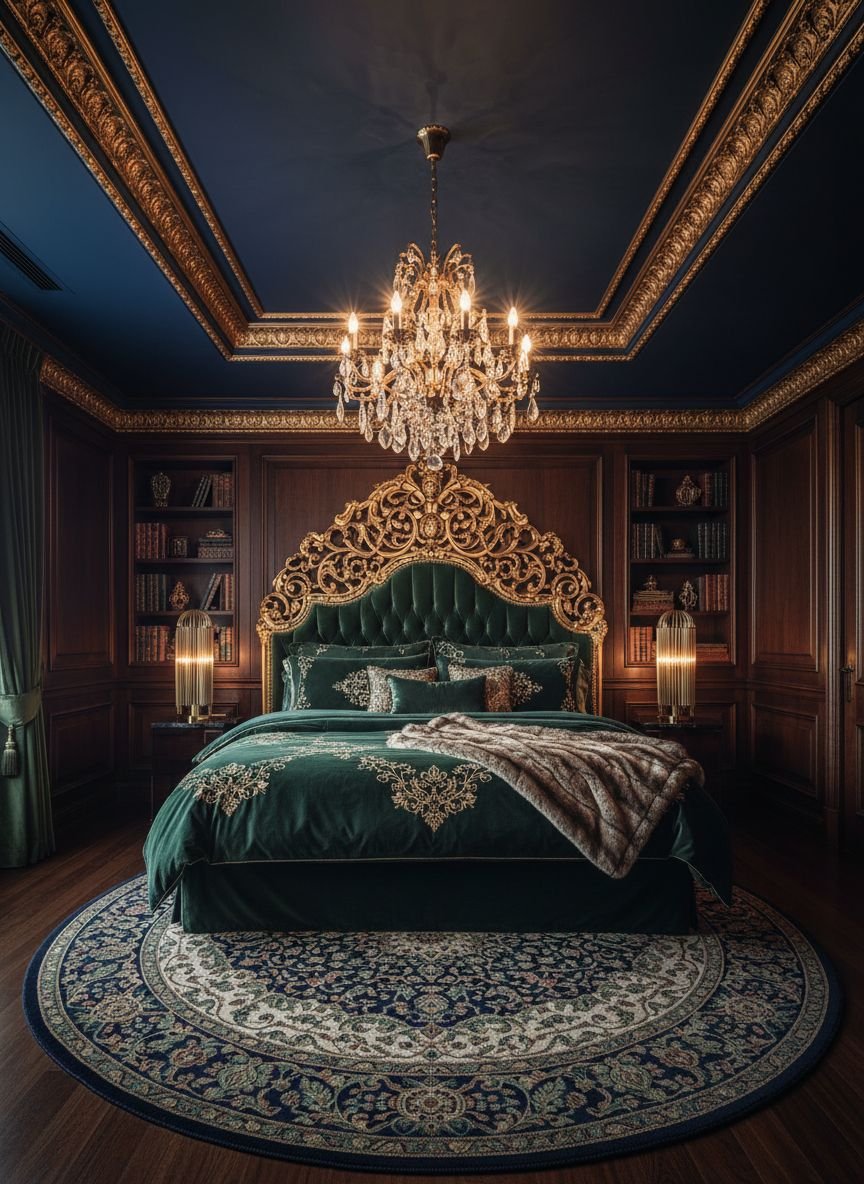
Painting the ceiling is the most cost-effective renovation you can do. A fresh coat of paint alters the psychology of the room. Standard white feels clean but often safe. A soft gray or beige warms the space and bridges the gap between the walls and the overhead plane.
“Color drenching” is a massive trend for 2026. This involves painting the trim, walls, and ceiling the same color. This technique blurs the boundaries of the room. It makes corners disappear. The result is a cocoon-like feeling that works perfectly in bedrooms or media rooms. Matte finishes hide imperfections best, while satin finishes reflect light and add a subtle glow.
Pro Tip: For a cohesive look, dilute your wall paint color with 50% white for the ceiling. This ensures the tones match perfectly without the ceiling feeling too heavy.
Get Experimental with a Painted Ceiling

Step beyond solid colors. The ceiling offers a blank canvas for artistic expression. Geometric shapes painted around a central light fixture create a modern medallion effect. This draws attention to your lighting and anchors the room.
High-gloss lacquer is another bold experimental choice. A high-gloss finish acts like a mirror. It reflects the room below and bounces light into dark corners. This is often called a “liquid ceiling.” It requires a perfectly smooth surface, so skim coating might be necessary first. The visual payoff is immense, adding a layer of luxury found in high-end hotels.
Save this idea to your Pinterest.
Pro Tip: Use painter’s tape to create a checkered or striped pattern. Keep the contrast low (like cream and white) for a subtle look, or high (black and white) for a retro vibe.
Flat on a Hot Tin Roof
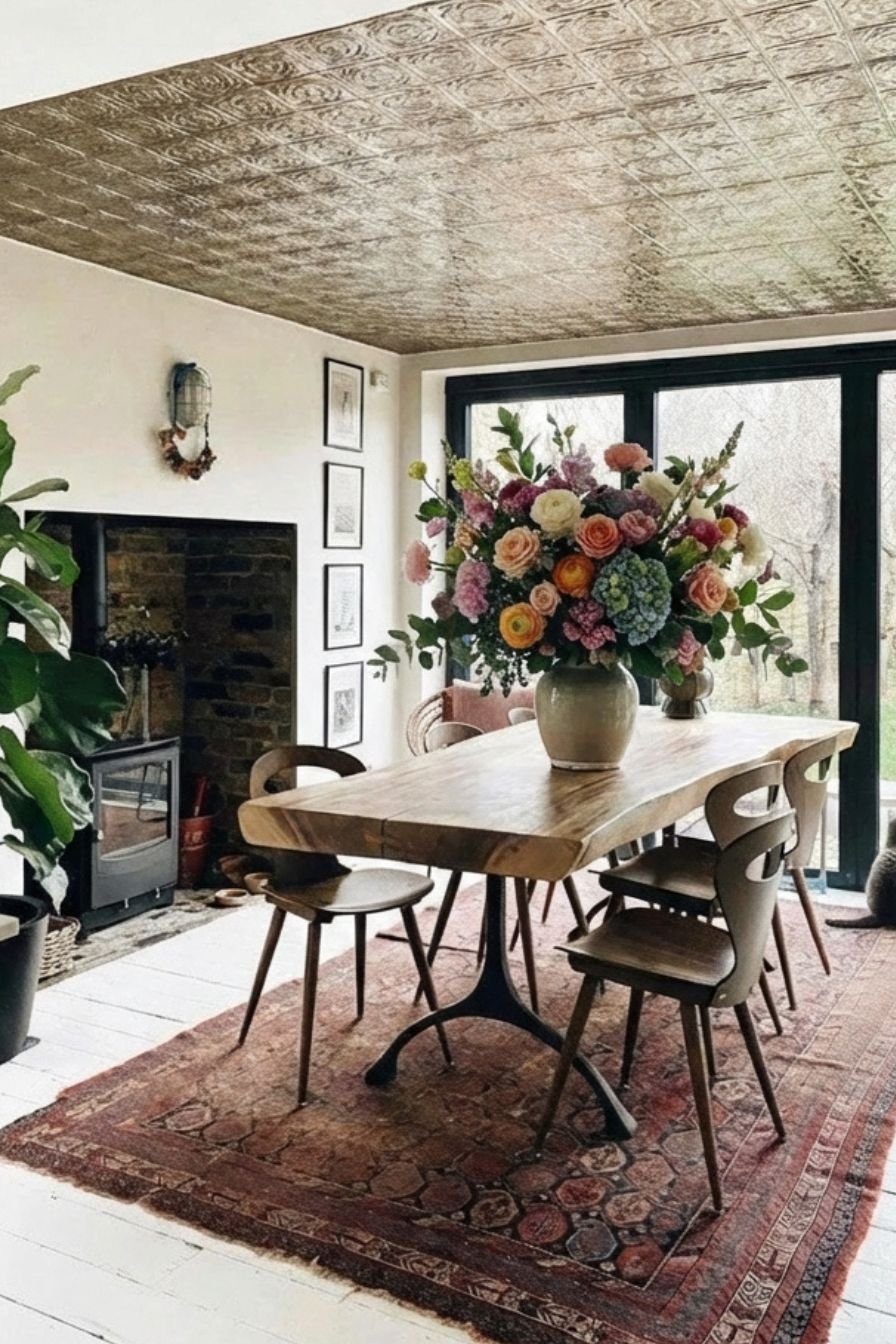
Tin tiles introduce vintage charm and intricate texture. Originally used in the late 19th century to mimic expensive plasterwork, they now serve as a stunning decorative element for modern homes. They work beautifully in kitchens or dining rooms, adding a layer of history and sophistication.
You can find authentic stamped metal sheets or lightweight faux-tin PVC tiles. The PVC options are easier to cut and install with adhesive. They come in various finishes, from copper and brass to matte white. If you choose metal, clear coat it to prevent rust, or paint it to match your decor. The repeating patterns catch the light and add depth that flat paint cannot achieve.
Pro Tip: Install tin tiles inside a coffer or a tray ceiling. This frames the tiles and turns the ceiling into a piece of framed art.
Wood and Timber
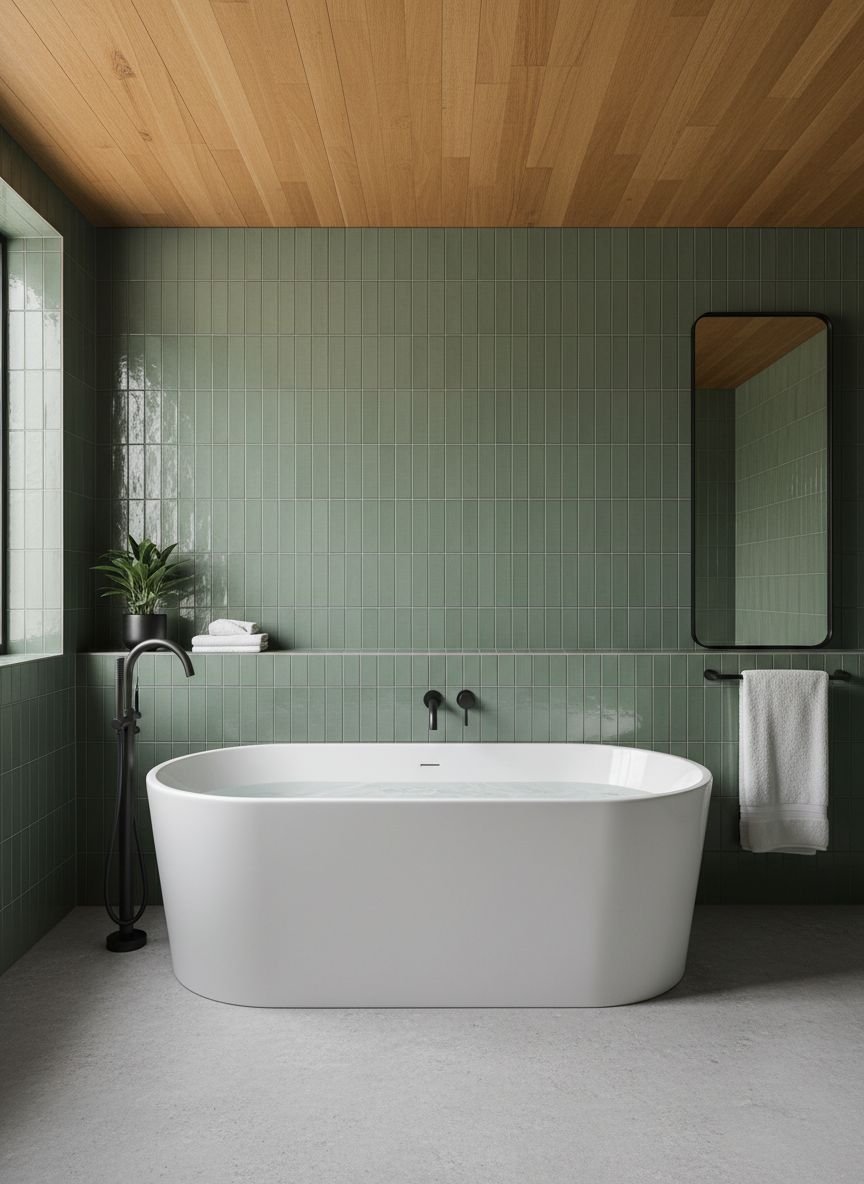
Wood brings organic warmth to sterile modern spaces. Cladding a ceiling in timber softens the acoustics and adds visual weight. Light woods like white oak or birch fit Scandi and Japandi styles perfectly. They keep the room bright while adding natural grain textures.
Tongue-and-groove planks are the standard choice for a seamless look. You can run them lengthwise to make a short room look longer. For a dramatic, moody aesthetic, consider staining the wood a dark walnut or charcoal. This pairs well with concrete floors or white walls, creating a striking contrast that feels grounded and expensive.
Pro Tip: Ensure you leave a small expansion gap at the perimeter of the ceiling. Wood expands and contracts with humidity, and this gap prevents warping. Cover the gap with molding.
Related posts :
- 20 Chic Black and Dark Green Bedroom Ideas for a Trendy Look That Redefine Cozy Luxury
- 15 Stunning Small Living Room Ideas to Transform Your Apartment Space into a Spacious Sanctuary
- 26 Living Room Mirror Ideas Designers Swear By to Instantly Brighten Your Home
Exposed Wooden Beams
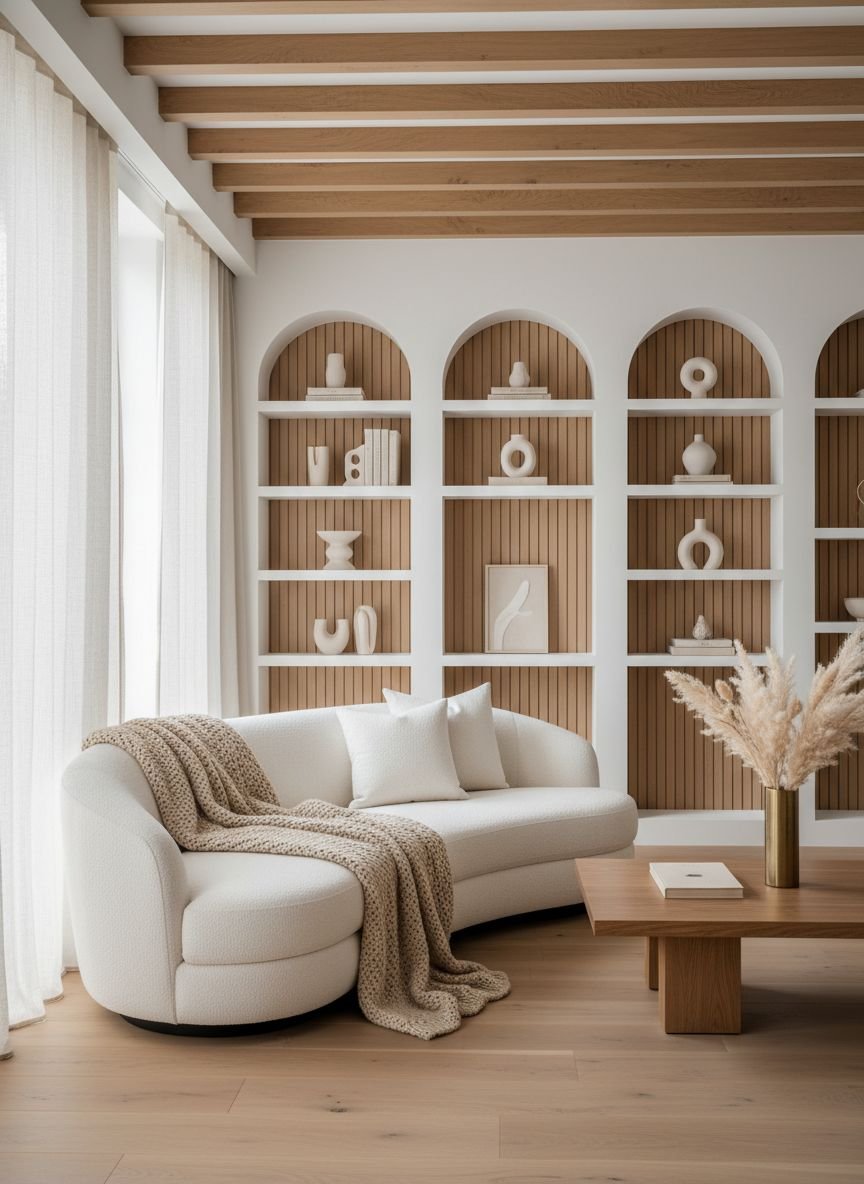
Exposed beams define the architectural structure of a home. In modern farmhouses or industrial lofts, they are essential. If your home has existing structural beams, strip the paint to reveal the raw wood. Sanding and sealing them restores their natural beauty and becomes the room’s main feature.
If you lack structural beams, install faux box beams. These are hollow U-shaped channels made of light wood or high-density polyurethane. They look indistinguishable from solid timber once installed but weigh a fraction of the amount. You can run them in a grid pattern for a coffered look or parallel for a traditional rafter style.
Pro Tip: Match the stain of your ceiling beams to the floor or other wood furniture in the room. This creates a harmonious color palette that ties the space together.
DIY Ceiling
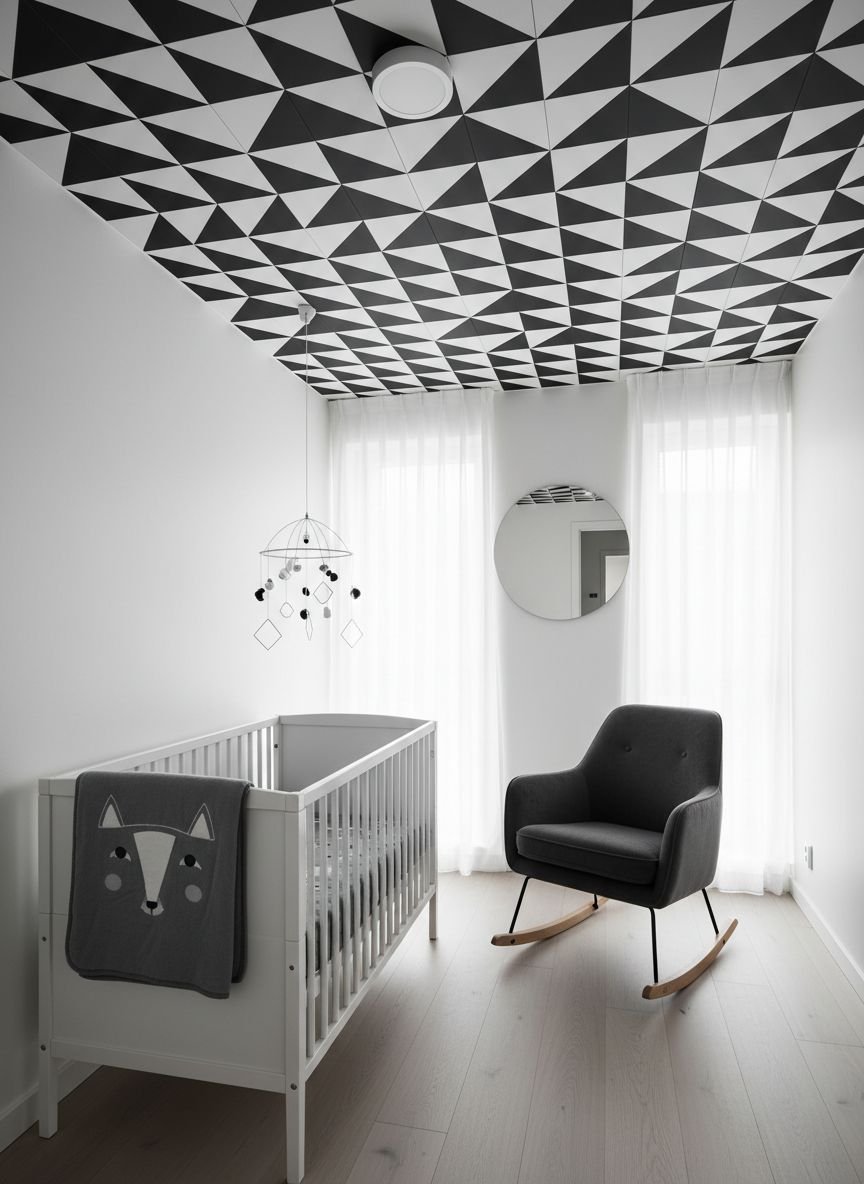
You can transform your ceiling without a contractor. Stenciling is a budget-friendly DIY project that mimics the look of wallpaper or tile. All you need is a stencil, a roller, and patience. Use a metallic paint for the stencil pattern to catch the light and add a touch of glamour.
Another DIY option is applying simple lattice strips. Nail thin wood strips in a geometric pattern over your existing drywall. Paint everything—the strips and the ceiling—the same color. This creates “shadow lines” and texture for the cost of a few pieces of lumber. It elevates a plain flat ceiling into a custom architectural feature.
Save this idea to your Pinterest.
Pro Tip: Use a laser level when applying stencils or trim. Ceilings are rarely perfectly level, and a laser line ensures your pattern stays straight across the room.
Enhance Your Lighting
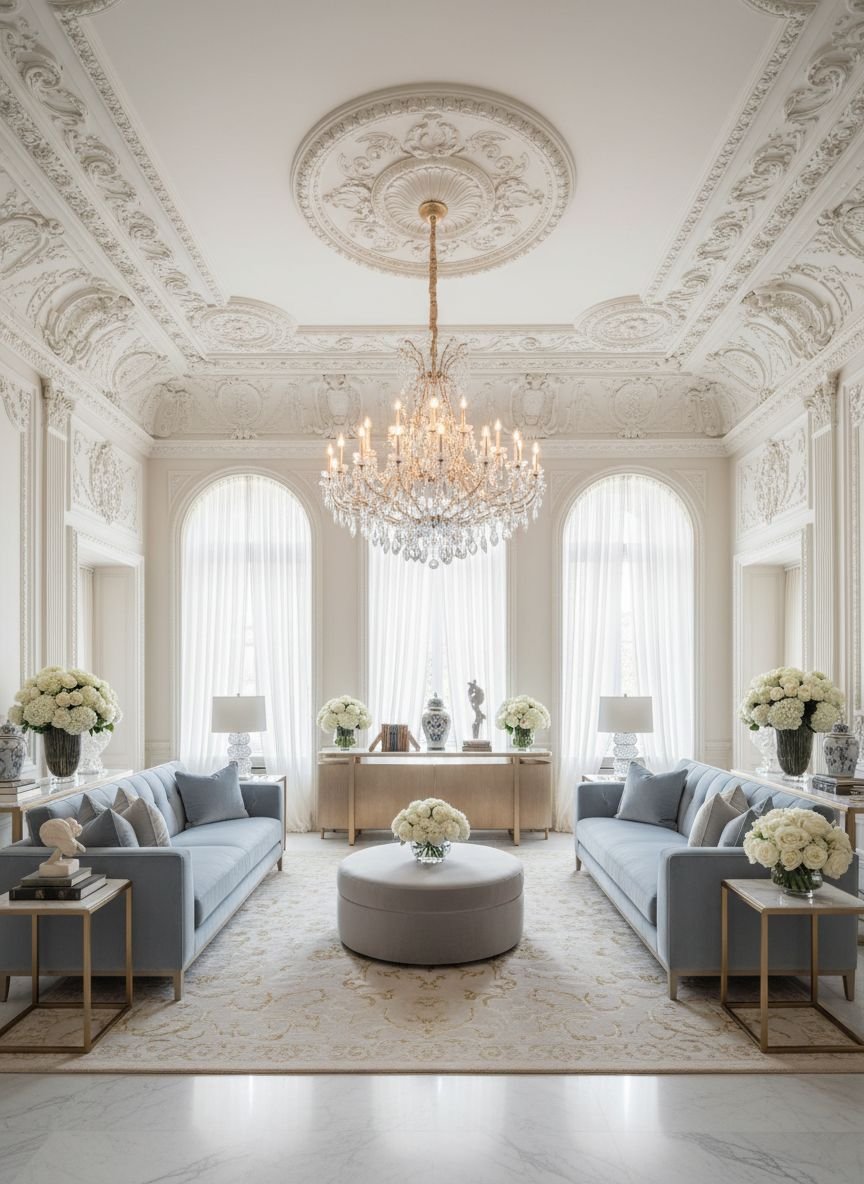
Lighting acts as the jewelry of the ceiling. A single flush mount fixture often looks cheap and provides poor illumination. Layering your lighting changes the functionality of the room. Start with ambient light, then add task lighting and accent fixtures.
Swap out a standard fan for a statement chandelier or a sculptural pendant. In a living room, an oversized fixture centers the seating area. The scale is important; a fixture that is too small makes the ceiling look vast and empty. Choose a fixture that contrasts with your ceiling color—black metal on white, or brass on dark blue—to make it pop.
Pro Tip: Install a dimmer switch for every ceiling light. Being able to control the intensity of the overhead light is crucial for setting the mood in the evening.
Recessed LED Lighting
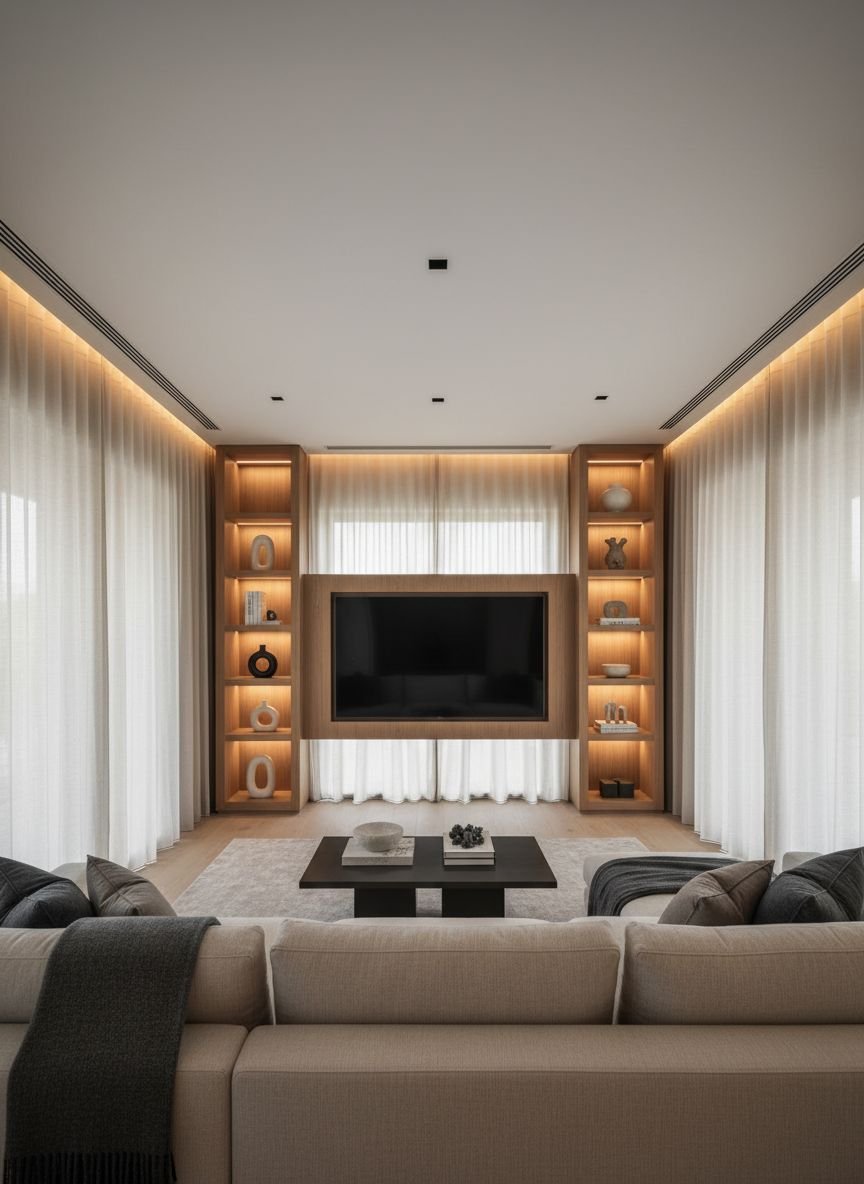
Recessed lighting, or “can lights,” provides a clean, modern look. They disappear into the ceiling, making the room feel larger and less cluttered. The trend for 2026 moves away from the “swiss cheese” look of too many cans. Instead, design is shifting toward strategic placement.
Use gimbal (adjustable) LED recessed lights to wash walls with light. This highlights artwork or textured walls. Perimeter lighting is another modern approach. Installing LED strips in a cove or drop ceiling creates a soft glow that reflects off the ceiling surface. This indirect light is flattering and reduces eye strain.
Pro Tip: Choose “warm dim” LEDs. These bulbs shift from a cool bright white during the day to a warm, candle-like glow when dimmed, mimicking natural circadian rhythms.
Add Architectural Details
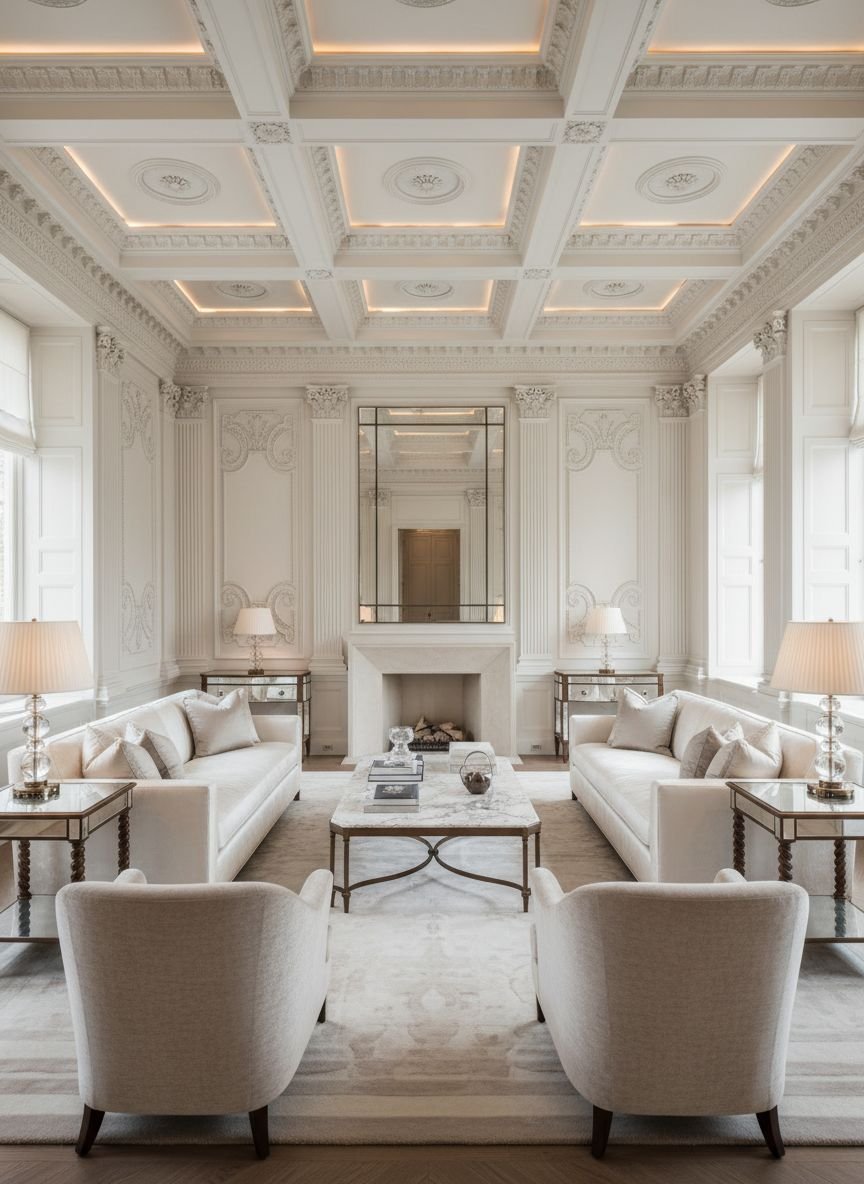
Moldings and medallions bring historic elegance to modern homes. A ceiling medallion around a light fixture serves as a focal point. It anchors the light and adds a layer of intricate detail. You can buy lightweight polyurethane medallions that glue directly to the drywall.
Crown molding softens the transition between wall and ceiling. For a modern look, choose a simple, flat profile rather than an ornate Victorian curve. If you have high ceilings, stack two layers of molding to create a substantial cornice. This draws the eye up and makes the room feel grander and more established.
Pro Tip: Paint the crown molding the same color as the wall, but in a semi-gloss finish. This heightens the walls visually, whereas painting it white can visually “cap” the room and make it feel shorter.
Beadboard/Wainscoting Ceiling Design
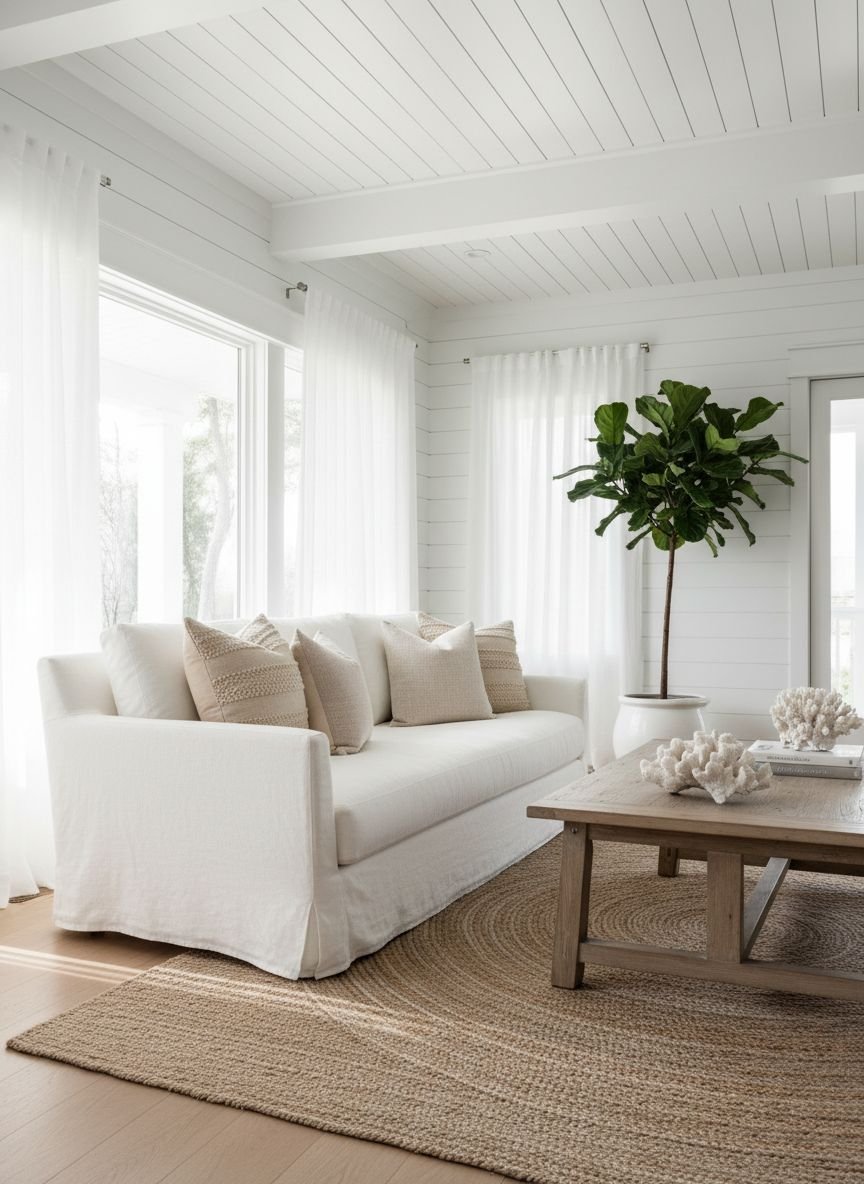
Beadboard offers a classic, cottage-core aesthetic that feels timeless. The linear grooves add texture and rhythm to the ceiling. It is an excellent solution for covering up damaged drywall or popcorn textures without messy scraping.
Sheets of beadboard paneling are affordable and easy to install. Finish the edges with trim for a polished look. White beadboard feels coastal and airy, perfect for porches or bathrooms. Painting beadboard a moodier color, like slate blue or sage green, adapts the look for a modern library or den. The texture adds interest without the busyness of a pattern.
Pro Tip: Run the beadboard grooves perpendicular to the ceiling joists for easier fastening. If the room is long and narrow, running them across the short width can make the room feel wider.
Popular Asked Questions
How can I make my low ceiling look higher?
Paint the ceiling a lighter color than the walls. White is the standard choice, but a very pale blue also creates the illusion of the sky, opening up the room. Avoid heavy textures or low-hanging light fixtures. Install curtain rods as close to the ceiling as possible to draw the eye upward.
Is it expensive to install a wood ceiling?
It depends on the material. Solid hardwood planks are expensive and labor-intensive. However, tongue-and-groove pine or laminate planks are budget-friendly alternatives. Peel-and-stick wood veneer planks are the cheapest option and are very DIY-friendly.
Can I cover a popcorn ceiling without scraping it?
Yes. Scraping is messy and labor-intensive. You can cover popcorn ceilings with beadboard paneling, wood planks, or styrofoam ceiling tiles. These materials go directly over the texture (using furring strips or adhesive), instantly hiding the popcorn finish.
What is the ceiling trend for 2026?
The biggest trend is “Color Drenching” (painting walls and ceilings the same color) and the use of sustainable, organic materials like bamboo, cork, and raw timber. High-gloss “lacquer” ceilings are also trending for their ability to bounce light.
Conclusion

The ceiling is the final frontier of interior design. Treating it with care completes your home. Whether you choose the simple elegance of a painted color drench, the rustic charm of exposed beams, or the sophisticated texture of tin tiles, the impact is undeniable. You elevate your space from standard to stunning by simply looking up.




Leave a Comment