
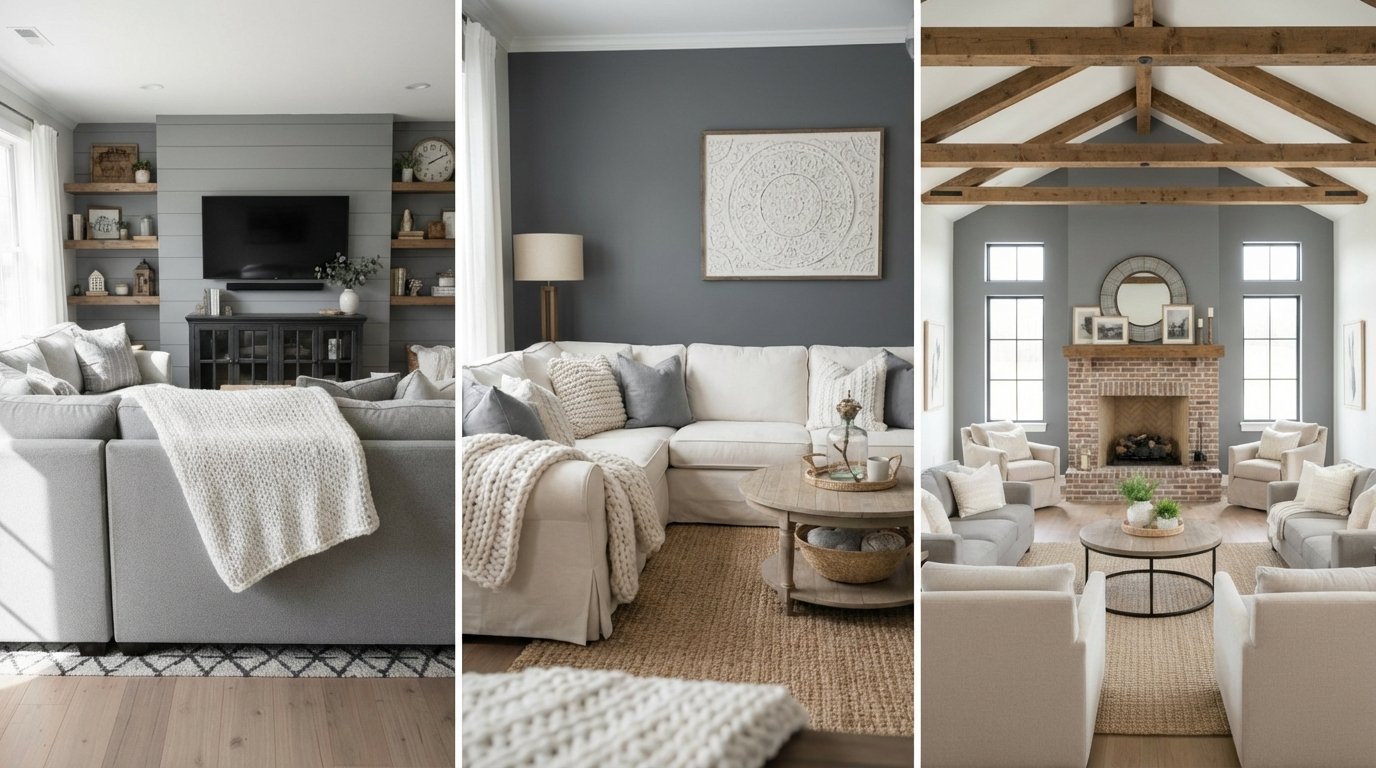
Is gray dead? Not even close.
While the flat, “builder-grade” gray of the early 2010s has faded, a new era of sophisticated, textured, and warm gray tones has taken over the interior design world in 2026. If you feel your farmhouse living room is lacking depth or feels too “cookie-cutter,” a gray accent wall is the ultimate solution. It grounds the space, provides a stunning backdrop for vintage decor, and bridges the gap between rustic charm and modern elegance.
In this guide, we are not just talking about a coat of paint. We are exploring architectural features, tactile textures, and moody hues that redefine what a “neutral” room can be. From “mushroom” greige tones that feel earthy and organic to dramatic charcoal shiplap that commands attention, these ideas will prove that gray is the most versatile color in your farmhouse palette.
Key Takeaways
- Texture is King: Flat paint is out; shiplap, board and batten, and plaster finishes are essential for a high-end 2026 look.
- Warmth Matters: Swap cool, blue-based grays for “mushroom,” taupe, or greige undertones to keep the room cozy, not sterile.
- Contrast Creates Drama: Pair deep charcoal walls with light wood furniture and cream textiles to create a striking visual balance.
- Architectural Detail: Use molding and trim to add history and character to a new build farmhouse.
- Lighting is Crucial: Gray walls change significantly with light; always test samples at different times of day before committing.
Table of Contents
- Subtle Elegance in a Contemporary Gray Living Room
- Contemporary Update on Shiplap Charm
- Tranquil Harmony in Modern Farmhouse Living Space
- Welcoming Farmhouse Ambiance with Gray Hues
- Subdued Sophistication in Silver-Toned Living Space
- Navy and Silver Tranquility in Home Design
- Serene Neutrality Enhanced by Wooden Accents
- Popular Asked Questions
- Conclusion
Subtle Elegance in a Contemporary Gray Living Room
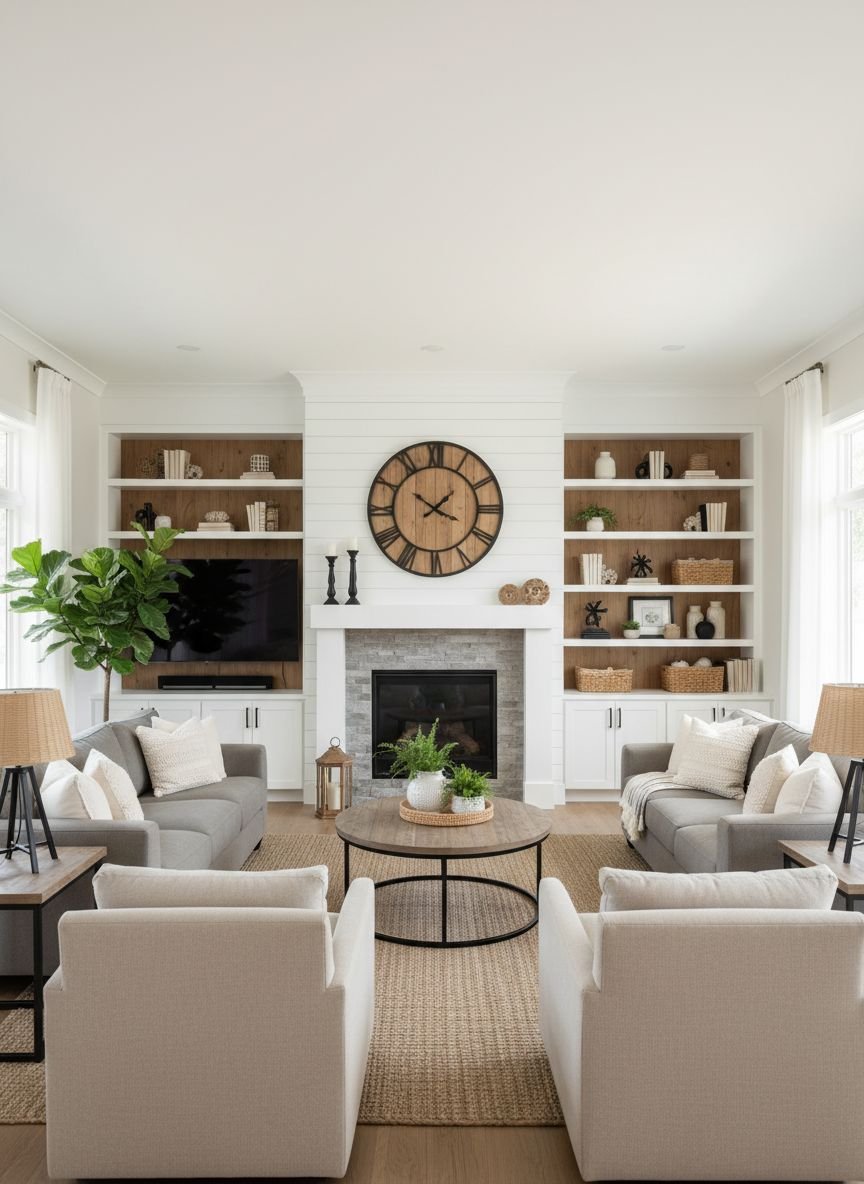
When we talk about “subtle elegance,” we are referring to the power of the “barely there” gray. This look relies on a pale, misty gray that acts almost like a white but with much more depth. It is perfect for smaller farmhouse living rooms where you want to maintain an airy, open feel without the clinical starkness of pure white. The key here is the undertone; a violet or blue undertone can make the space feel cool and crisp, which works beautifully with silver accents and glass decor.
To implement this, choose a paint color with a high Light Reflectance Value (LRV). This ensures the wall bounces natural light around the room. Pair this wall with cream-colored linen sofas and distressed white wood furniture. The contrast is low, creating a “monochromatic” vibe that feels incredibly high-end and curated. It is less about shouting for attention and more about creating a serene, whisper-soft backdrop for your life.
Pro Tip: Use matte finish paint for this look. A sheen can make pale gray look industrial, while a matte finish looks like velvet and hides wall imperfections.
Contemporary Update on Shiplap Charm
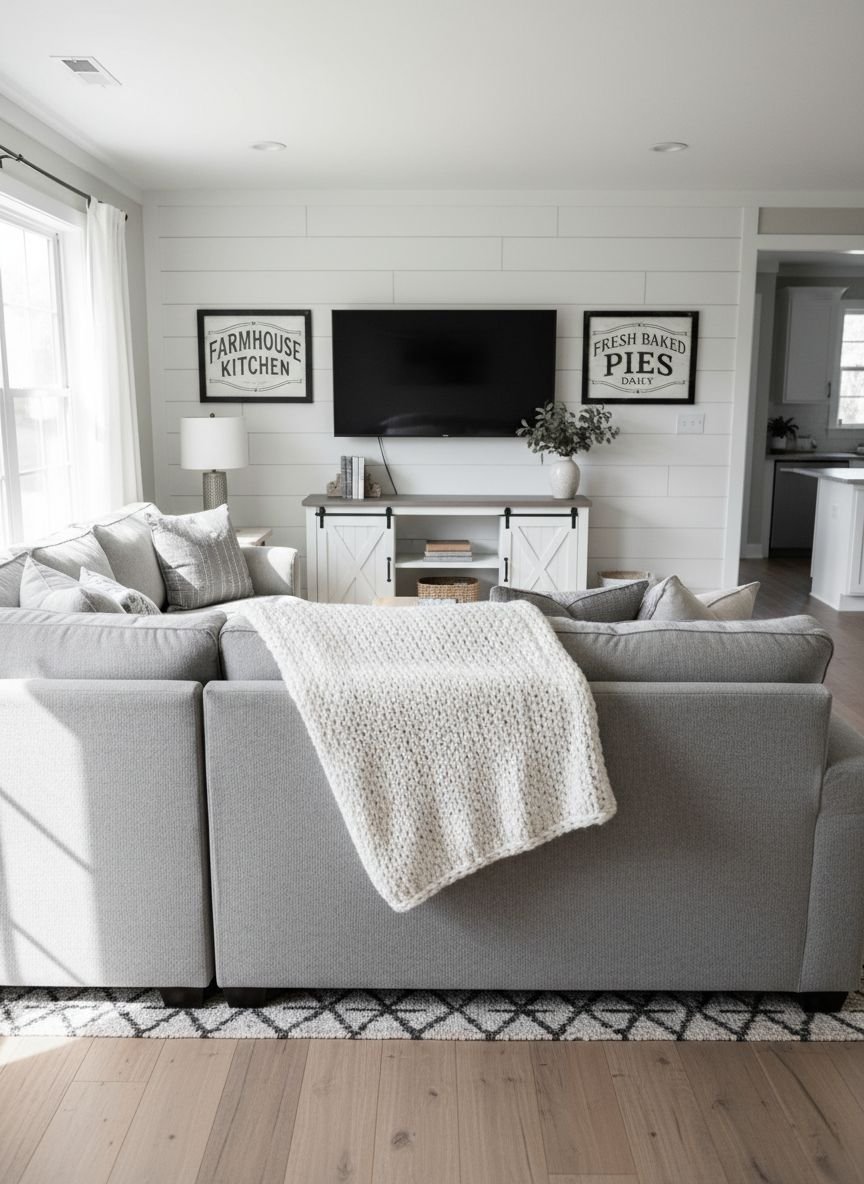
Shiplap is the hallmark of the farmhouse style, but the 2026 update moves away from the ubiquitous white horizontal boards. Instead, painting your shiplap a medium-tone gray instantly modernizes the aesthetic. This approach takes the rustic texture of the wood boards and refines it with a contemporary color palette. The shadows between the boards (the “rabbets”) catch the light differently when painted gray, adding a rich, linear texture that flat paint simply cannot achieve.
For a true contemporary twist, consider installing the shiplap vertically rather than horizontally. This draws the eye upward, making your ceilings feel higher—a common trick in modern farmhouse design. Select a “warm gray” or “greige” to keep the wood feeling organic. This wall becomes the perfect anchor for a leather cognac sofa, as the warm brown leather pops beautifully against the cool, structured lines of the gray wood.
Pro Tip: If you are DIYing this, paint the edges of the shiplap boards before you nail them to the wall to ensure no raw wood shows through the gaps when the wood expands and contracts.
Save this idea to your Pinterest.
Tranquil Harmony in Modern Farmhouse Living Space
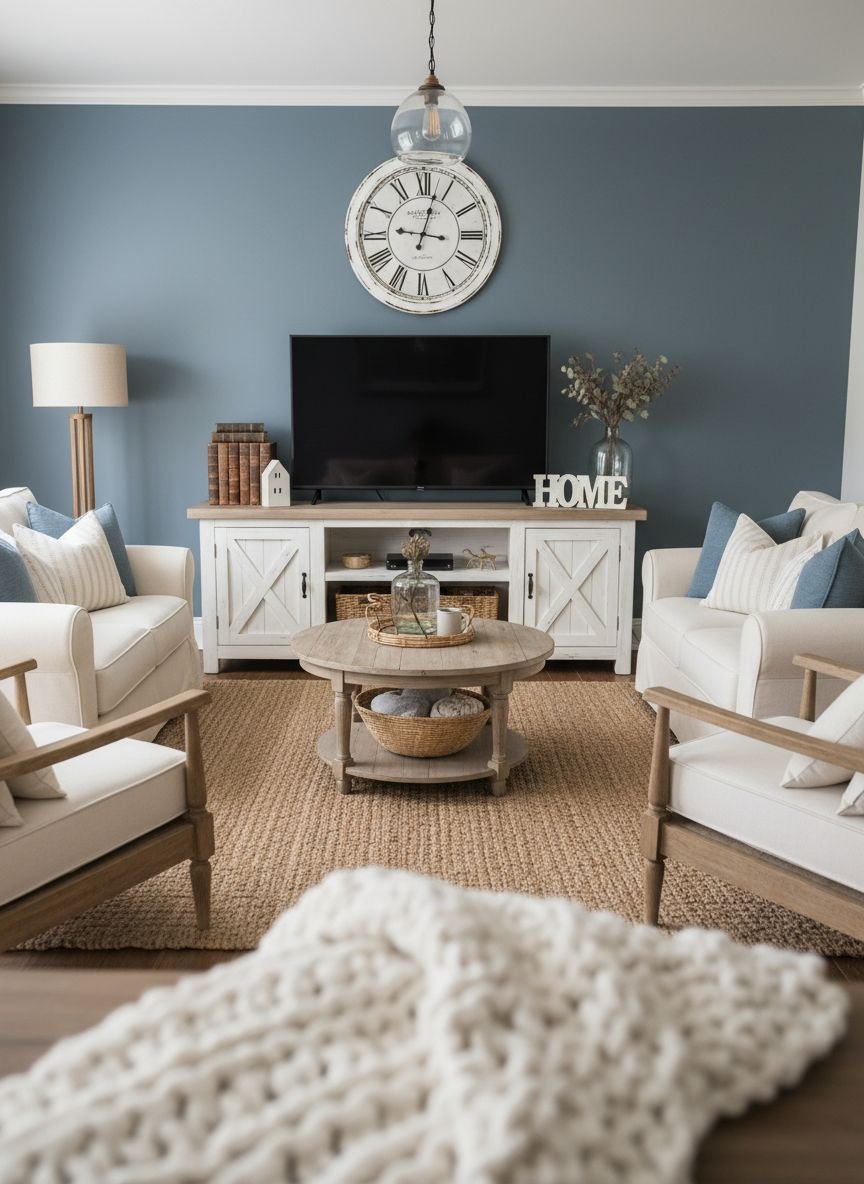
Tranquility in design often comes from balance. This accent wall idea focuses on “Mushroom Gray”—a color that sits right between beige and gray. It is the “it” color for 2026 because it feels grounded and earthy. Unlike the cool grays of the past, mushroom gray wraps the room in a warm hug. It pairs exceptionally well with natural elements like jute rugs, woven baskets, and unpainted timber beams, which are staples of the farmhouse look.
To achieve this harmony, avoid cluttering the accent wall. Let the color and the texture speak for themselves. Perhaps use a limewash paint technique here. Limewash creates a cloudy, mottled texture that looks like old-world plaster. This subtle movement in the paint adds an organic, lived-in feel that is essential for a space meant to be relaxing. It removes the “newness” of a renovation and adds instant soul to the living room.
Pro Tip: Layer different shades of oatmeal and sand in your throw pillows to bridge the gap between your mushroom gray wall and your other furniture.
Welcoming Farmhouse Ambiance with Gray Hues
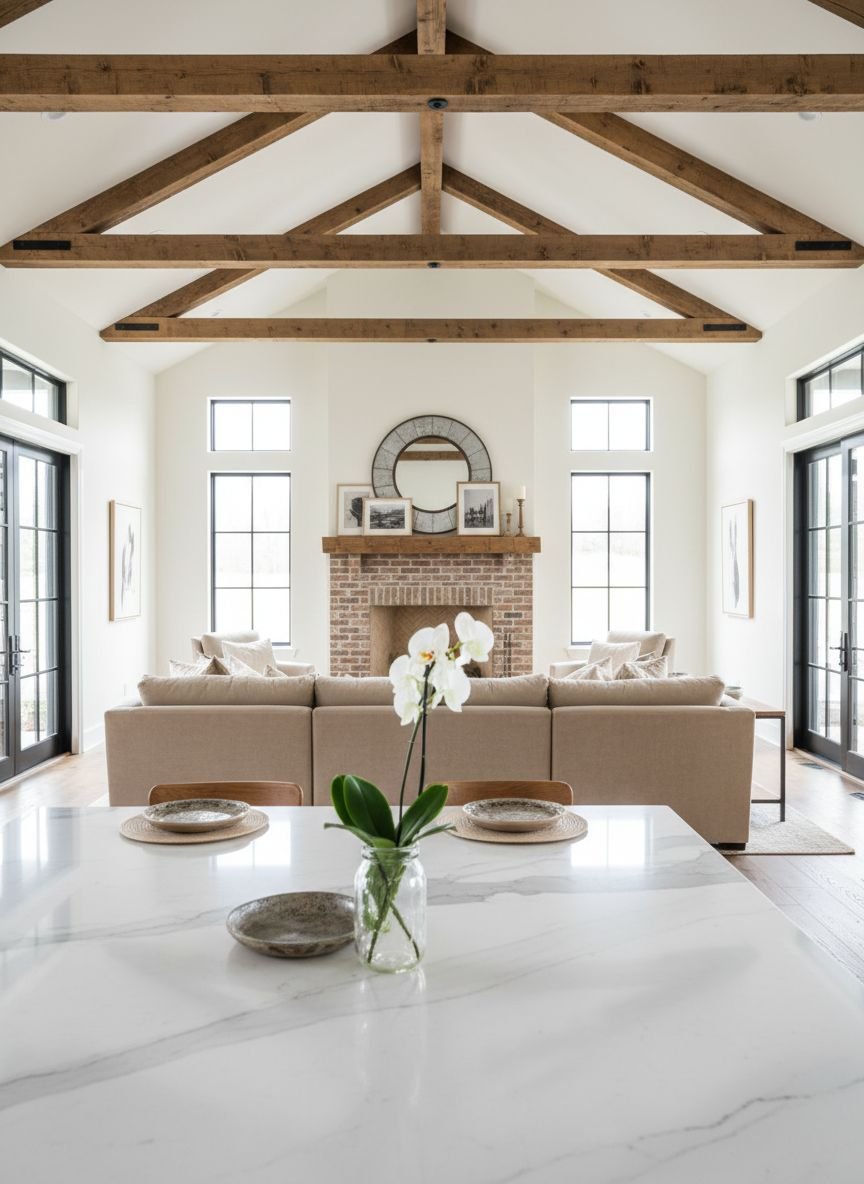
A “welcoming” atmosphere is the primary goal of any farmhouse living room. To achieve this with gray, you need to lean into the warmer, brown-based grays. Think of the color of a river stone or wet clay. This accent wall serves as the visual fireplace of the room—even if you don’t have a real fire. It anchors the seating area and signals to guests that this is a place to gather and stay a while.
Implementation involves combining this warm gray paint with soft lighting. Sconces mounted directly onto the gray accent wall cast a warm glow that highlights the pigment’s depth. Avoid cool-white LED bulbs, which can turn your warm gray into a muddy green. Instead, opt for 2700K or 3000K bulbs. Style the wall with a large, oversized clock or a singular piece of framed vintage art to keep the focal point clear but inviting.
Pro Tip: Add a chunky knit throw blanket in a charcoal shade to your sofa. The tone-on-tone connection between the blanket and the wall creates a cohesive, designer look.
Subdued Sophistication in Silver-Toned Living Space
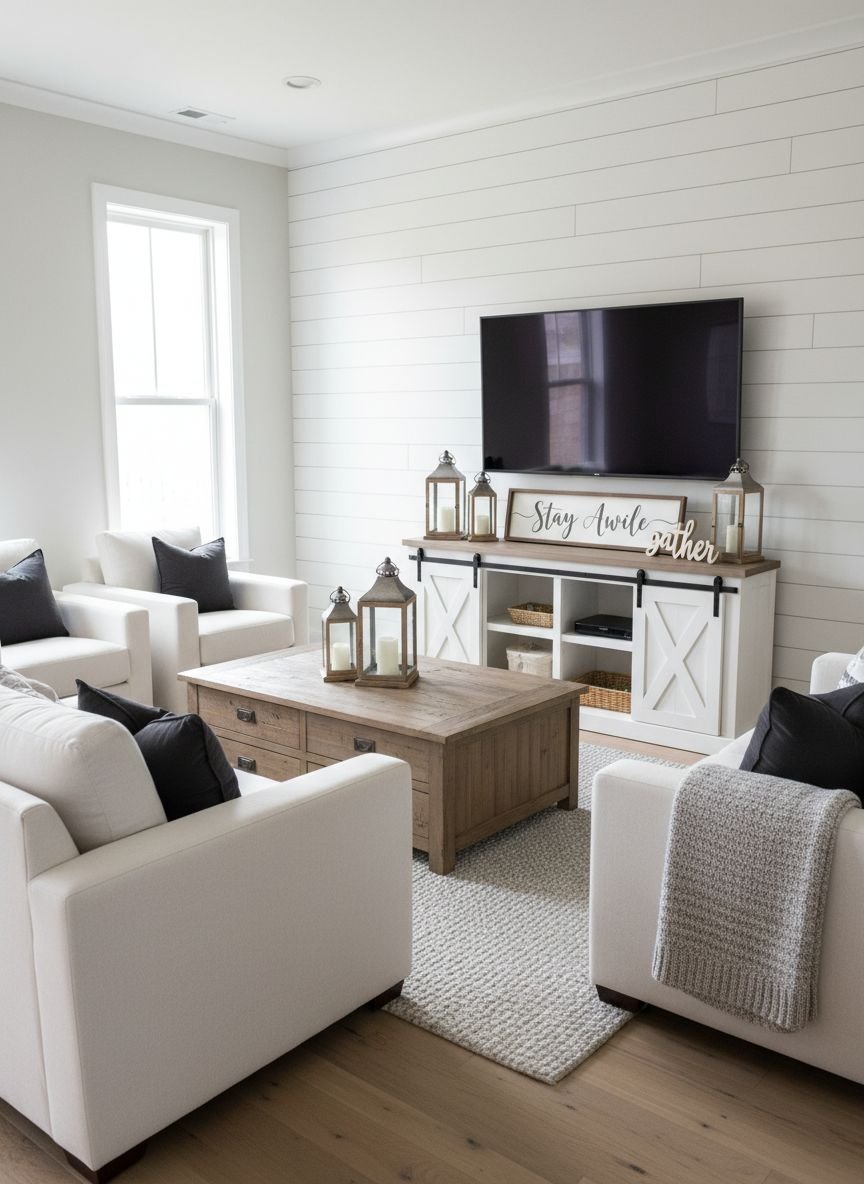
Silver-toned gray is a bold choice that leans into the “Modern” side of Modern Farmhouse. This isn’t about metallic paint, but rather a gray with a distinct, crisp coolness that mimics the elegance of silver. It works incredibly well in rooms that have black window frames or metal industrial accents. The cool wall creates a striking contrast against warm wood floors, preventing the room from feeling too rustic or “barn-like.”
This look is all about precision. Use high-quality painter’s tape to get crisp lines where the accent wall meets the ceiling and adjacent walls. Because the color is cooler, you need to introduce warmth through texture. A velvet sofa in a deep jewel tone, like emerald or navy, looks stunning against a silver-gray backdrop. The result is a living room that feels polished, expensive, and ready for entertaining.
Pro Tip: Introduce metallic accents like brushed nickel or chrome in your curtain rods or lamp bases to echo the silver undertones of the wall without being matchy-matchy.
Comparison: Cool Gray vs. Warm Gray Accent Walls
| Feature | Cool Gray (Silver/Blue Undertones) | Warm Gray (Mushroom/Greige) |
|---|---|---|
| Best For | Modern, Industrial Farmhouse | Rustic, Boho Farmhouse |
| Lighting | Needs ample natural light to avoid looking flat | Looks cozy in low light or north-facing rooms |
| Furniture Pairing | Black metal, glass, white lacquer | Natural wood, leather, linen, rattan |
| Vibe | Crisp, Clean, Airy, Elegant | Cozy, Earthy, Grounded, Relaxed |
| 2026 Trend Status | Classic staple for modernists | Trending highly as “New Neutral” |
Navy and Silver Tranquility in Home Design
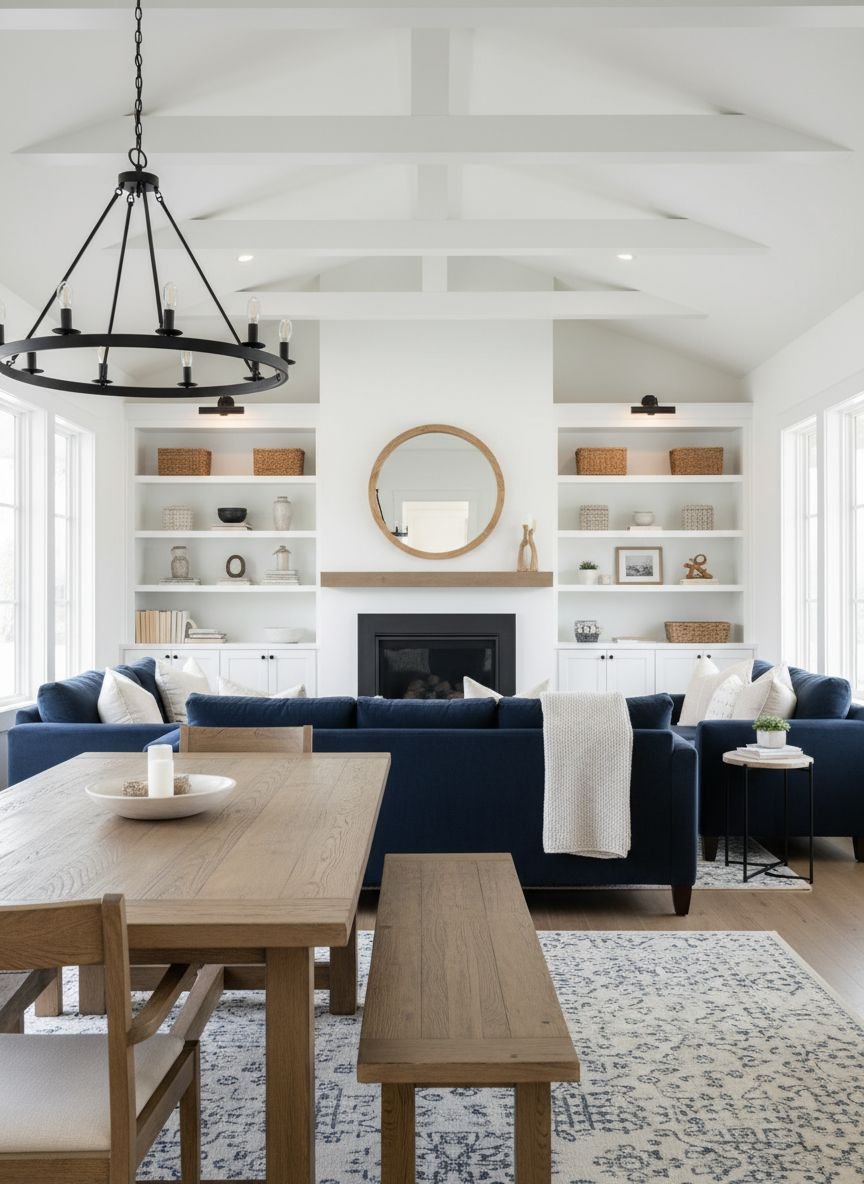
While this post focuses on gray, the combination of gray and navy is a powerhouse duo for farmhouse living rooms. This concept involves using a silver-gray accent wall as the canvas and layering deep navy elements on it or adjacent to it. For example, a built-in bookshelf painted in a soft silver gray, filled with navy-bound books and blue-and-white pottery, creates a classic “Coastal Farmhouse” vibe.
The visual analysis here is about complementary contrast. The cool gray recedes, making the room feel larger, while the navy anchors the eye. If you are adventurous, you could do a two-tone wall: dark navy wainscoting on the bottom third and a soft silver-gray on the top two-thirds. This lowers the visual weight of the room and makes the ceilings feel sky-high. It is a timeless look that feels nautical yet firmly planted in the farmhouse aesthetic.
Pro Tip: Use brass or gold hardware on any furniture against this wall. The warm metal pops against the cool navy and silver palette, adding a touch of luxury.
Serene Neutrality Enhanced by Wooden Accents
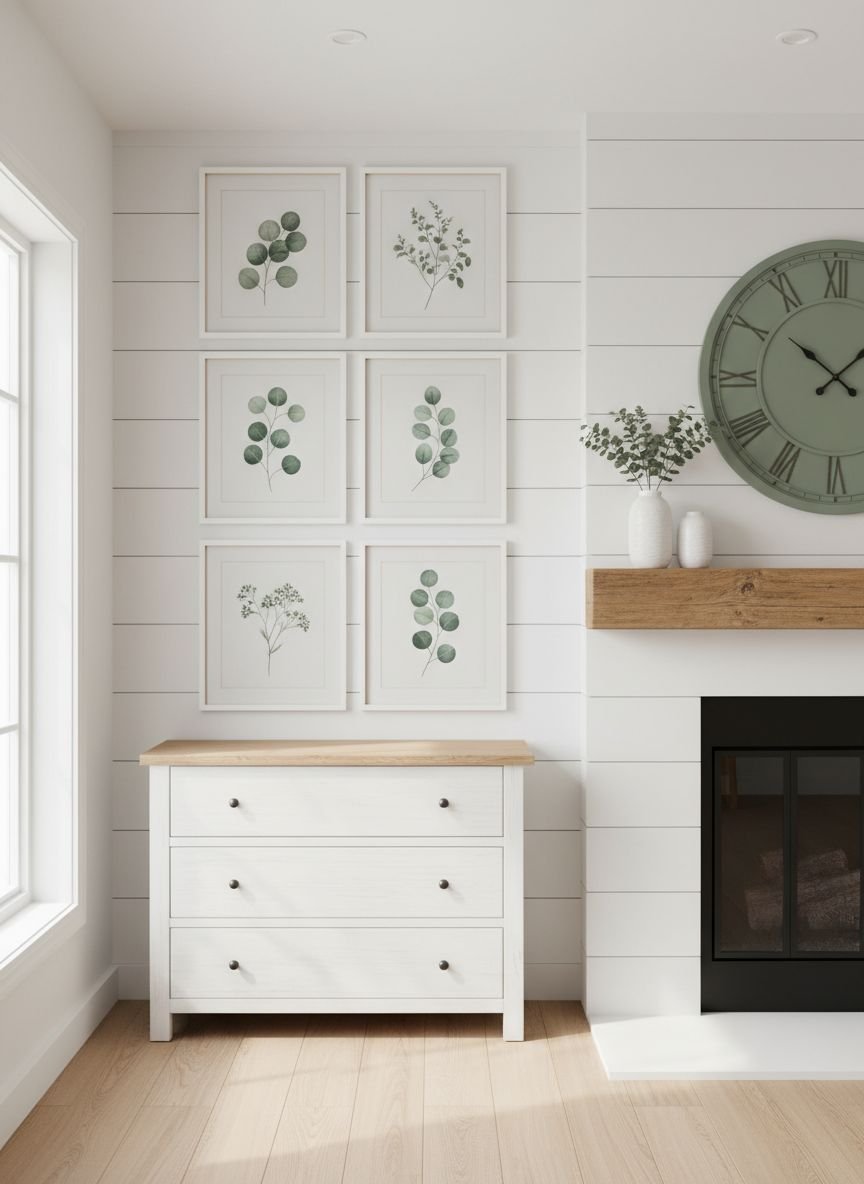
This style is the epitome of the “Organic Modern” farmhouse trend. The gray wall here is a soft, stone-like shade, but the real star is the integration of wood elements directly onto the wall. Think floating rough-hewn timber shelves mounted on a gray plaster wall, or a gray wall framed by thick cedar beams. The gray provides the “neutrality,” allowing the warmth and grain of the wood to shine without fighting for attention.
To get the look, choose a matte gray paint that mimics concrete or stone. Then, install open shelving using reclaimed wood. Style the shelves with white ceramics, trailing plants (like pothos or ivy), and vintage glass bottles. The green of the plants, the brown of the wood, and the gray of the wall create a triad of natural colors that is scientifically proven to be calming to the human eye. It is nature-inspired design at its best.
Pro Tip: Ensure your wood stain has a matte finish. Glossy wood can look dated; a raw or matte oil finish keeps the rustic farmhouse charm authentic.
Save this idea to your Pinterest.
Related posts :
- 9 Aesthetic Small Bedroom Ideas That Maximize Space and Feel Expensive
- 12 Pink Bathroom Design Ideas: Timeless Styles with Pink Tiles That Feel Like a Spa Retreat
- 15 Unique Patio Roof Extension Ideas For A Stunning Backyard That Will Transform Your Outdoor Living Space
Popular Asked Questions
Is gray still in style for living rooms in 2026?
Yes, but the shade has shifted. The cool, steel grays of the past are being replaced by warmer, earthy grays known as “mushroom,” “greige,” and “taupe.” These shades feel cozier and pair better with the natural wood textures popular in farmhouse design.
What accent color goes best with gray walls?
Navy blue is a classic choice that adds sophistication. For a more organic farmhouse look, Sage Green or Olive Green pairs beautifully with gray. If you want warmth, try Terracotta or rust-colored accents to contrast the cool tones of the gray.
How do I choose the right shade of gray?
Always test paint samples on your wall and observe them at different times of day. Gray paint has undertones—blue, green, or purple—that reveal themselves in different lighting. North-facing rooms tend to bring out the blue/cool notes, so you may want a warmer gray to balance it.
Can I do a gray accent wall in a small living room?
Absolutely. A light, airy gray can make the walls recede and the room feel larger. Alternatively, a dark charcoal accent wall can add depth and blur the boundaries of the room, creating a cozy “jewel box” effect that is very stylish.
What texture works best for a farmhouse gray wall?
Shiplap is the classic choice, but Board and Batten, vertical wood slats, and concrete/plaster finishes are trending for 2026. These textures add interest to the gray color, preventing it from looking flat or boring.
Conclusion
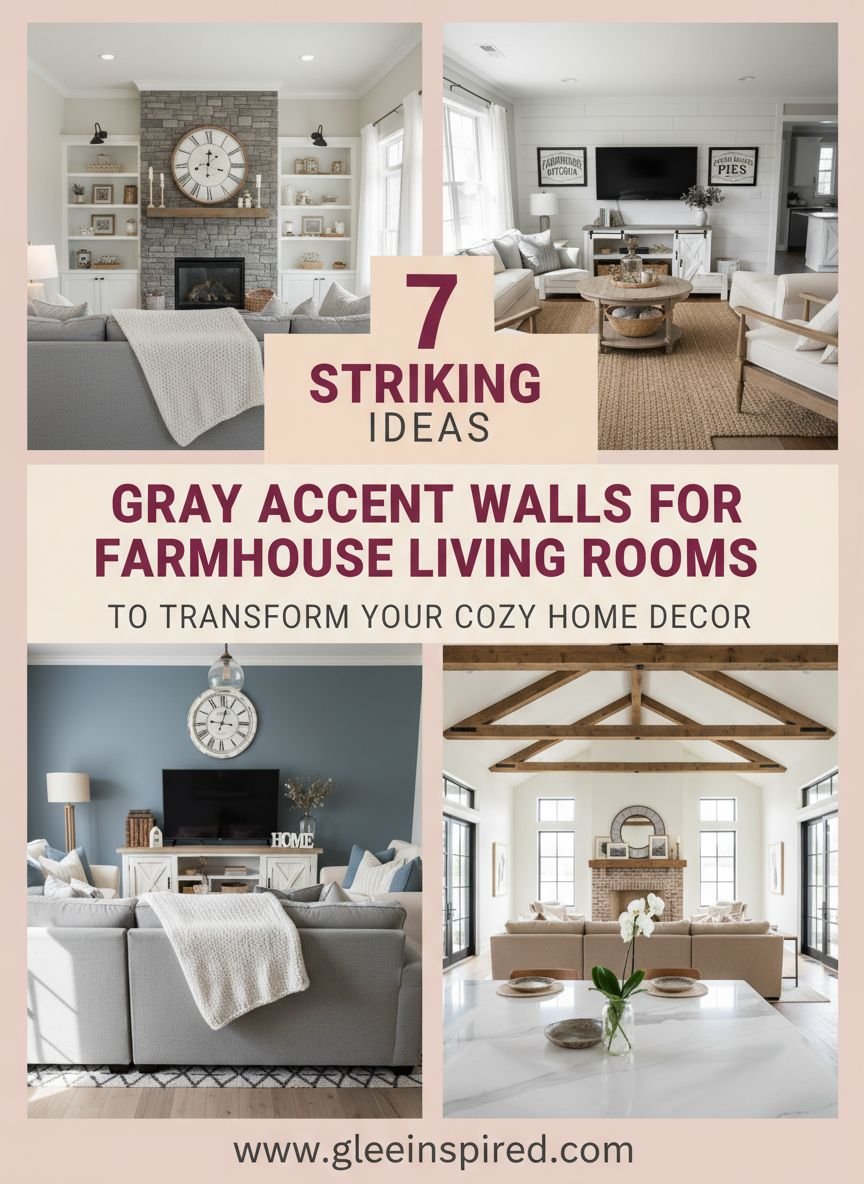
The gray accent wall is far from a fading fad; it is a design staple that has evolved to become warmer, richer, and more textured. Whether you opt for the dramatic moodiness of a charcoal board and batten wall or the organic serenity of a mushroom-toned plaster finish, these ideas prove that gray is the perfect canvas for your farmhouse living room.
By incorporating texture, choosing the right undertone, and layering in warm wood and textiles, you can create a space that feels both timeless and undeniably current.

Leave a Comment