
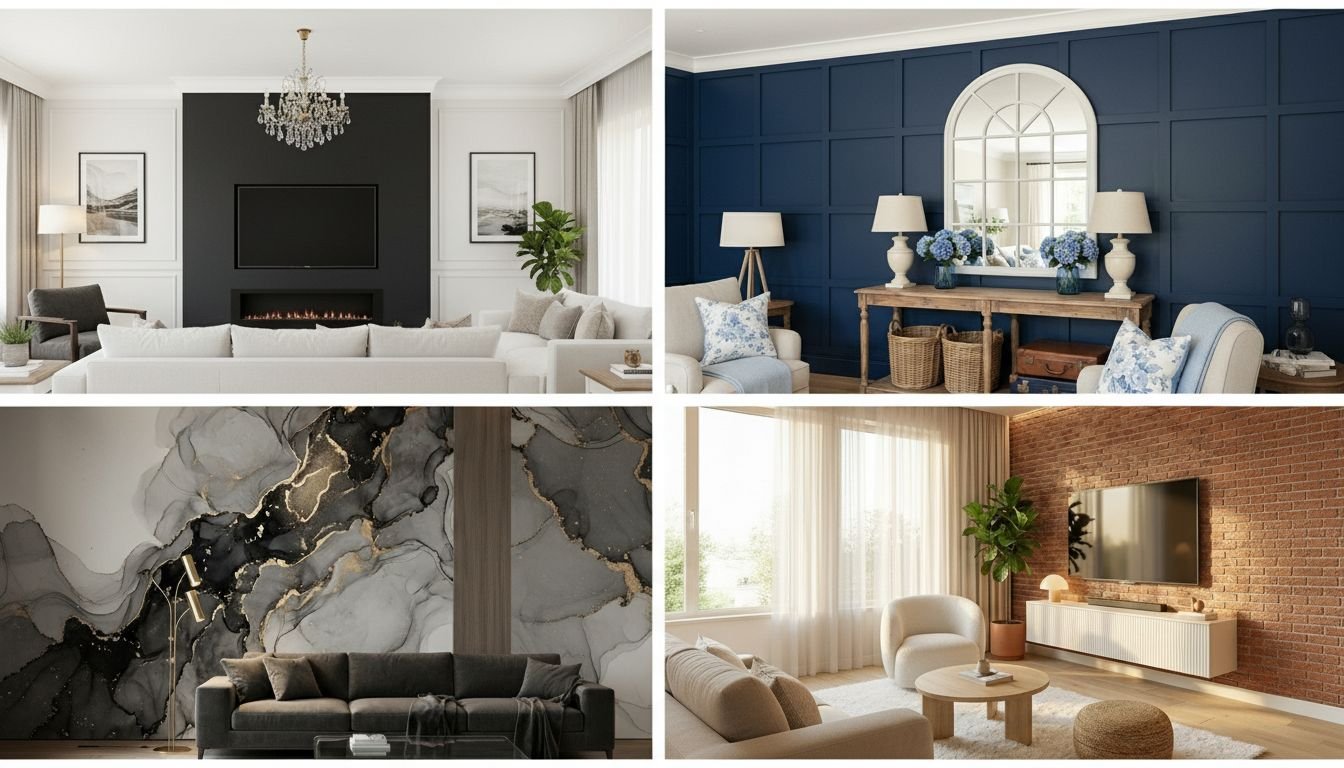
White walls often feel sterile or unfinished. You walk into your living room and sense that something is missing, but you cannot quite place it. The furniture is right, the layout works, yet the room lacks a soul. This is where a well-executed feature wall changes everything. It shifts the focal point, adds necessary depth, and injects personality without requiring a full renovation.
We have curated fourteen specific design strategies to fix this common design fatigue. Whether you need a rental-friendly solution or a permanent architectural change, these ideas range from simple paint tricks to complex wood installations. You will find the exact inspiration needed to turn a flat wall into a conversation piece.
Key Takeaways
- Texture Over Color: The most current trends favor adding physical texture (wood slats, brick, molding) rather than just a flat coat of contrasting paint.
- Functionality Matters: The best accent walls often double as storage solutions, using built-ins or floating shelves to maximize vertical space.
- Scale is Critical: Large walls require large art or broad patterns. Small prints or tiny decor pieces will make a spacious wall look cluttered and messy.
- Lighting Integration: Accent walls look best when paired with sconces or LED strips that highlight the texture and depth of the materials used.
Table of Contents
- Board and Batten Accent Wall
- Framed Painting Accent Wall
- Wood Slat Accent Wall
- Built-In Shelving Accent Wall
- Curvy Decor Accent Wall
- Herringbone Accent Wall
- Wood and Minimalist Accent Wall
- Large Art Piece Accent Wall
- Bookshelf Accent Wall
- Floating Shelves Accent Wall
- Faux Brick Paneled Accent Wall
- Removable Mural Accent Wall
- Separator Accent Wall
- TV Accent Wall
- Popular Asked Questions
- Conclusion
Board and Batten Accent Wall
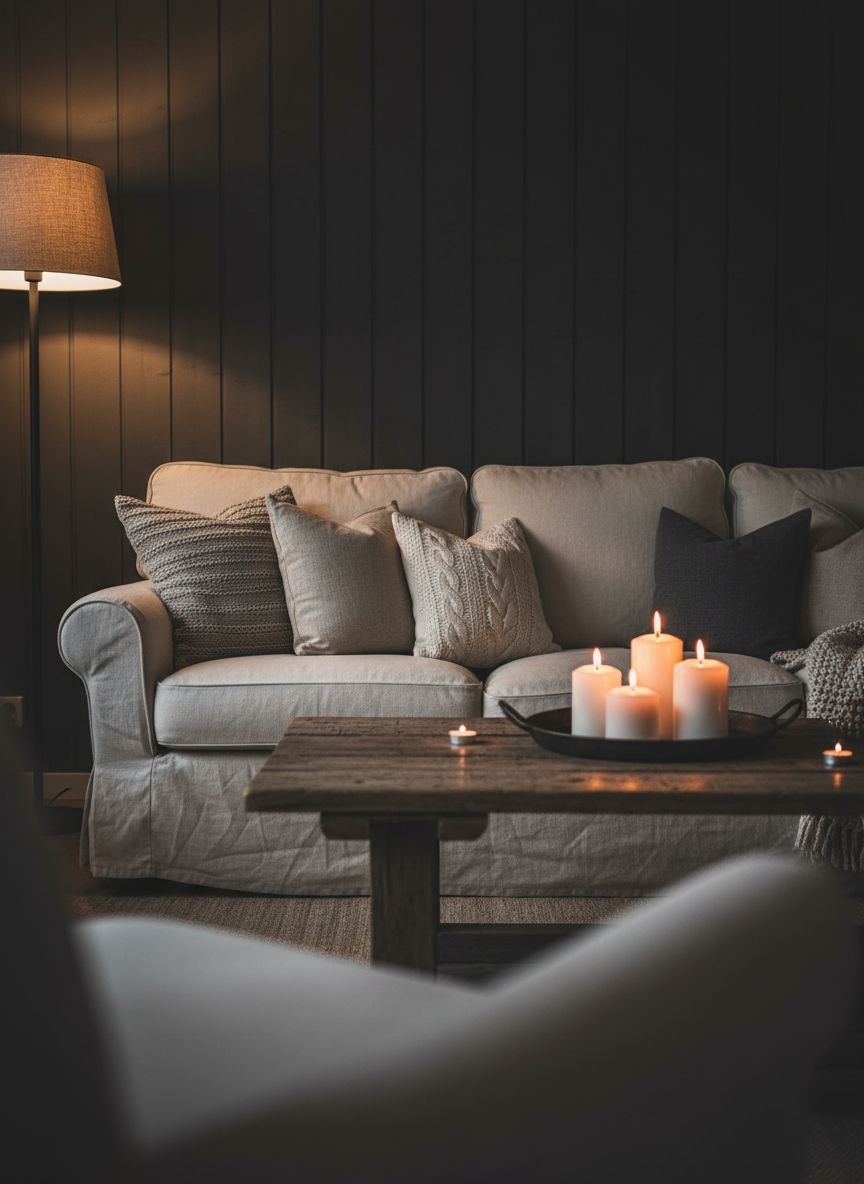
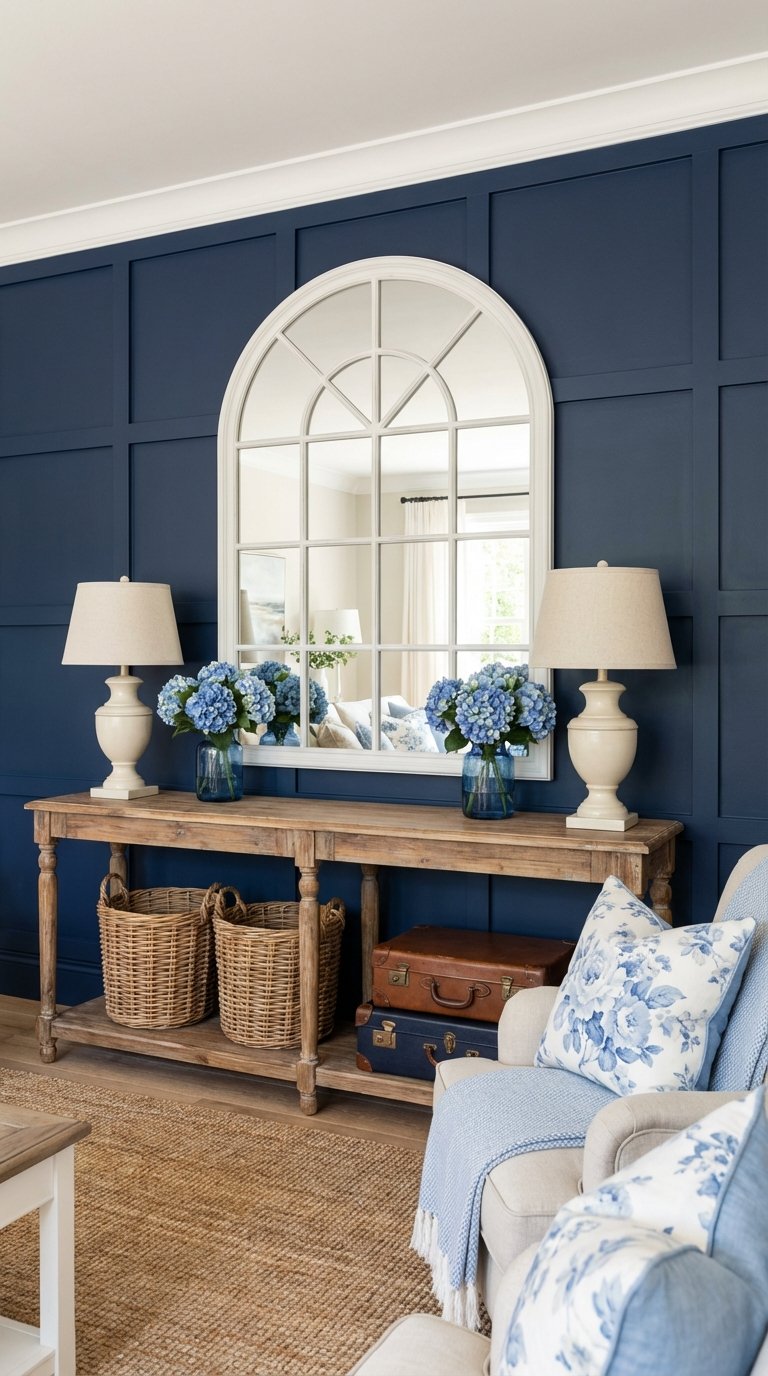
Traditional design meets modern application with board and batten. This technique involves applying vertical strips of wood (battens) over seams between wide boards, or simply over a smooth wall, to create a geometric, grid-like pattern. It immediately adds architectural weight to a room that lacks crown molding or interesting trim. The shadow lines created by the raised wood strips provide a dynamic look that changes as the sun moves across the room throughout the day. It works exceptionally well in transitional and farmhouse styles, but painting it a dark, moody charcoal or navy can skew it toward a modern aesthetic.
The beauty of this approach lies in its ability to trick the eye. Vertical battens draw the gaze upward, making low ceilings feel significantly higher. The grid pattern adds structure to an otherwise blank canvas, grounding your furniture arrangements. You do not need expensive solid wood for this either. MDF strips work perfectly once painted, making this a highly accessible project for a weekend warrior. Paint the wall and the strips the exact same color and sheen to create a seamless, built-in appearance that looks expensive but costs very little.
Pro Tip: Use a satin or semi-gloss finish for the paint. The slight sheen will catch the light on the edges of the battens, emphasizing the 3D effect more than a flat matte paint would.
Framed Painting Accent Wall
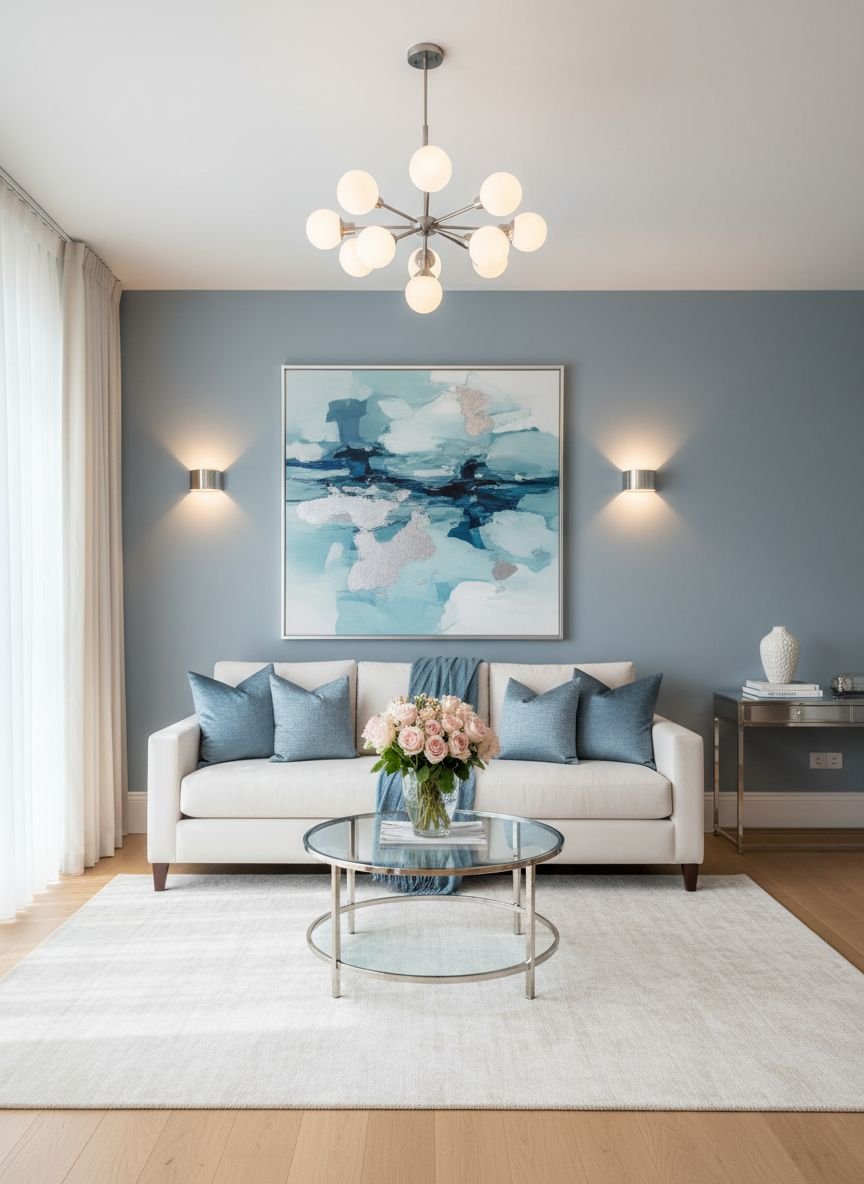
A gallery wall often feels chaotic if not curated correctly, but a dedicated framed painting accent wall focuses on precision and scale. Instead of a random assortment of small photos, this concept relies on a cohesive collection of matching frames or a singular theme. Think of this as a museum curation within your own home. The frames themselves become part of the architecture. Using identical black mats and thin gold frames creates a sense of rhythm and order that calms the mind rather than stimulating it with clutter.
The arrangement is just as important as the art itself. A symmetrical grid of six or nine square frames commands attention and suggests a high level of discipline and design intent. This setup works best behind a sofa or on a wall that is viewed from a distance, such as from the kitchen in an open-concept floor plan. The repetition of the frames acts like a wallpaper pattern but with much more depth. It allows you to swap out the art seasonally without damaging the wall, keeping the room fresh with minimal effort.
Pro Tip: Cut templates out of kraft paper that match the size of your frames. Tape these to the wall first to perfect your spacing before hammering a single nail.
Wood Slat Accent Wall
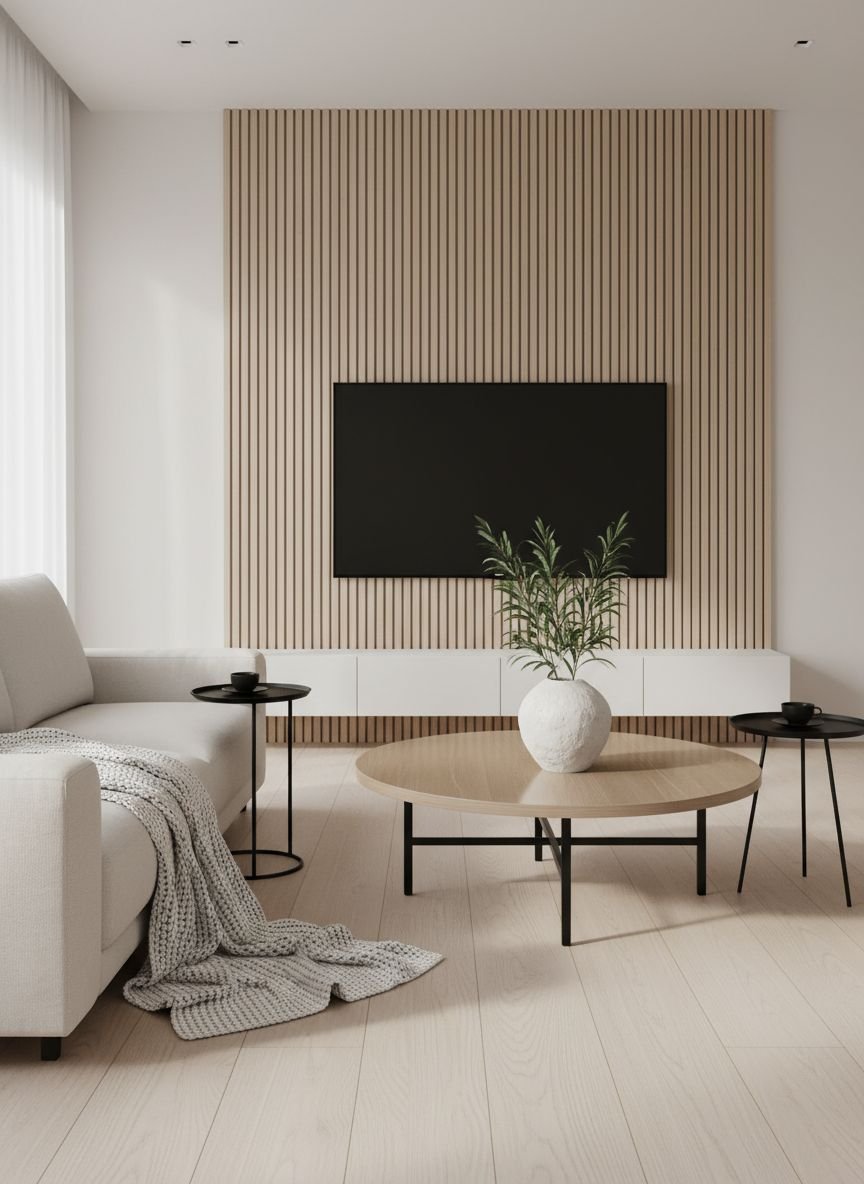
Vertical wood slats have taken over the interior design world for good reason. They introduce organic warmth and a linear texture that feels incredibly modern yet rooted in nature. This style is a staple of Japandi and mid-century modern design. The thin strips of wood, usually oak, walnut, or ash, are mounted with small gaps in between. These gaps often reveal a black felt backing, which serves two purposes. Visually, the black background creates deep contrast that makes the wood pop. Functionally, the felt acts as sound dampening, reducing echo in large living rooms with high ceilings.
This installation is perfect for defining specific zones in an open space. Placing wood slats behind a TV console or a reading chair visually separates that area from the rest of the room without building a physical wall. The vertical lines create a sense of height, while the wood grain softens the harshness of technology like large televisions or metallic light fixtures. It is a tactile experience that invites touch and makes the room feel cozier and more insulated from the outside world.
Pro Tip: If you are using real wood, seal it with a clear matte water-based polyurethane. This protects the wood from UV light yellowing while keeping that raw, natural look.
Built-In Shelving Accent Wall
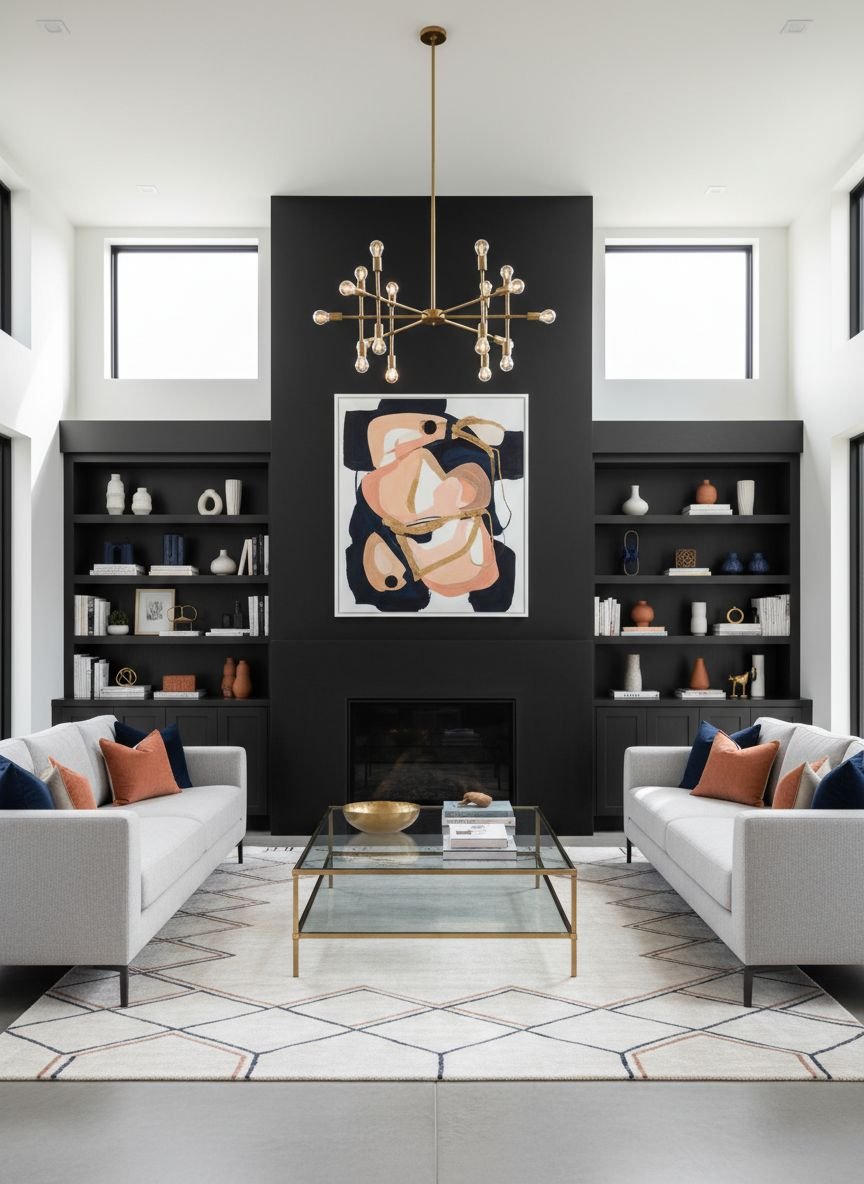
Nothing screams “custom home” quite like built-in shelving. This transforms a flat, useless wall into a functional powerhouse of storage and display. Unlike freestanding bookcases, built-ins are anchored to the wall and often trimmed out with molding to look like they were part of the original house construction. This seamlessly blends the storage into the architecture, saving floor space and eliminating the visual clutter of gaps behind furniture. You gain a massive amount of surface area to display books, pottery, and plants, allowing your personality to shine through your collections.
The lower section of a built-in wall usually features cabinets with doors. This is the secret weapon for maintaining a tidy living room. You can stash away board games, electronics, and extra throw blankets behind closed doors while keeping the open upper shelves styled and pretty. Painting the entire unit a bold color, such as emerald green or slate blue, turns the storage itself into the art piece. It frames your possessions and makes even simple paperbacks look like intentional decor choices.
Pro Tip: Install puck lights or LED strips inside the upper shelves. This ambient lighting highlights your decor items and adds a soft, warm glow to the room in the evening.
Curvy Decor Accent Wall
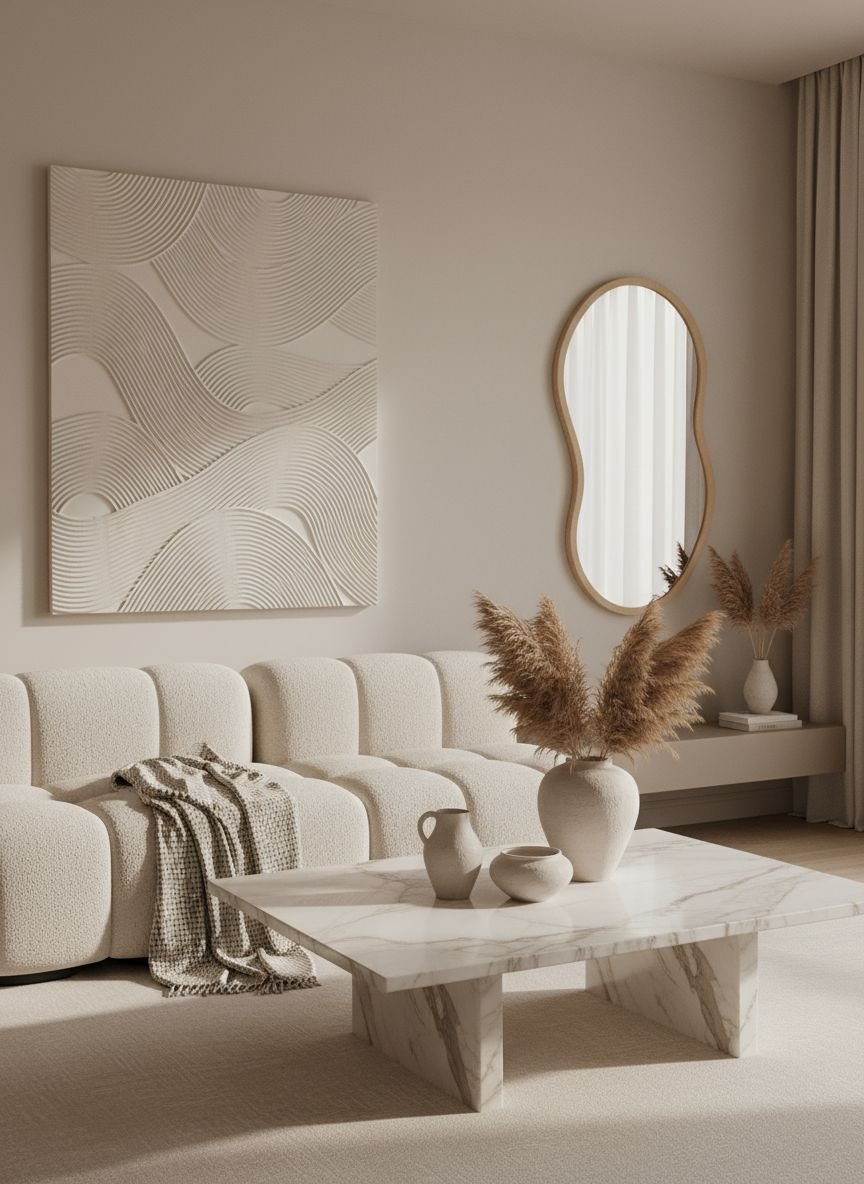
Rigid lines and sharp corners dominate most rooms. Breaking up that boxy feel with curves creates a flow that feels organic and welcoming. A painted arch or a curved color block is one of the most budget-friendly ways to achieve this. By simply using painter’s tape and a string to guide your brush, you can paint a large arch behind a console table, a mirror, or a seating area. This shape acts as a spotlight, drawing attention to whatever piece of furniture sits in front of it.
This technique is playful and softens the energy of the room. It references Art Deco and postmodern influences but feels fresh in contemporary colors like terracotta, sage, or blush. The curve leads the eye smoothly rather than stopping it abruptly like a square edge does. It is an excellent solution for renters who cannot build structures but want to define a space. The arch creates a “zone” for a desk or a plant corner, making the layout feel intentional.
Pro Tip: When peeling off the tape for your painted shapes, pull it away from the paint while it is still slightly tacky to ensure a crisp, clean line without chipping.
Comparison: Accent Wall Materials
| Material | Cost | DIY Difficulty | Durability | Best For |
|---|---|---|---|---|
| Paint | $ | Low | Medium | Renters, Frequent changes |
| Wood Slats | $$$ | Medium | High | Soundproofing, Texture |
| Wallpaper | $$ | Medium | Medium | Pattern lovers, Small walls |
| Molding | $$ | High | Very High | Classical look, Value add |
Herringbone Accent Wall
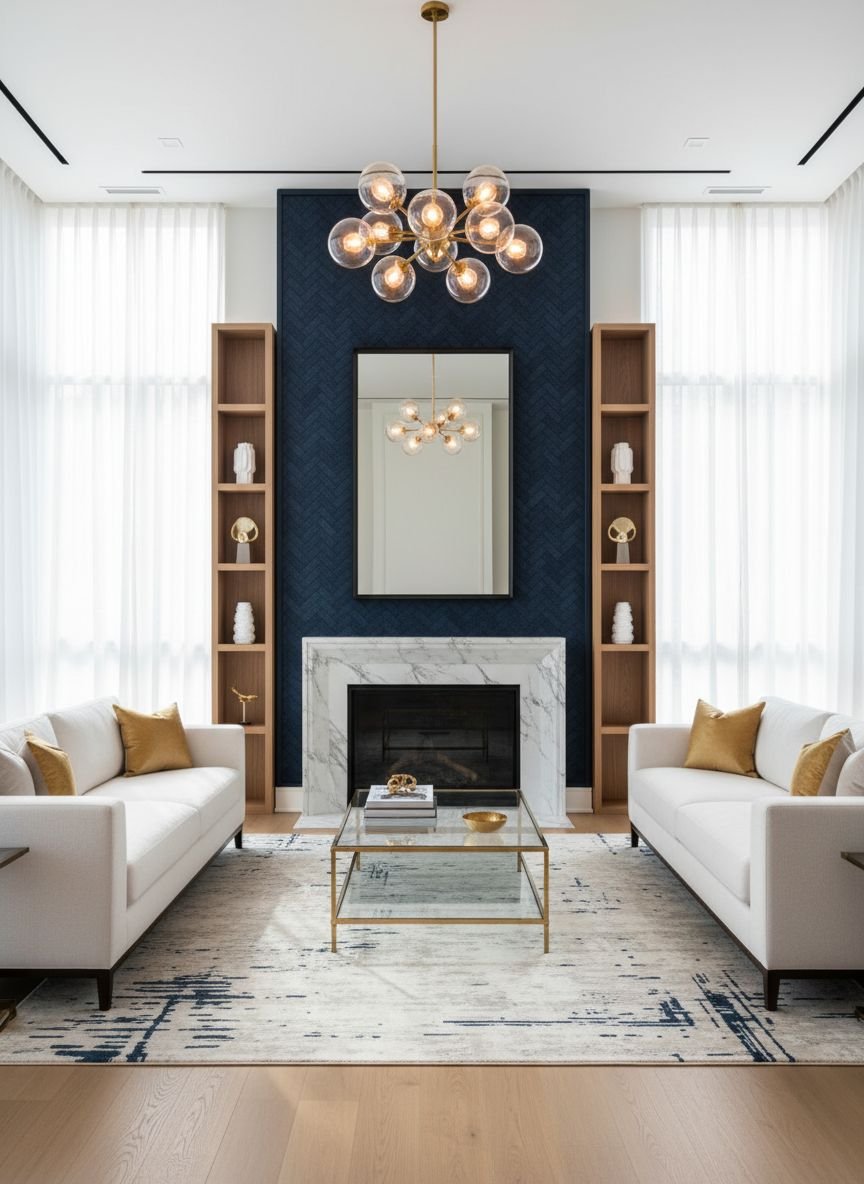
Herringbone is a pattern that has signaled luxury for centuries, typically found on the floors of Parisian apartments. Bringing this pattern up to the walls creates an immediate sense of sophistication and movement. Whether you use reclaimed wood, tile, or painted stencils, the zigzag pattern is energetic. It directs the eye diagonally, which makes a narrow wall feel wider. The complexity of the pattern means you do not need much else on that wall; the material itself is the artwork.
Using wood planks in a herringbone pattern adds rustic warmth but with a tailored fit. It is far more refined than the horizontal shiplap trend of the past decade. The interlocking angles catch light differently, creating a rich tapestry of shadows and highlights. This works beautifully as a backdrop for a simple linen sofa, where the texture of the wall contrasts with the softness of the fabric. It is a labor-intensive project, but the visual payoff is immense.
Pro Tip: If using wood, vary the stains slightly on the planks before installation. The subtle variation in color will make the pattern stand out more distinctly.
Wood and Minimalist Accent Wall
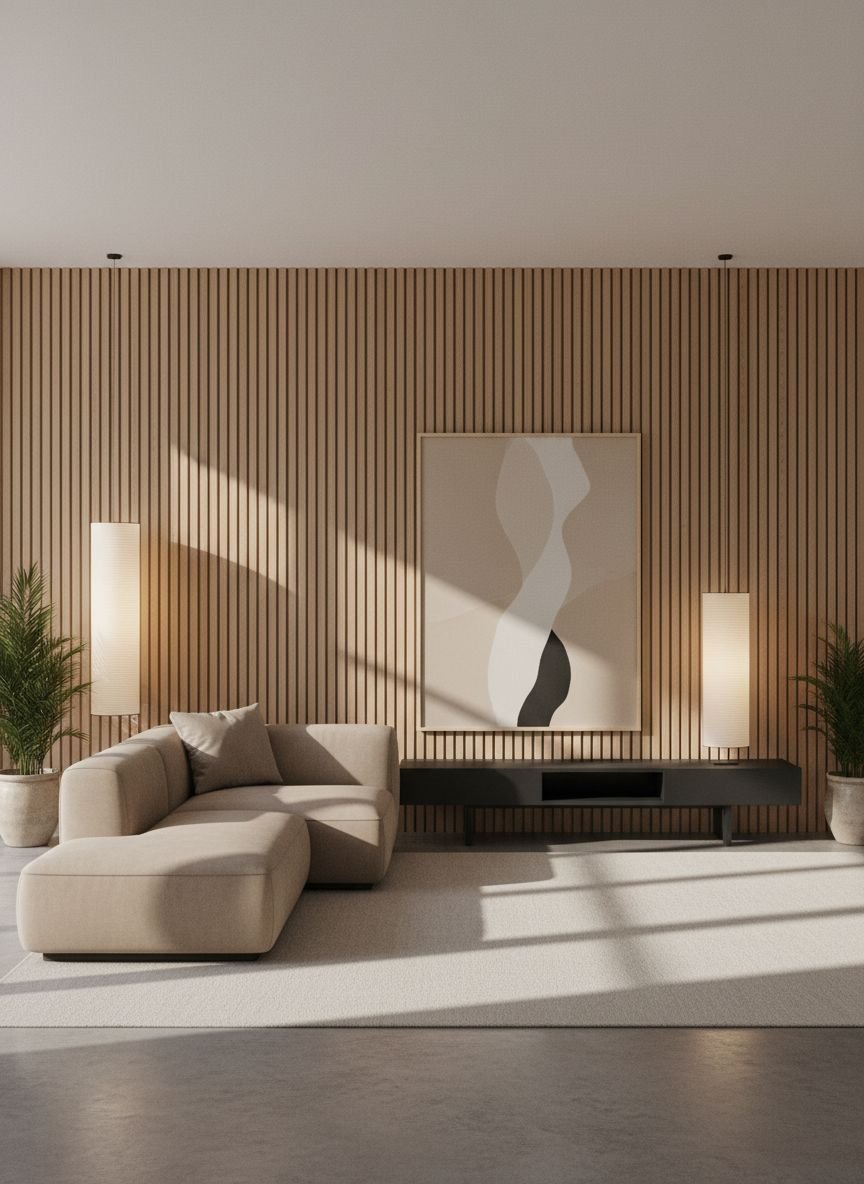
Minimalism does not mean empty; it means intentional. A wood and minimalist accent wall focuses on the quality of materials rather than the quantity of decor. This often involves large panels of wood veneer or plywood with a high-grade grain pattern, installed with clean, barely visible seams. The goal is to create a warm, honey-toned backdrop that feels serene. This style borrows heavily from Scandinavian design, where the beauty lies in the natural imperfections of the wood itself.
This approach calms a busy living room. By covering a large surface area with a uniform natural material, you reduce visual noise. It provides a neutral but warm canvas for a sleek leather chair or a modern floor lamp. Unlike busy wallpapers or intricate tile, a smooth wood wall does not demand your attention; it simply supports the room’s atmosphere. It makes the space feel grounded and earthy.
Pro Tip: Use a “blind nail” technique or construction adhesive to mount the panels so you do not have visible nail holes disrupting the clean, smooth surface.
Large Art Piece Accent Wall
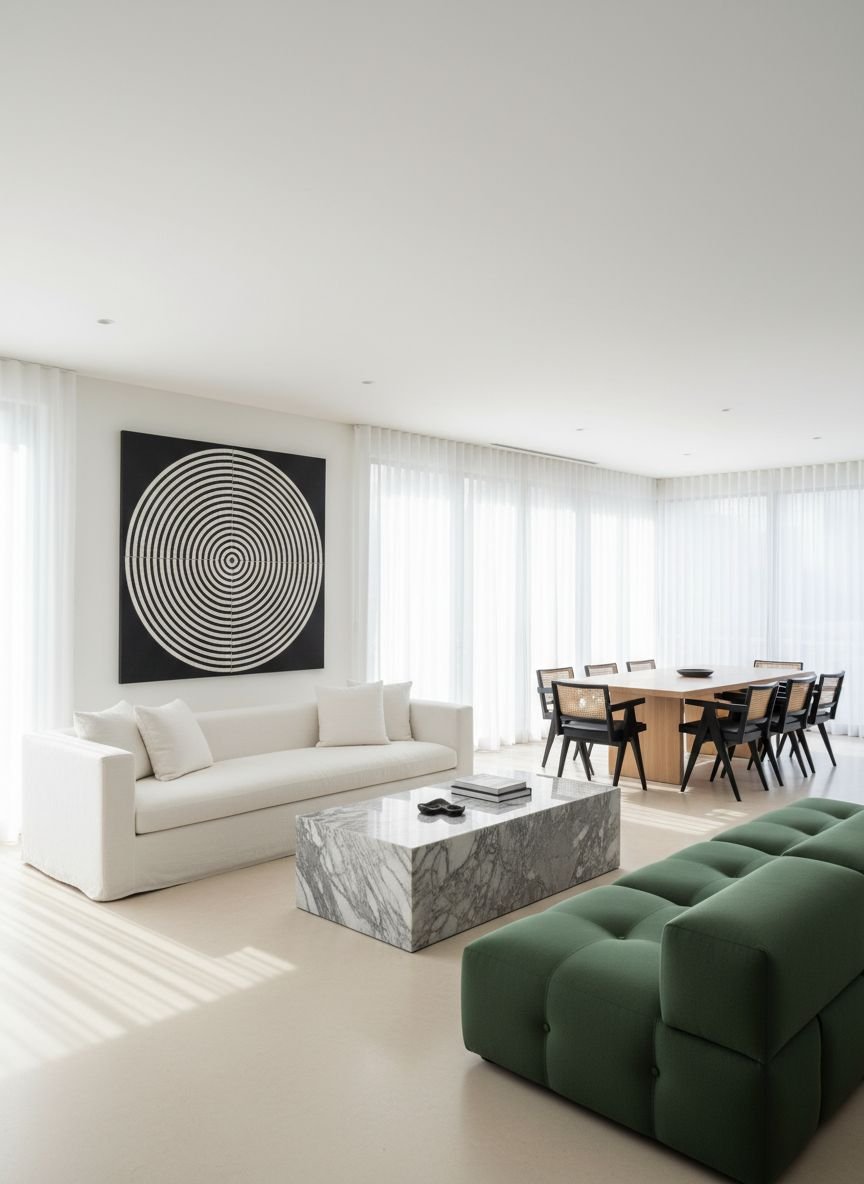
Sometimes the wall itself should remain simple, serving only as a support for one massive statement piece. An oversized canvas or print that spans nearly the height of the wall creates a dramatic focal point. This is a bold move that confident designers love. It anchors the room instantly. When you walk in, your eye knows exactly where to look. This strategy is particularly effective in rooms with high ceilings, where small art gets lost in the expanse of drywall.
The subject matter of the art sets the entire mood. An abstract piece with sweeping strokes adds energy, while a large landscape brings a window-like calmness to the space. Because the art is so large, it eliminates the need for other small decor items, keeping the room feeling uncluttered. It is a “one-and-done” decorating solution. The scale of the art must relate to the furniture below it; typically, the art should be about two-thirds the width of the sofa or console it hangs above.
Pro Tip: Save this idea to your Pinterest. For a budget-friendly version, buy a large drop cloth or canvas and paint your own abstract art using leftover wall paint samples.
Bookshelf Accent Wall
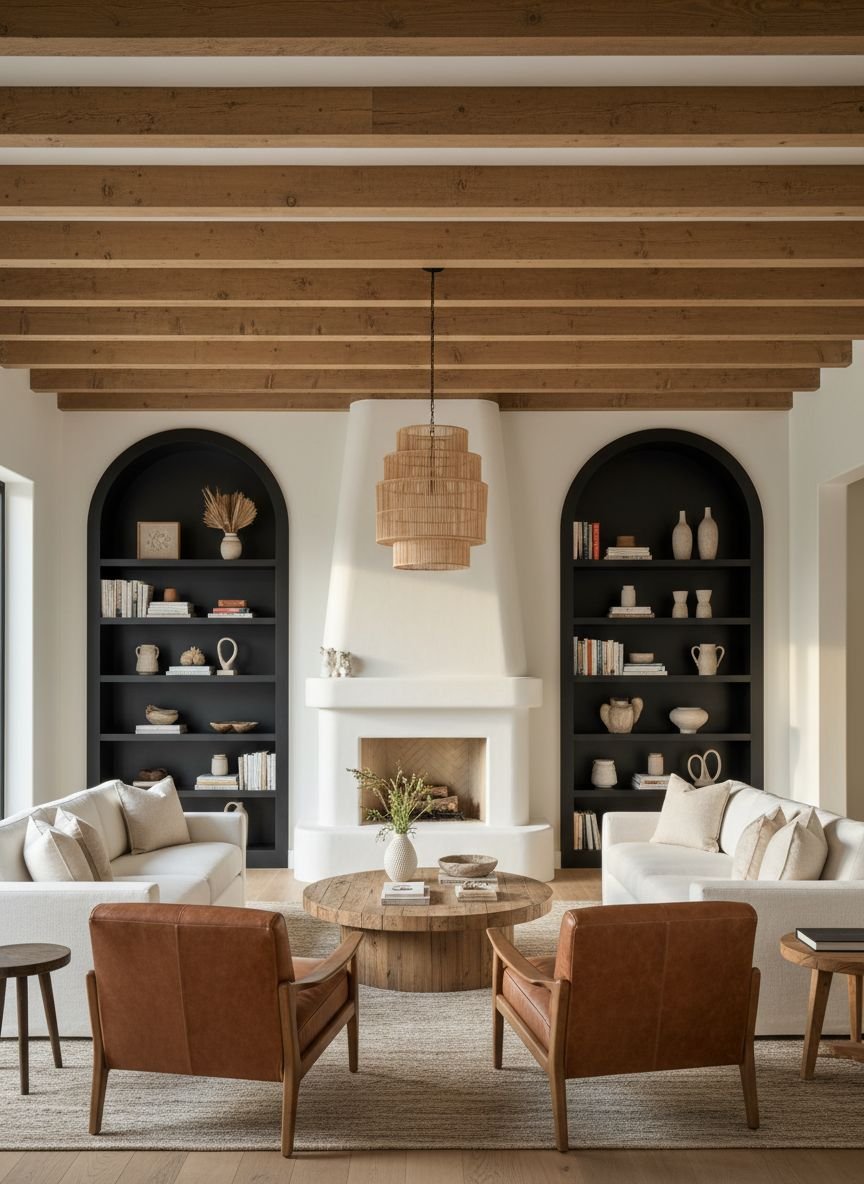
A bookshelf accent wall is different from built-ins because it often utilizes freestanding units or modular systems that cover a wall from floor to ceiling. This creates the vibe of a cozy home library. Books add unmatched texture and color to a room. The spines of hundreds of books create a mosaic of interests, hobbies, and knowledge. It makes a living room feel lived-in and intelligent. This is the antithesis of the sterile showroom look.
To keep it from looking messy, organize books by color or size, and intersperse them with sculptural objects. The vertical lines of the shelving units add height to the room. If you are renting, lining up three or four identical tall bookcases side-by-side gives the illusion of a custom wall without the permanent construction. It is a flexible solution that moves with you.
Pro Tip: Pull all books forward to the front edge of the shelves. This simple trick creates a uniform line that makes the entire collection look tidy and professional.
Floating Shelves Accent Wall
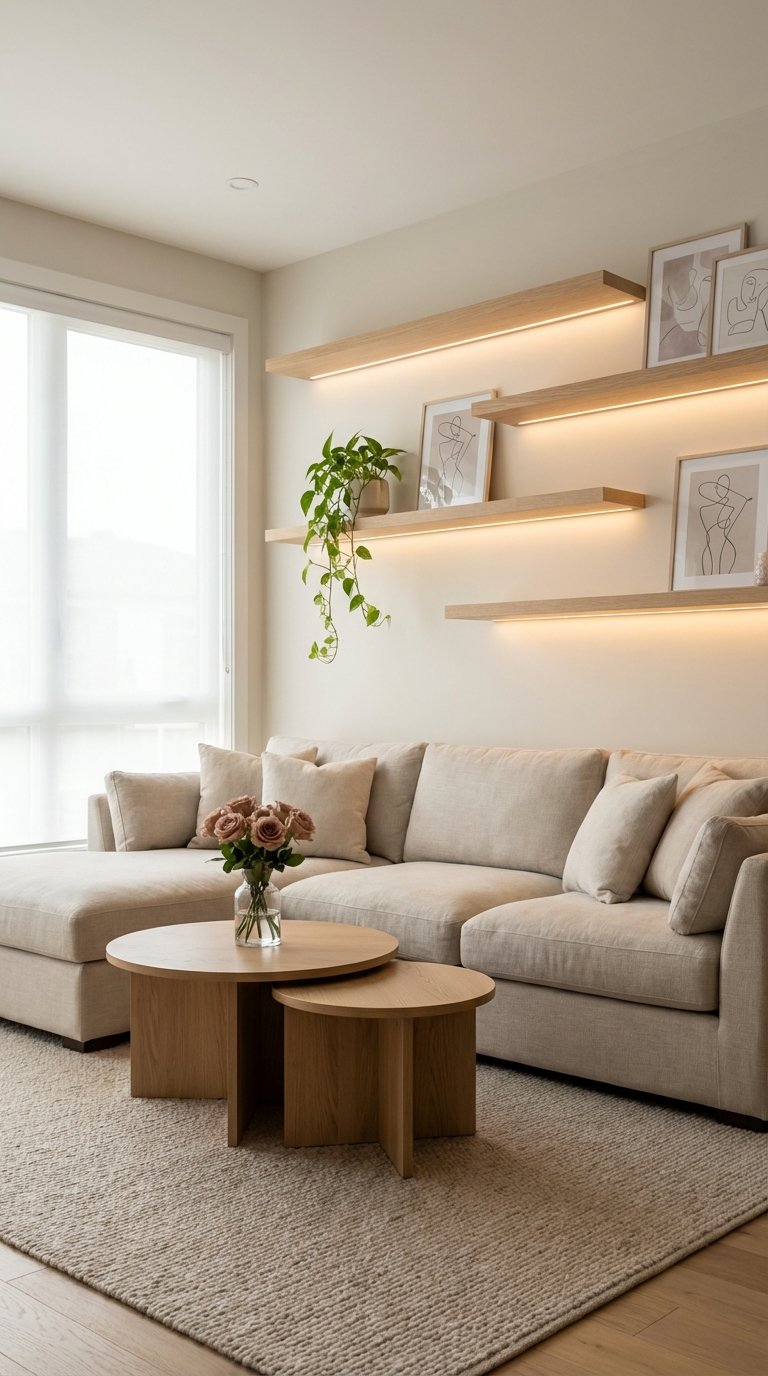
Floating shelves offer an airy, open alternative to heavy bookcases. Because they have no visible brackets, they look sleek and modern. They provide horizontal lines that can widen the look of a narrow wall. This creates a perfect stage for a rotating display of decor. You can change the entire color scheme of your living room just by swapping out the items on these shelves. It is a low-commitment way to experiment with trends.
The key here is negative space. Unlike bookshelves which are often packed, floating shelves should have breathing room between items. This allows the wall color behind to show through, keeping the look light. Thick, chunky wood shelves add a rustic or industrial element, while thin metal shelves look ultra-modern. They work exceptionally well in awkward nooks or beside a fireplace where a full cabinet might fit.
Pro Tip: Ensure your shelves are anchored into studs. Even light decor adds up in weight, and you want to prevent the shelves from sagging or pulling away from the drywall over time.
Related posts :
- 17 Stunning Fireplace Wall Ideas with a TV for your Living Room
- 18 Stunning TV Stand Decor Ideas to Elevate Your Living Room
- 14 Apartment Decor Inspiration Cozy Modern Ideas to Copy Now
Faux Brick Paneled Accent Wall
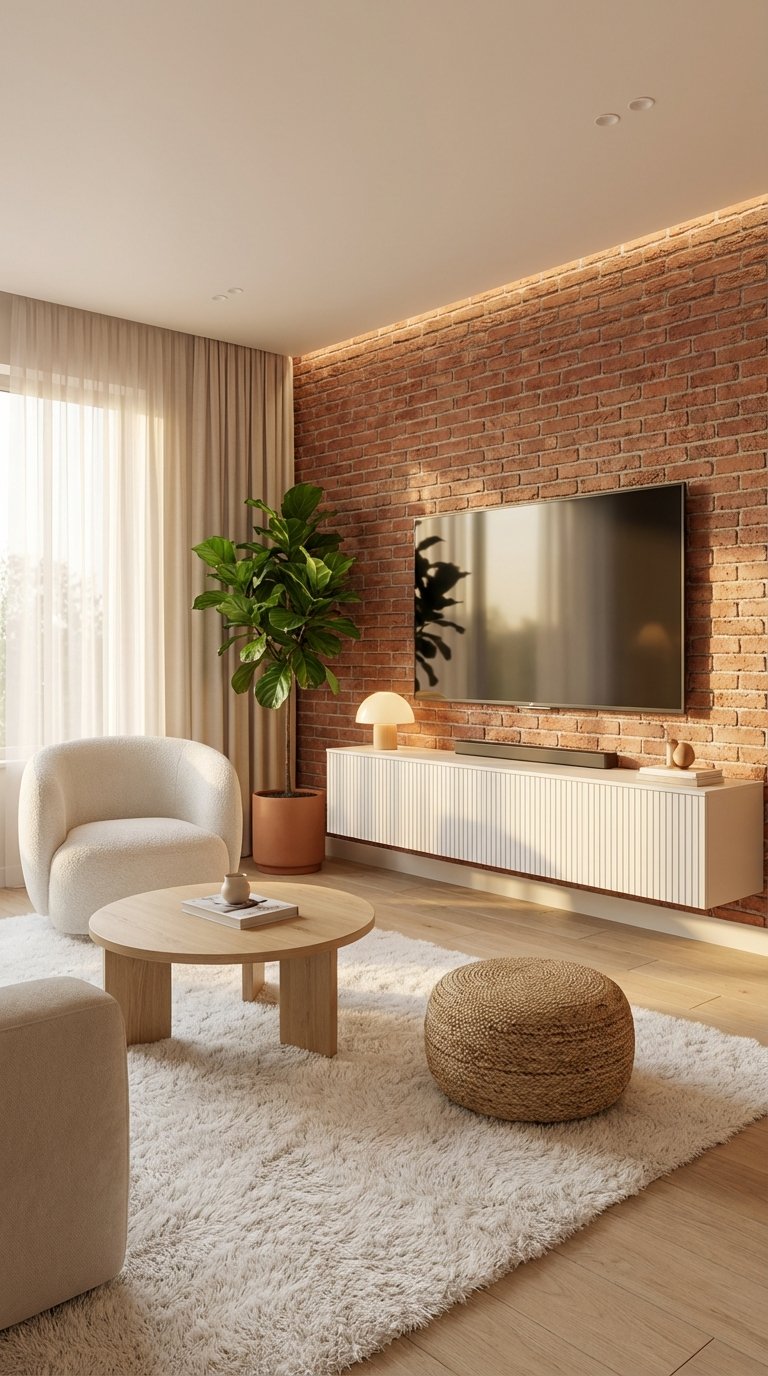
Exposed brick is a coveted feature in urban lofts, but you do not need a historic building to get the look. Faux brick panels or high-quality peel-and-stick brick wallpaper can recreate that industrial charm convincingly. The texture of brick, even if faux, adds a rugged, historical feel to a new build. It contrasts beautifully with soft furnishings like velvet sofas or wool rugs. The rough surface catches light in a way that flat paint never can.
White-washing the faux brick is a popular choice. It keeps the texture but brightens the room, fitting perfectly into farmhouse or shabby chic aesthetics. If you prefer a moodier vibe, painting the brick black or dark grey creates a stunning, cavernous feel that is perfect for a media room or a cozy evening lounge. The irregularity of the brick pattern breaks up the monotony of smooth drywall.
Pro Tip: Use a joint compound or spackle to “smear” over the faux brick panels before painting. This German Schmear technique adds authentic texture and hides the seams between panels.
Removable Mural Accent Wall
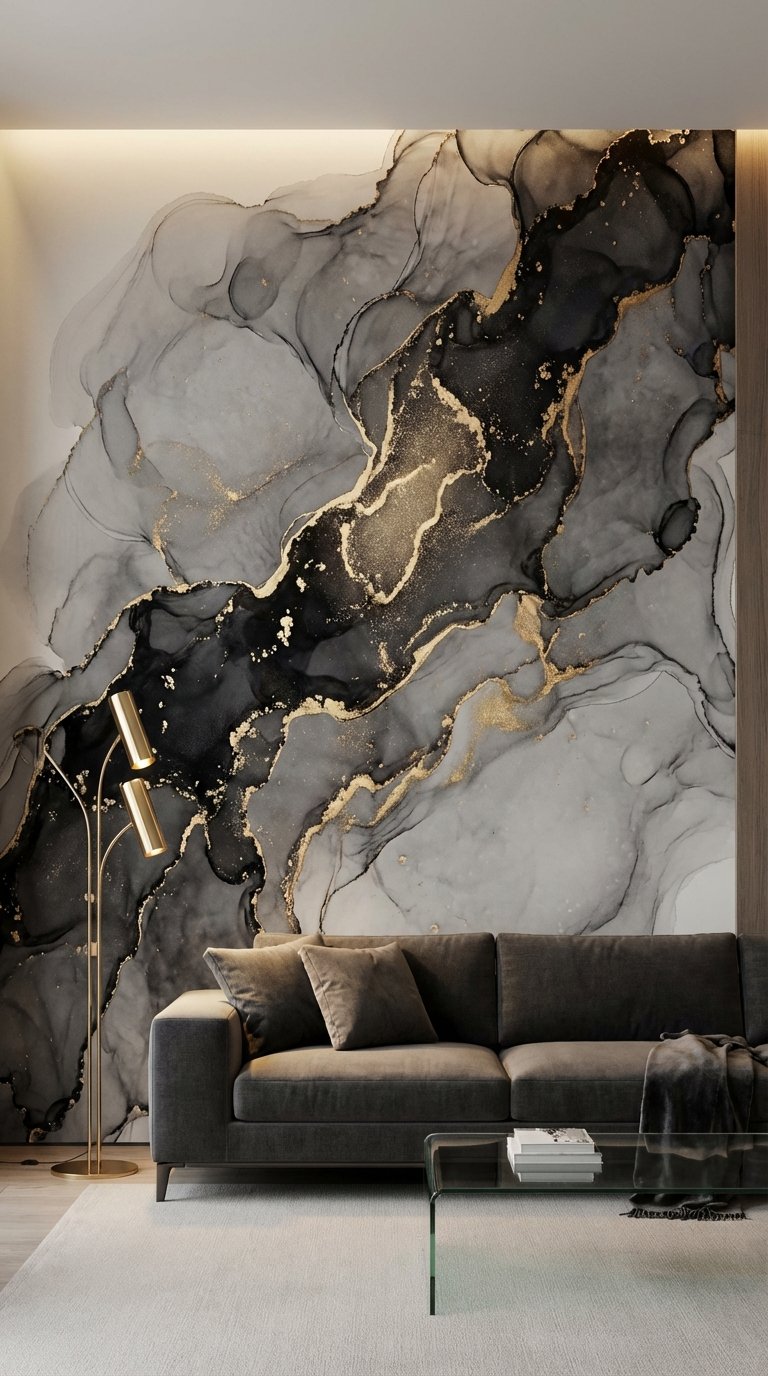
For those who fear commitment or live in rentals, removable murals are a revolution. These large-scale wallpapers come in peel-and-stick formats that leave no residue. You can transport your living room to a misty forest, a tropical jungle, or an abstract geometric world in an afternoon. A mural acts like a giant piece of art but covers the entire visual field. It creates an immersive experience that paint cannot match.
Murals are fantastic for setting a theme. A botanical print brings the outdoors in, perfect for rooms that lack large windows. A watercolor wash adds a dreamlike, ethereal quality. Because the image is continuous, it distracts the eye from room imperfections like uneven corners or awkwardly placed vents. It is big drama for a relatively low price point.
Pro Tip: When applying the mural, use a plastic smoothing tool wrapped in a soft cloth. This pushes out air bubbles without scratching the print design.
Separator Accent Wall
In open-concept homes, the living room often bleeds into the kitchen or dining area without a clear border. A separator accent wall helps define the space. This does not have to be a solid wall; it can be a partial wall, a glass partition, or a slatted screen. The goal is to create a visual stop that says “the living room ends here.” This psychological separation makes the living area feel more intimate and contained.
A freestanding shelving unit that acts as a room divider serves this purpose well. You can decorate the “living room side” with books and plants, while the other side faces the dining area. Another option is a half-wall with columns or a decorative screen. This adds architectural interest and complexity to a boxy room. It allows light to pass through while still providing that crucial sense of enclosure.
Pro Tip: Keep the separator semi-transparent or open. A solid blockade will make the room feel smaller, but an open structure maintains the airy feel while defining the zone.
TV Accent Wall
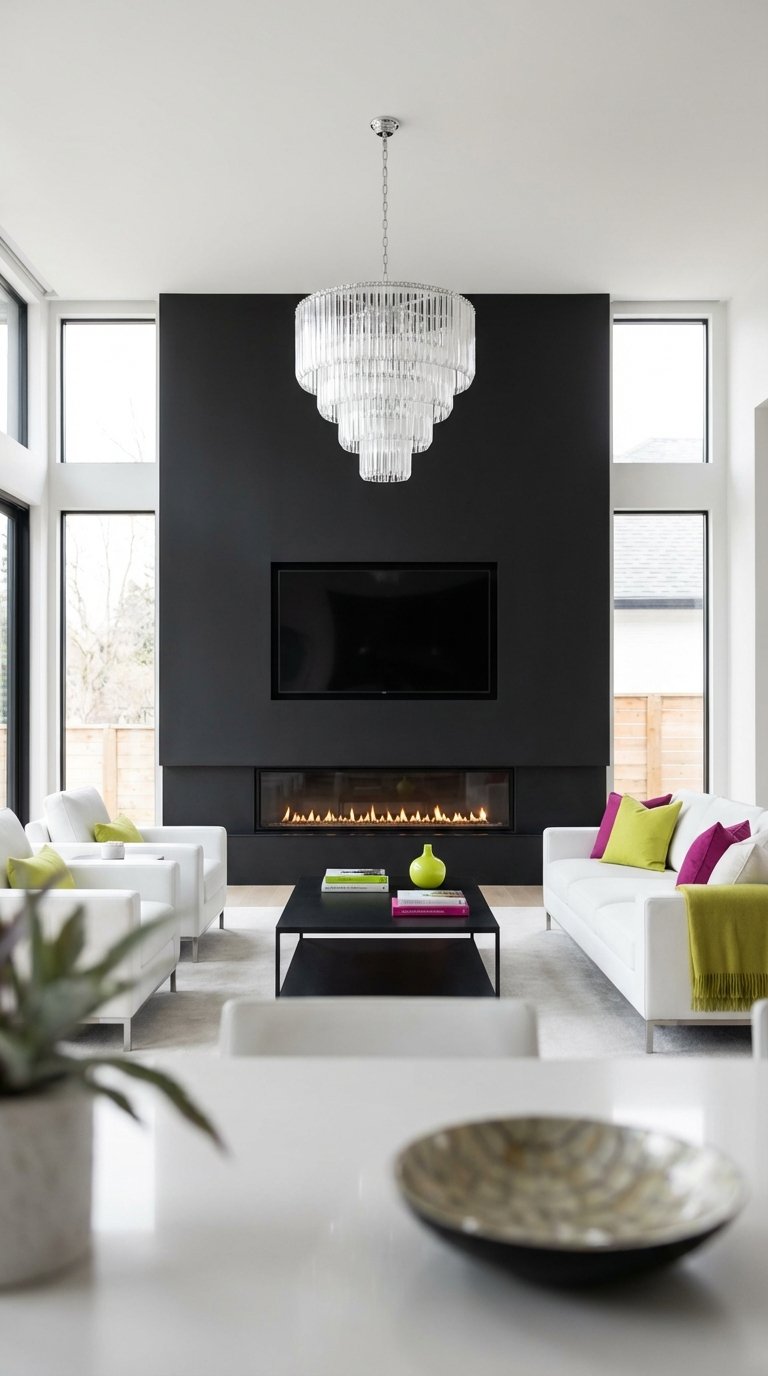
The television is often a black void in the room, clashing with your decor. A TV accent wall is designed to camouflage or integrate this screen into the design. Dark paint colors like charcoal, navy, or black are excellent here. When the TV is off, it blends into the dark background, becoming less of an eyesore. Pairing this with dark wood slats or dark cabinetry creates a sleek, cinematic vibe.
Alternatively, you can frame the TV with a gallery wall or build it into a shelving unit. By surrounding the technology with intentional decor, the TV becomes just one element of the wall rather than the only focal point. Backlighting the TV with LED strips can also reduce eye strain and add a futuristic, high-end glow to the setup. This turns a necessary appliance into a deliberate part of the room’s architecture.
Pro Tip: Hide the cords. Use a cable concealment kit or run cords behind the wall. Nothing ruins the look of a sleek TV accent wall faster than a tangle of dangling wires.
Popular Asked Questions
Which wall should be the accent wall?
The accent wall should usually be the first wall you see when you enter the room. It is often the wall that anchors the main furniture piece, such as the wall behind the sofa or the wall holding the TV and fireplace. Avoid choosing a wall with windows or doors, as these architectural breaks can disrupt the impact of the accent color or texture.
Are accent walls out of style in 2026?
Accent walls are not out of style, but the type of accent wall has changed. Simply painting one wall a different color is less popular now. The current trend focuses on texture and materials. Think wood slats, wallpaper, molding, stone, or brick. The goal is to add architectural depth and tactile interest rather than just a splash of color.
What is the cheapest way to do an accent wall?
The most budget-friendly option is paint. You can create geometric shapes, arches, or color blocks for the cost of a single can of paint and some masking tape. Another cheap option is a “Sharpie shiplap” or stencil wall, where you draw patterns directly on the wall to mimic expensive wallpaper or wood planks for just a few dollars.
Can you put an accent wall in a small living room?
Yes, you absolutely can. In fact, an accent wall can add depth to a small room, making it feel larger. Dark colors on an accent wall can make that wall visually recede, creating the illusion of more space. Vertical lines (like wood slats or striped wallpaper) draw the eye up, making low ceilings feel higher and the room feel airier.
Conclusion
Refreshing your living room does not require a complete remodel or new furniture. One well-designed accent wall has the power to shift the entire energy of the space. Whether you choose the warmth of wood slats, the sophistication of board and batten, or the bold statement of a mural, the key is to choose a texture that speaks to your personal style.
Start small if you are hesitant. Try a removable wallpaper or a painted arch. Once you see how much character it adds, you might find yourself reaching for the power tools to build those custom shelves.


Leave a Comment