
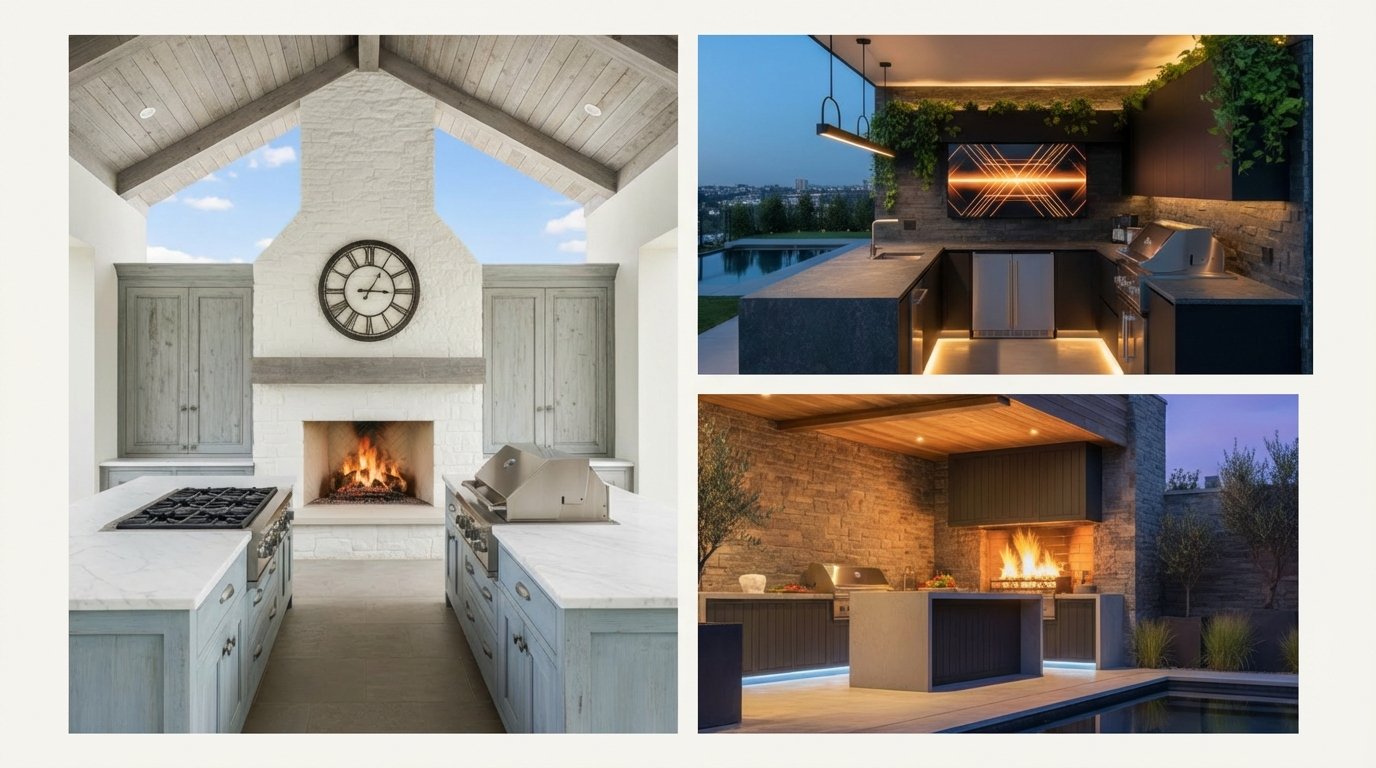
The modern backyard is no longer just a patch of grass with a solitary grill. It has evolved into a fully functional extension of the home. A covered outdoor kitchen with a fireplace is the ultimate luxury upgrade, allowing you to cook, dine, and relax outside regardless of the season. Whether it is a rainy spring evening or a crisp autumn night, the combination of a protective roof and a roaring fire creates a cozy, usable space year-round.
This trend is not just about aesthetics; it is about maximizing your living square footage and increasing property value. By integrating a fireplace, you create a natural focal point that draws guests out of the house and into the fresh air. From rustic stone retreats to sleek modern designs, there is a style to fit every architectural vibe.
Key Takeaways
- Year-Round Usability: A roof protects against rain and sun, while a fireplace provides necessary heat during cooler months.
- Zoning is Critical: distinct zones for cooking, dining, and lounging ensure the space flows logically and safely.
- Material Matters: Non-porous materials like granite and soapstone are essential for durability in covered outdoor environments.
- Ventilation Safety: Proper venting is non-negotiable when installing a fireplace under a covered structure to prevent smoke buildup.
Table of Contents
- Rustic Stone Retreat
- Modern Minimalist Elegance
- Cozy Cabin-Inspired Haven
- Mediterranean Alfresco Escape
- Contemporary Glass-Enclosed Design
- Farmhouse Charm with a Brick Hearth
- Industrial Chic Outdoor Kitchen
- Tropical Tiki Bar Ambiance
- Elevated Pergola with Fireplace Focus
- Classic Pavilion-Style Kitchen
- Lush Garden Kitchen with Fire Element
- Poolside Outdoor Kitchen & Fireplace Combo
- Smart Tech-Integrated Outdoor Kitchen
- Coastal Retreat with a Nautical Vibe
- Comparison: Wood vs Gas Fireplaces
- Popular Asked Questions
- Conclusion
Rustic Stone Retreat
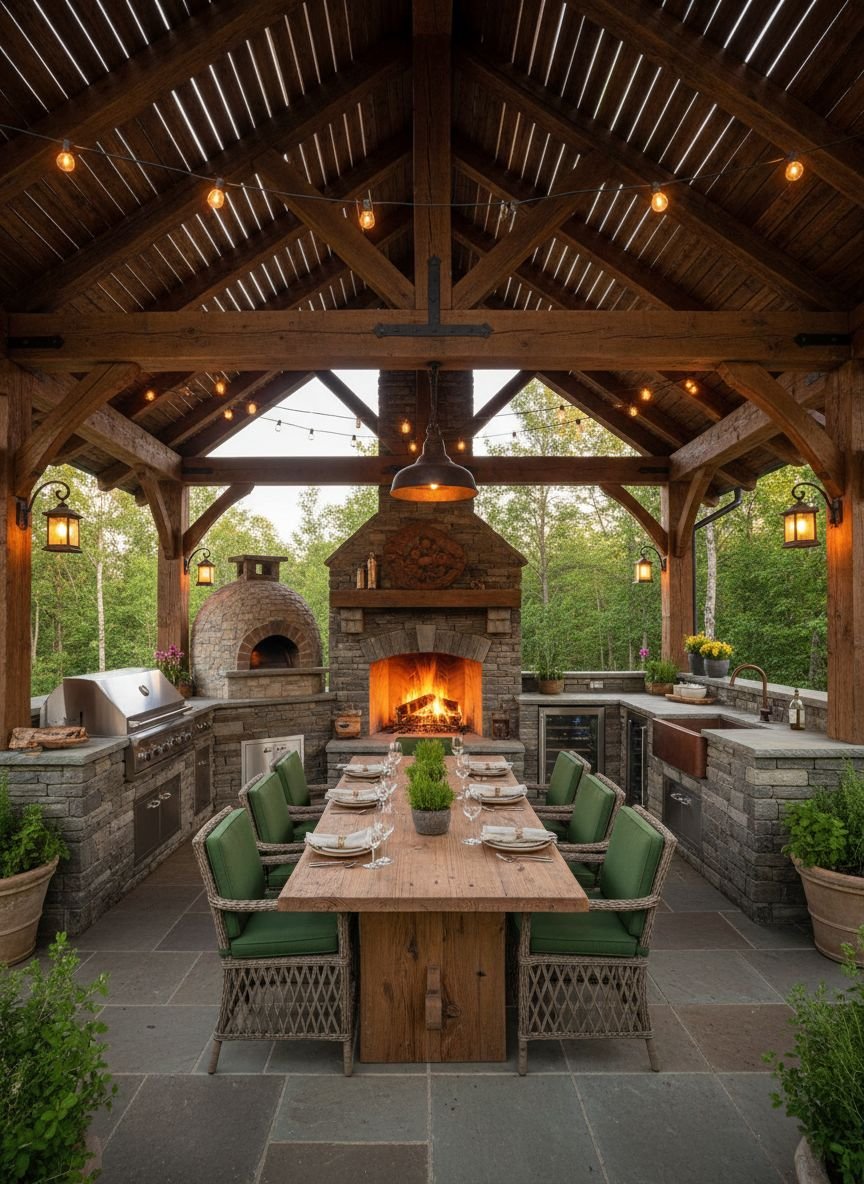
Nothing says “outdoor living” quite like the timeless appeal of natural stone. This design leans heavily on stacked stone veneers or river rock to create a solid, grounded aesthetic. The fireplace serves as the anchor of the space, often built with a massive hearth that doubles as extra seating. The kitchen counters typically feature granite or flagstone, blending seamlessly with the rough textures of the fireplace. Heavy timber beams overhead complete the look, providing sturdy support for the roof while adding warmth to the palette.
To keep this look from feeling too heavy, incorporate soft lighting such as wrought-iron lanterns or string lights woven through the beams. The furniture should be oversized and comfortable, with deep cushions in neutral earth tones like taupe, sage, or charcoal. This design works exceptionally well in wooded backyards or mountain settings where the structure can blend into the natural landscape.
Pro Tip: Use a matte sealer on the stone to protect it from grease splatters and soot without adding an artificial shine.
Modern Minimalist Elegance
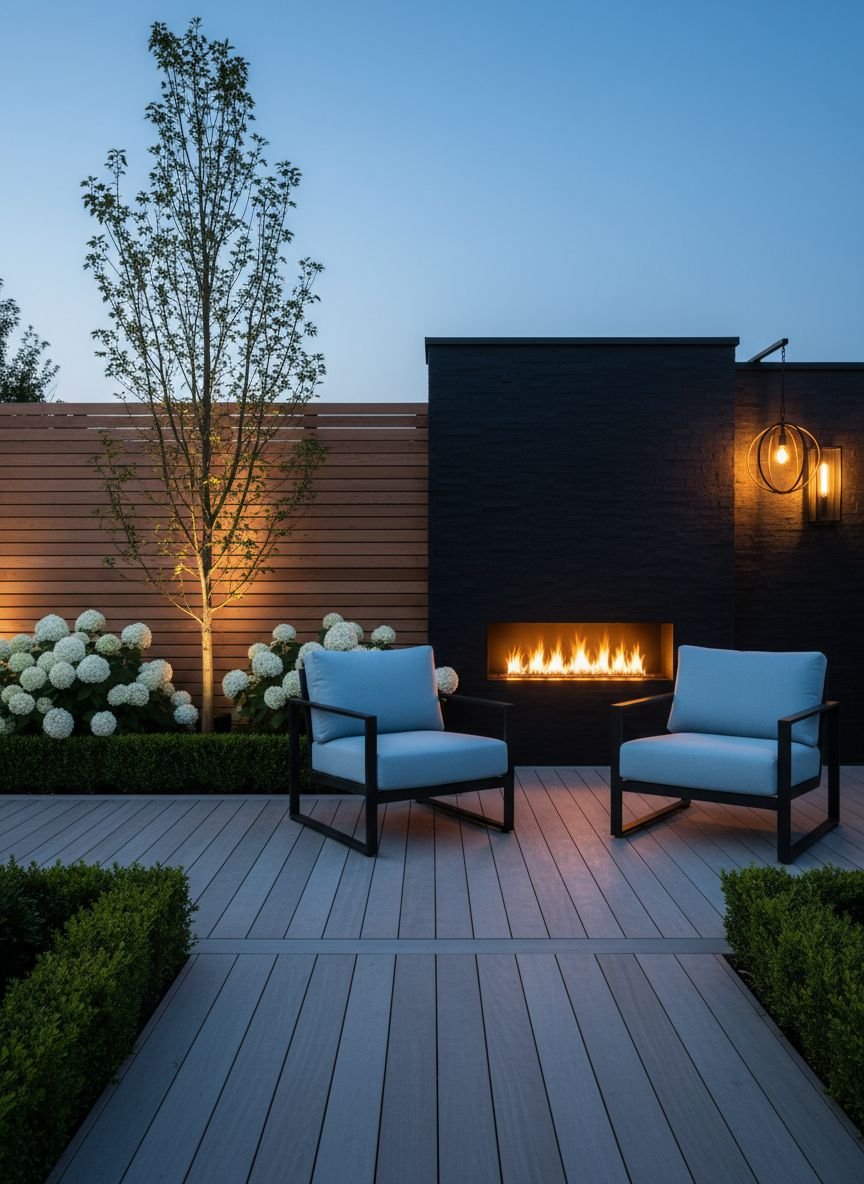
For those who prefer clean lines and uncluttered spaces, the modern minimalist approach is ideal. This style utilizes smooth textures like poured concrete, stainless steel, and large-format porcelain tiles. The fireplace is often a linear gas unit set into a sleek, stucco wall, eliminating the need for a bulky hearth or chimney. The color palette is strictly monochromatic, relying on shades of white, gray, and black to create a sophisticated atmosphere.
Functionality is key here. Cabinetry is often handle-less or features hidden pulls to maintain the streamlined look. The “cover” might be a flat-roofed structure with recessed lighting and built-in heat lamps, ensuring the space remains comfortable without visual clutter. The furniture is often low-profile, emphasizing horizontal lines that make the space feel wider and more open.
Pro Tip: Incorporate a “waterfall” edge on your kitchen island countertop to enhance the sleek, modern aesthetic.
Cozy Cabin-Inspired Haven
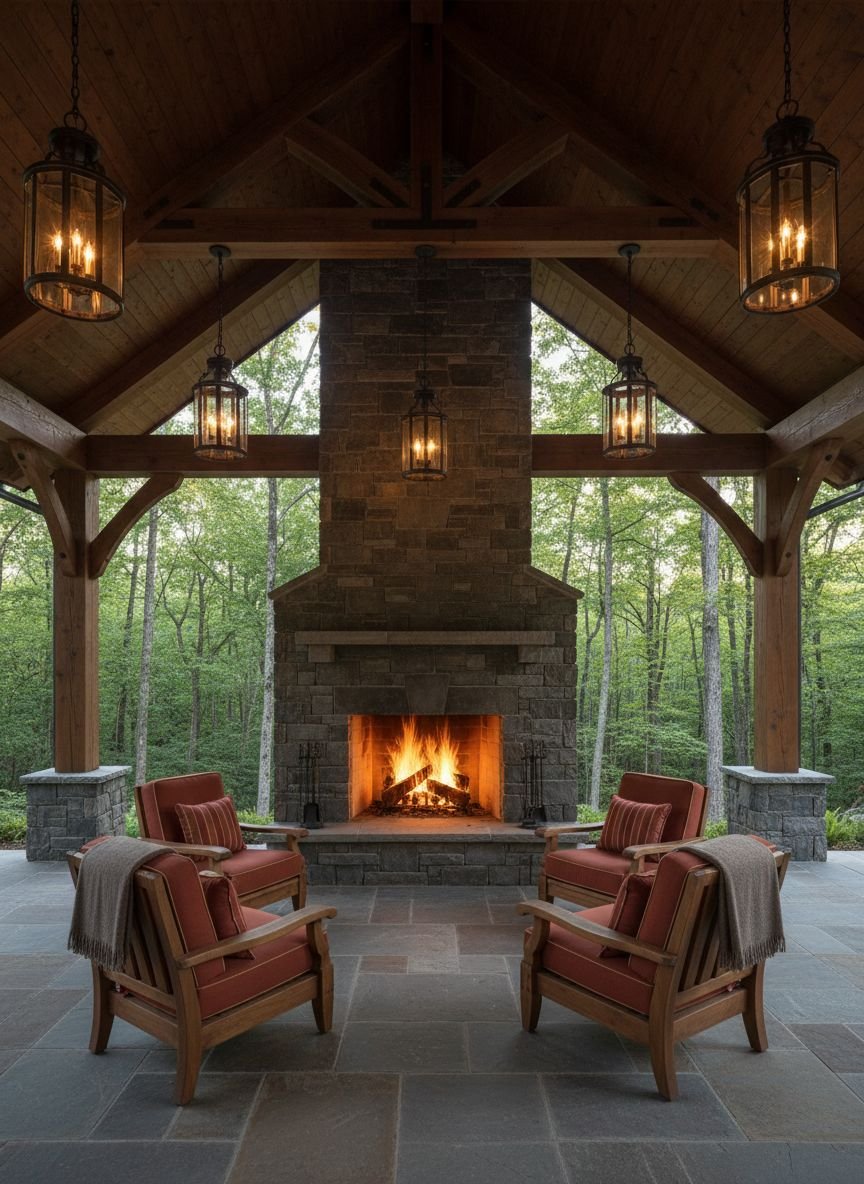
Bring the warmth of a mountain lodge to your backyard with a cabin-inspired design. This look is defined by the extensive use of wood, particularly cedar, redwood, or reclaimed barn wood. The fireplace is usually a traditional wood-burning unit with a stone facade, providing the crackle and scent of a real fire. Plaid textiles, faux fur throws, and vintage accessories like antique snowshoes or lanterns add character and charm.
The kitchen area in this design often features a wood-fired pizza oven alongside the standard grill, encouraging slow, communal cooking. The roof structure is typically a gable design with exposed trusses, creating a vaulted ceiling that feels spacious yet intimate. Warm, amber-toned lighting is essential to replicate the glow of a lantern-lit cabin.
Pro Tip: Install retractable insect screens to keep the space comfortable during bug-heavy summer evenings without sacrificing the view.
Mediterranean Alfresco Escape
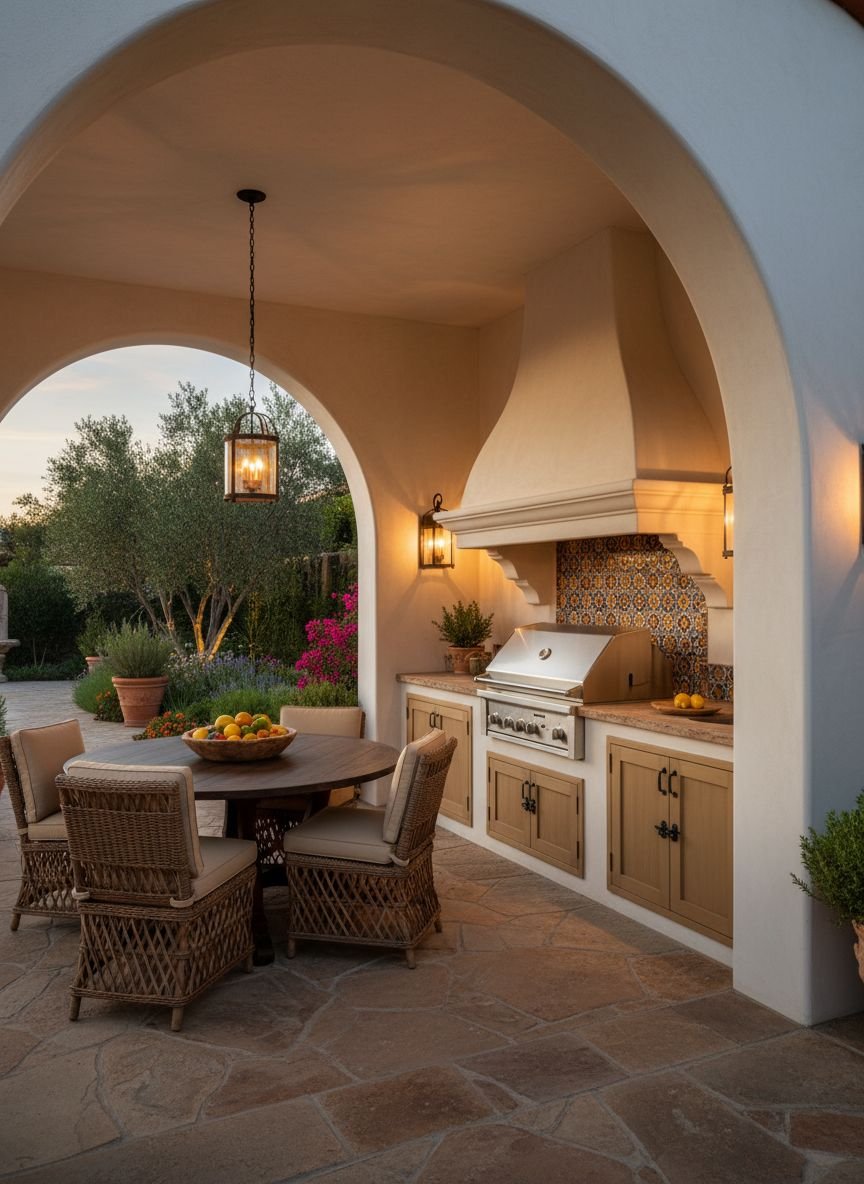
Transport yourself to the coast of Italy or Greece with a Mediterranean-style outdoor kitchen. This design is characterized by warm colors, terracotta tiles, and stucco finishes. Arched openings in the covered structure frame views of the garden, while the fireplace often features a curved, plaster design reminiscent of old-world ovens. Wrought iron details on light fixtures and furniture add a touch of intricate elegance.
The kitchen layout usually encourages social interaction, often featuring a large central island where guests can gather while food is prepared. Herb gardens planted in terracotta pots nearby not only add to the aesthetic but provide fresh ingredients for cooking. The overall vibe is relaxed and sun-drenched, perfect for long lunches that turn into dinner parties.
Pro Tip: Plant climbing vines like bougainvillea or jasmine on the pillars of your covered structure to soften the edges and add fragrance.
Contemporary Glass-Enclosed Design
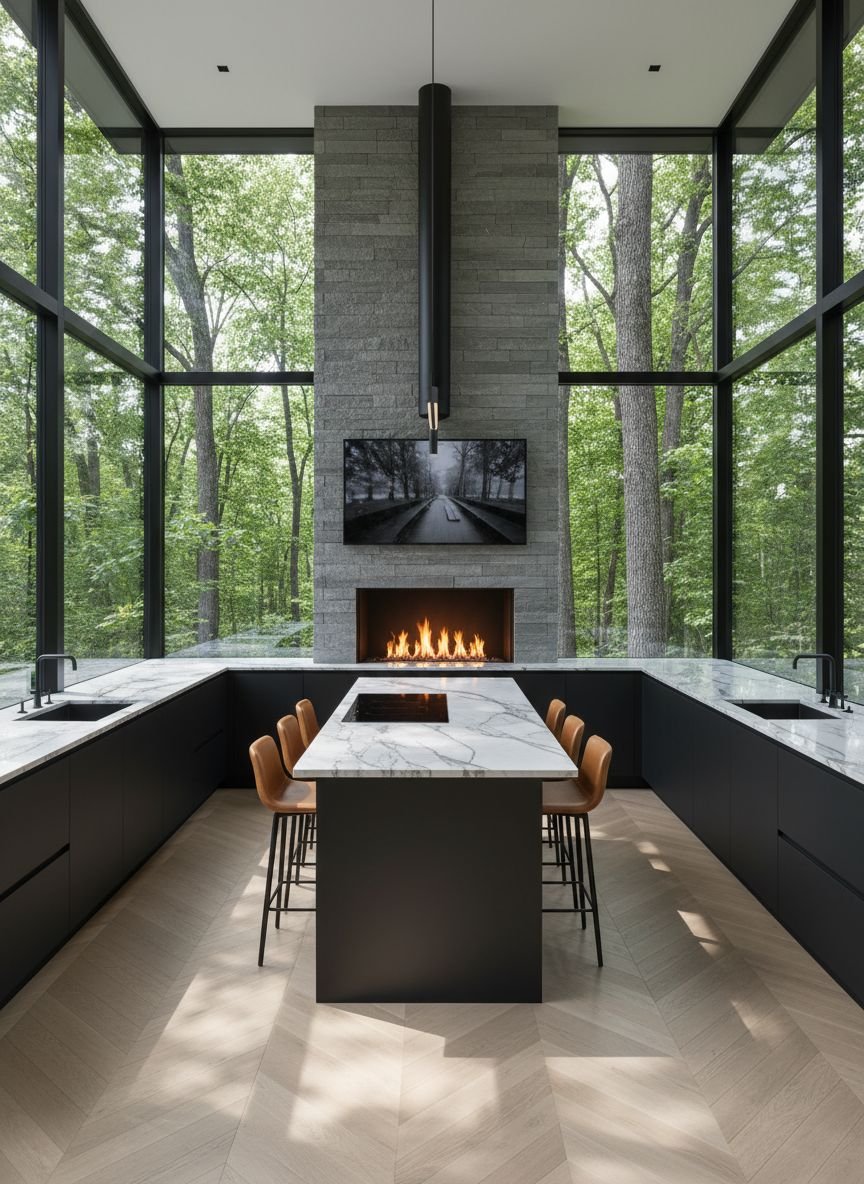
If you live in a climate with harsh winters or frequent rain, a glass-enclosed design offers the best of both worlds. This “sunroom” approach uses floor-to-ceiling glass sliding or bi-fold doors that can be fully opened in good weather and sealed tight when it gets cold. The fireplace becomes a true indoor-outdoor feature, often double-sided so it can be enjoyed from the patio and the garden.
The kitchen inside is fully equipped, often mirroring the quality of an indoor kitchen with high-end appliances and polished finishes. Because the space is protected from the elements, you have more freedom with material choices, allowing for velvet cushions or indoor-grade rugs. Skylights in the roof ensure the space remains bright and airy, even when the doors are closed.
Pro Tip: Ensure your ventilation hood is extra powerful in a glass-enclosed space to quickly remove smoke and cooking odors.
Comparison: Wood vs Gas Fireplaces
| Feature | Wood-Burning Fireplace | Gas Fireplace |
|---|---|---|
| Ambiance | High. Authentic crackle, smell, and visual appeal. | Medium. Consistent flame, but lacks the sound/smell. |
| Convenience | Low. Requires chopping wood, lighting, and cleaning ash. | High. Instant on/off with a switch or remote. |
| Installation | Expensive. Requires a full masonry chimney and foundation. | Moderate. Can be vented horizontally; no heavy chimney needed. |
| Maintenance | High. Regular ash removal and chimney sweeping required. | Low. Occasional cleaning of the burner and glass. |
| Heat Output | Variable. Depends on the wood and fire size. | Consistent. Controlled heat output (BTUs). |
Farmhouse Charm with a Brick Hearth
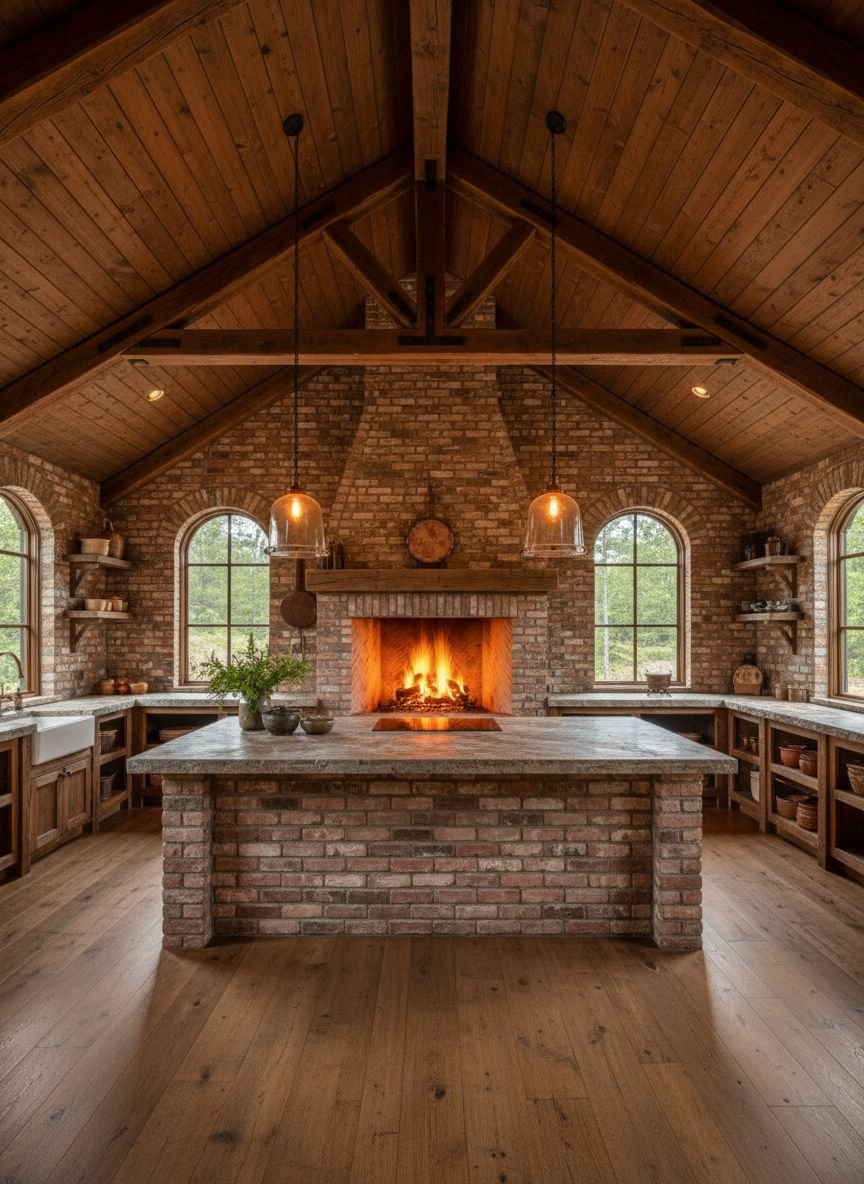
The modern farmhouse trend translates beautifully to outdoor spaces. This design relies on the classic combination of white shiplap (or weather-resistant siding) and red or whitewashed brick. The fireplace is typically a traditional brick structure, perhaps with a reclaimed wood mantel. The kitchen cabinetry might feature shaker-style doors in white or navy blue, topped with butcher block or soapstone counters.
Gooseneck barn lights and galvanized metal accents reinforce the farmhouse aesthetic. The furniture is usually a mix of timber and metal, such as a large trestle table with metal dining chairs. This style feels welcoming and unpretentious, making it perfect for family barbecues and casual gatherings.
Pro Tip: Use “thin brick” veneer instead of full bricks for the fireplace to reduce weight and installation costs while keeping the authentic look.
Industrial Chic Outdoor Kitchen
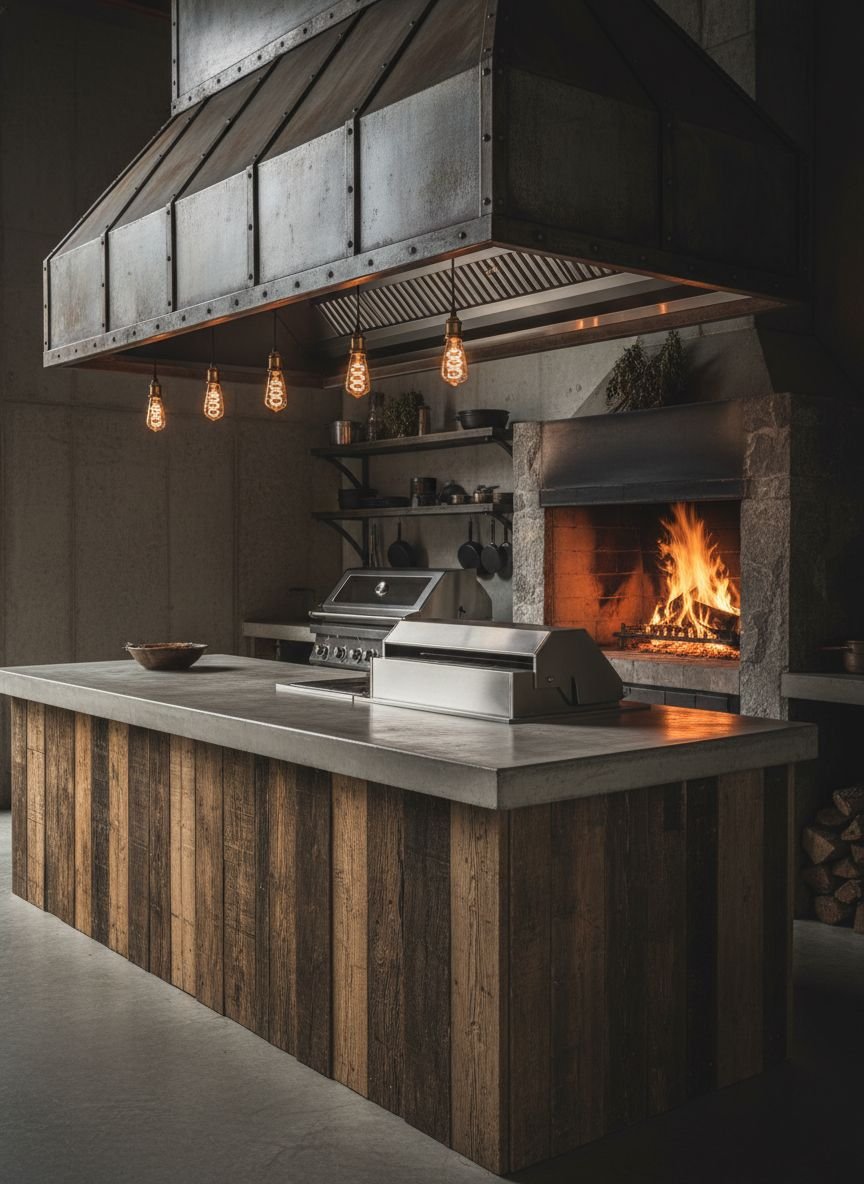
Industrial design celebrates raw materials and structural elements. In an outdoor kitchen, this looks like exposed steel I-beams, corrugated metal roofing, and concrete countertops. The fireplace might be a freestanding steel unit (like a chiminea or a suspended fireplace) or a raw concrete block structure. The color palette is cool and edgy, dominated by grays, blacks, and metallic tones.
To soften the harshness of the industrial materials, incorporate elements of nature like a vertical garden wall or wood slat accents. The kitchen appliances are typically professional-grade stainless steel, emphasizing the functional “chef’s kitchen” vibe. Lighting is often stripped back, using Edison bulbs or cage pendants.
Pro Tip: Seal concrete countertops with a food-safe, high-grade sealer to prevent staining from oil, wine, or citrus.
Tropical Tiki Bar Ambiance
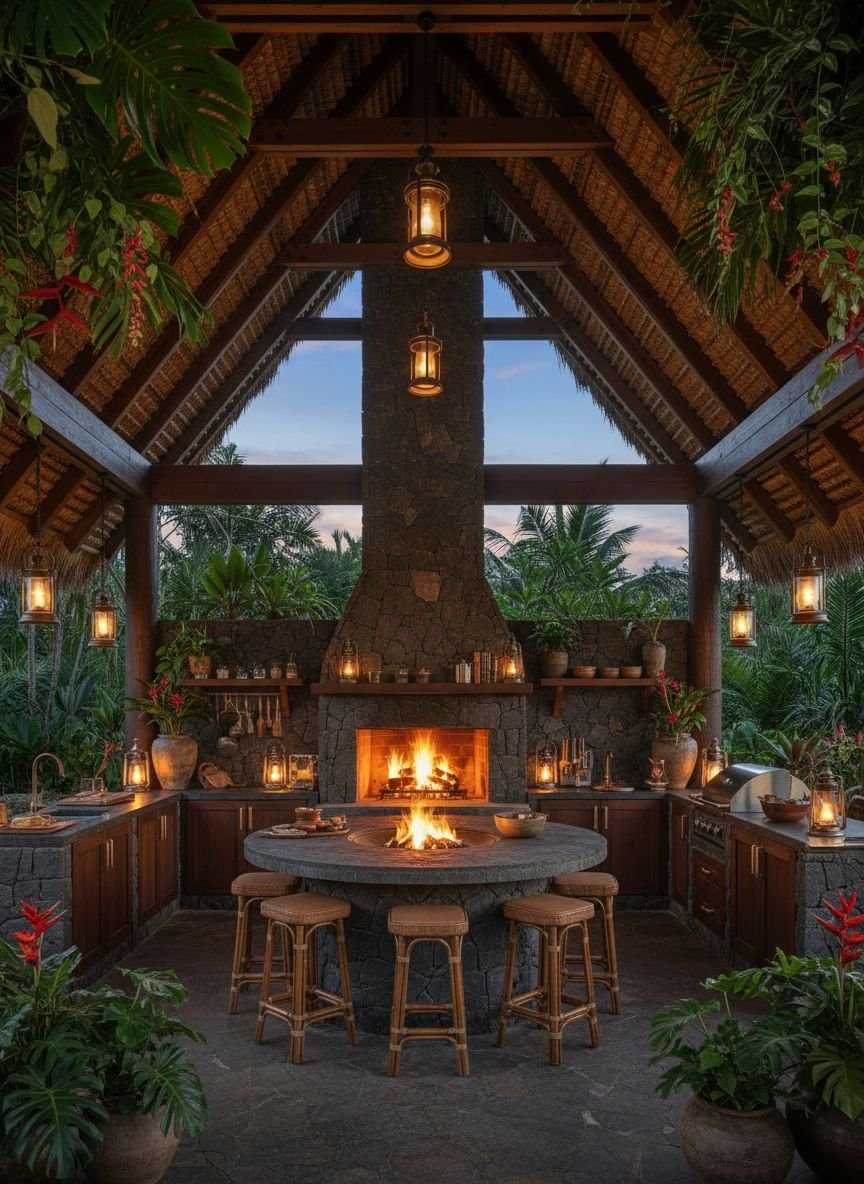
Create a permanent vacation spot in your backyard with a tropical-themed kitchen. While traditional thatch can be a fire hazard, modern synthetic thatch materials offer the look without the risk. Bamboo paneling, teak wood, and lava stone are key materials. The fireplace is often a gas fire pit table or a stone feature that mimics a volcanic rock formation, adding drama and warmth.
The kitchen layout usually centers around a bar area, complete with a built-in blender station and ice maker. Bright, vibrant colors in the upholstery—turquoise, coral, and lime green—pop against the natural wood tones. Lush landscaping surrounding the structure is essential to create that secluded, jungle-like feel.
Pro Tip: Choose “marine-grade” cabinetry and appliances if you live near saltwater or in a humid climate to prevent rust and corrosion.
Elevated Pergola with Fireplace Focus
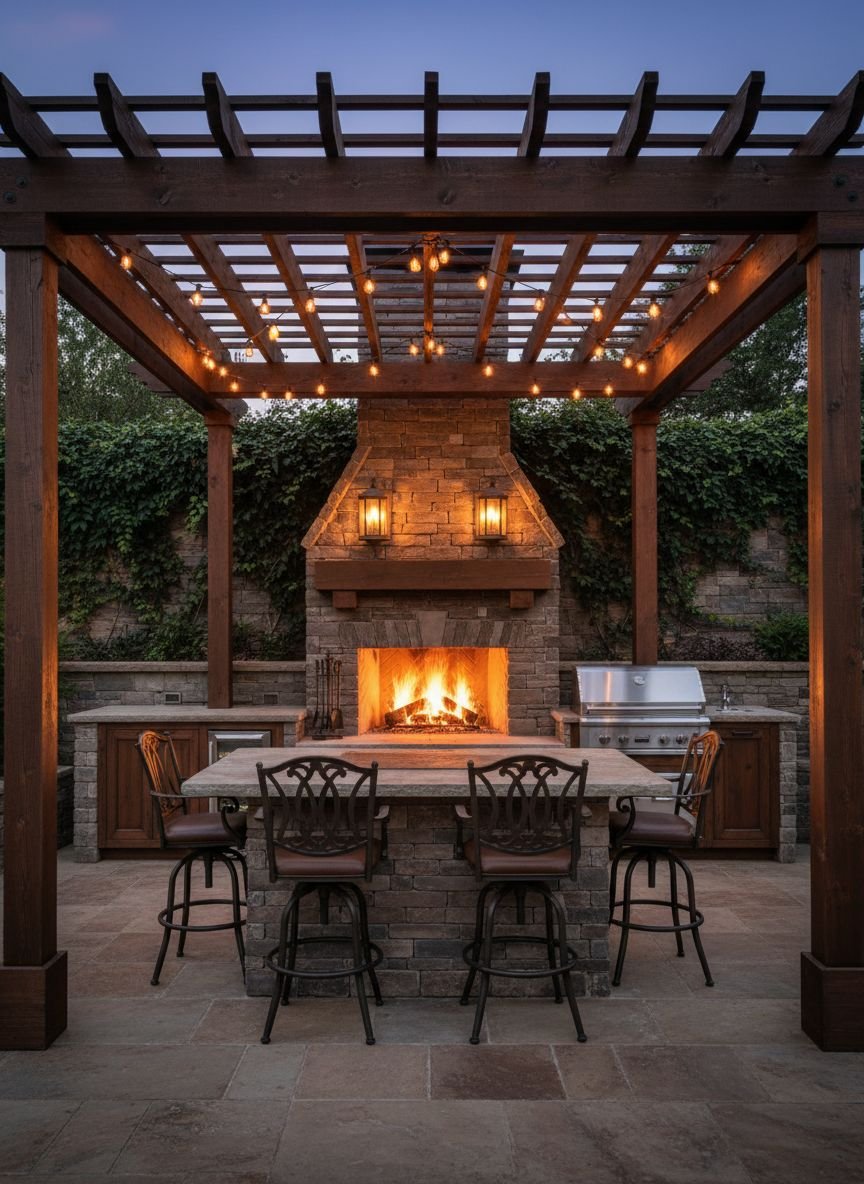
A pergola offers a lighter, airier alternative to a solid roof. While it doesn’t provide full rain protection (unless a polycarbonate sheet is added on top), it defines the space beautifully. Ideally, the fireplace is built into a privacy wall on one side of the pergola, creating a cozy “living room” feel. The slats of the pergola cast dynamic shadows during the day, adding visual interest.
This design is often more budget-friendly than a full pavilion. The kitchen might be a simple L-shaped island with a grill and prep sink. String lights zigzagging across the top beams create a magical atmosphere at night. It is a perfect setup for mild climates where heavy rain protection isn’t the primary concern.
Pro Tip: Install a louvered pergola roof that can be opened or closed manually to control sunlight and rain exposure.
Related posts :
- 15 Unique Patio Roof Extension Ideas For A Stunning Backyard
- 18 Innovative Small Garden Ideas to Maximize Your Green Space
Classic Pavilion-Style Kitchen
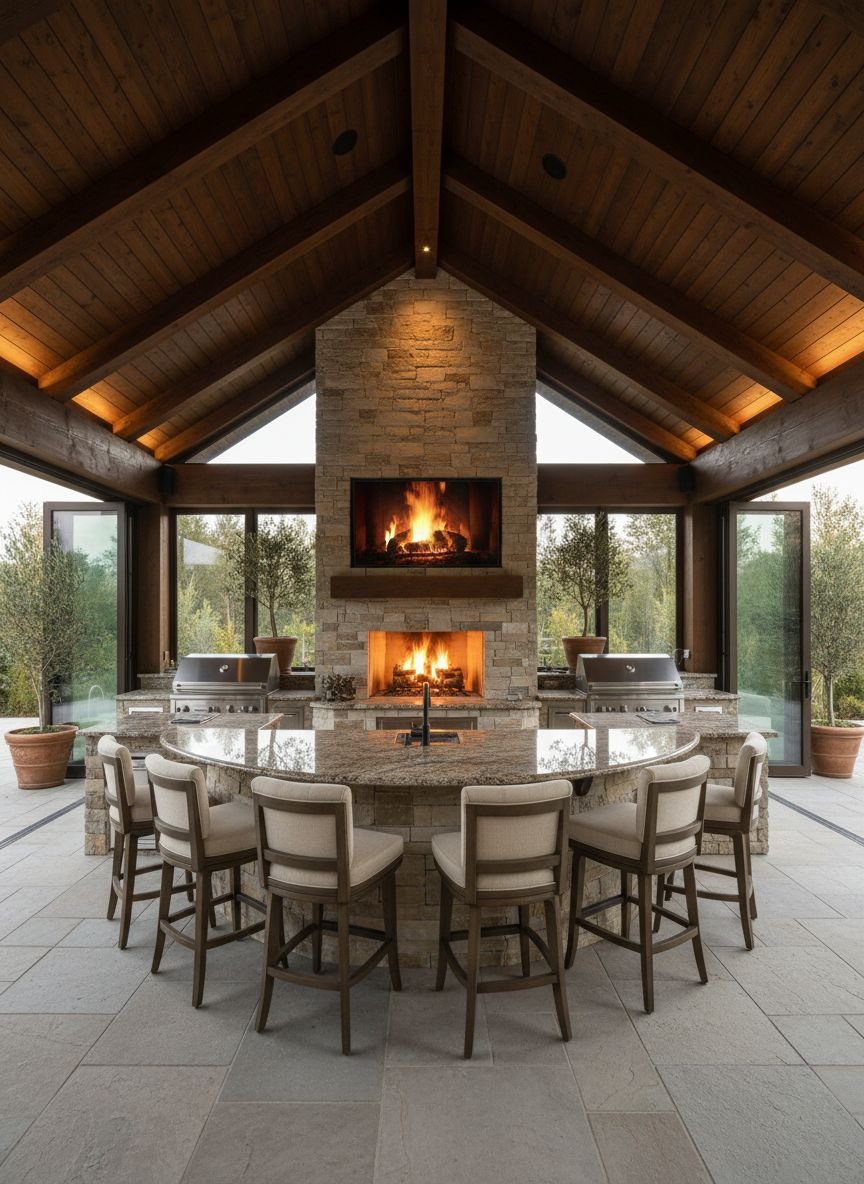
A pavilion is a freestanding structure with a full roof, completely detached from the main house. This allows for a grand, symmetrical design. The fireplace is usually centered on the back wall, creating a dramatic focal point that can be seen from the house. High, vaulted ceilings give the space a majestic feel and allow for large pendant lighting or chandeliers.
Because a pavilion is often larger, it can accommodate a full U-shaped kitchen with bar seating, a dining table, and a separate lounge area around the fire. It effectively becomes a second home in your backyard. Materials often match the main house to create architectural continuity.
Pro Tip: Install ceiling fans to keep air circulating on hot days and to push warm air down from the ceiling on cool nights.
Lush Garden Kitchen with Fire Element
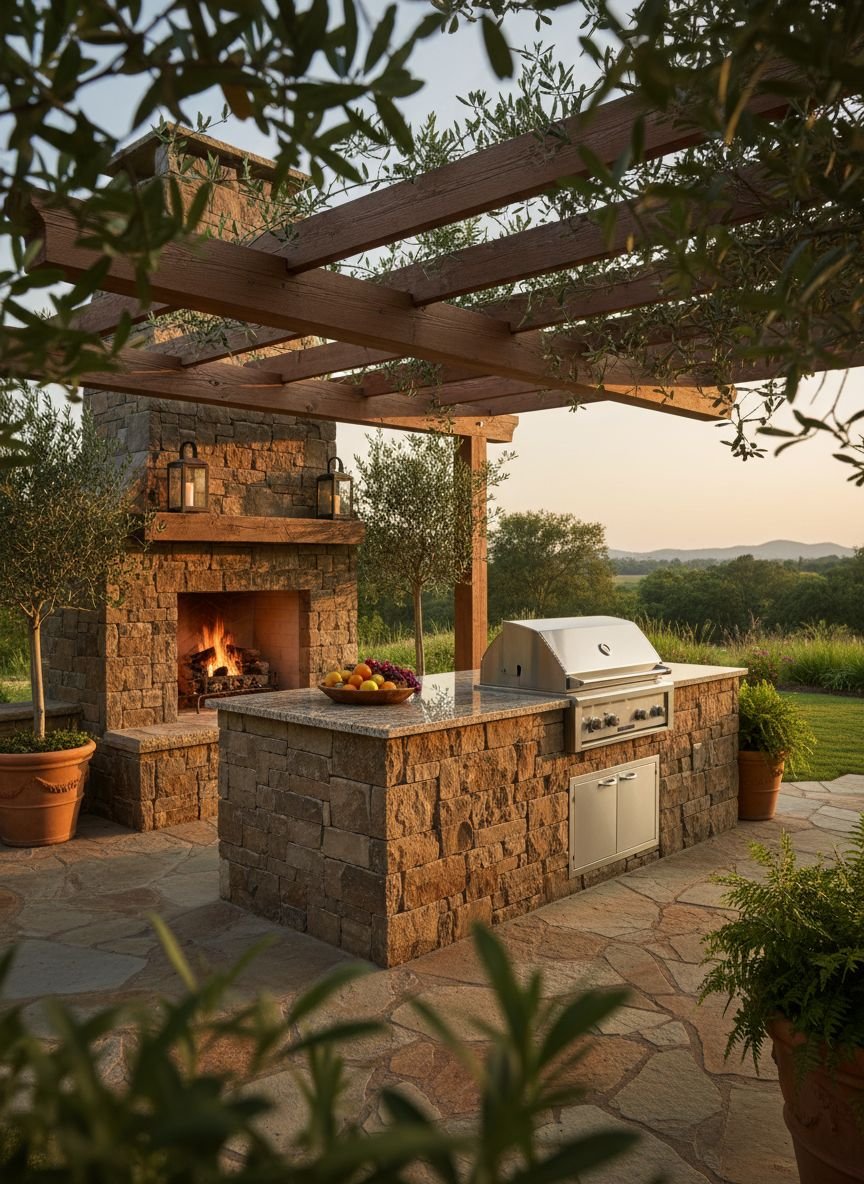
This design integrates the kitchen directly into the garden landscape. The structure might be covered in climbing vines or have a “green roof” planted with sedum. The fireplace is often built from natural boulders or irregular stones to look like it grew out of the earth. The boundary between the hardscape and the softscape is blurred, with plants spilling over onto the patio.
The kitchen itself is often compact to minimize the footprint on nature. Earthy tones and natural wood finishes help the structure recede visually, letting the garden be the star. The fire provides a primal gathering spot, perfect for roasting marshmallows surrounded by greenery.
Pro Tip: Use permeable pavers for the flooring to allow rainwater to drain naturally and water the surrounding plants.
Poolside Outdoor Kitchen & Fireplace Combo
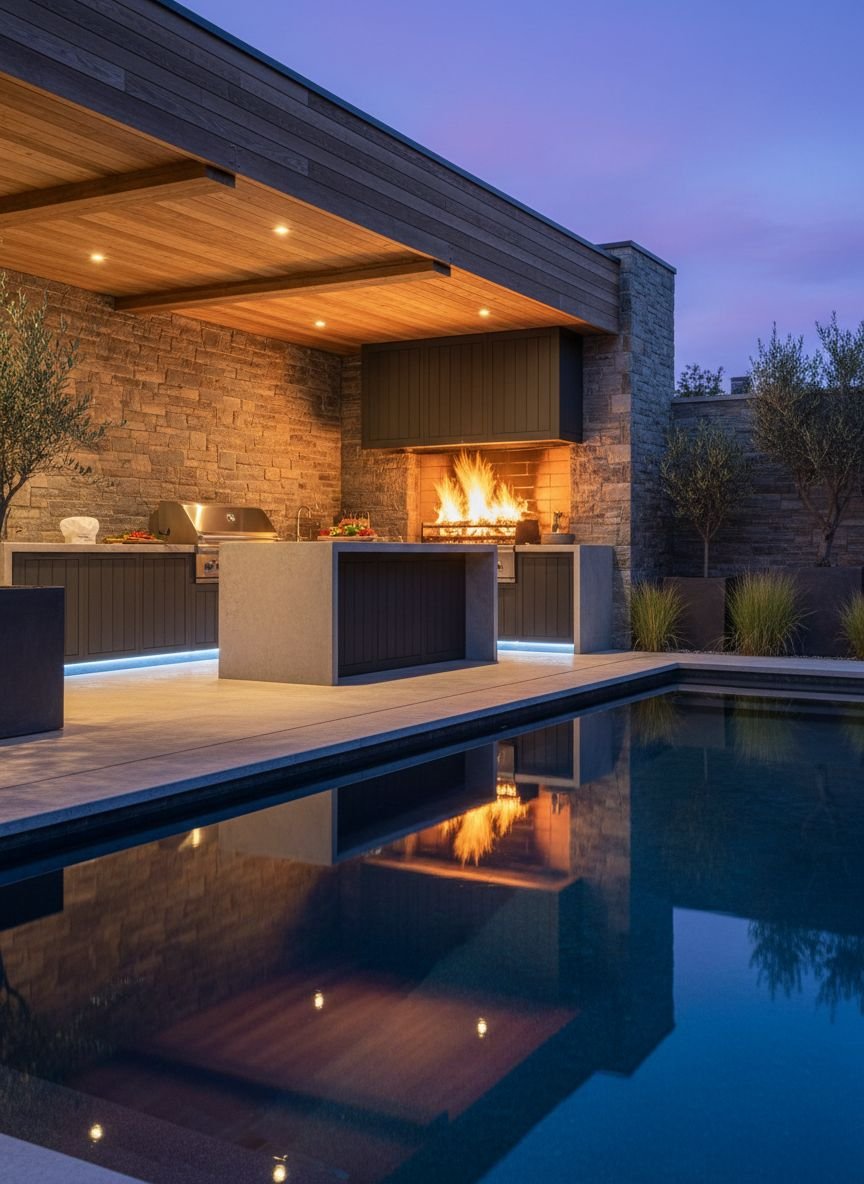
For those with a pool, integrating the kitchen and fireplace creates the ultimate resort experience. The structure provides a shady respite from the sun, while the fireplace offers a way to warm up after a night swim. The materials must be slip-resistant and able to withstand exposure to pool chemicals. Travertine or textured concrete are excellent flooring choices.
The design often features a “swim-up” bar on one side and a dry bar on the other. The fireplace creates a stunning reflection in the water at night. Storage is key here for pool toys and towels, often built into the kitchen island or bench seating.
Pro Tip: Save this idea to your Pinterest. Ensure the fireplace is located far enough from the pool edge to prevent splashes from extinguishing the fire or damaging hot components.
Smart Tech-Integrated Outdoor Kitchen
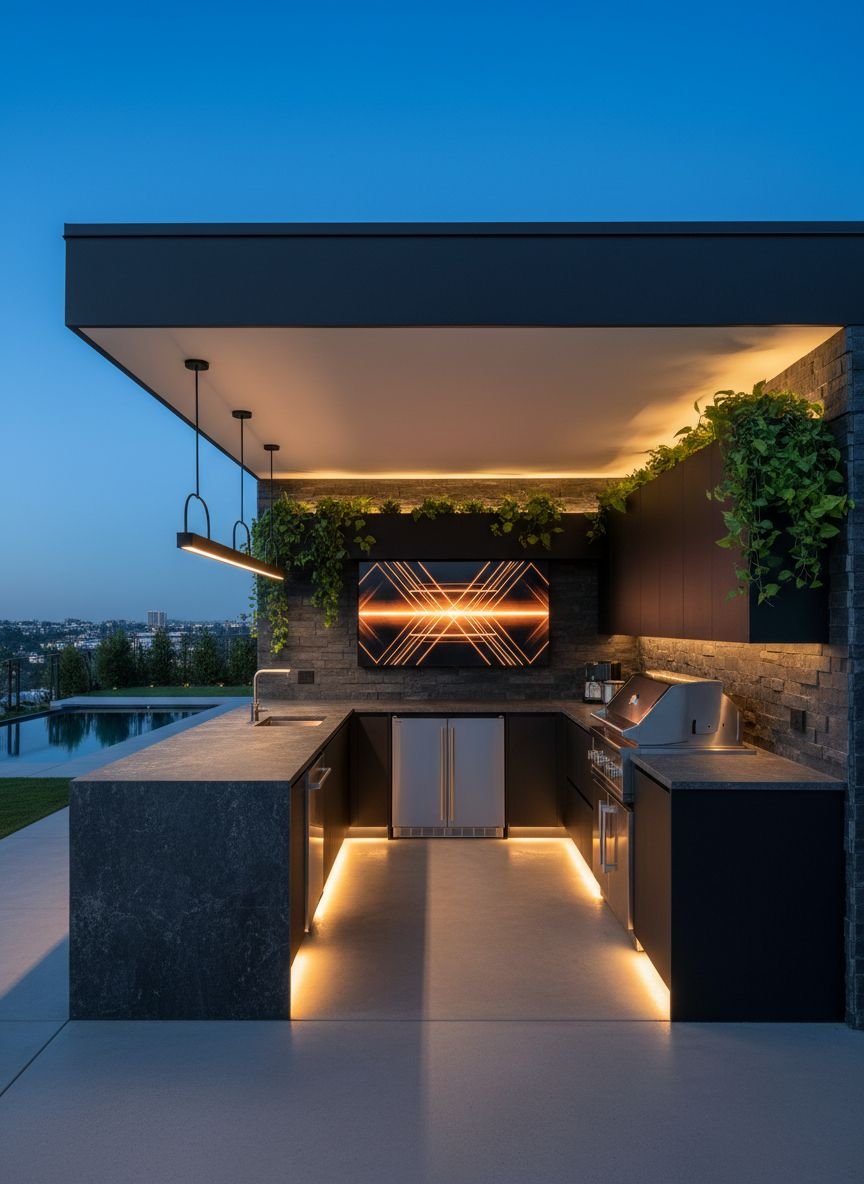
The smart home revolution has reached the backyard. This high-tech kitchen features automated screens that descend from the roof beams to block bugs or wind at the touch of a button. The fireplace is likely a remote-controlled gas unit with adjustable flame height and LED backlighting. Sound systems are hidden within the structure, and the grill might even be Wi-Fi enabled to monitor food temperatures from your phone.
The design aesthetic is usually sleek and futuristic, using materials like powder-coated aluminum and composite decking. Lighting plays a huge role, with color-changing LEDs allowing you to alter the mood of the space instantly.
Pro Tip: Ensure you have a strong Wi-Fi signal extender or a mesh network node installed outdoors to support all your smart devices.
Coastal Retreat with a Nautical Vibe
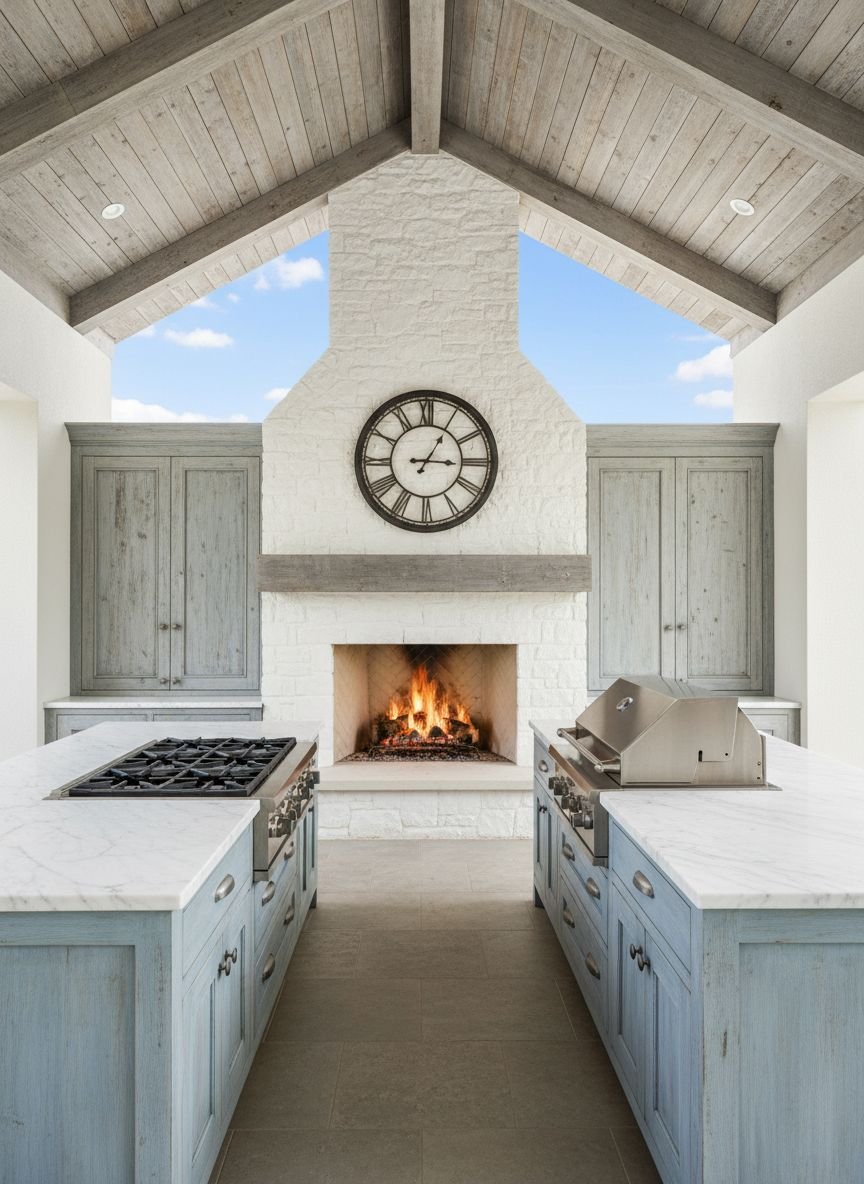
Even if you are miles from the ocean, you can capture the breezy, relaxed vibe of a coastal home. Use a palette of crisp whites, soft blues, and sandy beiges. The fireplace might be clad in white-washed brick, stucco, or even shiplap. Driftwood accents and rope details on the lighting fixtures enhance the nautical theme.
The covered structure should feel open and airy, perhaps with a high, white-painted ceiling. Wicker or rattan furniture with weather-resistant cushions adds texture. The kitchen counters often feature light-colored quartz or concrete that mimics the look of sea glass or sand.
Pro Tip: If you live near the coast, choose stainless steel grade 316 (marine grade) for all appliances and hardware to prevent rust from salt air.
Popular Asked Questions
Can you put a fireplace under a covered patio?
Yes, you absolutely can. However, safety is the number one priority. You must ensure there is proper ventilation to let smoke and heat escape. Gas fireplaces are generally easier to install under a roof because they don’t produce sparks or heavy smoke. If you choose wood-burning, you will need a chimney that extends through and above the roofline, meeting specific height codes to prevent fire hazards.
How much does a covered outdoor kitchen with a fireplace cost?
The cost varies wildly based on materials and size. A basic DIY setup might start around $6,000 to $10,000. A mid-range professional build typically lands between $20,000 and $40,000. Luxury custom designs with high-end appliances, stone masonry, and extensive roofing can easily exceed $60,000 to $100,000.
What is the best material for an outdoor kitchen countertop?
Granite is widely considered the best all-around option because it is incredibly durable, heat-resistant, and doesn’t fade in the sun. Soapstone is another excellent choice as it is non-porous and handles heat well. Concrete is popular for a custom look but requires regular sealing to prevent stains. Avoid porous stones like marble, which can stain easily from wine or grease.
Do I need a permit for an outdoor kitchen and fireplace?
almost all cases, yes. Adding a permanent roof structure, running gas/electric/plumbing lines, and building a masonry fireplace are significant construction projects that require local building permits. Your contractor should handle this, but always double-check with your local municipality to avoid fines or insurance issues later.
Conclusion
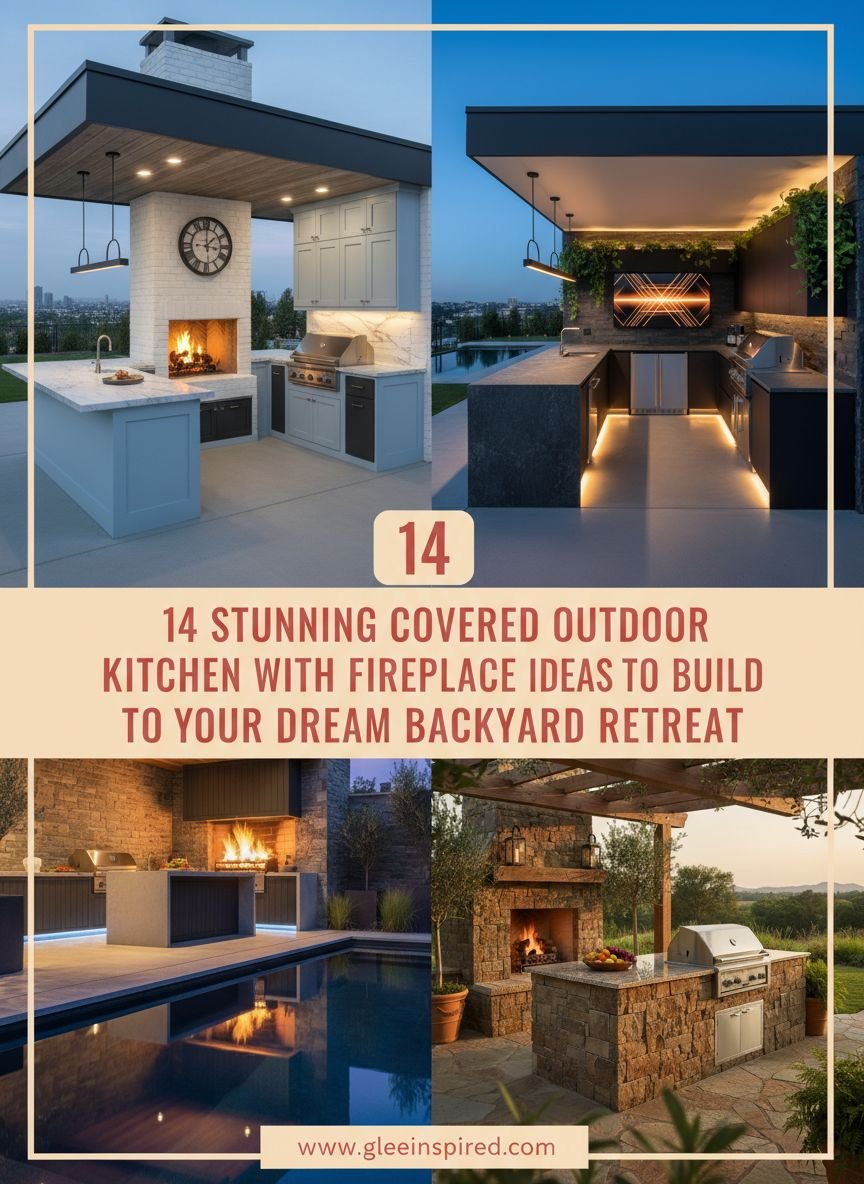
Creating a covered outdoor kitchen with a fireplace is one of the most rewarding home improvement projects you can undertake. It effectively adds a new room to your house, one that connects you with nature while providing the comforts of indoor living. Whether you prefer the rustic charm of stone or the sleek lines of modern design, the combination of fire and food creates a gathering space that family and friends will flock to for years.

Leave a Comment