
The Utility Hook
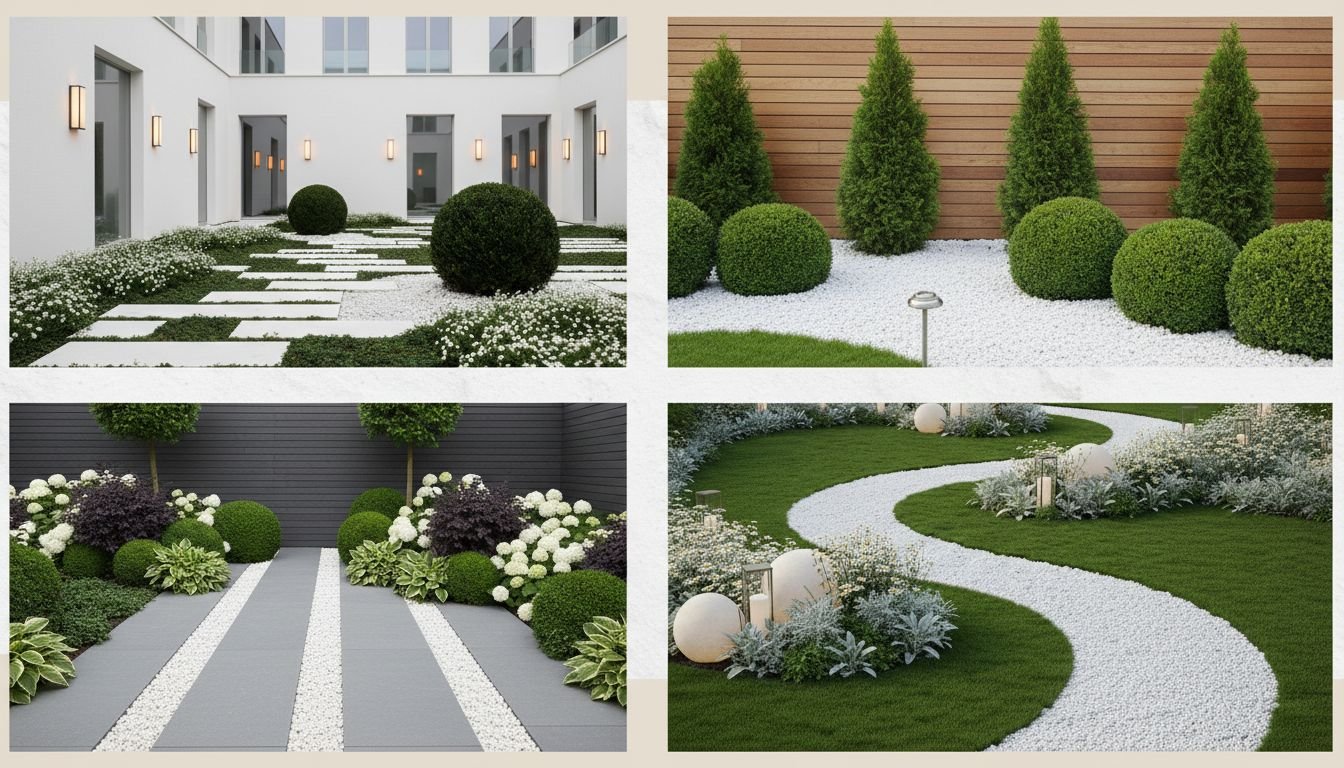
You want a garden that looks expensive but requires minimal effort. We get it. The endless cycle of mowing, weeding, and mulching is exhausting. That is why the trend of using white stone in landscaping is taking over Pinterest boards everywhere. It is not just about the clean, modern aesthetic; it is about reclaiming your weekends.
White stones reflect light, brighten shady corners, and provide excellent drainage that organic mulch simply cannot match. Whether you have a sprawling backyard or a tiny side yard, incorporating white rocks can solve common drainage issues while suppressing weeds. This guide delivers 16 specific, high-impact designs that blend crisp white aggregates with lush greenery. You will learn exactly how to pair marble chips with evergreens, create Zen-inspired borders, and maintain that pristine white look year-round.
Key Takeaways
- Brighten Shady Spots: White stones naturally reflect sunlight, making small or dark garden corners appear larger and more inviting.
- Reduce Maintenance: Unlike wood mulch that needs annual replacement, stone is a one-time investment that suppresses weeds and does not decompose.
- Boost Curb Appeal: The high contrast between white rocks and green foliage creates an immediate, high-end visual impact that increases property value.
- Improve Drainage: Stones allow water to permeate the soil quickly, preventing root rot and standing water in your garden beds.
Table of Contents
- White Stone Elegance Meets Evergreen Charm
- Peaceful Stones and Cheerful Blooms
- Stone Whisper in a Leafy Oasis
- Modern Serenity with Stone and Green
- A Timeless Symphony of Stone and Spruce
- Oasis of Tranquility in White Stone Splendor
- A Dance of Stones and Greenery
- White Wonderland: The Evergreen Spectacle
- Harmony of Hues in Stone and Shrub
- Crisp Stones, Verdant Dreams
- The Pebble Parade and Green Globe Groove
- Circular Greenery and Pebble Perfection
- Pebbles, Pots, and a Dash of Whimsy
- Zen Meets Zing: A White Stone Canvas
- A Curated Creation of Crisp Rocks and Verdant Wonders
- Serene Seating in a Stone Embrace
- Popular Asked Questions
- Conclusion
White Stone Elegance Meets Evergreen Charm
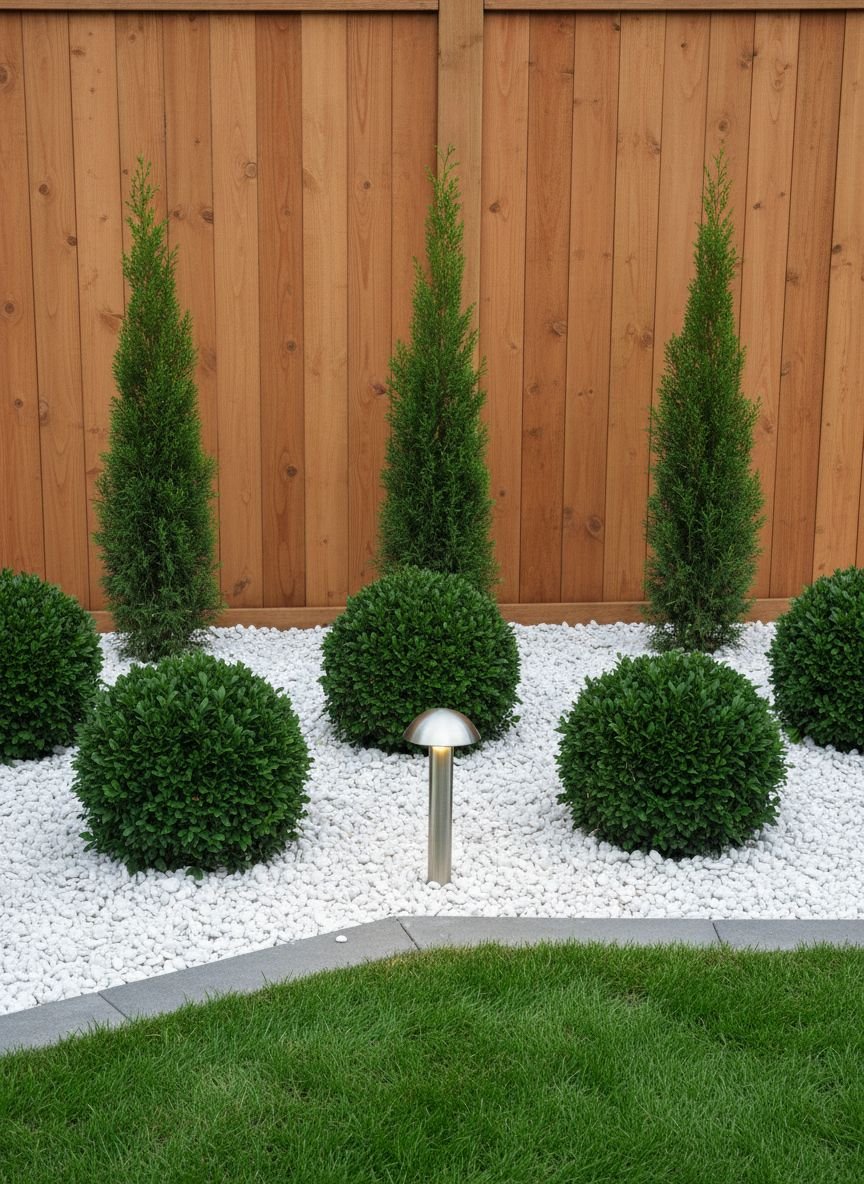
The contrast between manicured boxwoods and bright white marble chips creates a look of instant sophistication. This design relies on the sharp visual difference between the deep, glossy green of the shrubs and the chalky, matte finish of the stones. It is a classic formal garden technique updated for modern homes. The white stones act as a negative space that frames the plants, making them the undisputed focal point of the area.
To achieve this, you need to start with a level base and a high-quality weed barrier. Without the barrier, soil will mix with your pristine white stones, ruining the clean effect. Use steel edging to keep the rocks contained and separate from your lawn. This prevents the “migration” of stones into your grass, which can be a nightmare for your lawnmower. The result is a crisp, clean border that looks professionally installed.
Pro Tip: Use “Snow White” marble chips rather than river rocks for this specific look, as their angular shape locks them in place better than smooth round stones.
Save this idea to your Pinterest.
Peaceful Stones and Cheerful Blooms
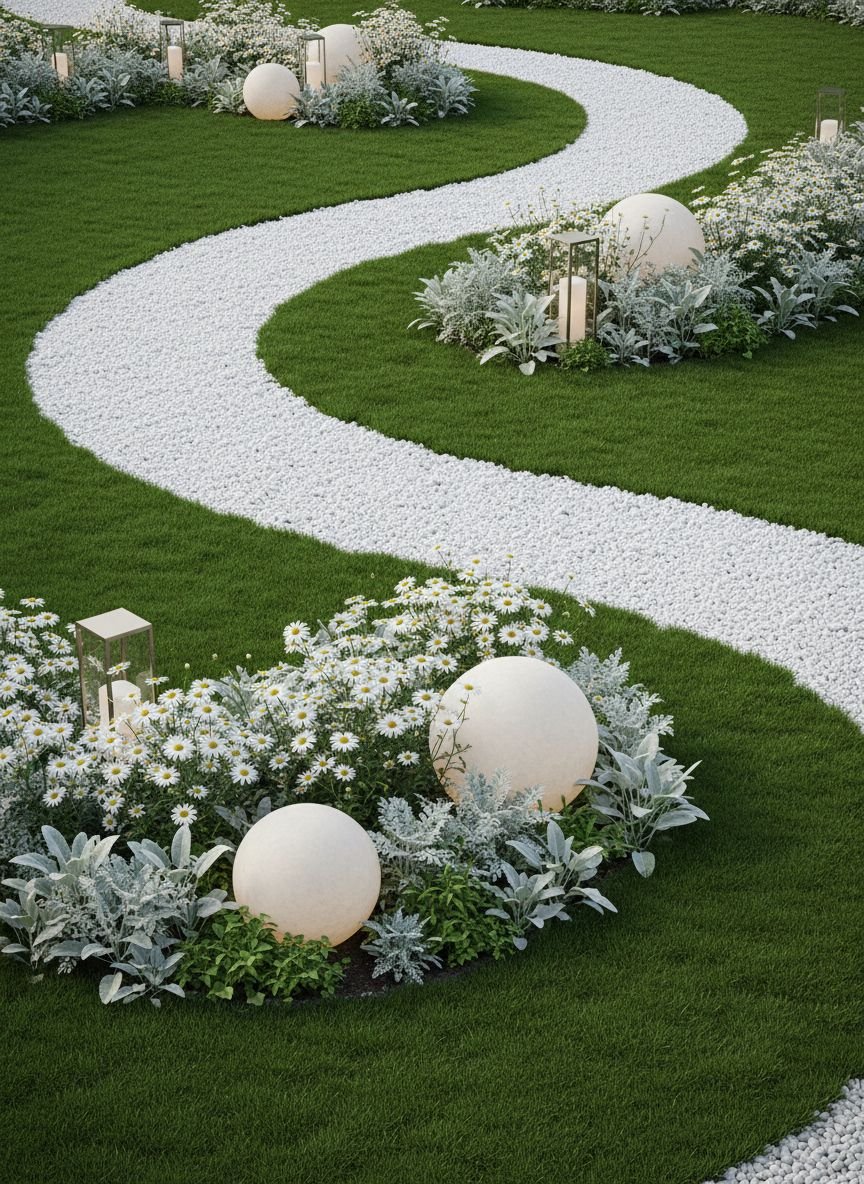
White stones are not just for modern, sterile landscapes; they are the perfect canvas for vibrant flower beds. When you plant colorful blooms like pink roses, purple hydrangeas, or yellow daylilies against a white rock background, the colors pop with much more intensity than they would against dark brown mulch. The white surface reflects sunlight up onto the underside of the leaves, which can actually help reduce fungal issues in dense foliage.
This approach works best when you group your flowering plants in clusters rather than scattering them individually. The white stone acts as a unifying element that ties the different colors together. It is particularly effective for cottage-style gardens where you want to tame the chaos of wildflowers. The stones keep the roots cool during hot summer days, provided there is enough foliage cover to prevent the rocks from absorbing too much heat themselves.
Pro Tip: Install a drip irrigation system beneath the stones before laying them down to keep water off the foliage and prevent mineral stains on the rocks.
Stone Whisper in a Leafy Oasis
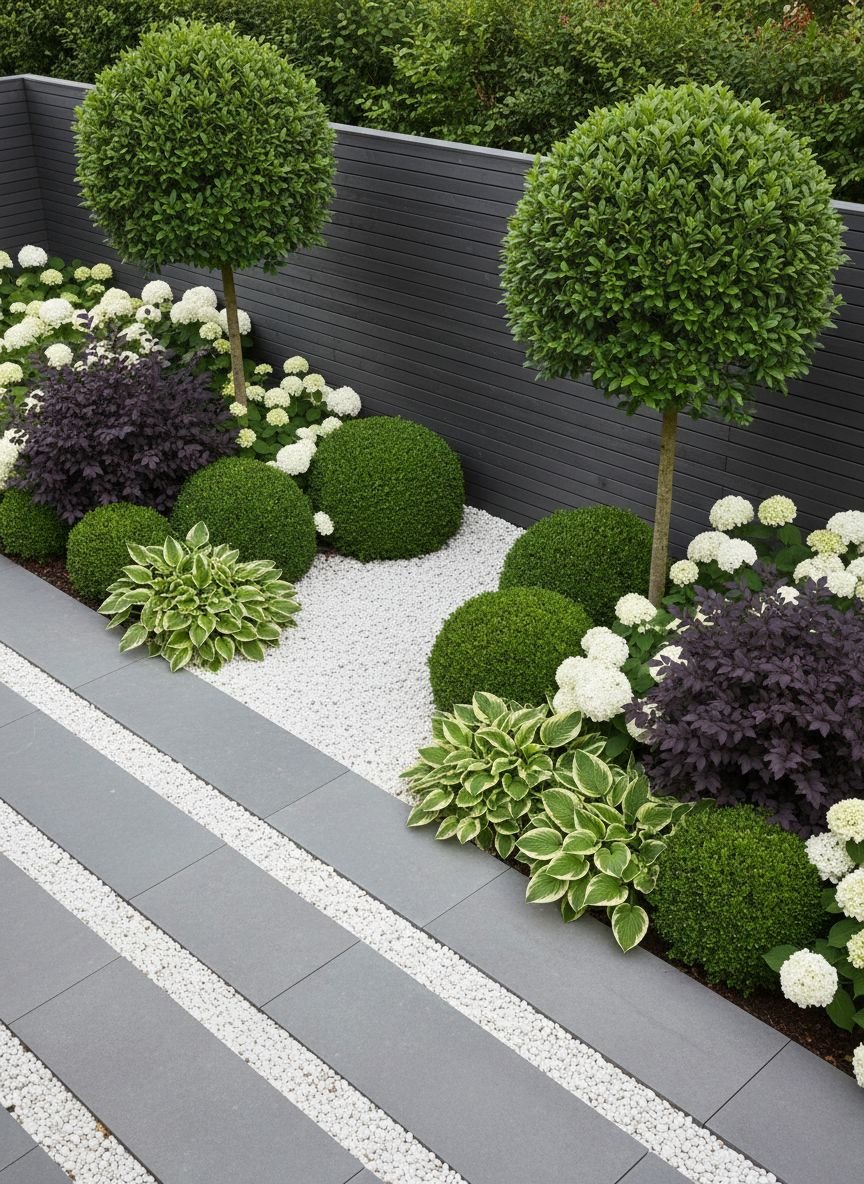
Shade gardens often suffer from being too dark or damp. Introducing white river rocks into a fern or hosta garden instantly solves this problem. The light color of the stones bounces ambient light around the space, making deep shade areas feel airy and open. Visually, the smooth, round texture of river rocks complements the soft, feathery texture of ferns and the broad leaves of hostas.
This design is also practical for areas with poor drainage or moss issues. The stones allow water to percolate quickly into the ground, preventing the muddy conditions that shade plants often sit in. When layering these elements, vary the size of the stones. Use larger cobbles near the base of trees and smaller pebbles in the open spaces to create a natural, flowing riverbed aesthetic that looks like it has always been there.
Pro Tip: Blow fallen leaves off the stones weekly with a leaf blower on a low setting to keep the white color visible and prevent organic staining.
Modern Serenity with Stone and Green
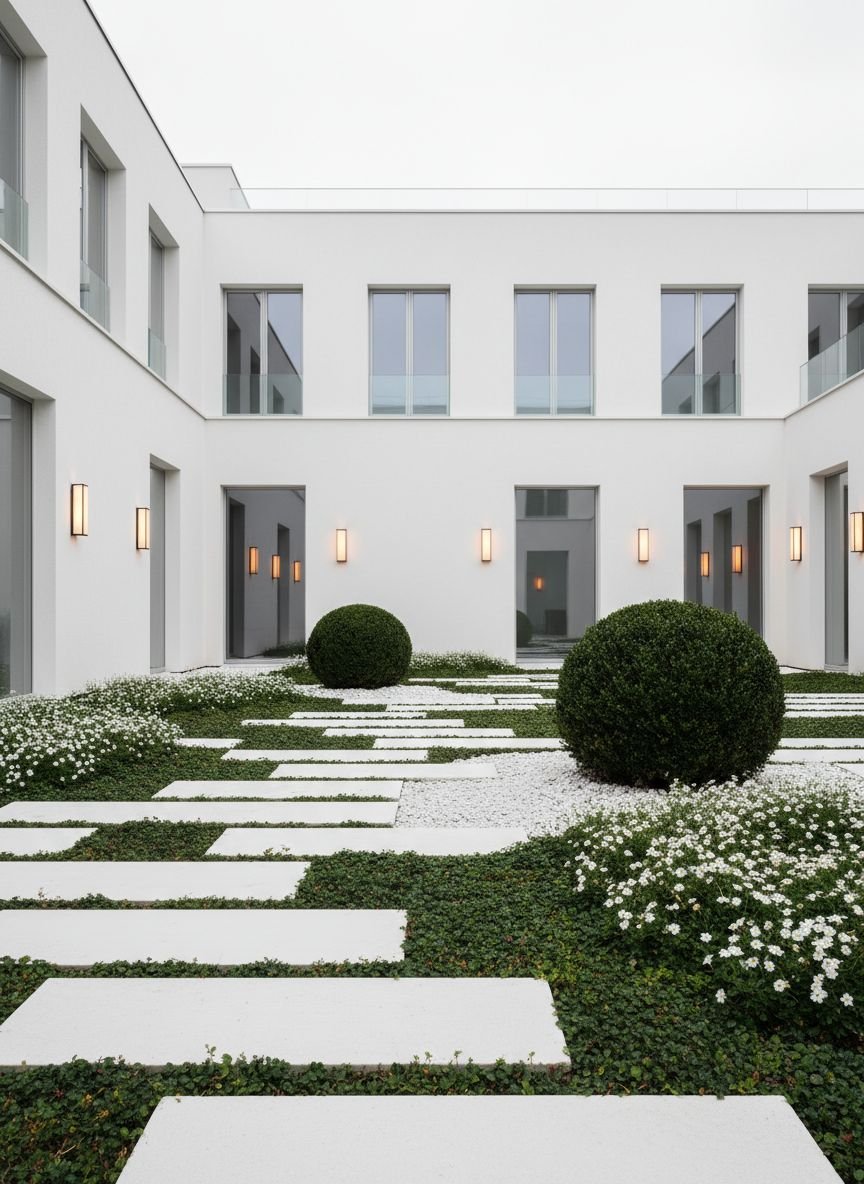
Minimalism thrives on clean lines and limited color palettes. This style uses large, rectangular concrete pavers separated by channels of white gravel. The geometric layout creates a sense of order and calm, perfect for contemporary homes. The green element usually comes from ornamental grasses or architectural succulents like agave, which reinforce the structural look.
The key to this look is precision. The gaps between pavers should be uniform, and the white gravel should be leveled perfectly flush with the paver surface. This creates a seamless transition that is safe for walking. It is an ideal solution for side yards or walkways where grass struggles to grow. The white stone reflects heat, so choose heat-tolerant plants if this area gets direct afternoon sun.
Pro Tip: Use a stabilizer binder with your gravel in high-traffic areas to keep the small stones from kicking up onto the pavers.
A Timeless Mix of Stone and Spruce
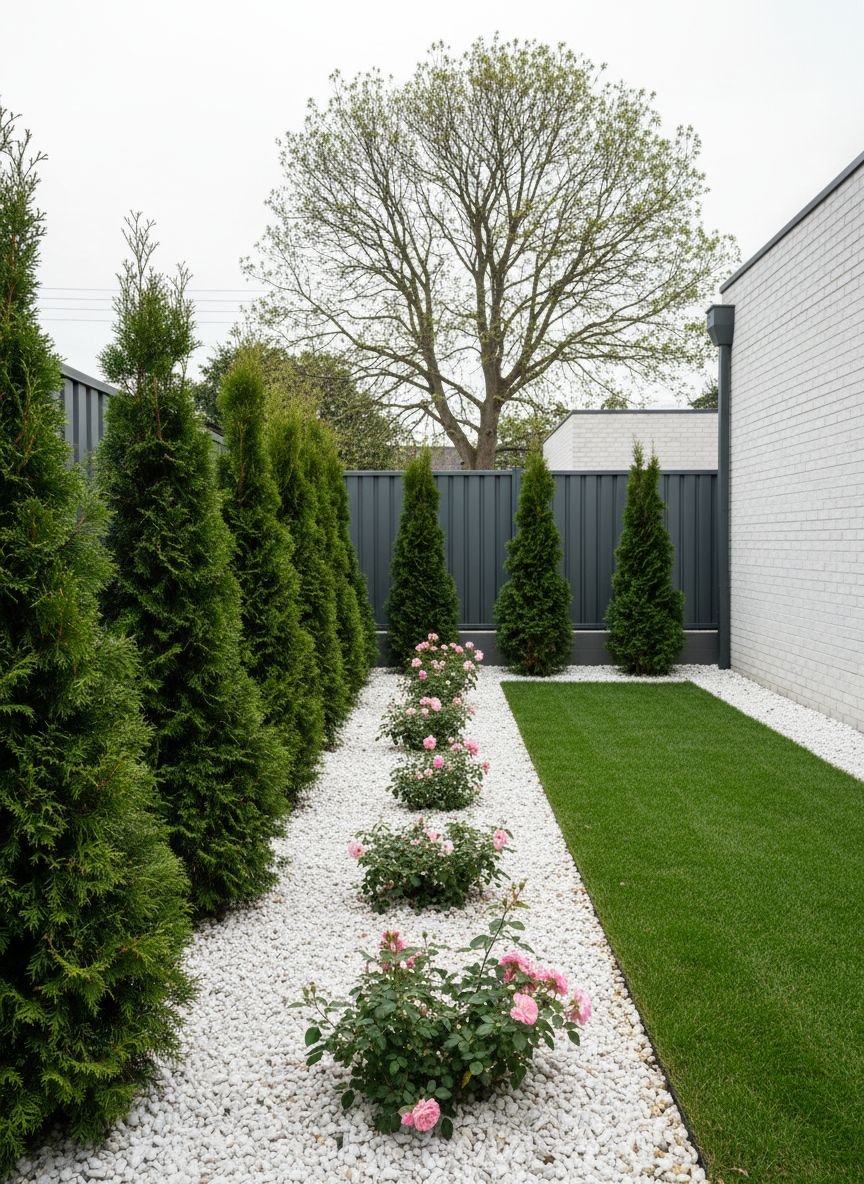
Conifers and stone are a natural pairing found in mountain landscapes, and you can recreate this rugged beauty in your own yard. This design focuses on height and texture. Tall, narrow spruces or junipers provide vertical interest, while rugged, irregular white boulders anchor the design at the ground level. Unlike the uniform marble chips used in formal gardens, this style benefits from crushed granite or larger, jagged rocks.
The aesthetic here is “controlled wildness.” You want the garden to look established and sturdy. The white stone mimics a scree slope or alpine floor, providing excellent drainage for conifers that hate “wet feet.” This is a fantastic low-water option for front yards. The evergreen nature of the spruce ensures that your garden maintains its structure and color even in the depths of winter, standing out beautifully against the white rock base.
Pro Tip: Place the largest boulders first as “keystones” and fill in around them with smaller gravel to make the landscape look natural rather than manufactured.
Save this idea to your Pinterest.
Comparison: Marble Chips vs. River Rocks
| Feature | White Marble Chips | White River Rocks |
|---|---|---|
| Texture | Angular, matte, sparkly | Smooth, round, polished |
| Stability | High (locks together) | Low (rolls easily) |
| Best Use | Formal paths, borders | Water features, casual beds |
| Cost | Generally lower | Generally higher |
| Heat | Reflects high heat | Retains some heat |
Get The Look: The Modern Minimalist
To achieve the “Modern Serenity” look, you will need:
- Material: 24×24 inch concrete pavers (light grey or white).
- Aggregate: 3/8 inch white pea gravel or crushed marble.
- Edging: Aluminum or corten steel edging strips.
- Plants: Blue Fescue grass or Snake Plants (for warmer zones).
Oasis of Tranquility in White Stone Splendor

Water features and white stone are a match made in landscaping heaven. The sound of water trickling over white pebbles creates a sensory experience that defines tranquility. In this setup, white polished pebbles are often used to line the bottom of a shallow pond or a dry creek bed. The water makes the white stones glisten, adding a dynamic, shimmering quality to the garden.
Even without actual water, you can create the illusion of a stream using white gravel swirled in wave patterns, a technique borrowed from Japanese Zen gardens. This “dry water” effect is zero maintenance and requires no pumps or electricity. Surround the stone “stream” with mossy mounds or creeping ground covers to soften the edges and enhance the illusion of a natural oasis.
Pro Tip: If using real water, ensure your white stones are “fish safe” and washed thoroughly to remove any stone dust that could cloud the water.
A Pairing of Stones and Greenery
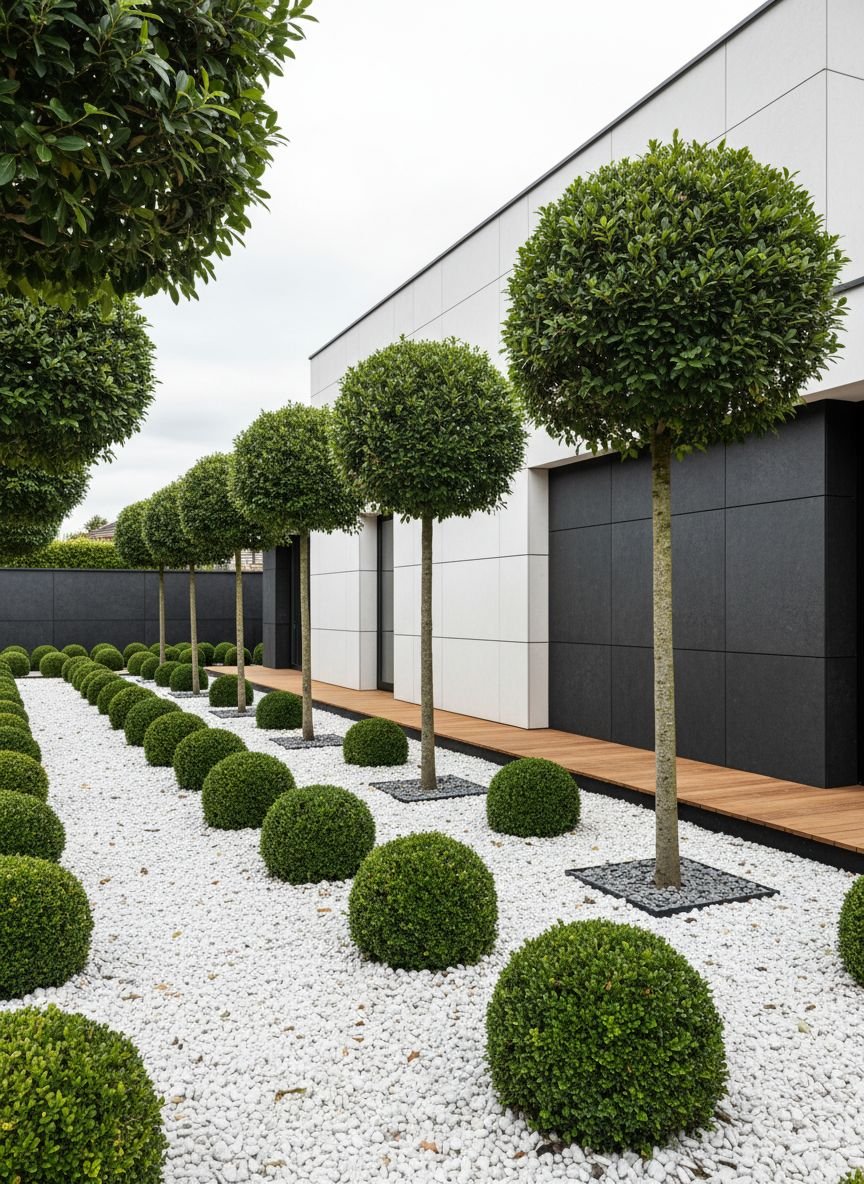
Instead of a solid separation between plants and stone, this idea integrates them. Imagine a checkerboard or organic mosaic where tufts of creeping thyme, sedum, or moss grow directly out of a white gravel bed. This breaks up the harshness of a large stone area and adds softness and life. It is a fantastic way to create a permeable patio that absorbs rain rather than creating runoff.
To make this work, you need to prepare the soil beneath the gravel properly. Use a grid system or permeable pavers that hold the gravel in place while allowing pockets of soil for the plants. Select plants that can tolerate the radiated heat from the stones. This style is incredibly popular in Mediterranean and drought-tolerant landscape designs because it looks lush without requiring a lawn’s worth of water.
Pro Tip: Choose “stepable” plants like Creeping Jenny or Irish Moss that can handle occasional foot traffic without dying.
White Wonderland: The Evergreen Spectacle
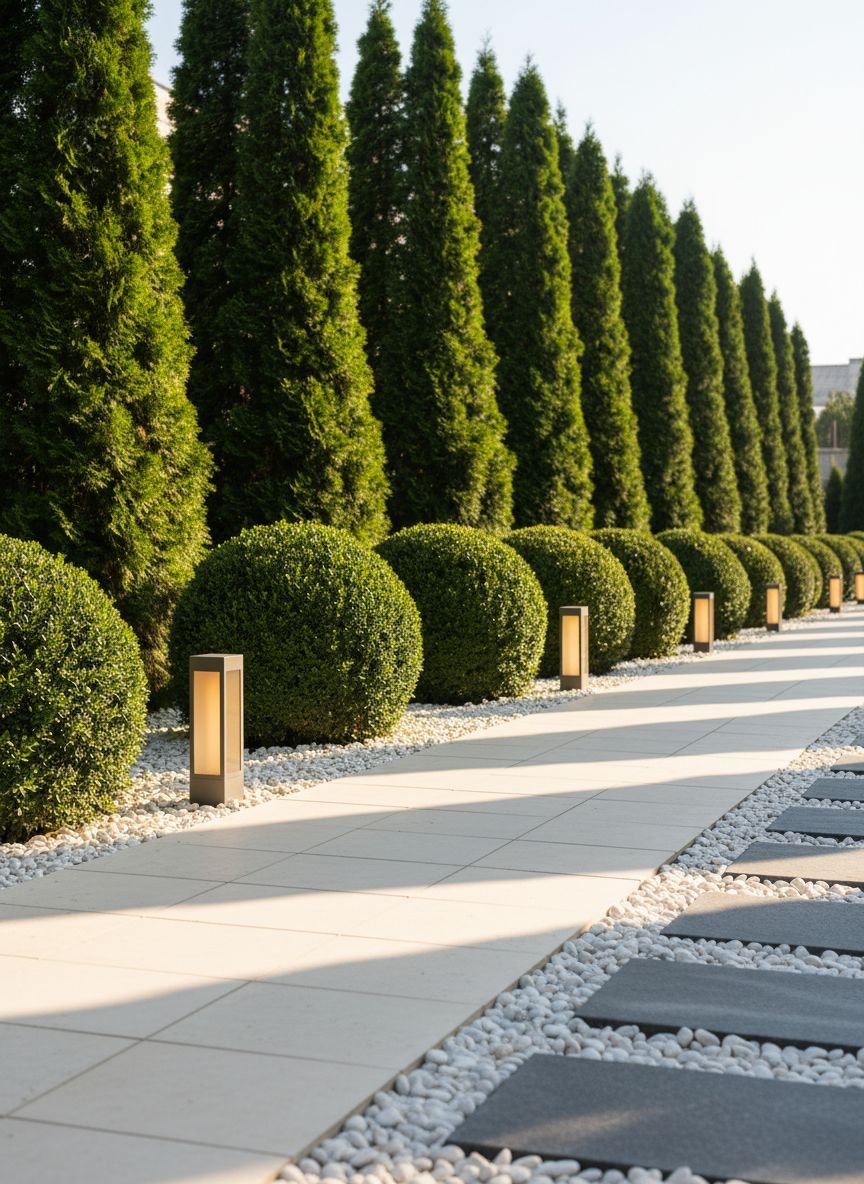
Winter can be a dreary time for gardens, but not if you utilize white stone. When the rest of the world is grey, a landscape featuring white rocks and structural evergreens remains bright and cheerful. The white stones act as a permanent snow cover, reflecting the weak winter light and brightening the view from your windows.
Focus on evergreens with interesting shapes—spirals, cones, or weeping varieties. The stark white base highlights the architectural form of these trees. This is also a great opportunity to use landscape lighting. Uplights placed at the base of the trees will reflect off the white stones, creating a glowing, magical effect at night that extends your garden’s enjoyment well into the evening hours.
Pro Tip: Avoid planting deciduous trees directly over white stone areas in this design to minimize the clean-up of fallen leaves in autumn.
Harmony of Hues in Stone and Shrub
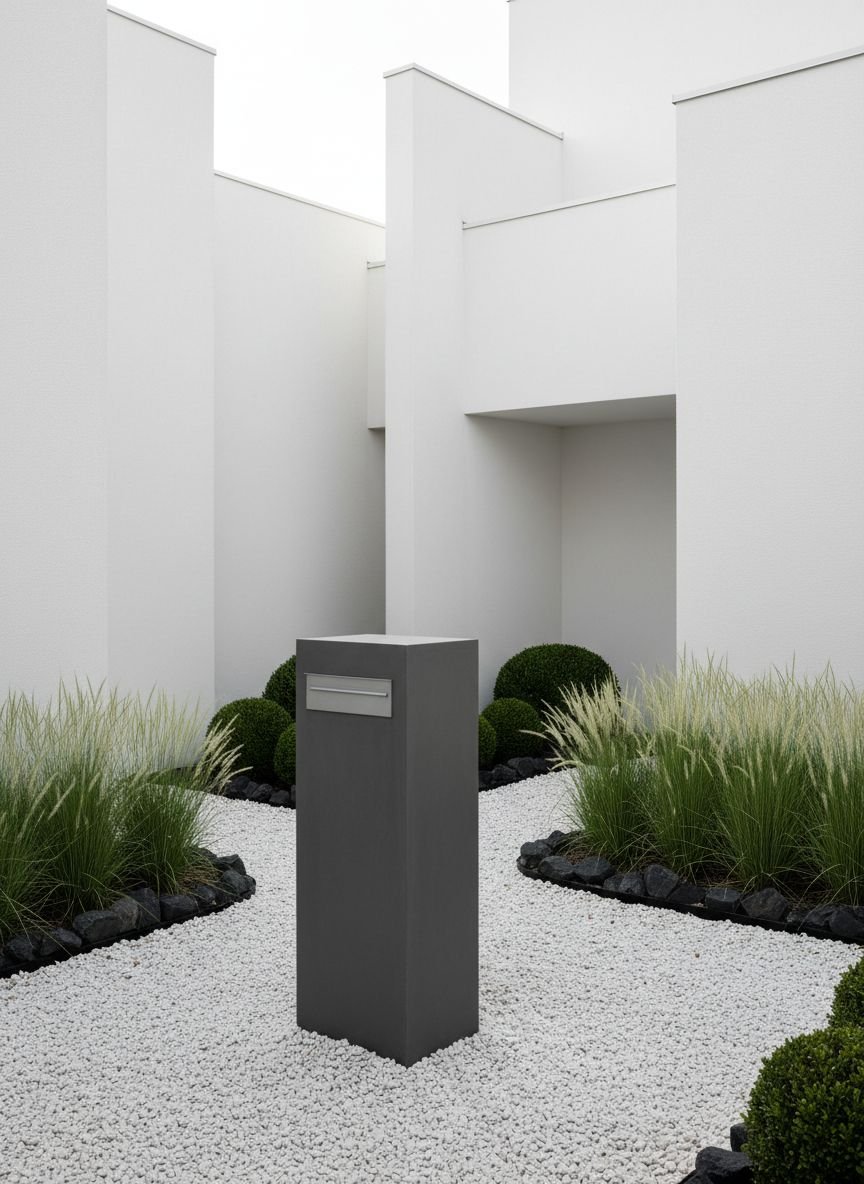
White stone does not have to be the only color in your hardscaping palette. Mixing white stones with grey or beige gravel can create a more natural, textured look that bridges the gap between your home’s exterior and the garden. This “salt and pepper” effect is more forgiving of dirt and debris than pure white stone.
Pair this mixed stone base with shrubs that have variegated leaves, such as Variegated Euonymus or Hostas with white margins. The white in the leaves picks up the white in the stones, creating a cohesive, designed look. This is a subtle, high-end design trick that makes the landscape feel curated. It is less stark than pure white gravel and blends beautifully with brick or stone house facades.
Pro Tip: When mixing stones, buy pre-mixed bags or mix them in a wheelbarrow before spreading to ensure an even distribution of color.
Crisp Stones, Verdant Dreams
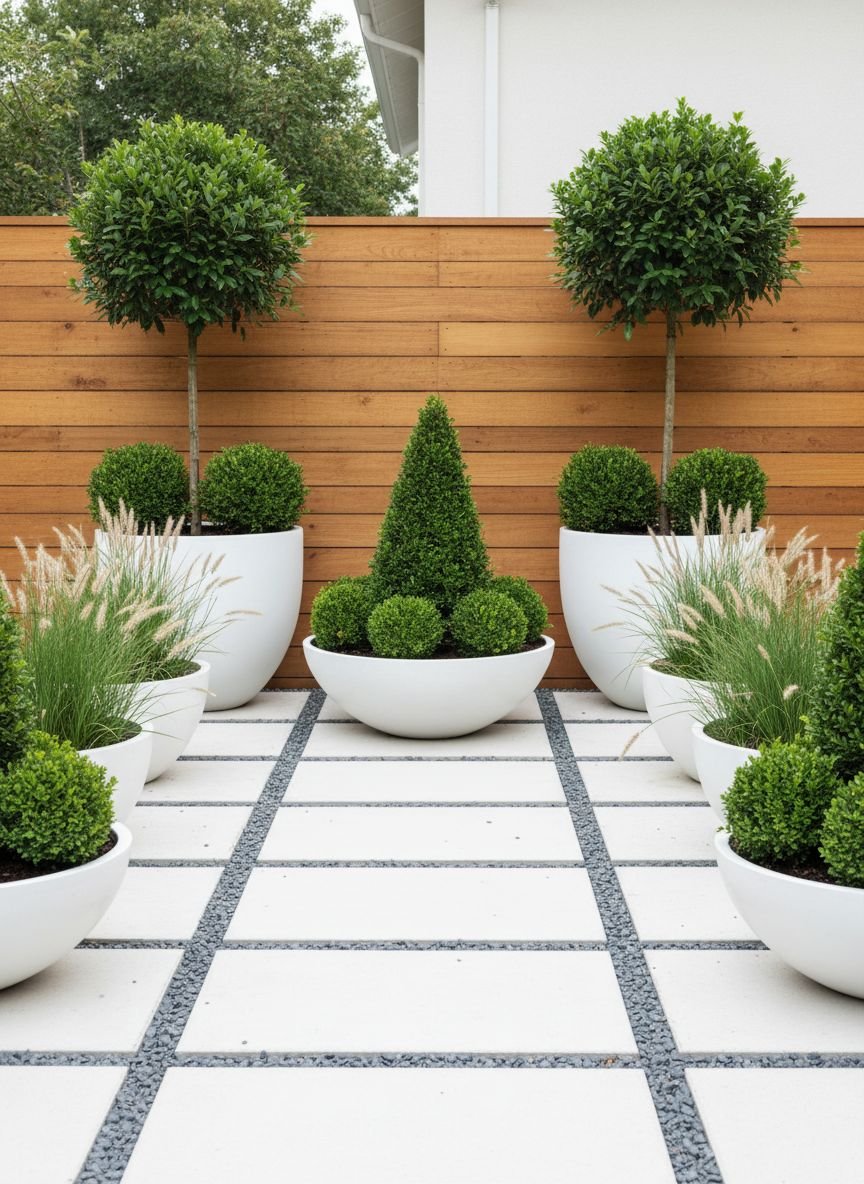
Nothing says “manicured” like the sharp line between a lush green lawn and a bright white stone border. This is the ultimate suburban dream garden. The white stone strip, usually about 12 to 18 inches wide, acts as a buffer zone that protects your fence and prevents grass from growing where the mower cannot reach.
This design serves a dual purpose: aesthetics and function. Visually, it frames the lawn like a picture. Functionally, it simplifies mowing because you can run the mower wheel right along the edge of the stone (if you have a solid edging barrier) without needing to use a string trimmer. It creates a neat, tidy appearance that neighbors will envy.
Pro Tip: Install a physical barrier like plastic or metal edging between the grass and the stone to stop grass roots from invading the rock bed.
Save this idea to your Pinterest.
Get The Look: The Zen Border
To achieve the “Zen Meets Zing” look, you will need:
- Material: Polished white Mexican beach pebbles (1-2 inch size).
- Feature Plant: Red Japanese Maple (Acer palmatum).
- Accent: Large granite boulders (odd numbers: 1, 3, or 5).
- Tool: A wooden rake for maintaining gravel patterns (if using smaller grit).
Related posts :
- 16 Inspiring Backyard Outdoor Patio Ideas That Transform Your Home Into a Private Oasis
- 18 Enchanting Fairy Garden Designs You’ll Want to Try This Weekend for a Magical Backyard Transformation
- 20 Productive Vegetable Garden Layout Ideas That Maximize Your Harvest
The Pebble Parade and Green Globe Groove
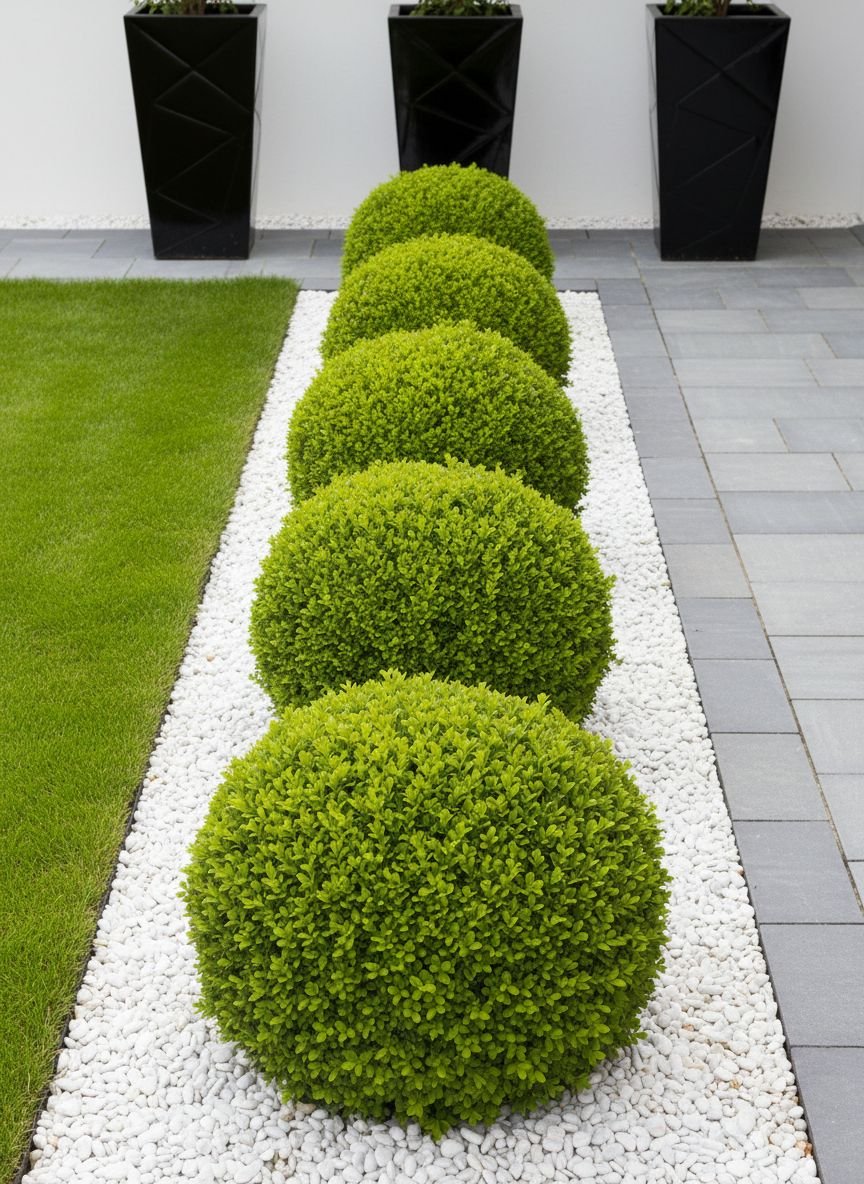
Topiary is the art of shaping plants, and spherical shrubs look incredible sitting on a bed of white pebbles. The round shape of the plants echoes the round shape of the stones, creating a pleasing geometric repetition. Boxwood, Japanese Holly, or Yew can be clipped into tight globes that look like they are floating on a white sea.
This style is playful yet elegant. It works well in front yards or along pathways. The white stones ensure that the bottom branches of the shrubs receive light reflected from the ground, which helps keep the plants full and green all the way to the base. It is a high-impact look that requires only occasional pruning to maintain the shapes.
Pro Tip: Space the globes far enough apart so they do not touch when they grow; the white space between them is crucial for the visual effect.
Circular Greenery and Pebble Perfection
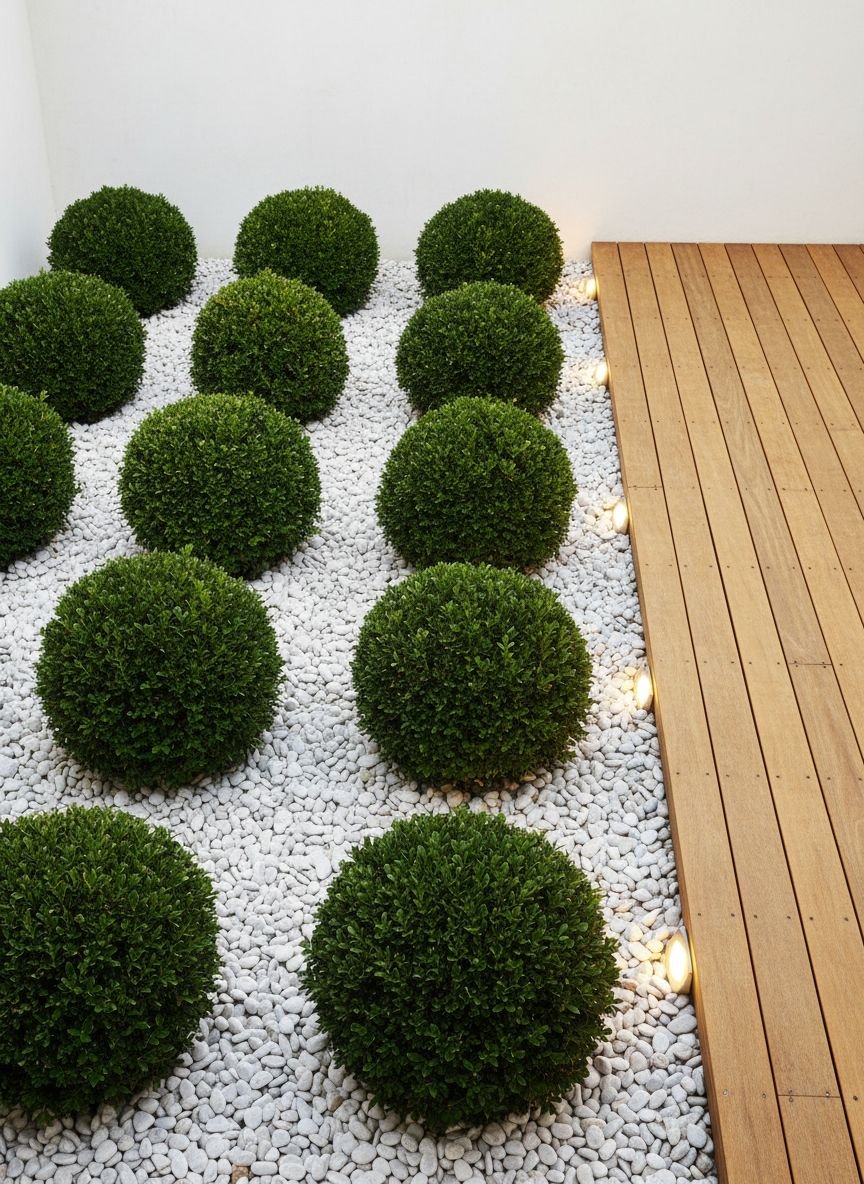
Break away from straight lines with circular garden islands. A round bed filled with white stones and a single specimen tree or a cluster of flowers creates a strong focal point in a square yard. The circle symbolizes unity and completeness, adding a calming influence to the landscape.
You can use white stones to define the circle itself or to fill the circle around the plants. A popular method is to have a circular lawn area surrounded by a ring of white gravel, or vice versa. This design draws the eye inward and can make a small, boxy yard feel more dynamic and interesting. Use flexible edging to create perfect curves.
Pro Tip: Use a rope attached to a center stake to mark out a perfect circle with spray paint before you start digging or laying stone.
Pebbles, Pots, and a Dash of Whimsy
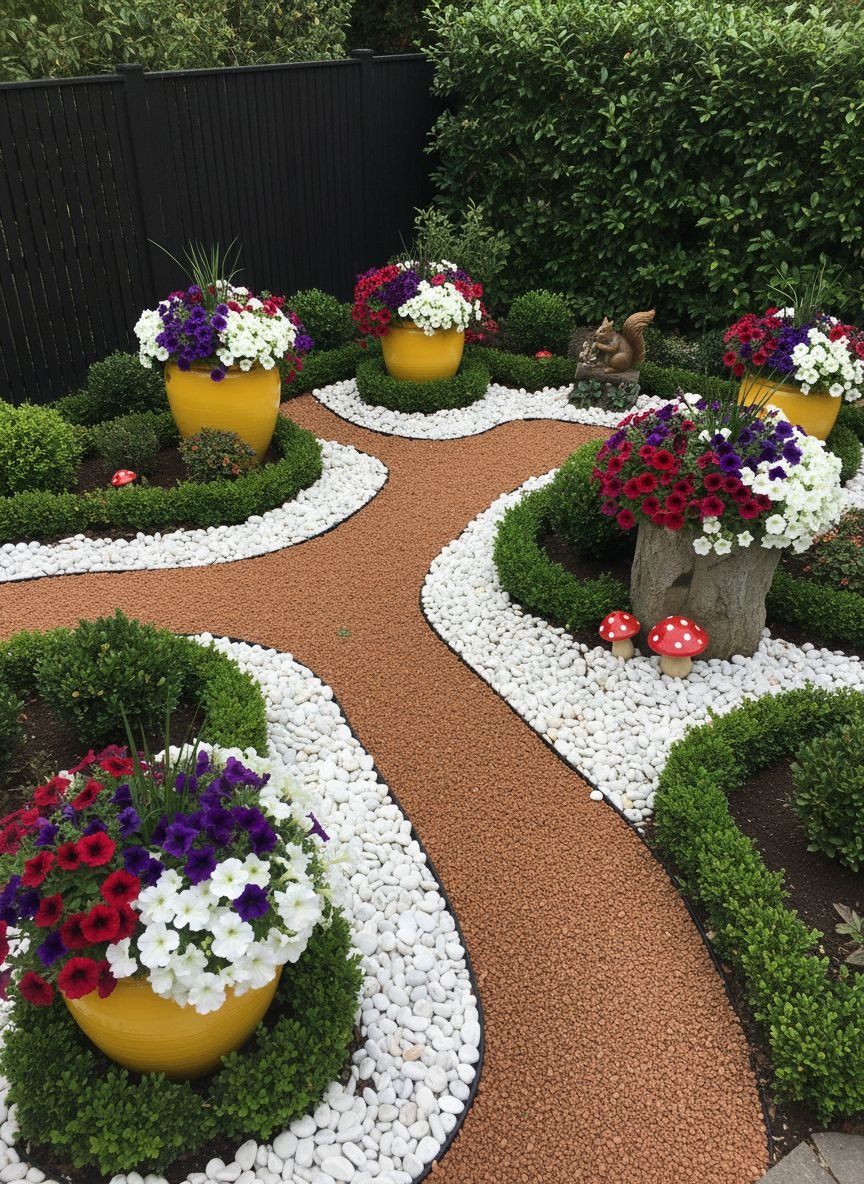
If you have poor soil, skip the digging and use white stones as a base for a container garden. Level out an area, cover it with weed fabric and white gravel, and then arrange a collection of terracotta, ceramic, or concrete pots on top. The white stone provides a neutral stage that lets the pots and plants shine.
This is a fantastic solution for renters or those with concrete patios they want to cover up. You can rearrange your garden whenever you want by simply moving the pots. The stones provide excellent drainage for the pots, preventing them from sitting in puddles. Add whimsical elements like garden statues, lanterns, or a birdbath to inject personality into the space.
Pro Tip: Vary the height of your pots using plant stands or overturned crates hidden behind other pots to create a layered, lush look.
Zen Meets Zing: A White Stone Canvas
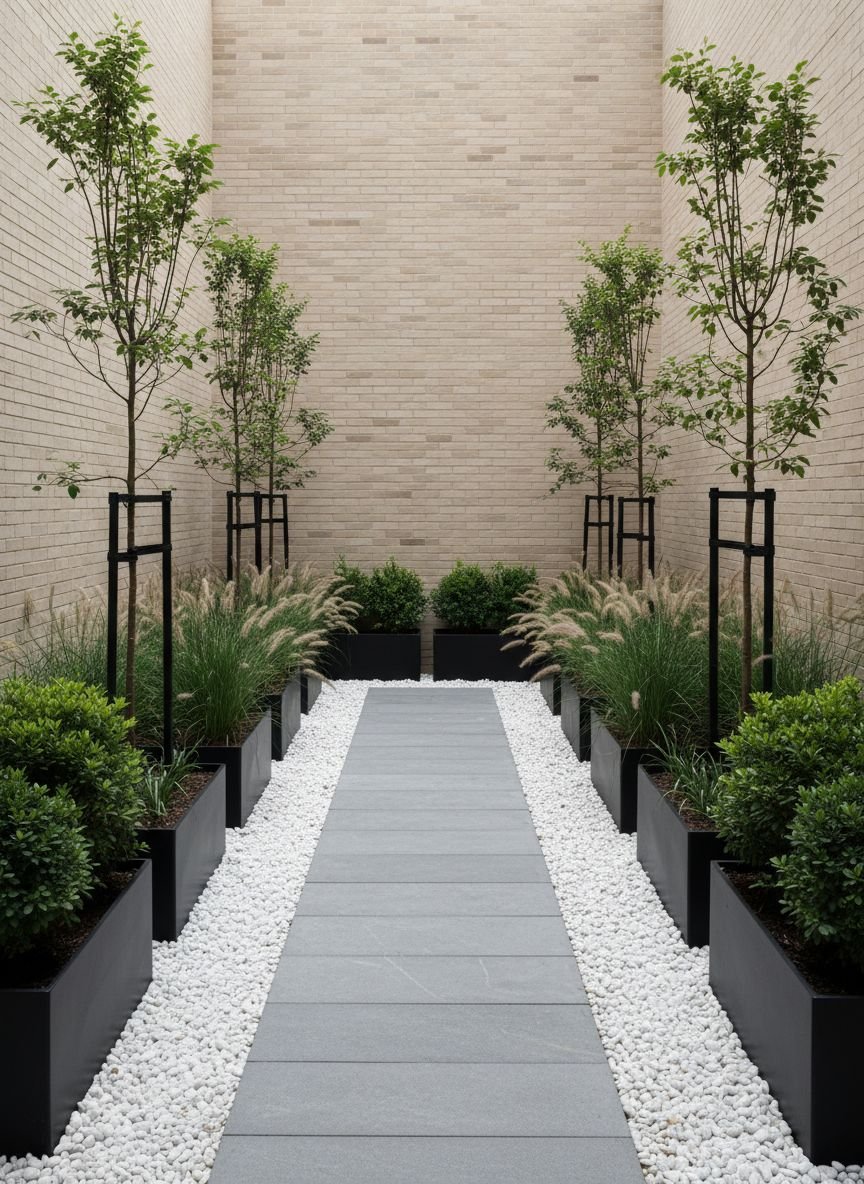
The “Zing” in this design comes from high-contrast plants like the blood-red Japanese Maple or bright lime-green Hakone grass. The “Zen” comes from the white stone base, typically raked gravel or smooth pebbles. This high-contrast pairing is striking and modern. The white background makes the red or chartreuse foliage appear almost luminous.
This style is all about restraint. Do not overcrowd the space. Let the white stone be the negative space that allows the eye to rest. It is perfect for a courtyard or an entryway where you want to make a bold statement with just a few elements. The maintenance is mostly keeping the stone clean and the few plants perfectly pruned.
Pro Tip: If you have a Japanese Maple, prune it to an umbrella shape to show off its trunk structure against the white background.
A Curated Creation of Crisp Rocks and Verdant Wonders
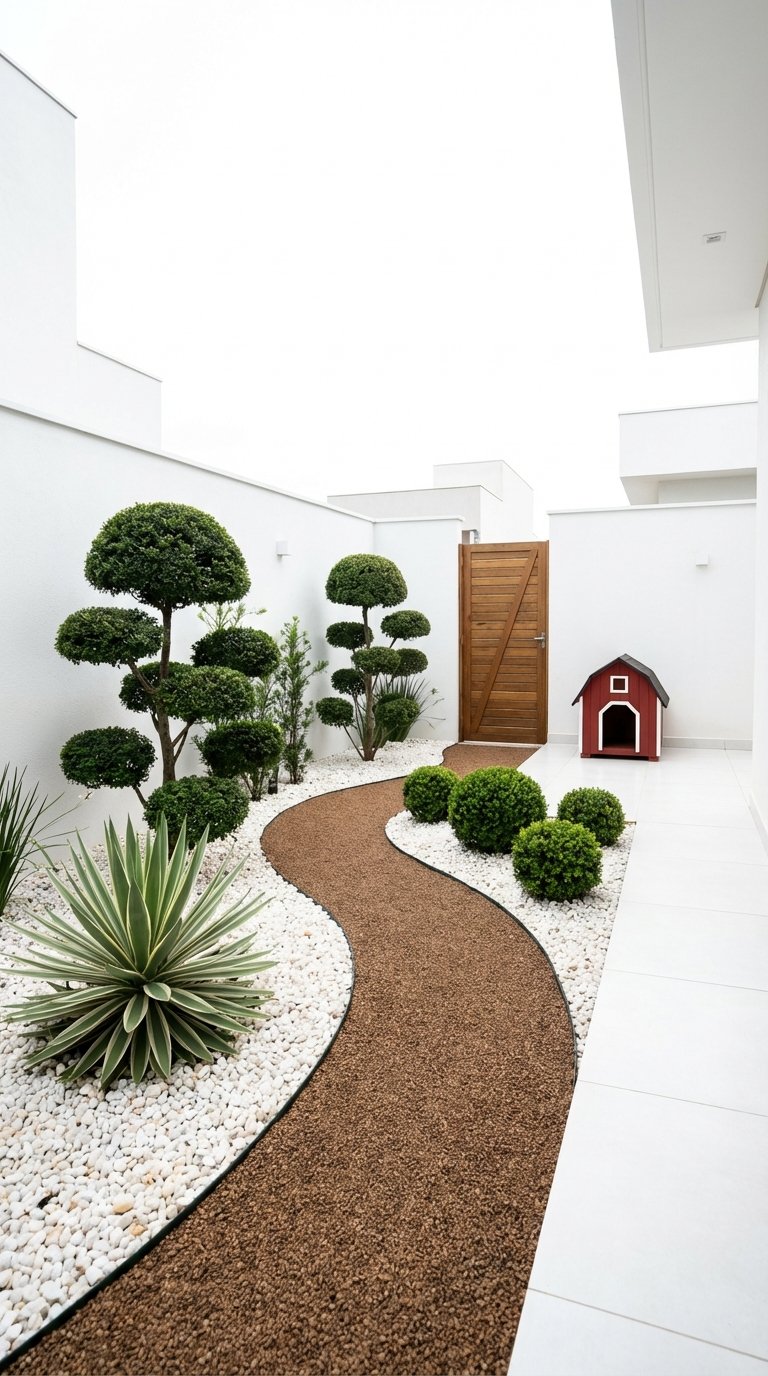
This idea treats the garden like a gallery. Use white stones of different sizes—boulders, cobbles, and gravel—to build a textured landscape. Then, insert “sculptural” plants like Agave, Yucca, or Aloe. These plants have strong, architectural shapes that look like living art pieces against the stone.
This is the ultimate low-water, xeriscape design. It is perfect for hot, dry climates. The white stones reflect the intense sun, keeping the soil cooler than dark mulch would, and the plants are naturally adapted to thrive in rocky, well-drained conditions. It is a rugged, sophisticated look that requires almost zero water once established.
Pro Tip: Wear thick gloves when planting architectural plants like Agave, as they can be sharp. Use long tweezers or tongs to pick leaves out of the spiky plants.
Serene Seating in a Stone Embrace
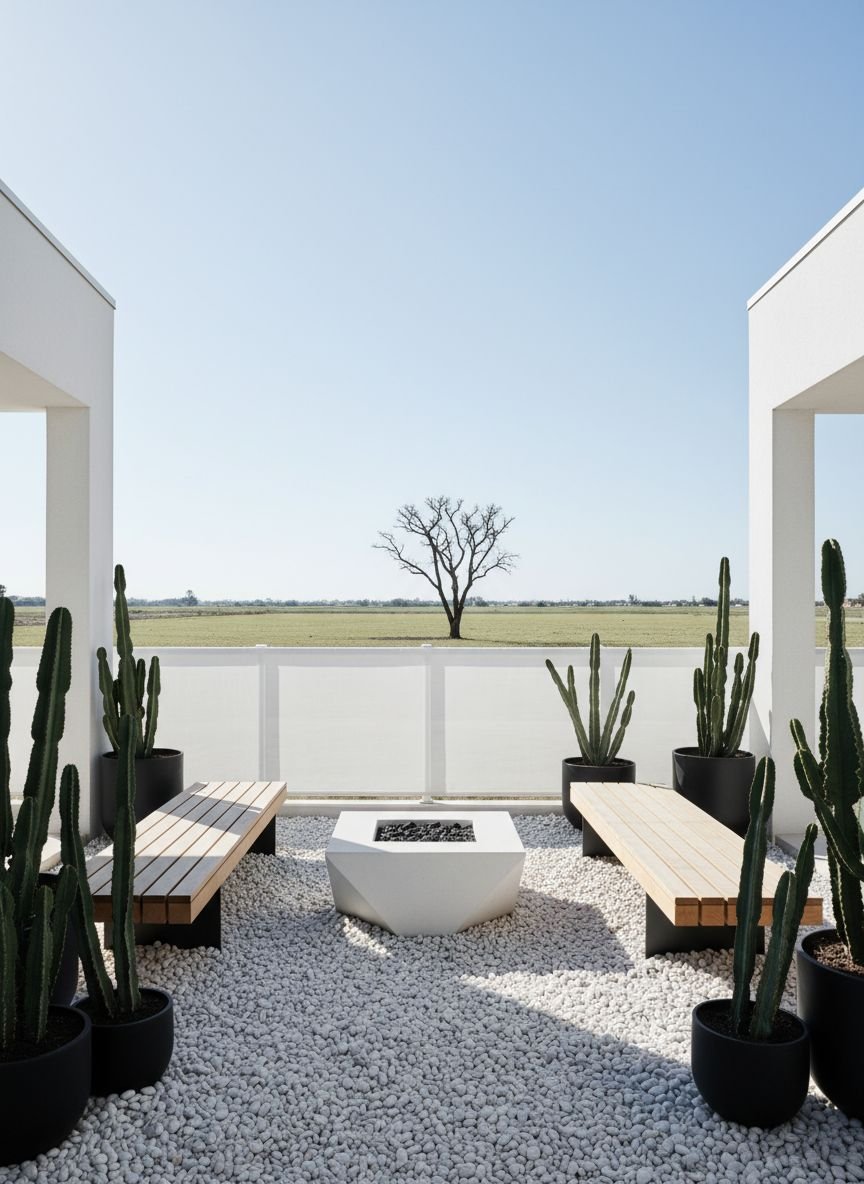
Finally, bring the white stone trend into your living space by creating a seating area on a pad of compacted white gravel. It is a budget-friendly alternative to pouring a concrete patio or laying pavers. The crunch of gravel underfoot adds a satisfying auditory element to your outdoor room.
Define the perimeter with larger stones or timber. Add a fire pit in the center and surround it with Adirondack chairs. The white stone reflects the firelight, creating a cozy, glowing atmosphere at night. It is permeable, casual, and incredibly chic. Just ensure the gravel layer is deep enough (at least 3 inches) to provide a stable base for furniture.
Pro Tip: Use “angular” gravel rather than round pea gravel for seating areas; the angular stones lock together and provide a firmer surface for chair legs.
Save this idea to your Pinterest.
Popular Asked Questions
Do white garden stones stay white?
White stones can lose their brightness over time due to dirt, algae, or fallen leaves. However, they do not fade like colored mulch. To keep them white, use a leaf blower regularly to remove debris. If they get dingy, you can wash them with a mixture of water and vinegar or a mild bleach solution to restore their sparkle.
Are white stones good for plants?
Yes and no. White stones reflect sunlight, which keeps the soil cooler than dark rocks but can radiate heat upwards onto plant foliage. This is great for heat-loving plants but can scorch delicate species in very hot climates. They also provide excellent drainage, which most plants love.
How do I stop weeds from growing in my white stone garden?
The most effective method is to install a high-quality, non-woven landscape fabric (weed barrier) underneath the stones. Do not use plastic sheeting, as it traps water. Additionally, keeping the stone layer at least 2-3 inches thick blocks sunlight from reaching the soil, preventing weed seeds from germinating.
What is the best type of white stone for a garden path?
For paths, avoid round river rocks or polished pebbles, as they roll underfoot and can be hard to walk on. Instead, choose angular stones like crushed marble or limestone chips (often called “chat”). These lock together to create a stable, firm surface that is safe and comfortable for walking.
Conclusion

Using white stone in your garden is more than just a trend; it is a design strategy that solves problems while elevating the look of your home. From the crisp elegance of marble chips bordering a green lawn to the Zen-like tranquility of a pebble-filled courtyard, these ideas prove that low maintenance does not mean low style.






Leave a Comment