
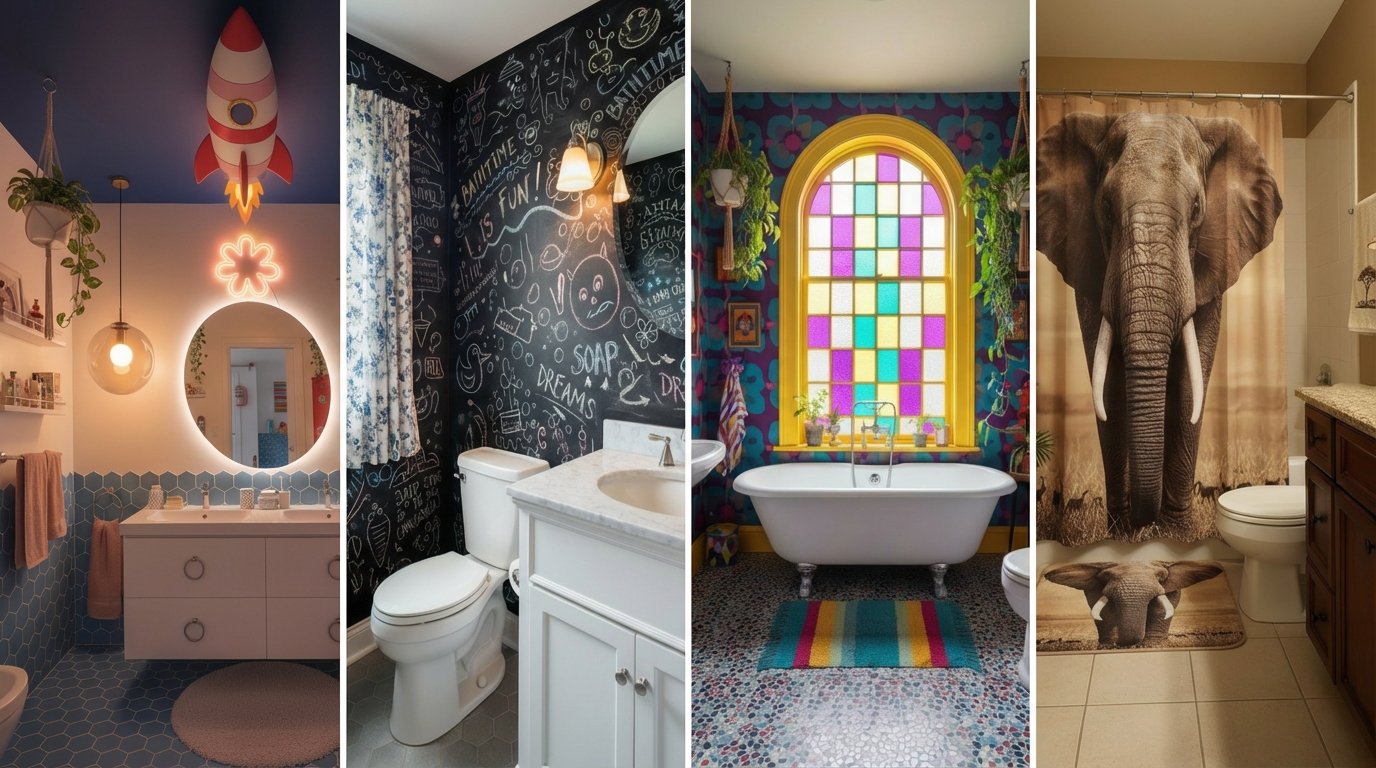
If you dread the nightly “it’s time for a bath” negotiation, you are not alone. Most parents know the struggle of coaxing a toddler into a sterile, boring bathroom. But here is the secret: when you transform a bathroom into a space that sparks imagination and independence, the resistance disappears.
The current trend in kids’ interior design isn’t just about bright colors; it is about creating “autonomy-friendly” spaces. This means accessible storage, safety features that look stylish, and themes that can evolve as your child grows. Whether you are planning a full renovation or a weekend DIY refresh, these 19 kids bathroom ideas will help you create a functional, magical retreat that handles splashing, clutter, and chaos with ease.
Key Takeaways
- Safety meets style: Non-slip surfaces and scald-guards can be aesthetically pleasing.
- Grow-with-me design: Choose neutral hard finishes (tiles, tub) and add personality through easily swappable accessories (curtains, mats).
- Accessible independence: Lower hooks, step stools, and open shelving encourage kids to take charge of their hygiene.
- Double duty: In shared bathrooms, color-coding is the ultimate hack for reducing sibling squabbles.
- Budget impact: You don’t need a remodel; decals, paint, and hardware swaps can completely change the vibe for under $100.
Table of Contents
- Choose a Fun Theme
- Bright and Playful Colors
- Personalized Accessories
- Easy-to-Reach Fixtures
- Creative Storage Solutions
- Interactive Wall Decals
- Waterproof Artwork
- Whimsical Shower Curtains
- Non-Slip Rugs and Mats
- Dual-Purpose Mirrors
- Educational Elements
- Playful Lighting Fixtures
- Easy-to-Clean Surfaces
- Chalkboard Walls
- Floating Vanities
- Dual Sinks
- Built-In Step Stools
- Open Shelving
- Animal Motifs
- Popular Asked Questions
- Conclusion
Choose a Fun Theme

A cohesive theme anchors the entire room and gives you a roadmap for shopping. Rather than generic “kids stuff,” select a narrative that transports them. Popular choices currently include “Deep Sea Adventure,” “Enchanted Forest,” or “Retro Surf Shack.” The key is subtlety; you do not need a cartoon character on every surface. Instead, use a palette of ocean blues, sandy beiges, and rope textures to suggest the beach without screaming it.
When executing a theme, think about the longevity of the design. A “Jungle” theme works beautifully with lush green tiles and natural wood accents that look sophisticated enough for adults but fun enough for kids. This approach saves you money in the long run because you won’t need to retile when they outgrow specific cartoons.
Pro Tip: Use the 60-30-10 rule. 60% neutral base (tiles/walls), 30% theme color (vanity/towels), and 10% specific theme accents (toothbrush holder/art).
Bright and Playful Colors
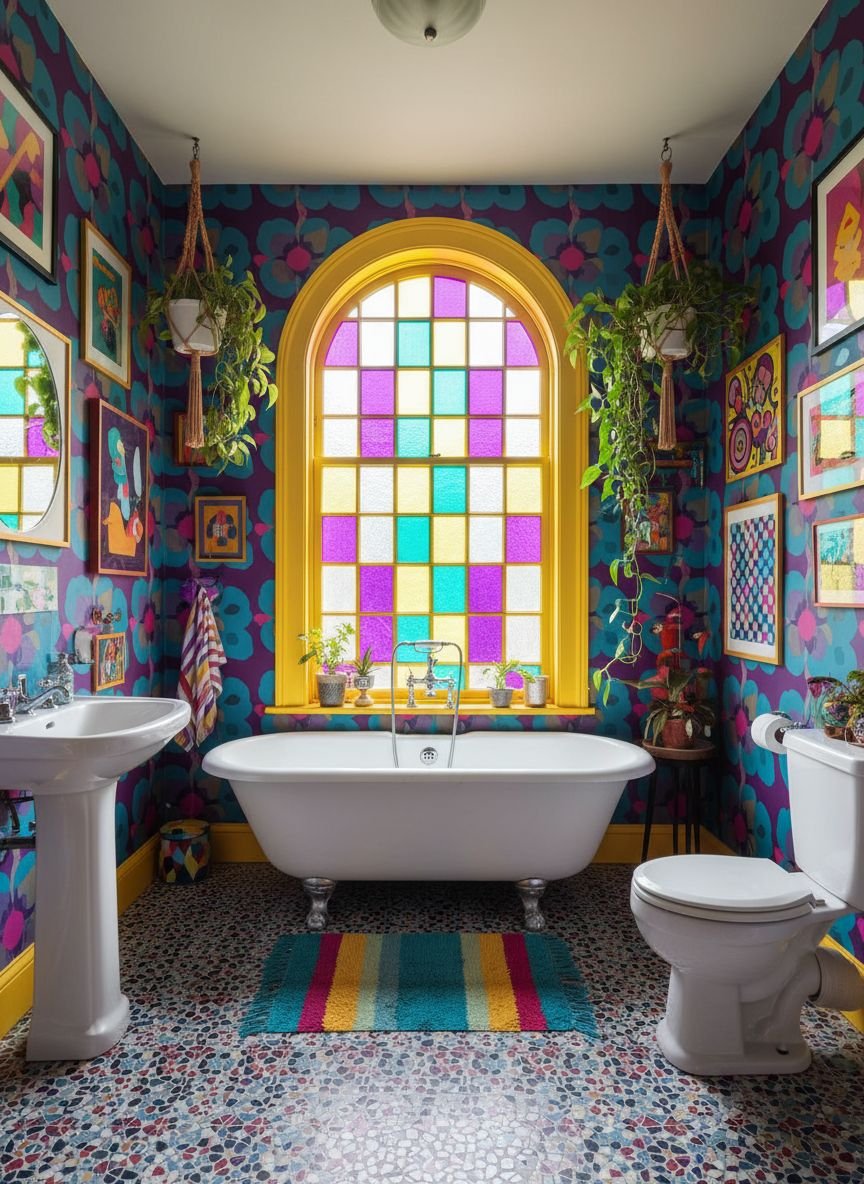
Color psychology plays a massive role in how a child perceives their space. While all-white bathrooms are trendy for adults, they can feel sterile to a child. High-energy colors like sunshine yellow, coral, or teal can make the morning routine feel more energetic. If you are worried about resale value or changing tastes, keep the expensive hard finishes (tile and tub) white and go wild with paint.
Consider painting the ceiling a bright color for an unexpected pop that draws the eye up. Alternatively, color-blocking is a massive trend right now. You might paint the bottom half of the wall a durable semi-gloss marine blue and leave the top half neutral. This not only looks stylish but hides scuff marks from little hands.
Pro Tip: Use semi-gloss or satin paint finishes. They reflect light to make the room look bigger and, more importantly, are scrubbable when toothpaste inevitably hits the wall.
Personalized Accessories
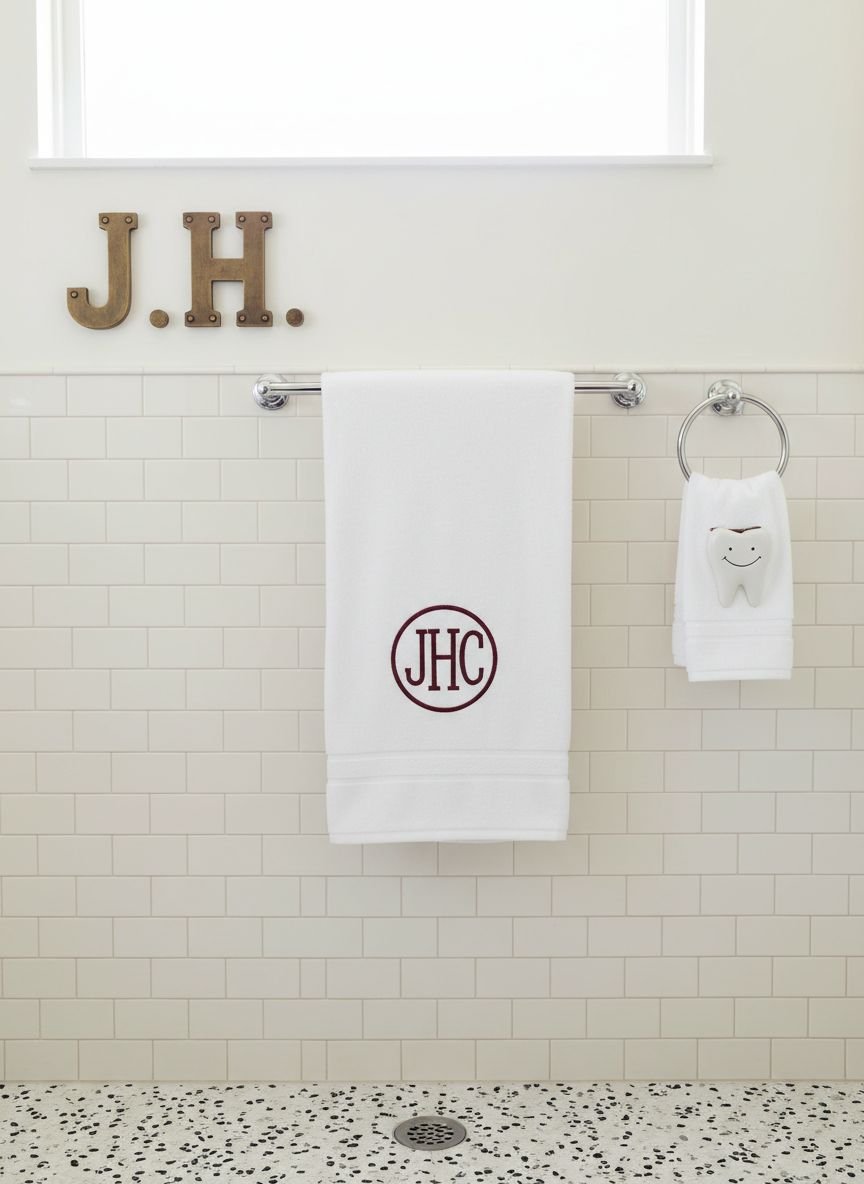
Nothing gives a child a sense of ownership quite like seeing their name or initial in their space. This is particularly effective in shared bathrooms where territory wars are common. Monogrammed towels are the classic choice, but you can go further with personalized step stools, robe hooks labeled with their first initial, or even a toothbrush cup with their name.
This strategy serves a functional purpose beyond aesthetics. When a child knows exactly which towel is theirs, they are more likely to hang it up. It builds a sense of responsibility. You can find beautiful ceramic or wooden letters at craft stores to mount above towel hooks, creating a designated “zone” for each child.
Pro Tip: If you have multiple children, assign a specific color to each child (e.g., Jack gets blue, Jill gets green) for their toothbrush, towel, and loofah.
Easy-to-Reach Fixtures
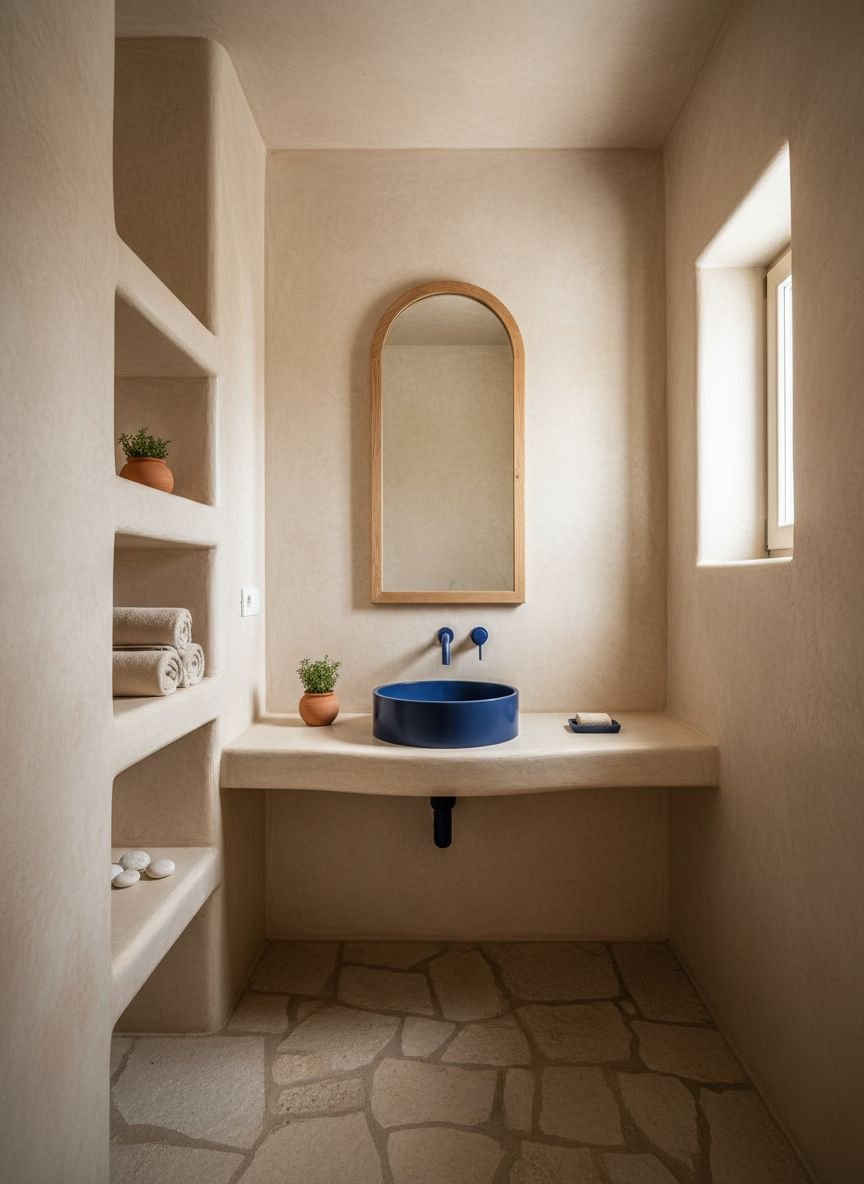
Independence starts with accessibility. If a child has to ask for help to wash their hands or grab a towel, the bathroom isn’t working for them. Lowering fixtures doesn’t necessarily mean moving plumbing, which is expensive. Instead, think about “accessible layers.” Install towel rings or hooks at the 36-inch height mark so they can hang up their own towel without climbing.
For the shower, an adjustable slide bar for the showerhead is a game-changer. It allows you to lower the spray for a toddler and raise it for a teen (or yourself). Faucet extenders are another brilliant, low-cost addition. These plastic chutes attach to the tap and bring the water stream forward, allowing little arms to reach the water safely without leaning precariously over the edge.
Pro Tip: Swap out round knobs for lever-style handles on faucets. They are much easier for small, soapy hands to grip and turn.
Creative Storage Solutions
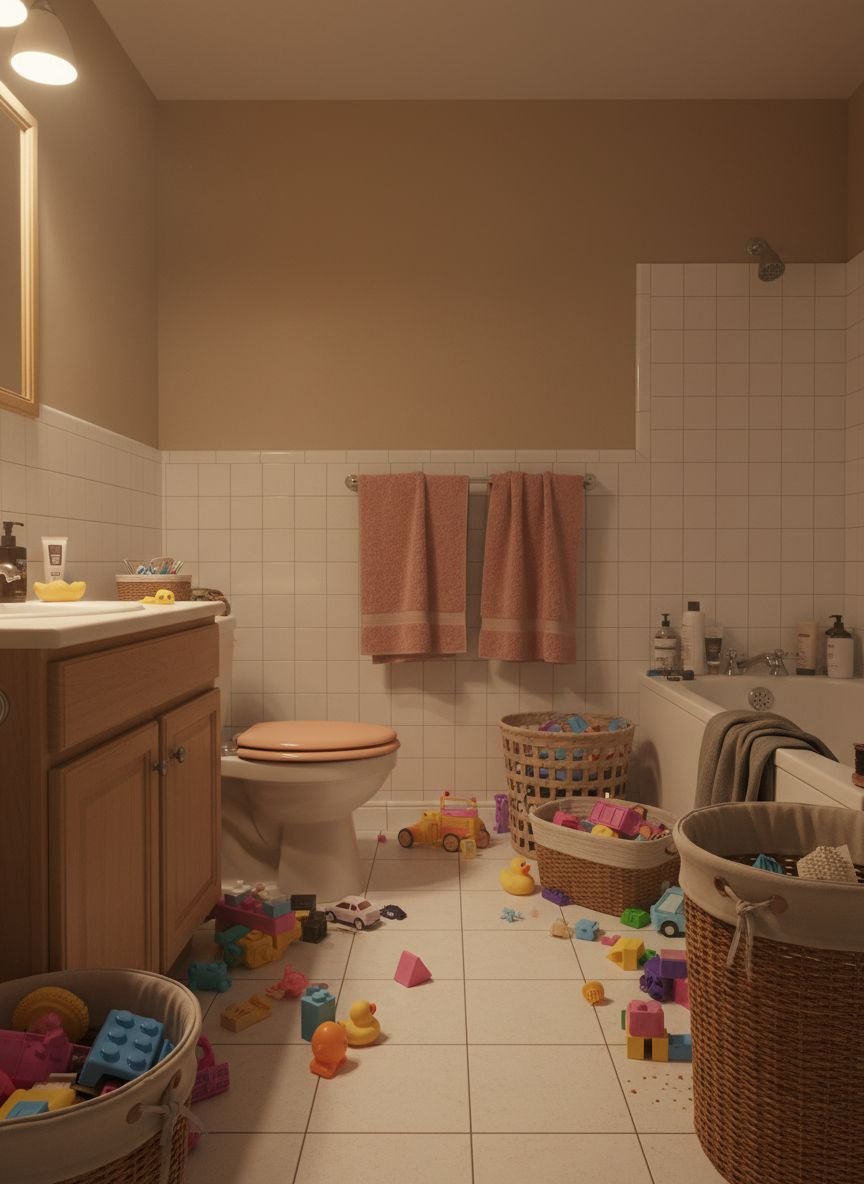
Kids come with a lot of gear: bath toys, detanglers, bubble bath, and endless washcloths. Standard cabinets often become black holes of clutter. You need storage that makes it easy to put things away, not just take them out. Open bins and baskets are superior to drawers for young children because they require one less step to use.
Utilize vertical space with a “ladder shelf” behind the toilet or a tension pole caddy in the corner of the tub. Mesh bags that hang via suction cups are essential for bath toys, allowing them to drain and dry to prevent mold. For a cleaner look, use uniform plastic bins inside the vanity, labeling them with pictures (e.g., a picture of a brush) so pre-readers know where items belong.
Pro Tip: Install a second, lower tension rod inside the shower/tub area specifically for hanging bath toy baskets or washcloths at kid-height.
Related posts :
- 15 Genius Tiny Bathroom Ideas That Instantly Double Your Space
- 10 Gorgeous Bathroom Vanity Designs to Upgrade Your Space That Will Instantly Increase Home Value
- 8 Genius Bedroom Storage Solutions for Small Spaces That Instantly Double Your Room
Interactive Wall Decals
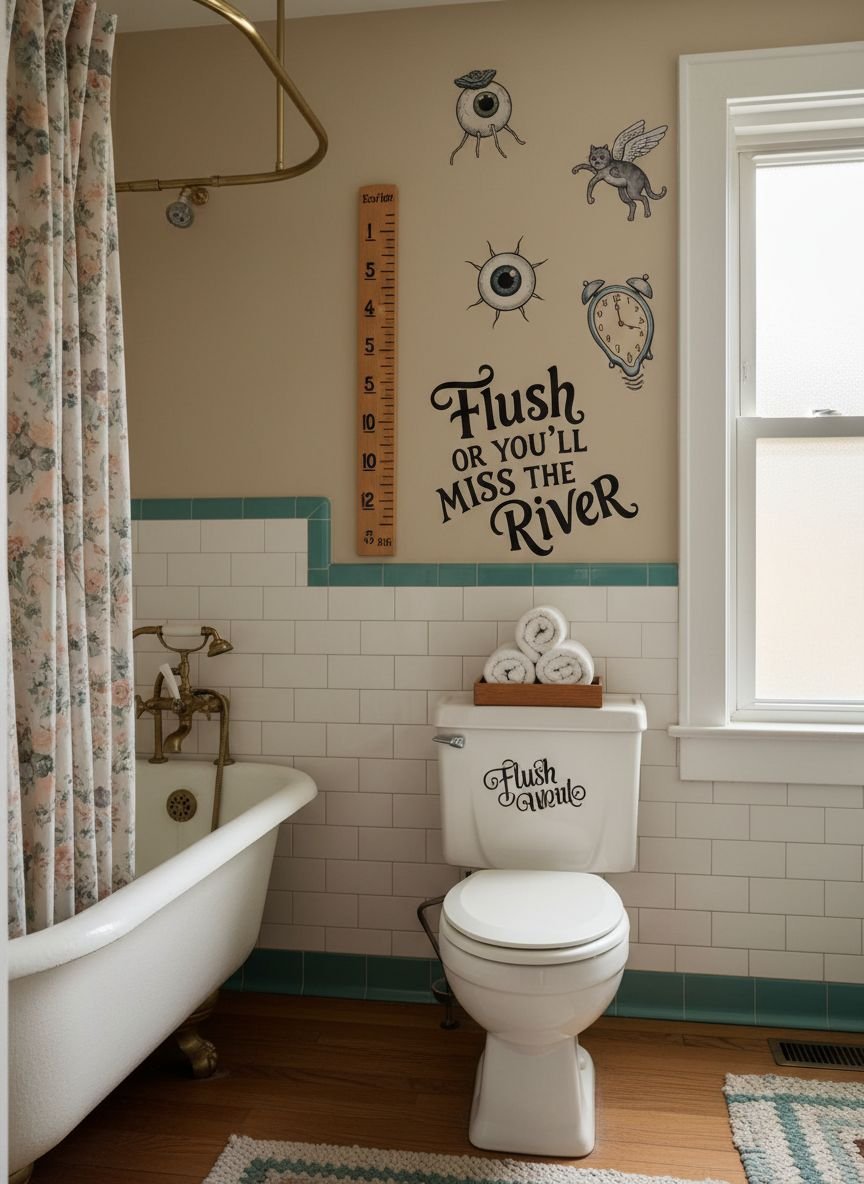
Wall decals are the renter’s best friend and the commitment-phobe’s secret weapon. Unlike wallpaper, which requires paste and labor, high-quality vinyl decals can be peeled off and moved without damaging the paint. You can turn a plain white wall into a galaxy of stars, a school of fish, or a jungle canopy in under an hour.
Look for “interactive” decals that encourage play or learning. Some sets come with measuring charts to track height, while others feature maps or alphabets. You can even find “dry erase” decals that allow kids to draw on the wall safely. Place these decals at the child’s eye level, usually the bottom third of the wall, to create a world that exists specifically for them.
Pro Tip: Before applying decals in a bathroom, clean the wall with rubbing alcohol and let it dry completely. The humidity in bathrooms can make adhesive tricky, so a clean surface is vital.
Waterproof Artwork
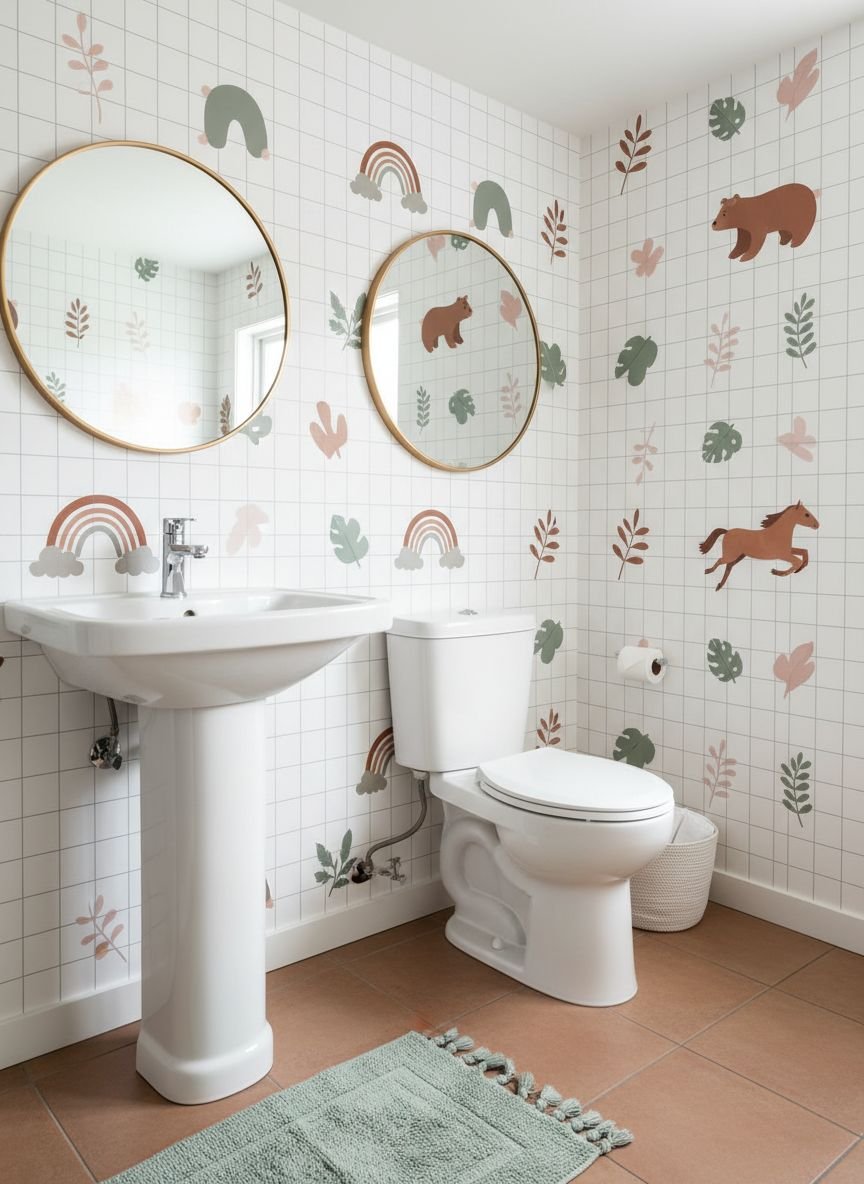
Art brings soul to a room, but the bathroom’s humidity is notoriously bad for paper prints. To solve this, look for waterproof alternatives. Metal prints, canvas wraps with a protective sealant, or even laminated educational posters can withstand the steam. Frame paper prints in glass-free acrylic frames which seal tightly and won’t shatter if knocked off the wall.
Theme-wise, this is a great place to add humor. Prints of animals brushing their teeth or taking bubble baths are classic hits. You can also frame your child’s own waterproof art—ask them to draw a picture on plastic sheets or use bath crayons on paper, then laminate it. It transforms the room into a gallery where they are the featured artist.
Pro Tip: Use “Command” strips specifically designed for bathrooms (water-resistant) to hang art. They hold up better in moist environments than standard adhesive hooks.
Whimsical Shower Curtains
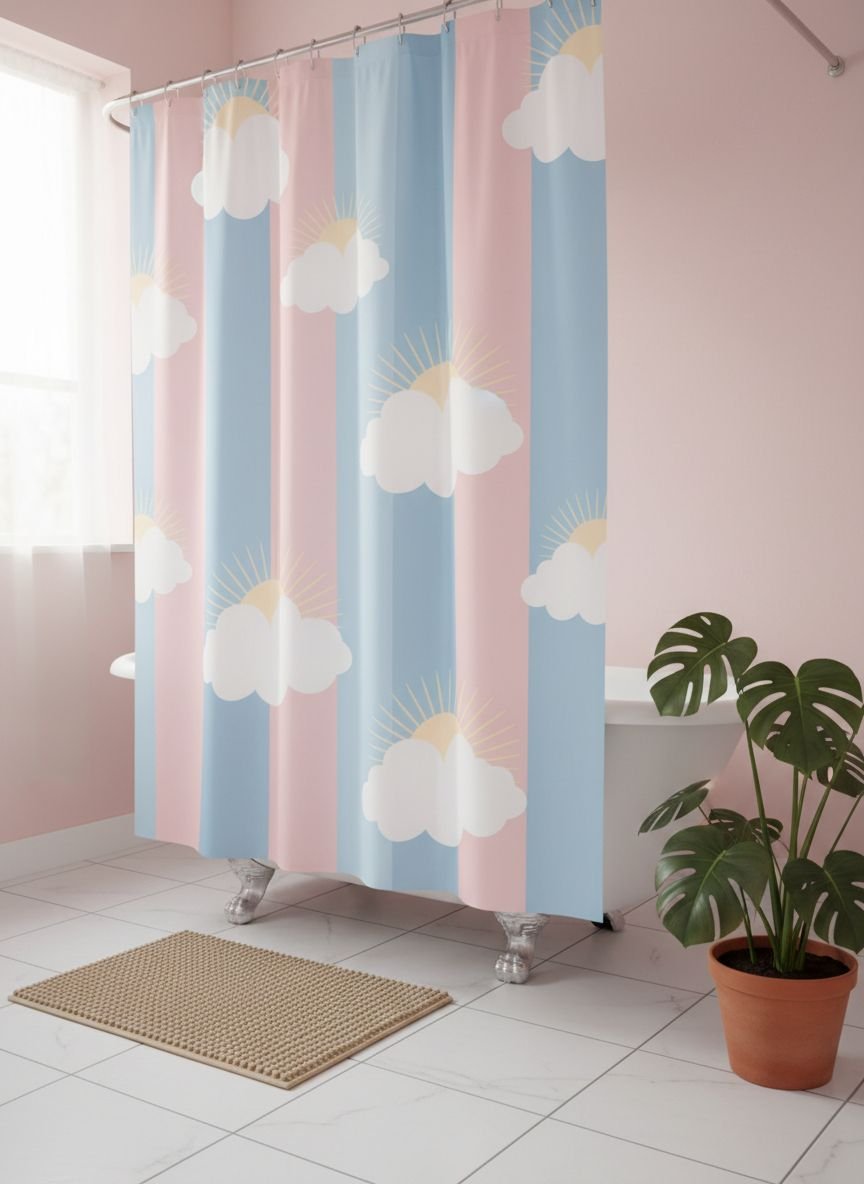
The shower curtain is the largest visual element in most bathrooms, acting as a massive canvas. This is the easiest way to set the tone of the room. If your walls are neutral, choose a bold, colorful curtain with a large-scale pattern. If your walls are busy, go for a solid color with interesting texture, like a waffle weave or pom-pom trim.
Fabric curtains are generally better than plastic ones because they can be tossed in the washing machine—a necessity for kids’ bathrooms. Look for polyester blends that resist mildew. To make it truly “whimsical,” consider curtains with ruffles, 3D elements (like sewn-on flowers), or educational maps.
Save this idea to your Pinterest.
Pro Tip: Always use a clear, heavy-duty liner inside the decorative curtain. Magnetic weights at the bottom of the liner prevent it from billowing in and attacking your child during a shower.
Non-Slip Rugs and Mats

Safety is non-negotiable, but it doesn’t have to look like a hospital. Modern non-slip mats come in shapes like clouds, leaves, or whales, adding to the decor rather than subtracting from it. The material matters: look for microfiber or chenille, which absorb water quickly and feel soft underfoot.
Inside the tub, the old-fashioned rubber mat is essential to prevent falls. However, these can trap mold. Look for “open weave” mats that allow water to flow through them, or mats treated with antimicrobial agents. Outside the tub, ensure every rug has a high-quality rubber backing. If you fall in love with a rug that doesn’t have grip, you must add a separate non-slip pad underneath.
Pro Tip: Wash bath mats weekly in hot water with vinegar to kill bacteria and restore the fluffiness of the fibers.
Dual-Purpose Mirrors
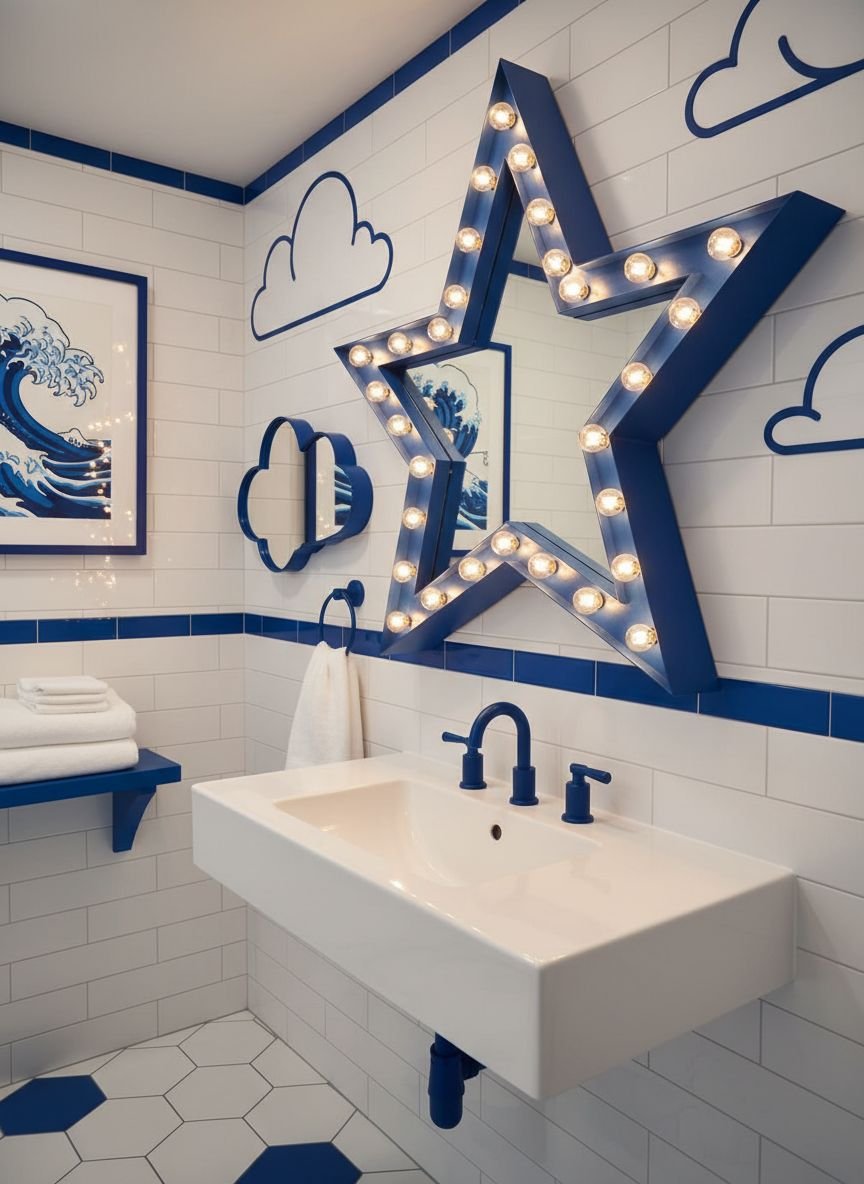
In a kid’s bathroom, a mirror is for more than just checking hair; it’s a tool for self-discovery and routine. “Dual-purpose” here means mirrors that offer storage or interactivity. Medicine cabinets are making a huge comeback because they keep clutter off the counter and out of reach of small hands. Look for models with mirrored interiors so kids can see themselves from different angles.
Another trend is the “tilted” mirror. Pivot mirrors, often found in vintage styles, allow you to angle the glass downward so a shorter child can see themselves, then tilt it back up for adults. This grows with the child perfectly. You can also add a small, suction-cup magnifying mirror at their height on the main mirror for close-up teeth brushing inspection.
Pro Tip: Install a strip of LED lighting around the mirror. Good lighting helps kids see dirt on their faces and makes the space feel bright and clean.
Related posts :
- 18 Bold Burgundy Bathroom Designs That Instantly Create a Moody Sanctuary
- 11 Stunning Decorative Ceiling Ideas for Modern Homes That Instantly Elevate Your Space
- 15 Stunning Small Living Room Ideas to Transform Your Apartment Space Into a Spacious Sanctuary
Educational Elements
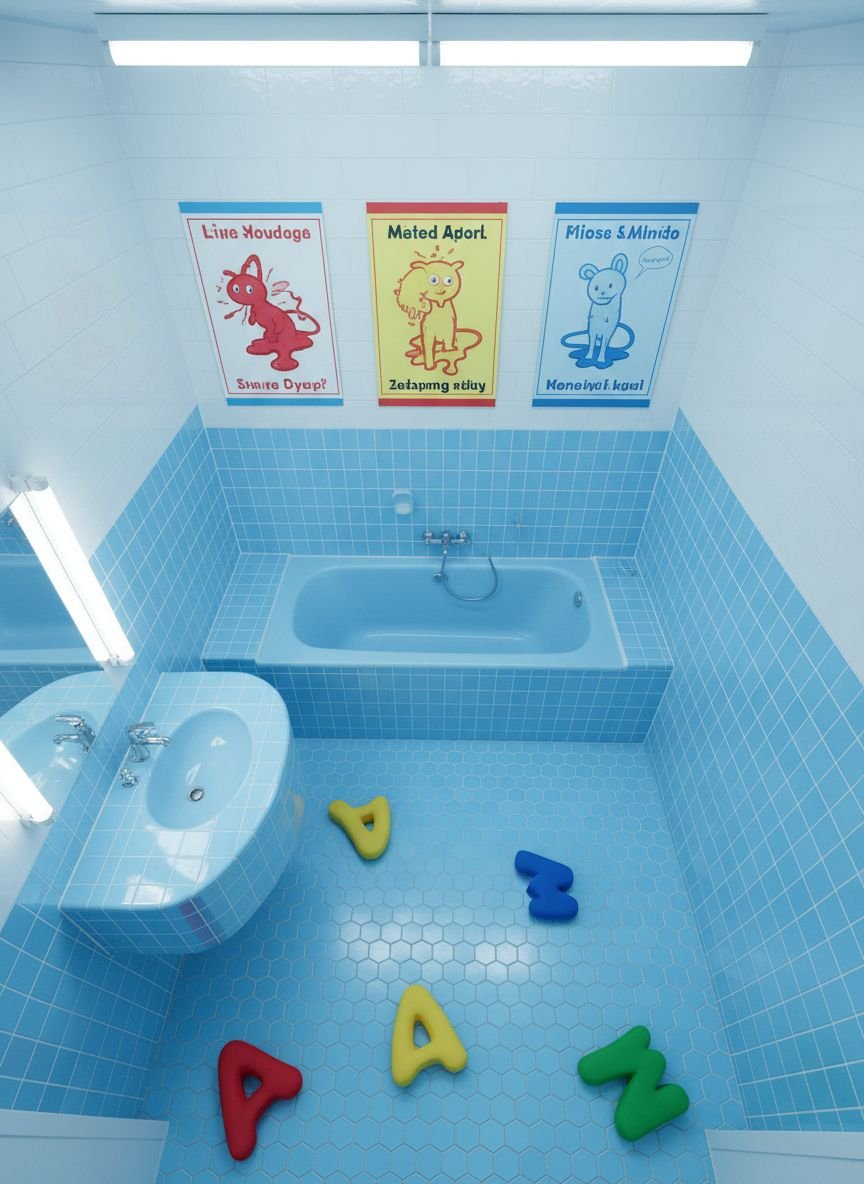
The bathroom is a surprisingly good place for passive learning. You have a captive audience while they sit on the potty or brush their teeth. Incorporate subtle educational tools into the decor. A shower curtain with a world map, a periodic table, or the alphabet is a classic choice.
Wall art can feature numbers, shapes, or inspirational quotes about hygiene and self-care. Even the hand-washing station can be educational; use a timer (sand glass or digital) to teach them how long 20 seconds really is. This teaches the concept of time management and proper hygiene simultaneously.
Pro Tip: Use foam bath letters that stick to the tile when wet. It turns bath time into a spelling lesson without feeling like homework.
Playful Lighting Fixtures
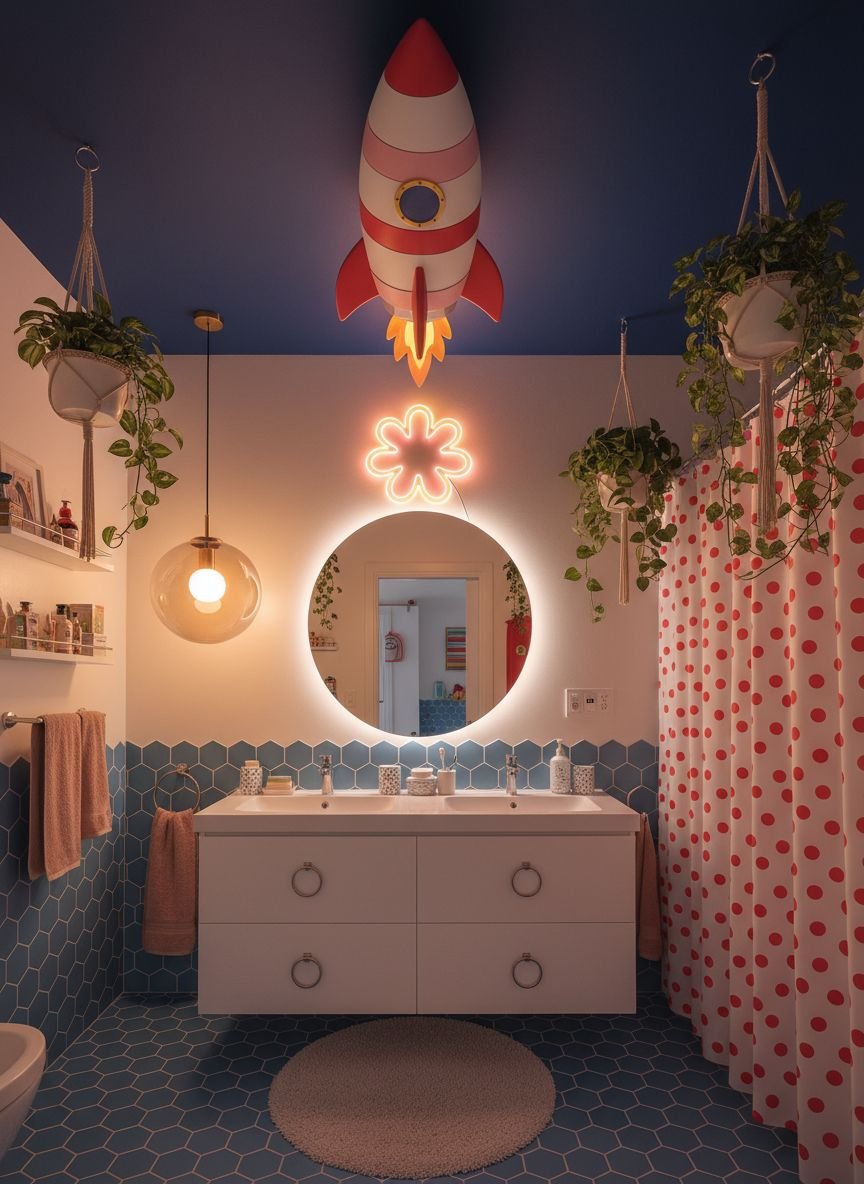
Lighting sets the mood. A harsh, single overhead bulb can make bath time feel clinical. Swap out the standard “boob light” for something with personality. Pendants in the shape of bubbles, stars, or balloons add a touch of magic. Sconces with industrial cages or colorful shades can flank the mirror for better task lighting.
Nightlights are also a crucial part of the lighting plan. A scared child won’t use the bathroom at night. Install a motion-sensor dimmer switch or a cute plug-in nightlight that projects stars onto the ceiling. This creates a safe, welcoming environment for midnight potty trips.
Pro Tip: Ensure all light fixtures in a bathroom are “damp rated” or “wet rated” depending on their proximity to the shower to prevent rust and electrical shorts.
Easy-to-Clean Surfaces

When designing for kids, your mantra should be “minimum grout, maximum wipeability.” Small mosaic tiles look beautiful but have miles of grout lines that trap urine and grime. Large-format porcelain tiles (12×24 inches) are much easier to keep clean. Quartz countertops are non-porous and resist staining from spilled medicine or markers better than marble or granite.
For walls, consider beadboard or wainscoting made from PVC or treated wood painted in semi-gloss. This protects the drywall from splashes and is incredibly easy to wipe down. Avoid textured wallpapers or porous stones that absorb odors and moisture.
Pro Tip: Use epoxy grout instead of cement grout. It is waterproof, stain-proof, and doesn’t need sealing, making it virtually indestructible against bathroom messes.
Chalkboard Walls
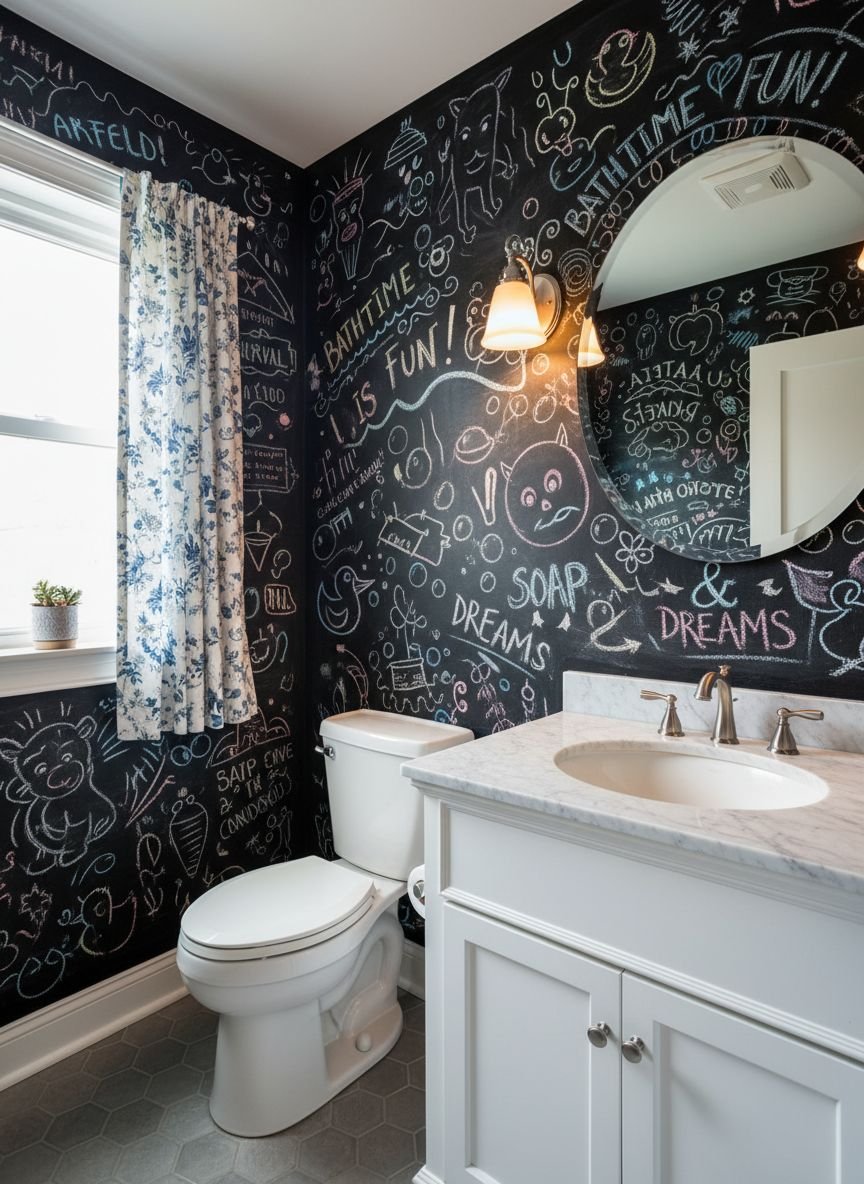
A chalkboard wall is the ultimate “yes” in a world of “no.” Painting one section of the bathroom—perhaps the wall opposite the toilet or the back of the door—with chalkboard paint gives kids a designated place to scribble. It keeps them occupied during potty training and allows them to express creativity.
You aren’t limited to black, either. Chalkboard paint now comes in various colors, including green, blue, and even pink. If you are worried about chalk dust, use “chalk pens” which are liquid-based and wipe off with a damp cloth but don’t create airborne dust.
Pro Tip: Frame the chalkboard area with molding to make it look intentional and neat, rather than just a painted patch of wall.
Floating Vanities
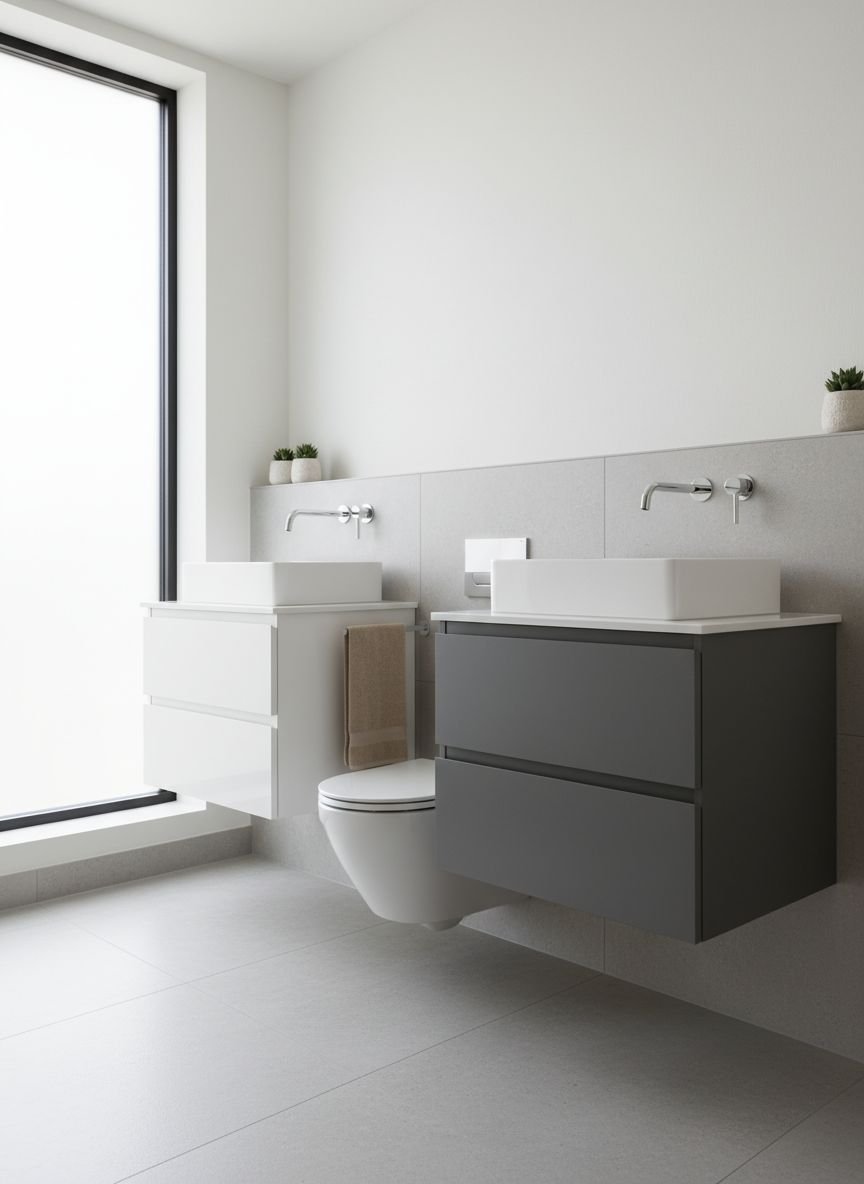
A floating vanity (mounted to the wall with no legs) is a modern design choice that has a secret superpower for parents: step stool storage. The open space underneath is the perfect “garage” to tuck away a bulky step stool when it’s not in use. This keeps the floor clear and eliminates tripping hazards.
Visually, floating vanities make a small bathroom look larger because you can see the floor extending all the way to the wall. They also allow you to adjust the mounting height. You can mount it slightly lower for kids, or at standard height and use the space below for baskets of towels or bath toys.
Pro Tip: Add motion-sensor LED strip lighting to the underside of the vanity. It acts as a cool nightlight that illuminates the floor for late-night visits.
Dual Sinks
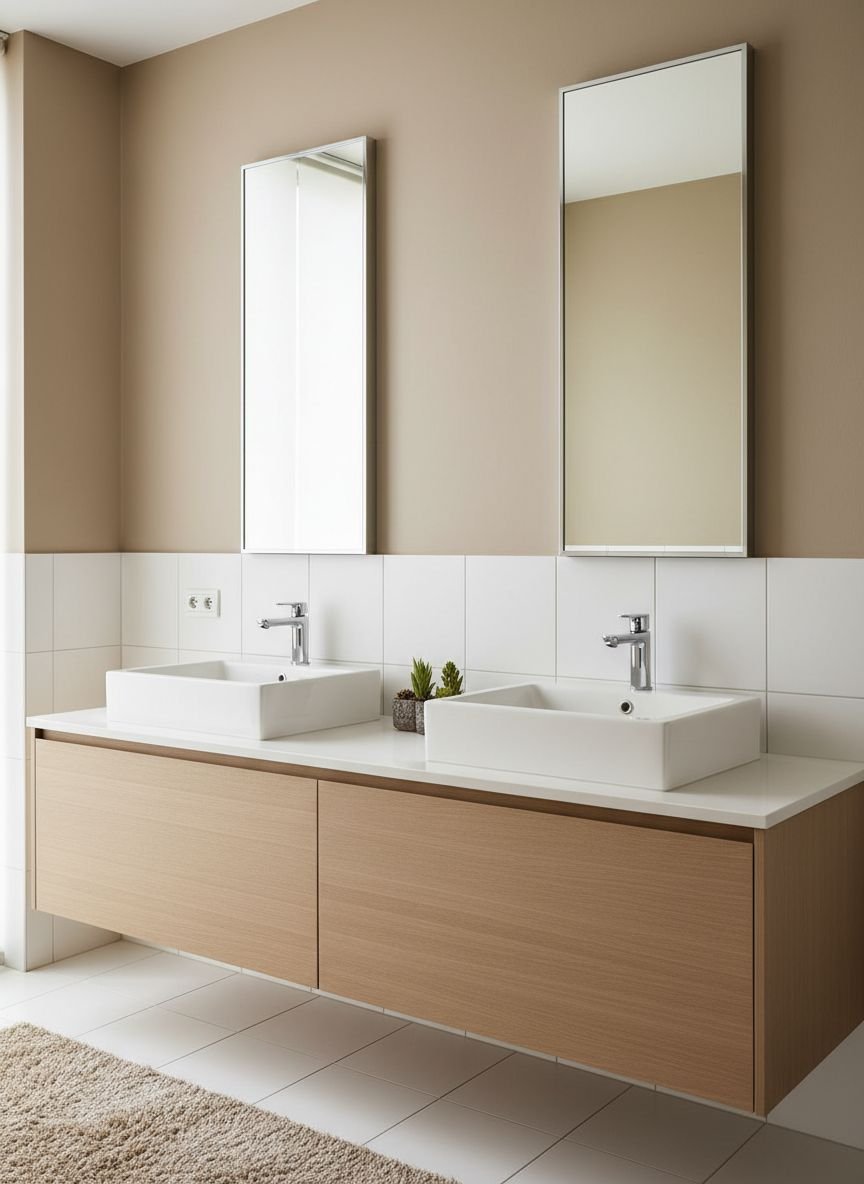
If you have the space (at least 60 inches of vanity width), dual sinks are a marriage saver—or rather, a sibling relationship saver. Having two distinct grooming stations allows two children to brush teeth and wash faces simultaneously, cutting the morning rush time in half.
Define the spaces clearly. You might use a single long mirror to unite the space, but place a cabinet or a stack of drawers between the two sinks to create a physical buffer zone. This drawer stack provides individual storage for each child’s toiletries, keeping their specialized toothpastes and hair accessories separate.
Pro Tip: If you don’t have plumbing for two sinks, install one large “trough” style sink with two faucets. It looks incredibly stylish and farmhouse-chic while serving the same function.
Built-In Step Stools

Forget the plastic stool that gets kicked around the room. The most elegant solution for kids’ bathrooms is the built-in step stool. Custom cabinetry can include a bottom drawer that flips over or pulls out to become a sturdy step. It is there when you need it and invisible when you don’t.
If you are not replacing the vanity, look for a “toe-kick” step stool. These are flat platforms that slide into the small recessed space at the bottom of standard cabinets. It’s a brilliant use of wasted space and ensures the stool is never lost or in the way of the door.
Save this idea to your Pinterest.
Pro Tip: Ensure the step surface has a rubberized or textured finish. A painted wood step can be slippery for socked feet.
Open Shelving
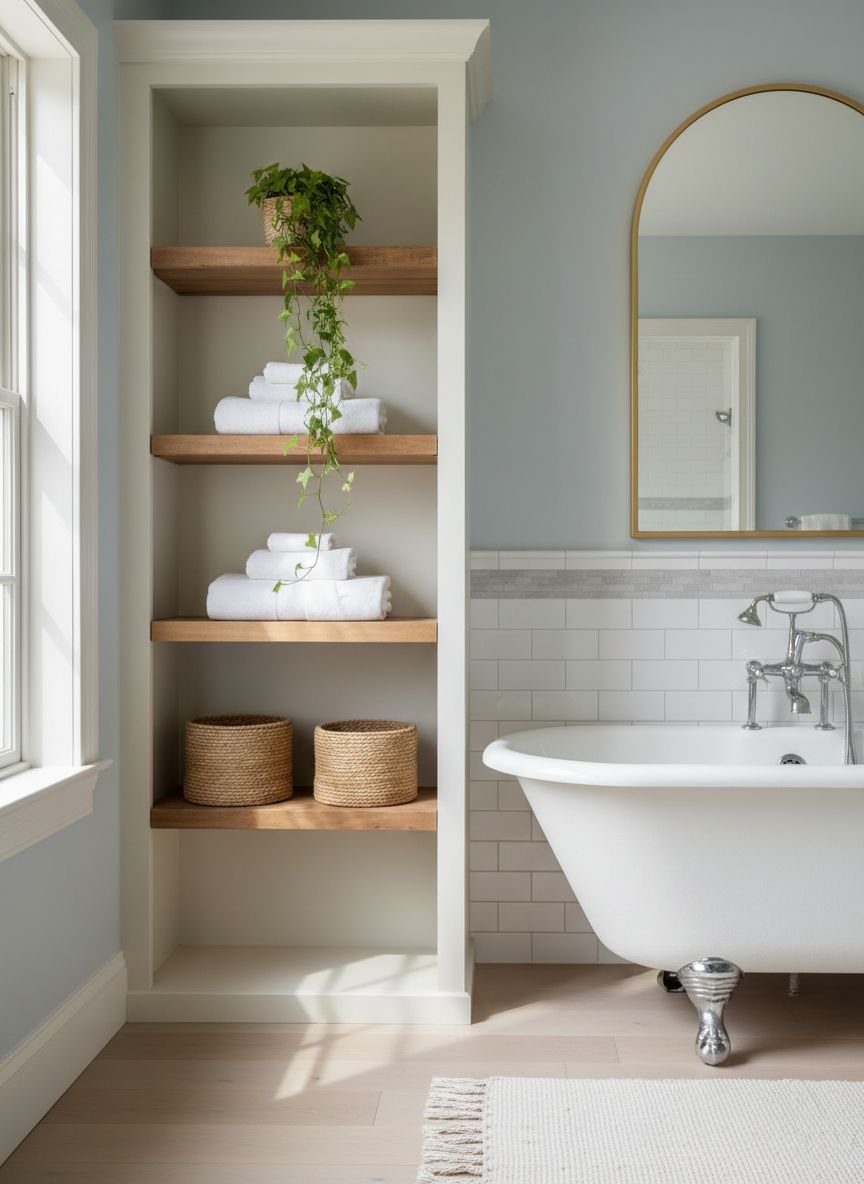
Open shelving is often debated, but in a kids’ bathroom, it is practical. Doors are barriers. If a child has to open a door to put a towel away, it likely ends up on the floor. Open shelves make grabbing a fresh towel or a new roll of toilet paper effortless.
Style these shelves with intention. Roll towels tightly (spa style) to save space and look tidy. Use uniform baskets (wicker, wire, or canvas) to corral small items like hair ties or bath bombs. Place the items kids need most on the lower shelves and the items you want to restrict (like extra shampoo or cleaning supplies) on the highest shelves.
Pro Tip: Avoid glass jars on open shelves. Use high-quality clear acrylic jars to store cotton balls and Q-tips. They look like glass but bounce if dropped.
Animal Motifs

We end with a classic: animals. But we aren’t talking about cartoon ducks. The modern way to do animal motifs is through sophisticated prints and silhouettes. Think brass hooks shaped like elephant heads, a bath mat in the shape of a tiger rug, or wallpaper featuring realistic botanical illustrations of birds.
This approach feels curated and expensive. It sparks the child’s interest in nature without making the bathroom look like a preschool classroom. You can mix and match animals—a “safari” vibe with lions and giraffes, or a “woodland” vibe with bears and foxes.
Pro Tip: Use animal tail hooks. These are wall hooks where the “hook” part is the curved tail of a dog, cat, or dinosaur. They are hilarious, functional, and sturdy enough for heavy robes.
Comparison: Paint vs. Wallpaper for Kids Bathrooms
| Feature | Semi-Gloss Paint | Vinyl Wallpaper |
|---|---|---|
| Durability | High (Scrubbable) | Medium (Peel & Stick is best) |
| Cost | Low ($30-$60) | Medium/High ($100+) |
| Changeability | Easy (Just paint over) | Easy (If removable type) |
| Style Impact | Color focused | Pattern focused |
| Best For | Walls prone to splashing | Accent walls away from tub |
Popular Asked Questions
How can I make a bathroom safe for kids without it looking ugly?
You don’t need bright plastic bumpers everywhere. Use matte-finish tiles to prevent slipping, install stylish grab bars that match your faucet finish (chrome or matte black), and use soft-close toilet seats to prevent slammed fingers. A rounded edge on the vanity countertop is also safer than a sharp 90-degree corner and looks very modern.
What is the best flooring for a kid’s bathroom?
Porcelain tile is the gold standard. It is waterproof, stain-resistant, and durable. Look for a “textured” or “matte” finish to ensure it isn’t slippery when wet. Vinyl plank flooring (LVP) is a great budget alternative that is softer underfoot and 100% waterproof, making it warmer for little feet than stone.
How do I organize a shared bathroom for a boy and a girl?
Focus on a gender-neutral base like white, grey, or sage green. Then, use color-coding for their accessories. Give them each a designated drawer or shelf. You can also use “zones”—the left side of the vanity is his, the right is hers. Double hooks are better than towel bars because they hold more and are easier for kids to use.
At what age should a child have their own bathroom space?
While many kids share a bathroom with parents effectively, by age 4 or 5, children start developing a need for privacy and independence. This is a great time to introduce step stools and accessible storage so they can brush their teeth and wash hands without assistance, even if they are still sharing the room with you.
How can I decorate a rental bathroom for kids?
Focus on reversible changes. Use command hooks for towels, suction cup organizers for the shower, and peel-and-stick decals for the walls. A bright, fun shower curtain and a colorful rug cover up boring rental finishes instantly. You can even use “washi tape” to create temporary geometric patterns on the vanity mirror or cabinets.
Conclusion
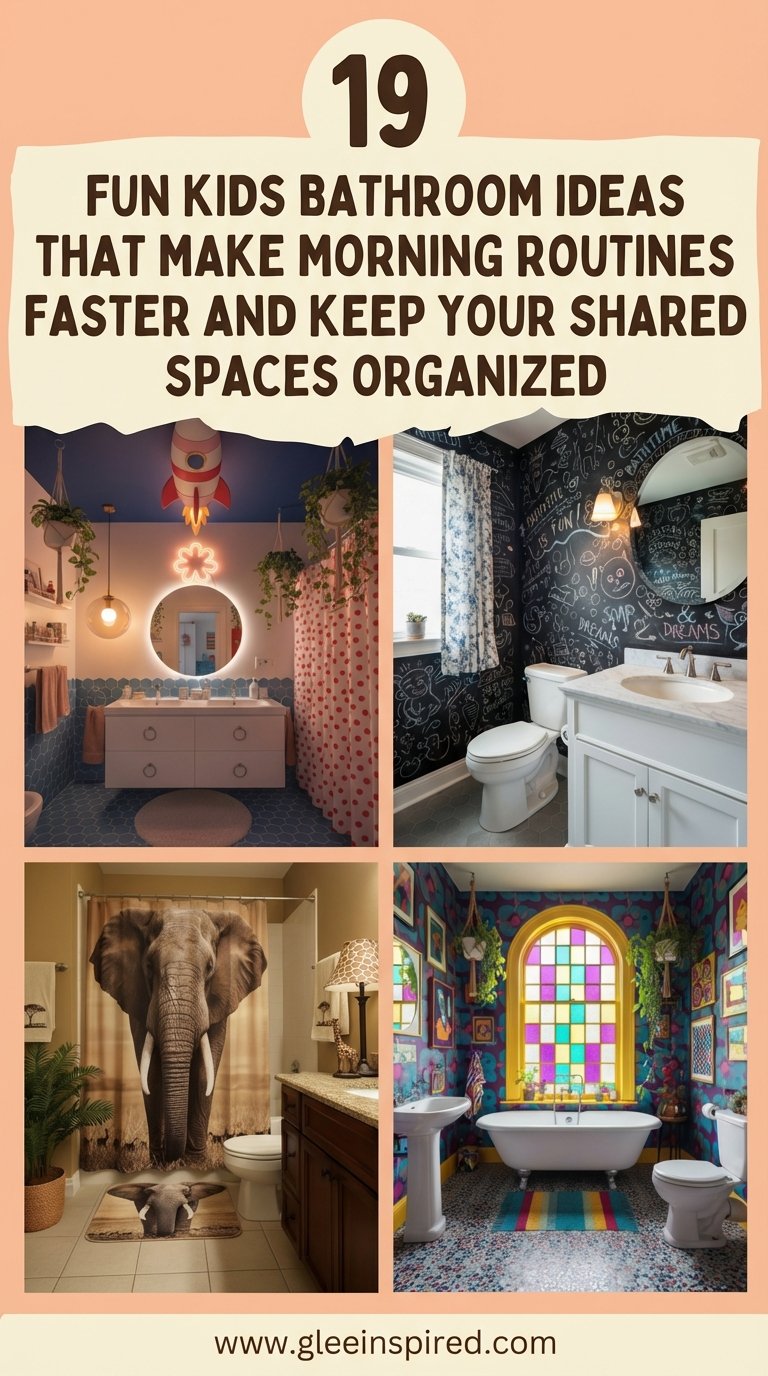
Creating a bathroom that works for kids doesn’t mean sacrificing style for function. By blending safety features like non-slip mats with playful elements like whimsical wallpaper and accessible storage, you build a space that fosters independence. Whether you choose a floating vanity for hidden step stools or a bold animal motif to spark joy, the goal is the same: a room that handles the splash zone with grace.

Leave a Comment