
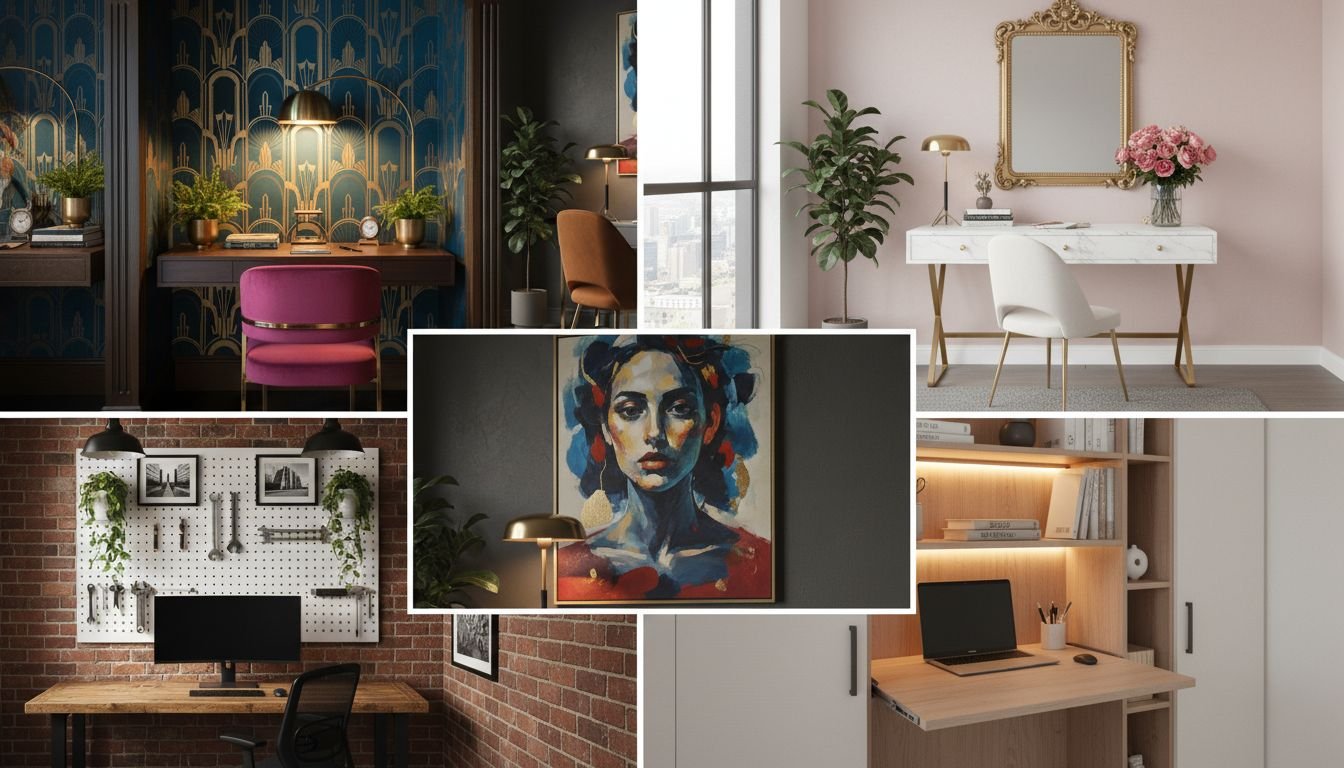
You are staring at a cluttered corner. You see a pile of laundry or a dead zone of empty wall space. I see your future empire. The reality of modern work is that you do not need a sprawling study with mahogany bookshelves to be productive. You need a surface, a seat, and a strategy.
The shift to remote work left many of us scrambling to find space where there was none. Working from the couch destroys your posture. The kitchen table is a recipe for distraction. You need a dedicated zone that signals to your brain: it is time to build.
This guide is not about knocking down walls. It is about clever adaptation. We are going to transform closets, alcoves, and window ledges into high-functioning workspaces. These 17 small home office ideas prove that square footage is just a number, but design is everything.
Key Takeaways
- Verticality is King: When you cannot build out, you must build up with shelving and wall-mounted units.
- Light Defines the Zone: Dedicated task lighting creates a psychological boundary between “home mode” and “work mode.”
- Multi-Functionality: Your furniture must work twice as hard; desks should fold, roll, or hide when not in use.
- The “Cloffice” is Real: Converting a closet is the highest-value renovation you can do for zero dollars.
Table of Contents
- Create A Floating Desk Zone
- Tuck A Desk Into A Closet Nook
- Maximize Corners With L-Shaped Desks
- Incorporate A Pegboard Wall
- Slide In A Rolling Cart For Supplies
- Use Vertical Shelving To Save Floor Space
- Camouflage Your Desk With A Fold-Down Table
- Divide Space With A Curtain Or Partition
- Use A Window Ledge As A Desk Base
- Add Personality With A Statement Chair
- Install Under-Shelf Lighting For Ambience
- Mount A Monitor To Free Up Desk Space
- Pair A Compact Desk With Bold Wallpaper
- Turn A Bay Window Into A Workspace
- Incorporate Hidden Storage Under The Desk
- Go Vertical With A Ladder Desk
- Add A Mirror To Expand The Visual Space
- Popular Asked Questions
- Conclusion
Create A Floating Desk Zone
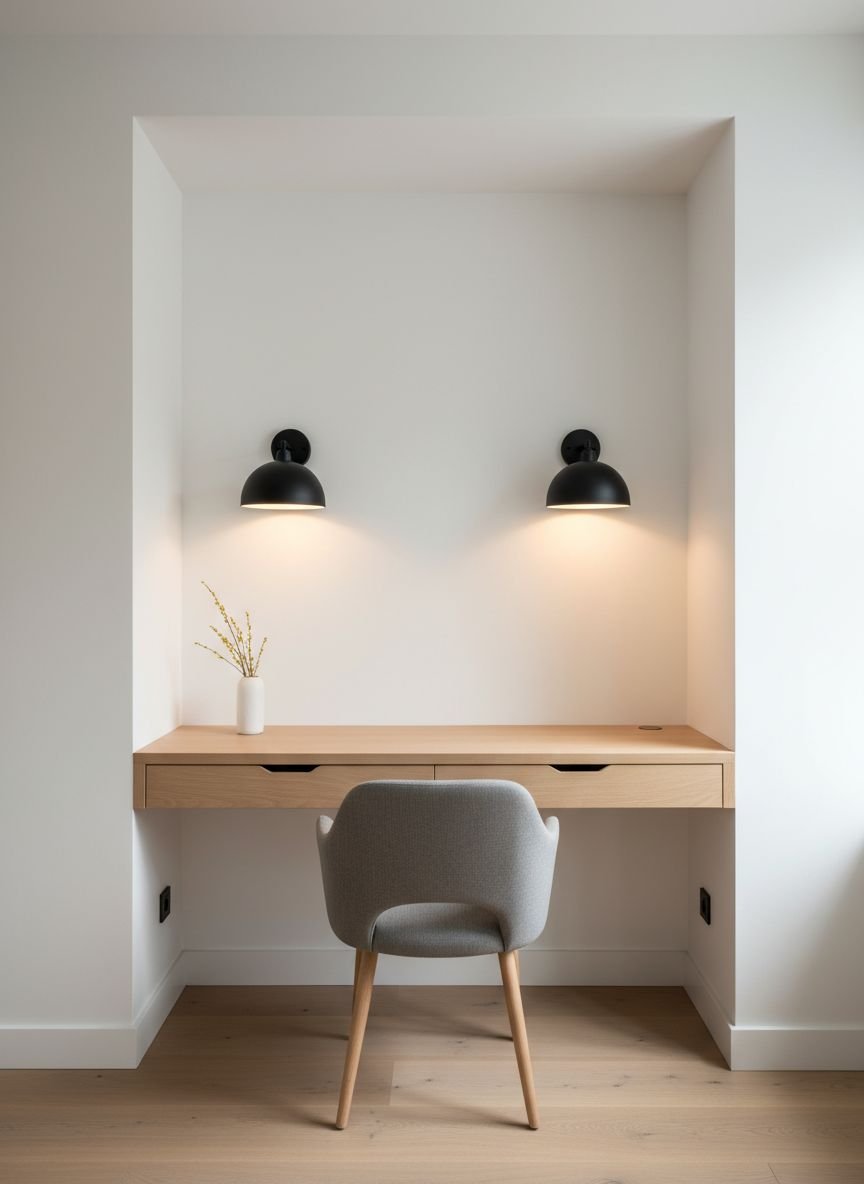
Legs are the enemy of small spaces. Traditional desks with bulky legs visually close off a room and make it feel cramped. The floating desk is the ultimate solution for maintaining an airy, open feel while securing a solid workspace. By mounting a slab of wood or a pre-made floating unit directly to wall studs, you reclaim the floor space underneath.
This lack of visual clutter tricks the eye into thinking the room is larger than it is. You can slide a stool completely underneath when you are finished, effectively deleting the office from the room. For a high-end look, choose a live-edge walnut slab. For a modern, minimalist vibe, go with a high-gloss white finish that blends into the wall. Ensure your brackets are rated for the weight of your equipment plus the pressure of your arms leaning on the surface.
Pro Tip: Install a power strip on the underside of the desk surface. This keeps cords off the floor and maintains that gravity-defying illusion.
Tuck A Desk Into A Closet Nook
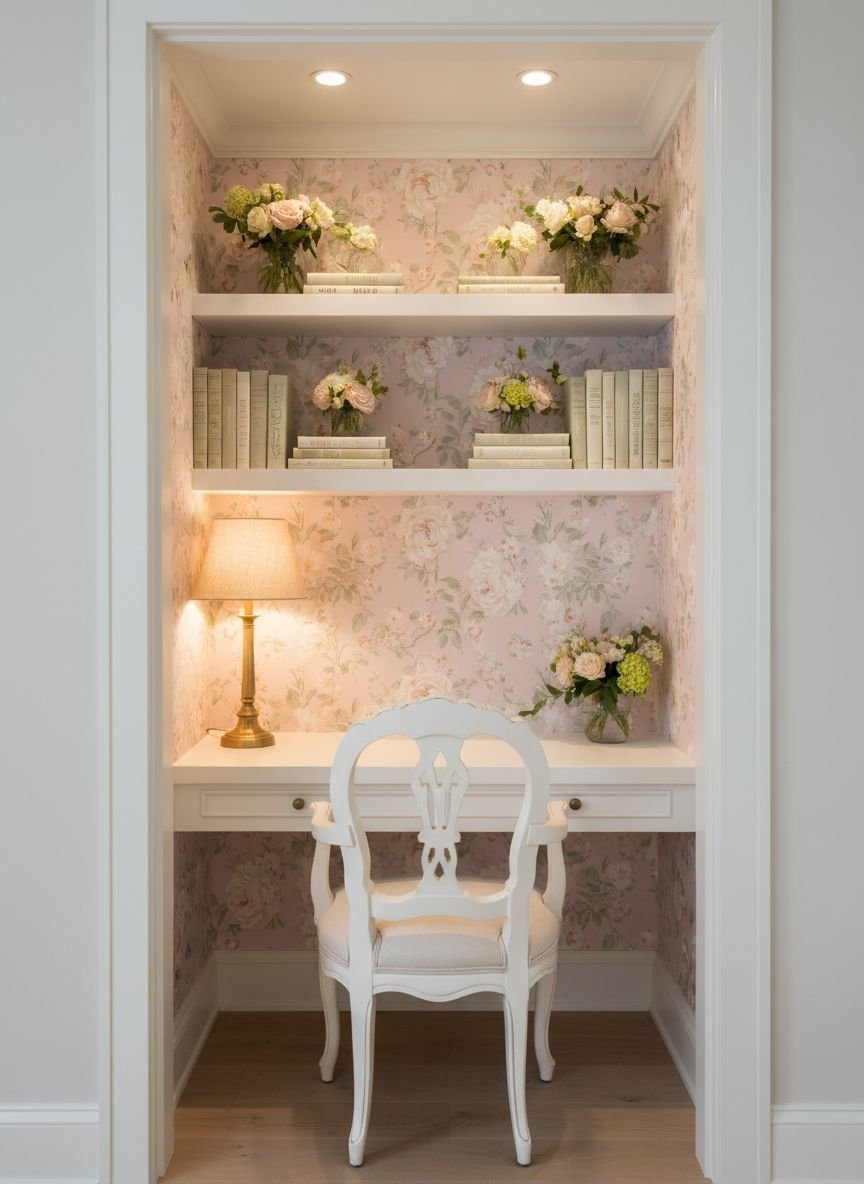
The “Cloffice” (Closet Office) is a viral trend for a reason. It is the only setup that allows you to literally close the door on your work at 5 PM. Most guest room closets are full of junk you rarely use. Clear it out. Remove the clothing rod and install a deep shelf at sitting height (usually 29-30 inches).
Lighting is the critical success factor here. Closets are dark caves by design. You must install hardwired sconces or high-quality rechargeable LED strips to banish the shadows. Paint the interior a contrasting color—perhaps a deep mood navy or a sage green—to create a “room within a room” feeling. If the doors impede your chair, remove them entirely and replace them with soft velvet curtains for a textural touch.
Pro Tip: Use the upper shelves for printer storage and bulky files, keeping the main desk surface pristine.
Maximize Corners With L-Shaped Desks
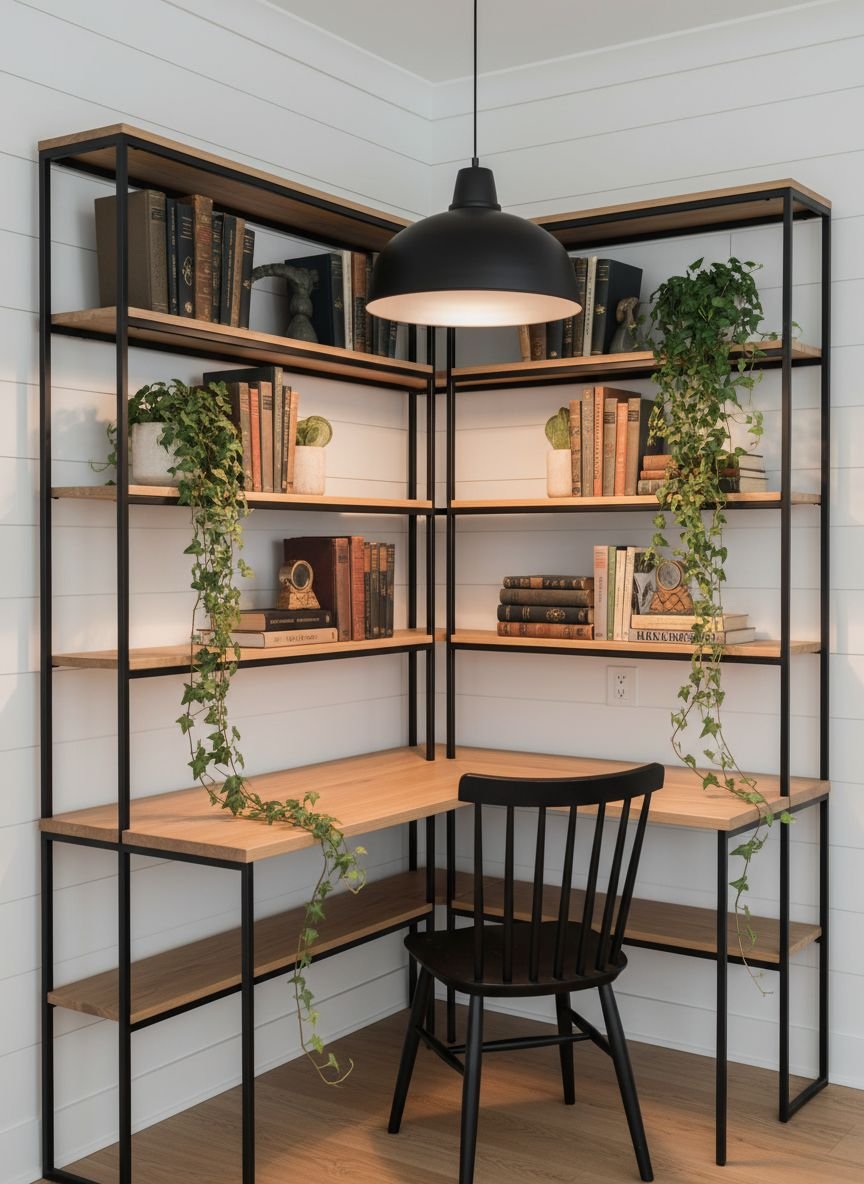
Corners are often dead space where dust bunnies gather. An L-shaped desk activates this dormant real estate. It provides double the surface area of a standard straight desk without encroaching into the center of the room. One “wing” of the desk holds your computer setup, while the other remains clear for writing, sketching, or coffee.
This layout creates a cockpit effect. Everything you need is within arm’s reach, which boosts efficiency. You do not have to buy a chunky corporate desk; two slim console tables placed perpendicular to each other work perfectly. This setup works exceptionally well in bedrooms where you need to define a workspace without it taking over the sleeping sanctuary.
Pro Tip: Place your monitor in the corner junction to maximize the depth and keep the straight edges clear for paperwork.
Incorporate A Pegboard Wall
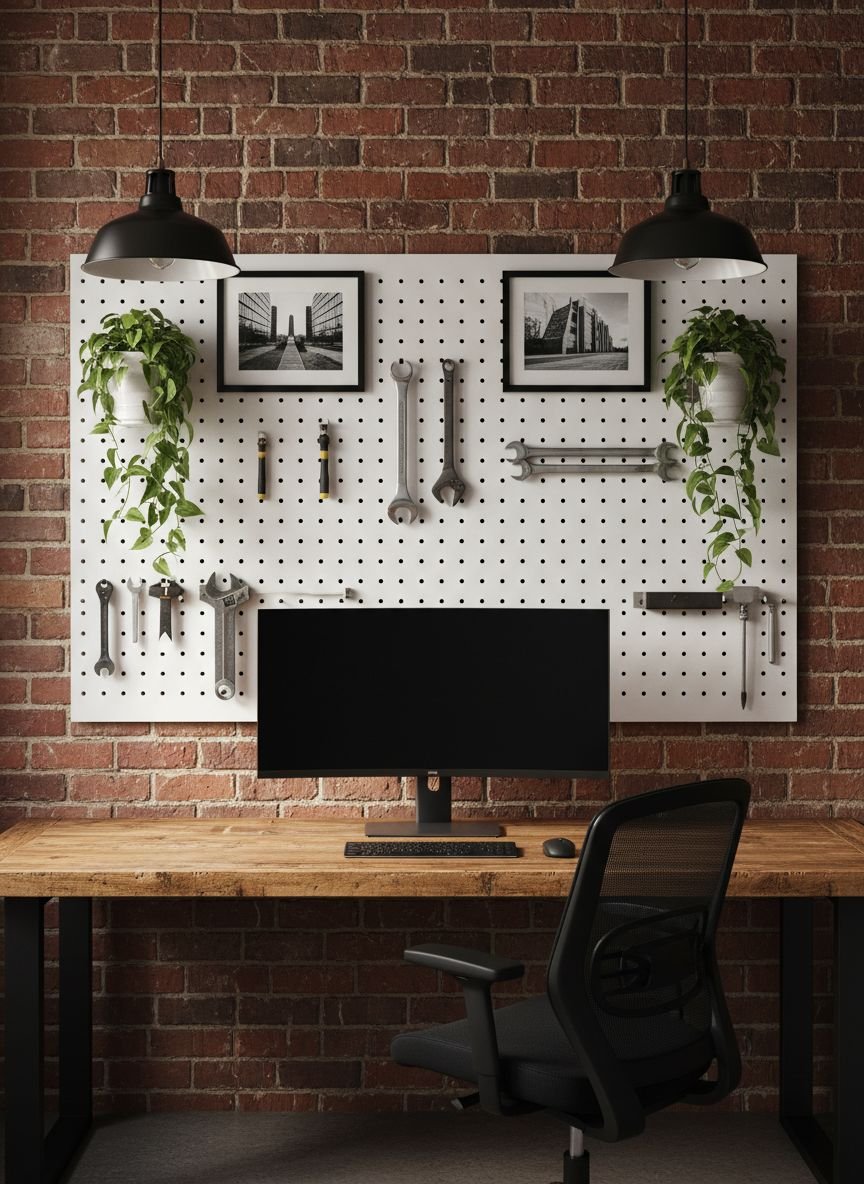
When floor space is zero, wall space is hero. A pegboard is not just for garages; it is a customizable organization system that adapts to your changing needs. In a small home office, drawer space is often nonexistent. A large pegboard mounted above your desk acts as an external hard drive for your physical supplies.
Paint the pegboard to match your wall color for a seamless look, or choose a bold accent color to frame the zone. Use hooks for headphones and scissors, small baskets for pens and charging cables, and shelves for succulents or inspirational art. The beauty of this system is its fluidity. If you buy a new gadget, you just move a peg. No new furniture required.
Pro Tip: Use wood dowels and plywood shelves on the pegboard for a warmer, Scandinavian aesthetic that feels less industrial.
Slide In A Rolling Cart For Supplies
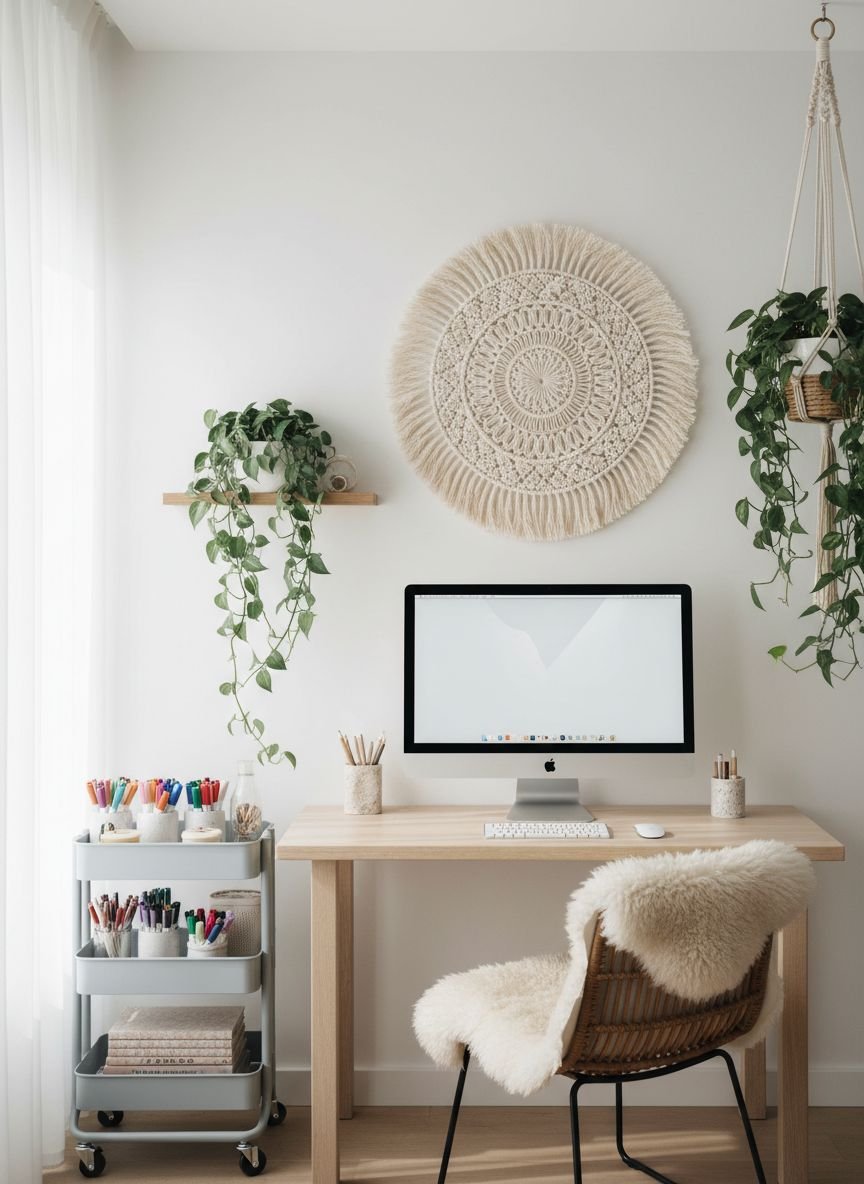
A static desk in a small room quickly becomes a dumping ground. If your desk is small, you cannot afford to clutter it with staplers, notepads, and snacks. Enter the three-tier rolling cart. This is your mobile side-hustle station. It holds everything that would normally stuff up your drawers.
Keep your daily essentials on the top tier. Put paper and reference materials on the middle. Use the bottom for heavy items or tech accessories. When you are working, pull the cart next to your chair. When you have guests or need to clean, roll it into a closet or another room. It creates a flexible office that moves with you.
Pro Tip: Choose a cart in a matte metal finish (black, white, or gold) rather than plastic to elevate the look from “dorm room” to “studio.”
Comparison: Floating Desk vs. Rolling Cart Setup
| Feature | Floating Desk | Rolling Cart Setup |
|---|---|---|
| Space Saving | High (Visual) | High (Physical) |
| Permanence | Fixed | Mobile |
| Storage | Minimal | High Capacity |
| Installation | Requires Drilling | Ready to Use |
| Best For | Minimalists | Crafters/Creative Pros |
Use Vertical Shelving To Save Floor Space
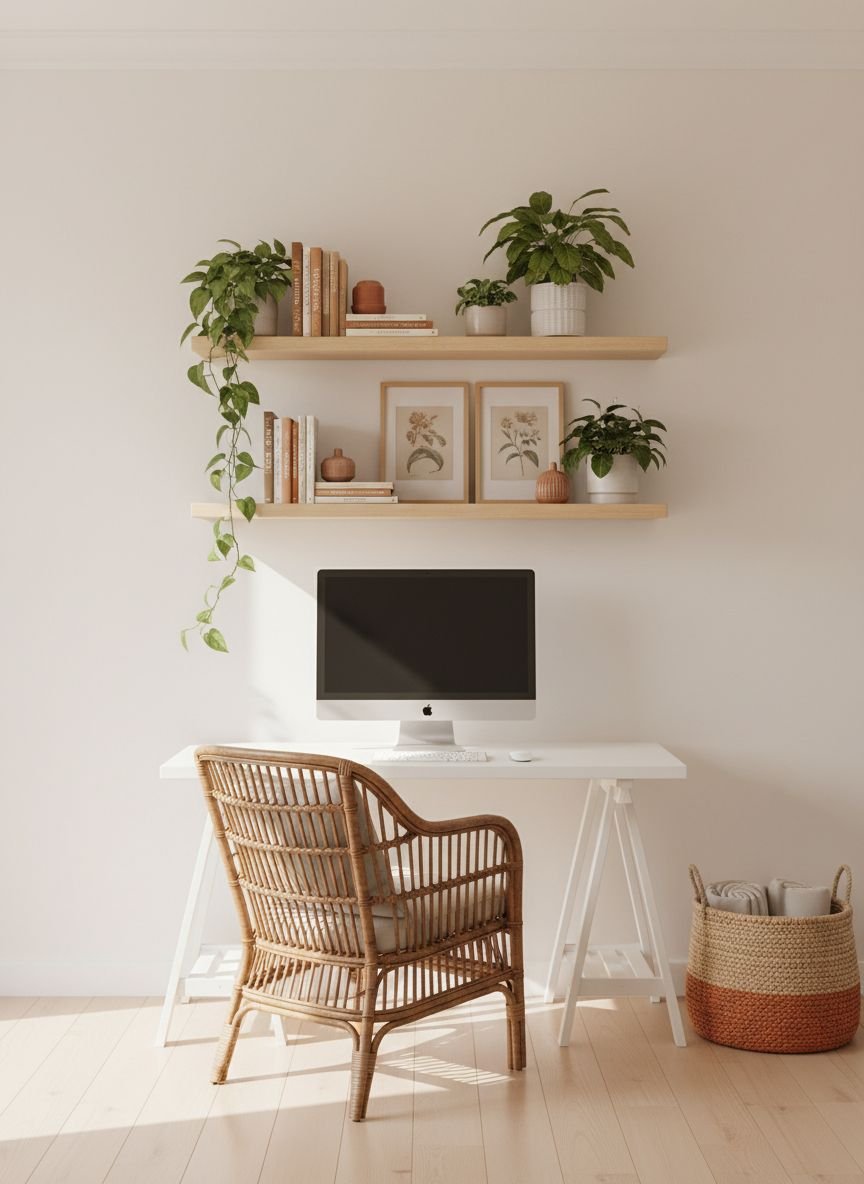
Stop looking at the floor. Look up. The space above your monitor is prime real estate. Installing floor-to-ceiling shelving units draws the eye upward, making low ceilings feel higher while providing massive storage. In a tight CEO Den, you want a high ratio of storage volume to floor footprint.
Open shelving prevents the room from feeling boxy, which can happen with closed cabinets. Style these shelves carefully. This is a mix of utility and display. Alternate stacks of books with decorative objects, plants, and photo frames. Use matching file boxes to hide ugly paperwork. The goal is a library feel that happens to have a computer in it.
Pro Tip: Leave the shelf directly above your monitor empty or minimally styled to prevent visual distraction while you stare at the screen.
Camouflage Your Desk With A Fold-Down Table
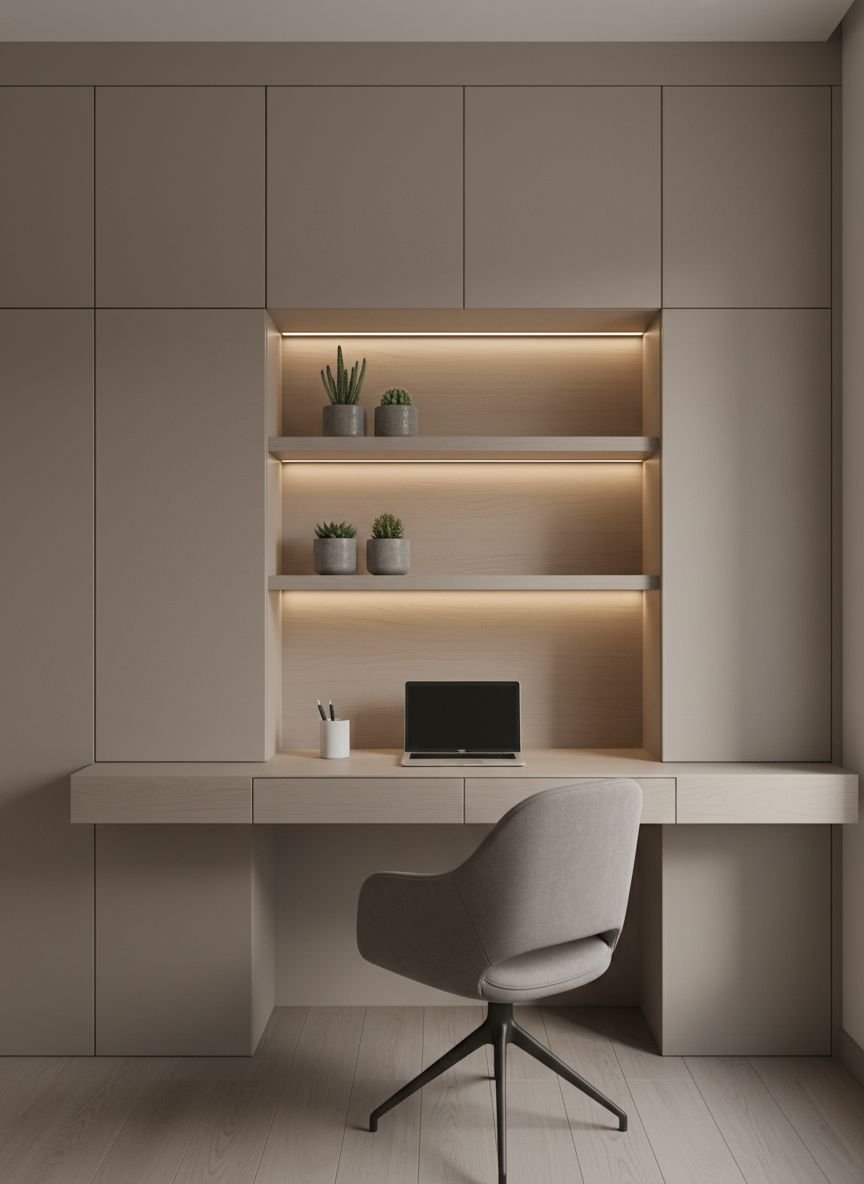
This is the secret weapon for multi-purpose rooms. A Murphy desk (or drop-leaf table) mounts to the wall and folds down only when needed. When closed, it might look like a shallow cabinet or even a piece of art. When open, it is a sturdy workstation.
This is ideal for a living room or a kitchen corner where a permanent desk would disrupt the flow of traffic. You can find units that include a few inches of internal storage for a laptop and a mouse. When the workday ends, you fold it up. The physical act of closing the desk helps you mentally sign off, which is crucial for work-life balance in small apartments.
Pro Tip: Ensure the latch mechanism is high quality. A wobbly desk is a productivity killer.
Divide Space With A Curtain Or Partition
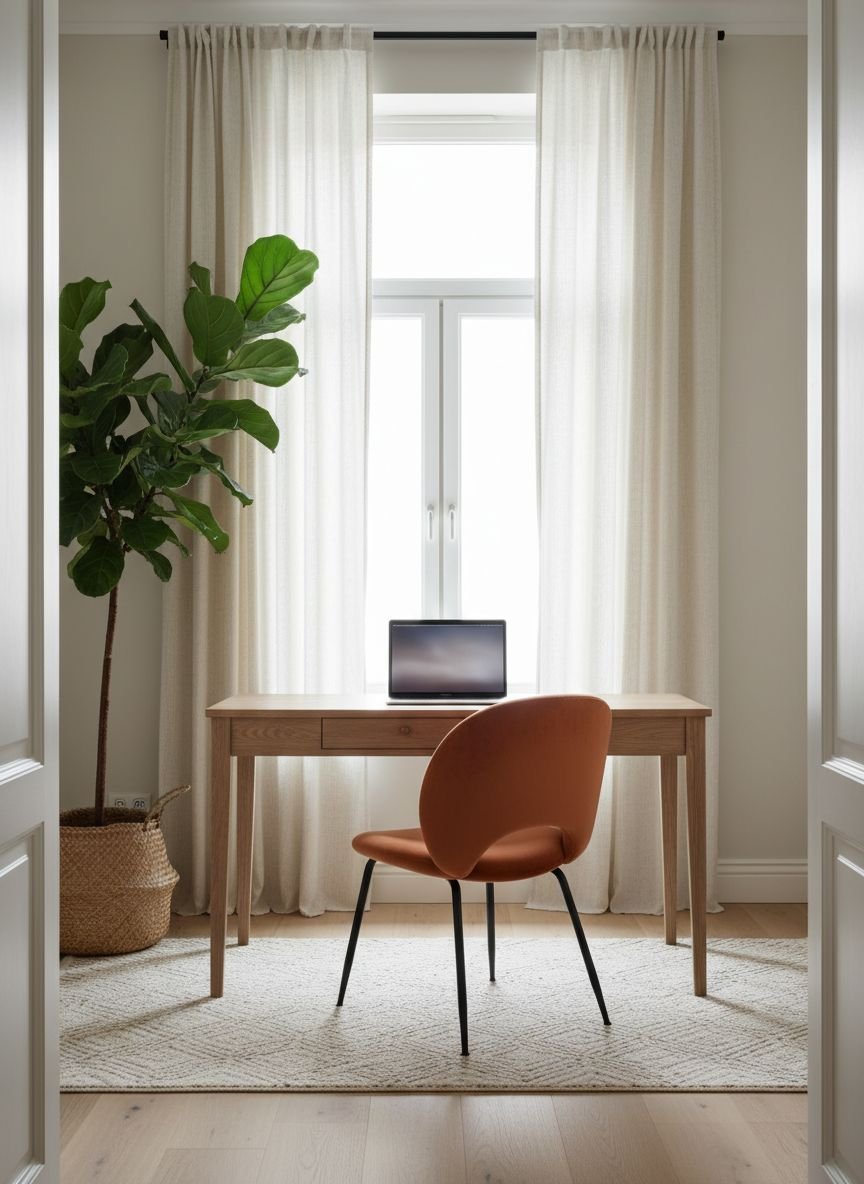
Visual separation is powerful. If your desk is in your bedroom, sleeping next to your to-do list induces anxiety. A physical barrier allows you to “leave” the office. You do not need to build a wall. A ceiling-mounted curtain track with a heavy linen drape offers a soft, acoustic barrier that can be pulled shut in seconds.
For a more structured look, use a rattan room divider or a folding screen. These add texture and warmth to the room while blocking the view of your monitor from the bed or sofa. It creates a dedicated “zone” that commands respect. When the divider is up, you are at work.
Pro Tip: Choose a light-colored curtain to let natural light filter through, so your workspace doesn’t feel like a dark isolation booth.
Use A Window Ledge As A Desk Base
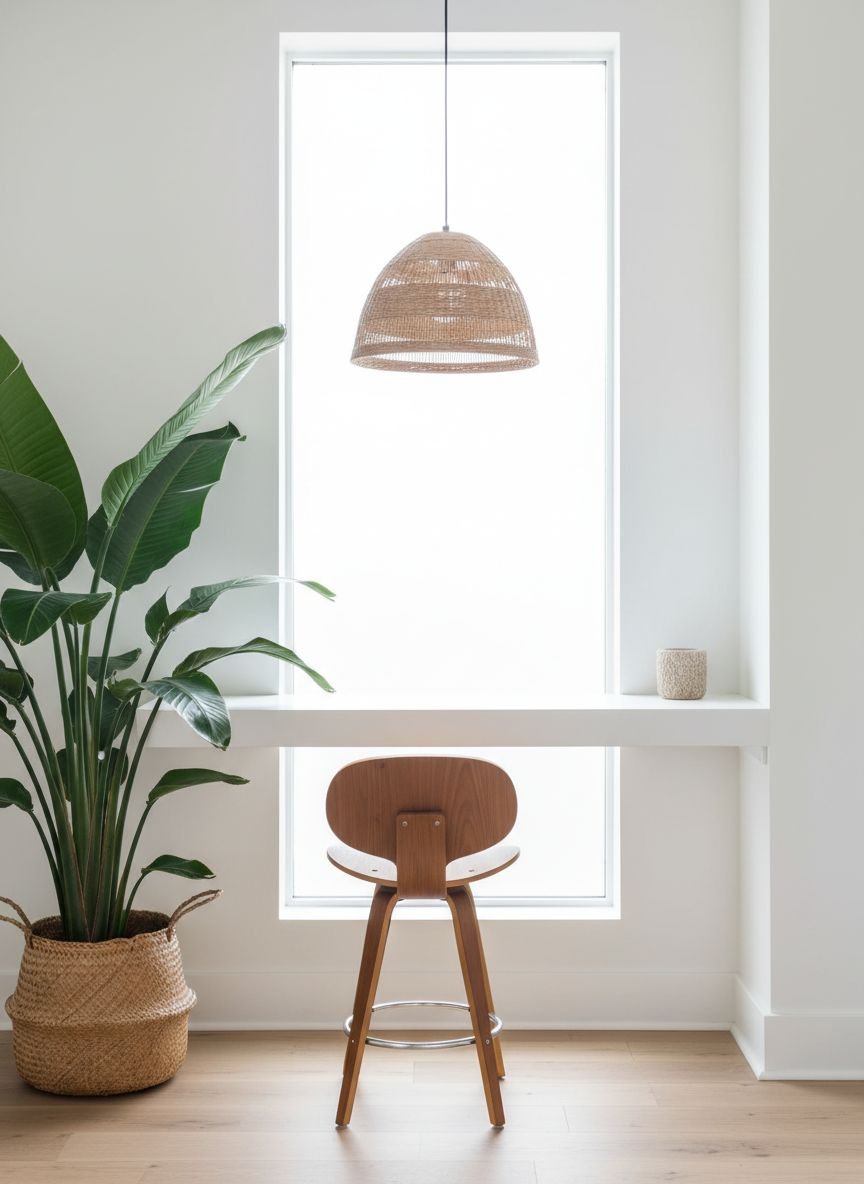
Natural light is the best productivity hack. If you have a window with a deep sill or a bay layout, you have the foundation for a desk. You can extend the sill with a custom-cut piece of wood or place a desk height table directly against the window.
Facing a window reduces eye strain by allowing you to look into the distance periodically. It also eliminates the problem of glare on your screen that happens when windows are behind you. This setup connects you to the outside world, making a small room feel expansive. You are not staring at a blank wall; you are staring at the neighborhood.
Pro Tip: Install top-down, bottom-up cellular shades. This allows you to block direct sun glare on the bottom half while letting light pour in from the top.
Add Personality With A Statement Chair
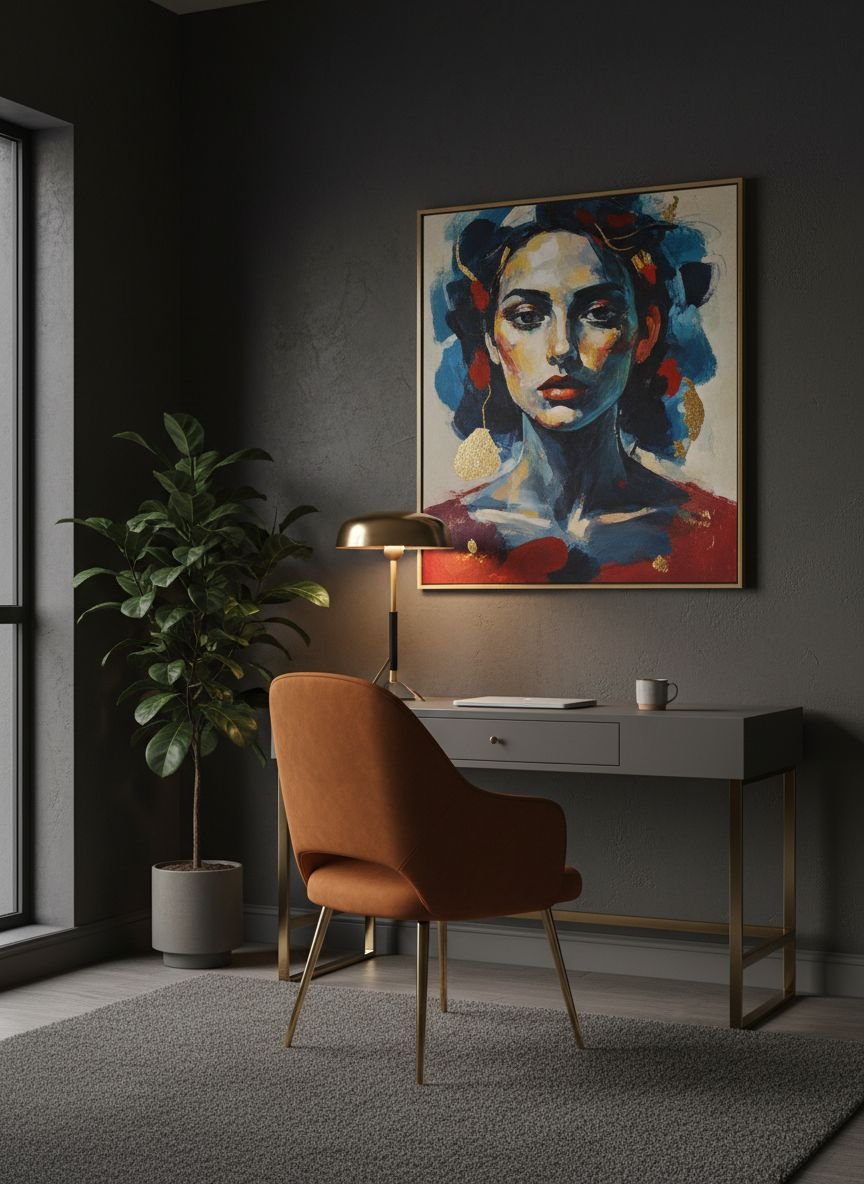
In a small office, you rarely have space for a sofa or accent furniture. Your desk chair is the only opportunity to make a design statement. Do not settle for a boring, black mesh corporate chair unless you absolutely need it for 8-hour ergonomic support.
Choose a chair with velvet upholstery, a bold color, or a sculptural shape. A cognac leather mid-century chair adds warmth. A bouclé fabric chair adds softness. Since the chair is often visible from the rest of the room, it needs to act as furniture, not just equipment. It bridges the gap between “office” and “home.”
Pro Tip: If you choose a dining-style chair for aesthetics, add a lumbar support pillow and a sheepskin throw for comfort during long sessions.
Get The Look: The CEO Den Essentials
- Lighting: Warm brass sconces or a matte black architect lamp.
- Texture: Velvet chair, wooden desk surface, linen curtains.
- Tech: Wireless keyboard and mouse to reduce cable clutter.
- Greenery: Snake plant (low light tolerant) or Pothos (trailing).
Install Under-Shelf Lighting For Ambience
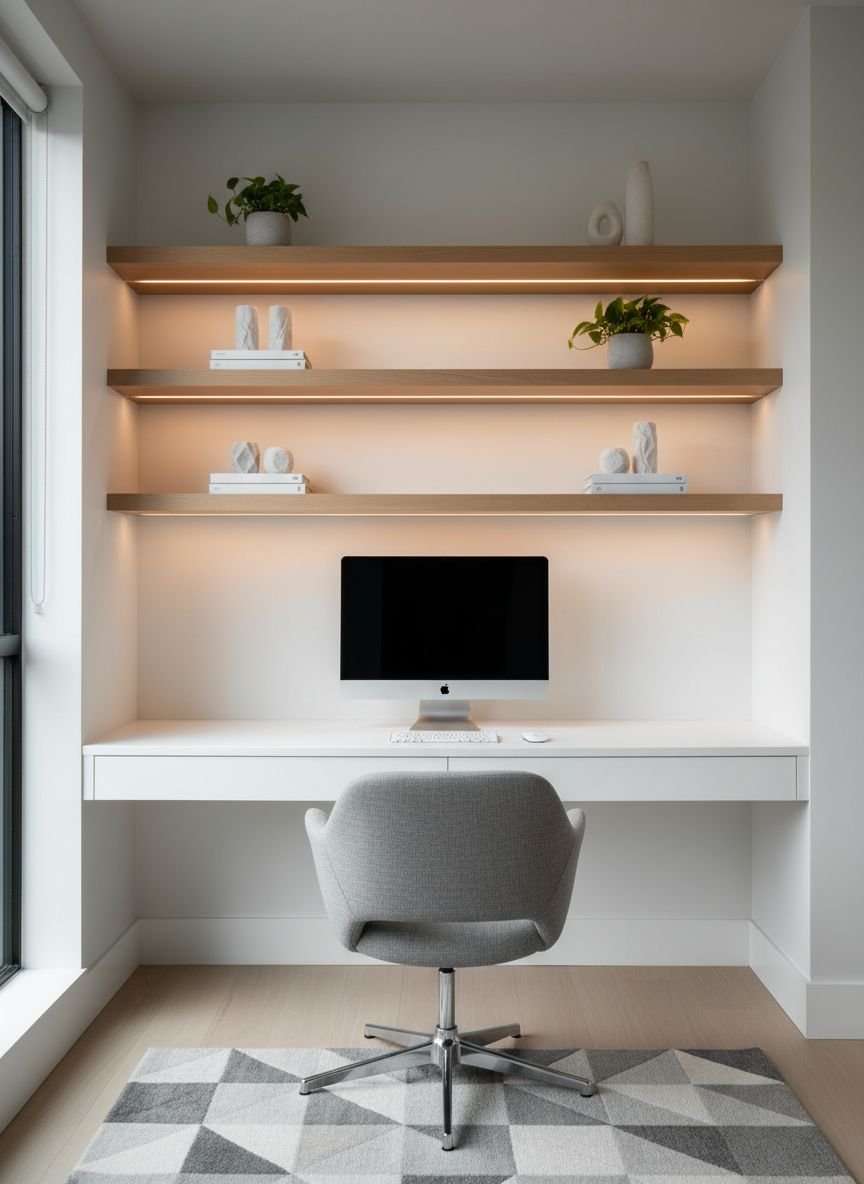
Overhead lighting is harsh and unflattering. It creates shadows on your work surface. The solution is localized lighting. If you have shelves above your desk, mount LED light bars underneath them. This washes your workspace in a warm, focused glow.
This is often called “task lighting,” but it doubles as mood lighting. In the evening, turn off the big room light and work solely by the glow of your shelf lights. It creates a cozy, intimate atmosphere that helps with focus. It feels like a library study carrel rather than a cubicle.
Pro Tip: Choose lights with a color temperature of 2700K to 3000K for a warm, residential feel. Avoid the cold blue 5000K office lights.
Mount A Monitor To Free Up Desk Space

The footprint of a monitor stand is surprisingly large. It eats up the prime real estate directly in front of you. By using a VESA mount arm attached to the wall or clamped to the back of the desk, you float the screen in the air.
This reclaims roughly one square foot of desk space—which is massive on a small desk. It allows you to push your keyboard forward and use the surface for writing or lunch. Furthermore, a monitor arm allows you to adjust the height and angle perfectly for your posture, preventing neck strain.
Pro Tip: Route the monitor cables through the arm itself (if it has channels) or zip-tie them to the arm structure for a clean, wireless look.
Pair A Compact Desk With Bold Wallpaper

Small spaces are the best places to take big risks. A tiny corner office is the perfect canvas for bold, patterned wallpaper that would be overwhelming in a large living room. Define your “CEO Den” by papering just the wall behind the desk.
This visual cue separates the workspace from the rest of the room without a physical barrier. A dark, moody floral or a geometric Art Deco print adds depth and makes the corner feel intentional, customized, and expensive. It turns a utility area into a focal point.
Pro Tip: If you are renting, use peel-and-stick wallpaper. It is easy to install and removes without damaging the paint.
Turn A Bay Window Into A Workspace
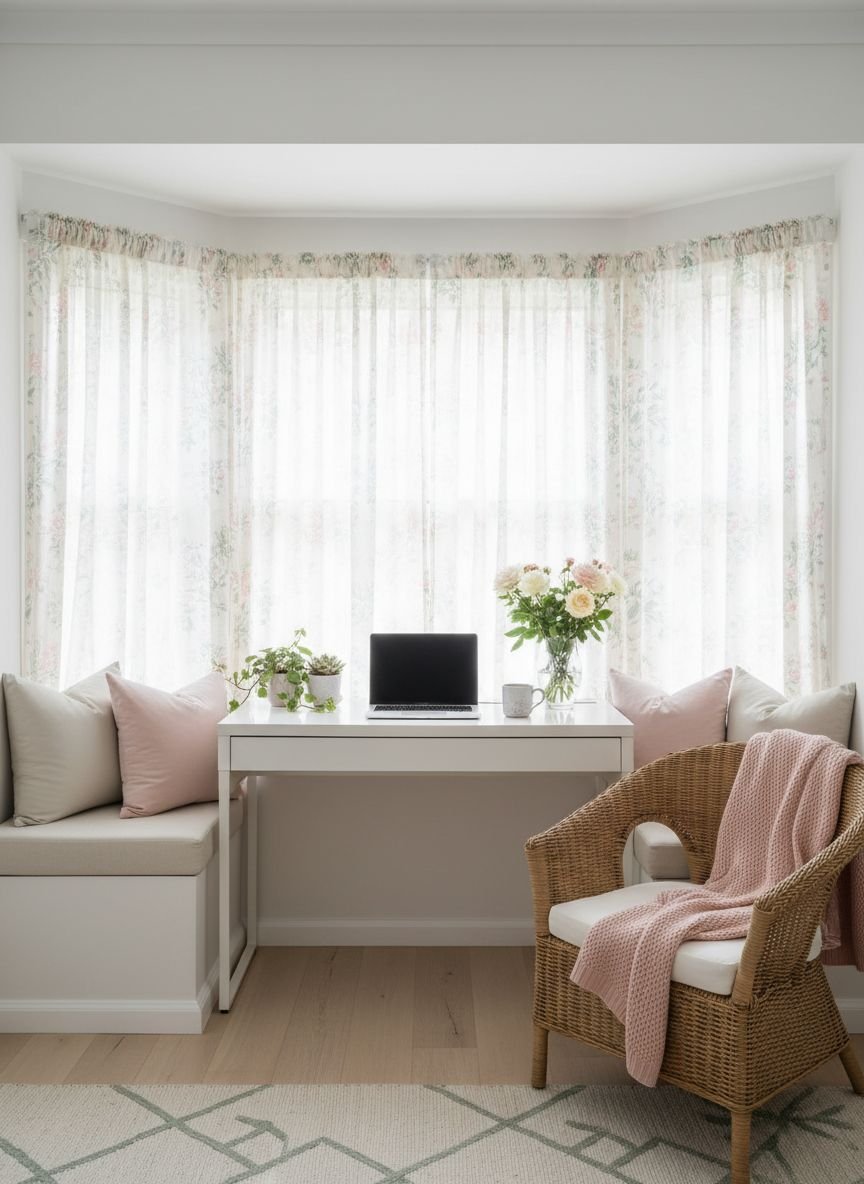
Bay windows are awkward to furnish. They are often too small for a sofa but too big to leave empty. They are destined to be desks. The geometry of a bay window wraps around you, providing natural light from three angles.
You can build a custom desktop that fits the exact angles of the bay, maximizing every inch. Alternatively, place a round table in the center of the bay. This position commands the room. It feels executive and grand, even if the footprint is small. You have a view, light, and a dedicated architectural feature framing your work.
Pro Tip: Add custom cushions to the window seat sections flanking the desk for a built-in “break area” or reading nook.
Incorporate Hidden Storage Under The Desk
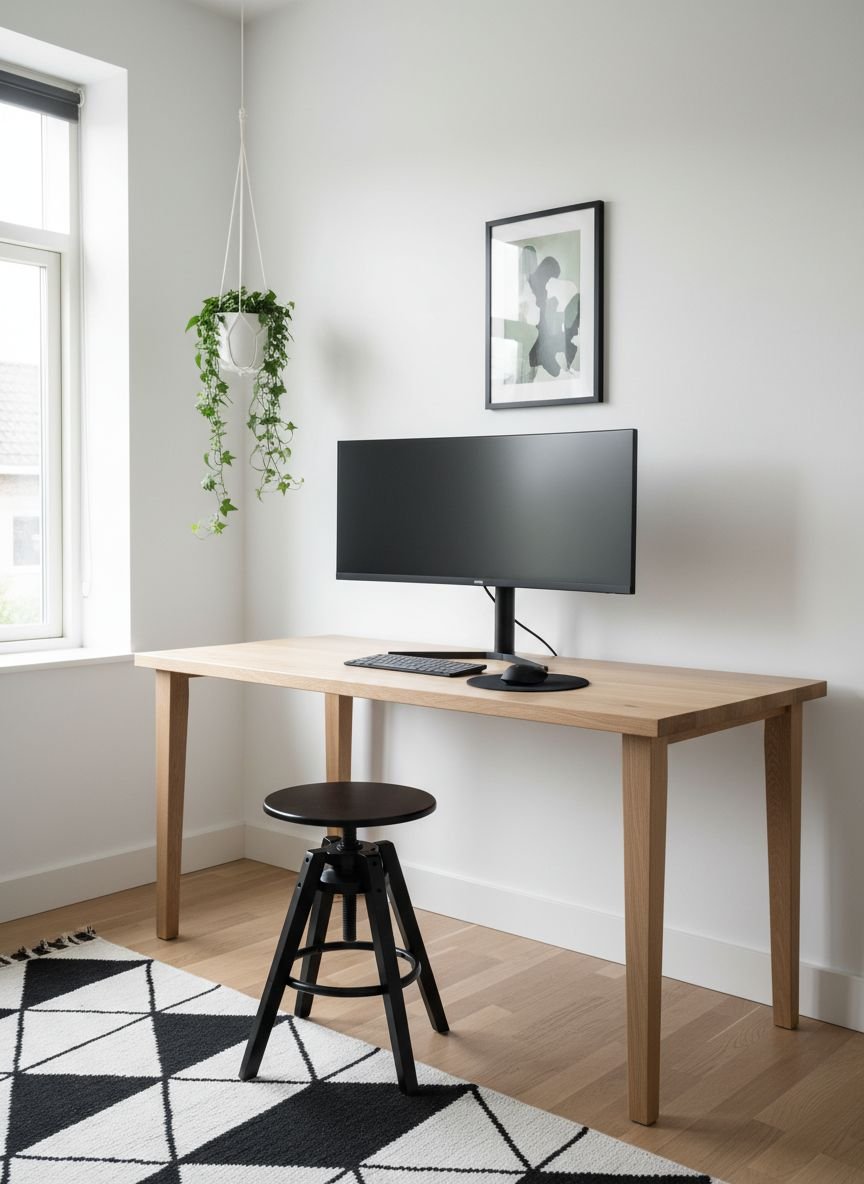
If you are using a simple table as a desk, you are missing out on storage. But you don’t want bulky file cabinets banging your knees. The solution is slim, hidden storage. You can mount shallow drawers directly to the underside of the tabletop for pens and laptops.
Another option is to use the space behind things. If your desk is in a corner, the triangle of space behind your monitor is often wasted. Place a small box or riser there to hide hard drives and docks. Use the vertical space on the inside of the desk legs to mount hooks for headphones or cable management baskets.
Pro Tip: Use magnetic cable organizers on the back of metal desk legs to keep charging cords invisible but accessible.
Related posts :
- 8 Genius Bedroom Storage Solutions for Small Spaces That Instantly Double Your Room
- 15 Stunning Small Living Room Ideas to Transform Your Apartment Space Into a Spacious Sanctuary
- 14 Apartment Decor Inspiration Cozy Modern Ideas to Copy Now That Will Transform Your Space
Go Vertical With A Ladder Desk
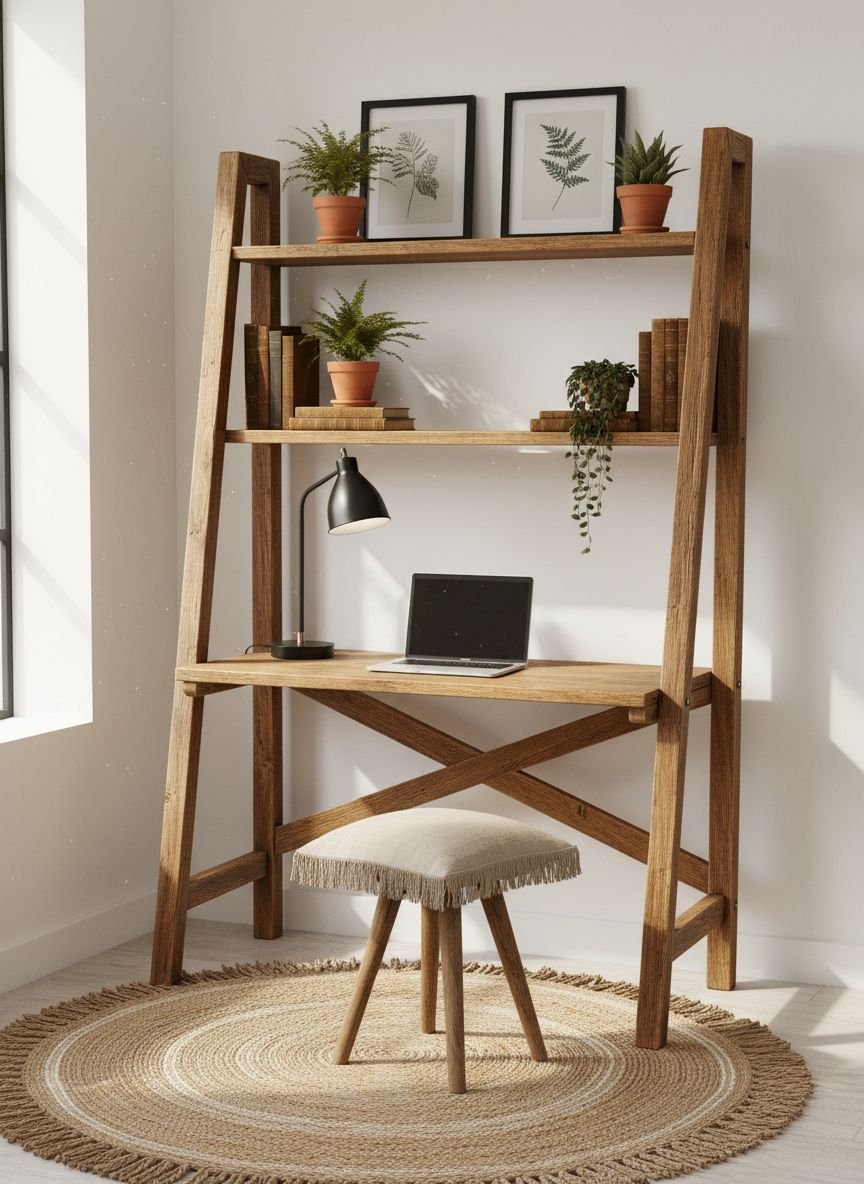
The ladder desk is a champion of apartment living. It leans against the wall, taking up very little floor depth at the base and tapering as it goes up. This design feels much less intrusive than a boxy cabinet.
Most ladder desks come with two or three shelves above the writing surface. This gives you built-in vertical storage without drilling holes in the wall. It is a rental-friendly, all-in-one solution. The aesthetic is usually modern and open, allowing the wall color to show through, which maintains that feeling of spaciousness.
Pro Tip: Secure the top of the ladder to the wall with an anchor strap. Even though it leans, you don’t want it tipping when you type aggressively.
Add A Mirror To Expand The Visual Space
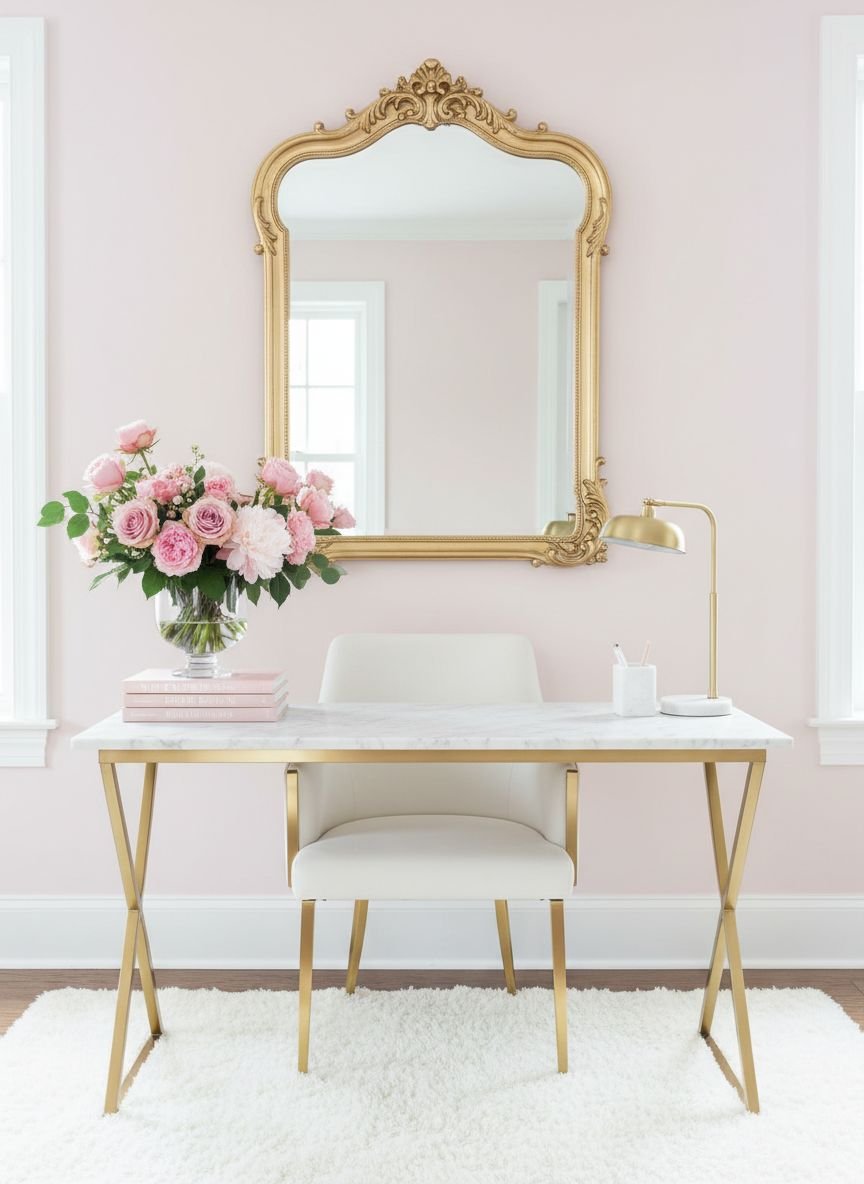
Mirrors are the oldest trick in the designer’s book, and they work wonders in a small office. Hanging a large mirror above your desk does two things. First, it reflects light, brightening a dark corner. Second, it creates depth, making the wall “disappear” so you don’t feel like you are staring at a barrier.
If your desk faces a wall, a mirror allows you to see the room behind you. This mimics the “command position” in Feng Shui, where you can see the door. It subconsciously makes you feel more secure and in control, rather than boxed in.
Pro Tip: Save this idea to your Pinterest. Choose a mirror with a thin, metallic frame to keep the look sleek and modern.
Popular Asked Questions
Where is the best place to put a desk in a small bedroom?
The best place is usually in a corner or directly next to the bed as a nightstand replacement. Replacing a bedside table with a small desk saves massive space. Another great option is the “foot of the bed” layout, where a narrow console desk sits against the footboard, facing a TV or wall. This keeps the work zone separate from the sleep zone near the pillows.
How small can a home office be?
A functional workspace can be as small as 24 inches wide by 18 inches deep. This is enough space for a laptop and a mouse. If you are using a “cloffice” (closet office), a standard 2-foot deep closet is plenty of room. The key is not the floor area, but the surface area and legroom.
What are the best colors for productivity in a small office?
Blue is widely considered the best color for focus and calm, making it ideal for high-stress jobs. Green is excellent for balance and reducing eye strain, perfect for long hours. If you need creative energy, warm accents like terracotta or yellow can stimulate the brain. Avoid stark white if it feels too clinical; opt for warm off-whites instead.
How do you hide a desk in a small room?
To make a desk disappear, use a “ghost” chair (clear acrylic) and a glass desk, which have zero visual weight. Alternatively, use a drop-front secretary desk that closes up to look like a dresser. Using a curtain or a folding screen is also a simple, effective way to physically block the view of the workspace when you are done for the day.
Conclusion

You do not need a corner office in a skyscraper to feel like a CEO. You need a space that respects your ambition. By applying these small home office ideas—using vertical space, controlling the light, and choosing multi-functional furniture—you turn a cramped corner into a powerhouse of productivity.
The “CEO Den” is a mindset. It is about claiming space in your home and your life for your goals. Whether it is a closet makeover or a floating shelf, the perfect desk is the one that gets used.



Leave a Comment