
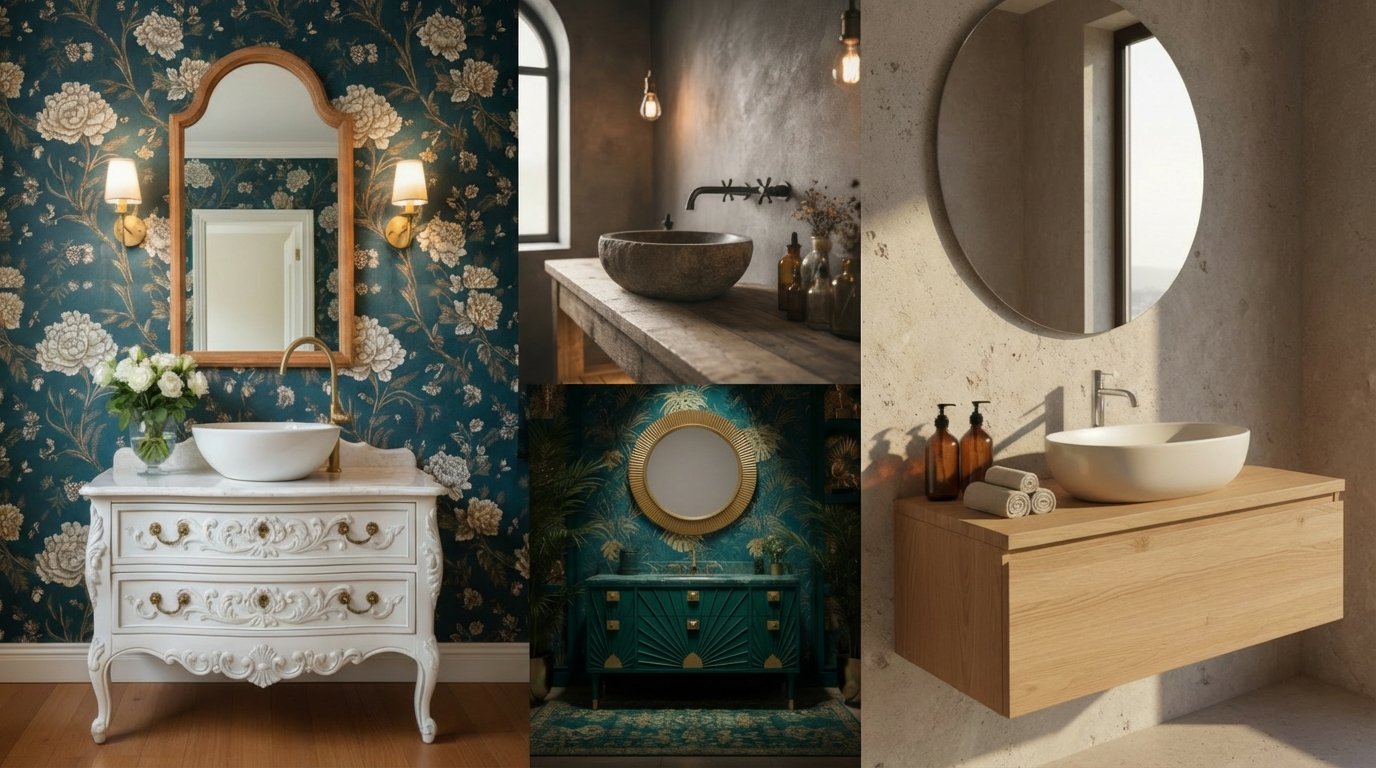
Long-tail Keywords: DIY bathroom vanity makeover, repurposed dresser vanity, rustic farmhouse bathroom storage, modern floating vanity installation, small bathroom luxury upgrades, eco-friendly bamboo bathroom furniture, industrial style bathroom design, mediterranean tile vanity ideas, art deco bathroom glamour, scandi style bathroom organization.
Your bathroom vanity serves as more than just a sink holder. It acts as the visual anchor of the room and dictates the entire mood of your sanctuary. Many homeowners stick with builder-grade cabinets and miss a massive opportunity to add character. You want a space that feels curated and high-end without needing a full-scale renovation.
Updating your vanity offers the highest return on investment for small bathroom projects. This guide breaks down ten distinct design aesthetics that solve common storage problems while looking incredible. We cover everything from waterproofing vintage furniture to installing sleek floating units for small spaces. You will find the exact inspiration needed to stop scrolling and start building.
Key Takeaways
- Repurposing Adds Soul: Converting vintage dressers into vanities saves money and creates a one-of-a-kind focal point.
- Texture Over Color: Trending designs like rustic barnwood and green bamboo rely on tactile surfaces rather than loud paint colors to make an impact.
- Floating for Space: Modern minimalist floating vanities expose more floor area, making tiny bathrooms feel significantly larger.
- Lighting Matters: High-gloss and mirrored vanities require strategic lighting placement to maximize their glam effect without glare.
Table of Contents
- Vintage Dresser Vanity Conversion
- Rustic Barnwood Vanity Inspiration
- Modern Minimalist Bathroom Vanity Design
- Art Deco Vanity Design
- Coastal Chic Vanity Inspiration
- Green Bamboo Vanity Design
- Mediterranean Mosaic Vanity Inspiration
- Industrial Metal Wood Vanity Inspiration
- Mirrored Vanity for Glamorous Touch
- Scandi Style Bathroom Vanity
- Popular Asked Questions
- Conclusion
Vintage Dresser Vanity Conversion

A repurposed vintage dresser brings immediate history and warmth to a sterile bathroom. You start by hunting for a solid wood piece at flea markets or estate sales. Look for deep drawers and sturdy legs capable of supporting a heavy stone countertop or vessel sink. The visual appeal comes from the juxtaposition of aged wood grain against sleek porcelain or marble. Dark walnut or mahogany pieces create a moody, sophisticated atmosphere, while painted chipping chalk paint fits a cottage aesthetic.
Adapting furniture requires specific modifications. You must cut the back panel to accommodate plumbing and often shorten the interior drawers to make space for the P-trap. The top surface needs serious protection. If you keep the original wood top, apply multiple coats of marine-grade polyurethane to prevent water damage. Many designers prefer removing the wood top entirely and replacing it with quartz or granite for better durability. This blend of old-world charm and modern functionality turns a cookie-cutter bathroom into a bespoke retreat.
Pro Tip: wax the drawer runners with beeswax to ensure they slide smoothly even in humid bathroom conditions.
Save this idea to your Pinterest.
Rustic Barnwood Vanity Inspiration
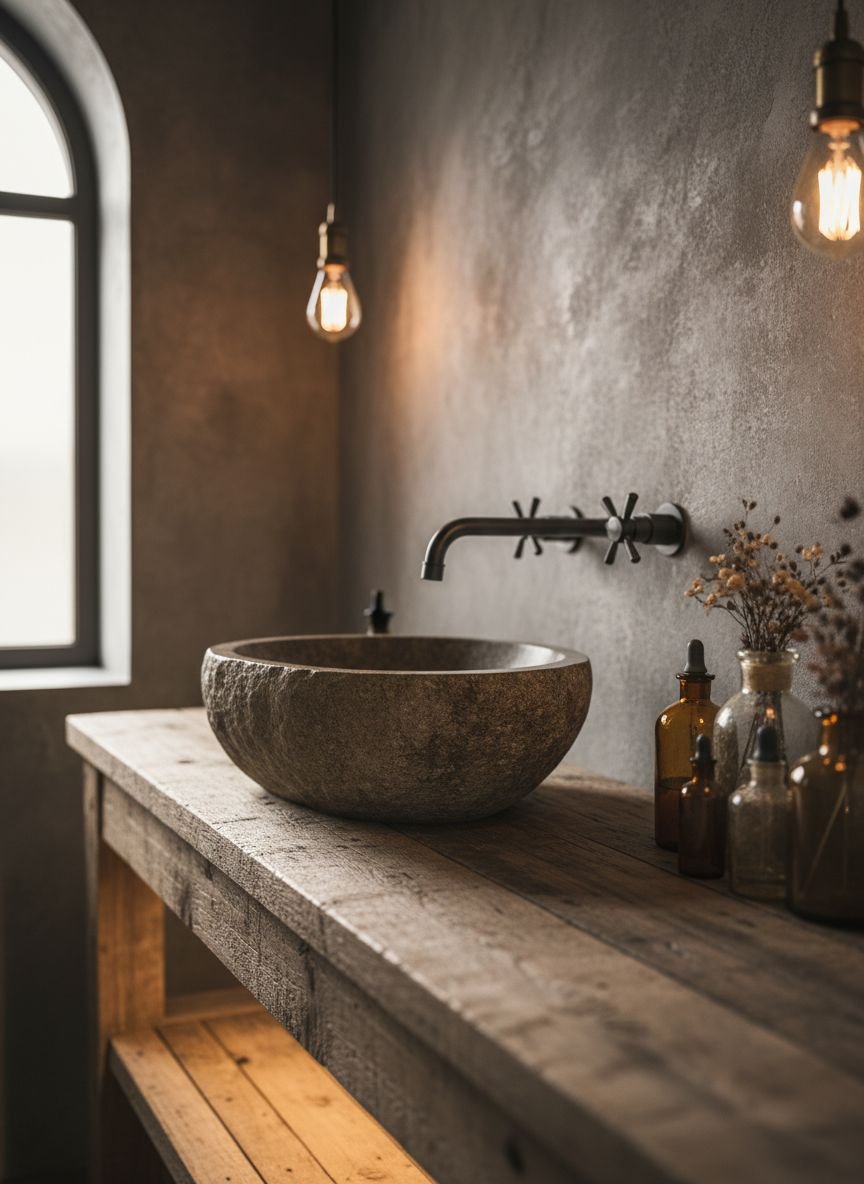
Rough-hewn barnwood vanities introduce organic texture that softens the hard lines of tile and glass. This style works exceptionally well in farmhouse or cabin-inspired homes but also warms up industrial spaces. The wood features knots, saw marks, and natural variations in color that hide dust and water spots better than high-gloss finishes. Reclaimed oak or pine are the standard choices here. The material tells a story and grounds the room with an earthy, substantial feel.
Construction often involves simple, blocky silhouettes to let the material shine. Open shelving on the bottom is a common feature in rustic designs. This allows you to display fluffy towels or woven baskets, which adds another layer of softness to the room. You have to be careful with sealing. Raw wood absorbs moisture rapidly. A matte, penetrating sealer protects the timber without altering its natural, dry look. Pair this vanity with oil-rubbed bronze faucets and hardware to complete the rugged, timeless look.
Pro Tip: Use a stiff bristle brush to clean the grooves of the wood weekly to prevent dust buildup in the texture.
Save this idea to your Pinterest.
Modern Minimalist Bathroom Vanity Design
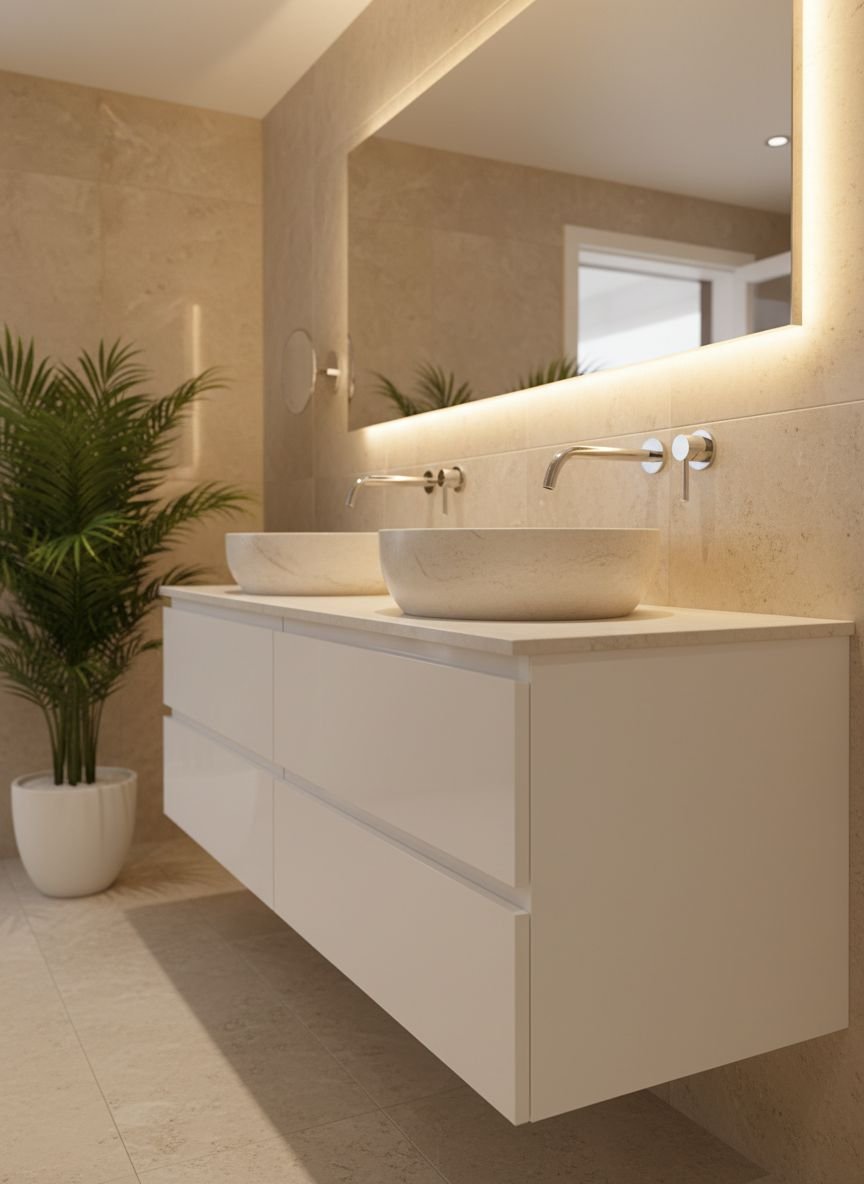
Minimalist design focuses on clean lines, handleless fronts, and maximizing negative space. The floating vanity stands as the hero of this aesthetic. By mounting the cabinet to the wall and leaving the floor underneath visible, you trick the eye into perceiving the room as larger. This is a critical strategy for tight apartments or powder rooms. The finishes tend to be monochromatic—matte black, high-gloss white, or slate gray. The lack of ornamentation forces the viewer to appreciate the form and the quality of the materials.
Storage in minimalist vanities often relies on hidden push-to-open mechanisms or integrated finger pulls. This eliminates visual clutter caused by knobs and handles. The countertop usually features an integrated sink or a simple rectangular vessel to maintain the sleek profile. Lighting plays a huge role here. Under-cabinet LED strips cast a soft glow on the floor, enhancing the floating effect and providing excellent night lighting. This design choice prioritizes efficiency and calm, clutter-free living.
Pro Tip: Reinforce the wall studs before installation to ensure they can support the heavy weight of a floating cabinet and stone top.
Save this idea to your Pinterest.
Art Deco Vanity Design
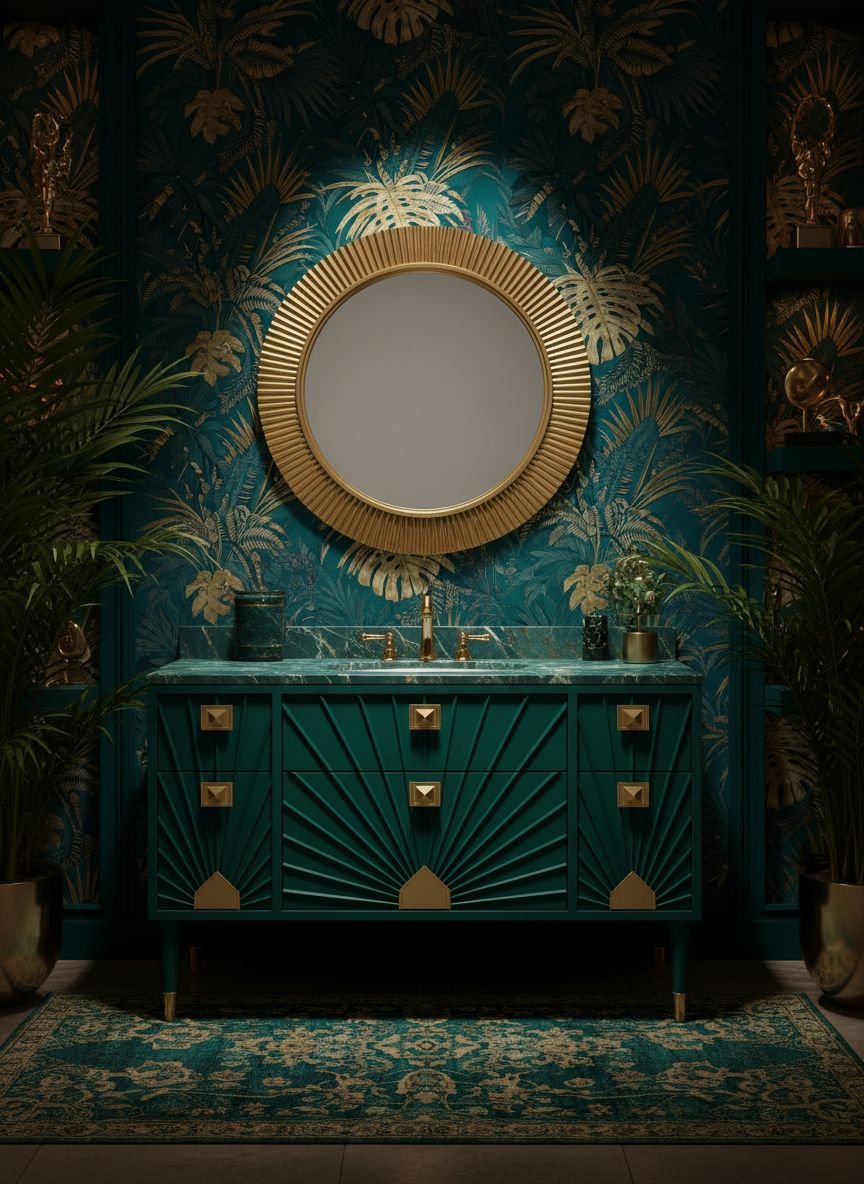
Art Deco brings unapologetic luxury and bold geometry to the bathroom. This style is defined by rich materials, metallic accents, and symmetrical patterns. Think deep navy or emerald green cabinetry paired with brushed gold or polished brass hardware. The vanity legs might feature stepped details or curves reminiscent of the 1920s. This design choice is for the homeowner who wants their bathroom to feel like a boutique hotel or a speakeasy.
Surfaces in Art Deco vanities often use high-contrast materials. Black marble countertops with white veining (Nero Marquina) are a staple. The cabinetry might feature fluted wood detailing or inlay work that catches the light. Mirrors are not just functional here; they are part of the architecture, often featuring beveled edges or geometric shapes that echo the vanity design. This is a high-maintenance look that demands attention but pays off with incredible visual drama.
Pro Tip: Match your faucet finish exactly to your cabinet hardware to maintain the cohesive, high-end look typical of this era.
Save this idea to your Pinterest.
Coastal Chic Vanity Inspiration
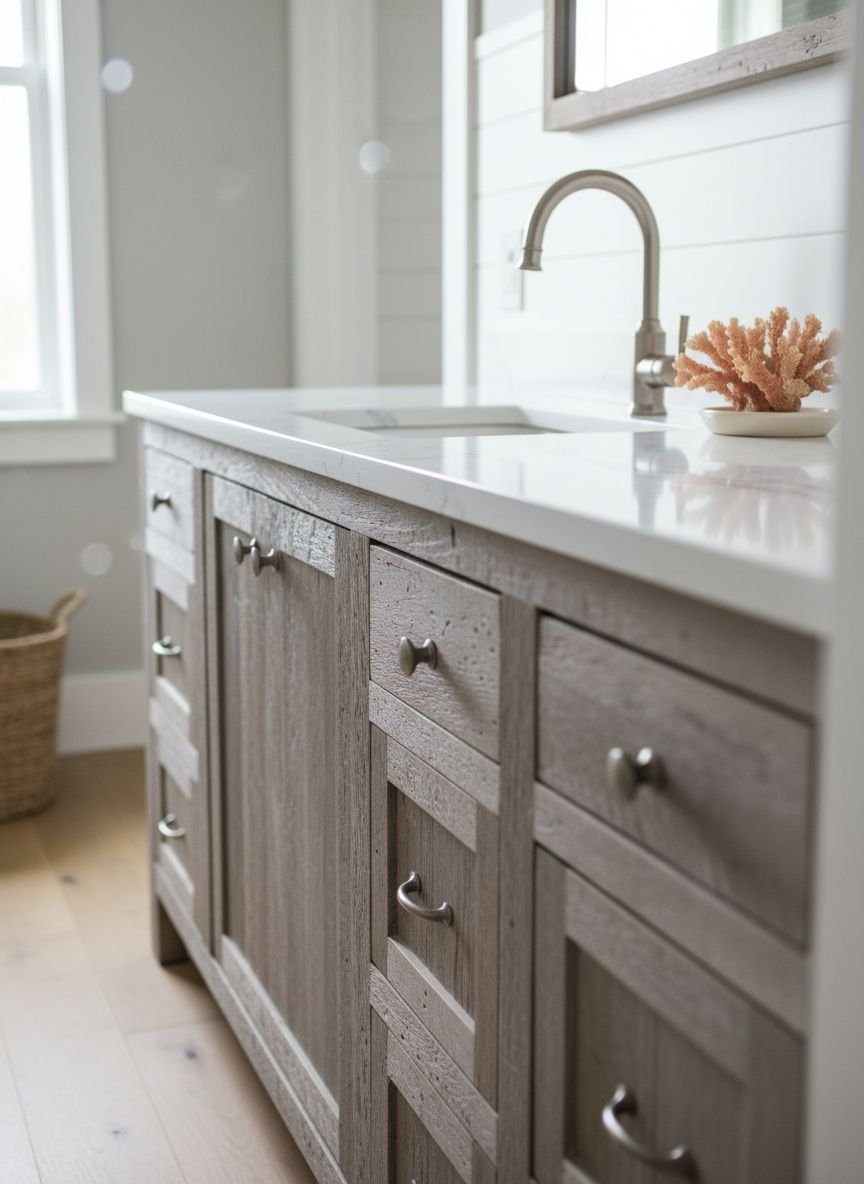
Coastal chic moves away from kitschy seashell motifs and embraces the relaxed, airy palette of the seaside. The vanity usually features whitewashed oak, driftwood tones, or soft pastel blues and greens. The goal is to create a spa-like atmosphere that feels breezy and light. Shaker-style doors or louvered fronts are popular as they mimic the look of shutters and beach cottages. The hardware is typically polished nickel or chrome, reflecting light like the sun on water.
Countertops in coastal bathrooms favor white quartz or light-colored granite to keep the space feeling open. Styling is kept simple and functional. Glass jars for cotton balls and light-colored towels reinforce the clean aesthetic. This design works perfectly in bathrooms with natural light, as the pale tones amplify the brightness. It creates a serene backdrop for your morning routine, reducing stress through color psychology and simple forms.
Pro Tip: Choose a “engineered quartz” top that mimics white marble to get the coastal look without the risk of staining from makeup or oils.
Save this idea to your Pinterest.
Comparison: DIY vs. Pre-Made Vanities
| Feature | DIY Conversion (Vintage) | Pre-Made Store Bought |
|---|---|---|
| Cost | Low to Medium (Labor intensive) | Medium to High (Convenience cost) |
| Uniqueness | High (One-of-a-kind) | Low (Mass produced) |
| Installation | Difficult (Requires plumbing cuts) | Easy (Standard plumbing alignment) |
| Durability | Variable (Depends on sealing) | High (Factory finished) |
| Time | Weeks (Sourcing + Refinishing) | Days (Delivery + Install) |
Related posts :
- 18 Bold Burgundy Bathroom Designs That Instantly Create a Moody Sanctuary
- 15 Genius Tiny Bathroom Ideas That Instantly Double Your Space
- 21 Beautiful Bathroom Decor Ideas You Will Love! (2026 Trend Guide)
Green Bamboo Vanity Design
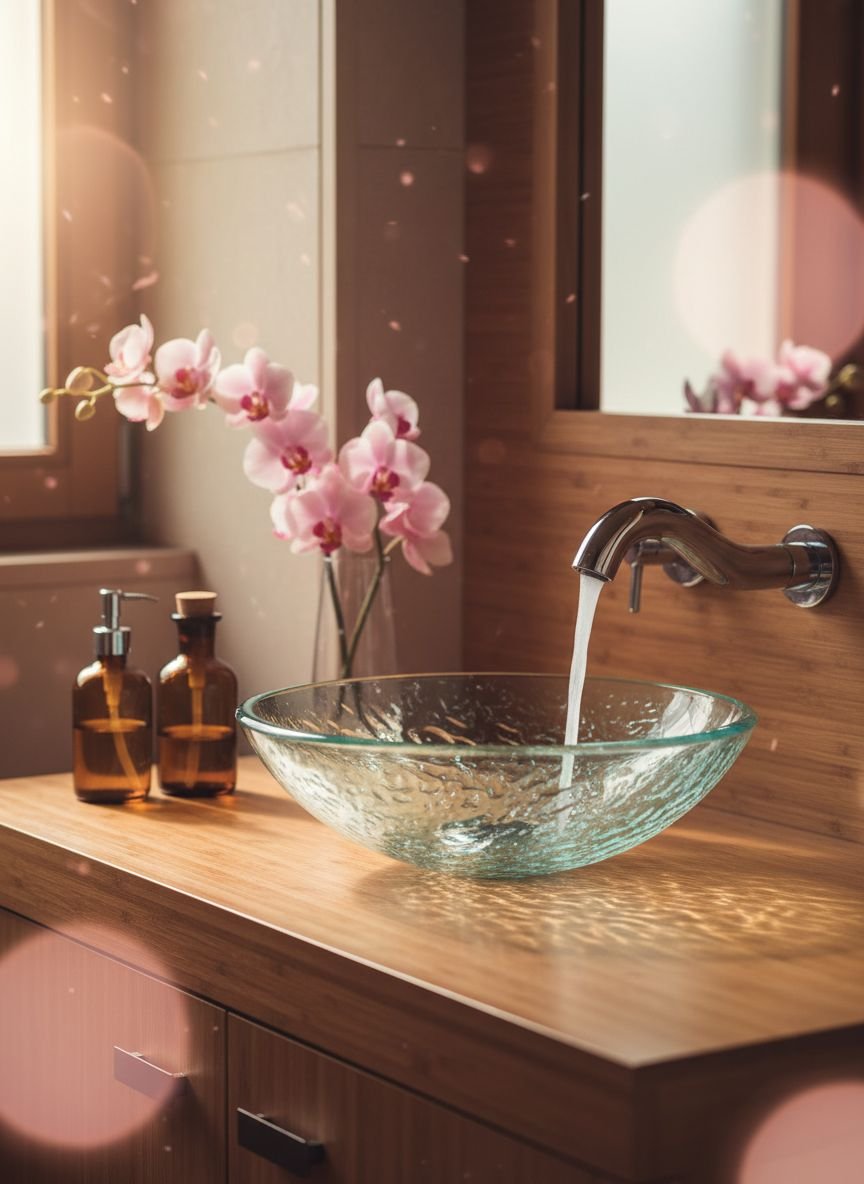
Bamboo vanities offer a sustainable solution that brings the outdoors in. As a rapidly renewable material, bamboo appeals to eco-conscious homeowners. Visually, it provides a linear grain and a warm, honey-toned color that rivals traditional hardwoods. This material resists warping in humid environments better than many softwoods, making it a practical choice for steamy bathrooms. The aesthetic leans towards “Japandi” (a mix of Japanese and Scandi) or tropical spa styles.
Designers often pair bamboo with slate or dark stone to create a grounding contrast. The construction tends to be simple to highlight the material’s natural beauty. Slatted shelves or doors allow for airflow, preventing mold growth on stored items. Adding greenery, such as potted ferns or hanging pothos, complements the bamboo and purifies the air. This vanity choice signals a commitment to wellness and nature-centric design.
Pro Tip: Look for “carbonized” bamboo if you prefer a darker, caramel color; the heat treatment process darkens the sugar in the plant naturally.
Save this idea to your Pinterest.
Mediterranean Mosaic Vanity Inspiration
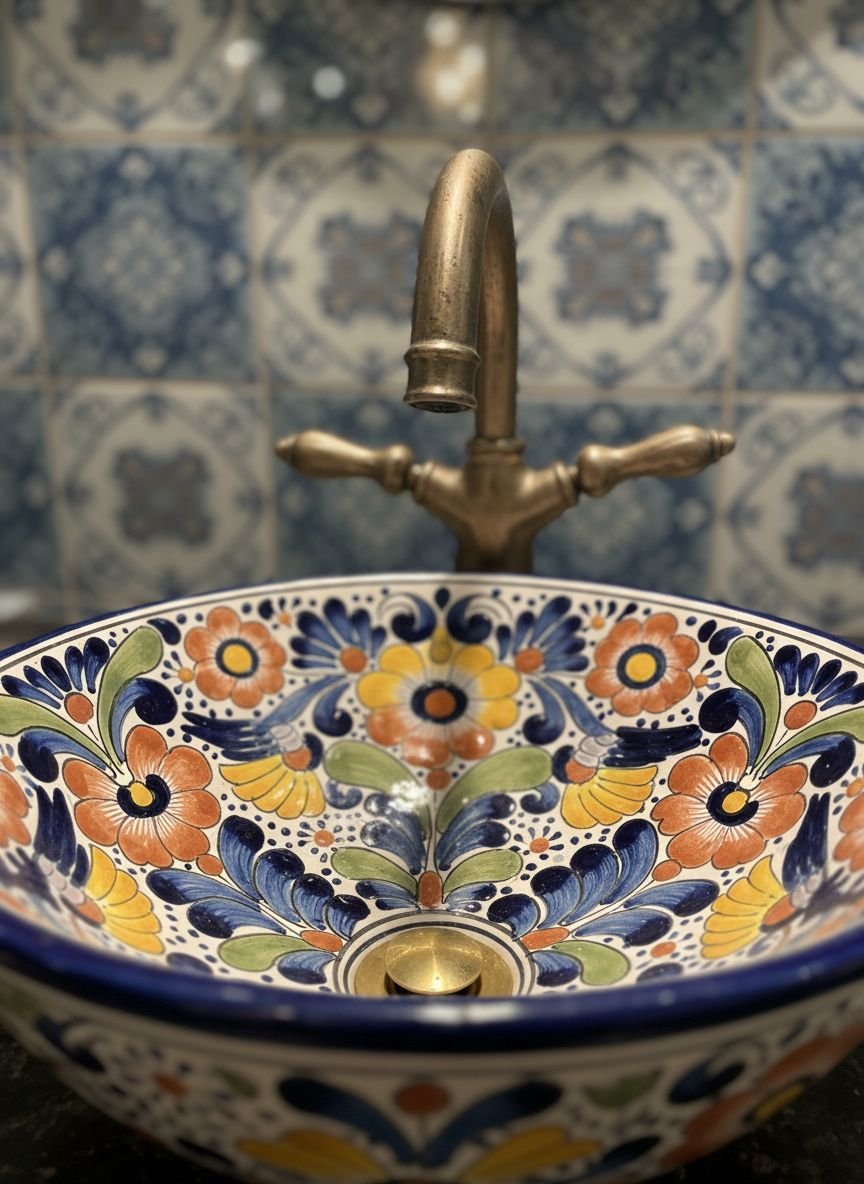
The Mediterranean look centers on intricate tile work and vivid colors. Instead of a standard wood cabinet, some Mediterranean vanities are built-in structures covered in ceramic or cement tiles. The patterns often feature geometric stars or floral motifs in cobalt blue, terracotta, and white. This creates a waterproof, incredibly durable surface that can withstand heavy use. It feels permanent and architectural, like a feature found in a Greek villa or a Moroccan riad.
If a fully tiled structure is too bold, you can achieve this look with a wooden vanity featuring tiled inlays or a statement backsplash that runs down to the floor. Iron hardware and vessel sinks made of hammered copper or hand-painted ceramic complete the ensemble. The visual complexity of the tile means you can keep the rest of the bathroom walls simple. This style brings energy and global character to the space.
Pro Tip: Use epoxy grout for tiled vanity tops; it resists staining and does not require sealing like traditional cement grout.
Save this idea to your Pinterest.
Industrial Metal Wood Vanity Inspiration
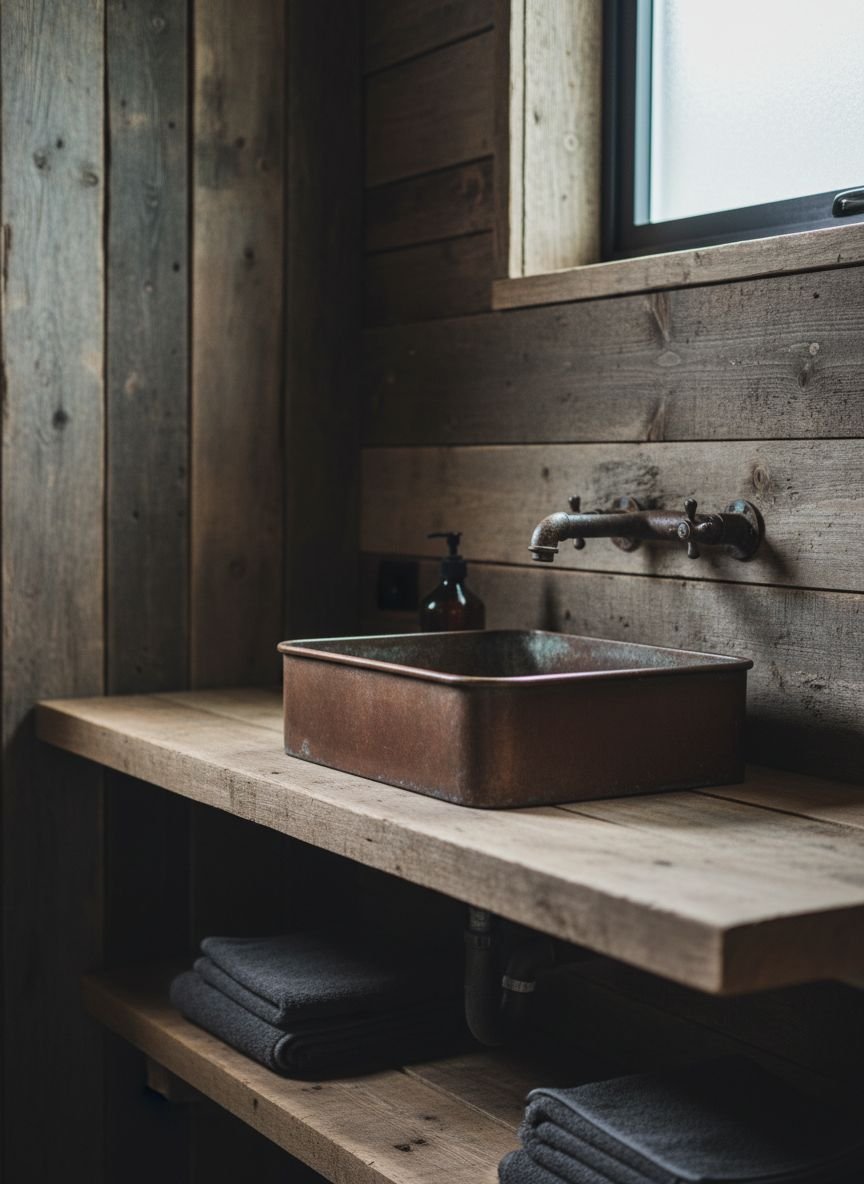
Industrial design celebrates raw materials and unfinished edges. These vanities often combine black metal piping or angle iron frames with chunky reclaimed wood shelves. The look is masculine, sturdy, and unapologetically functional. It fits perfectly in urban lofts or homes with exposed brick. The open framework makes the bathroom feel larger, though it requires you to keep your plumbing pipes attractive (often plated in chrome or brass) since they are fully visible.
Concrete countertops are a natural pairing for this style. They add a cool, gray weight that balances the warmth of the wood shelves. Storage is usually open, relying on wire baskets or metal bins to organize toiletries. This lack of doors encourages minimalism, as you cannot hide clutter. The aesthetic is about stripping back the unnecessary and highlighting the engineering of the home.
Pro Tip: Coat any raw steel parts with a clear metal sealer to prevent rust from forming in the damp bathroom environment.
Save this idea to your Pinterest.
Mirrored Vanity for Glamorous Touch
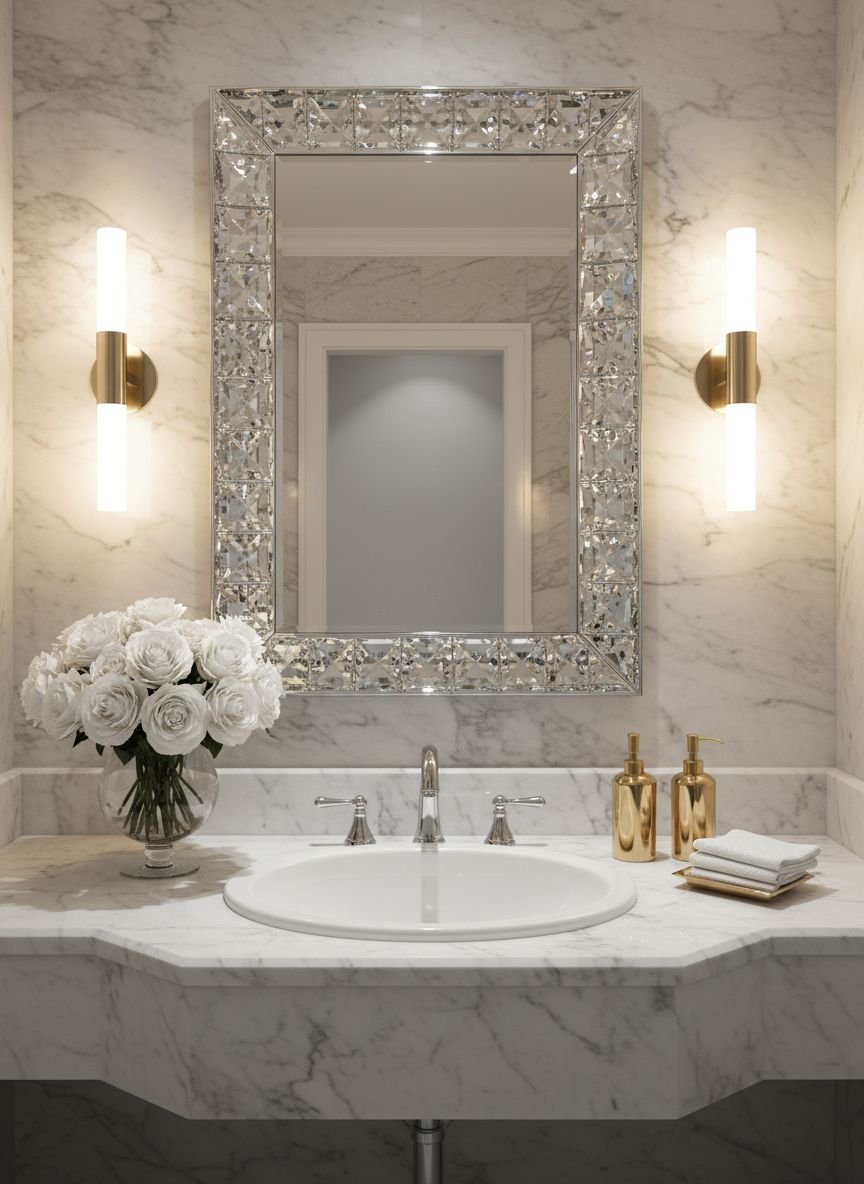
A mirrored vanity acts as a jewelry box for your bathroom. The reflective surfaces bounce light around the room, making even the darkest corners feel bright and expensive. This style draws from Hollywood Regency design, prioritizing glamour and shine. The mirrors are usually applied to the drawer fronts and sides, often with beveled edges that act like prisms. Crystal knobs or acrylic handles enhance the sparkling effect.
This choice is surprisingly versatile. It can look ultra-modern or vintage depending on the shape of the cabinet. The main benefit is the illusion of space; the vanity seems to disappear, reflecting the floor and walls around it. However, it requires discipline. Fingerprints and water splashes show up instantly. You must be willing to wipe down the surfaces daily to maintain the pristine, high-gloss impact.
Pro Tip: Use a glass cleaner that is ammonia-free to avoid damaging the silver backing of the mirrors over time.
Save this idea to your Pinterest.
Scandi Style Bathroom Vanity
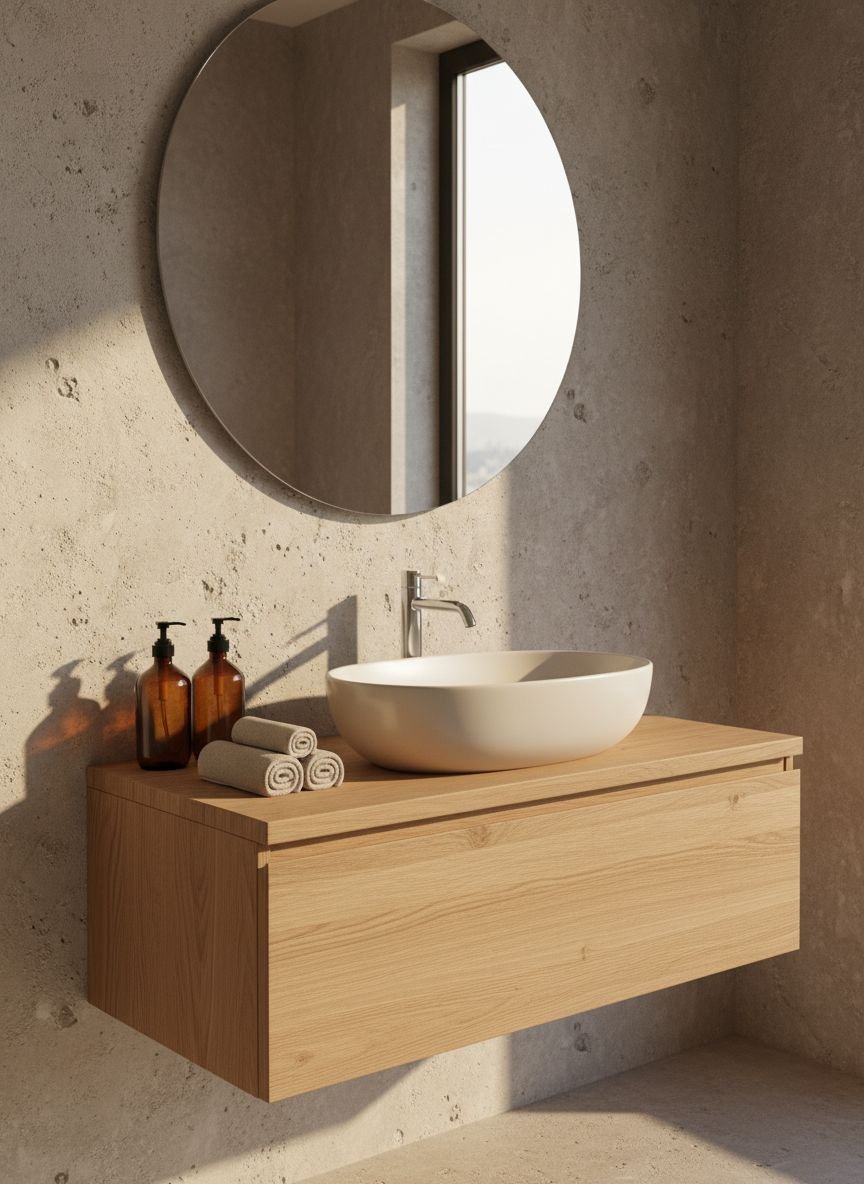
Scandinavian design prioritizes functionality, light, and natural materials without excess. A Scandi vanity typically features light woods like ash, birch, or white oak. The finish is matte or satin, never glossy. The design is boxy and simple, often wall-mounted to maintain clear floor space. White countertops are the standard, creating a seamless, clean look that feels hygienic and bright.
Organization is key to this style. The interiors of the drawers are often just as designed as the exterior, with dividers and compartments for every item. The lack of visual noise promotes a sense of calm. Accessories are kept to a minimum—perhaps a single wooden brush or a concrete soap dish. This vanity style is timeless and easily adaptable; you can change the look of the room simply by swapping out towels or a bath mat, as the vanity itself is a neutral canvas.
Pro Tip: Install a single, long bar pull on drawers for a streamlined look that is easy to grab with wet hands.
Save this idea to your Pinterest.
Popular Asked Questions
What is the standard height for a bathroom vanity?
Standard vanity height used to be 30 to 32 inches. However, modern “comfort height” vanities are now more popular and stand at 36 inches, similar to kitchen counters. This taller height is easier on your back as you do not have to bend down as far to wash your hands or face.
Can I install a bathroom vanity myself?
Yes, you can install a vanity yourself if you have basic DIY skills. You need to know how to use a level, a drill, and basic plumbing tools to reconnect the sink trap and supply lines. If you are moving plumbing pipes inside the wall, you should hire a professional plumber.
What is the most durable material for a bathroom vanity?
Solid wood is very strong but can warp with humidity if not sealed well. Marine-grade plywood is often considered the best balance of durability and resistance to moisture. Avoid particle board (MDF) for bathroom vanities if possible, as it swells and breaks down quickly if water penetrates the outer layer.
How much does a bathroom vanity update cost?
A budget DIY makeover (painting and new hardware) can cost under $100. Buying a new pre-made vanity from a big-box store typically ranges from $300 to $1,200 depending on size and material. Custom or high-end designer vanities can cost $2,000 or more.
Conclusion

Choosing the right bathroom vanity transforms the utility of your morning routine into a moment of joy. Whether you select the rugged texture of Rustic Barnwood, the sleek lines of Modern Minimalist design, or the history of a Vintage Dresser Conversion, the impact is undeniable. These designs prove that you do not need a massive square footage to create a space that feels luxurious and personal.
Leave a Comment