
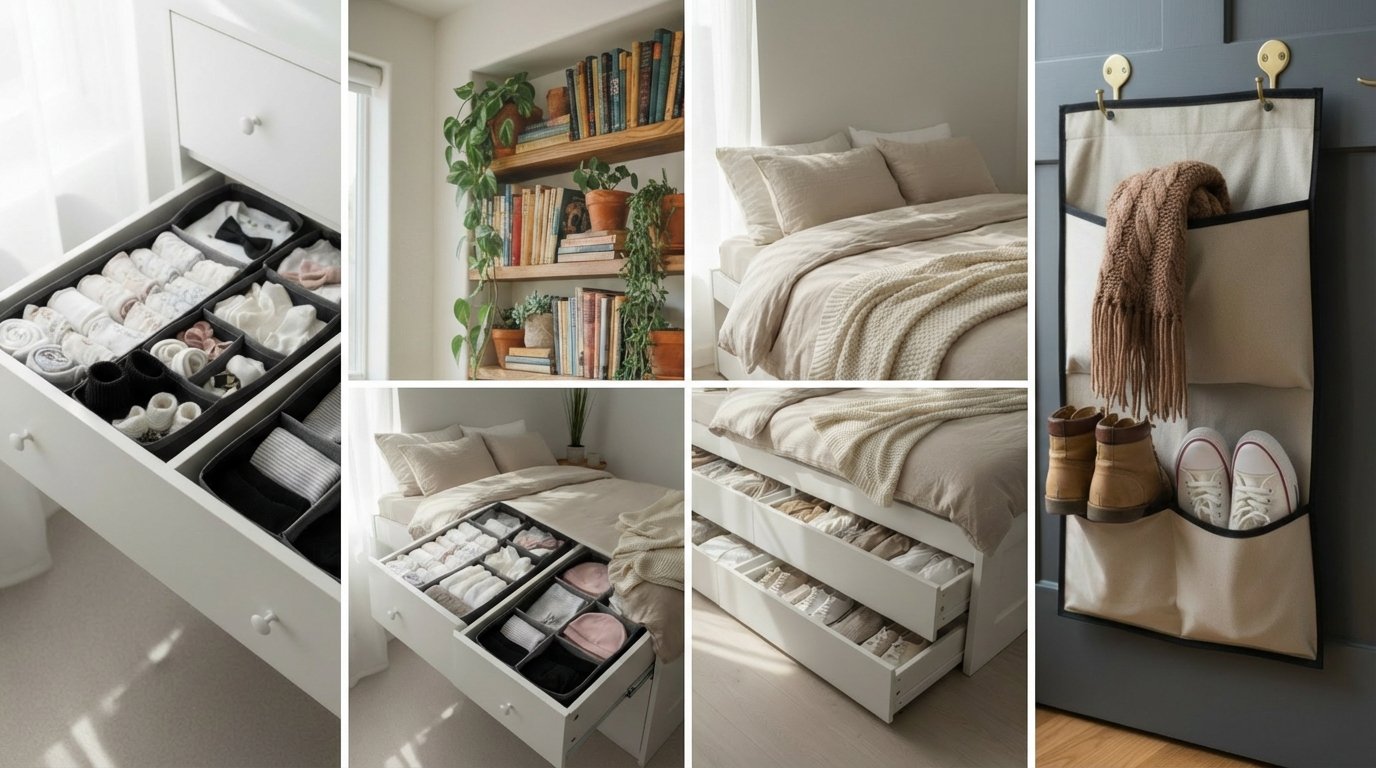
You are tired of tripping over shoes. Your closet is bursting at the seams, and your “relaxing sanctuary” feels more like a cluttered storage unit. You don’t need a bigger house; you need smarter physics.
The secret to conquering a small bedroom isn’t purging everything you own—it’s utilizing the “dead zones” you walk past every day. From vertical real estate to hidden compartments that defy logic, maximizing a tiny footprint is about tricking the eye and working the angles.
This isn’t just about tidying up. It is about reclaiming your peace of mind. Below, we break down the 8 most effective storage categories, detailed with over 40 specific execution strategies to transform your cramped quarters into a spacious, organized haven.
Key Takeaways
- Verticality is Non-Negotiable: If you can’t build out, you must build up. Floor-to-ceiling units are the single most effective way to multiply square footage.
- Visual Continuity Matters: “Color drenching” your storage (painting shelves the same color as walls) reduces visual noise, making the room feel 30% larger.
- The “Floating” Rule: Keeping the floor visible creates an optical illusion of space. Opt for wall-mounted nightstands and shelves over heavy cabinetry.
- Hidden Functionality: Every piece of furniture must serve two purposes. If your bed is just for sleeping, it’s wasting space.
Table of Contents
- Under-Bed Storage
- Multi-Functional Furniture
- Wall-Mounted Shelves
- Over-the-Door Organizers
- Built-In Closets
- Storage Benches
- Corner Shelves
- Wardrobe Alternatives
- Related posts
- Popular Asked Questions
- Conclusion
Under-Bed Storage
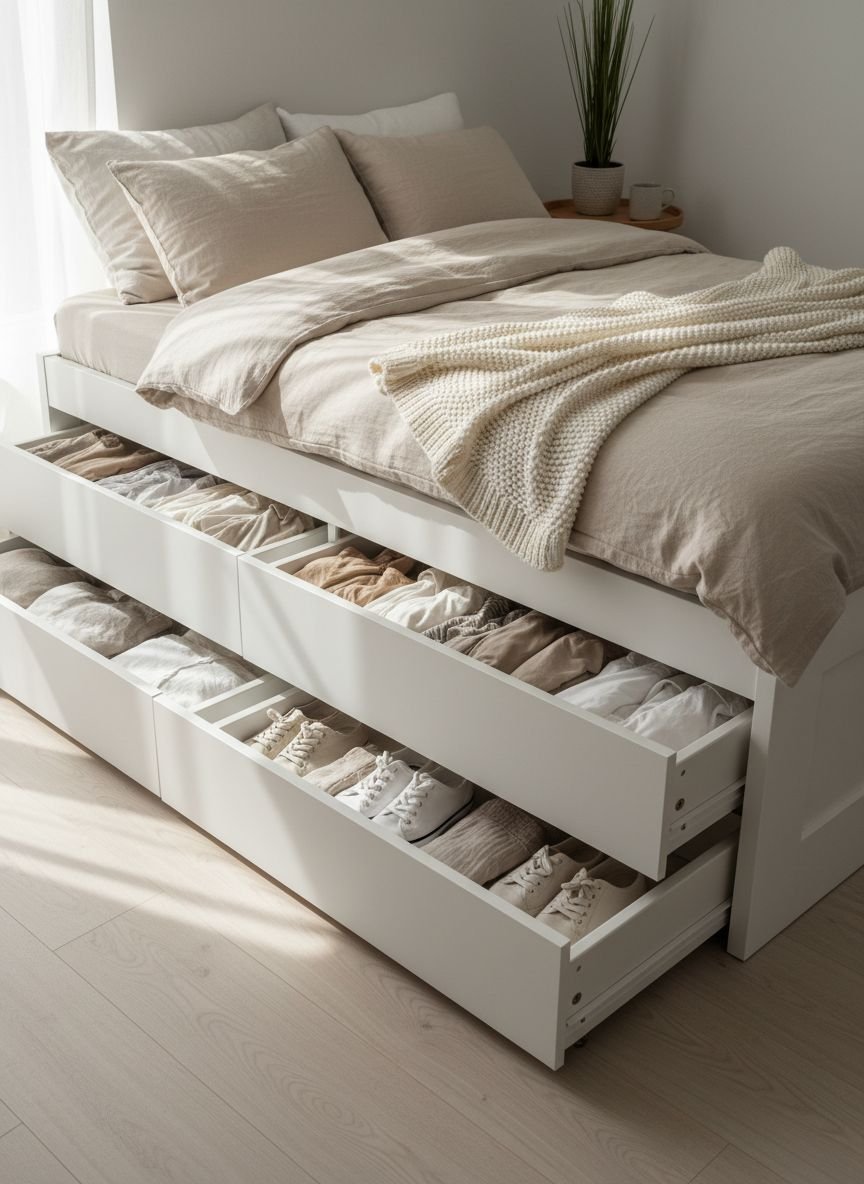
The space beneath your mattress is the largest hidden cabinet in your home. Ignoring it is a rookie mistake. However, stuffing random items underneath creates dust bunnies and chaos. You need a system.
1. Hydraulic Lift Beds
The gold standard for small bedrooms. These frames lift up entirely on gas pistons, revealing the entire footprint of the bed for storage. It is perfect for bulky winter coats, suitcases, or spare duvets. The visual clutter is zero because everything is contained within the frame itself.
2. Rolling Wooden Drawers
If you have a standard bed frame, opt for independent drawers on caster wheels. Look for units with a “dust cover” or lid. Aesthetically, you can match the drawer face to your nightstand wood grain for a cohesive look.
3. Vacuum Seal Systems
This is pure physics. By removing the air from fluffy items like comforters and wool sweaters, you reduce their volume by 75%. Stack these rigid, flat bags inside a canvas under-bed bin. This allows you to store an entire seasonal wardrobe in a 6-inch gap.
4. Wicker Baskets for Texture
For beds with higher clearance where the storage is visible, avoid clear plastic bins. They look cheap and messy. Use low-profile wicker or rattan baskets. They add warmth and texture to the room while concealing the contents.
5. The Platform Riser Hack
If your current bed is too low, use sturdy bed risers. A mere 3-inch elevation can be the difference between fitting a rolling bin or not. Cover the gap with a tailored bed skirt if you prefer a traditional aesthetic.
Pro Tip: Measure the vertical clearance of your bed frame before buying bins. Leave at least 1 inch of breathing room so the bins slide out smoothly without catching on the slats.
Multi-Functional Furniture
In a small room, every object must pay rent. If a piece of furniture only does one thing, it is likely too luxurious for your square footage.
6. The Storage Ottoman
Place a hollow ottoman at the foot of the bed. It acts as a seat for putting on shoes, a step for high beds, and a deep chest for linens. Choose velvet or boucle fabrics to add a layer of softness to the room.
7. Headboards with Hidden Compartments
Modern headboards now come with slide-out side panels or lift-top cubbies. These are ideal for books, medication, and charging cables, effectively eliminating the need for a bulky nightstand.
8. Murphy Desks
If your bedroom is also your office, a fold-down wall desk is essential. When closed, it looks like a shallow cabinet or a piece of art. When open, it provides a sturdy workspace. This allows you to reclaim floor space the moment you clock out.
9. Loft Beds with Desk Underneath
For extremely tight spaces (like studio apartments), a loft bed is a game-changer. By elevating the sleeping area, you create an entire room’s worth of space underneath for a desk, a reading nook, or a dresser.
10. Nightstands with Drawers (Not Just Tables)
Avoid “leggy” side tables that have no storage. Choose a nightstand with at least two deep drawers. You need a place to hide the clutter of daily life—hand creams, journals, and charging cords—so surfaces remain serene.
Save this idea to your Pinterest.
Wall-Mounted Shelves
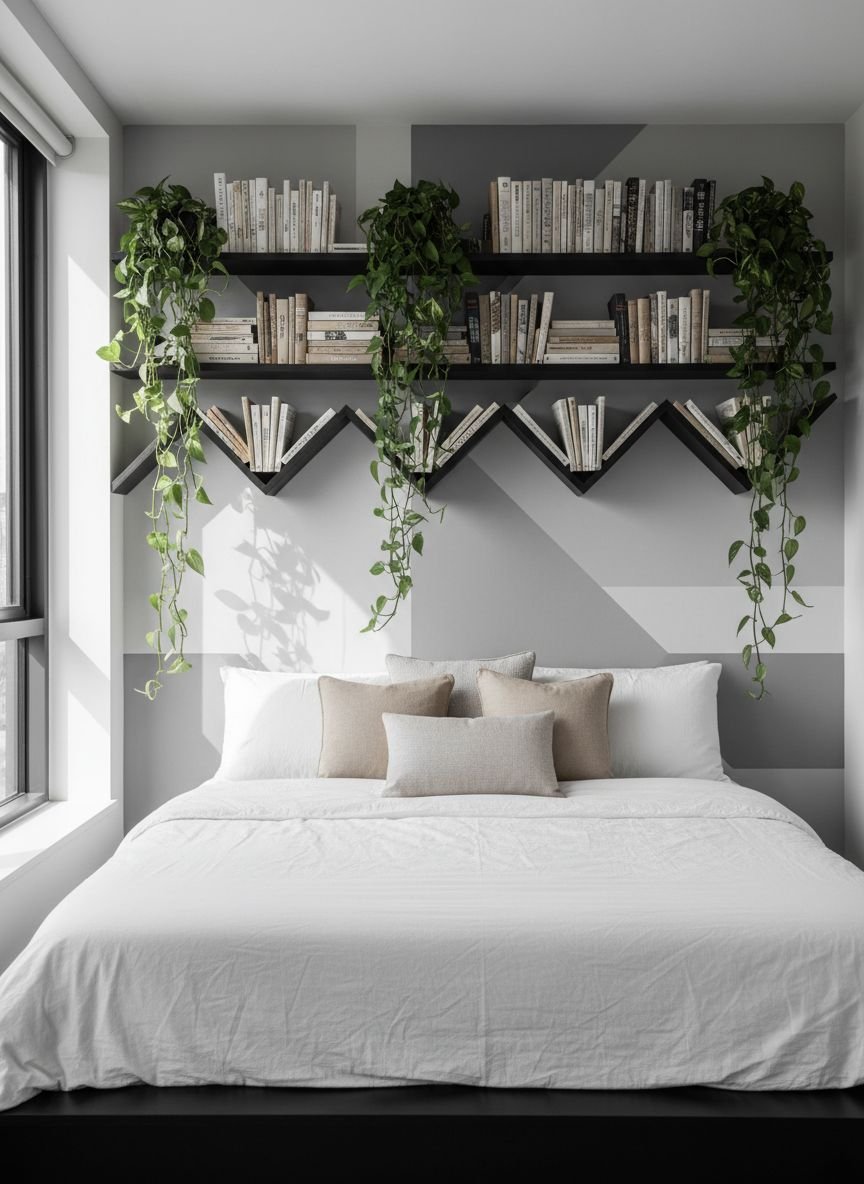
When the floor is full, look up. Walls are often underutilized in bedroom design.
11. High-Perimeter Shelving
Install a single shelf running the entire perimeter of the room, about 12 inches below the ceiling. This “halo” effect draws the eye up, making ceilings feel higher, and provides massive storage for books or decorative boxes containing off-season gear.
12. Floating Nightstands
Mounting your bedside table to the wall creates a “floating” effect. Seeing the floor extend all the way to the wall tricks the brain into thinking the room is larger. Plus, it makes vacuuming significantly easier.
13. The Pegboard Wall
Borrow this idea from the garage. A stylish wooden or metal pegboard can hold jewelry, hats, scarves, and small baskets. It is infinitely customizable. As your needs change, you simply move the pegs.
14. Recessed Niches
If you are doing a renovation, cut into the drywall between the studs. This creates storage that doesn’t encroach on the room’s footprint at all. It is the ultimate sleek, architectural solution for toiletries or books.
15. Vertical Book Towers
Instead of a wide bookshelf, use a “spine” bookshelf. These are thin, vertical metal columns where books stack horizontally. They take up roughly 1 square foot of floor space but can hold dozens of titles.
Pro Tip: Paint your shelves the exact same color as your walls. This technique, called “color drenching,” makes the storage blend in visually, reducing the feeling of clutter.
Over-the-Door Organizers
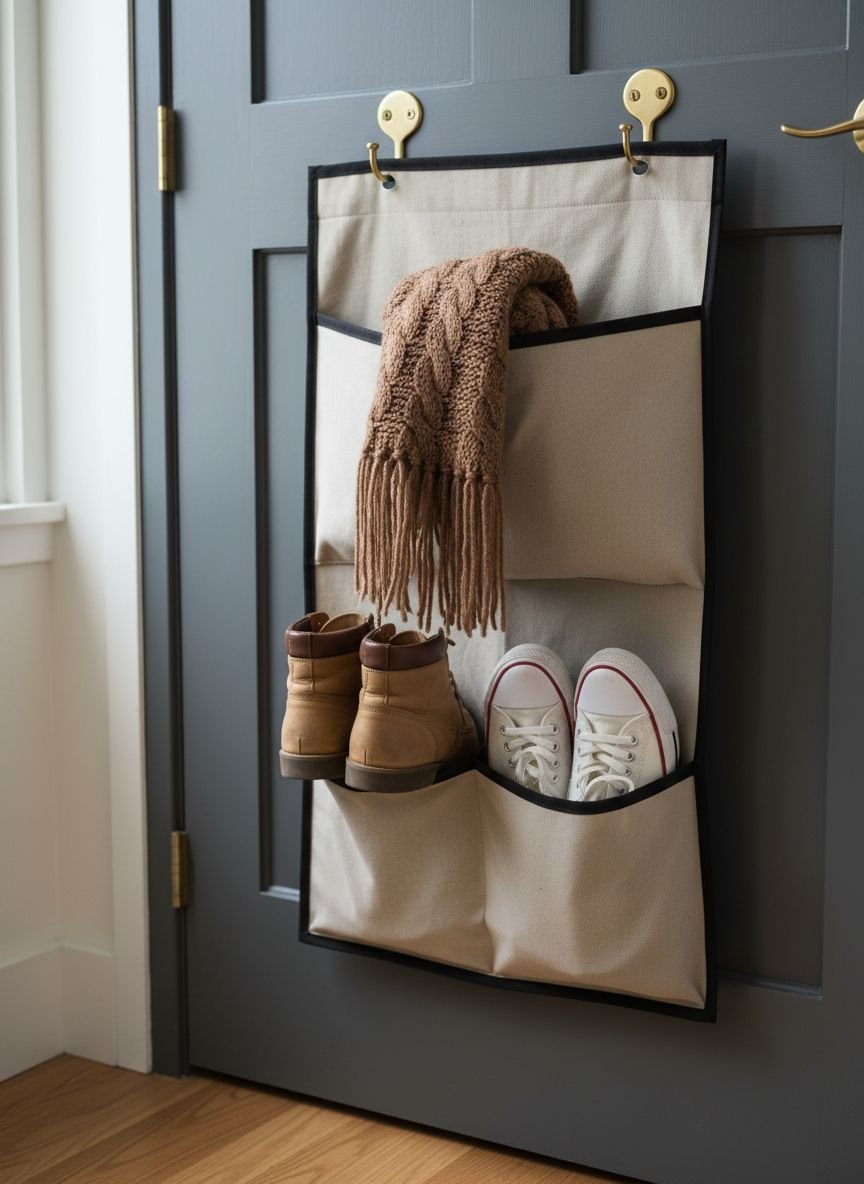
Doors are moving parts that often get ignored. The back of your bedroom or closet door is prime real estate for thin items.
16. The Mirror-Jewelry Cabinet
This is a classic for a reason. It looks like a full-length mirror, but it opens to reveal storage for hundreds of earrings, necklaces, and rings. It solves two problems (vanity and storage) with one footprint.
17. Heavy-Duty Robe Hooks
Install a row of sturdy matte black or brass hooks. Use them for your “in-between” clothes—the jeans that aren’t quite dirty but aren’t clean enough for the drawer. This prevents the dreaded “chair pile.”
18. Shoe Pockets (Upgraded)
Forget the cheap clear plastic ones. Look for linen or canvas fabric organizers with structured pockets. They look like furniture rather than a college dorm accessory. Use them for shoes, rolled t-shirts, or clutch bags.
19. Wire Basket Systems
Metal wire racks that clip over the door offer deeper storage than pockets. These are excellent for handbags or bulky scarves. Ensure they have felt pads on the back to prevent scratching your door paint.
Comparison: Hidden vs. Exposed Storage
| Feature | Hidden Storage (Under-bed, Closets) | Exposed Storage (Shelves, Racks) |
|---|---|---|
| Visual Impact | Minimal; keeps room looking clean. | High; adds character but can look messy. |
| Accessibility | Slower; requires opening/lifting. | Instant; grab and go. |
| Best For | Seasonal items, ugly clutter, linens. | Books, hats, beautiful accessories. |
| Maintenance | Low; protects from dust. | High; requires regular dusting/styling. |
Built-In Closets
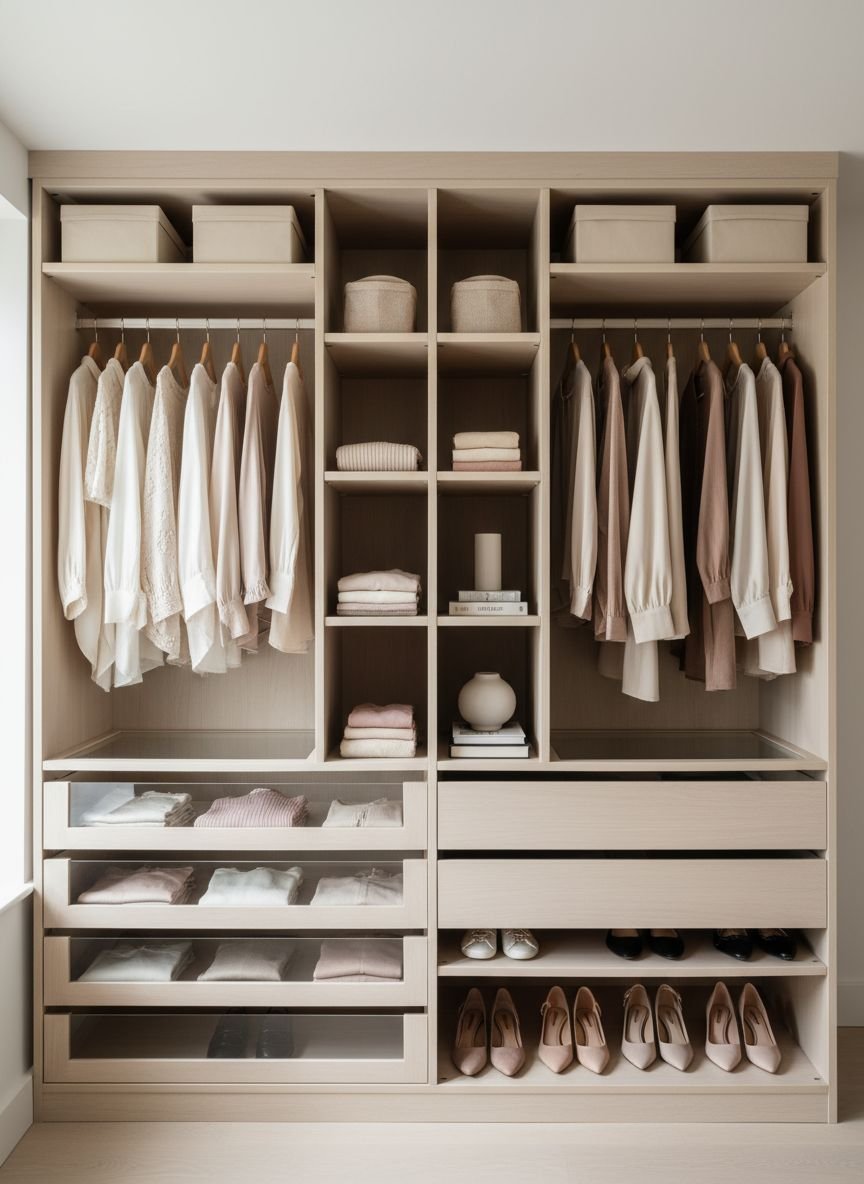
If you own your home, custom joinery adds value and solves awkward geometry.
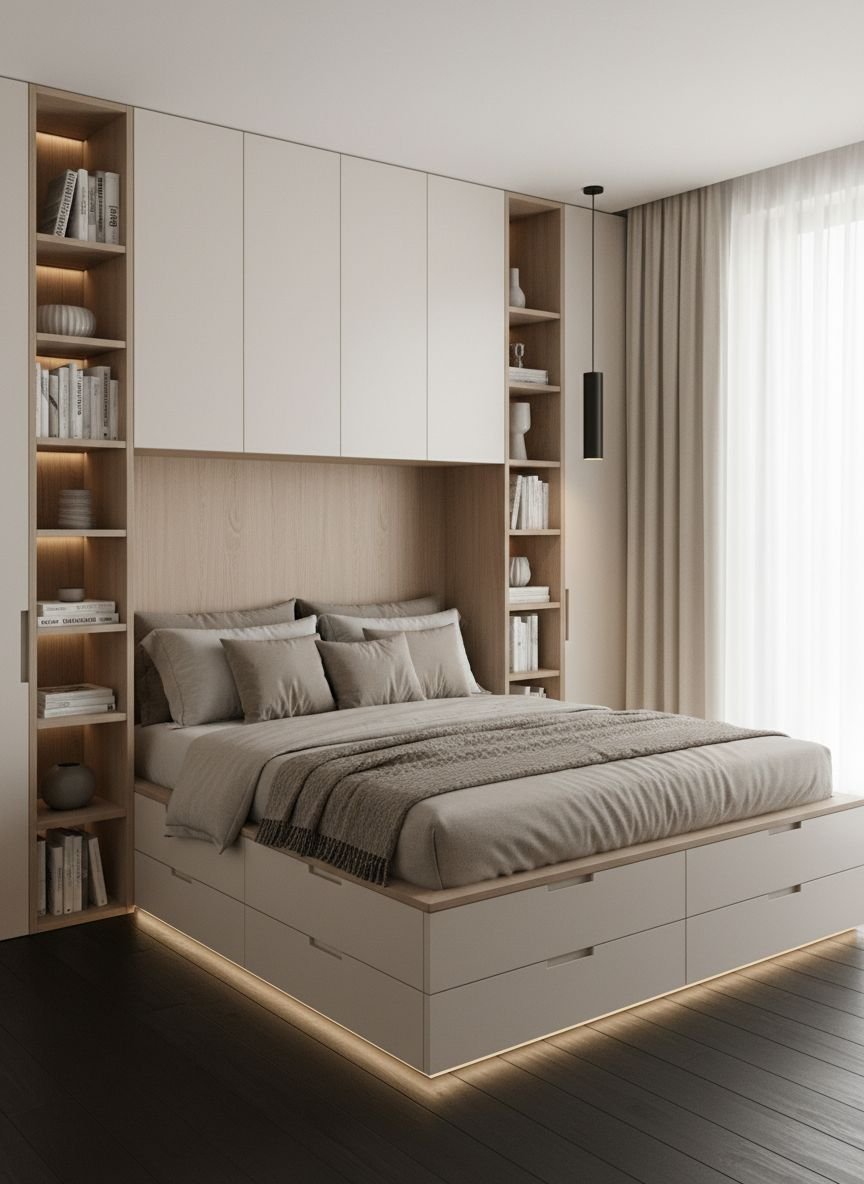
20. The “Up-and-Over”
Build wardrobes on either side of the bed and connect them with a bridge of cabinets above the headboard. This frames the bed comfortably and utilizes the entire wall. It creates a cozy, alcove feel while maximizing cubic storage.
21. Floor-to-Ceiling Wardrobes
Standard wardrobes stop a foot below the ceiling. That is wasted space. Custom or semi-custom units (like IKEA hacks) that go all the way to the crown molding look built-in and offer 20% more storage.
22. Sliding Doors
In a small room, swinging doors require clearance space you might not have. Sliding doors on tracks allow you to place furniture closer to the closet without blocking access.
23. Internal Drawer Systems
Eliminate the need for a separate dresser in the room by installing drawers inside your closet. Keep the bedroom floor for the bed and a rug only.
24. Mirrored Fronts
Use mirrored doors on your built-ins. They reflect light and double the visual depth of the room. This is the oldest trick in the interior design book because it works.
For more on using mirrors to expand space, see 26 Living Room Mirror Ideas Designers Swear By.
Storage Benches
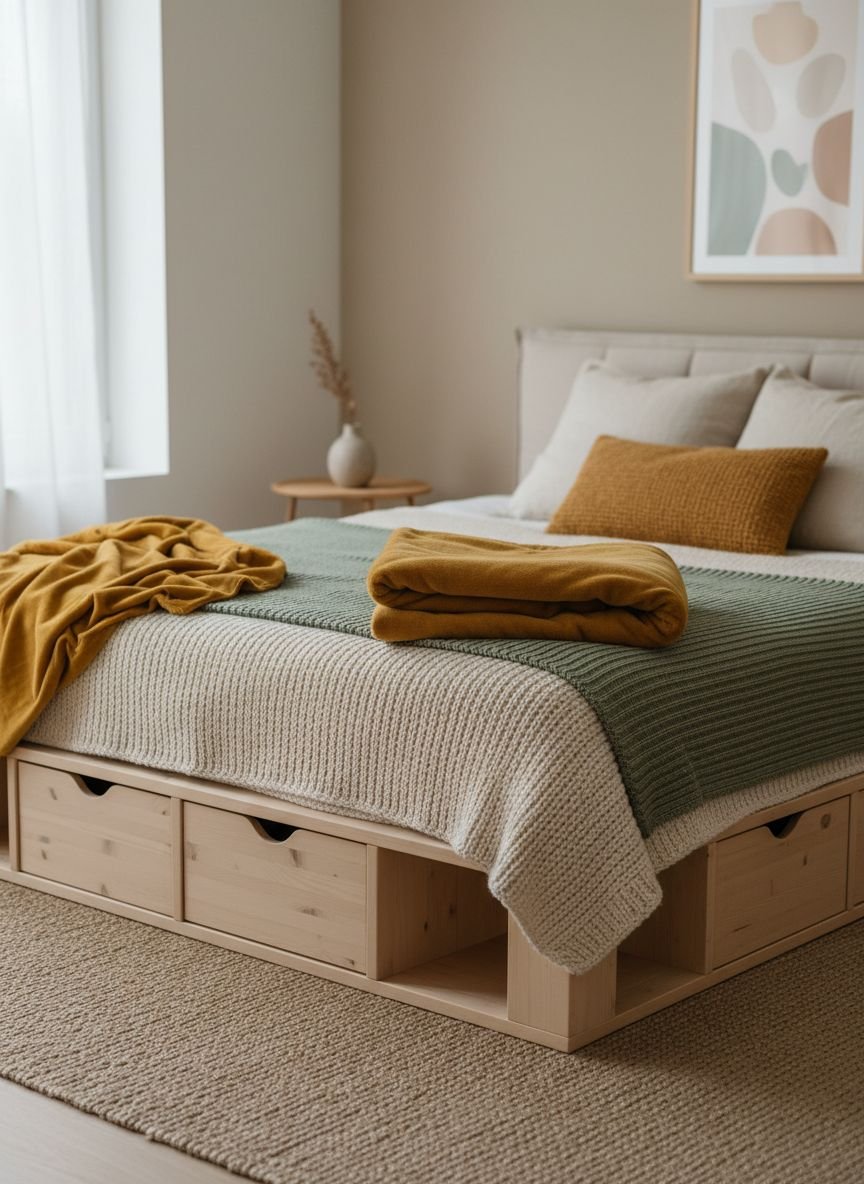
A bench anchors the bed and provides a final catch-all for clutter.
25. The Flip-Top Upholstered Bench
Choose a bench with a hinged lid. Inside, use dividers to separate shoes or bags. The upholstered top adds a luxury hotel vibe.
26. Cubby Benches with Baskets
A wooden bench with open cubbies allows for basket storage. This is great for quick access items like slippers or throw blankets.
27. Window Seat Storage
If you have a bay window, build a custom bench seat with a lift-top or drawers underneath. It turns an awkward architectural feature into a functional reading nook.
28. The Slim “Console” Bench
For very narrow rooms, use a skinny console table or narrow bench. It might not hold bulky bedding, but it serves as a drop zone for phones and keys, keeping the bed clear.
Corner Shelves
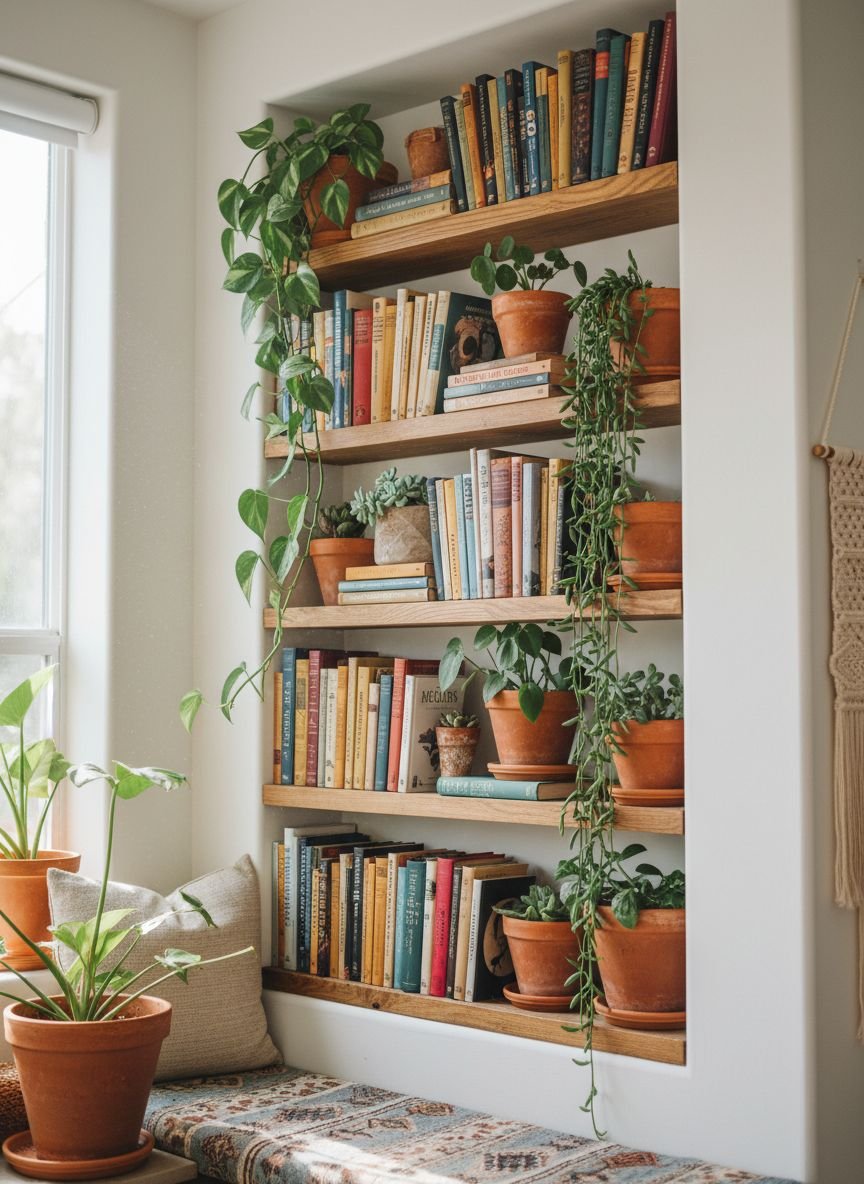
Corners are where space goes to die. Revive them with angular solutions.
29. Zig-Zag Corner Units
These floating shelves fit snugly into the 90-degree angle. They are perfect for displaying plants, perfumes, or small framed photos. They draw the eye vertically, emphasizing ceiling height.
30. The Corner Wardrobe
Standard wardrobes are rectangular. A specialized corner unit (L-shaped) utilizes the depth of the corner, which is often deeper than a standard closet. This is the best place to hang bulky winter coats.
31. Tension Rod Corner Poles
These are floor-to-ceiling poles with adjustable trays. They require no drilling and are perfect for renters. Use them for plants or a secondary nightstand solution.
32. Triangular Floating Desks
Turn a corner into a workspace with a simple triangular piece of wood mounted to the wall. It’s unobtrusive and effective for laptop work.
Wardrobe Alternatives
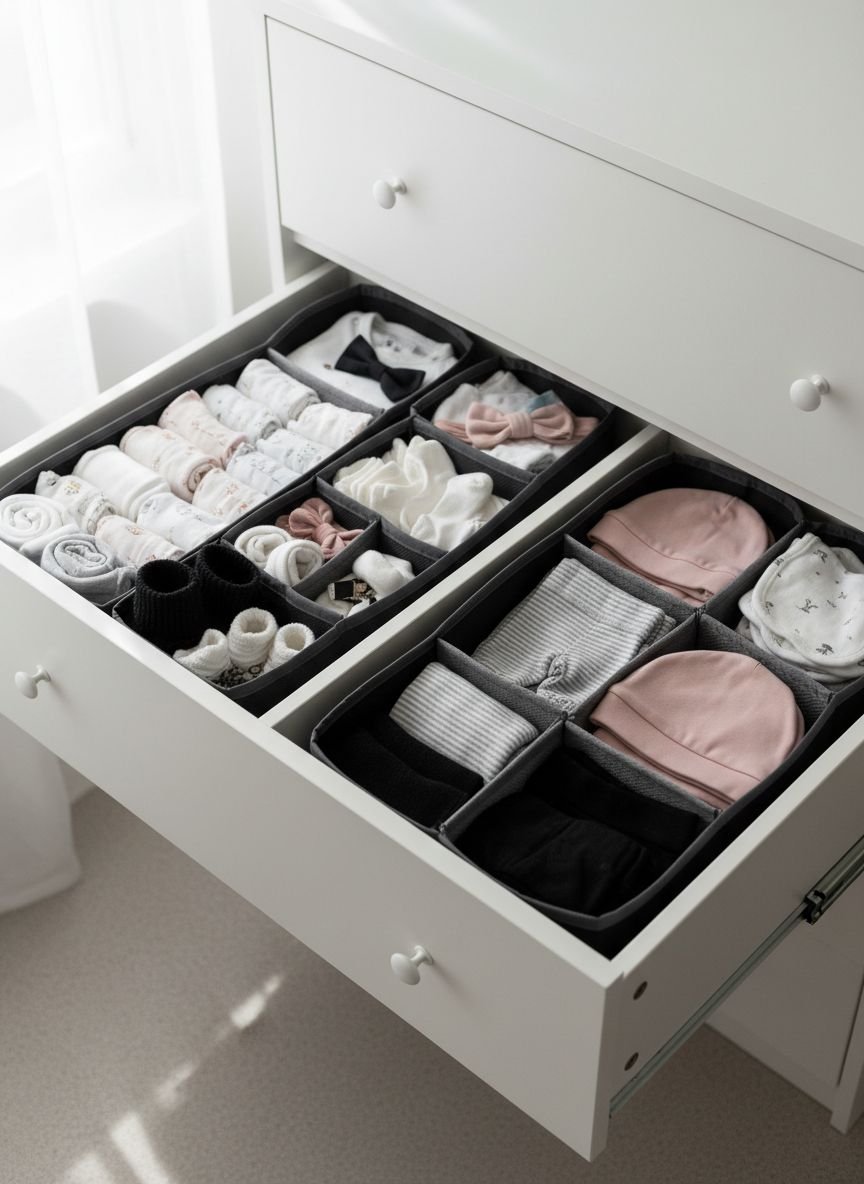
No closet? No problem. The “open wardrobe” is a massive trend in industrial and bohemian design.
33. The Industrial Pipe Rack
Construct a clothing rack from black iron plumbing pipes. It’s sturdy, stylish, and airy. Because you can see through it, it doesn’t block light like a wooden wardrobe does.
34. Curtain Dividers
Install a ceiling track and hang a heavy velvet curtain to partition off a corner of the room. Behind the curtain, you can use inexpensive wire shelving or bins. It creates a soft “wall” that hides the mess.
35. The “Headboard” Closet
Float your bed in the center of the room (if width allows) and place a low dresser behind the headboard. Alternatively, build a false wall behind the bed to serve as a walk-through closet.
36. Ladder Racks
Lean a wooden ladder against the wall. It’s perfect for hanging tomorrow’s outfit, towels, or throw blankets. It has a tiny footprint and adds vertical interest.
37. Rolling Garment Racks
A high-quality commercial rolling rack is chic and functional. You can wheel it to the mirror when getting ready and wheel it back against the wall when done.
Pro Tip: If you use an open wardrobe, you must invest in matching hangers. Whether wood or velvet, uniformity is the only thing separating a “stylish display” from a “messy pile.”
Related posts :
- 20 Chic Black and Dark Green Bedroom Ideas for a Trendy Look that Redefine Cozy Luxury
- 12 Unique Classy Bedroom Ideas That’ll Make You Feel Like Royalty
- 16 Stunning 1970s Bedroom Designs That Will Instantly Transform Your Space
Popular Asked Questions
How do you organize a small bedroom with no closet?
You have to create one. The most popular method is using a freestanding clothing rack paired with a dresser. To keep it looking tidy, use matching hangers and color-coordinate your clothes. Another option is a modular wall system (like IKEA BOAXEL) that mounts directly to the wall and can be covered with a ceiling-mounted curtain for a clean look.
How to maximize space in a 10×10 bedroom?
Focus on the layout. Place the bed against the wall rather than centering it to open up a larger floor area. Use vertical storage like tall bookshelves or wall-mounted cabinets. Avoid bulky furniture; choose pieces with exposed legs or “floating” designs to keep the floor visible, which tricks the eye into seeing more space.
What is the best way to store shoes in a small bedroom?
Avoid keeping shoes on the floor where they create tripping hazards. Under-bed rolling drawers are excellent for off-season footwear. For daily shoes, a slim, tip-out shoe cabinet (which is very narrow against the wall) is a lifesaver. Over-the-door organizers are also highly effective for flats and sandals.
Is it okay to put a dresser in the closet?
Yes, this is a pro-organizer move. Putting a small dresser inside the closet (under the hanging clothes) frees up the main bedroom floor space. It keeps your socks and underwear hidden away and allows your bedroom to feel more like a sanctuary and less like a dressing room.
Conclusion
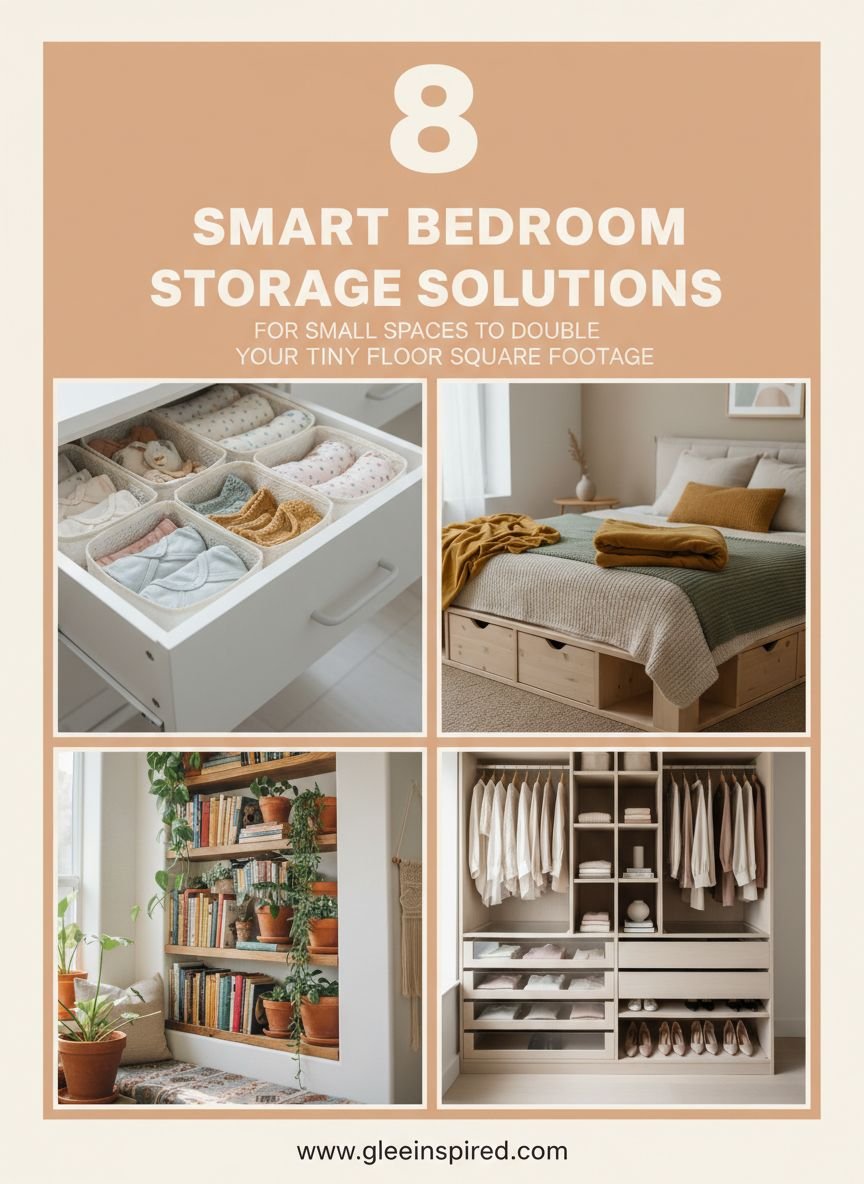
Living in a small space does not mean you have to sacrifice style or your shoe collection. By embracing vertical storage, utilizing the hidden potential under your bed, and choosing furniture that works double-time, you can double the functionality of your room.
The goal is not just to store things; it is to create a flow where everything has a home. Start with one of these solutions this weekend—perhaps the under-bed organization or a simple wall shelf—and feel the immediate relief of a decluttered space.




Leave a Comment