
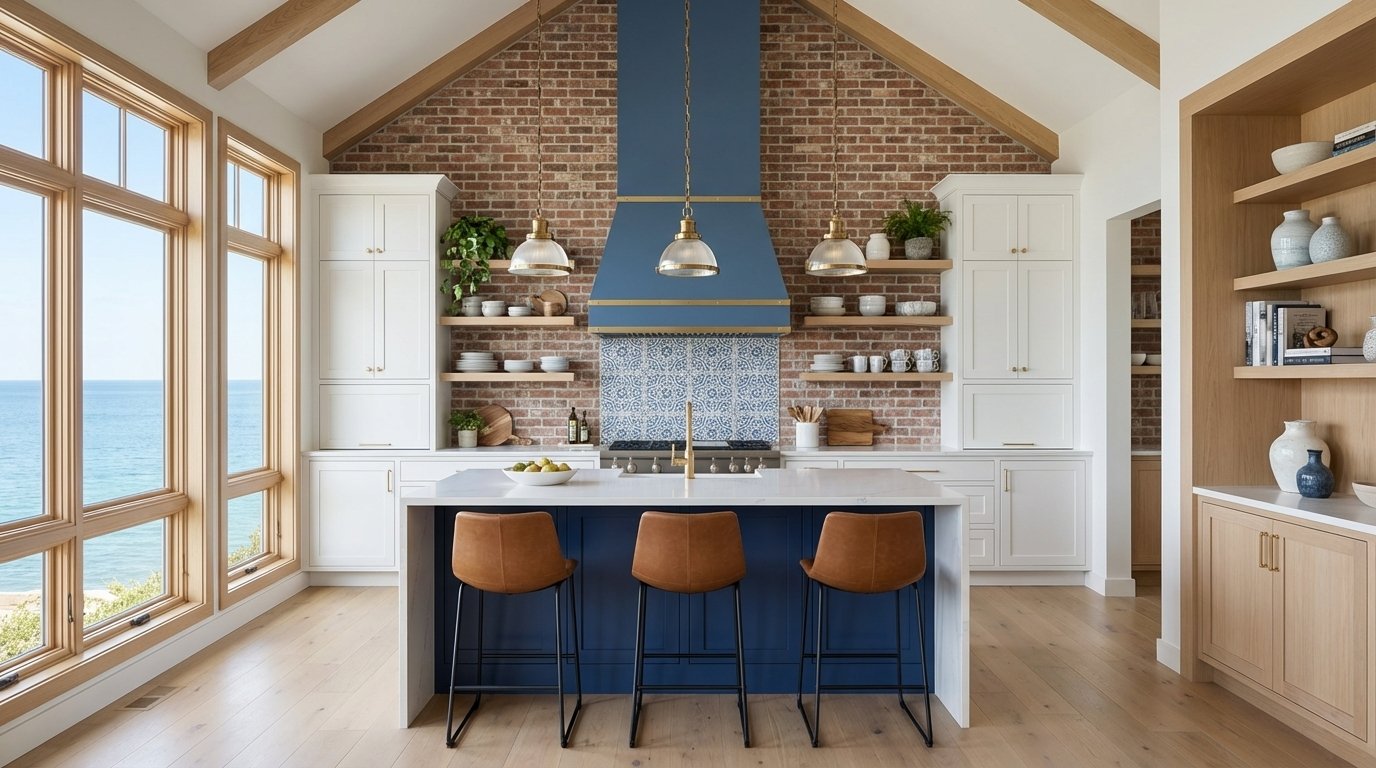
Blue and brown is the color combination taking over interior design this year. It balances the cool, calming nature of blue with the earthy, grounding warmth of brown to create a space that feels both modern and timeless. If you are tired of sterile all-white kitchens but afraid of going too dark, this palette is your perfect middle ground.
This guide shows you exactly how to style this look, from cabinet choices to the perfect hardware finishes. Whether you have a small apartment kitchenette or a sprawling open-plan home, these ideas will help you design a kitchen that looks expensive and inviting.
Key Takeaways
- Balance is Critical: Use the 60-30-10 rule. Let brown or blue be dominant, but not both equally, to avoid visual clutter.
- Texture Matters: Mix smooth painted blue cabinets with rougher wood grains or brick to create a “lived-in” luxury feel.
- Hardware Finishes: Brass and gold warm up navy blue, while matte black adds a modern industrial edge to lighter blues.
- Lighting: Darker blue and brown kitchens require layered lighting (under-cabinet, pendants) to prevent the room from feeling cave-like.
Table of Contents
- Classic tranquility in light blue and brown
- An open kitchen in blue with brown flooring and industrial elements
- Exposed brown brick wall with deep blue cabinets
- Blue shelves and cabinets with brown wallpaper
- Modern brown bar stools in a blue and white kitchen
- Contrasting light brown wood with navy blue
- Wooden countertops with deep blue kitchen cabinets
- Open space kitchen in brown, blue and white
- Industrial gray with blue and brown kitchen design
- Rustic brown meets modern blue
- Related posts :
- Popular Asked Questions
- Conclusion
Classic tranquility in light blue and brown
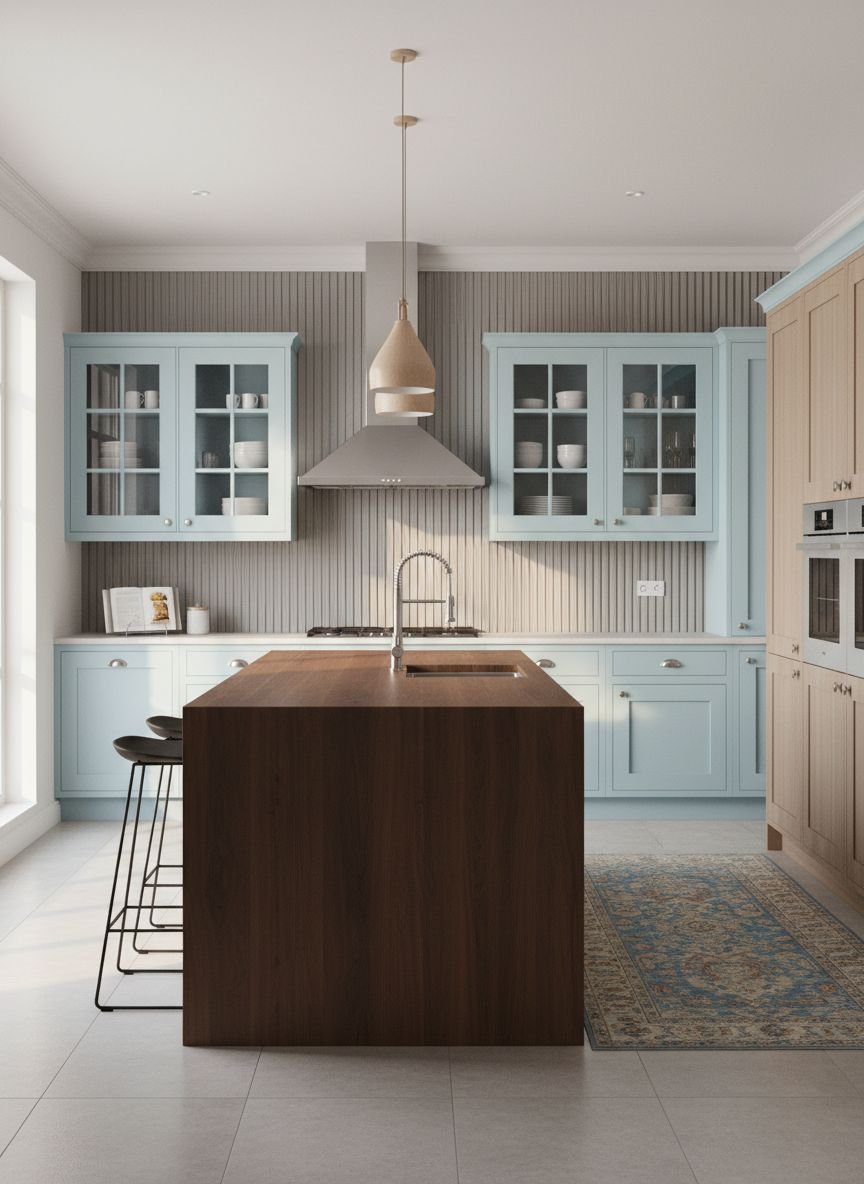
Soft pastel blues paired with light brown woods create a kitchen that feels airy and coastal. This look is perfect for smaller kitchens where you want to maximize the feeling of space without resorting to stark white. The light blue reflects natural light, while the brown elements, such as light oak flooring or open shelving, prevent the room from feeling too cold.
To achieve this, focus on matte finishes rather than high gloss. A chalky, matte light blue paint on the cabinets hides fingerprints better and looks more sophisticated. Pair this with “blonde” woods or bamboo accessories. The goal is to keep the contrast low and the vibes gentle. It is a style that works exceptionally well in cottage-core or Scandinavian-inspired homes.
Pro Tip: Use rattan or wicker baskets for storage on top of the cabinets. The natural brown texture bridges the gap between the blue cabinets and the ceiling, adding warmth to the upper third of the room.
An open kitchen in blue with brown flooring and industrial elements
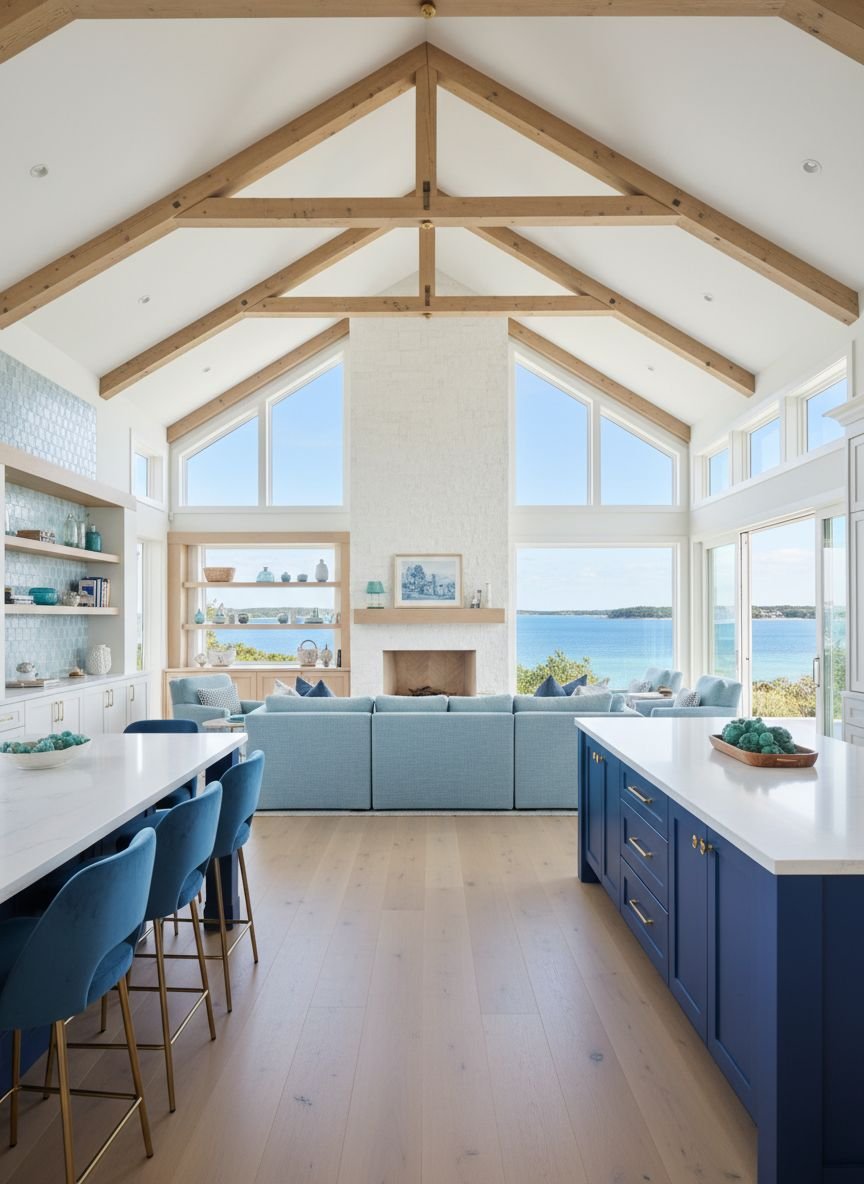
Grounding a blue kitchen with dark brown flooring is a design power move. When you have an open floor plan, the kitchen needs to flow seamlessly into the living areas. Using a continuous brown floor, whether it is hardwood, luxury vinyl plank (LVP), or wood-look tile, unifies the space. The blue cabinets then become a stunning feature wall rather than just storage.
Industrial elements are the secret sauce here. Think black metal pendant lights, stainless steel appliances, and perhaps a concrete countertop. The industrial gray and black tones act as a buffer between the rich brown floor and the vibrant blue cabinets. This prevents the colors from clashing and gives the space a masculine, architectural edge.
Pro Tip: If your brown floors have red undertones (like cherry wood), opt for a blue with a slight green undertone (like teal or peacock) to create a complementary color harmony.
Exposed brown brick wall with deep blue cabinets
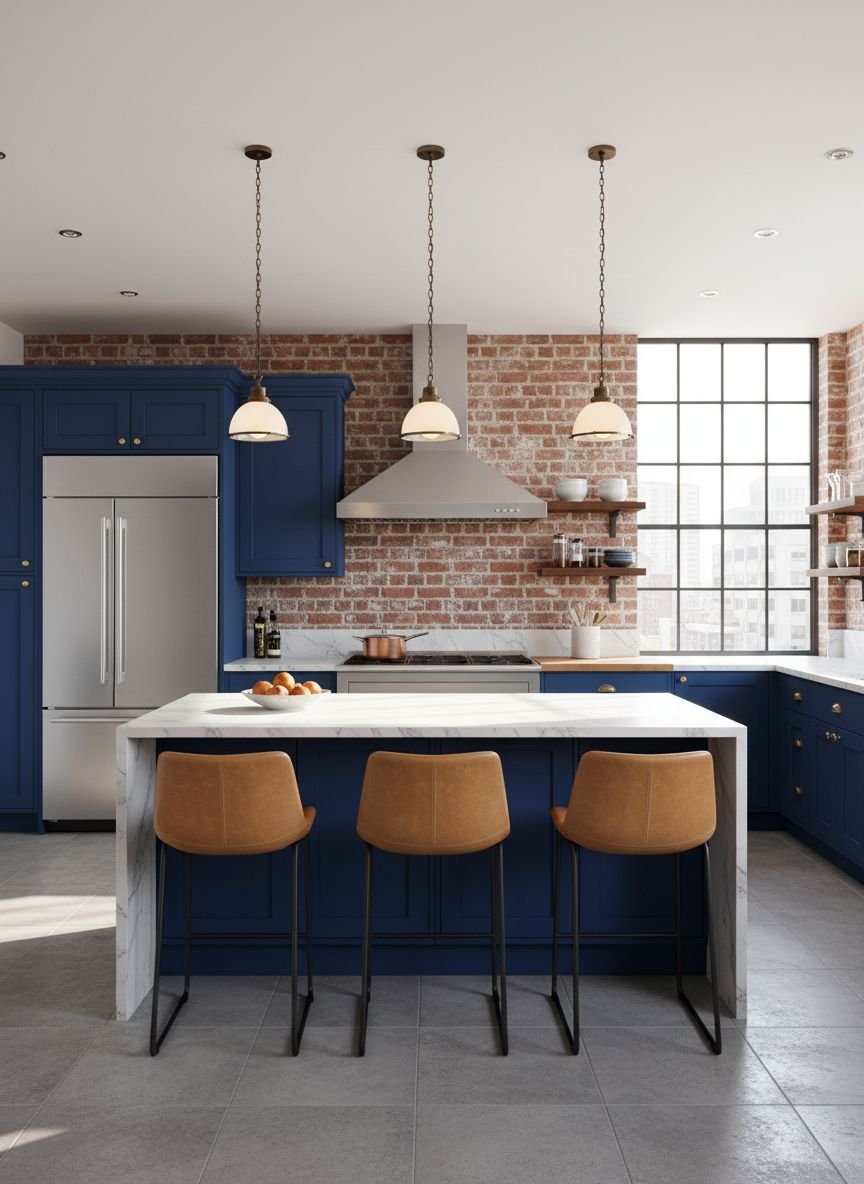
This is the ultimate texture play. The rough, porous nature of an exposed brown brick wall offers an incredible contrast to the smooth, satin finish of deep blue cabinetry. This look leans heavily into the “New York Loft” or “Urban Rustic” aesthetic. The red and brown tones naturally found in brick are on the opposite side of the color wheel from blue, making this a high-contrast, high-energy design.
If you do not have a real brick wall, you can achieve this look with high-quality brick veneer or even textured wallpaper for a budget-friendly update. Keep the backsplash minimal or nonexistent if you have the brick, as the brick itself serves as the visual focal point. Let the deep blue cabinets frame the brickwork like art.
Pro Tip: Install warm-toned LED strip lighting under your upper cabinets or shelves to wash the brick wall with light. This highlights the texture of the masonry and creates a cozy evening ambiance.
Save this idea to your Pinterest.
Blue shelves and cabinets with brown wallpaper
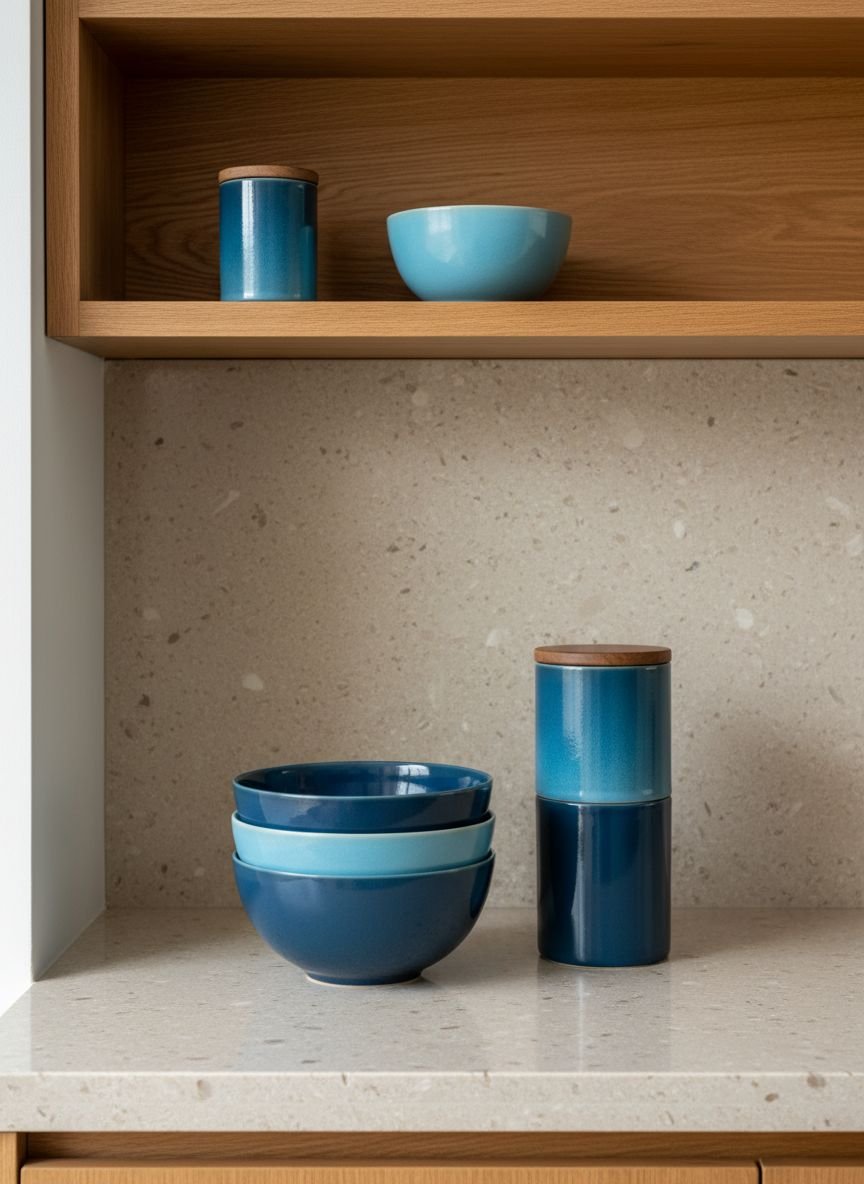
Wallpaper is back in kitchens, and it is a fantastic way to introduce brown patterns without committing to wood cabinetry. Imagine a rich navy blue cabinet set paired with a wallpaper featuring a brown botanical or geometric print. This adds depth and personality to the room that paint alone cannot achieve.
When using brown wallpaper, consider applying it to the back of open shelving or inside glass-front cabinets. This “peek-a-boo” effect adds layers to your design. It allows you to display white or cream dishes against a dark, patterned background, making your collection pop. Ensure the wallpaper is vinyl or peel-and-stick material that is moisture-resistant and wipeable.
Pro Tip: If you use a busy brown wallpaper, keep your cabinet hardware simple. Sleek brass knobs or hidden finger pulls will ensure the look remains elegant and not chaotic.
Modern brown bar stools in a blue and white kitchen
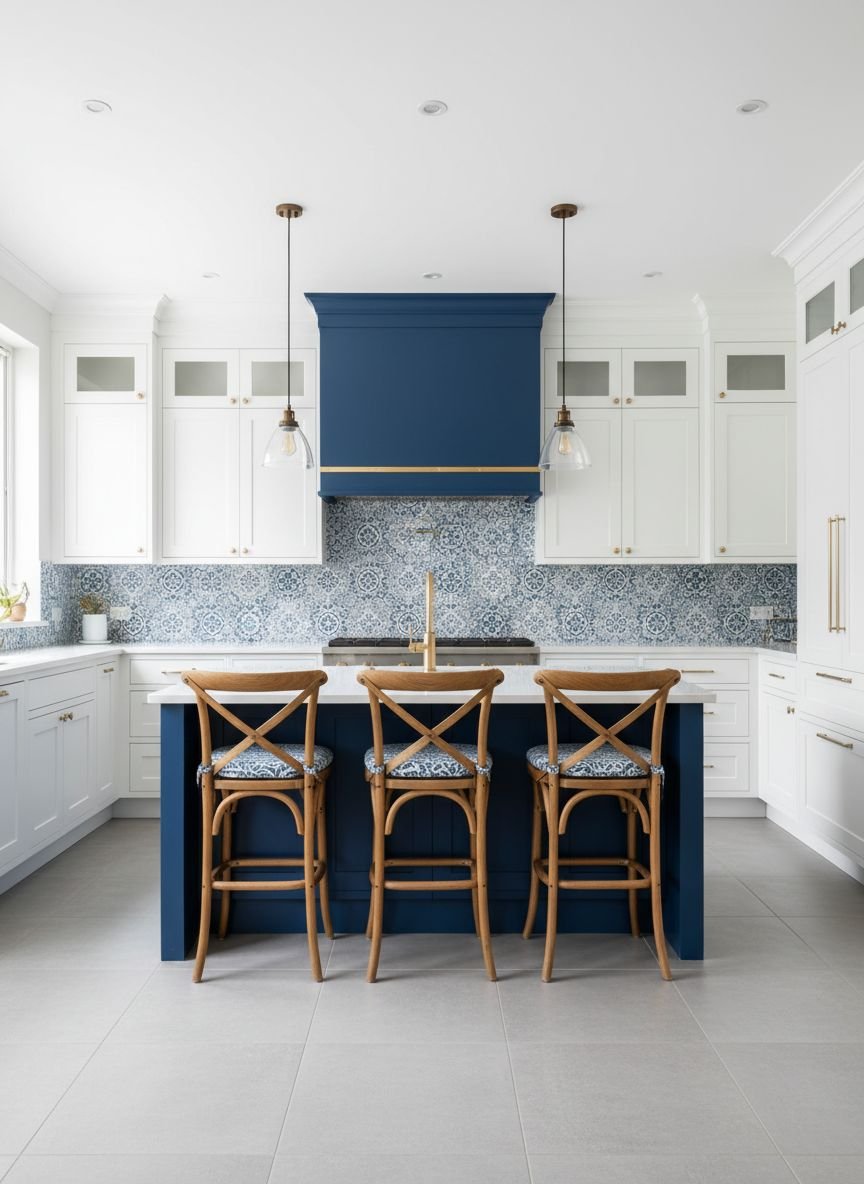
If you have a classic blue and white kitchen and want to warm it up, furniture is your best friend. Adding cognac leather or dark walnut bar stools is the fastest, non-permanent way to introduce the brown and blue trend. The rich brown leather against a navy or slate blue island creates a sophisticated, “Ralph Lauren” inspired vibe.
This approach is perfect for renters or those on a budget. You do not need to replace floors or paint cabinets. Simply swapping out metal or plastic seating for warm brown textures changes the entire temperature of the room. Look for stools with backs for comfort, and consider mixing materials, such as leather seats with wood legs, to layer the brown tones.
Pro Tip: Match your wooden cutting boards and utensil holders to the wood tone of the bar stools. This repetition of color tricks the eye into thinking the design was planned from the start.
Comparison: Wood vs. Painted Brown Accents
| Feature | Natural Wood Accents | Painted Brown/Wallpaper |
|---|---|---|
| Texture | Adds grain and physical texture | Adds pattern and visual texture |
| Durability | High (if sealed properly) | Medium (depends on material) |
| Cost | $$$ (Walnut, Oak) | $ – $$ (Paint, Vinyl) |
| Vibe | Organic, Rustic, Warm | Artistic, Modern, Bold |
| Best For | Countertops, Shelving, Floors | Accent Walls, Backsplashes |
Contrasting light brown wood with navy blue
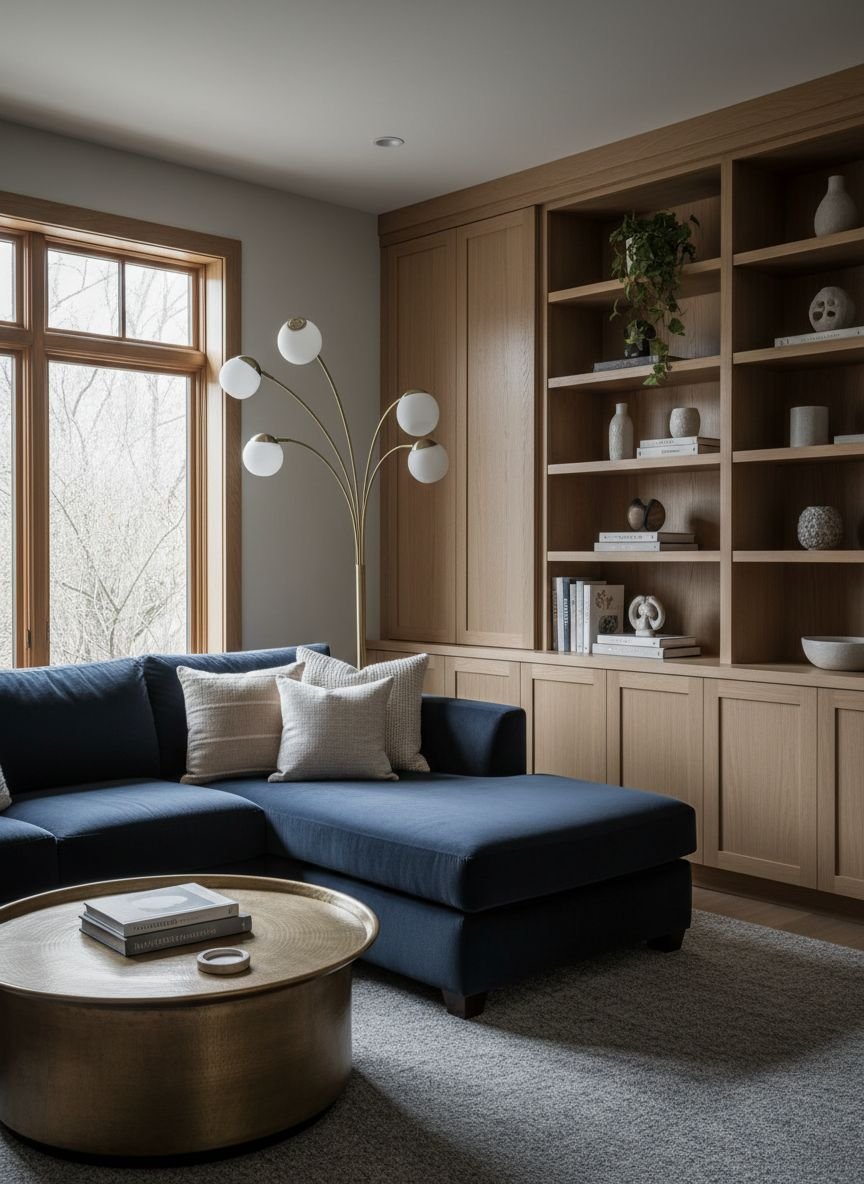
Navy blue is a commanding color. When you pair it with light brown wood (like ash, maple, or birch), you create a striking modern contrast. The lightness of the wood prevents the navy from feeling too heavy or oppressive. This combination is a staple in mid-century modern design, where clean lines and natural materials reign supreme.
Try using navy blue for your lower cabinets and light wood for your upper cabinets. This “tuxedo” style grounds the room with the dark color at the bottom while keeping the eye-level space bright and open. It creates a vertical gradient that makes low ceilings feel higher.
Pro Tip: Use matte black hardware on the light wood and brass hardware on the navy blue. Mixing metals is trendy and helps define the two different zones of the kitchen.
Wooden countertops with deep blue kitchen cabinets
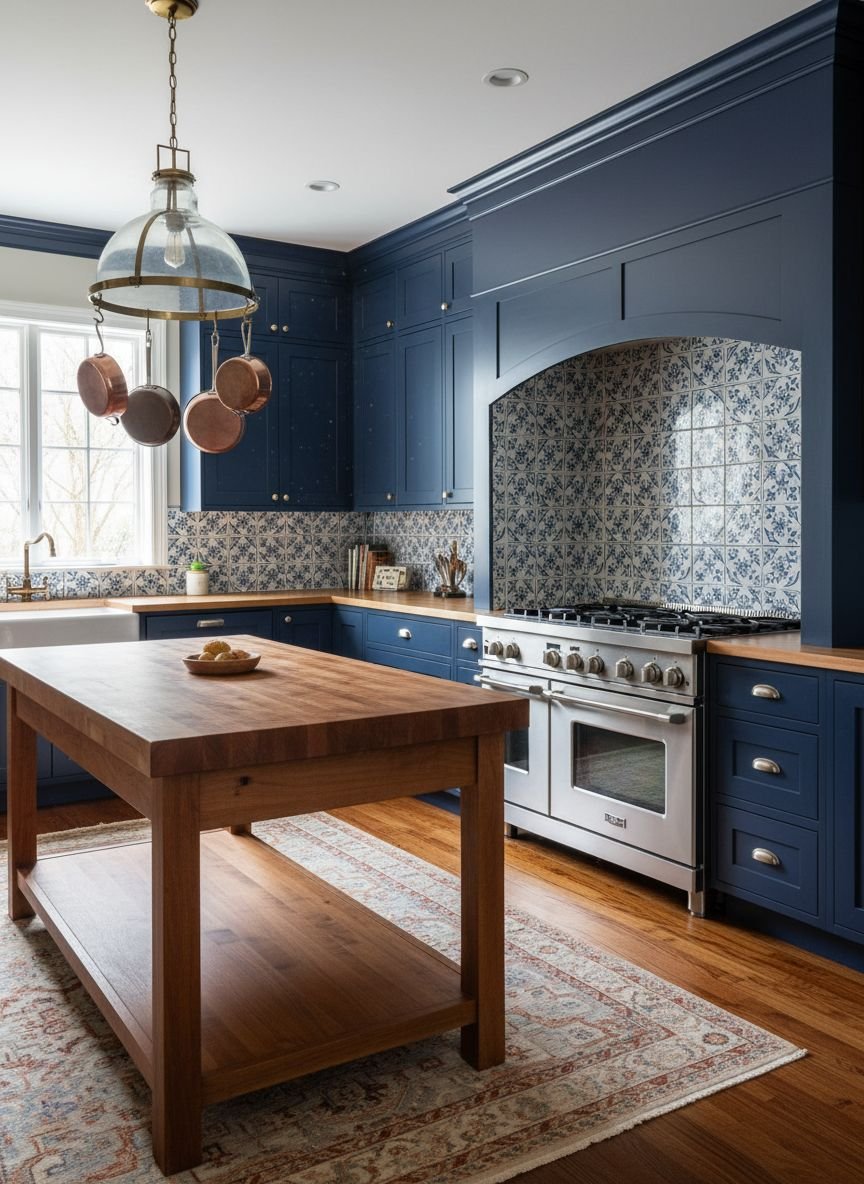
Butcher block countertops are the hero of the brown and blue kitchen. They add a massive surface area of warm brown that cuts through the coolness of blue cabinetry. Whether you choose a rich walnut or a lighter beech, the wood adds a softness that stone or quartz cannot replicate. It invites you to touch it and lean against it.
Maintenance is the key consideration here. Wood countertops need regular oiling to stay water-resistant. However, the aesthetic payoff is huge. The combination of deep ocean blue paint and oiled wood feels nautical and expensive. It is a look that ages beautifully, as the wood acquires a patina over time that adds character to the space.
Pro Tip: If you are worried about water damage around the sink, use a farmhouse sink (apron front). This protects the front edge of the wood countertop from water dripping off your waist while washing dishes.
Open space kitchen in brown, blue and white
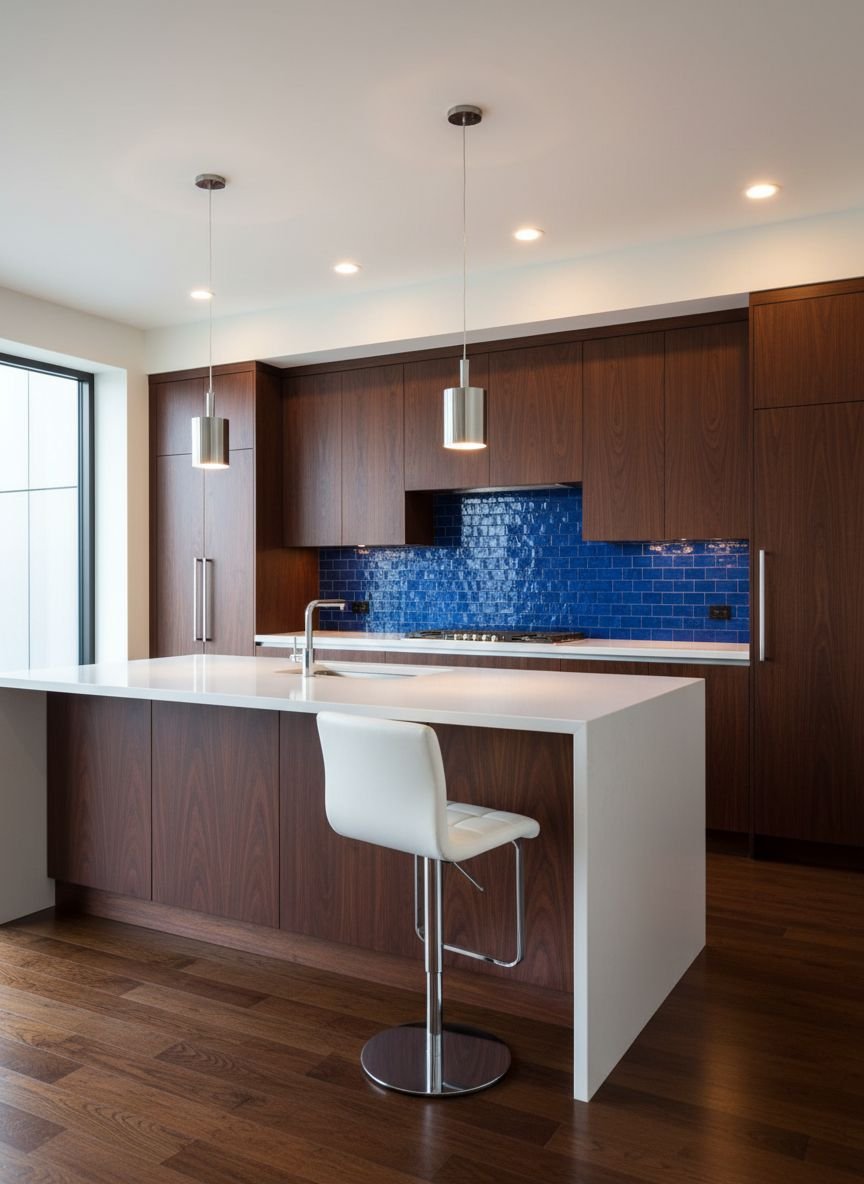
The “Rule of Three” is a design principle that states odd numbers are more visually appealing. Using brown, blue, and white creates a perfect triad. White acts as the negative space that allows the blue and brown to breathe. This is the safest and most popular way to execute this trend, as it guarantees the room remains bright.
A common application is white walls, blue cabinets, and brown furniture or flooring. Alternatively, you could have white upper cabinets, blue lower cabinets, and a brown island. The white reflects light, the blue adds color, and the brown adds warmth. It is a balanced equation that works in almost any architectural style, from Victorian to Contemporary.
Pro Tip: Use the white space to display art. A gallery wall with brown frames on a white wall connects the palette together without adding clutter.
Industrial gray with blue and brown kitchen design
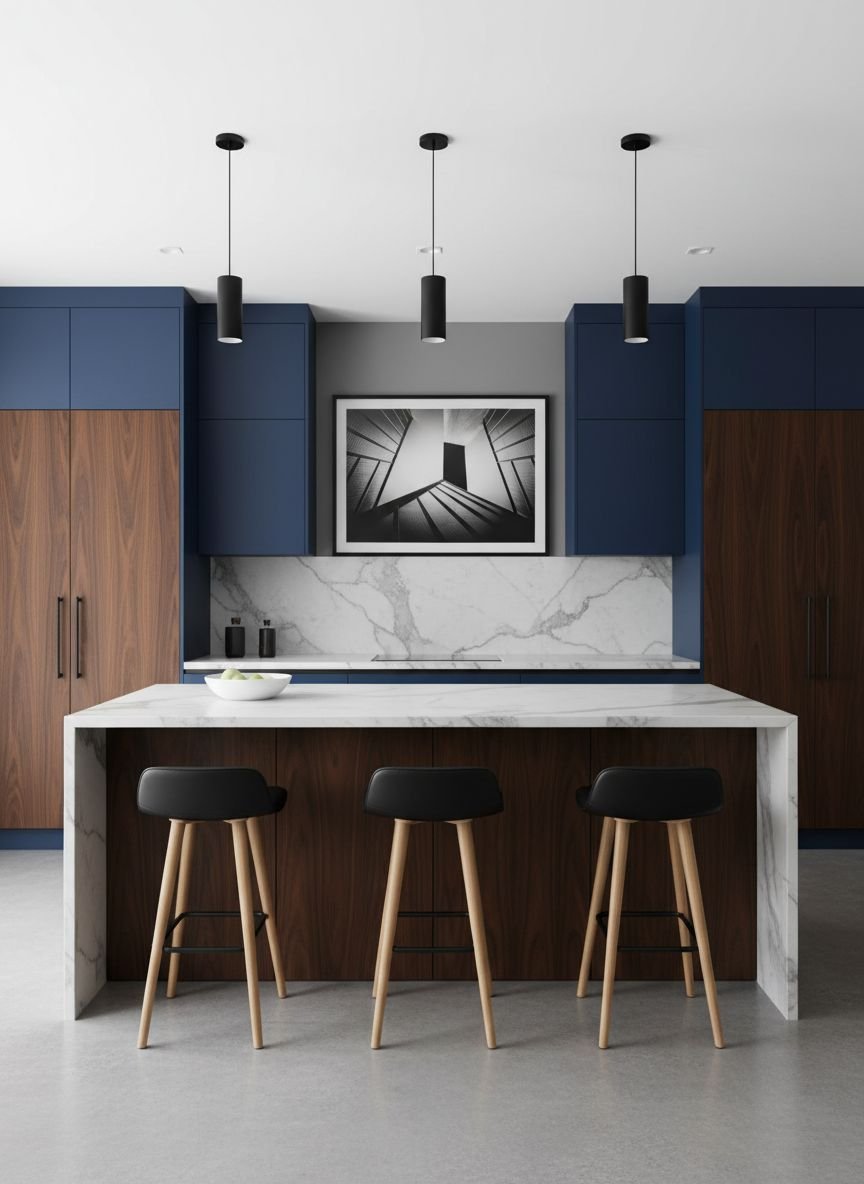
For those who love a moodier, edgier aesthetic, introducing gray into the mix is brilliant. Gray acts as a bridge between blue and brown. A cool gray concrete floor or gray subway tile backsplash harmonizes with the cool tones of blue, while the brown wood adds the necessary contrast.
This look often features “dusty” blues—shades with gray undertones like slate or charcoal blue. These muted colors look incredible next to reclaimed wood and raw metal finishes. It is a sophisticated, adult palette that feels very high-end custom home.
Pro Tip: Texture is everything here. Mix matte gray tiles, satin blue paint, and rough-sawn brown wood. If everything is smooth and glossy, the gray can look flat and boring.
Rustic brown meets modern blue
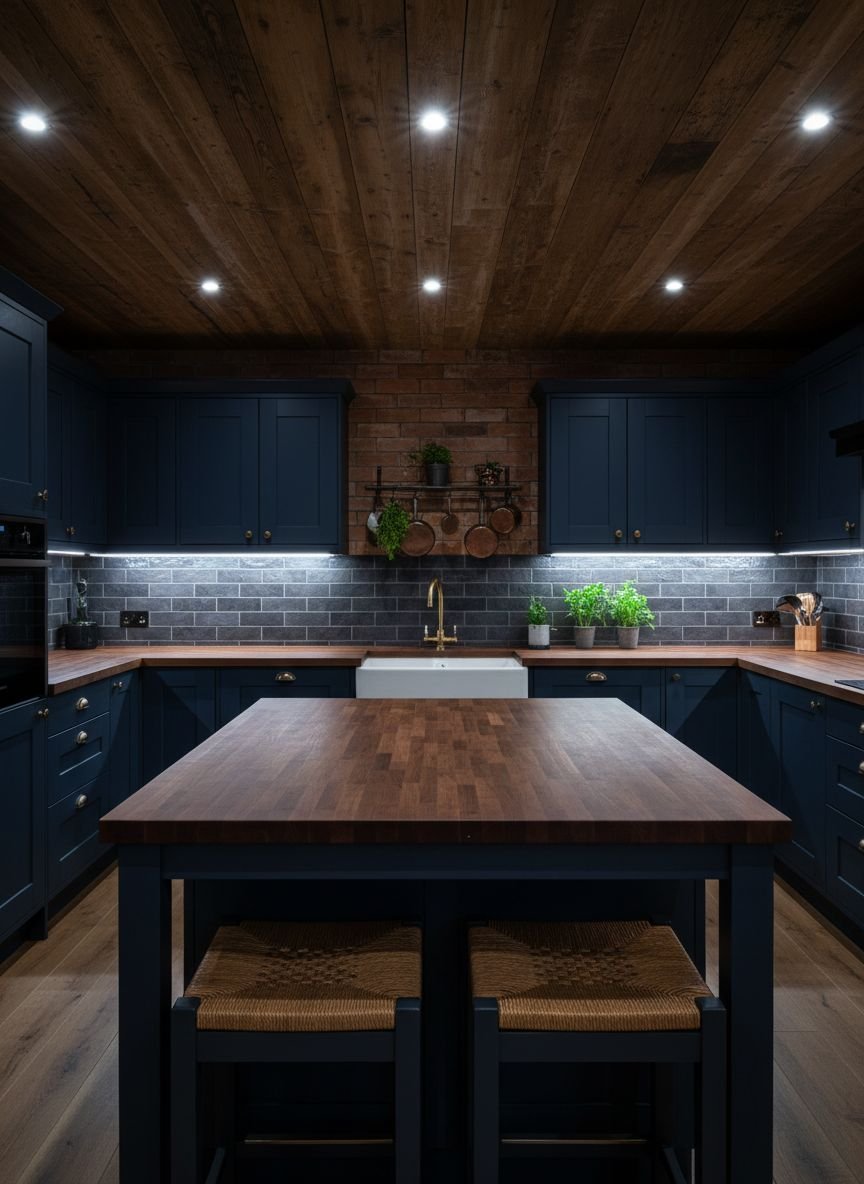
Transitional design is the art of mixing two styles, and this idea blends the old with the new. Picture a rustic, farmhouse-style kitchen with heavy timber beams, reclaimed wood floors, and perhaps a sliding barn door (all brown). Now, introduce sleek, handle-less modern cabinets in a vibrant electric blue.
The clash of eras creates a dynamic tension that is visually exciting. The rustic brown elements tell a story of history and comfort, while the modern blue elements scream innovation and freshness. It prevents the rustic elements from looking “dusty” and the modern elements from looking “sterile.”
Pro Tip: Keep the countertop neutral (white quartz or gray concrete) to let the battle between the rustic wood and modern blue paint be the main attraction.
Related posts :
- 12 Inspiring Navy Blue Patio Decor Ideas That Create A Serene Outdoor Oasis
- 16 Inspiring Shower Tile Combinations That Transform Your Bathroom Into A Spa
- 14 Genius Tiny Bedroom Ideas That Instantly Double Your Space
Popular Asked Questions
Do brown and blue go together in a kitchen?
Yes, absolutely. They are complementary because blue is a “cool” color and brown is a “warm” neutral. When used together, they balance each other out. The brown stops the blue from feeling too cold, and the blue stops the brown from feeling too heavy or boring.
What shade of blue goes best with wood cabinets?
It depends on the wood tone.
- Light Wood (Oak/Maple): Looks great with Navy Blue or deep Midnight Blue for high contrast.
- Dark Wood (Walnut/Mahogany): Pairs well with lighter shades like Powder Blue, Duck Egg Blue, or a gray-toned Slate Blue to brighten the space.
- Medium Wood: Can work with almost any blue, but Teal or Peacock Blue adds a nice retro vibe.
How do I brighten a dark blue and brown kitchen?
Lighting and white accents are key.
- Countertops: Use white quartz or marble countertops to reflect light upwards.
- Backsplash: A white or light gray glossy tile backsplash bounces light around the room.
- Ceiling: Keep the ceiling white.
- Hardware: Use reflective metals like polished brass or chrome rather than matte black.
What hardware color looks best with blue and brown?
Brass or Gold is the most popular choice because it highlights the warm tones in the brown wood and pops against the blue paint. Copper is also a beautiful choice for a more rustic look. If you want something modern and subtle, Matte Black works well, especially if you have industrial elements.
Conclusion
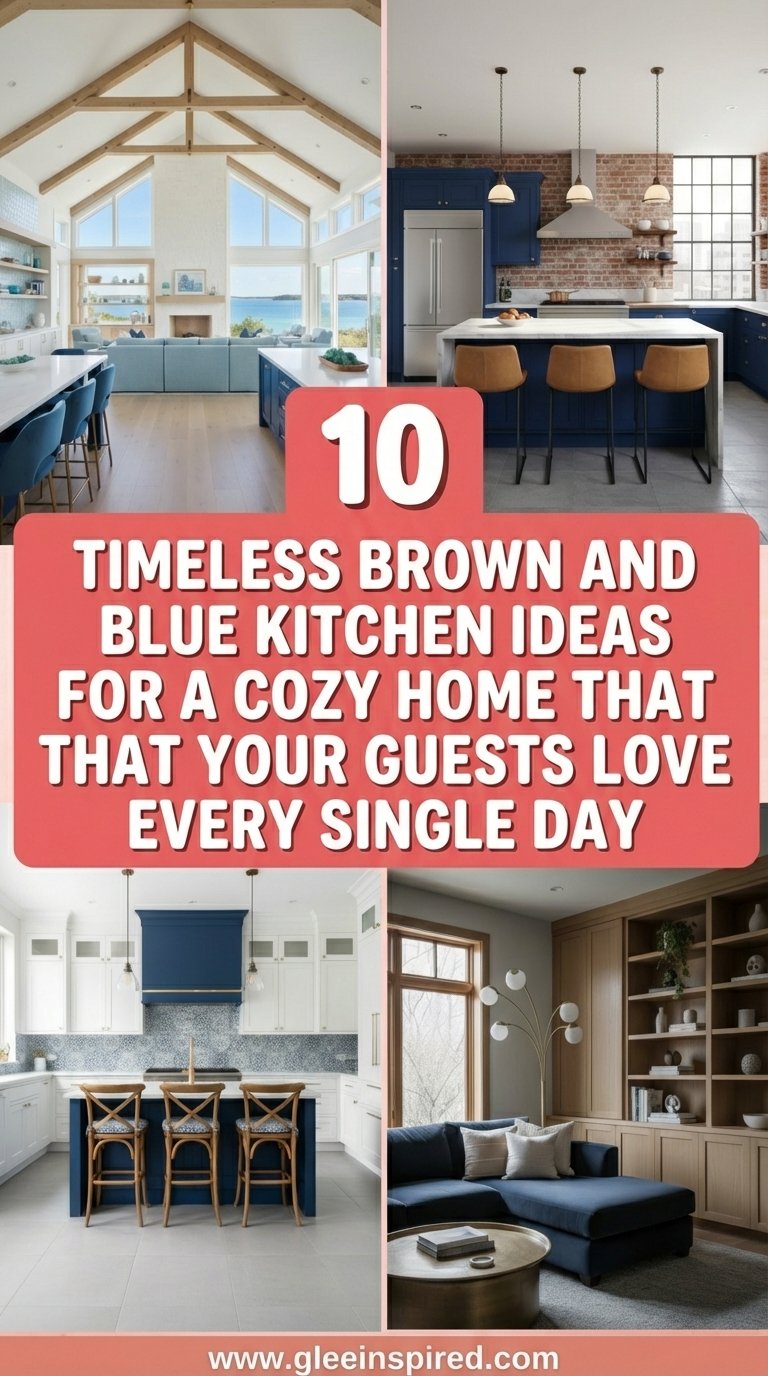
The brown and blue kitchen trend is more than just a fleeting moment in design; it is a return to balance. By mixing the serenity of blue with the stability of brown, you create a heart of the home that feels grounded yet inspiring. Whether you choose to paint your cabinets navy or simply add some wooden bar stools to a blue island, you are layering warmth and style into your daily life.
Leave a Comment