
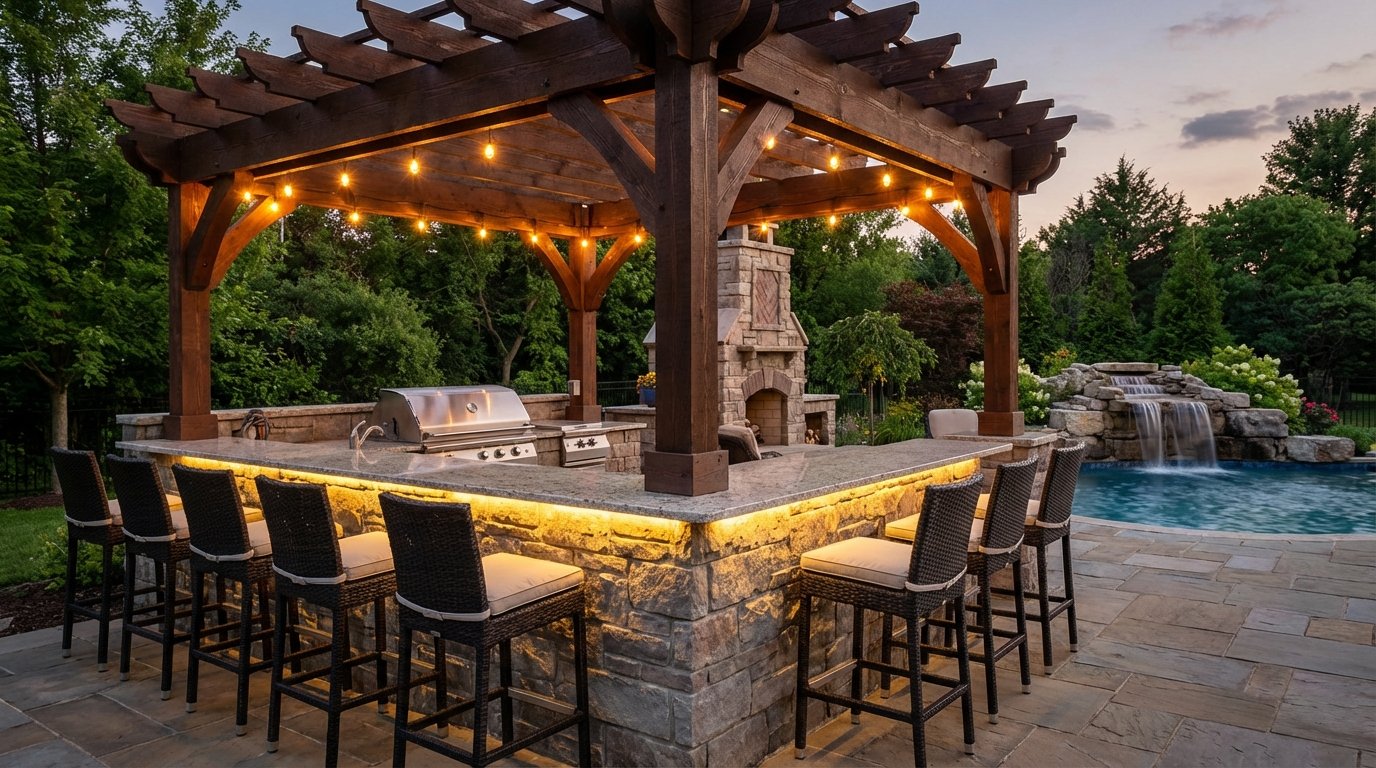
You want to turn your backyard into a destination, not just a patch of grass. An outdoor kitchen with bar seating does exactly that. It bridges the gap between a simple grilling station and a full-blown entertainment hub where guests linger long after the food is served.
This trend is about creating an “alfresco room” that mirrors the comfort of your indoor living space. It solves the problem of the isolated cook. When you add bar seating, you are no longer staring at a wall while everyone else parties; you are at the center of the action. Whether you have a sprawling patio or a compact deck, these ideas maximize flow, style, and functionality.
Key Takeaways
- Social Connection: Bar seating turns meal prep into a communal activity.
- Space Efficiency: Integrated seating saves square footage compared to separate dining sets.
- Value Addition: A well-designed outdoor kitchen significantly boosts property value.
- Versatility: Multi-level counters can serve as both prep stations and eating areas.
Table of Contents
- Convertible Bar Seating
- Outdoor TV Setup
- Integrated Lighting Solutions
- Tiled Backsplash for Style
- Bar with Built-In Fire Pit
- L-Shaped Bar Delight
- Retractable Canopy for Shade
- Kitchen with Scenic Views
- Water Feature Integration
- Curved Bar Island
- Eco-Friendly Materials
- Pergola-Covered Kitchen
- Rustic Stone Finish
- Timeless Granite Countertops
- Multi-Level Bar Counter
- Floating Bar Countertop
- Related posts :
- Popular Asked Questions
- Conclusion
Convertible Bar Seating
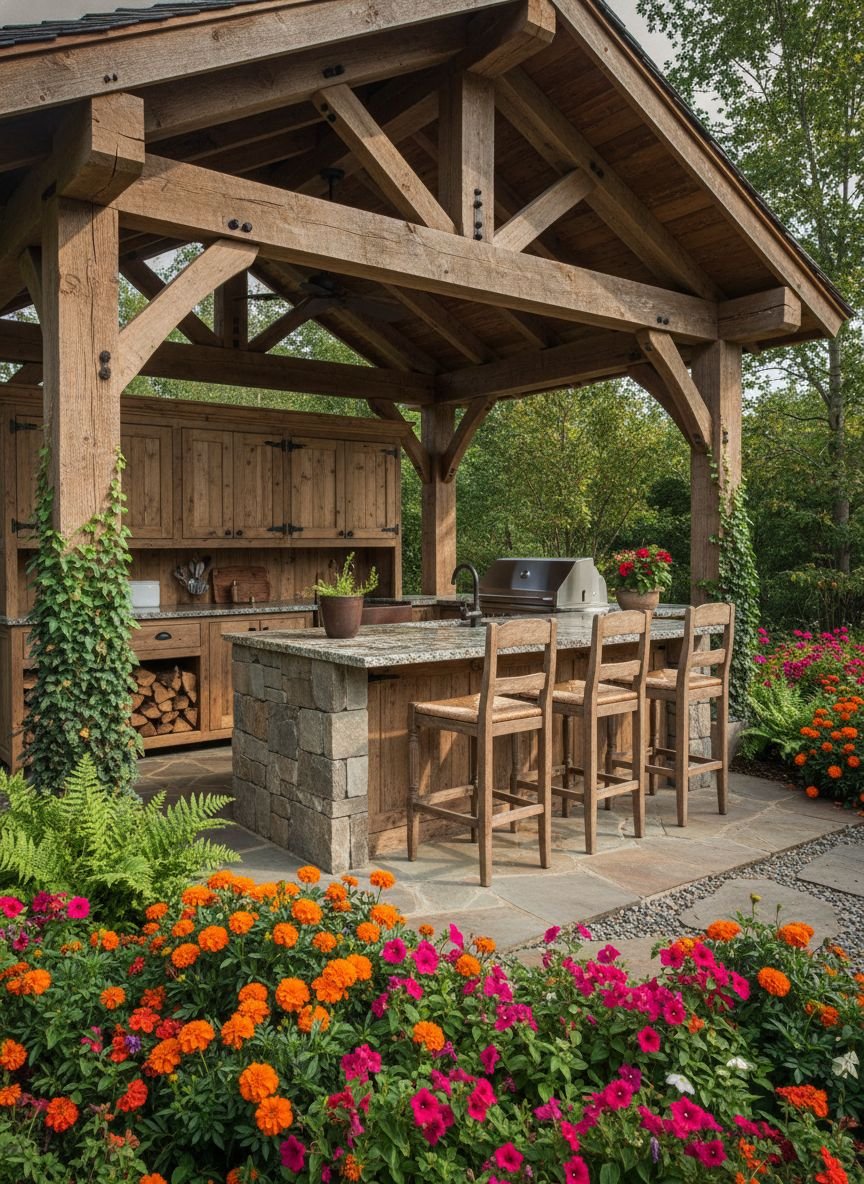
Flexibility is the ultimate luxury in small outdoor spaces. A convertible bar seating arrangement allows you to maximize your footprint without committing to a permanent massive structure. These designs often feature fold-down counters or pass-through windows that connect the indoor kitchen to the outdoor patio. When the bar is not in use, the counter drops down to flush with the wall, opening up the area for general circulation.
The mechanism relies on sturdy, weather-resistant brackets that can support the weight of heavy plates and leaning elbows. Wood is a common material here for its lightweight nature, but it must be sealed properly against moisture. This design is perfect for homeowners who entertain occasionally but want to maintain an open deck for yoga or children’s play during the week.
Pro Tip: Install high-quality marine-grade hinges to prevent rusting during wet seasons.
Outdoor TV Setup
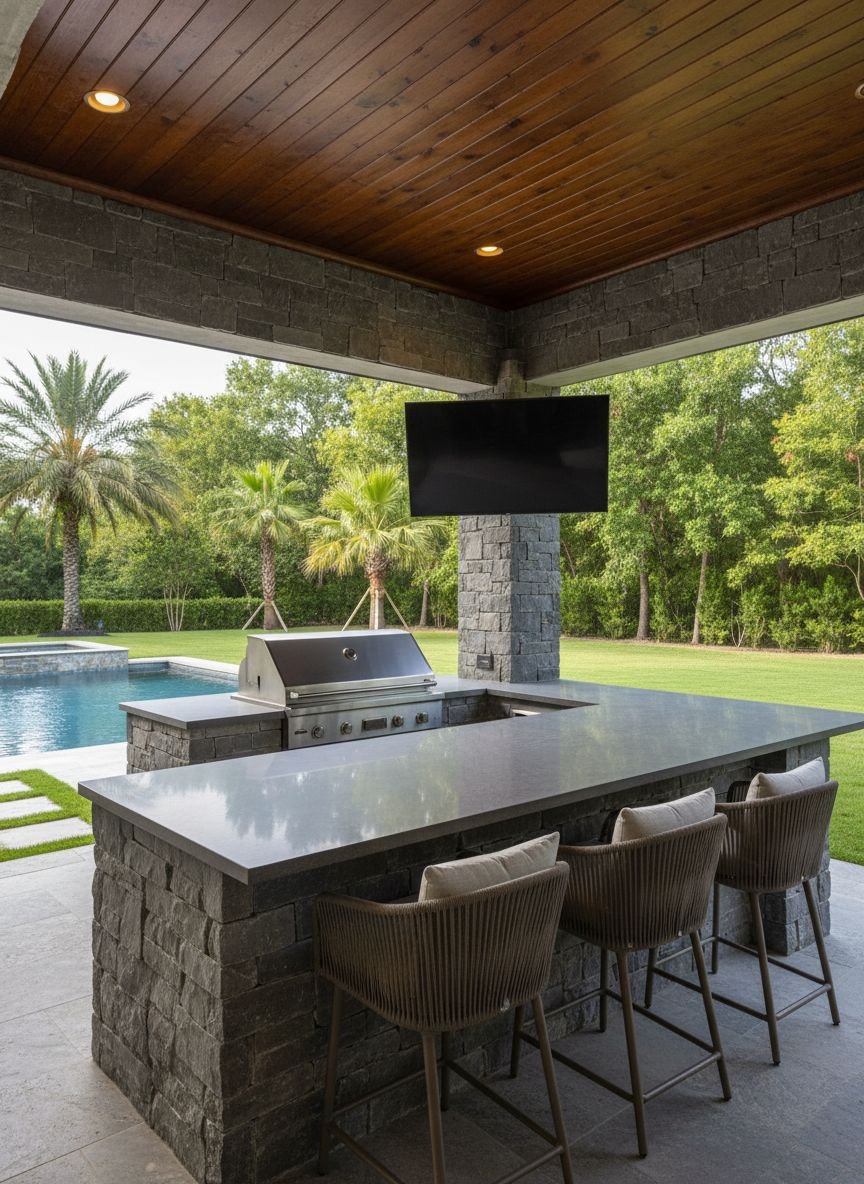
The modern outdoor kitchen is incomplete without an entertainment component. Positioning your bar seating directly facing a mounted outdoor TV creates the ultimate sports bar experience right in your backyard. The key here is sightlines. You want to ensure that the cooking equipment does not obstruct the view for your seated guests.
Glare is the enemy of outdoor viewing. Place the TV inside a protective enclosure or under a deep overhang to shield the screen from direct sunlight. Sound is also a factor; open air dissipates audio quickly. Consider installing a soundbar directly beneath the TV or integrating surround sound speakers into the patio ceiling to ensure the commentary is crisp without needing to blast the volume.
Pro Tip: Use an articulating mount so you can angle the screen toward the pool or dining table when the bar is empty.
Integrated Lighting Solutions
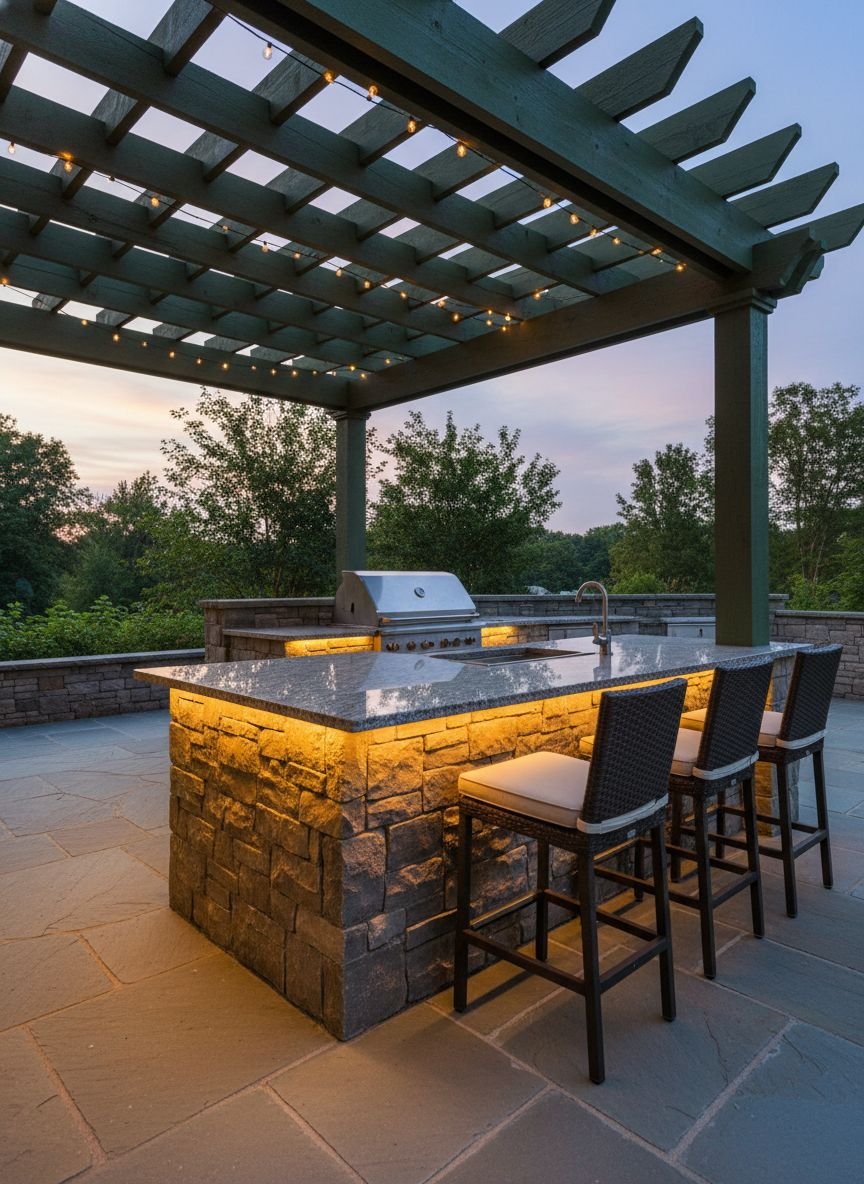
Lighting transitions your outdoor kitchen from a daytime workspace to an evening lounge. Integrated lighting under the bar counter is not just aesthetic; it is functional safety. LED strip lights installed under the lip of the counter cast a soft glow downward, illuminating the footrests and the path around the stools. This prevents trips and stumbles in the dark.
For a high-end look, choose warm white LEDs (2700K to 3000K) to mimic the cozy vibe of a candlelit dinner. If you have a stone veneer on your island, grazing lights placed at the base can shine upward to highlight the texture of the rock. This layering of light creates depth and drama that overhead floodlights simply cannot match.
Pro Tip: Put your bar lights on a separate dimmer switch so you can lower them as the night progresses.
Tiled Backsplash for Style
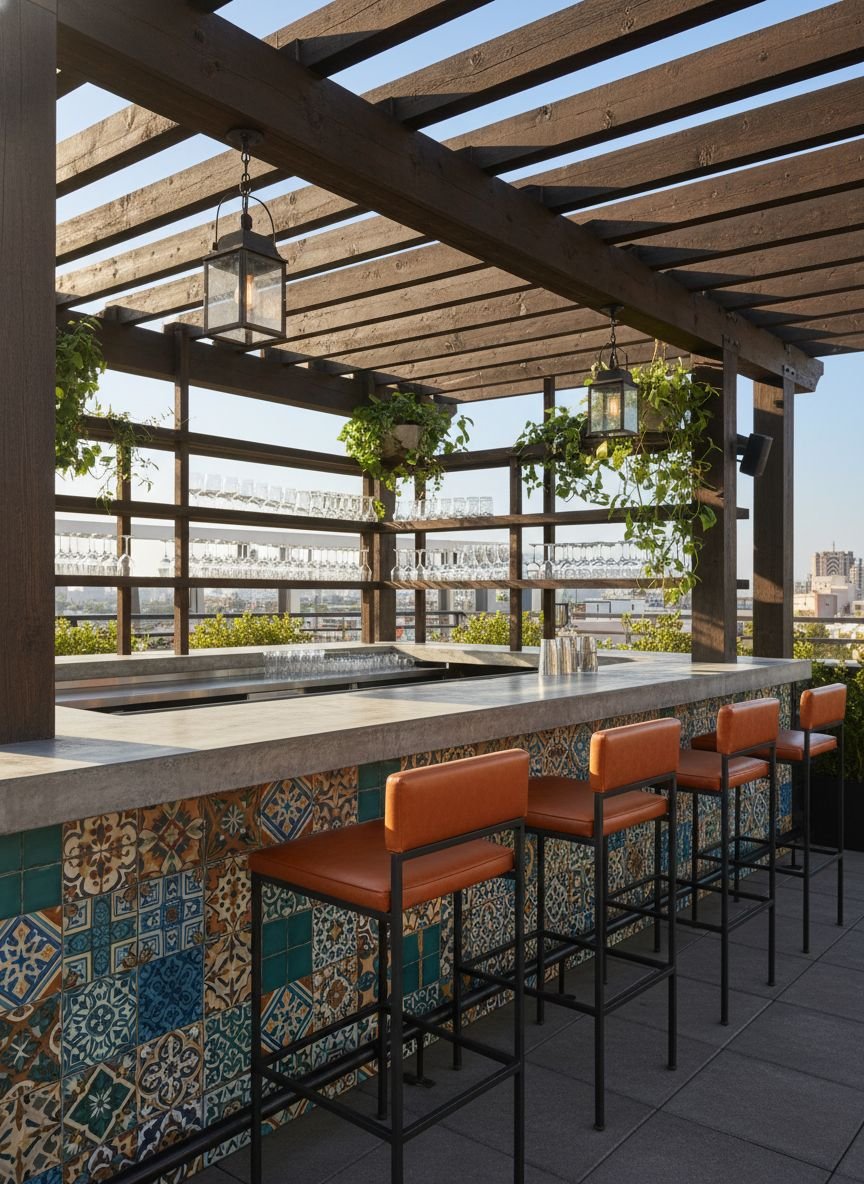
A tiled backsplash is often overlooked in outdoor kitchens, yet it offers a massive opportunity for injecting personality. While the counter handles the heavy duty work, the vertical surface behind the grill or bar is where you can play with color and pattern. Mediterranean-style encaustic tiles or vibrant blue glazed ceramics can bring a resort feel to a standard stucco setup.
Durability is paramount for outdoor tiles. You must select materials that are frost-proof if you live in a cold climate. Porcelain is an excellent choice as it is denser and less porous than standard ceramic, making it resistant to cracking from freeze-thaw cycles. The grout should also be sealed with a high-quality outdoor sealant to prevent mildew and staining from grease splatter.
Pro Tip: Choose a patterned tile that hides splashes and soot better than a solid white subway tile.
Bar with Built-In Fire Pit
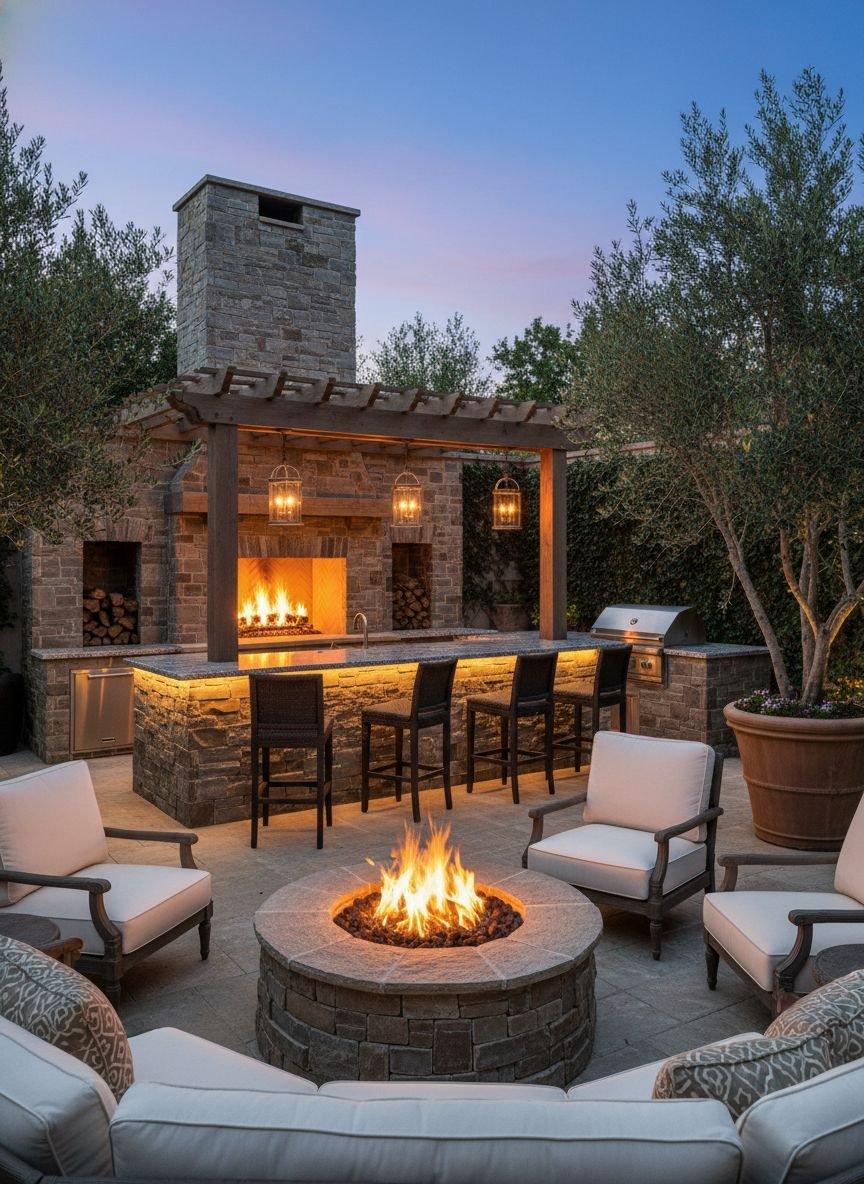
Combining a fire feature with your dining surface creates a magnetic focal point. A bar counter with a linear fire pit running down the center creates instant ambiance and warmth. This setup encourages guests to gather around and stay longer, extending the usability of your outdoor kitchen into the cooler autumn months.
Safety is the main design constraint here. The fire trough needs to be insulated properly to ensure the countertop surface remains cool enough for plates and drinks. Gas-powered units are superior for this application because they offer instant control over the flame height and heat output. A glass wind guard is essential to keep the flame steady and prevent napkins from blowing into the fire.
Pro Tip: Save this idea to your Pinterest if you love hosting late-night wine tastings.
Comparison: Countertop Materials
| Material | Durability | Maintenance | Cost |
|---|---|---|---|
| Granite | High | Low (Seal yearly) | $$$ |
| Concrete | Medium | High (Prone to stains) | $$ |
| Porcelain | High | Very Low | $$$ |
| Tile | Medium | Medium (Grout lines) | $ |
L-Shaped Bar Delight
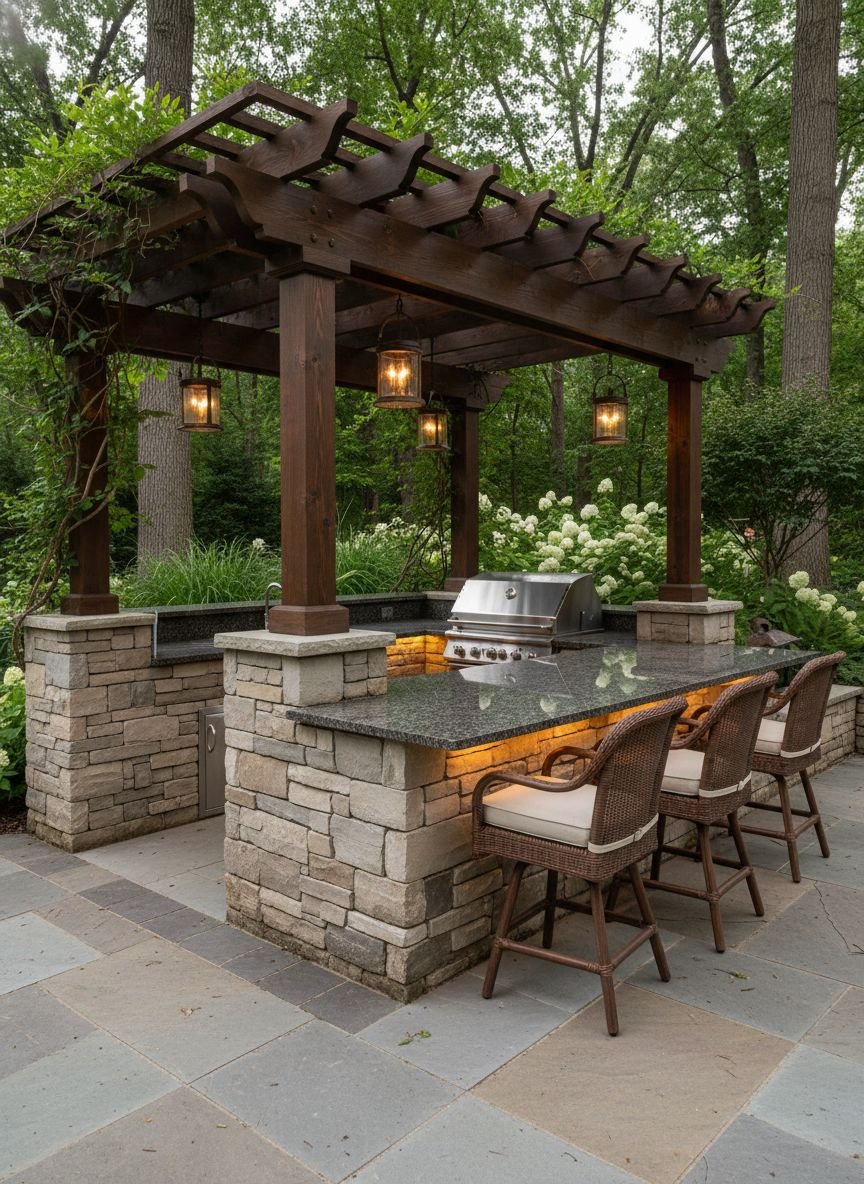
The L-shaped configuration is a classic for a reason. It naturally separates the “hot zone” (grill and side burners) from the “social zone” (bar seating). One leg of the L is dedicated to the chef’s workflow, while the perpendicular leg offers a safe, cool surface for guests to sit. This keeps children and guests away from open flames while keeping them within conversation range.
This layout also maximizes corner space on a patio. You can tuck the L-shape into a corner of the deck to open up the center for a dining table or lounge area. The interior of the L provides ample room for under-counter storage, such as a mini-fridge or trash pull-out, keeping the visual clutter hidden from the seated guests.
Pro Tip: Ensure you have at least 42 inches of clearance inside the L for the cook to move comfortably.
Retractable Canopy for Shade
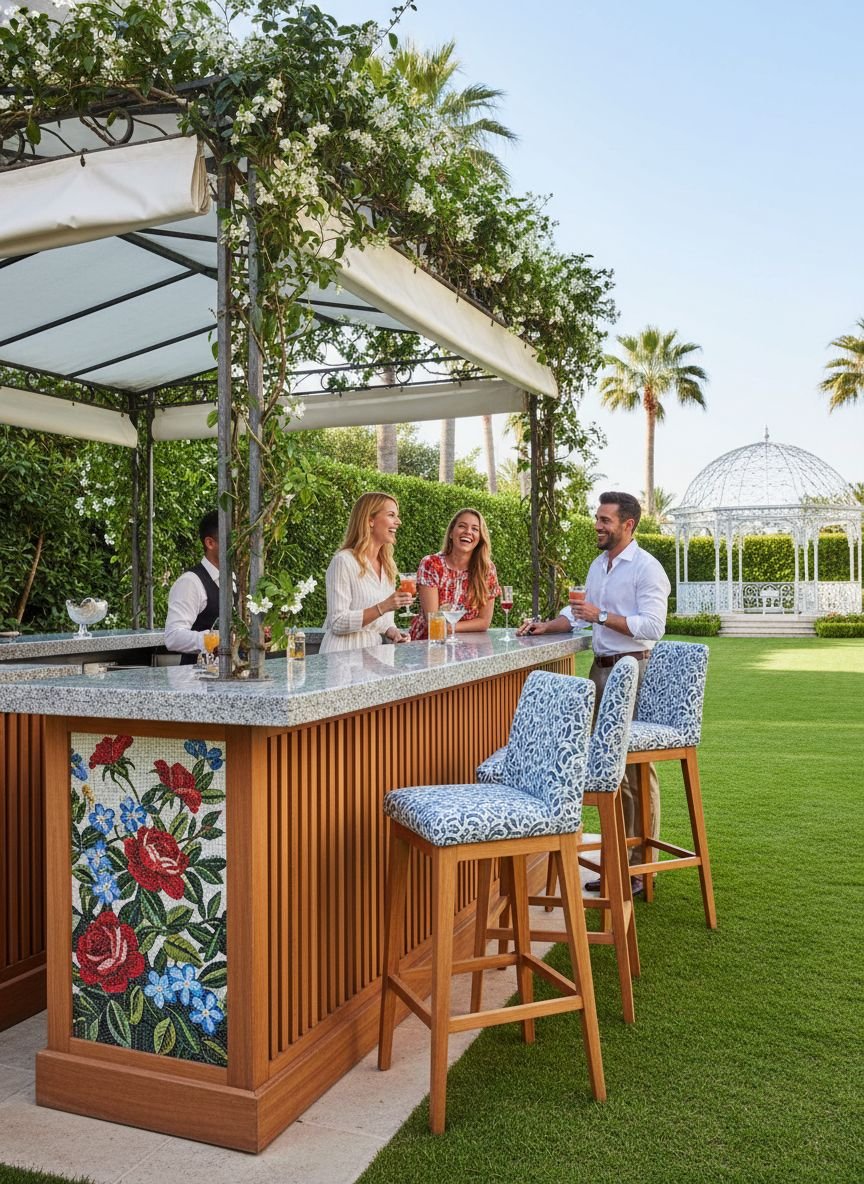
A bar is useless if it is baking in the midday sun. A retractable canopy offers on-demand shade that protects your guests and your equipment. Unlike a permanent roof, a retractable awning allows you to enjoy the stars at night or let the sun in during cooler spring days.
Modern fabrics are UV-resistant and can reduce the temperature underneath by up to 15 degrees. Motorized versions with wind sensors are a smart investment; they automatically retract when wind speeds get too high, preventing damage to the structure. This dynamic shading solution makes your outdoor bar a viable destination at 2 PM in July, not just after sunset.
Pro Tip: Choose a striped fabric pattern to hide dust and pollen accumulation.
Kitchen with Scenic Views
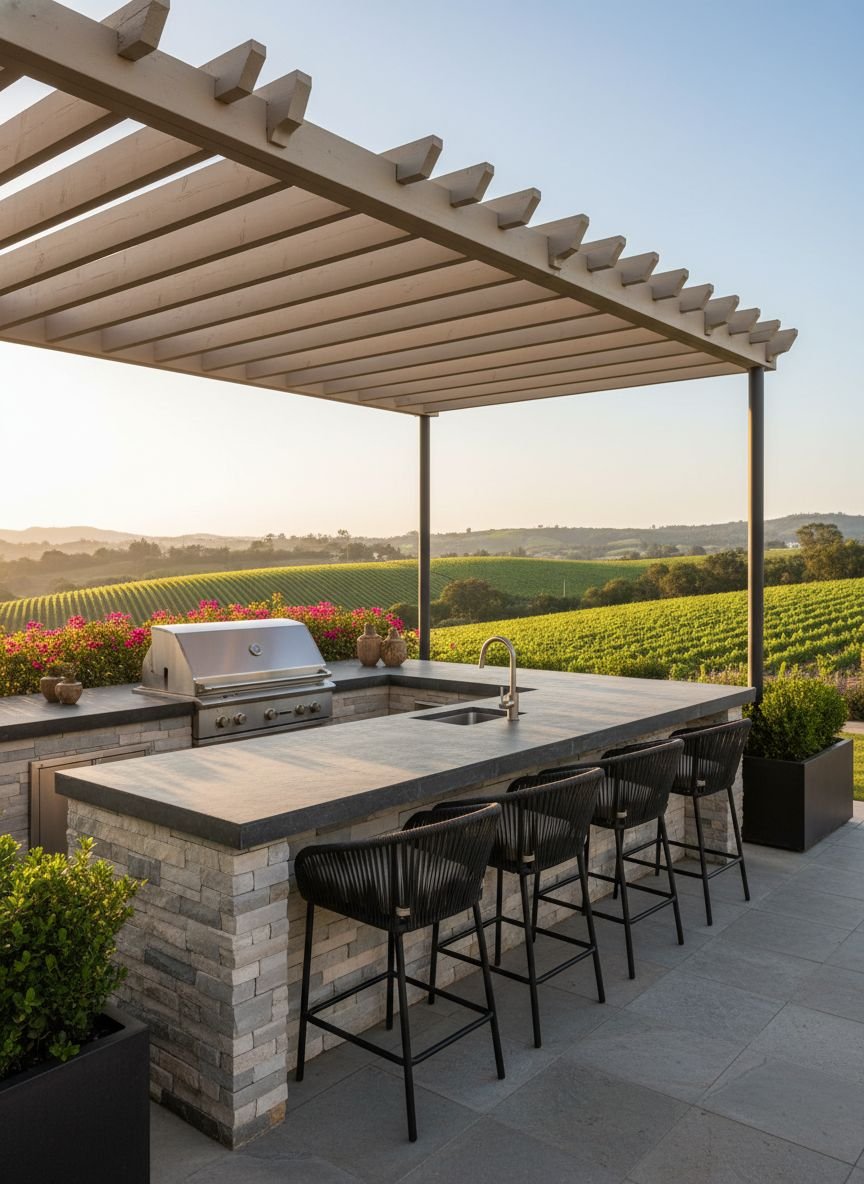
If your property overlooks a garden, a pool, or a skyline, your bar seating must be oriented to capture it. Too often, outdoor kitchens are pushed against a wall, forcing guests to stare at the siding of the house. Instead, float the island in the middle of the patio and place the bar stools on the outer edge, facing the view.
This design approach often requires running utility lines (gas, water, electricity) under the patio flooring to the island location. While this increases the initial installation effort, the payoff is a high-end, resort-like experience. The cook may have their back to the view, but they face their guests, creating a warm and engaging dynamic.
Pro Tip: Use backless bar stools to keep the sightlines open when the bar is not in use.
Water Feature Integration
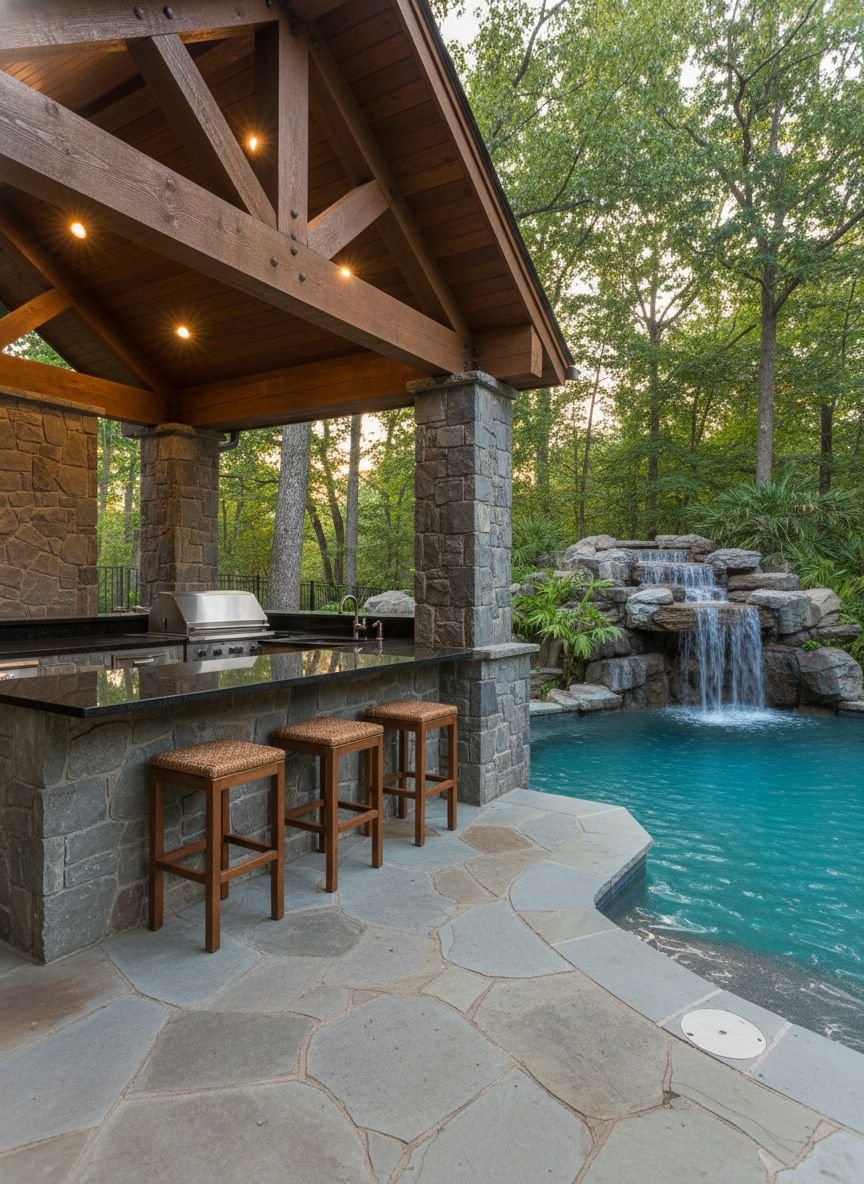
The sound of trickling water instantly lowers blood pressure. integrating a small water feature, such as a sheer descent waterfall or a bubbling fountain, into the side of the bar island adds a layer of sensory relaxation. This is particularly effective in urban environments where you might want to mask the noise of traffic or neighbors.
The water feature can be built into the stone veneer of the bar wall, catching water in a narrow trough at the bottom. Lighting the water from within creates a shimmering effect at night. This element turns your outdoor kitchen from a functional cooking space into a tranquil Zen garden.
Pro Tip: Ensure the pump is easily accessible via a service panel for maintenance.
Curved Bar Island
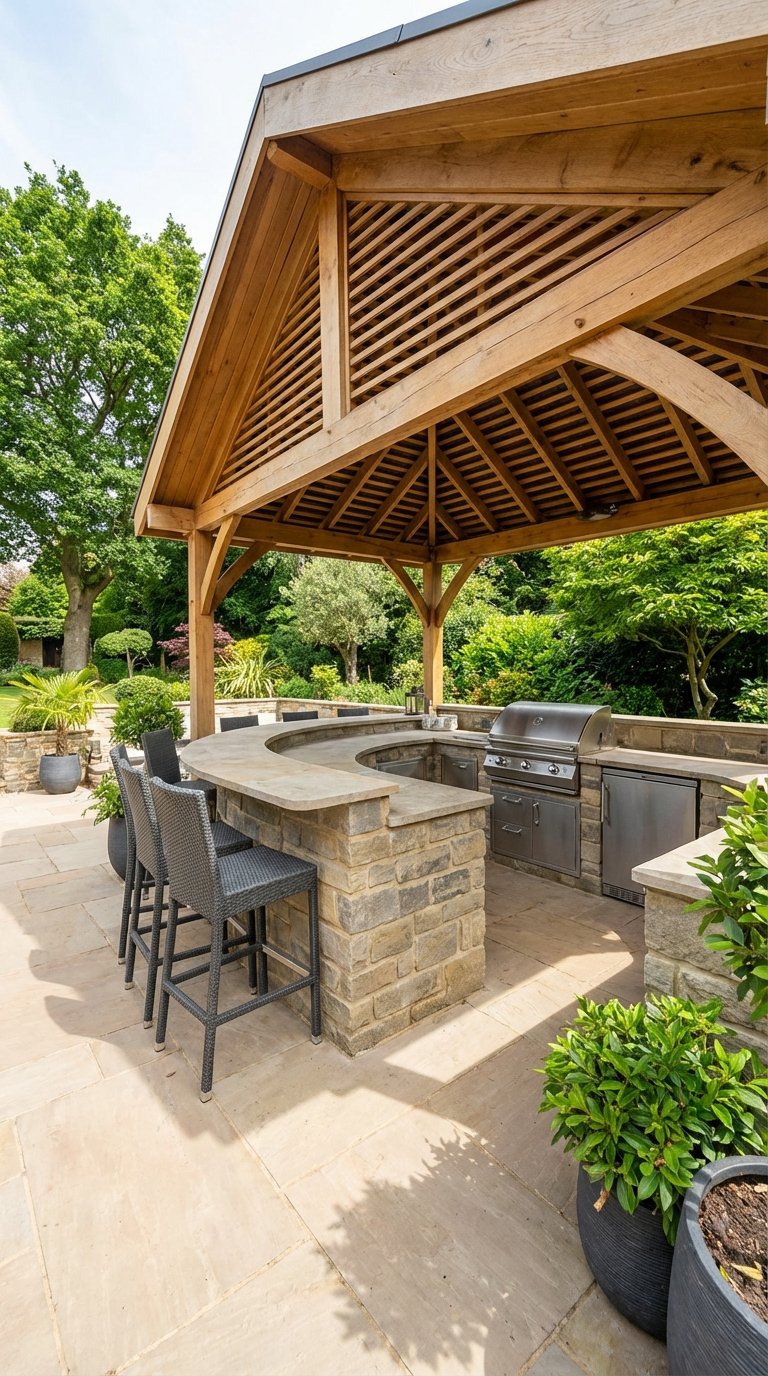
Straight lines can feel rigid and formal. A curved bar island introduces organic flow to your backyard. It softens the hard edges of a rectangular patio and encourages better conversation. On a curved bar, guests are angled slightly toward each other rather than sitting in a straight line, which makes socializing more natural.
Constructing a curved island requires flexible framing materials, such as steel studs or specialized concrete forms. The countertop template will also be more complex, often requiring a digital laser measure for precision. However, the result is a custom, high-design look that stands out from the standard prefabricated modular kitchens.
Pro Tip: Use small mosaic tiles or vertical wood slats for the facing, as they handle curves better than large stone slabs.
Eco-Friendly Materials
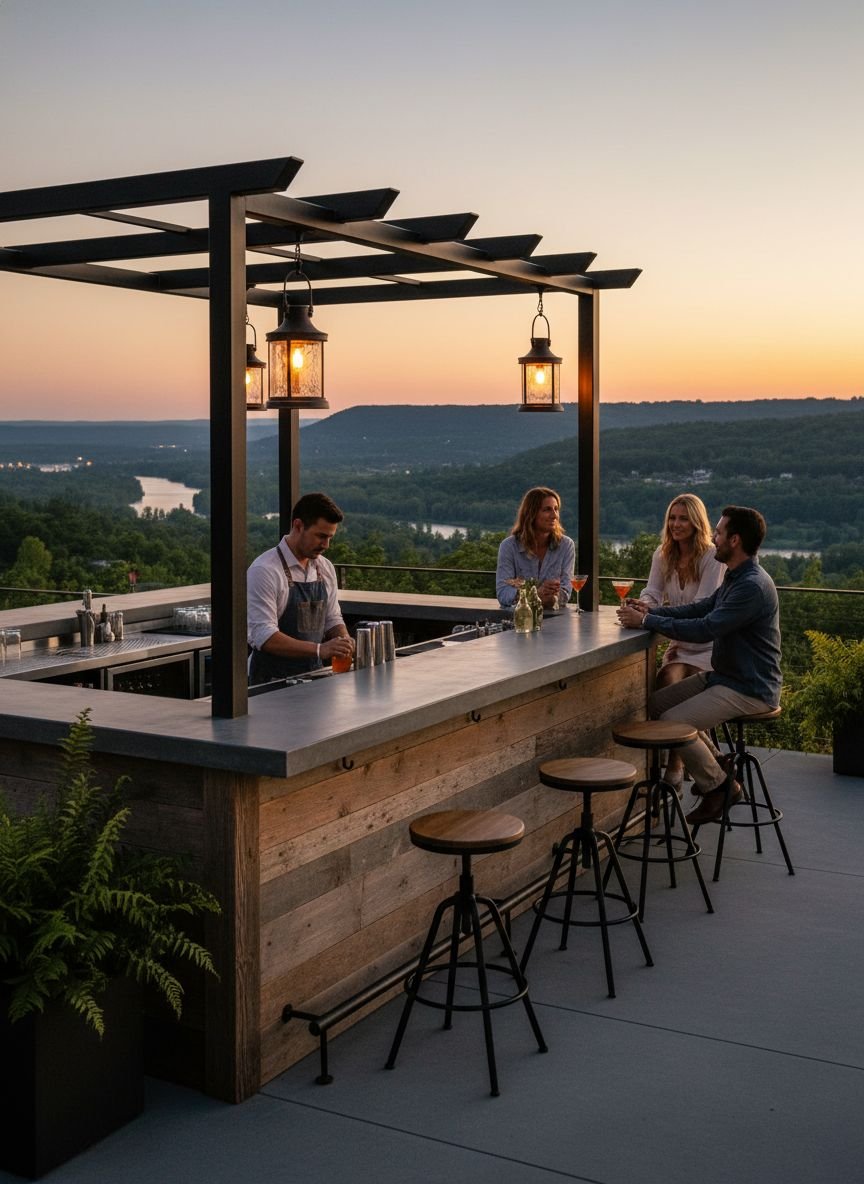
Sustainability is a major trend in outdoor design. Homeowners are increasingly choosing recycled and eco-conscious materials for their kitchen bars. Countertops made from recycled glass embedded in concrete offer a unique, terrazzo-like aesthetic that is incredibly durable.
For the cabinetry and facing, reclaimed wood or composite lumber (made from recycled plastics) are excellent choices. Composite lumber resists rot, termites, and fading without the need for annual staining. This reduces the chemical load on your garden environment and ensures your kitchen lasts for decades with minimal upkeep.
Pro Tip: Look for FSC-certified wood if you choose natural timber to ensure it comes from responsibly managed forests.
Pergola-Covered Kitchen
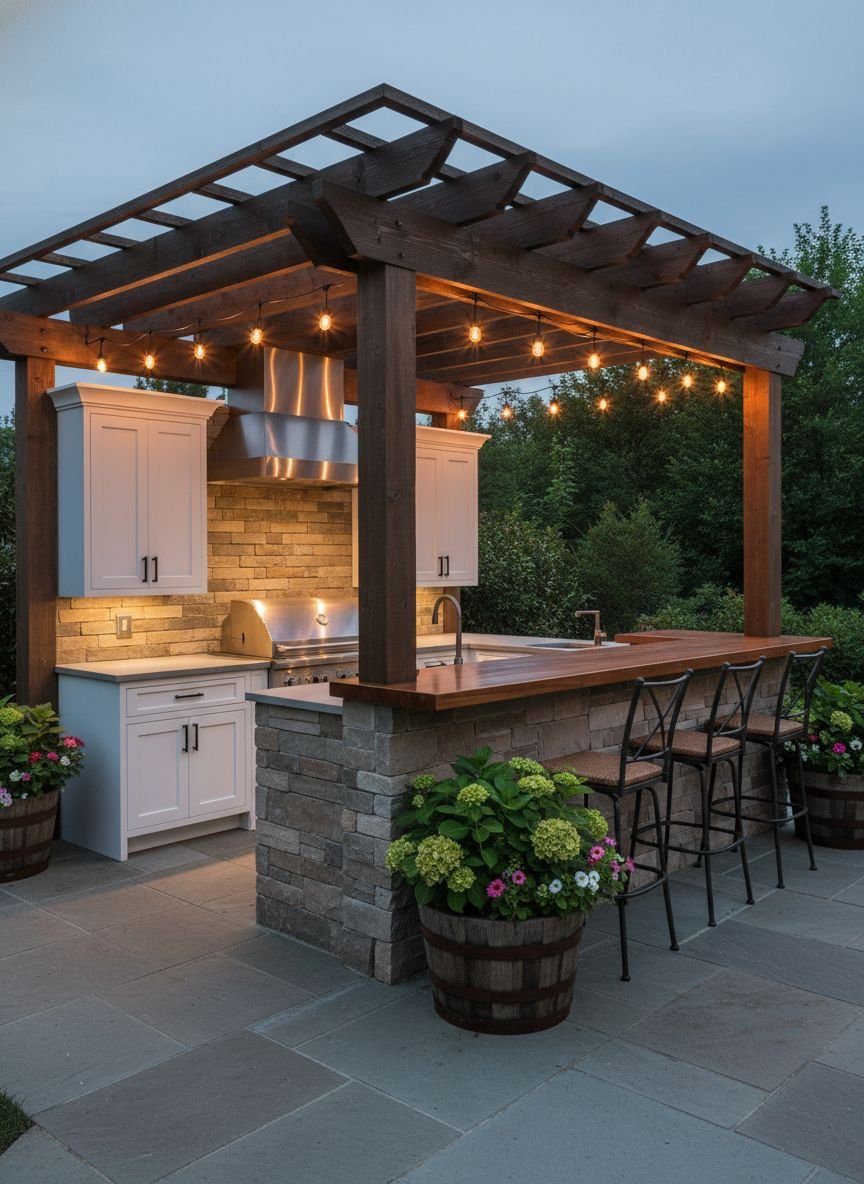
A pergola defines the space without closing it in. It provides a visual ceiling that makes the outdoor kitchen feel like a distinct room. By growing climbing vines like wisteria or jasmine up the posts, you add natural shade and fragrance to your bar area.
The structure of the pergola also provides mounting points for amenities. You can hang pendant lights directly over the bar counter, install ceiling fans to keep mosquitoes away, or mount outdoor heaters for chilly nights. The interplay of light and shadow created by the pergola slats adds texture to the space throughout the day.
Pro Tip: Install a polycarbonate sheet on top of the pergola slats to keep the rain out while letting the light in.
Rustic Stone Finish
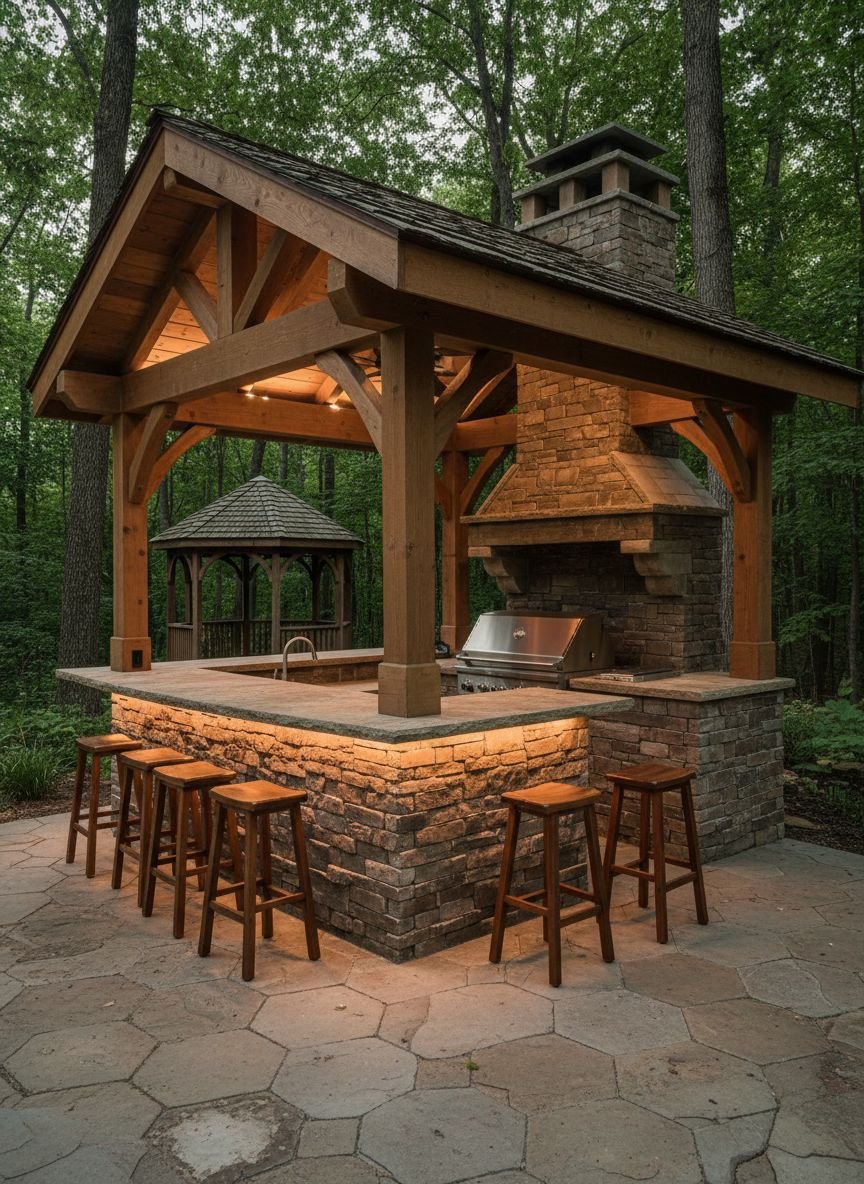
For a timeless, grounded look, nothing beats natural stone. Stacked stone veneer is a popular choice for the base of the bar island. It blends seamlessly with garden landscapes and ages beautifully. Whether you choose jagged ledge stone for a rugged look or smooth limestone for a cleaner vibe, stone anchors the kitchen visually.
When pairing a countertop with a stone base, simplicity is key. A solid-color concrete or honed granite top prevents the design from looking too busy. The texture of the rough stone contrasts elegantly with the smooth bar surface, creating a tactile experience for guests resting their feet or knees against the island wall.
Pro Tip: Seal the stone veneer to prevent efflorescence (white powdery deposits) from moisture migration.
Timeless Granite Countertops
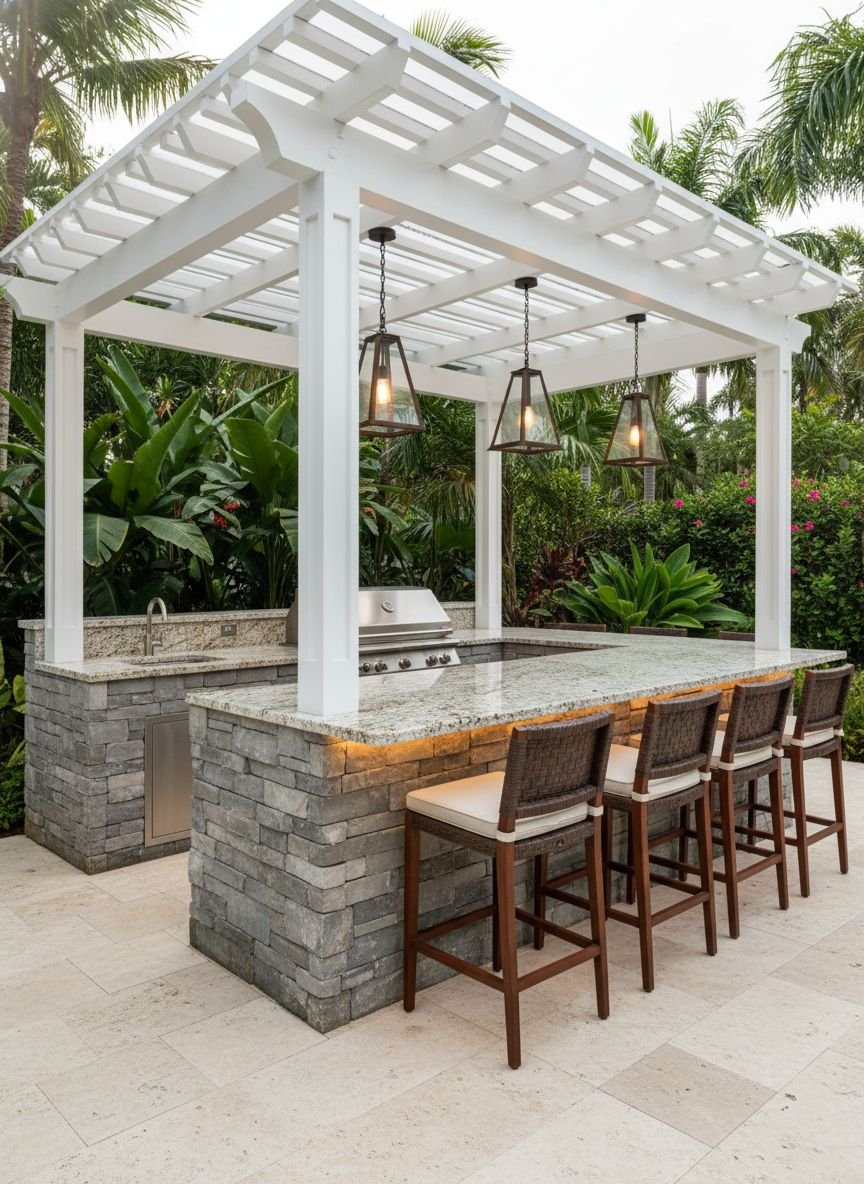
Granite remains the gold standard for outdoor bar tops. It is virtually indestructible against the elements. It can withstand scorching sun, freezing snow, and pouring rain without warping or fading. Unlike quartz, which can yellow under UV exposure due to its resin content, natural granite is UV stable.
When selecting granite for an outdoor bar, opt for a honed or leathered finish rather than a high gloss polish. A polished surface can create blinding glare in the sun and shows water spots and pollen easily. A matte finish hides dust and feels more organic to the touch.
Pro Tip: Avoid absolute black granite in uncovered areas, as it can get hot enough to burn skin in direct summer sun.
Multi-Level Bar Counter
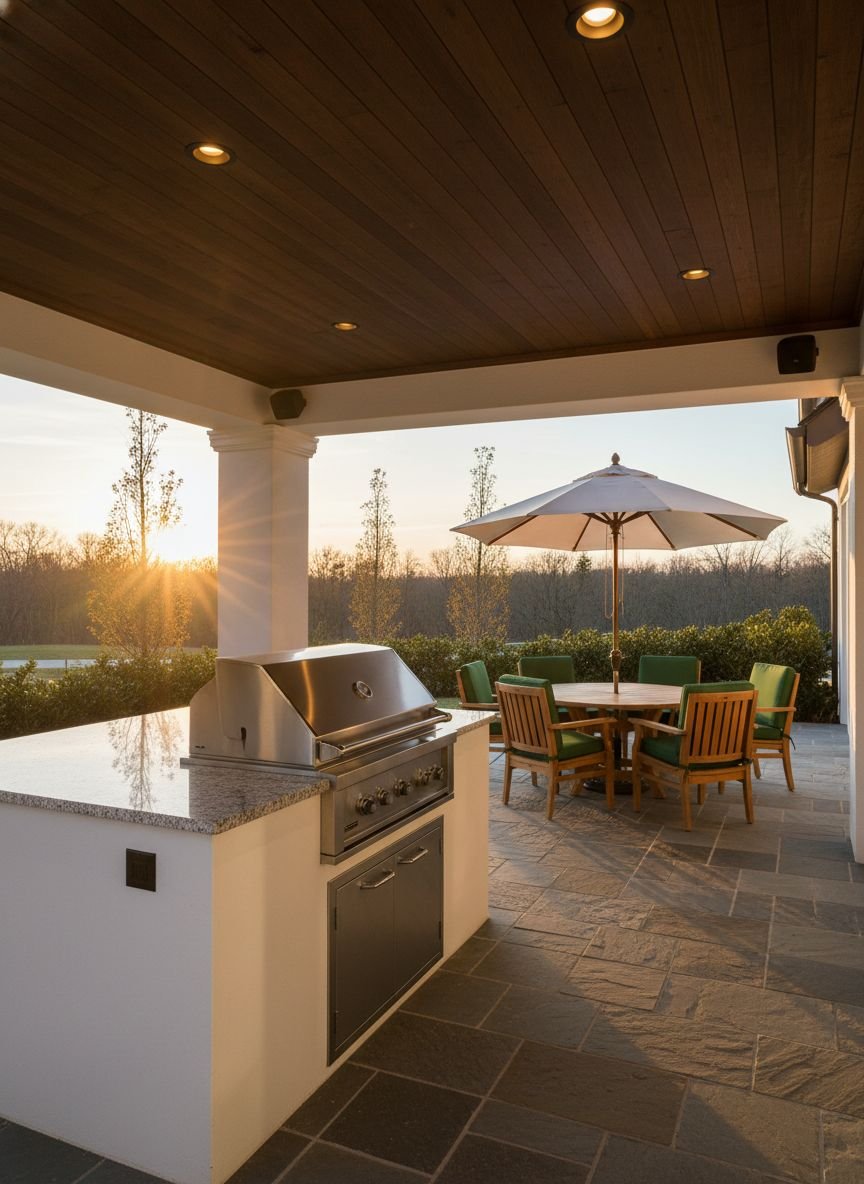
A multi-level counter creates a functional separation between the chef and the guests. The lower level, typically at 36 inches, is the working height for chopping and grilling. The upper level, raised to 42 inches, creates a bar top for serving and seating.
This 6-inch rise serves a crucial purpose: it hides the mess. Your guests see a clean bar surface and their drinks, while the dirty prep dishes and marinades are hidden behind the riser. It also provides a backsplash for the counter, preventing grease from the grill from splattering onto your guests.
Pro Tip: Use contrasting materials for the two levels (e.g., concrete for the prep zone and wood for the bar top) to emphasize the design.
Floating Bar Countertop
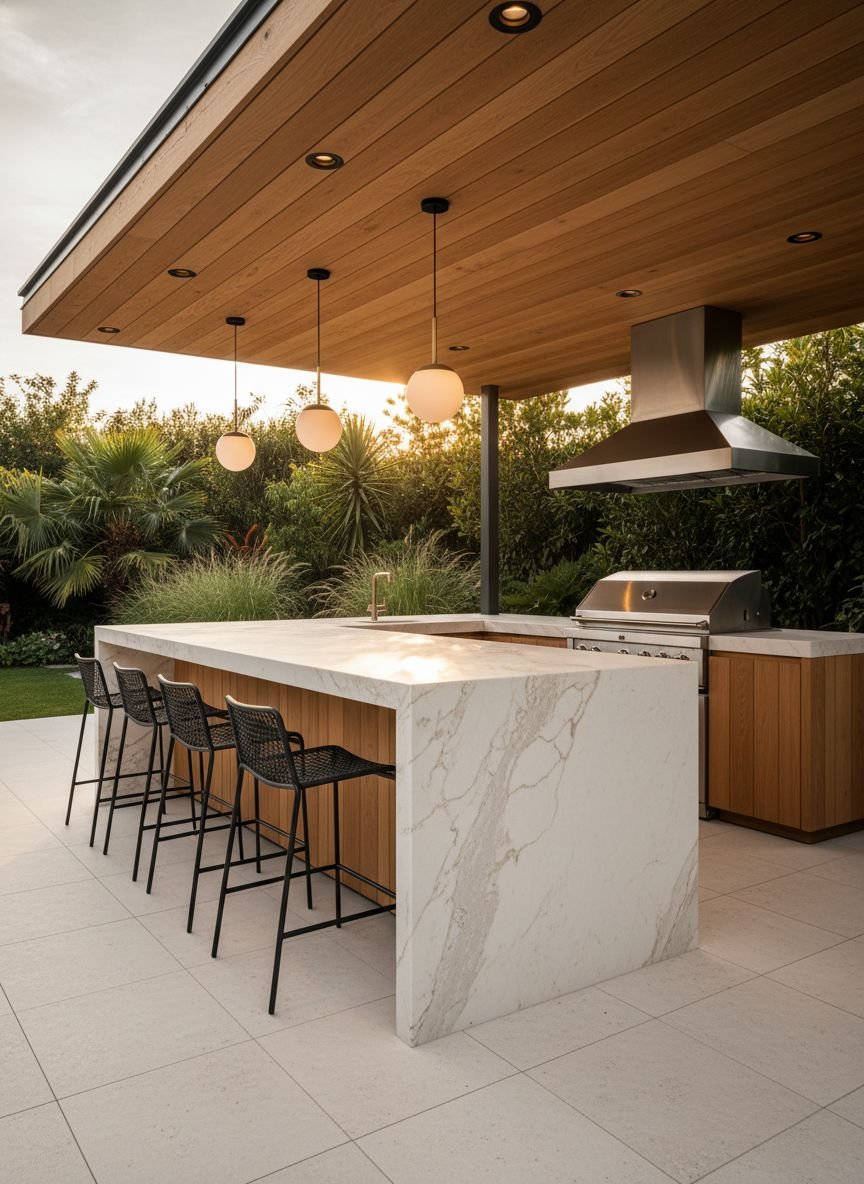
For a sleek, ultra-modern aesthetic, consider a floating bar countertop. This design uses heavy-duty steel brackets hidden inside the wall or cabinetry to support the counter, eliminating the need for legs or corbels. The result is a clean, minimalist line that makes the space feel larger and airier.
This style works exceptionally well with concrete or engineered stone. The lack of visual clutter underneath allows for sleek, modern bar stools to shine. It also makes cleaning the patio floor underneath the bar significantly easier, as there are no table legs to sweep around.
Pro Tip: Ensure your wall structure is reinforced with blocking to handle the significant leverage weight of a floating stone slab.
Popular Asked Questions
What is the standard height for an outdoor kitchen bar?
The standard height for a bar top is between 42 and 48 inches. This is higher than the standard kitchen counter height, which is 36 inches. The extra height allows guests to stand comfortably with a drink or sit on bar stools (typically 30 inches high) while looking eye-to-eye with the person cooking.
How much overhang do I need for outdoor bar seating?
You need a minimum overhang of 12 to 15 inches for comfortable seating. This provides enough knee room so guests do not have to sit sideways or lean forward awkwardly to reach their plates. If you are using a thick stone top, ensure you have proper steel support brackets for any overhang exceeding 10 inches to prevent cracking.
What is the best countertop material for an outdoor bar?
Granite and Dekton are the top choices. Granite is natural, heat-resistant, and durable. Dekton is an ultra-compact surface that is completely UV resistant, scratch-proof, and non-porous (meaning no stains). Avoid quartz for uncovered outdoor kitchens, as the resin binders can discolor in direct sunlight.
How do I protect my outdoor kitchen bar from weather?
The best protection is a permanent roof or pergola. If that is not possible, invest in high-quality, custom-fitted canvas covers for the island and the stools. Sealing natural stone surfaces annually prevents water absorption and freeze-thaw damage. Using marine-grade stainless steel (316L) for cabinets prevents rust in coastal or humid environments.
Conclusion
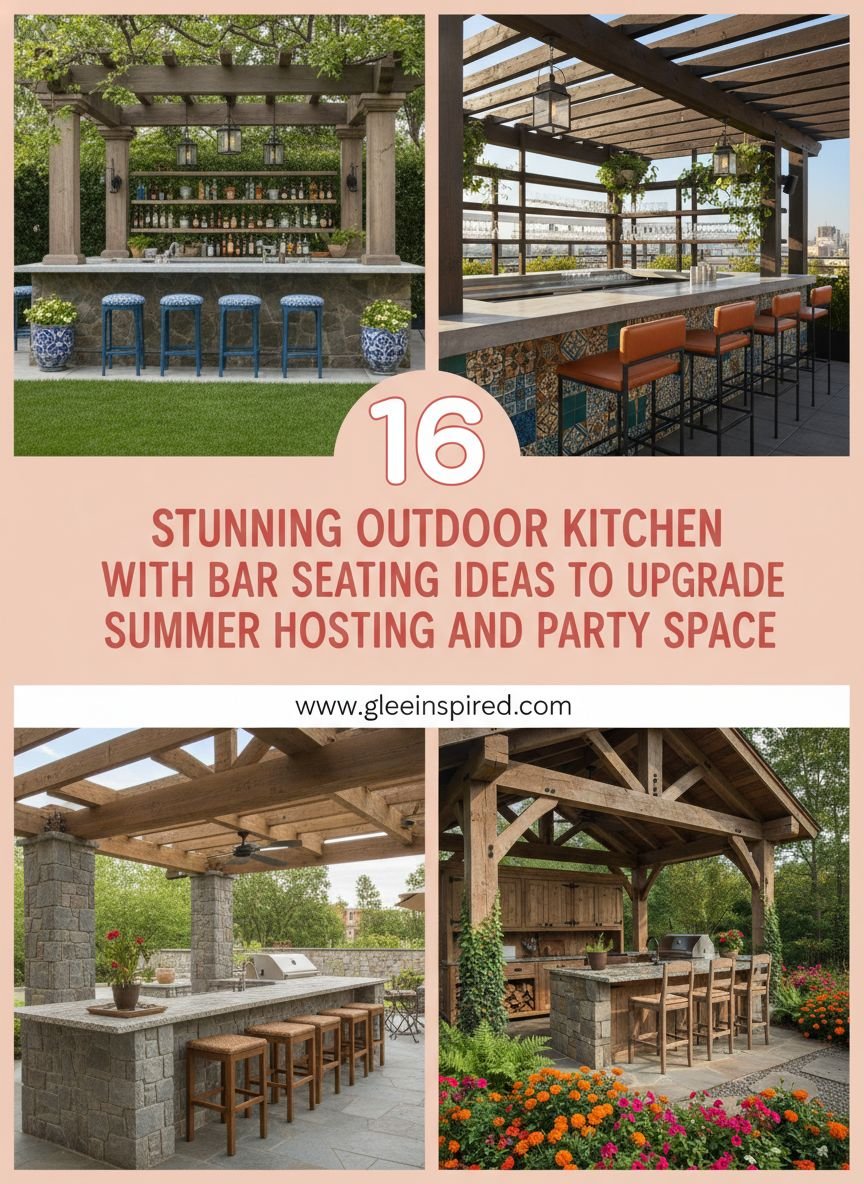
Creating a stylish outdoor kitchen with bar seating is about more than just buying a grill. It is about designing a lifestyle. Whether you choose a rustic stone finish with a fire pit or a sleek floating concrete counter, the goal is to create a space that pulls you outside.

Leave a Comment