
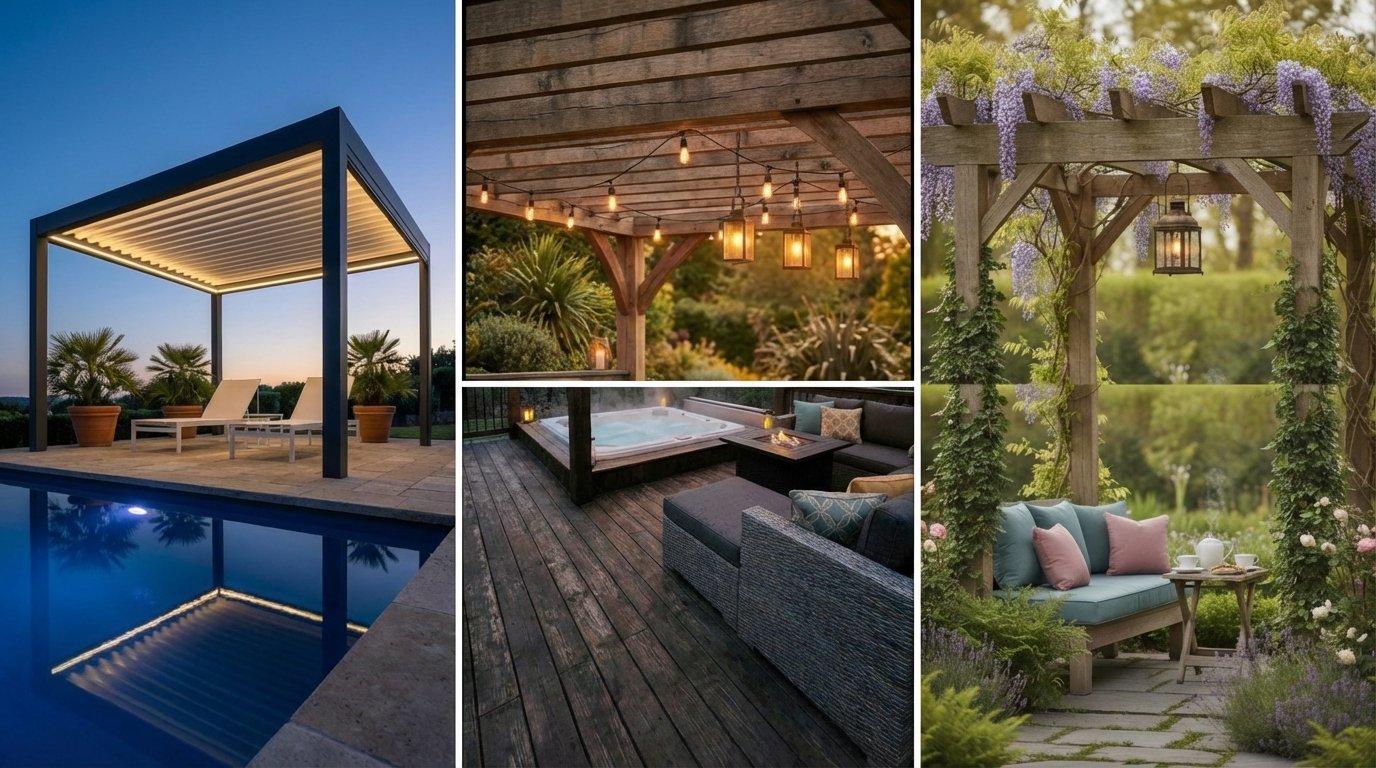
You want a backyard that feels like a private resort. A well-designed pergola does exactly that. It defines your outdoor space, provides essential shade, and adds significant property value. Whether you have a sprawling lawn or a tight urban patio, the right structure changes everything.
This guide breaks down the 13 Best Pergola Design Ideas to suit every architectural style and budget. We cover everything from modern metal structures with fire pits to classic wooden designs draped in greenery. You will find practical solutions for privacy, lighting, and zoning your outdoor living area.
Key Takeaways
- Zoning is Critical: Use pergolas to define specific areas like outdoor kitchens, reading nooks, or spa zones.
- Material Matters: Cedar offers natural rot resistance, while aluminum provides a sleek, maintenance-free modern look.
- Privacy Solutions: Integrate trellis screens and outdoor curtains to block neighbors and soften harsh sunlight.
- Lighting Transforms the Space: Plan for string lights or hardwired fixtures early in the design process to extend use into the evening.
- Scale Appropriately: Ensure the structure height and width balance with your home’s exterior to avoid overwhelming the space.
Table of Contents
- Pergola With Trellis Screen
- Pergola With Side Curtains
- Breezy Pergola
- Small Wooden Pergola
- Functional Pergola With Grill and Dining Area
- Tight Space Pergola
- Sturdy Pergola With Outdoor Jacuzzi
- Modern Pergola With Firepit
- Classic Pergola With Swing Bench
- Mediterranean Style Pergola
- Compact Garden Pergola With Reading Nook
- Spacious Cooking Area With Pergola
- Poolside Pergola
- Related posts :
- Popular Asked Questions
- Conclusion
Pergola With Trellis Screen
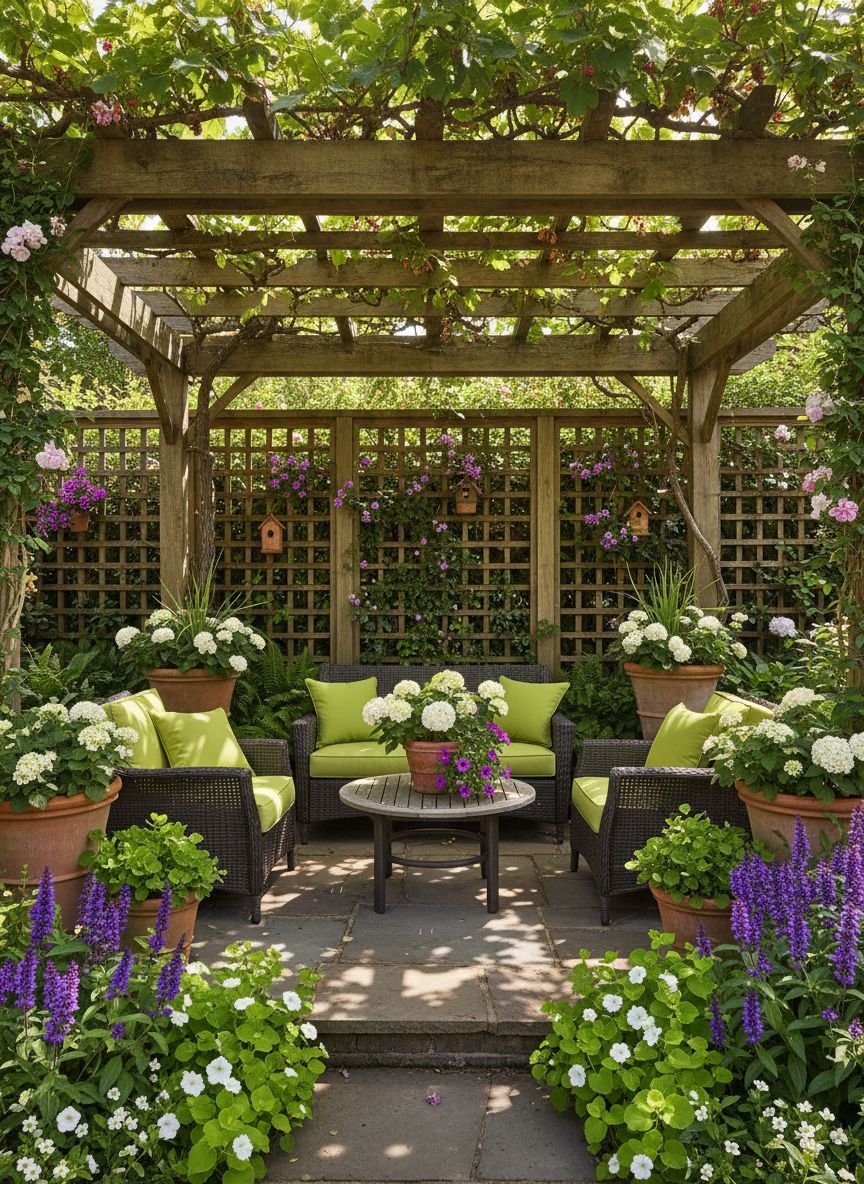
Privacy often tops the list of backyard requirements. A pergola featuring a built-in trellis screen solves this issue without building a solid wall. The lattice structure allows air to circulate freely while breaking up the line of sight from neighboring windows. This design creates a secluded “room” effect that feels intimate rather than claustrophobic. The interplay of light and shadow through the grid adds a dynamic visual texture to your patio throughout the day.
You can customize the density of the trellis to control visibility. A tighter grid offers more seclusion, while a wider grid supports climbing plants. Fast-growing vines like Clematis or Wisteria thrive here. As the plants mature, they weave through the wood or metal lattice. This creates a living wall that cools the area through transpiration. The combination of structural lines and organic foliage softens the hardscaping of a patio.
Pro Tip: Install the trellis on the west-facing side of the pergola. This blocks the harsh, low-angle afternoon sun while keeping the other sides open for views and airflow.
Pergola With Side Curtains
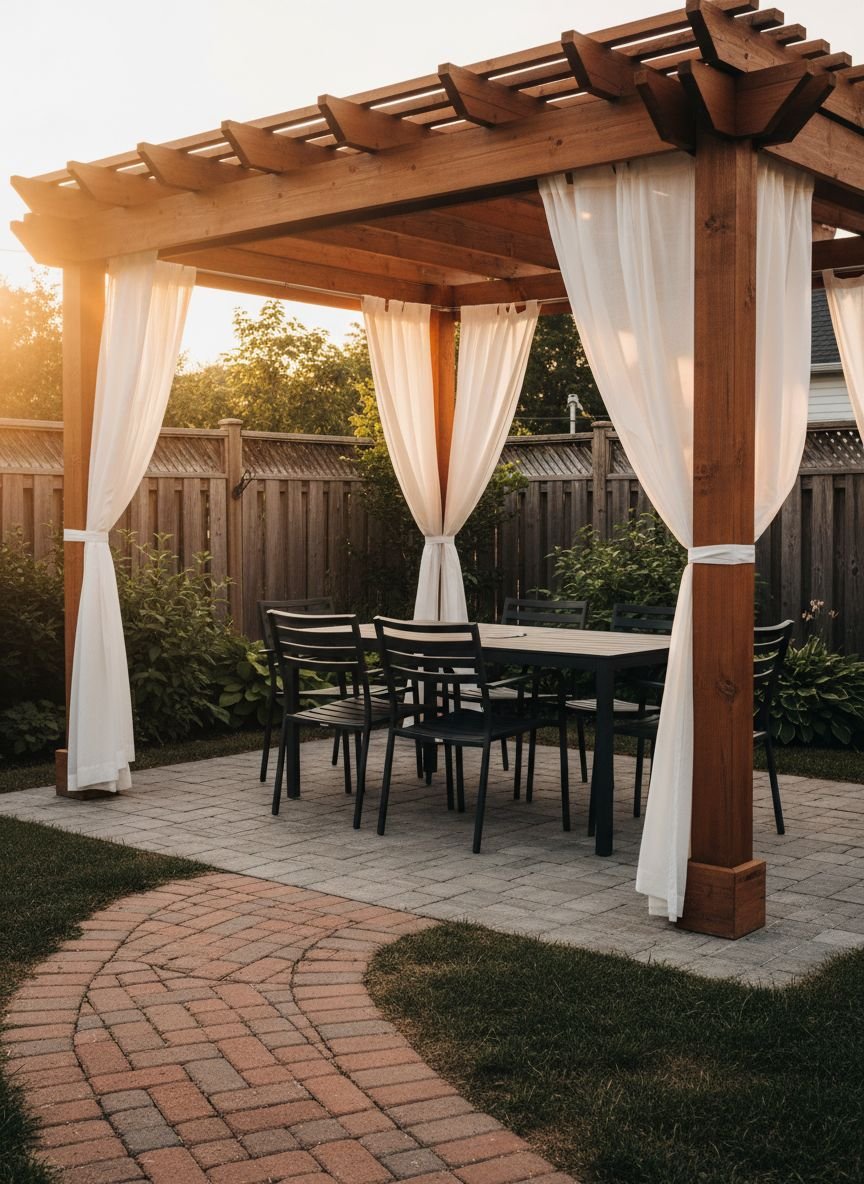
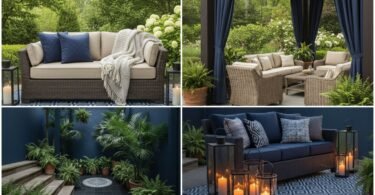
Soft textiles bring the comfort of an indoor living room to the outdoors. Adding side curtains to your pergola structure introduces elegance and versatility. High-quality outdoor fabrics, such as canvas or solution-dyed acrylics, withstand the elements while providing a resort-style aesthetic. When drawn closed, these curtains offer complete privacy and protection from low sun or light breezes. When tied back, they frame the view and add a sense of grandeur to the posts.
This setup works exceptionally well for dining areas. The fabric absorbs sound, making conversations easier and the atmosphere more intimate. Visually, the softness of the drapes contrasts beautifully with the rigid lines of timber or steel beams. Choose neutral tones like cream or sand for a spa-like vibe, or go bold with navy or stripes to anchor the space. The movement of the fabric in the wind adds a calming, kinetic energy to your garden.
Pro Tip: Use weighted hems or curtain weights. This prevents the fabric from blowing wildly during stronger gusts and keeps the look polished.
Save this idea to your Pinterest.
Breezy Pergola
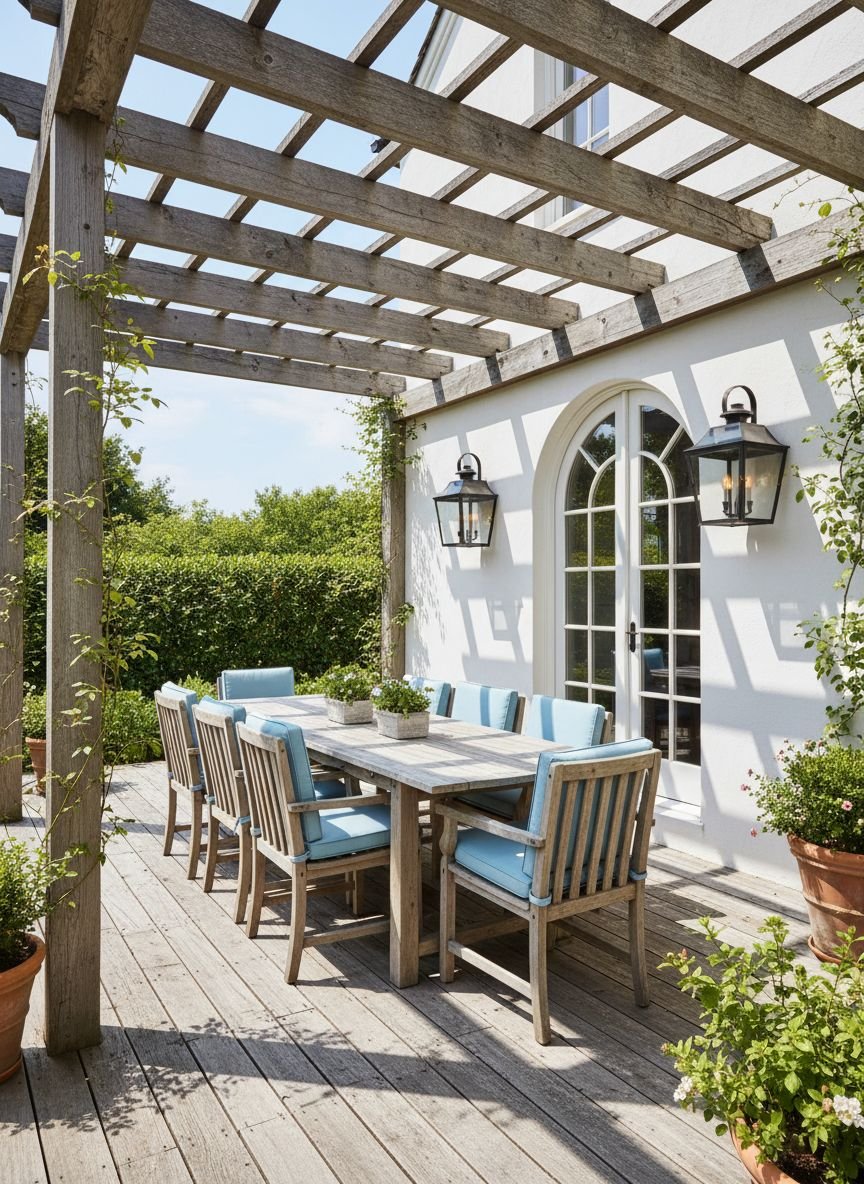
Sometimes less really is more. A breezy, open-top pergola focuses on defining a space without heavily restricting light. This design uses widely spaced rafters and minimal cross-beams. The goal here is not deep shade but rather architectural definition. It frames the sky and creates a designated zone for lounging furniture without making the area feel dark or enclosed. This style suits modern homes where clean lines and an airy atmosphere take precedence.
The open structure keeps the patio cool by allowing maximum vertical airflow. Heat escapes instantly rather than getting trapped under a dense roof. This makes it an ideal choice for regions with humid summers. You can enhance the “breezy” feel by keeping the furniture low-profile and the color palette light. Pale woods like birch or bleached oak, paired with white aluminum, reinforce the weightless quality of the design.
Pro Tip: Orient the rafters to run North-South. This casts moving shadows that change distinctly throughout the day, giving you moments of sun and moments of relief.
Small Wooden Pergola
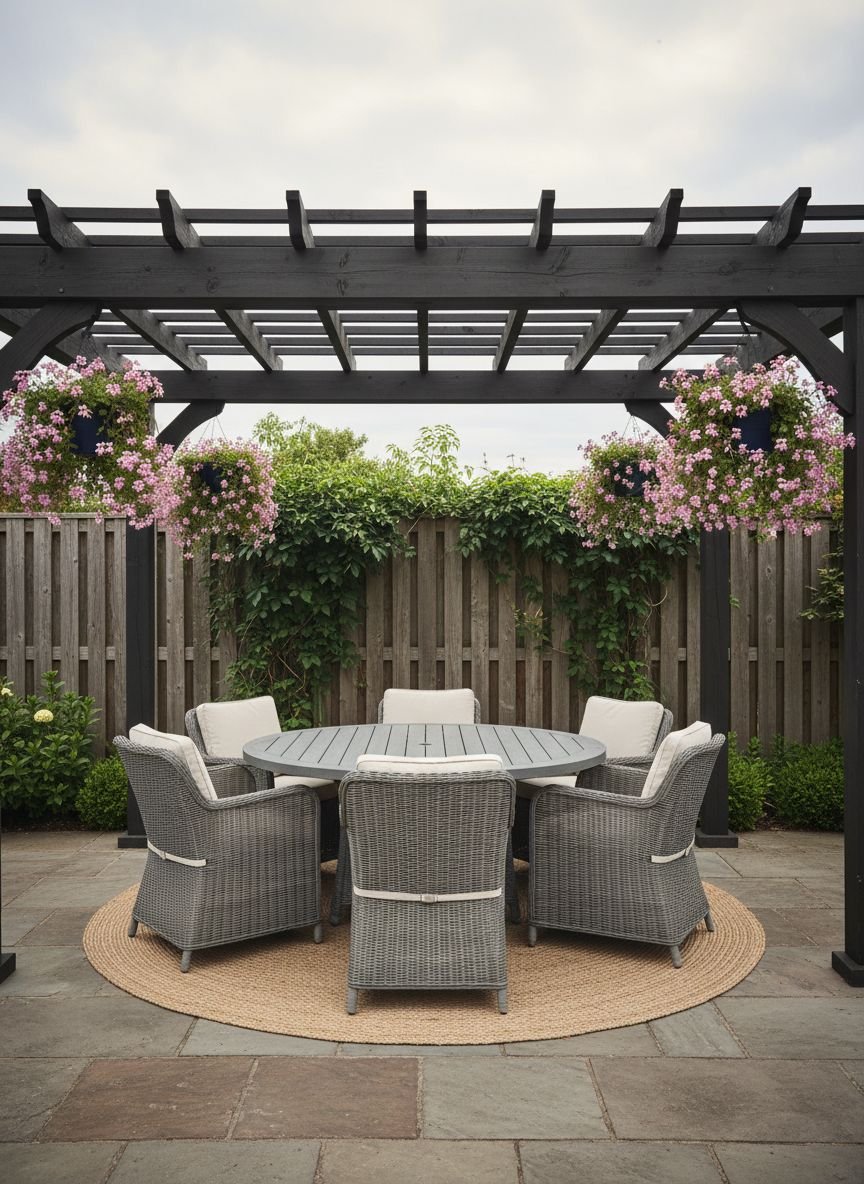
You do not need a massive estate to enjoy architectural garden features. A small wooden pergola anchors a tiny backyard or a side yard patio effectively. The warmth of natural timber—cedar, redwood, or pressure-treated pine—adds organic character to small spaces that might otherwise feel paved and cold. The key to a small pergola is proportion. Thinner posts (4×4 instead of 6×6) and lighter rafters ensure the structure does not dominate the limited square footage.
This design creates a cozy focal point. Place two comfortable chairs and a small side table underneath, and you have an instant retreat. The wood creates a natural connection between your home and the garden plantings. Over time, the wood will weather to a silvery gray, blending even more seamlessly with the landscape. If you prefer a polished look, a rich stain protects the wood and adds contrast against green lawns or fences.
Pro Tip: Anchor the posts securely to concrete footings. Even a small structure acts like a sail in high winds, so proper ground anchoring is non-negotiable.
Functional Pergola With Grill and Dining Area
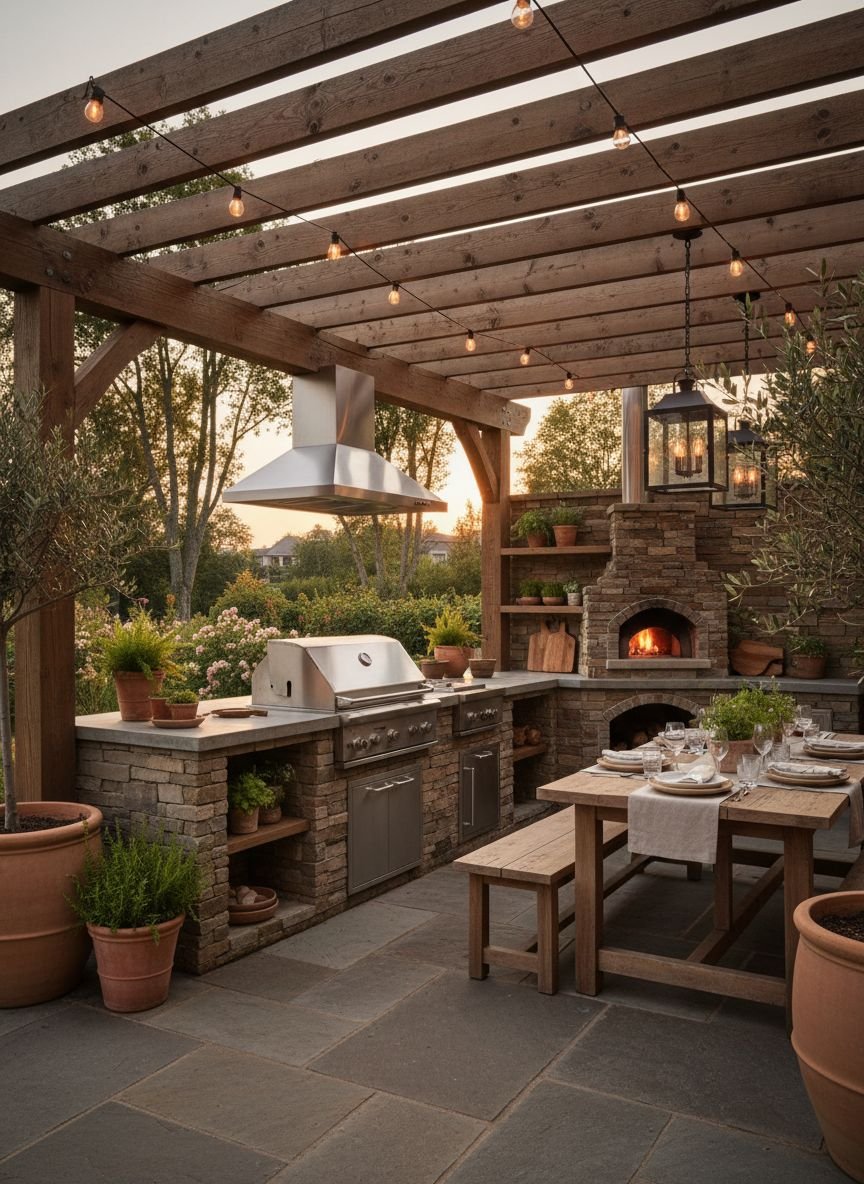
The ultimate entertainer’s dream combines shelter with a cooking station. A pergola dedicated to a grill and dining area transforms a backyard into a full-service outdoor kitchen. The overhead structure defines the “kitchen” zone, separating it visually from the lounging or pool areas. Functionality drives this design. You need high clearance for smoke ventilation and durable materials that resist grease and heat.
Position the dining table directly under the main canopy for shaded lunches. Place the grill station slightly to the edge or ensure the rafters above the grill are widely spaced to prevent smoke accumulation. Integrated lighting is crucial here. Pendant lights over the dining table and task lighting near the grill allow the party to continue well after sunset. This setup encourages social cooking, where the chef remains part of the conversation rather than being isolated against a wall.
Pro Tip: Incorporate a small bar counter on one side of the pergola structure. It serves as a prep station for the grill and a serving buffet for guests.
Comparison: Top Pergola Materials
| Material | Pros | Cons | Best For |
|---|---|---|---|
| Cedar / Redwood | Natural look, rot-resistant, aromatic. | Requires staining/sealing every 2-3 years. | Rustic & Traditional styles. |
| Aluminum | Modern, zero maintenance, lightweight. | Can dent, gets hot to the touch. | Contemporary & Minimalist. |
| Vinyl | Affordable, easy to clean, white finish stays bright. | Can look plastic/cheap, may crack in extreme cold. | Classic & Budget-friendly. |
| Steel | Extremely strong, supports wide spans. | Prone to rust if not powder-coated, heavy. | Industrial & Urban designs. |
Tight Space Pergola
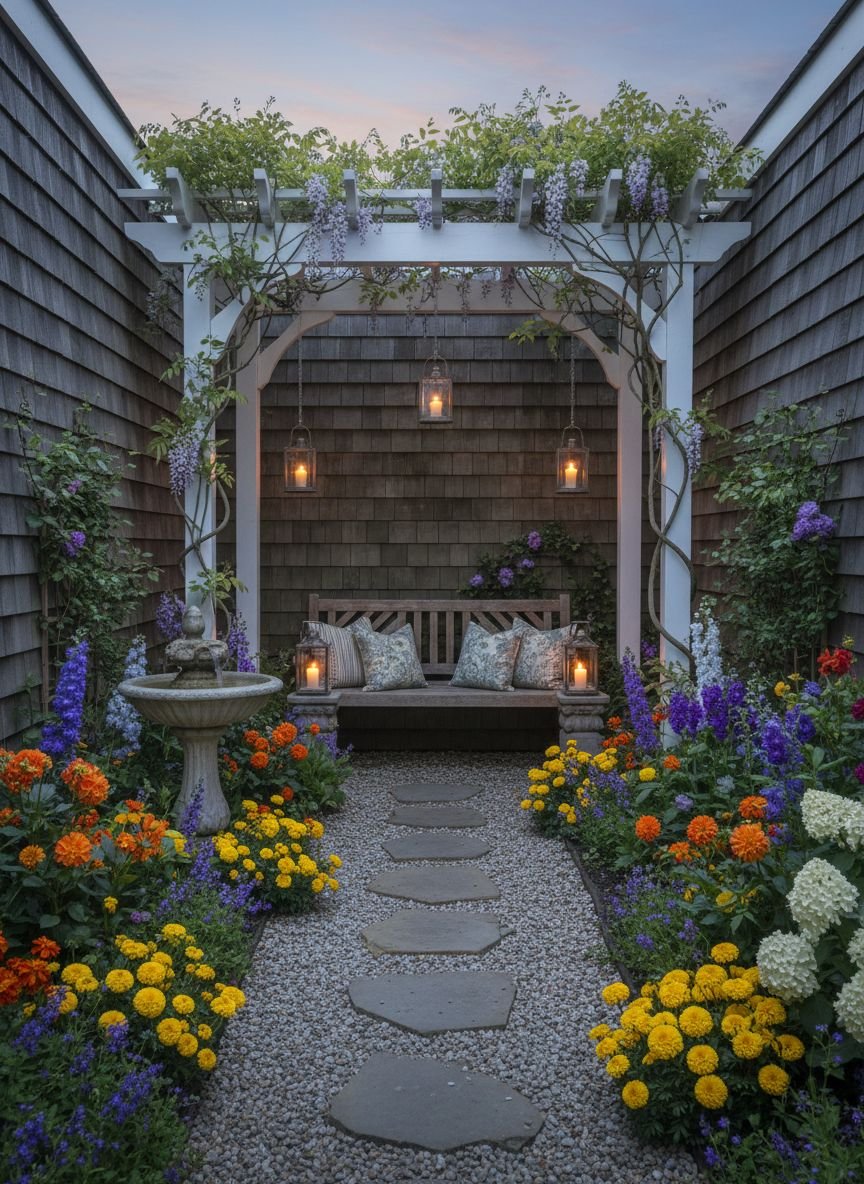
Urban environments often present narrow, awkward outdoor strips. A tight space pergola utilizes verticality to maximize these areas. Lean-to designs are particularly effective here. By attaching one side of the pergola to the house wall, you reduce the number of posts needed, saving precious floor space. This technique turns a neglected alleyway or a small concrete slab into a deliberate, stylish extension of the indoor living area.
Use the overhead beams to hang plants or string lights, drawing the eye upward and making the space feel larger. Since floor space is at a premium, built-in bench seating between the posts is a smart move. It eliminates the need for bulky chairs and keeps the pathway clear. Light-colored materials help reflect daylight into the house, preventing the adjacent indoor room from becoming too dark.
Pro Tip: Use a “slat” style roof with angled louvers. This gives you control over privacy from upper-story neighbors without blocking all the natural light.
Sturdy Pergola With Outdoor Jacuzzi
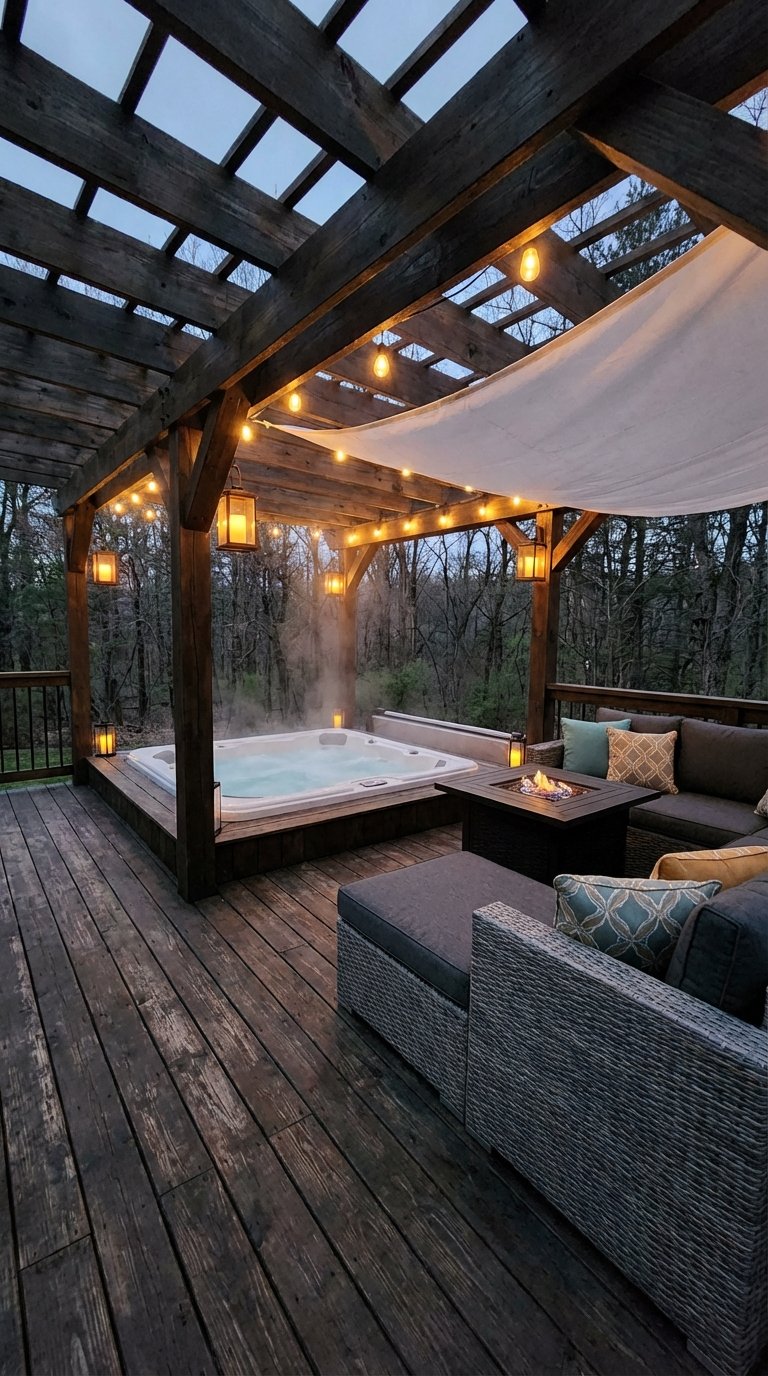
A hot tub requires shelter to be truly usable year-round. A sturdy pergola over your jacuzzi provides privacy and protection from the elements. This design prioritizes durability and moisture resistance. The rising steam from the water affects materials, so sealed wood or powder-coated aluminum are the best choices. The structure creates a spa-like enclosure, making the tub feel integrated into the landscape rather than just plunked onto the patio.
Privacy is paramount in this setting. Integrate lower privacy walls or frosted glass panels on the most exposed sides. The roof design should offer a balance; open enough to see the stars at night, but covered enough to stop falling leaves or light rain. Many homeowners opt for a retractable canopy system here, giving them the option of full exposure or full protection depending on the weather.
Pro Tip: Add hooks or a small shelf to the pergola posts for towels and robes. Keeping these dry and within arm’s reach elevates the user experience.
Save this idea to your Pinterest.
Modern Pergola With Firepit
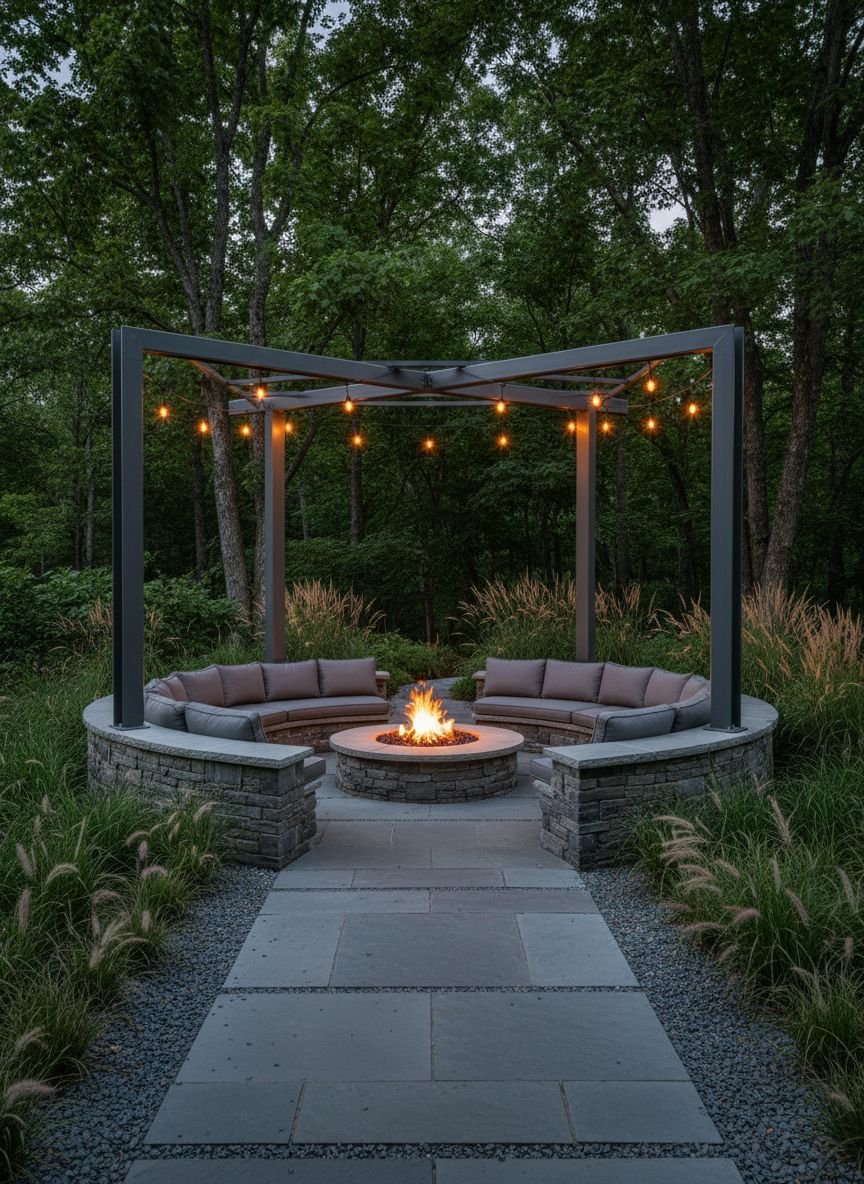
Fire and structure create a primal, inviting gathering spot. A modern pergola framing a firepit creates a high-contrast, sophisticated focal point. The geometry of the pergola—usually flat-roofed with clean, black or dark grey lines—contains the organic, flickering movement of the fire. This juxtaposition defines modern landscape design. The overhead structure reflects the heat downward, creating a cozy microclimate that extends your outdoor season into late autumn.
Safety dictates the design here. The pergola roof must be high enough to avoid heat damage, and the fire feature should be gas-burning to eliminate flying sparks. Concrete, steel, and stone are the primary materials. Arrange low, deep-seating furniture around the firepit. The pergola columns frame the seating group, creating a sunken living room feel even if the patio is level.
Pro Tip: Install dimmable LED strip lighting along the interior beams. This provides a soft ambient glow that complements the firelight without overpowering it.
Classic Pergola With Swing Bench
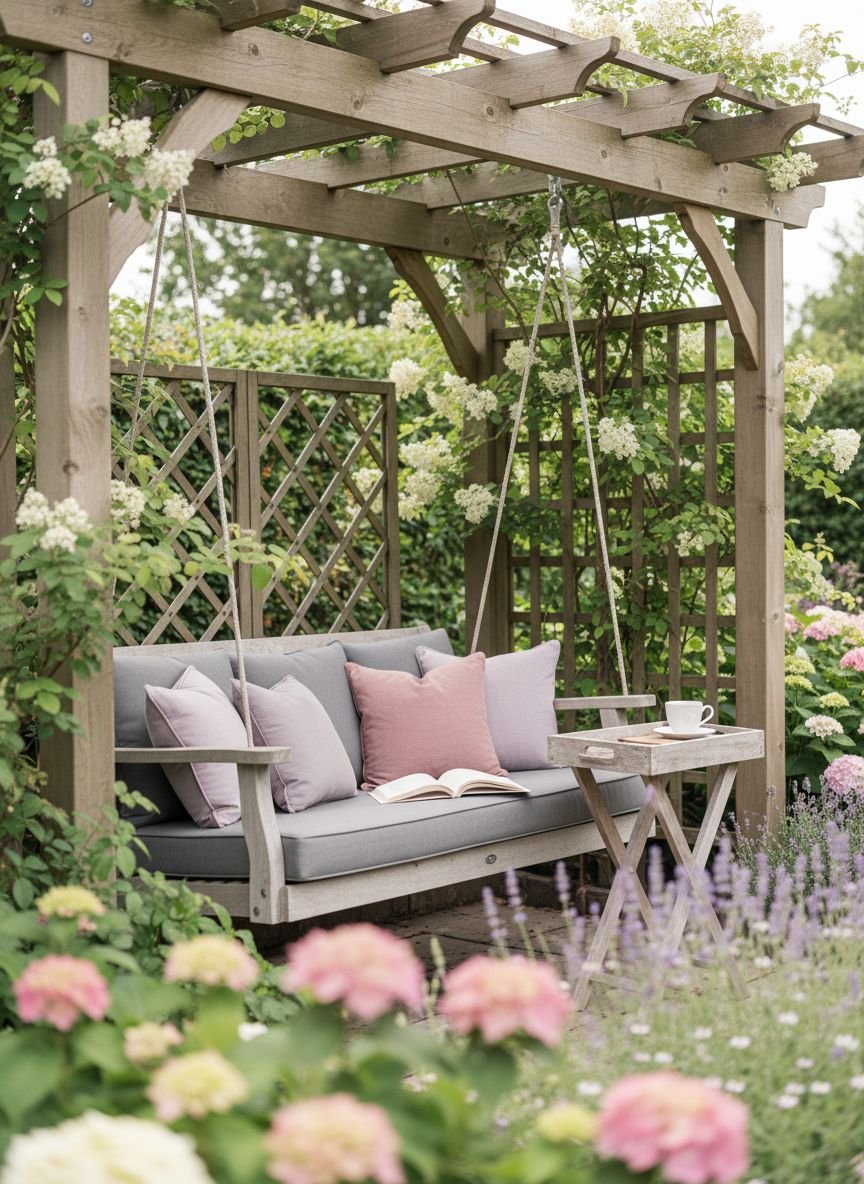
Nostalgia meets relaxation in this timeless design. A classic pergola equipped with a swing bench invites you to slow down. This setup is perfect for a quiet corner of the garden or overlooking a lawn. The structure must be robust, with heavy-duty cross beams capable of supporting the dynamic weight of the swing. Traditional styling details, such as scrolled rafter tails and column bases, enhance the romantic, old-world charm.
Surround the base of the posts with fragrant flowers like lavender or jasmine. As you swing, the movement stirs the air and releases the scent. This sensory experience makes the spot magical. The swing itself should be deep and piled with weather-resistant cushions. It becomes a destination for morning coffee or reading a book, offering a gentle, rocking motion that calms the mind.
Pro Tip: Use marine-grade hanging hardware and chains. Inspect them annually to ensure safety and prevent squeaking.
Mediterranean Style Pergola
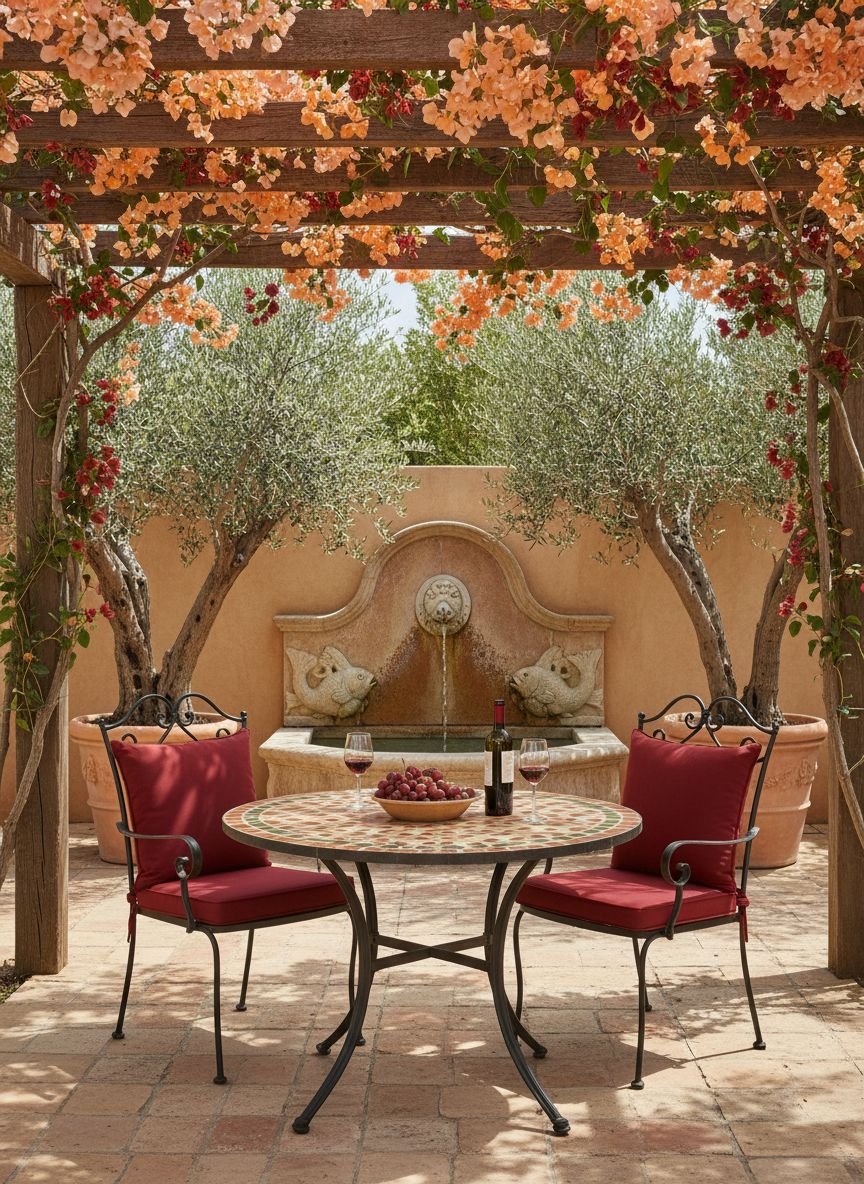
Bring the warmth of the Italian coast to your backyard. A Mediterranean-style pergola focuses on natural materials, warm earth tones, and lush vegetation. Rough-hewn timber beams, often stained in dark walnut or left to weather naturally, form the skeleton. The defining feature is often the roof: either a heavy growth of grapevines or a partial covering of bamboo reeds or terracotta tiles.
The flooring below should complement the rustic vibe—think irregular flagstone, travertine, or patterned tile. White flowing drapes tied to the posts add a touch of Grecian elegance and soften the heavy wood. Furnish the space with wrought iron tables and mosaic accents. This style is not about perfection; it is about texture and organic warmth. It feels lived-in and timeless, perfect for long, lazy lunches.
Pro Tip: Plant grapevines or ornamental kiwi at the base of each post. These vigorous growers will cover the roof in two to three seasons, providing the densest, coolest natural shade available.
Get The Look: Mediterranean Oasis
- Lighting: Oversized iron lanterns with LED candles.
- Textiles: Cream canvas cushions with terracotta and olive green throw pillows.
- Plants: Potted citrus trees (lemon or lime) and Bougainvillea for splashes of magenta.
- Flooring: Tumbled limestone pavers or gravel.
Compact Garden Pergola With Reading Nook
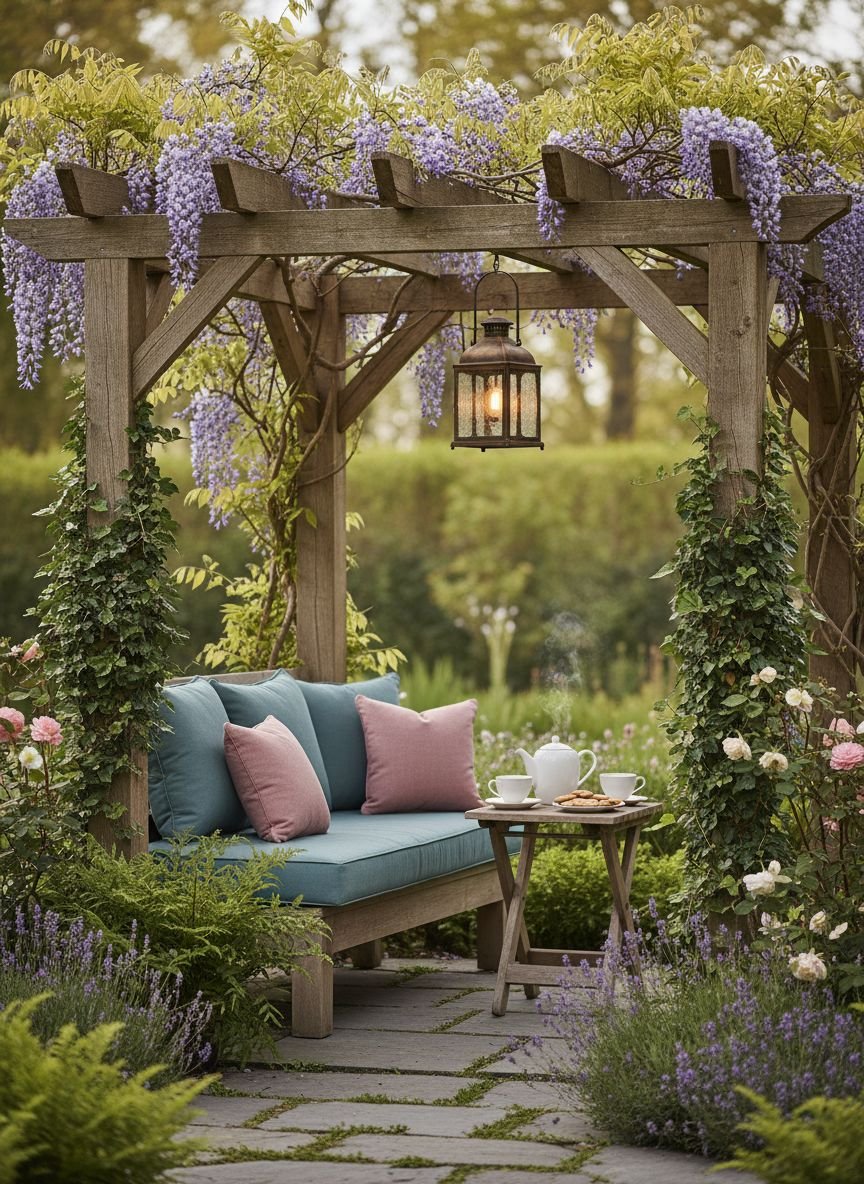
For the book lover, a massive patio is unnecessary. A compact garden pergola designed specifically as a reading nook offers the ultimate escape. This structure is often freestanding, placed further back in the garden away from the house distractions. It creates a destination. The footprint can be as small as 6×6 feet—just enough space for a luxurious chaise lounge and a small table for tea.
Surround the pergola with tall ornamental grasses or hydrangeas to create a “secret garden” feel. The roof should offer substantial shade to prevent glare on pages or screens. A solid roof section or a heavy canvas weave works best here. The isolation is the luxury. It is a space dedicated to silence and imagination.
Pro Tip: Solar-powered reading lamps are essential here if you don’t run electricity to the back of the garden. Clamp them to the pergola post for directed light.
Spacious Cooking Area With Pergola
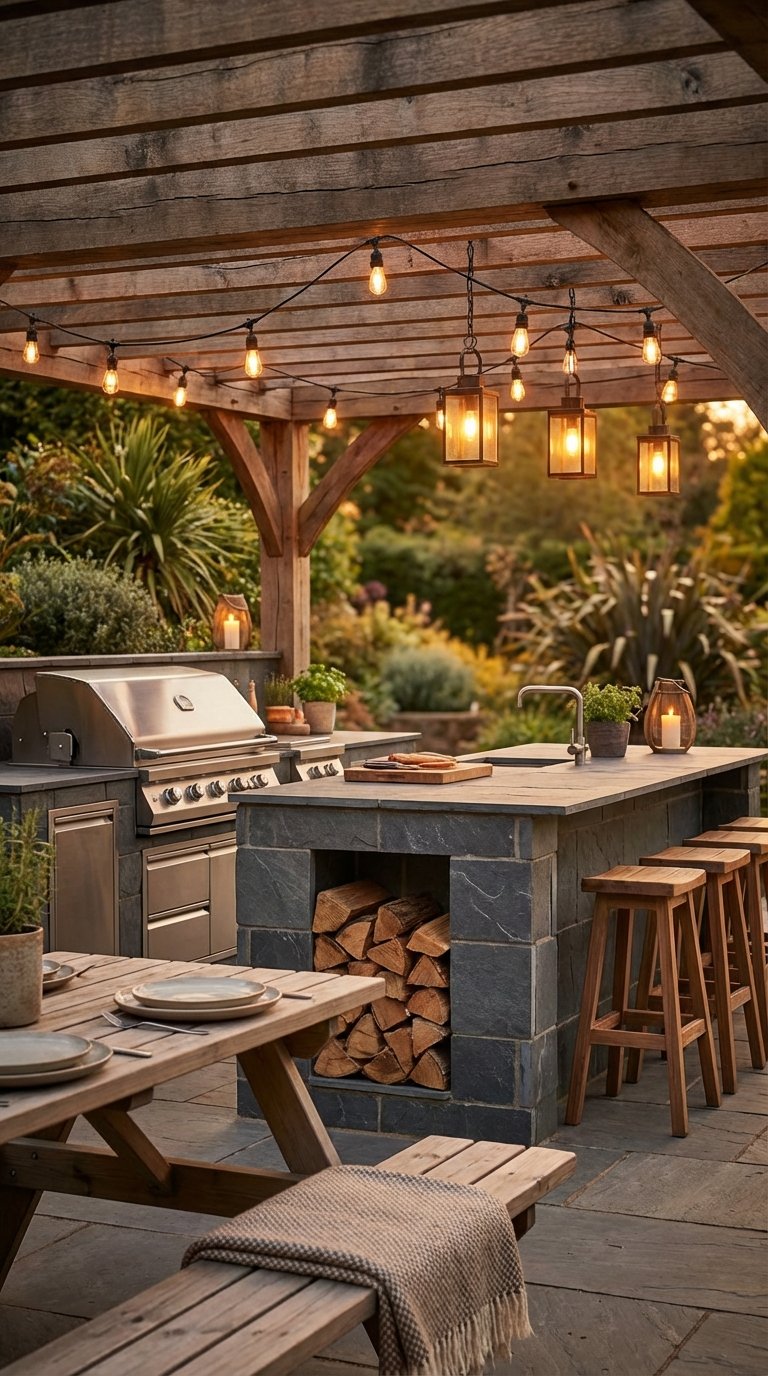
This is the big sibling to the grill station. A spacious cooking area pergola covers a full outdoor kitchen layout: fridge, sink, pizza oven, and extensive counter space. The pergola unifies these appliances into a cohesive room. Scale is vital. The structure must span a large area without too many obstructing posts, often requiring steel reinforcement within wood beams or a full steel frame.
Zoning within the pergola is important. Use the beam layout to visually separate the “hot” zone (grills/ovens) from the “cool” zone (bar/prep). Integrated ceiling fans are a game-changer in this design, keeping the chef cool and pushing away smoke and flies. The aesthetic should match your home’s architecture perfectly, acting as a seamless extension of the indoor kitchen.
Pro Tip: Consider a “sky-light” section in the pergola roof. Use clear polycarbonate panels over the prep counter to ensure you have natural light for chopping and plating food.
Poolside Pergola
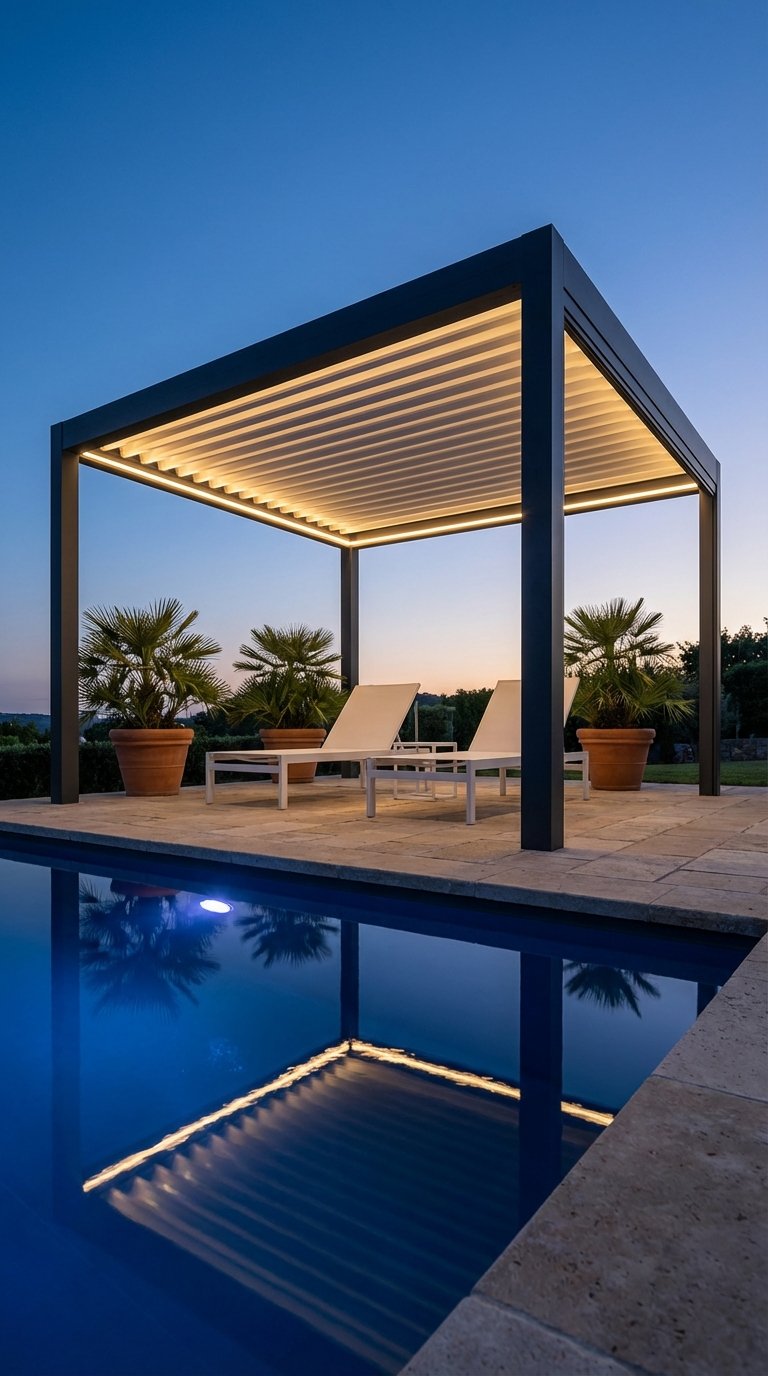
A poolside pergola provides a critical respite from the sun. Positioned on the pool deck, it serves as the primary lounge area for swimmers taking a break. Water resistance is the main technical requirement. Materials must withstand constant splashing and exposure to pool chemicals (chlorine or salt). Aluminum or vinyl are superior choices here as they will not warp or rot from moisture.
Furnish this space with chaise lounges or a low sectional with quick-dry foam. The vibe should be resort-chic. White structures against blue water create a crisp, clean look. Retractable canopies are popular here, allowing sunbathers to control their exposure with the pull of a cord. This structure anchors the pool area, giving the eye a vertical point of interest in a typically flat landscape.
Pro Tip: Ensure the flooring under the pergola is slip-resistant. Natural stone or textured pavers prevent accidents when moving from the pool to the shade.
Related posts :
- 22 Inspiring Gazebo Designs for Your Backyard That Transform Outdoor Living
- 10 Fantastic Outdoor Patio Kitchen Ideas That Will Instantly Upgrade Your Backyard Living Space
- 14 Chic Patio Curtain Ideas That Instantly Create a Private Backyard Oasis
Popular Asked Questions
Is it cheaper to build a pergola or buy a kit?
Buying a kit is generally cheaper and faster for standard sizes. Kits come pre-cut and drilled, saving labor costs. However, building from scratch allows for custom dimensions and higher-quality lumber, which might offer better long-term value despite the higher upfront cost.
Do I need a permit for a pergola?
Yes, in most municipalities, you need a permit for any permanent outdoor structure. This depends on the size, height, and whether it is attached to your house. Always check with your local HOA and city planning office before breaking ground to avoid fines.
What is the best height for a pergola?
The standard height is between 8 and 10 feet. An 8-foot ceiling feels cozy and intimate, perfect for small dining areas. A 10-foot ceiling feels grand and airy, which is better for large lounging zones or structures attached to high rooflines.
How do I keep my pergola from rotting?
Choose the right wood, such as cedar, redwood, or pressure-treated pine. Apply a water-repellent sealant or stain immediately after installation and reapply it every two to three years. Alternatively, choose aluminum or vinyl, which are impervious to rot.
Conclusion
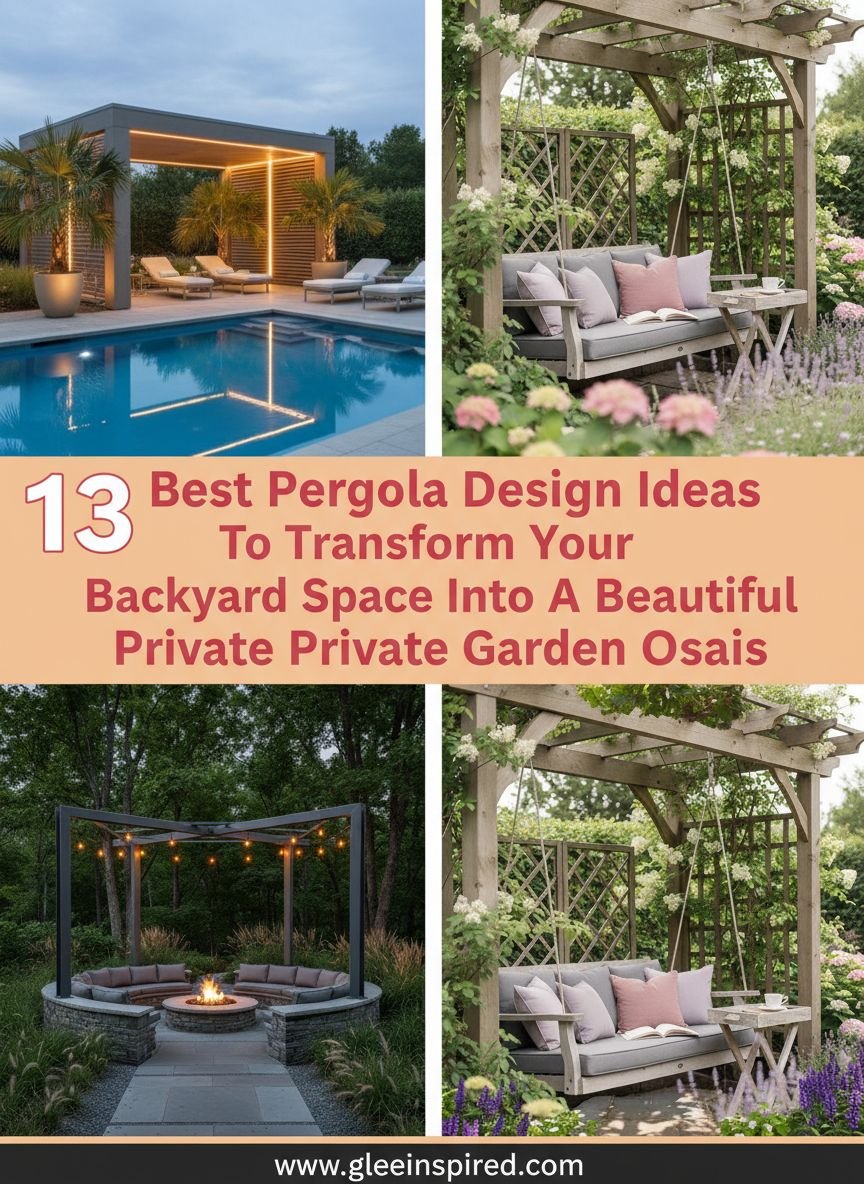
The right pergola design does more than just block the sun; it frames your outdoor life. Whether you choose the romantic seclusion of a Pergola With Side Curtains or the sleek utility of a Modern Pergola With Firepit, these structures add definition and luxury to your home.
Review your yard’s orientation and your lifestyle needs. Do you need a cooking hub or a quiet reading nook? The answer will dictate the size, material, and placement of your new structure.


Leave a Comment