
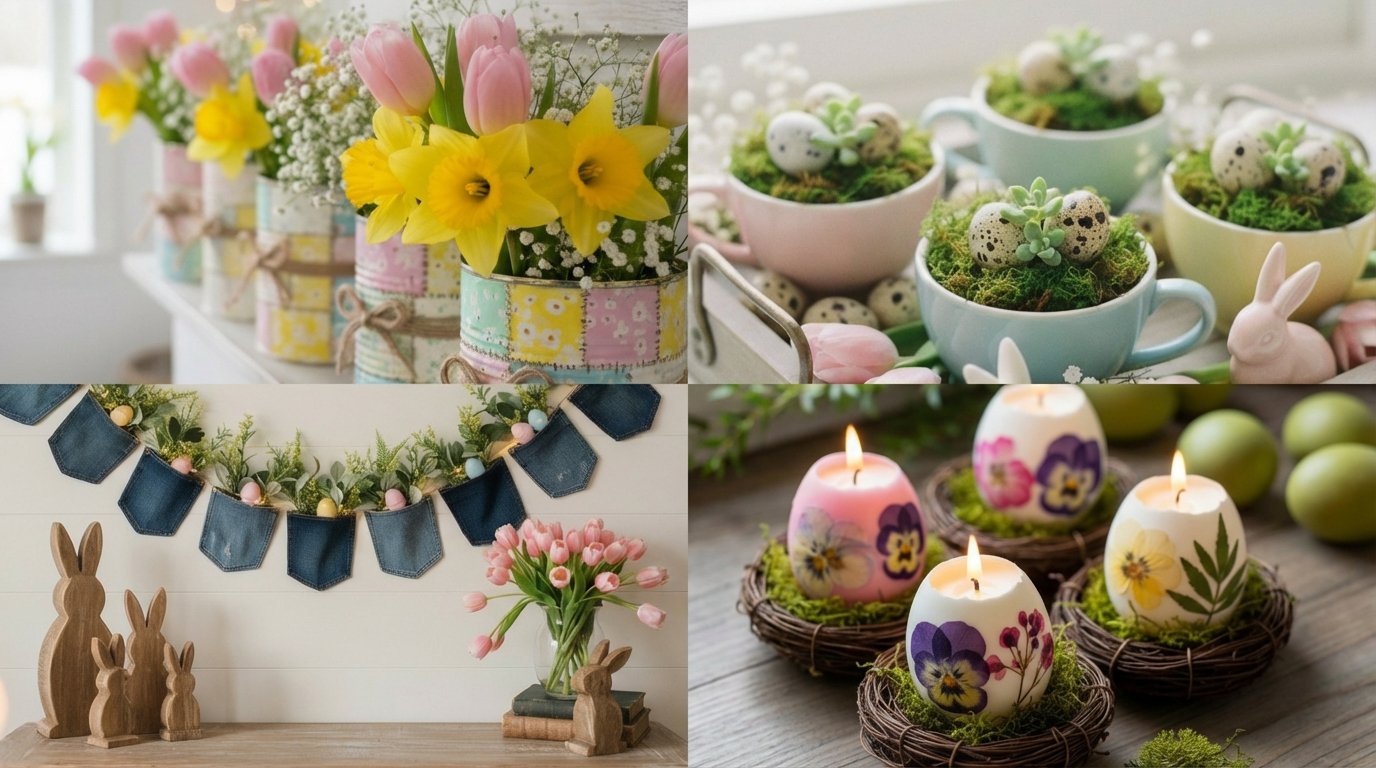
Upcycling is no longer just a trend; it is a necessity for the modern, eco-conscious home. Instead of buying mass-produced plastic decorations that end up in landfills, you can create stunning, high-end Easter decor using items you already own. This guide explores 15 upcycled Easter home decor ideas that transform “trash” into treasured spring accents. Whether you want to refresh your space for Spring 2026 or need budget-friendly Easter decorating solutions for a small apartment, these projects prove that style does not require spending.
Key Takeaways
- Sustainability Meets Style: Learn how to divert waste by turning tin cans, fabric scraps, and old books into chic decor.
- Cost-Effective Luxury: Achieve a high-end “farmhouse” or “shabby chic” aesthetic for nearly zero dollars.
- Personalized Decor: Create unique pieces that tell a story, making your home feel curated rather than catalog-copied.
- Family-Friendly Crafts: Many of these projects are simple enough to involve children, turning decorating into a bonding activity.
Table of Contents
- Vintage Teacup Easter Egg Planters
- Repurposed Mason Jar Bunny Lanterns
- Woven Fabric Scrap Easter Garland
- Old Book Page Bunny Silhouettes
- Upcycled Tin Can Vases
- Denim Pocket Egg Pouches
- Wooden Pallet Easter Bunny Door Hanger
- Shabby Chic Egg Wreath
- Egg Carton Spring Flower Bouquet
- Upcycled Sweater Bunny Plushies
- Reclaimed Wood Easter Cross Centerpiece
- Glass Bottle Candle Holders
- Eggshell Tealight Holders
- Embroidery Hoop Wall Art
- Tin Lid Easter Chick Magnets
- Popular Asked Questions
- Conclusion
Vintage Teacup Easter Egg Planters
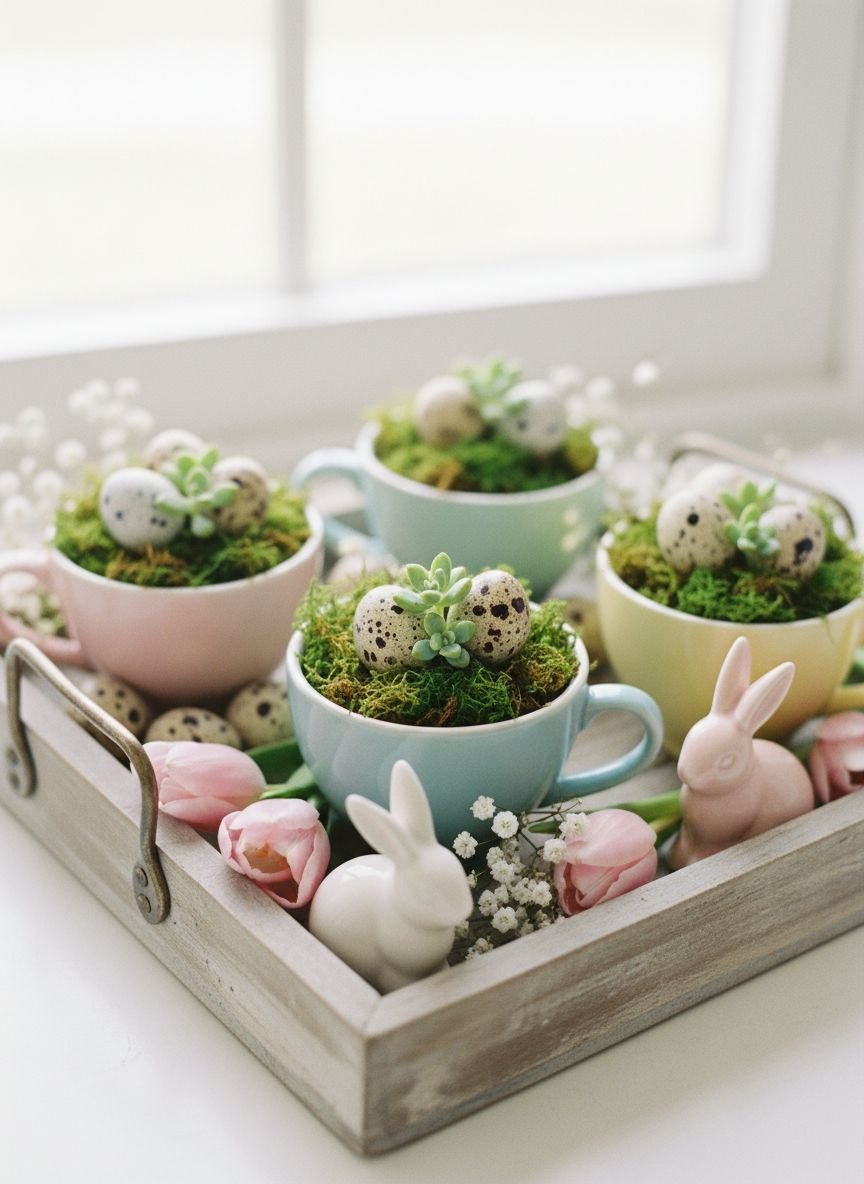
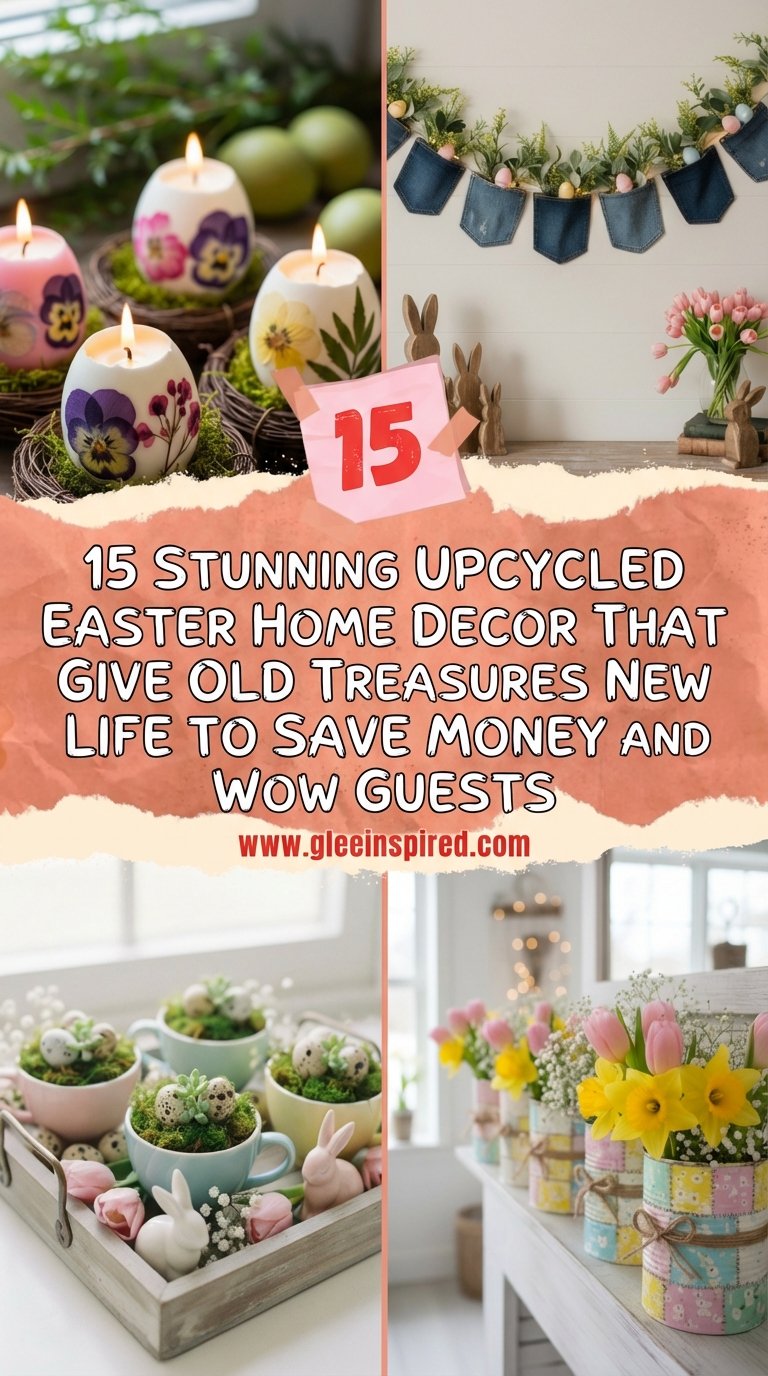
There is something undeniably charming about the juxtaposition of delicate porcelain and rugged nature. Vintage Easter decorations DIY enthusiasts often overlook the potential of chipped or mismatched teacups sitting in the back of the cupboard. This project repurposes those forgotten vessels into miniature gardens that serve as the perfect whimsical centerpiece for your Easter brunch.
The visual appeal lies in the contrast between the intricate floral patterns of the china and the fresh, vibrant green of spring moss or succulents. By filling a teacup with a small amount of gravel for drainage and potting soil, you create a sustainable home for small plants. To elevate the Easter theme, nestle a small speckled egg (painted wood or blown real egg) amongst the greenery. This design principle relies on scale; the small, contained arrangement draws the eye and invites closer inspection, making it ideal for table settings where you want to encourage conversation without blocking sightlines.
Pro Tip: If your teacup has a hairline crack, do not toss it! The soil will actually help seal it slightly, and the moss will cover imperfections. Use succulents like sedum or hens-and-chicks which require very little water to prevent leaks.
Repurposed Mason Jar Bunny Lanterns
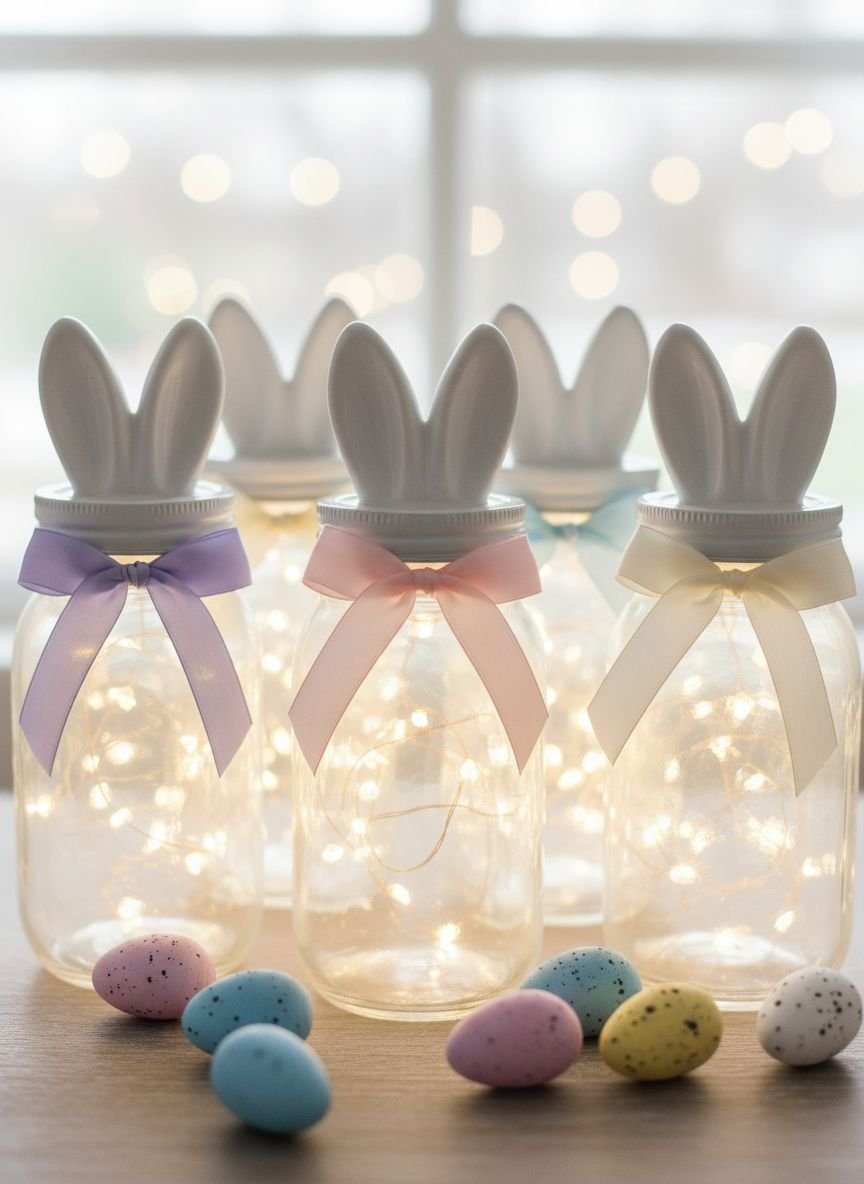
Rustic Easter centerpieces often feature mason jars, but this upcycled twist adds a soft, ambient glow perfect for evening gatherings. Instead of simply painting the jars, this project utilizes negative space to create a glowing bunny silhouette that feels magical and sophisticated. This is a prime example of how budget-friendly Easter decorating can look expensive with the right lighting.
To achieve this look, adhere a bunny-shaped sticker or vinyl cutout to the center of a clean jar. Paint the entire jar with chalk paint in pastel hues like sage green, blush pink, or antique white. Once the paint is dry to the touch but not fully cured, carefully peel away the sticker to reveal the clear glass bunny window. When you place a battery-operated tea light inside, the light shines through the silhouette, casting a warm and inviting shape. Wrap the rim with jute twine or a pastel ribbon to finish the farmhouse aesthetic.
Pro Tip: For a “frosted” glass look on the clear window, dab a little bit of white tissue paper with Mod Podge on the inside of the glass where the bunny is. This diffuses the light and hides the bulb mechanism.
Woven Fabric Scrap Easter Garland
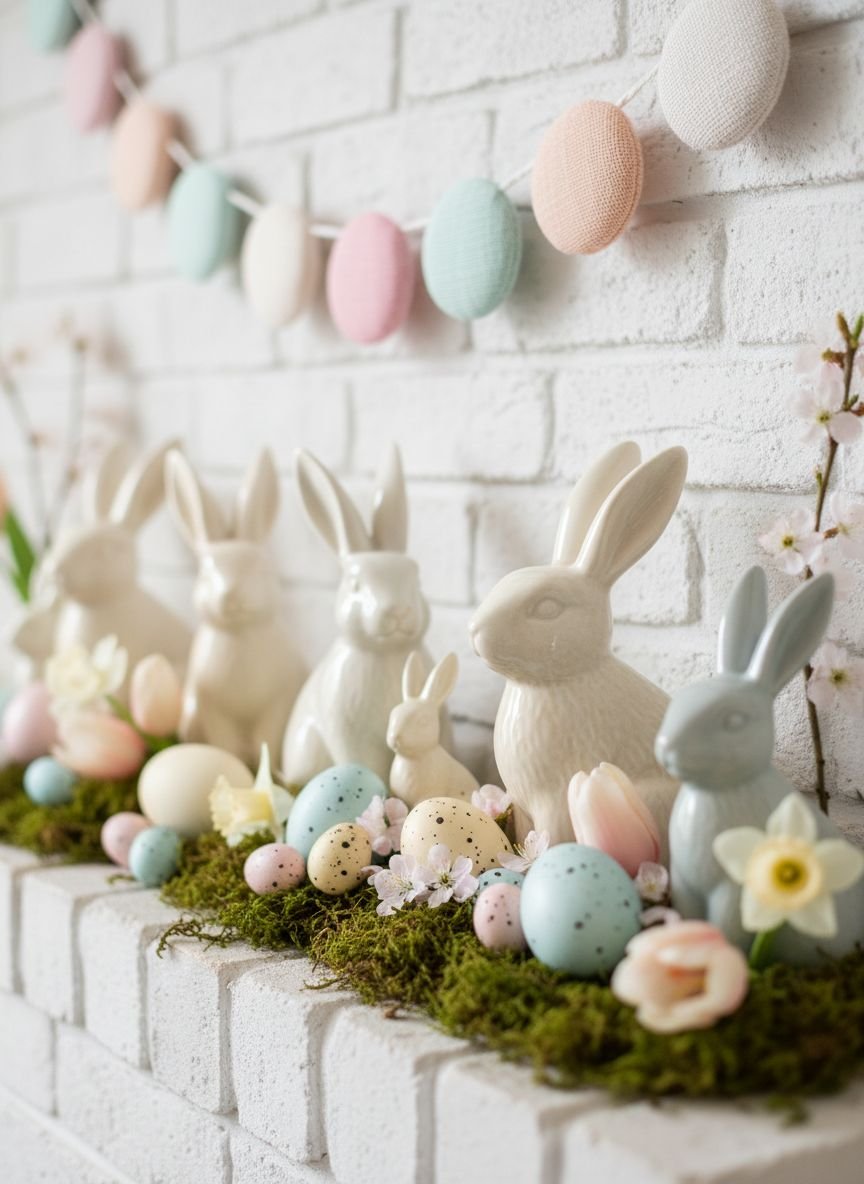
Textiles add warmth and texture to a room, and a woven fabric scrap Easter garland is the ultimate way to use up leftovers from other sewing projects. This decor item fits perfectly into the “cottagecore” and “boho” trends for Spring 2026, offering a relaxed and cozy vibe that rigid plastic garlands cannot match. It solves the problem of fabric waste while adding a soft, tactile element to your mantel or staircase.
The beauty of this garland is in its imperfection. You strip old shirts, linens, or drop cloths into long ribbons and tie them onto a sturdy central cord (like thick jute or hemp rope). You can alternate colors to create a pattern or go for a “scrappy” look with random pastels. Intersperse the fabric ties with reclaimed buttons threaded onto thin wire, or add small wooden beads for extra weight and drape. The result is a heavy, luxurious garland that softens the hard edges of a fireplace mantel or doorframe.
Pro Tip: To create a “rag rug” texture, vary the width of your fabric strips. Thicker strips (2 inches) create volume, while thinner strips (0.5 inches) add delicate movement.
Old Book Page Bunny Silhouettes
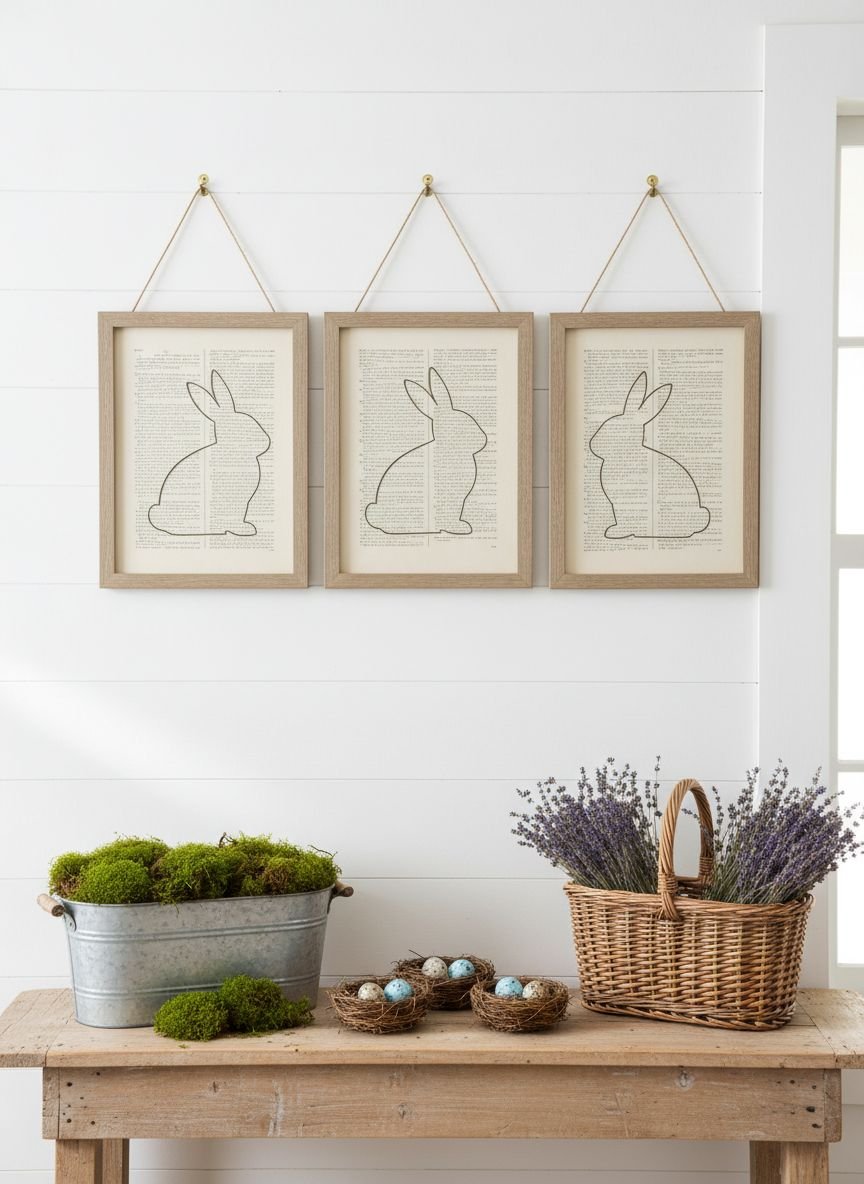
For lovers of vintage Easter decorations DIY, nothing beats the sepia-toned nostalgia of old book pages. This project transforms damaged books—those with broken spines or missing covers that would otherwise be discarded—into elegant wall art. It is a minimalist approach that works well in neutral, modern farmhouse, or academic-styled interiors.
The visual interest comes from the typography. The blocks of text provide a subtle, intellectual texture that serves as a background for a stark white or black bunny silhouette. You can frame a single page for a small accent or create a gallery wall of six to nine framed pages for a dramatic impact. The key is to mount the book page on a sturdy cardstock backing to prevent rippling, then overlay a cardstock cutout of a bunny. Alternatively, you can print the bunny shape directly onto the book page if your printer can handle fragile paper.
Pro Tip: Use an exacto knife to slightly distress the edges of the bunny cutout. This rough edge blends better with the aged paper than a crisp, scissor-cut line.
Upcycled Tin Can Vases
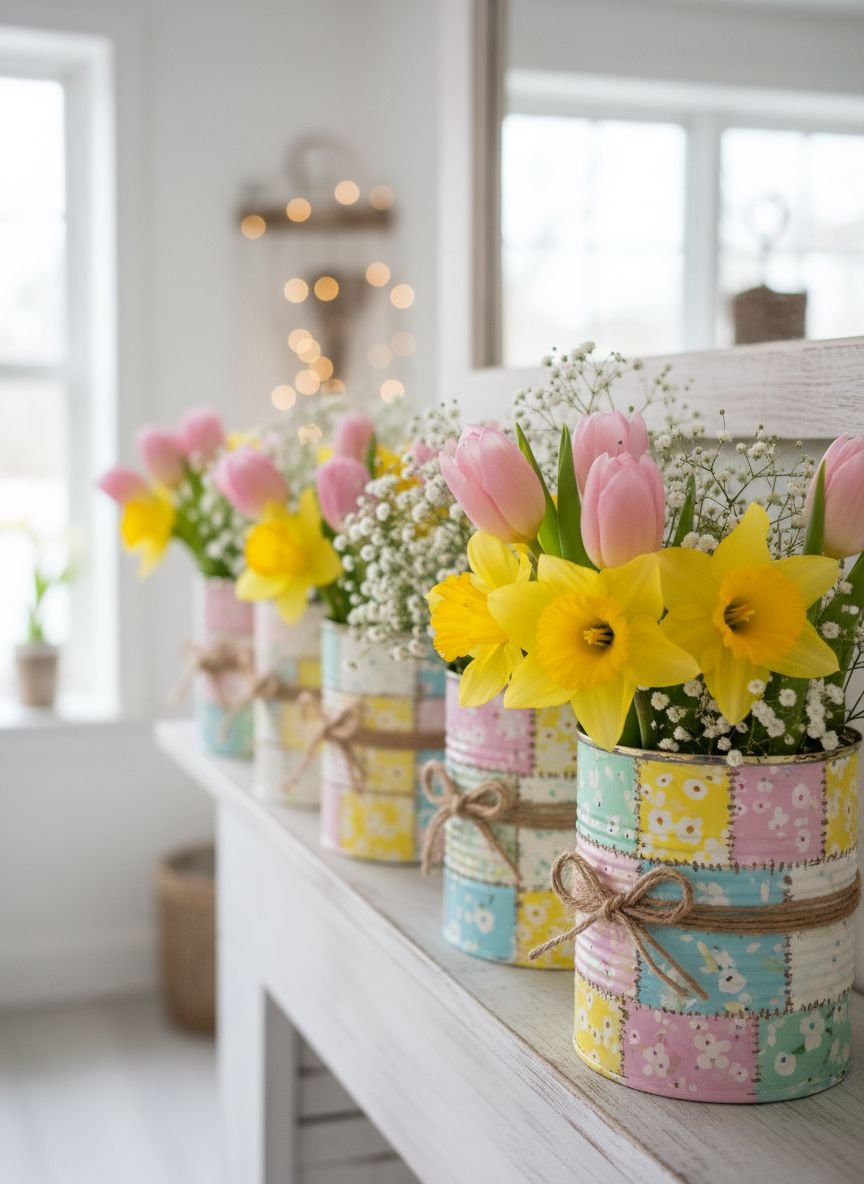
Eco-friendly Easter ideas often start in the recycling bin. Tin cans are abundant, durable, and surprisingly versatile. By upcycling them into vases, you are diverting metal from the waste stream and creating industrial-chic vessels that contrast beautifully with soft spring florals. This project is excellent for mass-producing centerpieces for a large event or wedding on a budget.
Thoroughly clean and de-label various sizes of tin cans. To remove the sharp inner edge, use a file or simply hammer it down flat. The design transformation happens with paint and texture. A coat of matte white spray paint gives them a ceramic look, while a “chippy” paint technique (using petroleum jelly between paint layers) adds vintage character. Grouping them in odd numbers (sets of three or five) creates a dynamic visual rhythm on a mantel or windowsill. Filled with baby’s breath, tulips, or daffodils, the humble tin can becomes a stylish design element.
Pro Tip: To prevent rust and extend the life of your arrangement, coat the inside of the can with a clear waterproof sealant or use a small plastic cup inside the can to hold the water.
Comparison: Upcycled Vases vs. Store-Bought
| Feature | Upcycled Tin Can Vase | Store-Bought Ceramic Vase |
|---|---|---|
| Cost | $0 – $5 (Paint/Supplies) | $20 – $50+ |
| Sustainability | High (Diverts waste) | Low (New manufacturing) |
| Customization | Unlimited (Color/Texture) | Limited to stock |
| Durability | High (Metal doesn’t shatter) | Low (Fragile) |
| Aesthetic | Rustic / Industrial / Boho | Polished / Standard |
Denim Pocket Egg Pouches
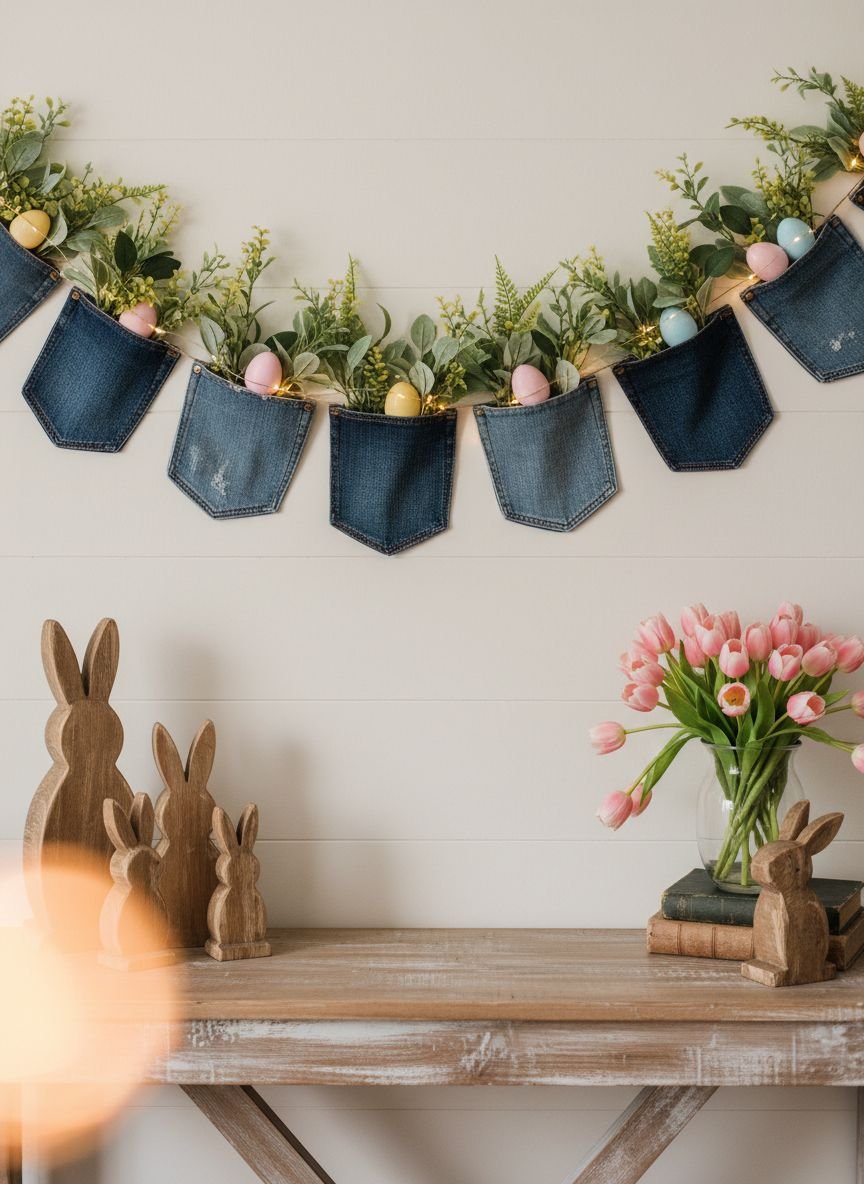
Denim is one of the most durable fabrics, yet millions of pairs of jeans are discarded annually. This creative project uses the back pockets of old jeans to create adorable hanging “nests” or pouches for Easter treats. It is a shabby chic Easter craft that adds a cool, blue-toned texture to your decor palette, balancing out the typical pinks and yellows.
Cut the pockets out of the jeans, leaving the back layer of fabric intact so it forms a pouch. You can leave the edges raw and frayed for a rustic look. Punch holes in the top corners and thread a piece of twine or ribbon through to create a handle. Hang these pouches on a garland, a decorative ladder, or even on the backs of dining chairs as place settings. Fill them with faux grass and a few painted eggs or chocolate treats. The indigo blue of the denim acts as a neutral, grounding the lighter spring colors.
Pro Tip: If you have embellished jeans with embroidery or sequins on the pockets, these make for extra special, “glam” Easter pouches without any extra work.
Wooden Pallet Easter Bunny Door Hanger
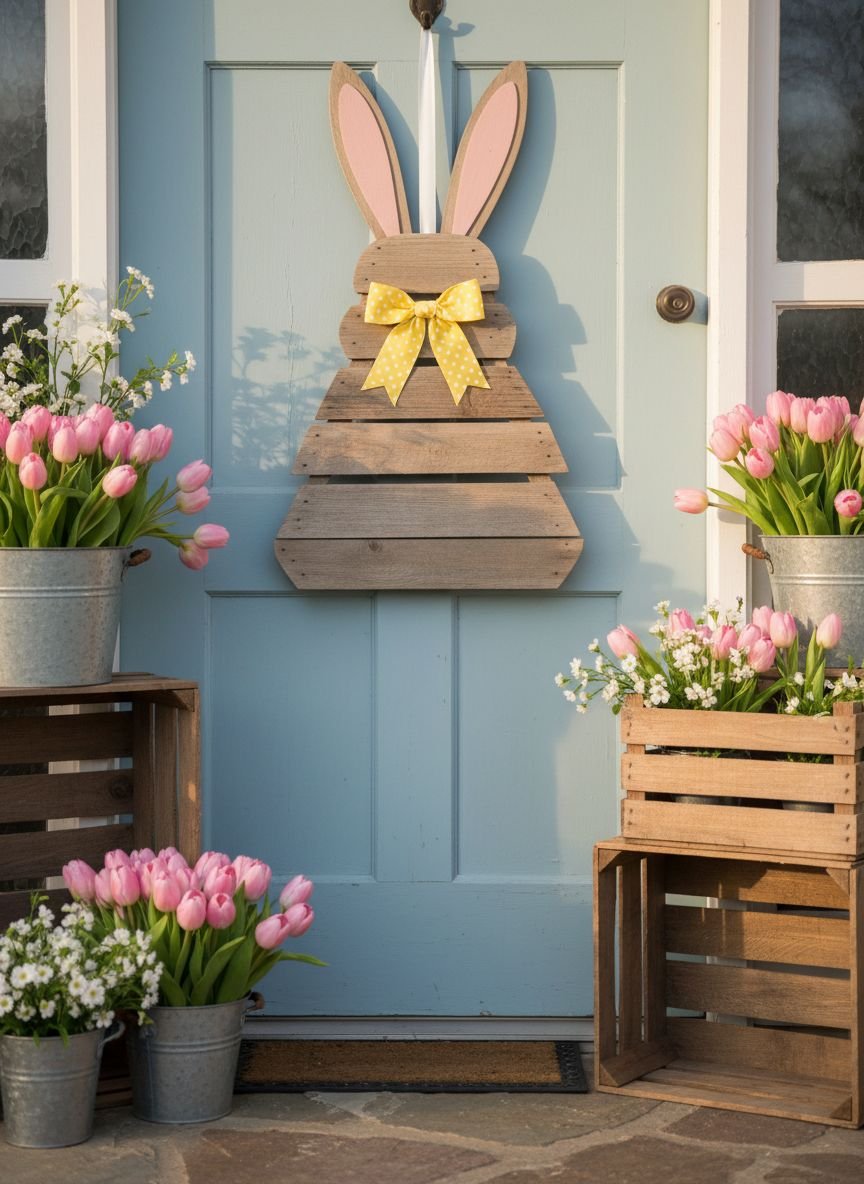
Farmhouse Easter decor ideas are incomplete without a touch of reclaimed wood. Pallet wood is free, abundant, and full of character. A bunny-shaped door hanger made from pallet slats makes a bold statement at your entryway, signaling the season to all who visit. This project requires some basic woodworking but yields a high-impact result that looks like it cost a fortune at a boutique.
Disassemble a pallet and line up the slats vertically. Trace a large bunny shape (or just a bunny head with ears) onto the wood. Use a jigsaw to cut out the shape, keeping the horizontal brace pieces on the back to hold the slats together. Sand the edges to prevent splinters but leave the surface rough to maintain that weathered patina. You can whitewash the wood to brighten it up or leave it natural. Add a large burlap bow or some felt flowers to the “neck” of the bunny for a pop of color.
Pro Tip: Save this idea to your Pinterest. To ensure your door hanger doesn’t bang against the door in the wind, glue small felt pads to the back of the wood.
Shabby Chic Egg Wreath
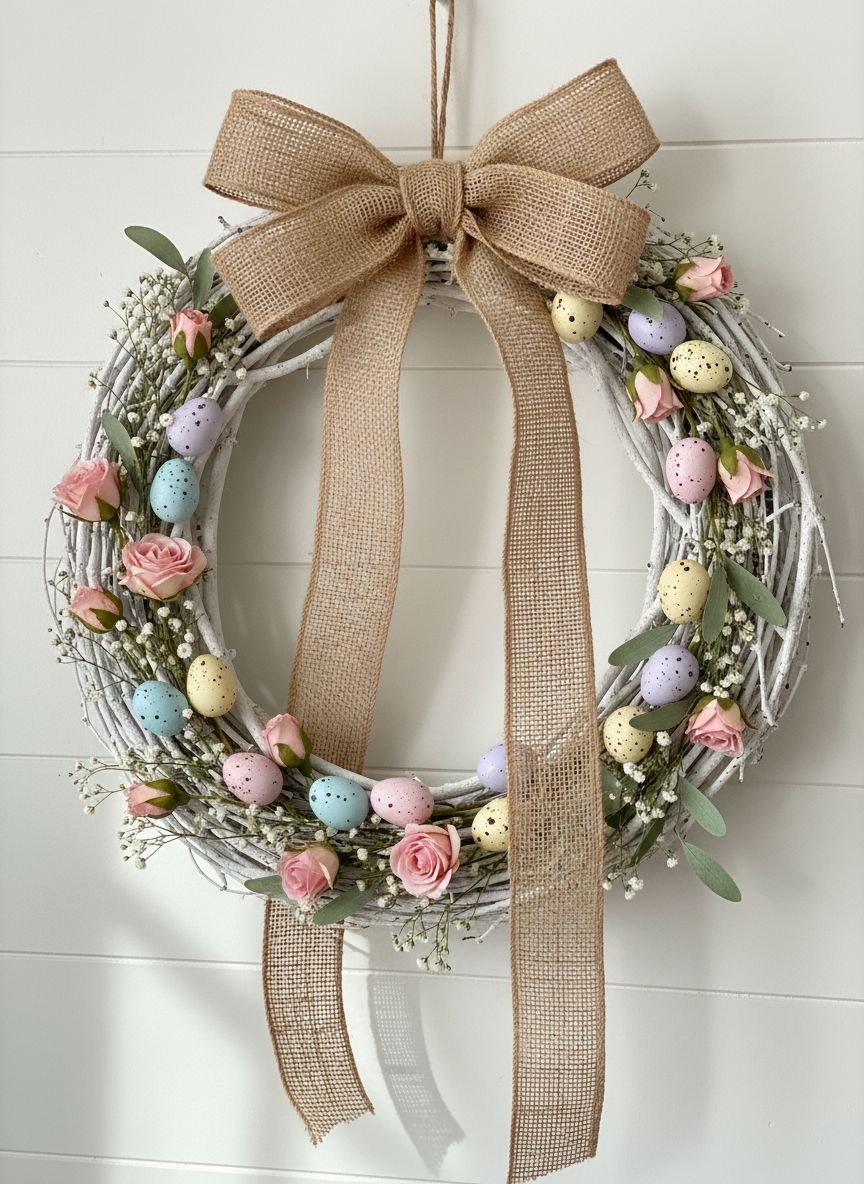
We all have them: those cheap, bright plastic Easter eggs that accumulate after years of egg hunts. Instead of throwing them away, give them a thrift flip Easter decor makeover. This wreath transforms the tacky plastic into a sophisticated, textured masterpiece that rivals high-end department store decor.
The secret is texture. You cannot simply paint plastic; you must alter its surface. Coat the plastic eggs in a mixture of paint and baking soda, or wrap them in scraps of fabric, sheet music, or twine. Once the eggs have a matte, textured finish in a cohesive color palette (think creams, pale blues, and greys), hot glue them onto a wreath form. Intersperse the eggs with dried moss or preserved leaves to hide the glue and add an organic element. The result is a dense, rich wreath that looks heavy and expensive, despite being made of hollow plastic.
Pro Tip: For a “speckled egg” effect, dip an old toothbrush in brown acrylic paint and flick the bristles over your painted eggs before gluing them to the wreath.
Egg Carton Spring Flower Bouquet
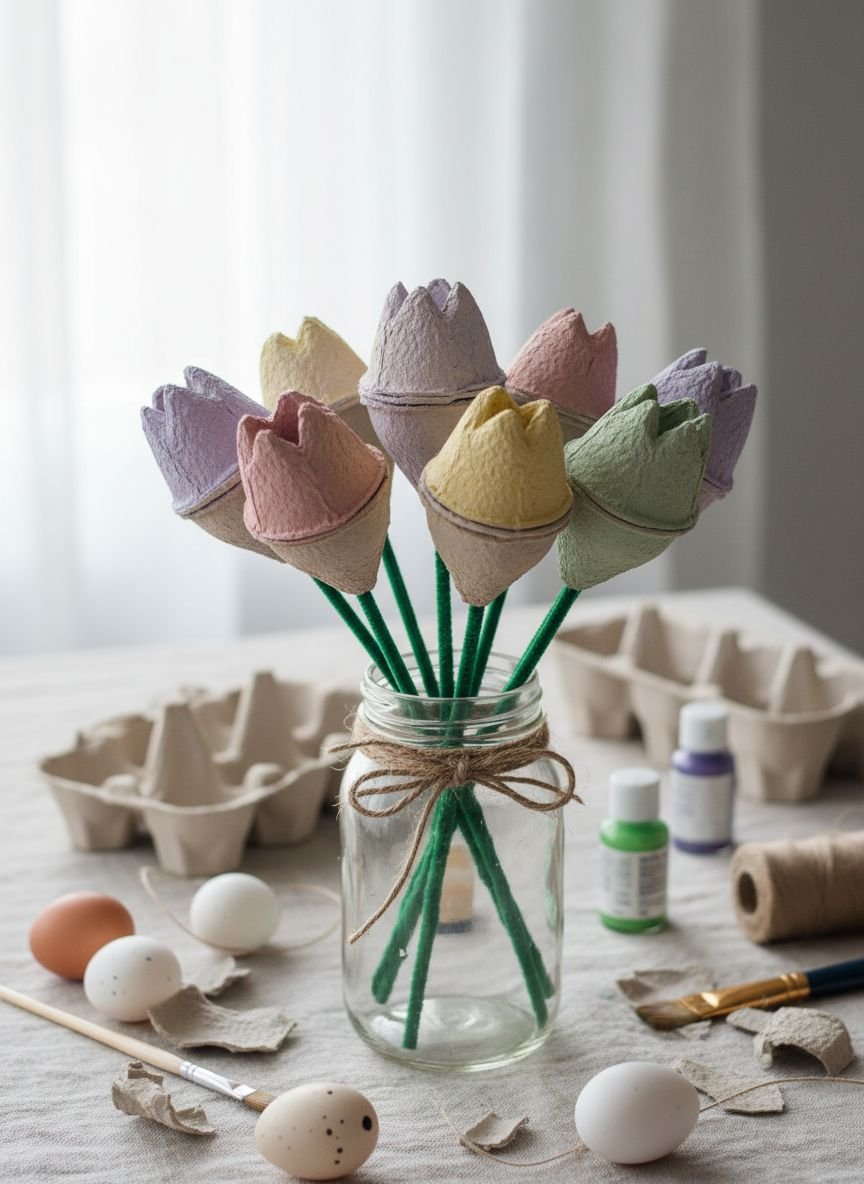
Sustainable Easter crafts often challenge us to look at packaging differently. The humble paper egg carton is essentially molded paper pulp, perfect for crafting faux florals. This project turns a waste product into a surprisingly realistic and artistic “flower” bouquet that will never wilt.
Cut the individual cups out of the egg carton. Trim the edges into petal shapes—round for roses, pointed for lilies, or fringed for daisies. You can layer two cups together to create a fuller bloom. Paint the cardboard with acrylics, blending colors from the center outward to mimic real nature. Poke a hole in the center and thread a green pipe cleaner or floral wire through for a stem. Arranged in one of your upcycled tin can vases, these paper flowers add a unique, artistic flair to a side table or shelf.
Pro Tip: Use the flat lid of the egg carton to cut out leaf shapes. Paint them green and glue them to the wire stems for added realism.
Upcycled Sweater Bunny Plushies
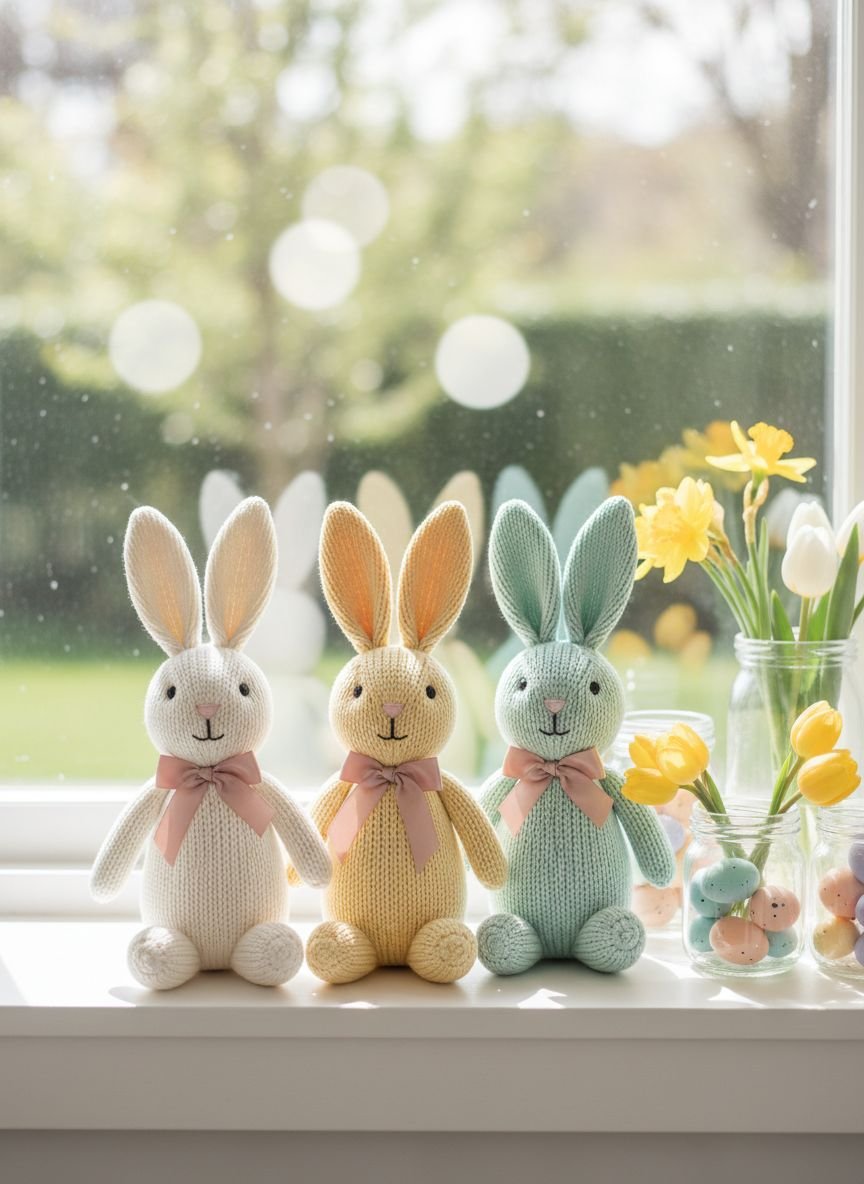
As winter fades, you may find sweaters that are shrunk, moth-eaten, or simply out of style. Instead of donating unwearable items, upcycle them into soft, cuddly bunny plushies. This repurposed spring home decor idea brings a cozy, “hygge” feeling to your Easter styling, perfect for softening hard surfaces like wooden benches or stone mantels.
The knit texture of a sweater mimics the softness of fur. Use the sleeves for the bunny’s body to minimize sewing. Stuff the tube with fiberfill (or scraps of other unwearable clothes for a zero-waste option) and tie off sections with yarn to create a head and body. Cut long ears from the body of the sweater and sew them on. The charm lies in the details: a pom-pom tail, button eyes, or a ribbon scarf. These plushies look adorable sitting on a windowsill or tucked into a bookshelf.
Pro Tip: If you use a wool sweater, wash it in hot water and dry it first to “felt” the fabric. This makes it denser and prevents it from unraveling when you cut it.
Related posts :
- 14+ Adorable Crochet Bird Toy Free Patterns for Your Next Project
- 18 Innovative Small Garden Ideas to Maximize Your Green Space that Feel Like a Private Oasis
- 15 Unique Patio Roof Extension Ideas For A Stunning Backyard That Will Transform Your Outdoor Living Space
Reclaimed Wood Easter Cross Centerpiece
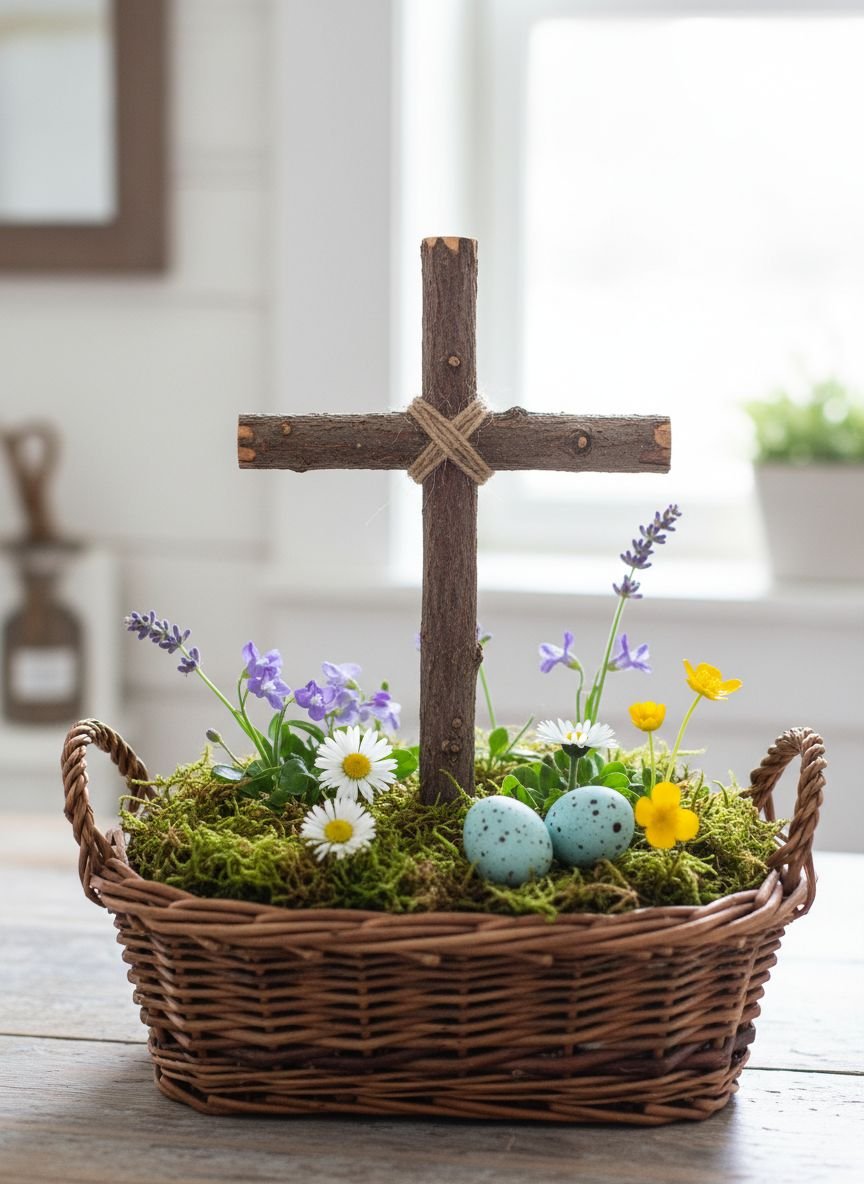
For many, Easter is a deeply spiritual holiday. A reclaimed wood Easter cross serves as a meaningful and rustic centerpiece. Using scrap wood, barn wood, or even drift wood found on a spring walk, you can create a symbol of faith that aligns with a natural, understated aesthetic.
The construction is simple: two pieces of wood joined with a lap joint or simple nails. The design impact comes from the styling. Drape a small garland of wildflowers (dried or fresh) over the cross arm. The contrast between the rough, weathered wood and the delicate blooms symbolizes new life springing from the old. This piece works beautifully on a dining table surrounded by candles or on a mantle as a focal point.
Pro Tip: If your wood is too new-looking, age it instantly by brushing on a solution of steel wool dissolved in vinegar. This reacts with the tannins in the wood to turn it a silvery-grey.
Glass Bottle Candle Holders
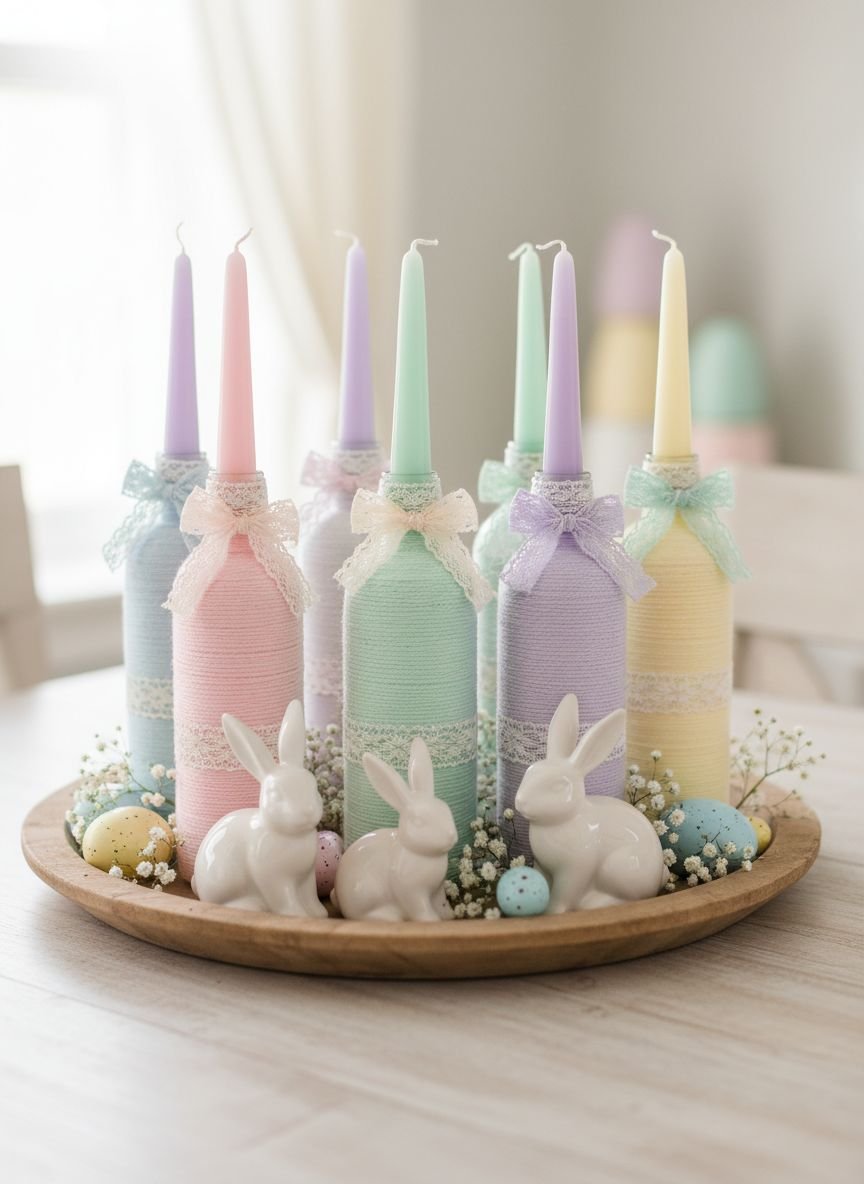
Clear glass bottles from soda, wine, or sparkling water have elegant silhouettes that are often wasted. By wrapping them in yarn, lace, or twine, you can transform them into boho-chic candle holders. This project is all about texture layering and soft, diffused color palettes.
Remove the labels and clean the bottles. Start from the bottom and wrap yarn tightly around the bottle, securing it with glue. You can switch materials halfway up—perhaps transitioning from rustic jute twine at the base to delicate white lace at the neck. Insert a taper candle into the mouth of the bottle. When lit, the wax may drip down the side, adding to the romantic, vintage vibe. A cluster of these bottles in varying heights creates a stunning architectural element on a table.
Pro Tip: If the candle is too small for the bottle opening, wrap the base of the candle in a little bit of masking tape until it fits snugly.
Eggshell Tealight Holders
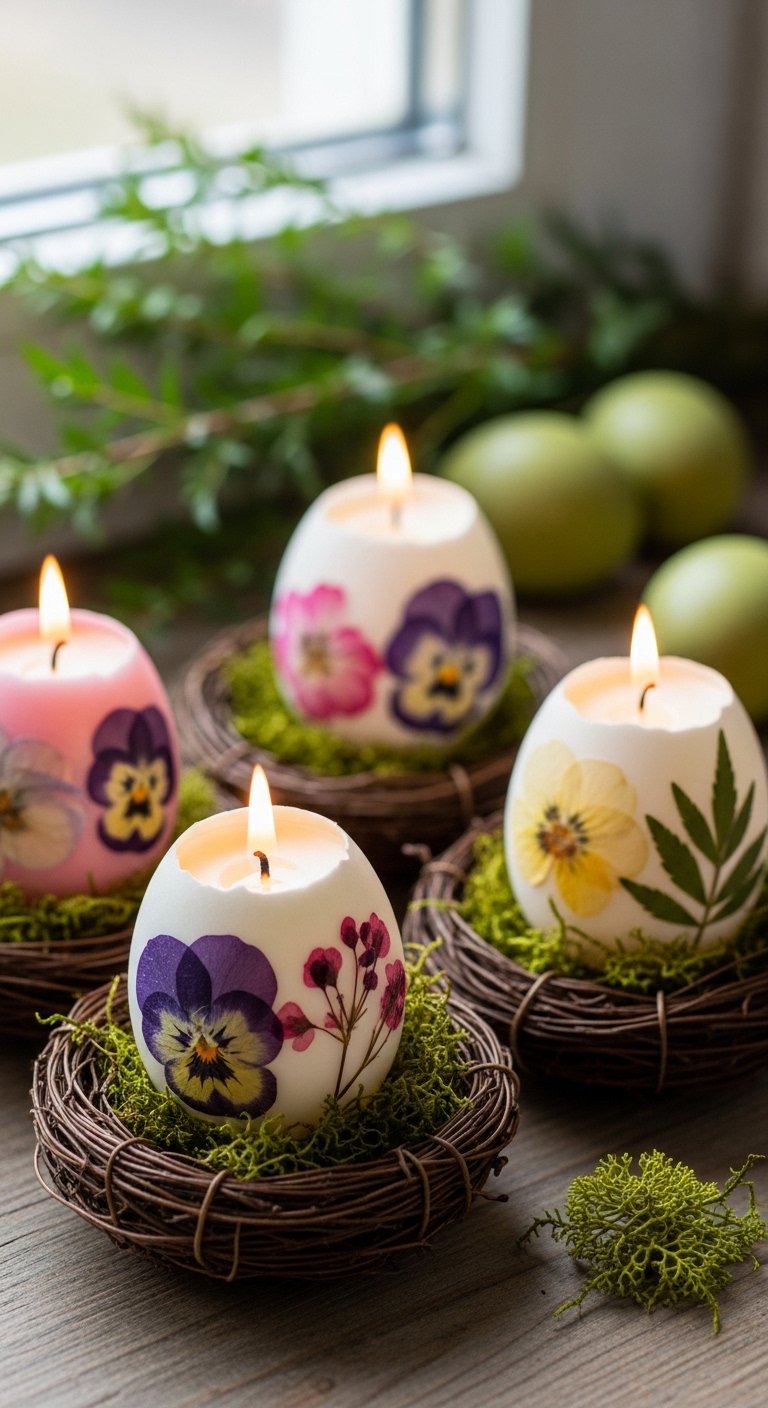
This is perhaps the most delicate and organic idea on the list. Eggshell tealight holders use the actual eggshell as a vessel for a tiny candle. It is the epitome of sustainable Easter crafts because it uses a natural byproduct of your kitchen.
Carefully crack raw eggs near the top third, empty the contents (save for an omelet!), and wash the shells gently. You can dye the shells in soft pastels or leave them natural white and brown. Melt some soy wax and pour it into the shell with a small wick, or simply place a very small tea light inside if the shell is large enough (like a duck egg). Place these fragile lights in an egg carton or a ceramic egg tray. The glow through the translucent shell is ethereal and unmatched by any artificial material.
Pro Tip: To create a stable base so the egg doesn’t tip over, glue the bottom of the shell to a small washer or a coin painted white.
Embroidery Hoop Wall Art
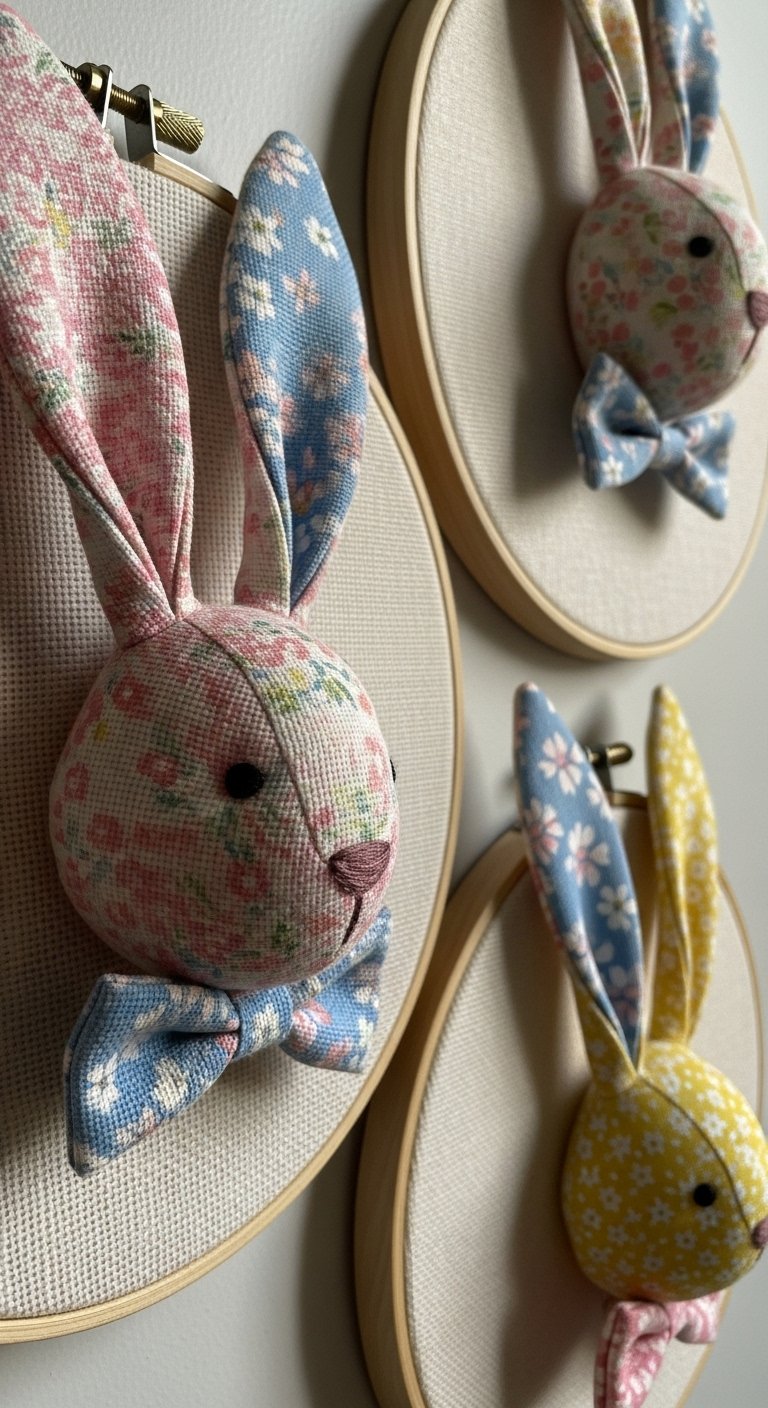
Embroidery hoops are inexpensive and frame fabric beautifully. Even if you don’t know how to embroider, you can create stunning upcycled Easter wall art. This project uses the hoop as a frame for fabric collages, focusing on bunny silhouettes or spring motifs.
Stretch a piece of neutral fabric (linen or cotton) across the hoop. Cut a bunny shape out of a contrasting patterned fabric—perhaps a floral scrap or a piece of an old plaid shirt. Adhere the bunny to the center using fabric glue or a simple running stitch. You can add a small cotton ball tail for a 3D effect. Hang a group of three hoops in different sizes to fill a blank wall with festive cheer. It is a soft, textile-based alternative to traditional framed prints.
Pro Tip: Don’t trim the excess fabric at the back too short. Instead, gather it with a running stitch and pull it tight to finish the back cleanly, allowing the hoop to sit flat against the wall.
Tin Lid Easter Chick Magnets
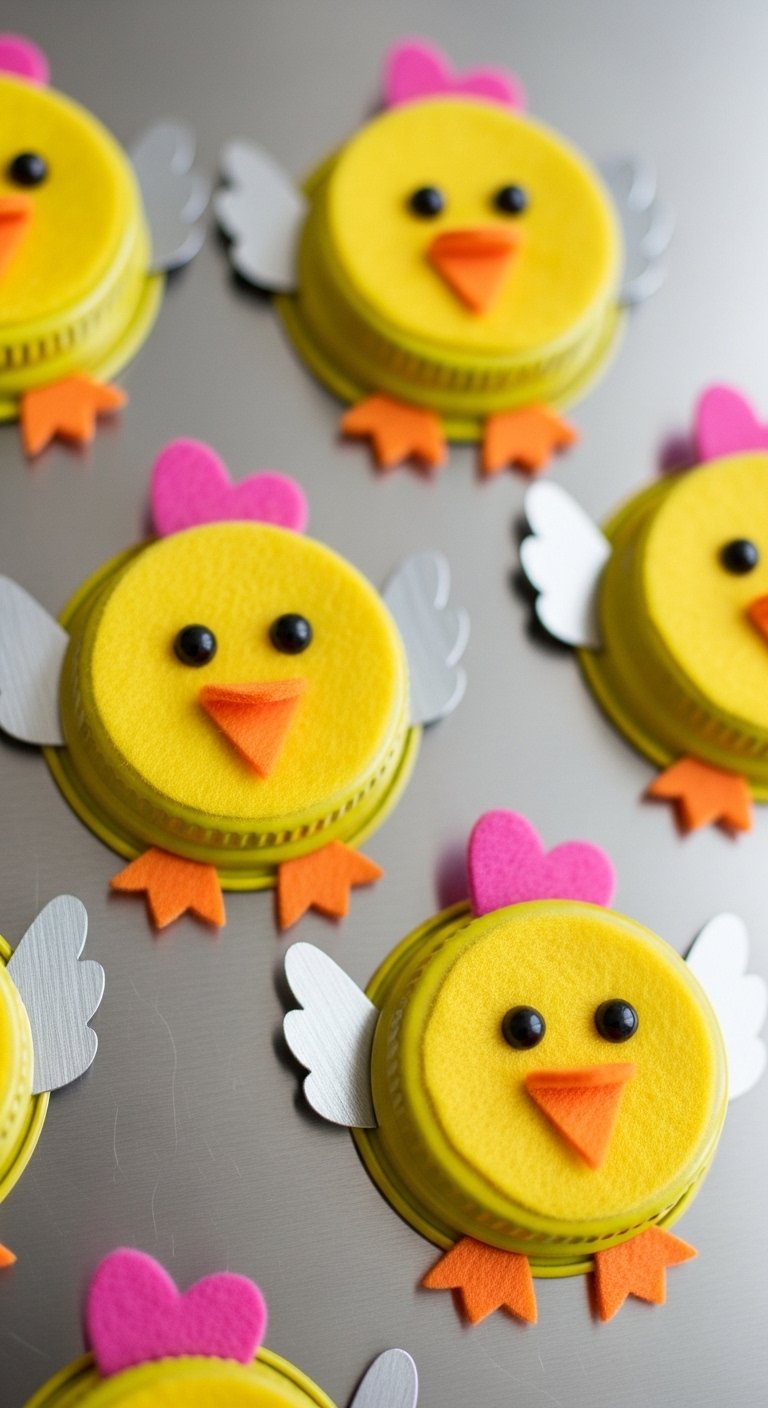
Finally, a project for the smallest scraps: bottle caps and jar lids. Tin lid Easter chick magnets are a fun, quick craft that brightens up your refrigerator. This is a great way to use those random metal lids from pickle jars or jelly jars that don’t fit any container you currently own.
Paint the inside of the lid yellow. Glue two googly eyes and a small orange felt triangle for a beak. For the wings, glue yellow feathers or small loops of yellow ribbon to the sides. Attach a strong magnet to the back. These cheerful little chicks can hold up your grocery list or your children’s Easter drawings. It is a small touch, but one that brings a smile every time you open the fridge.
Pro Tip: Use slightly larger mason jar lids to create “Mama Hens” and beer bottle caps to create “Baby Chicks” for a whole family display.
Popular Asked Questions
How can I make my Easter decor more sustainable?
To make Easter decor sustainable, focus on reuse and natural materials. Instead of buying plastic eggs and synthetic grass, use real blown eggs, wooden eggs, or papier-mâché. For baskets, repurpose wicker baskets you already own or use galvanized buckets. Avoid glitter (which is microplastic) and opt for natural dyes made from turmeric, beets, or cabbage instead of chemical dye kits.
What can I use instead of plastic Easter eggs?
There are many eco-friendly alternatives to plastic eggs. Wooden eggs are durable and can be painted annually. Felted wool eggs are soft and safe for toddlers. Fabric eggs (sewn from scraps) are beautiful and unbreakable. You can also make papier-mâché eggs using old newspapers, which can be filled with treats just like the plastic versions.
How do you make a bunny out of recycled materials?
You can make a bunny out of almost any recycled material!
- Socks: Fill an old sock with rice, tie with string to form a head and body, and cut the cuff into ears.
- Cardboard: Cut bunny shapes from shipping boxes and paint them.
- Jars: Paint a glass jar and add paper ears.
- Fabric Scraps: Braided fabric strips can be glued into a bunny shape on a canvas.
How to make Easter decorations out of waste material?
Look at your trash with a creative eye. Tin cans become vases. Egg cartons become flowers or wreaths. Glass bottles become candle holders. Old books become paper garlands or art. The key is to clean the item thoroughly and then alter its appearance using paint, texture (like twine or fabric), or by changing its function.
Conclusion
Creating a festive home for Easter doesn’t require a trip to the big-box store. By embracing upcycled Easter home decor, you not only save money but also curate a home that is rich in character and kindness to the planet. From vintage teacup planters to denim egg pouches, these 15 ideas prove that old treasures can indeed find new life.





Leave a Comment